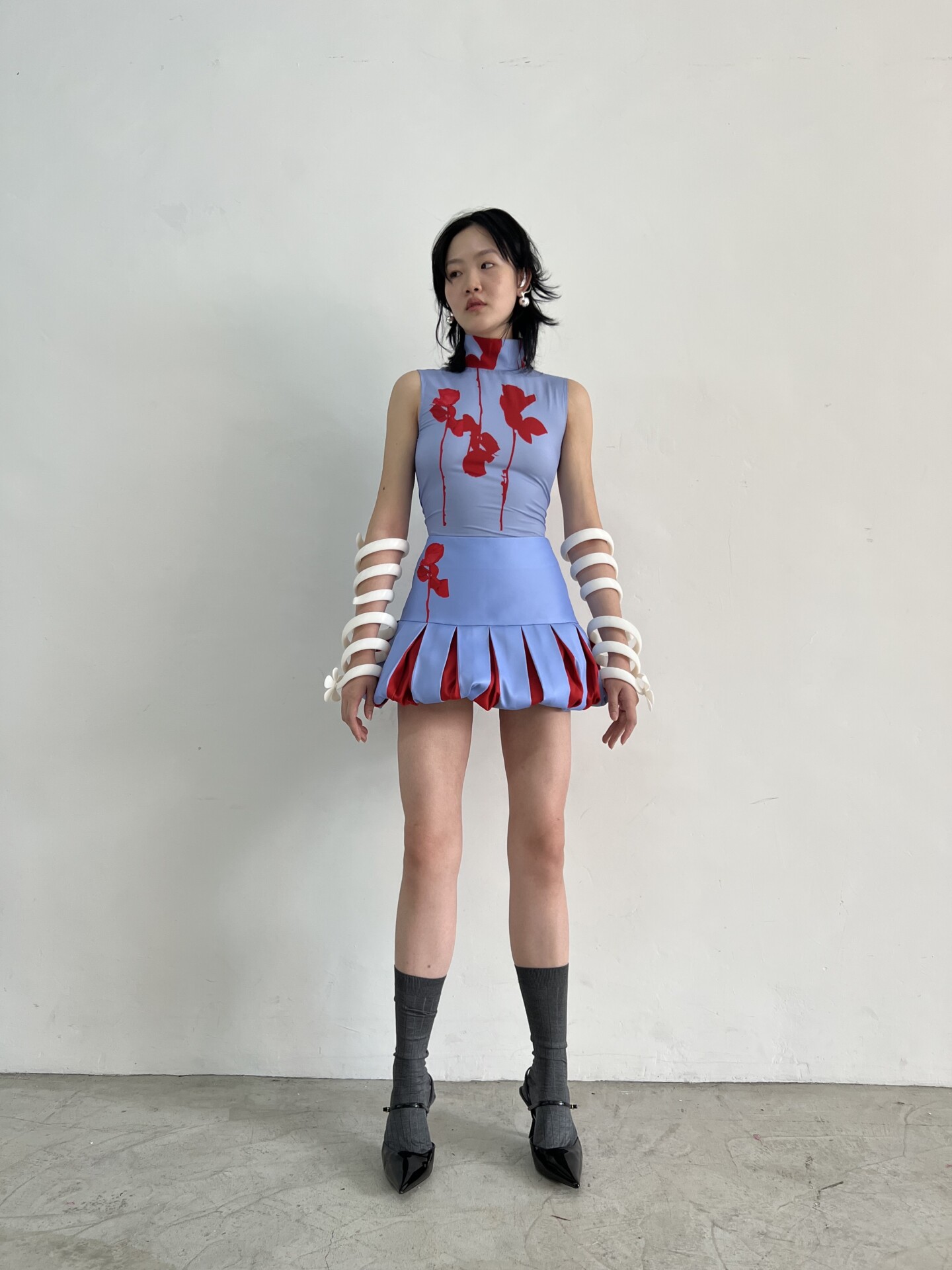
Celine Kwan via Instagram.
Amid the technological revolution and the exacerbation of insatiable desire, monopolised and fed by names like Bezos, Zuckerberg and Musk (motives… TBC), it’s easily assumed that tech is the environment’s worst enemy. But, a mentality like this can only invoke further division. The inevitable power that tech possesses should instead be harnessed to promote a relationship of peaceful coexistence with the environment or better, a symbiosis.
And, that it is… in some cases. As we near a climatic crisis point, new innovative technologies with environmentally-pivoted foci are cropping up around us. The struggle comes in finding the sweet spot between economic viability, continuing technological evolution – and greener pastures.
Meet 3D printing: a production practice of possibility and promise, garnering much interest for its position at the nexus of technological advancement and sustainable prospect. Predating the 21st century, 3D print has been around for some time. Recent years have witnessed its evolution from prototyping to the manufacturing of ready-to-use products, enabling a shift in philosophy from mass to on-demand production. The algorithm-driven printing process is limitless in its applications – penetrating all realms of design; from furniture, structurally-sound building blocks and car parts to medical equipment, jewellery and even garments.
As 3D print becomes an increasingly viable option for clothes manufacturing in the fashion industry, it can be observed seeping into the collections of haute couturiers like Iris Van Herpen and Chanel (whose 3D print counterpart, Julia Koerner, we talk to) and technical wear designers like Adidas and NASA, who’ve entrusted the technology for use in building parts for astronaut suits.
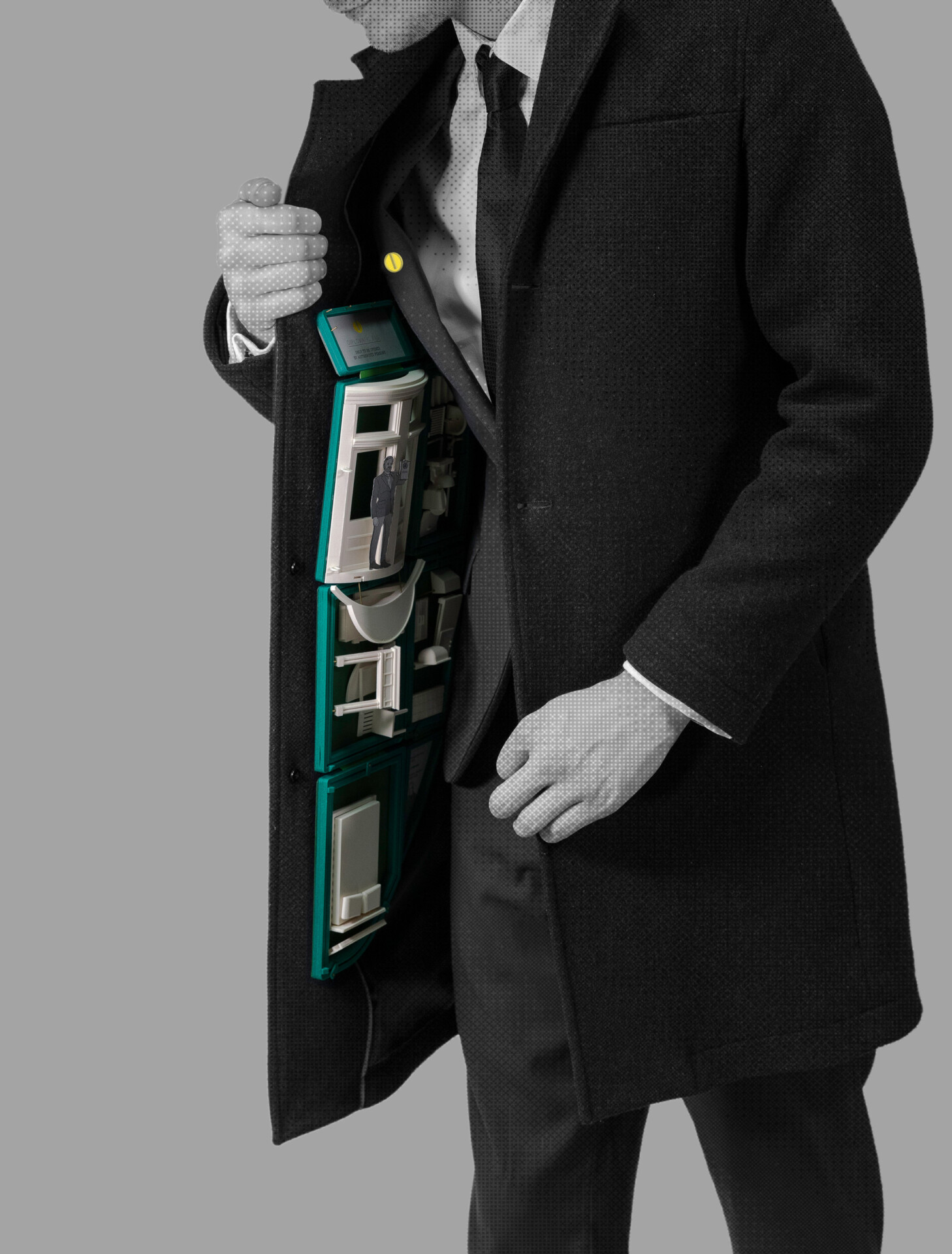
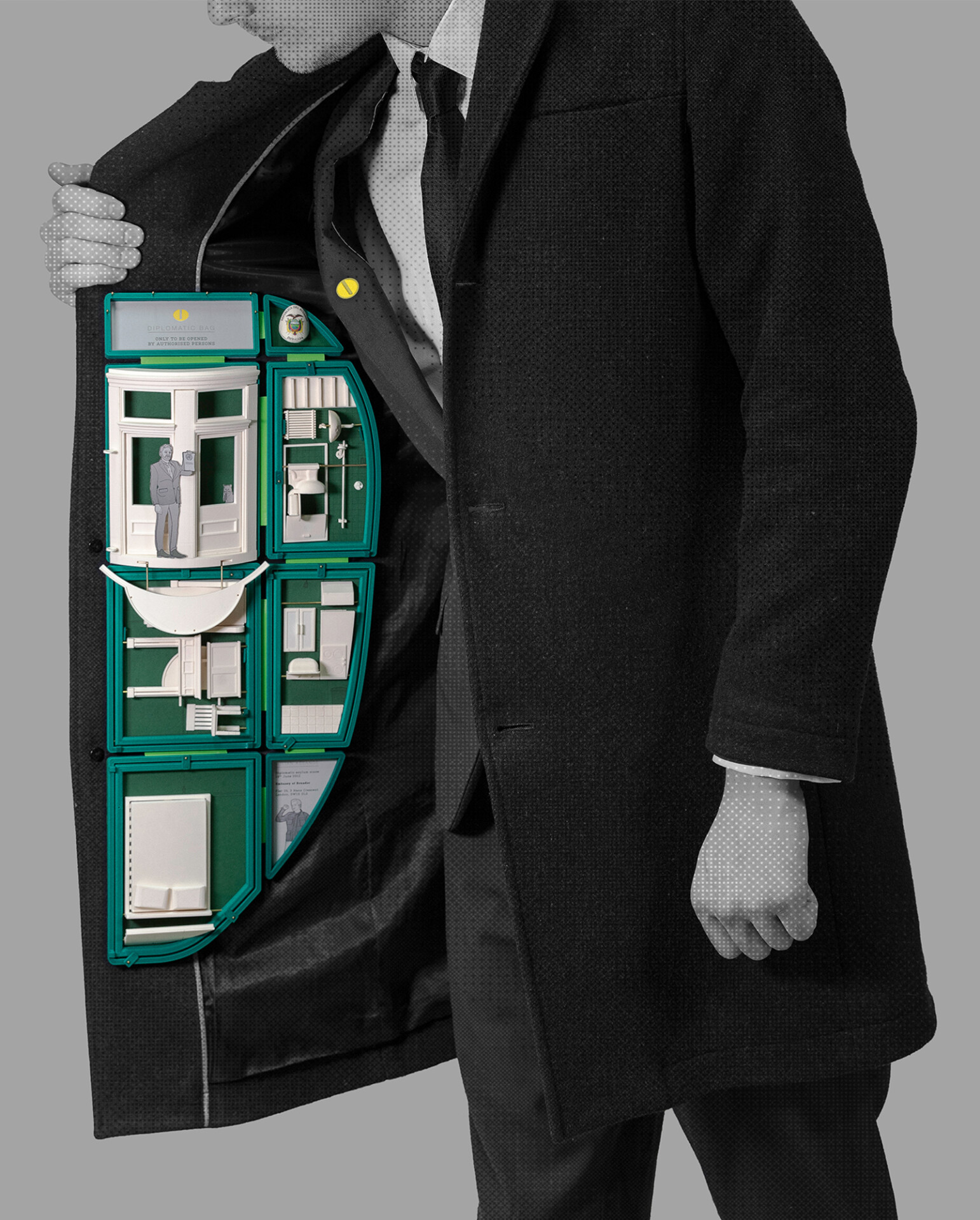
Theo Jones, Architecture Model Unfolding Julian Assanges Home of Diplomatic Containment. Image Courtesy of the Designer.
“The possibilities of 3D print are endless. You can print pretty much anything, something really delicate or something really structural,” says designer Celine Kwan. 3D print is crucial to the Central Saint Martins print graduate’s eponymous brand. In her retro-futuristic collection titled ‘Welcome Home’, Kwan used 3D print to reinterpret the materially progressive essence of the 60s and 70s with an avant garde spin. Using Fused Deposition Modelling (FDM) and Selective Laser Sintering (SLS) print processes, Kwan adorned her garments with fascinating layers of futuristic floral appliqués, tiled chainmail, bangles and dotted mesh fabrics that better resemble sequinned lace.
There are countless factors that make 3D printing so appealing: the intricacy and detail that the process prevails; the technicality; production speeds as quick as just a few hours; its increasing accessibility; and above all, the sustainable potential the technology holds.
Aesthetically, finishes vary depending on a filament’s composition. You could, for example, add carbon fibre or metal to the filament changing the product’s physical properties. In fact, according to architect, 3D print expert and founder of GreenMatWorkshop, Theo Jones, you can add pretty much anything, resulting in a range of technicalities including flexibility, waterproofing, rigidity, colours that change sensitive to temperature, and, if you add iron to the filament and spray it with water, even rusting!
Whilst Jones is an architect by trade, 3D print has allowed him to traverse a range of disciplines from product and interior design to fashion design, or ‘wearables’, as he puts it. A personal project of Jones’ examined the space possessed by Julian Assange during his stay in the Ecuadorian embassy. Jones made a jacket, as an emblem of diplomacy, that contains a 3D printed fold out of the few rooms that Assange had access to over the seven year period that he sought political asylum in the embassy. Jones specifies that this project was in no way a political statement in support or anti-support of Assange, but rather out of pure fascination with the concept of containment.
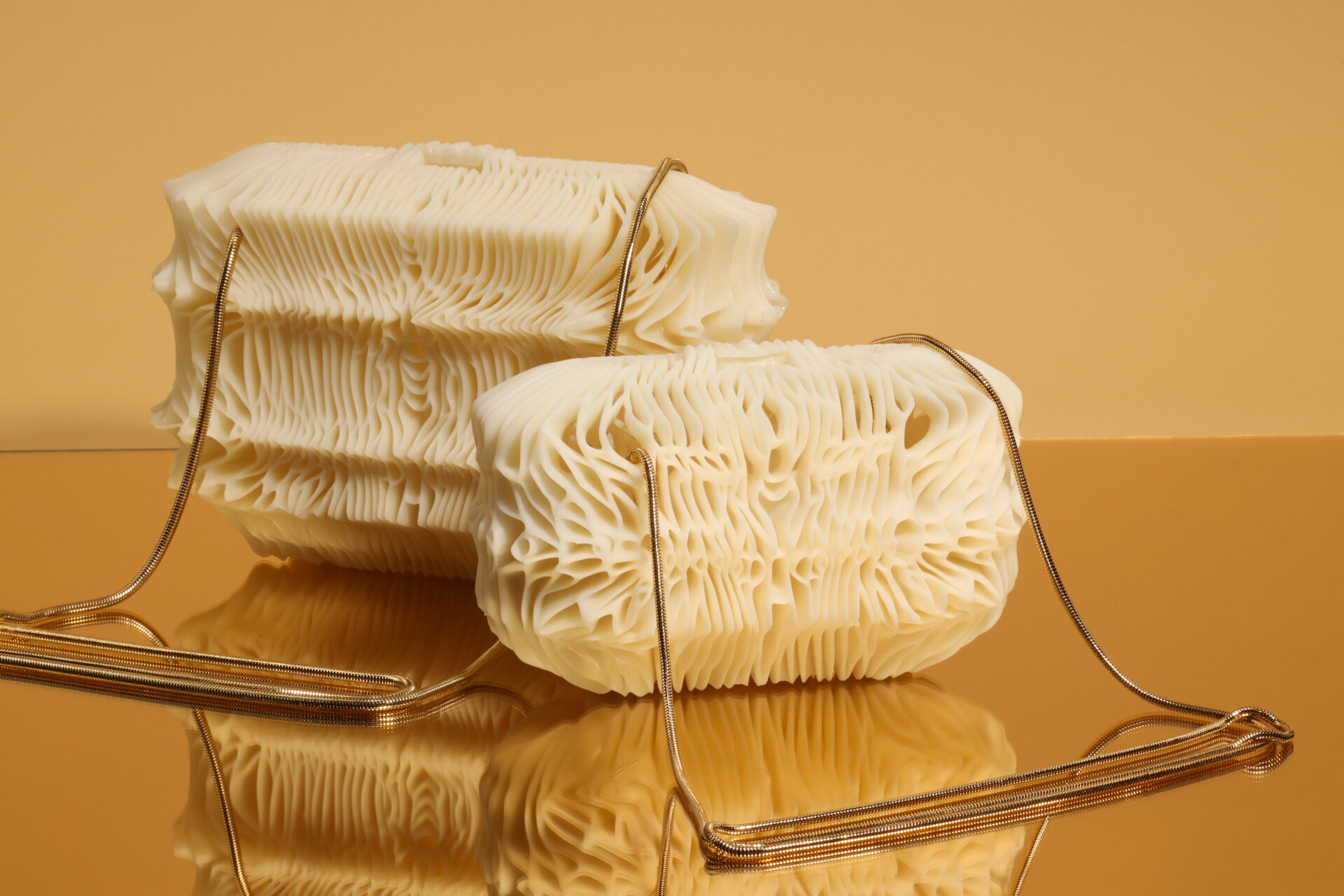
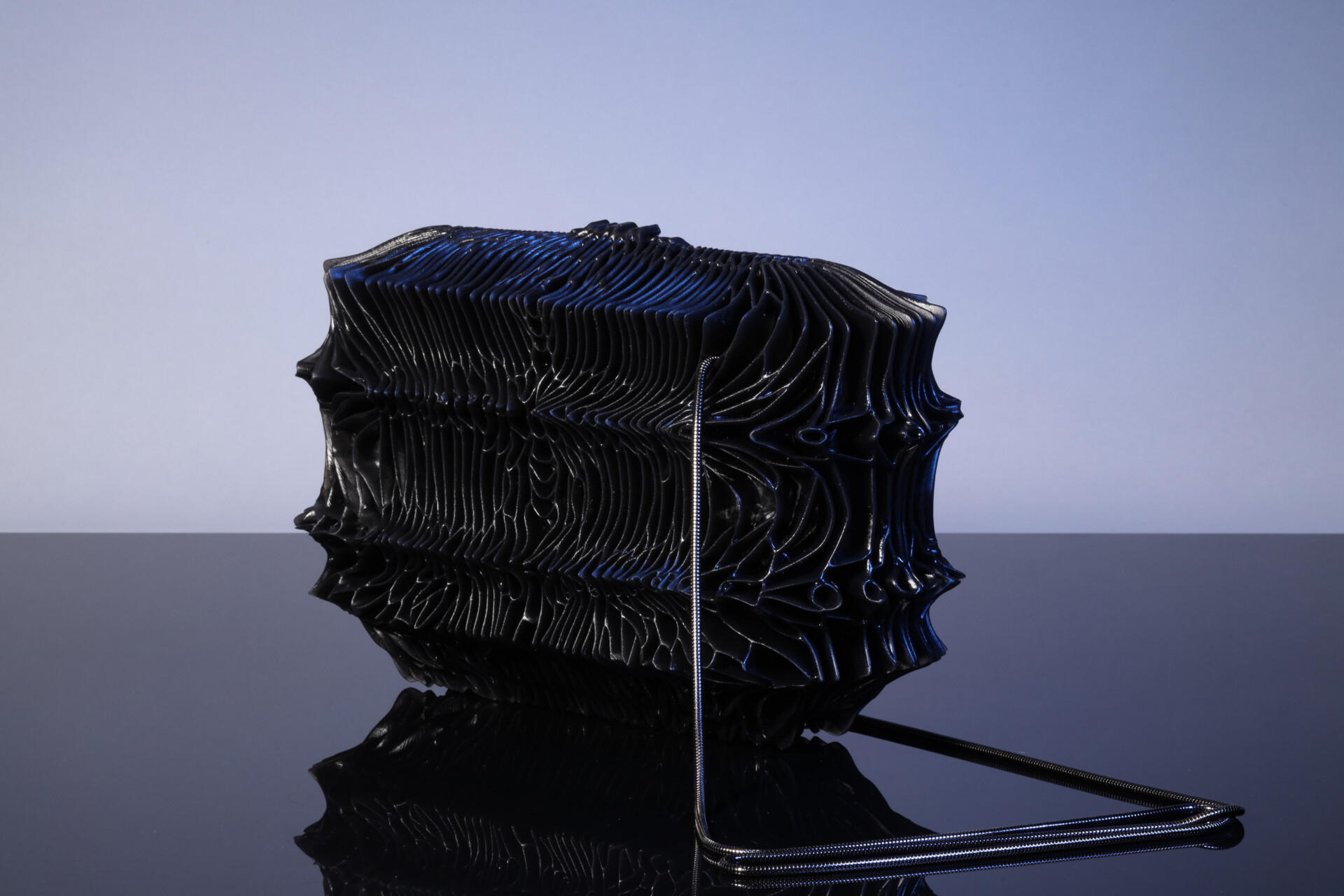
Julia Koerner HY Clutch Bone and Slate, 2021, ©JK3D. Photo by Elena Kulicova.
LA/Vienna-based architect, fashion designer, lecturer and cross-disciplinary 3D print expert, Julia Koerner, has spent fifteen years researching and developing the technology. Koerner has taken part in a diverse plethora of collaborations including printing for the haute couture collections of Iris Van Herpen and Chanel, and Swarovski, who she is developing a new glass 3D printing technology with. Koerner also played a key role in printing Queen Ramonda of Wakanda’s crown and shoulder mantle in the Marvel Black Panther films alongside costume designer Ruth E. Carter and director Ryan Coogler.
When it comes to 3D print, Koerner tends to hybrid natural logic with technological and digital aptitude, creating CADs inspired by nature’s intricacies. “Nature has developed over thousands of years; different colours, patterns; its systems have been optimised through evolution; and beauty is inherent to it,” she says. “We can make products using natural processes and novel technology.”
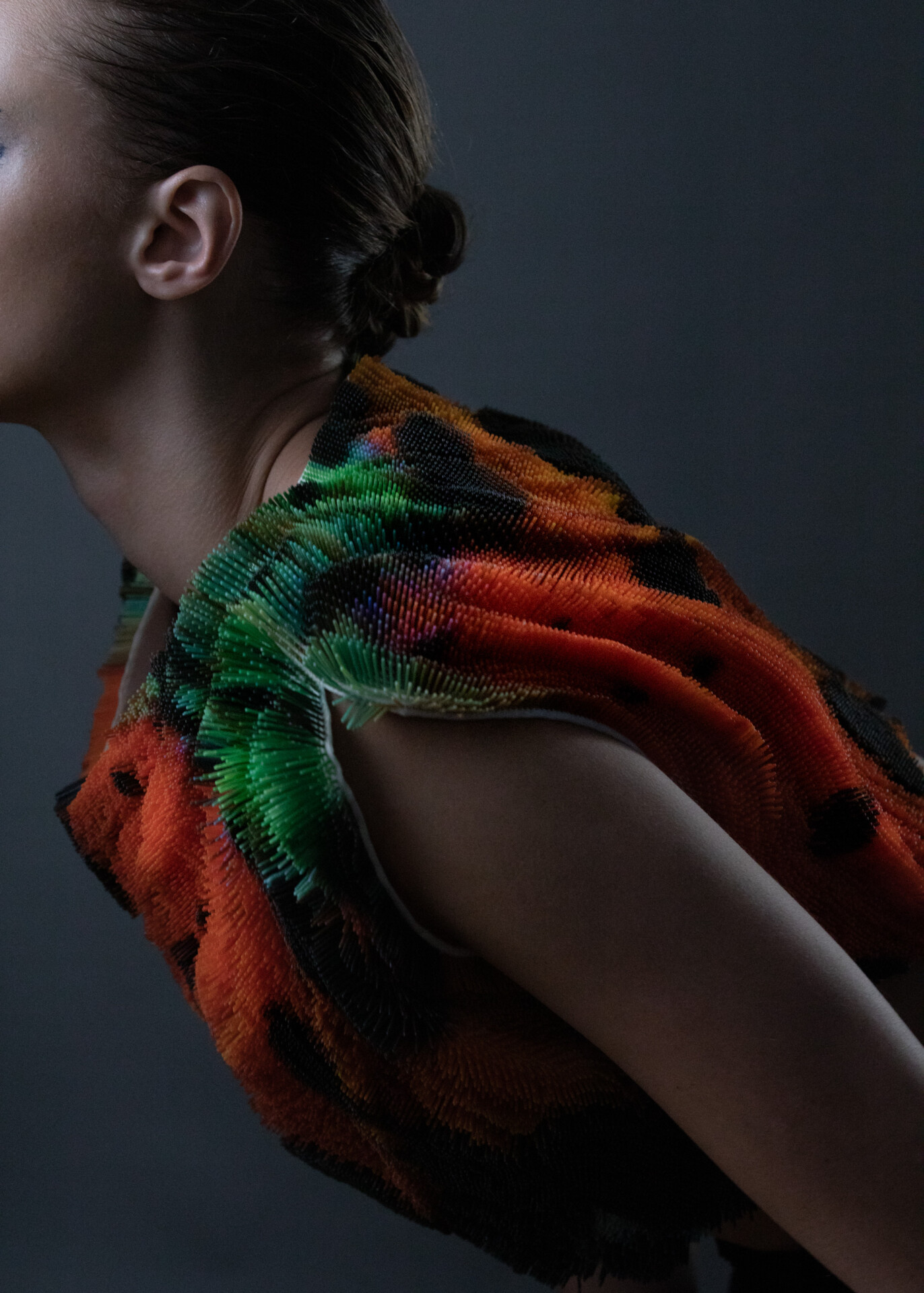
“When a tree grows, it hardens in certain areas like the trunk, and softens in others like its leaves. It displays a multitude of colours. Yet it all grows from one material and all decomposes after it dies,” says a fascinated Koerner. She applies the same logic to her designs. 3D print warrants details like this in a manner no other production method does. Considering the varying rigidity of natural structures, Koerner’s Sporophyte jacket features shoulder embellishments that are harder and a bodice that is more flexible.
By using plant-based polymers and resins as filaments, like PLA (the most common used in FDM 3D printing), a garment can later biodegrade. “Technology historically looked to artificial materials. Now we can mimic and work with natural ones like cornstarch PLA, opening new possibilities and ideas as to how we can produce,” she says.
.
Jones is excited by the plant-based nature of some 3D print filaments but, in pursuit of plastic elimination where possible, is a little sceptical of their scalability. He points out that the biodegradation of any plastic, plant-based or not, is no fleeting process. “Obviously there are lots of plastics out there that have gotten much, much better, but sometimes alternatives are better. PLA, for example, is good for what it is, as long as you don’t approach it from a wasteful perspective,” says Jones.
That being said, recycling is always an option, and whilst virgin filaments make for a smoother production process, recycled plastics can and do work. Koerner was recently involved in a start-up project with an NGO based in Scandinavia that work alongside the UN to collect waste plastic from the oceans in Thailand, turning it into filaments for 3D printing. “As a non-virgin plastic, it is harder to print with but it’s a really exciting idea about how to reuse existing plastic,” she shares. “It could be an option for the demographic that wants a new dress every other week.”
“Perhaps down the line there might even be 3D printing cafes where you come in with a file and print it – like there have been paper printing cafes. 3D printing labs could become shop adjacents.” She notes that it’s not in the too distant future that people could melt down their own garments to print into new ones. It’s all very futuristic.
3D print allows for on-demand, customisable production. Therefore inventory and necessary storage space is at a minimum; excessive production based on sale predictions is null and waste is reduced; and the necessity of returning a product is lesser because the item can be customised to the buyer’s exact requirements. Troubleshooting can be done in fewer steps using prototyping, reducing waste even further.
This is the approach Koerner takes to making garments at JK3D. The entirely-printed HY Clutch (including hinge, clasp and interior pocket) is printed from plant-based resin, post-purchase, locally at her LA or Vienna atelier (order-location dependent) to reduce transport emissions. Practices like this reduce the carbon footprint of a product that might be produced through multiple steps in multiple locations through traditional production means. “Being an additive manufacturing method, 3D print is more sustainable than one that’s not as you only use the amount of material you need,” says Koerner. Additive manufacturing, as opposed to subtractive where a block is carved away, builds layer upon layer so there is little to no waste.
“I think there will be a massive shift as accessibility is on the rise and pricing on the down,” says Kwan. Koerner agrees, remarking that the majority of her students now have their own printers: “It’s becoming increasingly affordable. A basic 3D printer costs around $200 and you can buy a 3D printing pen for as little as $30.” Whilst the expense of printing might be falling, it doesn’t take away from the fact that it is an energetically expensive mode of manufacturing… and know what that means in terms of greenhouse gas emissions. This can, of course, be curbed by using renewable energy sources such as solar power as opposed to fossil fuel-derived energy. Koerner is doing exactly that by using roof-top solar panels to power her LA atelier.
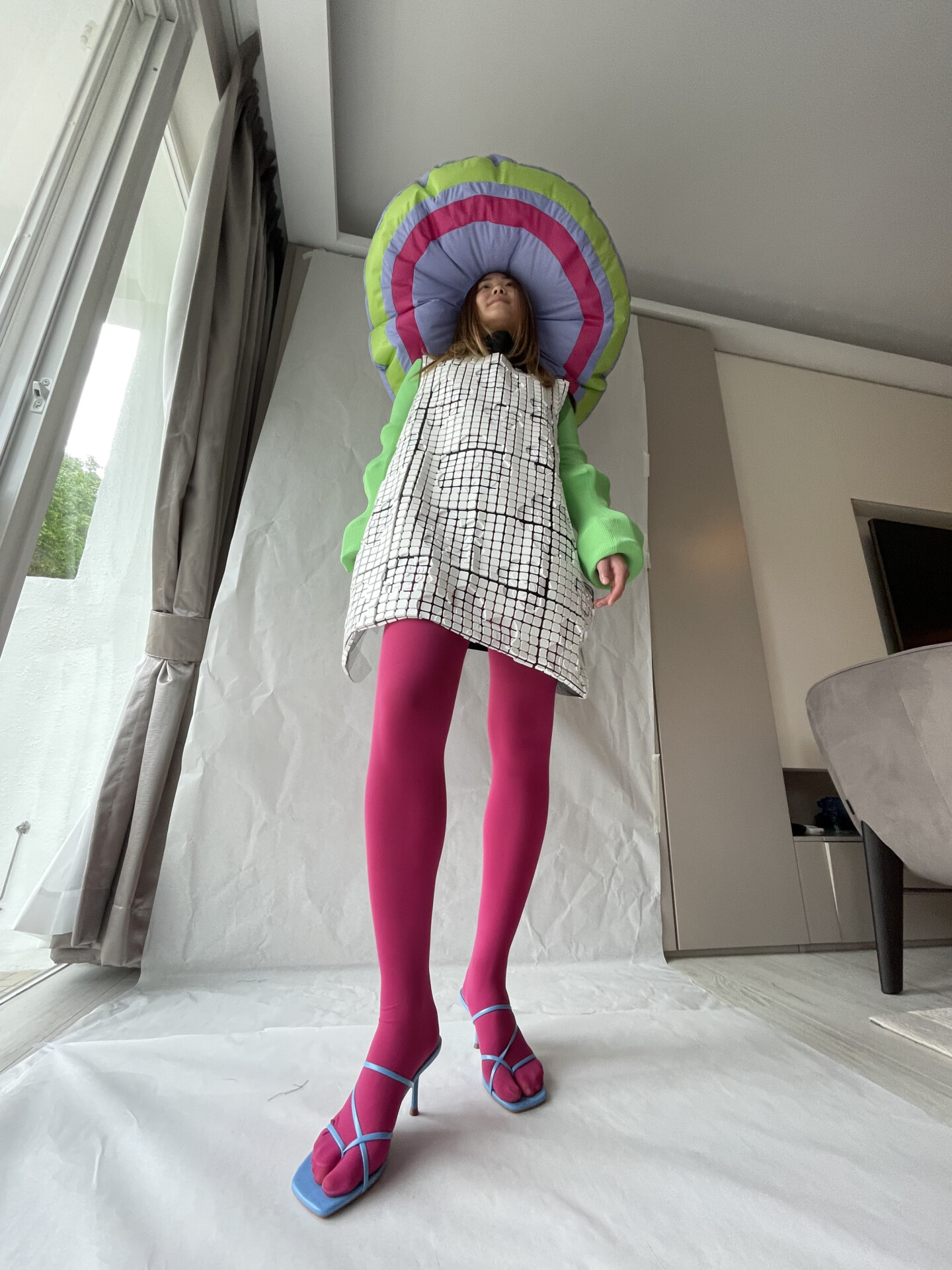
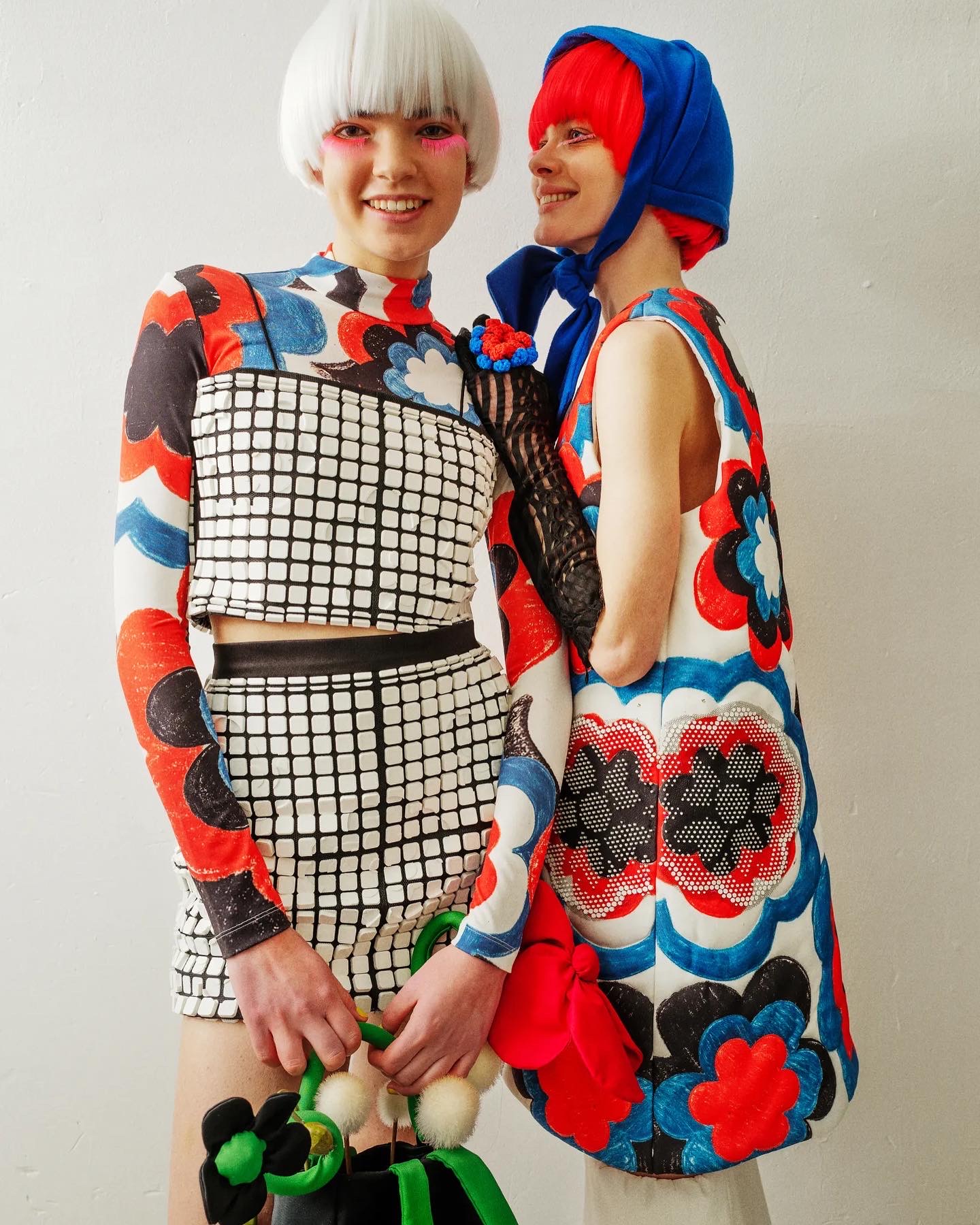
Celine Kwan. Image Courtesy of the Designer.
Caveats considered, 3D print is not a one fits all solution. But, it can certainly play a hugely important role in the rethink of production. “We need to incorporate 3D print into already existing practices and into the lifecycle of existing products,” says Jones. “If the sole of a shoe is the first thing to give, perhaps a shoe company might offer a 3D printed sole repair prolonging the life of an already existing product.”
Koerner shares the sentiment: “There is no one solution. One solution means we’re using finite and limited resources. 3D print offers one innovative way of making clothes and there are many interesting things about it but there can never be one way of doing something. Other avenues like traditional techniques and bio-fabrics, like growing clothes out of mycelium, are fascinating too.”
And it goes without saying that sustainable fashion futures go further than switching up production modes or creating new ones. It’s all too easy to offset bigger issues behind the facade of buzzwords and greenwashing. Forming new habits *consumption* without breaking old ones *consumption* won’t solve anything.
Combined with other innovative technologies, traditional crafts and active efforts to reduce consumption in a multi-perspective approach, 3D print can play part in shifting the dynamic towards a reciprocally beneficial system whereby reducing greenhouse emissions and exacerbating decarbonisation are central. We’re excited.