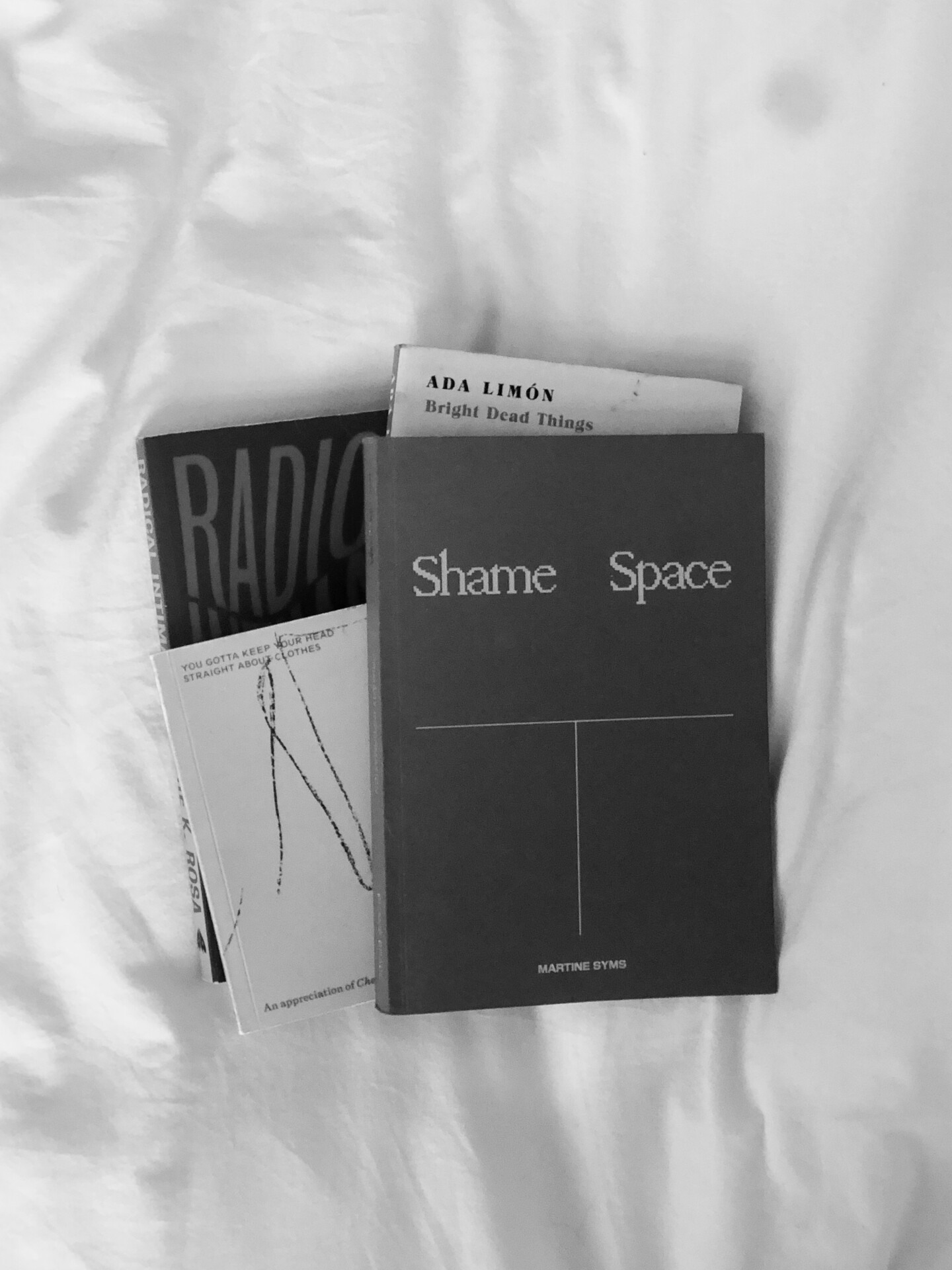
I don’t believe much in a New Year, which is probably why I’m writing this column at the end of January and not the start. I don’t believe in this construct that follows us around telling us to be a new version of ourselves; one that is more gorgeous, more “put together”, healthier, slimmer, smarter. I think setting such strict New Year’s resolutions is one way to fast track yourself to burn out. But, as always, the change in year brings the dreaded question asked in almost every social interaction: what’s your resolution?
My response? Read more. Last year, I set myself the goal of reading 100 books which equates to around two a week and when you’re at university full time (while working two jobs) it’s difficult to get through two books a month, nevermind a week, and so I managed 40. This year, I’m not setting myself a quantifiable goal. Instead, I’m simply saying: read more.
I’m sure many of you will also share a desire to read more. At least I hope so, because this column will be giving you five titles to set you off on a year of reading – all of which I have read, and loved immensely.
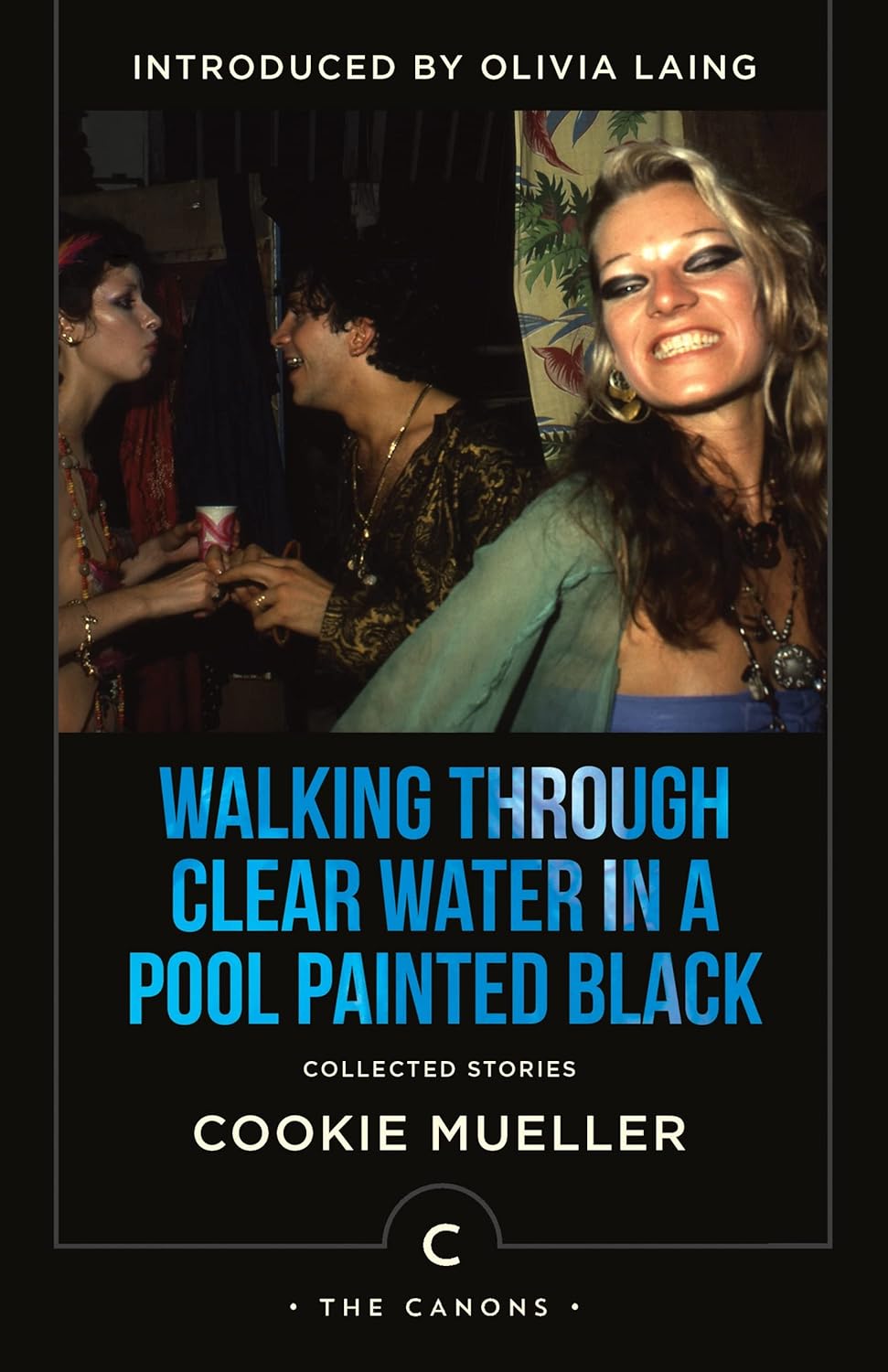
Walking Through Clear Water In a Pool Painted Black by Cookie Mueller
Where to begin with this book. It has become my bible. Never have I felt an urge so strong to read a book over and over and over again. I can confidently say that if I were only to read one book for the rest of my life, it would be this.
For those unfamiliar with Cookie Mueller, she was, in the words of John Walters, “a writer, a mother, an outlaw, an actress, a fashion designer, a go-go dancer, a witch-doctor, an art-hag, and above all, a goddess.” (I don’t even think I need to go on after that description, but I will).
Across a series of diary entries, a selection of fables, and a column, Cookie chronicles her hedonistic life filled with risk and reward – from smoking weed with the Mansons, to accidentally burning a house down, to visiting a witch with Nan Goldin to cure her heartbreak, to heavily critiquing the government’s response (or lack of) to the AIDS epidemic. Honest and shameless, Cookie leaves nothing hidden from the reader. As Olivia Liang, who writes a foreword in the recently published version, Walking Through Clear Water In a Pool Painted Black is “a how-to manual for a life ricocheting joyously off the rails . . . a live corrective to conformity, conservatism and cruelty”.
Once I finished the book, I let it sit in my room for a while. I wanted to give it to a friend, but I felt like I couldn’t quite part with it. And so I let it sit and sit, until it was ready for it to be passed on. My friend is reading it now and he too announced it has become our bible. And so, we’ve agreed to bind it in a leather casing for that very reason.
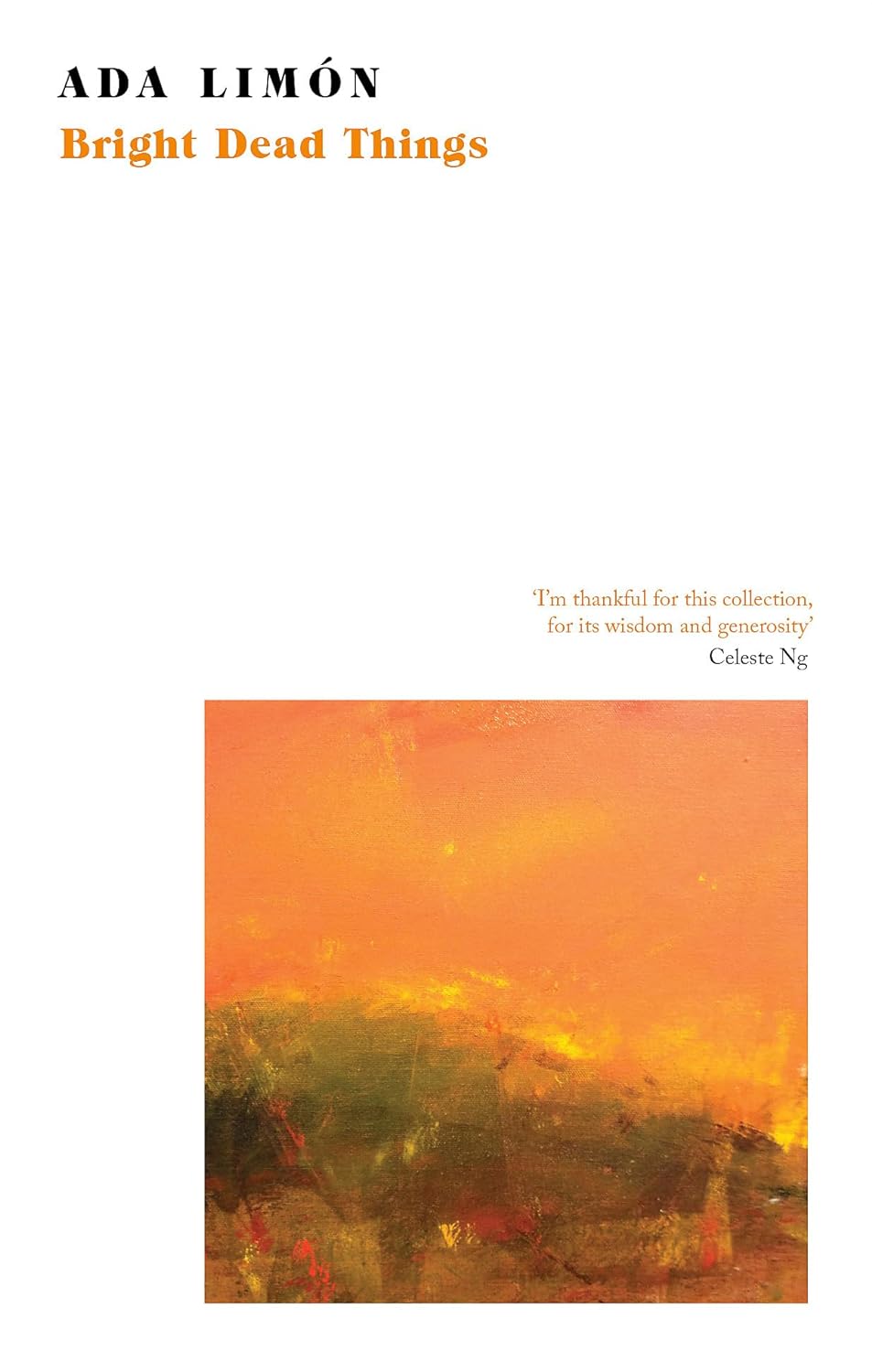
Bright Dead Things by Ada Limón
The gatekeeper in me didn’t want to share this book with you, for no other reason than that it feels like it was written entirely for me – even though inside Limón had written “For Lucas & Lily Bean” and its predecessor’s predecessor had written “4 Phoenix”. So few books have touched me in the way that this one has. I first discovered it in a book swap with my friend Phoenix (too a brilliant poet, featured in SLEEK 79, and the aforementioned recipient). I gave her Patti Smith’s Devotion (another great book) and in return she offered me a slim white book whose cover bore an abstract painting of orange and green that – in my mind at least – looked the way I’d imagine the Earth burning.
The collection comprises a series of poems that explore the beautiful absurdity that is life: the fear and excitement of living in a world that you will one day leave. Limón’s poems offer a window into the speaker’s shifting of self; as she moves from New York to rural Kentucky, loses a parent, her youth and falls in love. Intimate and moving, her brilliant and weirdly reassuring words acknowledge that we’re all just dying creatures attempting to find something that is “disorderly, and marvellous, and ours.” It’s a book you can pick up at any page, and whatever’s written is bound to have a profound effect on you (I had to tear a poem out, The Conditional, and stick it to my wall so I could see it everyday).
When I next saw Phoenix, she asked if she could keep Devotion as her own and whether I would like to keep Bright Dead Things as mine.
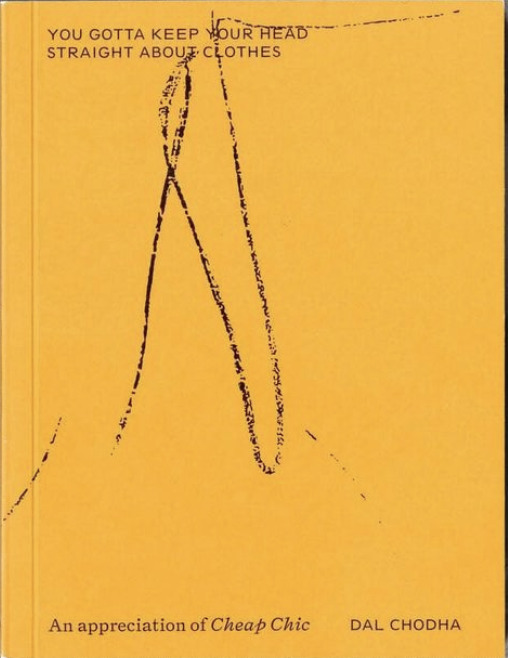
You Gotta Keep Your Head Straight About Clothes by Dal Chodha
If you’ve ever met Dal Chodha, you’ll know that he has a very stripped-back wardrobe. In fact, you can almost always guess what he’ll be wearing before you actually see him. Usually, it’s some variation of a beautifully knit grey jumper – always with the most fabulous neckline – paired with black denim coveralls and flat leather shoes. And yet, every time it feels entirely new.
Dal’s approach to fashion has been influenced by Cheap Chic – the 1975 published guidebook, written by Carol Troy and Caterine Millinaire, to thrift shopping. Its authors believed the way to consume fashion is “to have a few clothes that you really love, rather than a closet full of mismatched fashions.” Essentially it’s a book that, as the title of Dal’s tribute suggests, helps you keep your head straight about clothes.
Despite having been published almost five decades ago, a lot of what Cheap Chic says rings true to today – even more so, perhaps. And this is what Dal’s You Gotta Keep Your Head Straight About Clothes, published by Tenderbooks, highlights. Part tribute, part fan-letter, part critical commentary, the pocket-sized book suggests how we might reconsider the way we approach the building of “style”, through an “intelligent and measured consumption. A focus on needs, not wants.” In a world that tells us we should want more, Dal tells us to consider less.
One to pass onto a friend, a lover, a stranger.
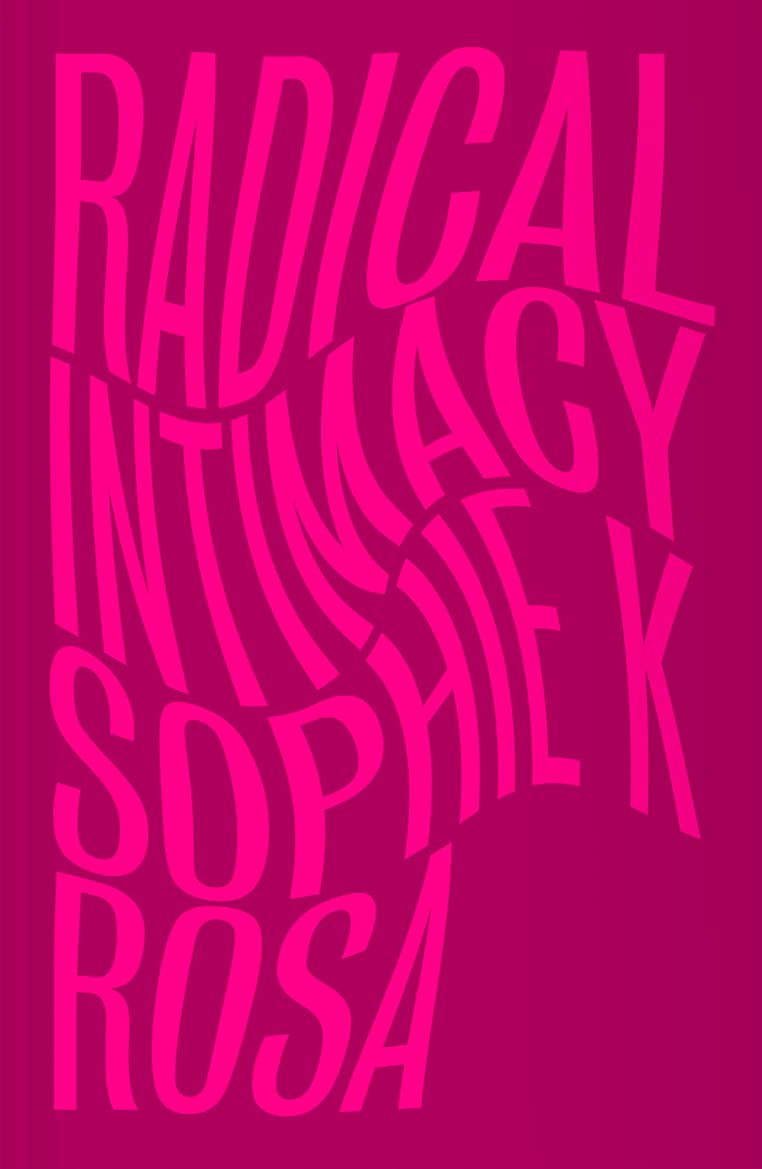
Radical Intimacy by Sophie K. Rosa
This particular book was my dedicated Christmas break read. I bought it early December, and held onto it until I knew I’d have a week off with nothing to do but read. Of course, that didn’t quite go to plan as with the festive period came an endless hangover that made it impossible for my brain to make sense of anything other than what to eat next.
How I would describe it is an up-to-date, and arguably more digestible, version of Fisher’s Capitalist Realism. Interrogating the capitalist system in which we live, and highlighting the ways in which its structure trickles down into the most intimate aspects of our lives. Punchy and deeply passionate, Rosa calls upon us to use the most radical aspects of our imagination to come to alternative modes of living and existing through topics of housing, family, friendships, sex, love, ageing, death and more.
A powerful and transformative read that provides a glimmer of hope for how we might find a truly joyful existence within a callous society.
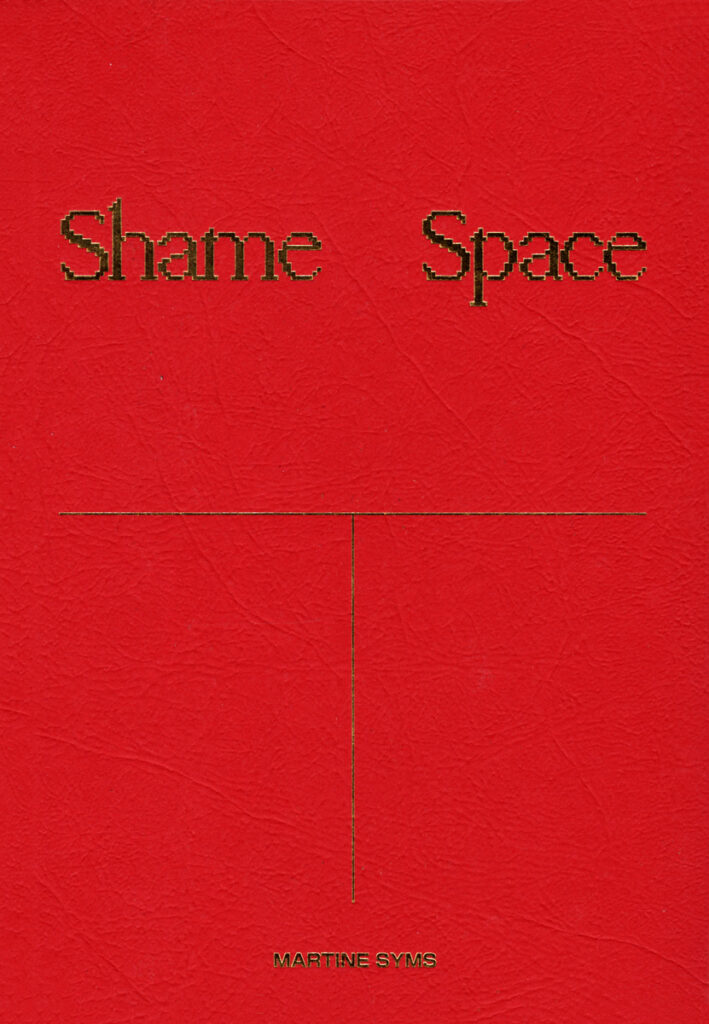
Shame Space by Martine Syms
I first came across this book upon a visit to a Martine Syms exhibition at Sadie Coles, London. With its red cover and gold lettering, it beckoned me to open it and read its insides. I flicked through and caught glimpses of phrases that amused me while also making me feel incredibly understood in the most shameful (hence the title) of ways – I simply had to have it.
Exploring the intersection between narrative and identity, Shame Space is an artist book that brings together a collection of journal writings by Syms from the period of 2015 – 2017 in an attempt to capture her shadow self. In doing so, she presents the parts of herself (that most of us have too) deemed unacceptable – the rage, the selfishness, the laziness, the hatred. Placed alongside image stills from the project Ugly Plymouths (2020), her entries are gathered into fifteen chapters that collectively present a narrative that will continue beyond the pages themselves.
As I stood there holding the book in my hands, utterly absorbed by the words it contained, I was informed by the lady at the gallery that this was only a display copy and I would, as she put it, have a hard time getting a hold of it since it’s sold out everywhere. Sounded like a challenge to me. Within five minutes of leaving the gallery, I had found it on Internet and a second hand copy (why anyone would want to get rid of this book alludes me, but I’m very glad they did) would arrive at my door within 2 weeks.