Photography by Maximillian Semlinger, 2023.
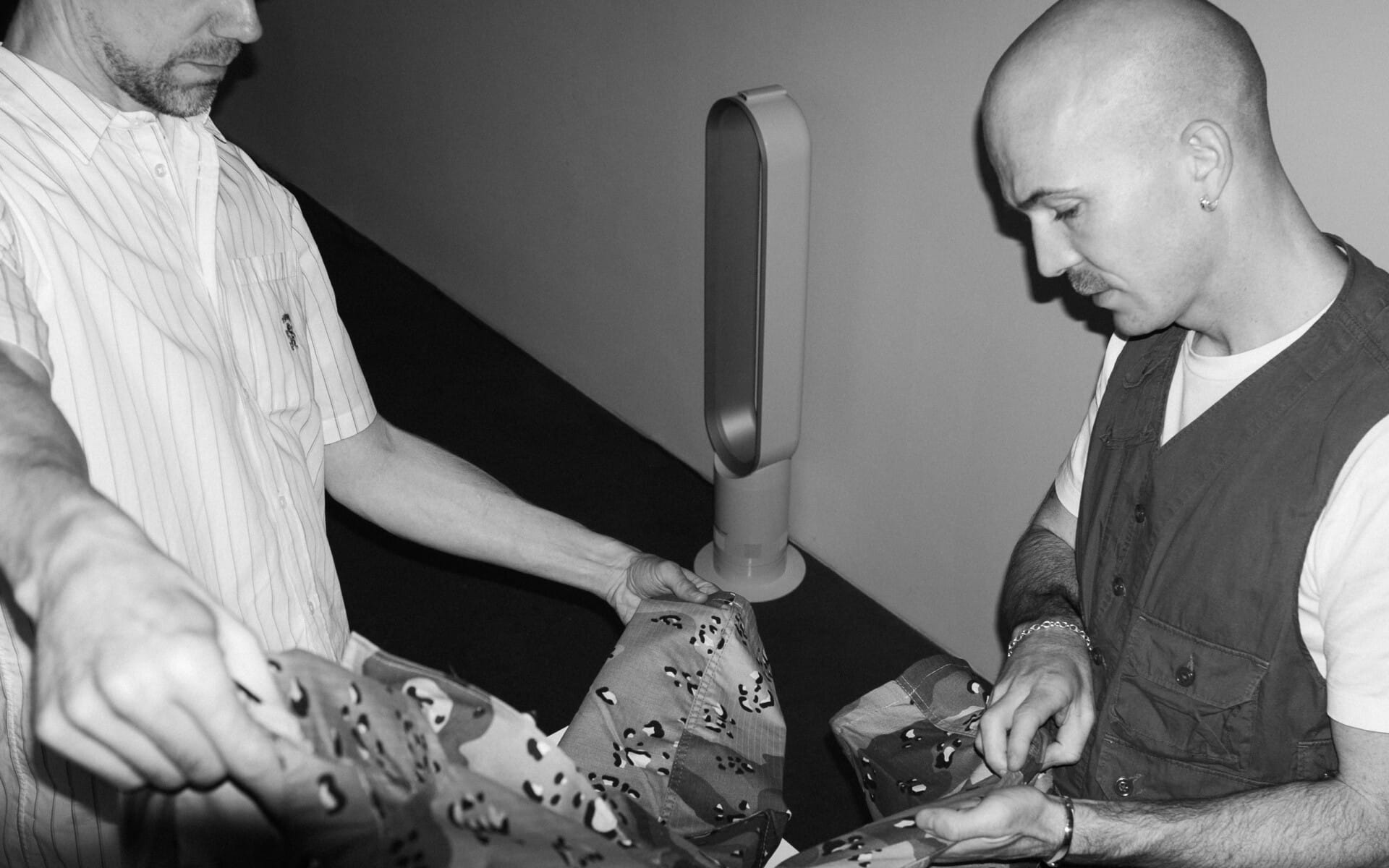
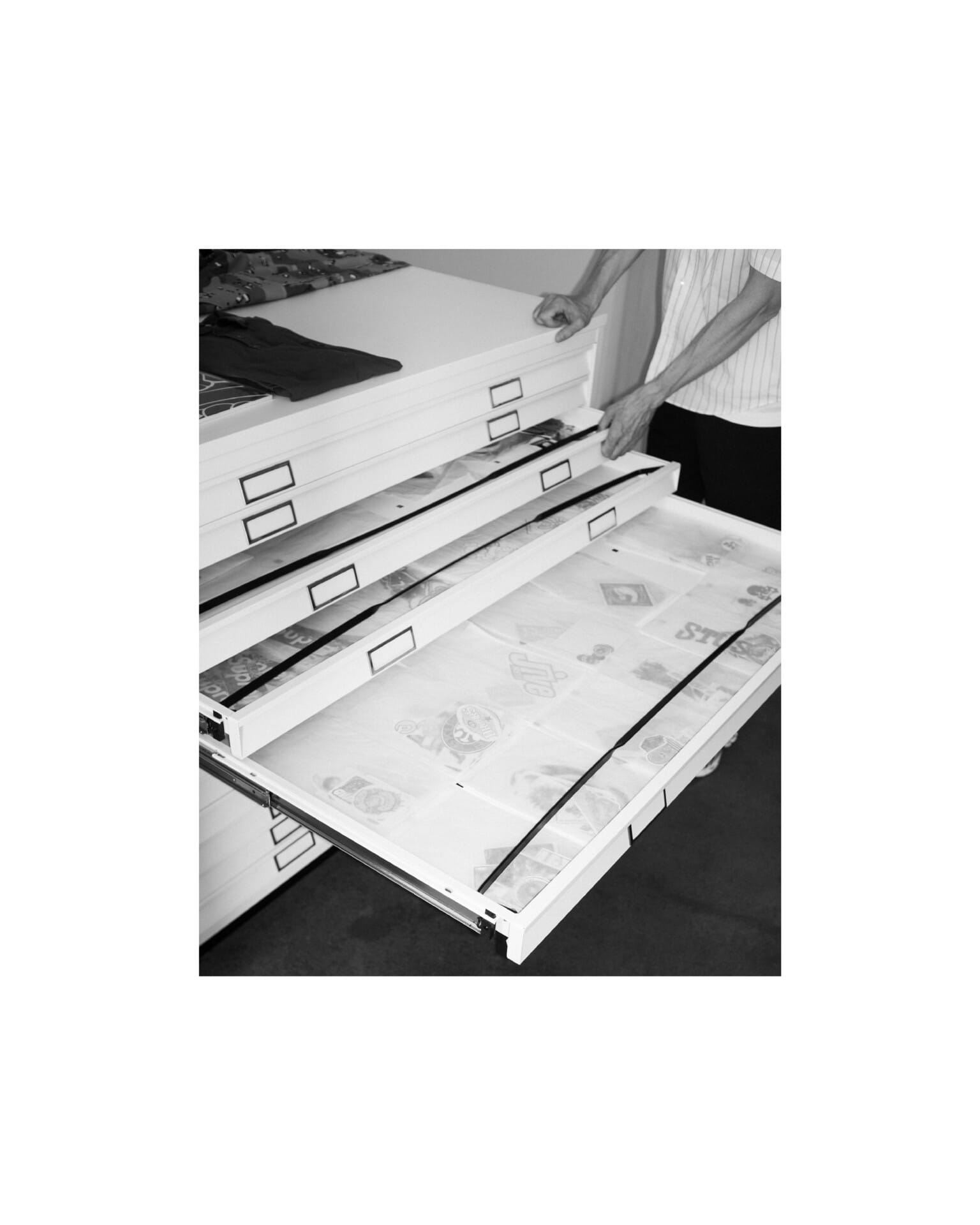
The act of collecting makes you either a hoarder or an archivist, divided by the fine line between over-consumerism and actually storing history. Jörg Haas, founder of the OG fashion blog and now agency Beinghunted., began to store everything in his parent’s basement early on, unaware that he was curating an empire of treasures. Visiting his office felt like delving into his lifeline, with each piece narrating a segment of his past, all compressed into piles of magazines, stickers and a full rag of clothes. It all created a museum-like atmosphere where meaningful artifacts are being preserved from oblivion.
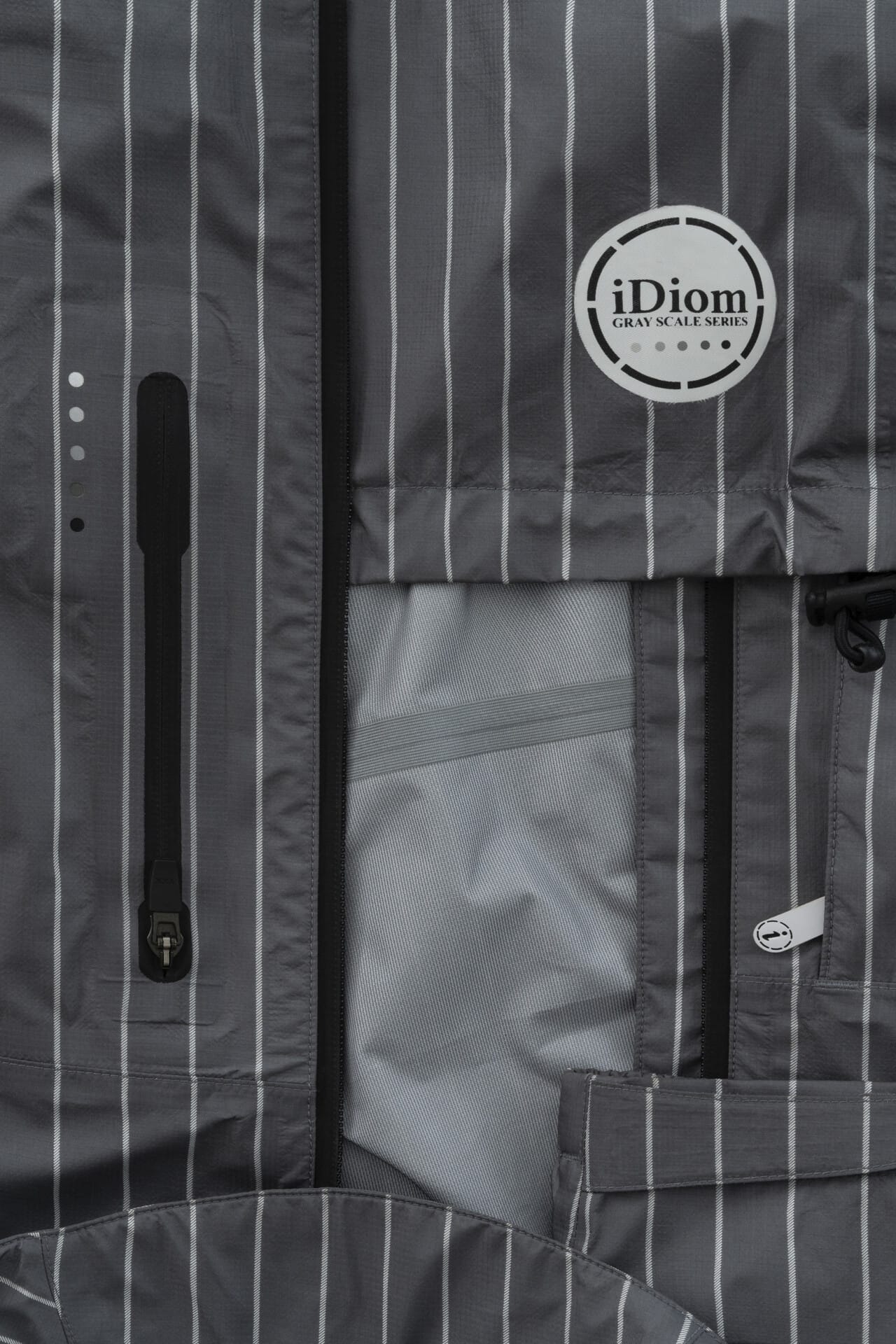
Together with Adam Barnard from Otto Resource, this wealth of knowledge has been made accessible through creating a platform for exploration and understanding. Their platform offers over 100 in-depth studies on fashion products from the last 50 years, with technical insights, socio-cultural analysis, and modern application strategies. With a fast-moving fashion industry, the digital archive allows us to look back to the roots and offer a base we can learn from as they provide innovative design solutions through research, consultation, and a focus on reapplying historical learnings.
SLEEK talked to Jörg Haas and Adam Barnard about the process of archiving, its emotional value and how the knowledge of the past can bring new possibilities to the fashion scene.

Photography by Phillip Koll, 2023.
SLEEK: How did the collaboration between Beinghunted. and Otto Resource come to life?
Adam Barnard: Our collaboration “began” in 2015 when I was working as an editor for HYPEBEAST. I was sent to interview graffiti legend Futura 2000 and ACRONYM founder Errolson Hugh during a celebratory event at the Beinghunted. space.
It was here that I first met Jörg, and while he is an incredibly humble and easygoing person, the meeting had a profound impact on me. I was effectively standing in the presence of a foundational component of Berlin’s — and probably even Europe’s — streetwear circuit. Over the years, we both realized we spoke the same kind of language, shared the same passions and interests, and had a deep-rooted respect for product.
Berlin’s fashion events became our meeting spots, where we discussed the value of a physical archive and what it could mean to preserve these items. Once the new Otto Resource website launched, partnering with Jörg felt like the natural next step.
Jörg Haas: As Adam mentioned, we met in 2015 when I had just opened my office/gallery at Spittelmarkt. This event, celebrating Futura’s 60th birthday, was my first as “Beinghunted.” after a decade in retail. Hosting Futura and Errolson, both major influences on my journey, was an honor. I first encountered Futura in the book “Subway Art” in 1985, and I met Errolson in 2003 in Munich, discovering we shared similar interests.
In hindsight, this event was a physical activation of Beinghunted.’s archive. I had featured Futura Laboratories and ACRONYM products on the old beinghunted.com, and even sold ACRONYM in my online store starting in 2004. Adam and I began our conversation just as the plan to open the archive was gaining momentum. This event was the trigger that helped align everything.


Photography by Maximillian Semlinger, 2023.
S: Since Beinghunted. started out in 2001 covering fashion movements, does the archive hold anything you have written about as a newsfeed back then? Do you have a personal connection to any of the archive pieces?
JH: That’s a clear YES! When I started, the pace wasn’t as fast as it is today, and the newsfeed was personal. Lifestyle marketing was just emerging, but Beinghunted. wasn’t about campaigns—it was about my personal taste, and later, my partner Gail’s, who joined in 2003 from our New York HQ. We ran Beinghunted. like a zine, posting only what we liked—things I often wanted myself. Sometimes, writing about items felt therapeutic, like owning them without actually having them. Highlight pieces from brands like visvim, NEIGHBORHOOD, Nike, adidas, and KAWS eventually became part of what I now call the “active” archive.
This archive didn’t begin with Beinghunted. in 2001. I didn’t actively collect for what’s now part of the Otto Resource project; I simply didn’t throw things away. I kept them at my parents’ place, thinking it might be cool to revisit them in a few years—not out of nostalgia, but as part of an actual archiving process. I suppose there’s also a “collector’s gene” in my family.
Photography by Phillip Koll, 2023.
S: Archive fashion stands for a culture of appreciation in form of collecting and treasuring the past. It seems contrasting to how the general fashion world works nowadays, what impulses and meaning does archiving fashion bring to the present?
AB: I think archiving today is important for many of the same reasons that museums and libraries were and still are. In a recent interview, I compared Otto Resource to a Wunderkammer (English: Cabinet of curiosities), and I feel this analogy lends itself well to the question above. Wunderkammer were collections of objects, with the classic cabinets of curiosities emerging in the sixteenth century. In addition to the most famous and best documented cabinets of rulers and aristocrats, members of the merchant class and early practitioners of science in Europe formed collections that were the precursors to museums.
I find it fascinating how collecting — born solely from curiosity and passion — went on to be the precursor of a concept as prolific as the “museum”. And I feel this illustrates what archiving could bring to the present. Not only does it stand to drive genuine interest around the acquisition of knowledge, but it provides evidence for our theories about the world of fashion and encourages us to be more democratic.
JH: The term “archive” today, especially in the context of products and fashion, often carries a nostalgic connotation. Having experienced the innovation of the 1990s, I feel that modern design relies too heavily on looking back, driven by the marketing of sportswear giants like Nike and adidas, who focus on celebrating past icons rather than creating new ones. It is understandable that this leads straight into a cul-de-sac.
The past, accessible through archives or even better, conversations, offers immense energy and should inspire us. When I look at Otto Resource and the items we’ve chosen, I see that energy. It’s not just in the pieces themselves, but in the stories behind them. There are the anecdotes how far (sometimes literally) one had to go at the time to find certain brands – many trips to London for one GOODENOUGH T-Shirt, leaving English messages on Japanese bulletin boards to get something/anything from A Bathing Ape, emailing everyone I knew with links to Supreme to get the Dunk Lows – the conversations with store staff, designers, and often the memories that are connected to certain events.
Many archives focus solely on the past, but the Beinghunted. (Active) Archive continues to evolve, adding new elements each year. It’s becoming harder to stay engaged with so much being recycled and driven by marketing but I think the archive reflects my age and connection to the cultures closest to me, even as youth culture becomes increasingly coded and harder to relate to.
Photography by Maximillian Semlinger, 2023.
S: The subject of sustainability can’t exist in fashion because a production of anything is not sustainable in the first place. Otto Resource also has a research facility and now you have collaborated on a digital cultural archive. Are these the only ways to push for more sustainability in fashion?
AB: I’m reluctant to tie Otto Resource’s name to ideas of sustainability, because, as you so rightfully said, if something — fashion-related in this case — is produced, it is unsustainable by definition. And as a research facility, we consult our client base on the production of products. Sure, we always push for the use of more sustainable techniques, materials, dyes, and finishes, but we are as much a part of the problem as anyone else.
I do however think what Jörg and I achieved was important for communicating the importance of sharing. I think more than calling out fashion overkill, consumerism, or even overproduction, we should be calling out “gatekeeping”. Gatekeeping cripples fashion… all it does is create a knowledge monopoly and causes us to forget the fact that we are all in this together. In my opinion, sustainability begins with access to the right information, so that young brands, designers, and even factories can take the right first steps.
I’ve also come to realize that hoarding information only ever breeds complacency. I see so many brands falling back on the achievements of their past that they never actually look forward. Unless you own proprietary techniques, sharing your information does not necessarily leave you susceptible. This is of course not to encourage or endorse copycat culture, but more to say that if someone wants to pick up the ball of where your brand left off, let them do so respectfully and with the relevant knowledge. Nobody likes a botched job.
S: In the past years, there has been an archive trend which seems like an oxymoron. Can archives bring a sense of reconnecting to the heritage of products to a consumer or is it more so feeding into wanting to consume even more?
AB: Archives could theoretically drive both consumerism and reflection, but I don’t think they fuel consumption as much as platforms like Instagram. The one major difference being that social media reduces engagement time, which could be said to accelerate consumption, whereas the archive should urge a closer, more sustained look at something. To quote Cav Empt’s Toby Feltwell, “Technology works in an insidious way to make us forget it hasn’t always been there and it quickly becomes invisible, normal, boring. Looking at old technology can help bring the true nature of the present into focus.”
The products stored in real archives are also not there to be consumed in the traditional sense. Like the objects of a Wunderkammer, they are more so a window into the cultural, stylistic, and even political tendencies of a bygone generation. Perhaps I’m too utopian in my vision, but going to a museum wouldn’t necessarily drive me to want to purchase an original Henry Taylor painting or a Jean Arp sculpture. It also wouldn’t motivate me to want to buy knock-offs just because they’re available. It would (and does) however drive me to consume the information surrounding them.
JH: Some archives today have a commercial aspect, almost functioning as shops, and their vast collections might tempt consumers to want more—more from a brand or a specific era. However, high-end pieces often carry price tags close to, or even higher than, their original cost. When you strip away the marketing, the true value of an item becomes clear. In the 1990s, if you liked what Stüssy stood for, a few T-shirts and a cap were enough; it wasn’t about quantity. I recall visiting four stores in Munich that carried Stüssy, browsing through tightly packed racks, and only buying if I found a design I truly liked.
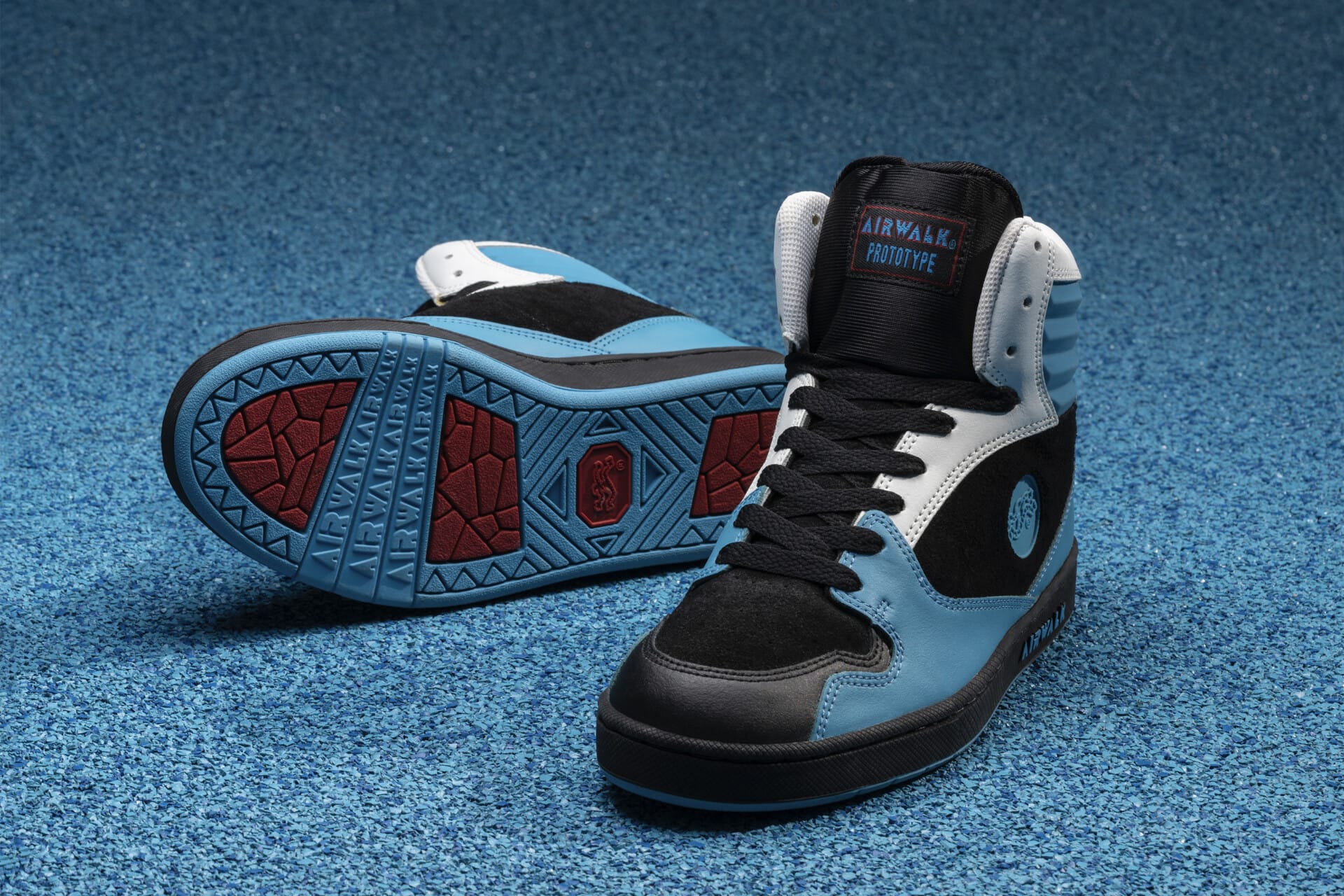
The items in the Beinghunted. archive represent different stylistic periods. While you can now buy some of these on platforms like Grailed or eBay, I believe people are still interested in the meaning behind things. I can explain exactly what Anarchic Adjustment meant to me, but why would someone in their mid-20s buy an Anarchic Adjustment longsleeve for $600 if they didn’t understand its significance?
Photography by Phillip Koll, 2023.
S: How does innovation look like in a world that seems to have seen everything already? What can we still integrate in today’s act of making fashion and what can we learn from what was created in the past?
AB: Back in the days, the industry’s innovative baseline was not as developed as it is today. Brands and designers were forced to try out new techniques and approaches for the simple fact that they had not been tried before; at least, not in the context of a commercially-viable fashion product. And to do so, these forerunners needed to first run the gauntlet of due diligence and failed attempts.
To me, innovation today cannot exist without the acquisition of knowledge. You have to know where it’s all coming from to be able to offer a respectful interpretation! Otherwise, whatever you do will only ever be received as a poor attempt to mimic the past. As I mentioned earlier, “Nobody likes a botched job.”
JH: Innovation will come from the processes—deciding if an idea is worth turning into a product. This involves market analysis, sustainability considerations, distribution, product lifecycle, and recycling. Questions like, “Is there demand?” and “Does it have lasting relevance?” are key.
The most innovative brands will lead in these areas. Luxury brands have the resources but are often focused on major marketing moments. Sportswear brands act similarly. Producing something sustainably doesn’t make it sustainable if it’s unwanted or unnecessary. It’s still wasteful.

Photography by Phillip Koll, 2023.
S: Having a cultural digital archive, you are including products that hold meaning nowadays. But in which context did they exist when they were first released? Did they hold the same cultural value as we project onto them today?
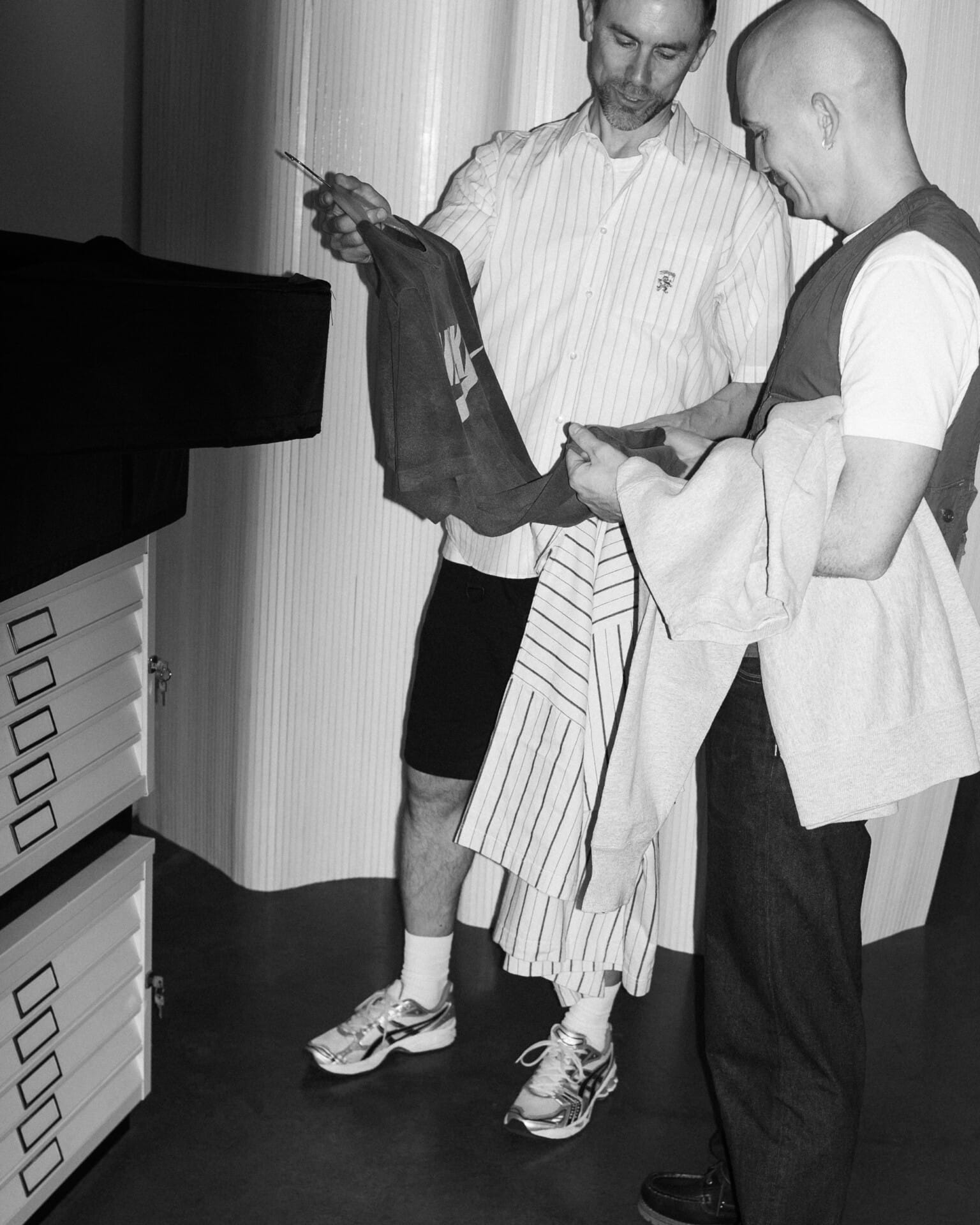
JH: Adam and I have discussed this a lot. Lifestyle marketing began in the late 1990s, gained momentum in the 2000s—with Beinghunted. playing a key role—and now permeates all of youth culture. It’s becoming harder for youth culture to develop freely, as commercial interests dominate. The products in the Beinghunted. Archive, selected for Otto Resource, have an innocent backstory. Back then, if you skated, you got stickers at skateshops, or sent a dollar to a brand for a pack of decals. You bought a Stüssy T-shirt because you saw it on MTV or a skater you admired. I saved up for a Vivienne Westwood shirt, and the experience was so meaningful that I kept the receipt and bag.
In those days, you lived in the moment—nothing was marketed to you. You didn’t queue for a Supreme hoodie; you discovered the store on Lafayette and wanted something to bring home. You bought Air Max 97s because they looked cool, not because they were iconic.
To put it simply: brands made stuff, some of it cool enough to be embraced by subcultures. We bought things because we were part of a scene, not for their “cultural value.” We never called it “sneaker culture,” a term I still dislike. Buying sneakers was just that—no culture to it.
In retrospect, products have become artifacts of certain youth cultural moments, but that’s a present-day perspective. I wish editors would stop rewriting history using today’s vocabulary. Each item carries personal memories, and while some gained cultural significance over time, it was the personal value that mattered first.