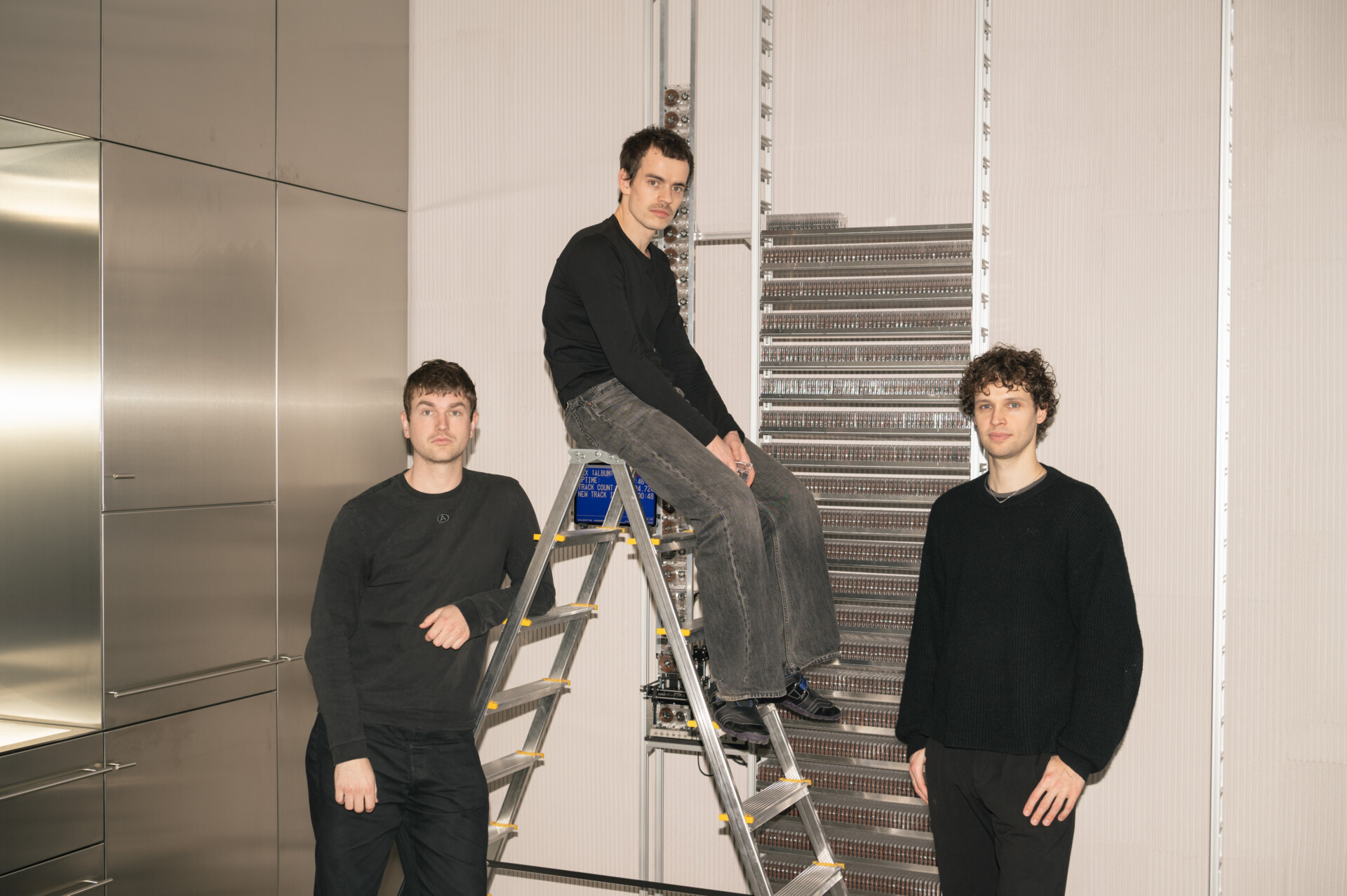
Photography by Sophie Nawova Meyer.
Every thirty minutes, a cassette falls to the floor. A soft clatter, followed by a moment of confusion, then laughter. Another half hour has passed. In Killing A Friend’s new studio, time is a precocious entity. It creeps by slowly when you are engrossed in a conversation about artistic identity and collective creativity, only to suddenly charge ahead the moment you realise that the never-ending album max by Valentin Hansen has filled yet another cassette tape. The album – if that is even the right word for this work – has been swelling with a continuous flow of new songs since early 2025, using machine learning and AI-powered production tools. Its incessant growth questions how technology shapes the future of music and what happens when art is driven by infinite efficiency.
The studio, designed by Studio Ludwig Jenssen, is situated in an architectural relic of post-war modernism – somewhere between the Siegessäule and Tiergarten, in the heart of Berlin’s Hansaviertel. With its iconic residential buildings, shady avenues, and hidden courtyards, the neighbourhood is both a futuristic utopia and a West Berlin time capsule. Here, nestled between brutalist concrete and squirrel nests, Killing A Friend – a nod to Hansen’s eponymous song – has found a space that reflects their philosophy: structured, yet open to everything.
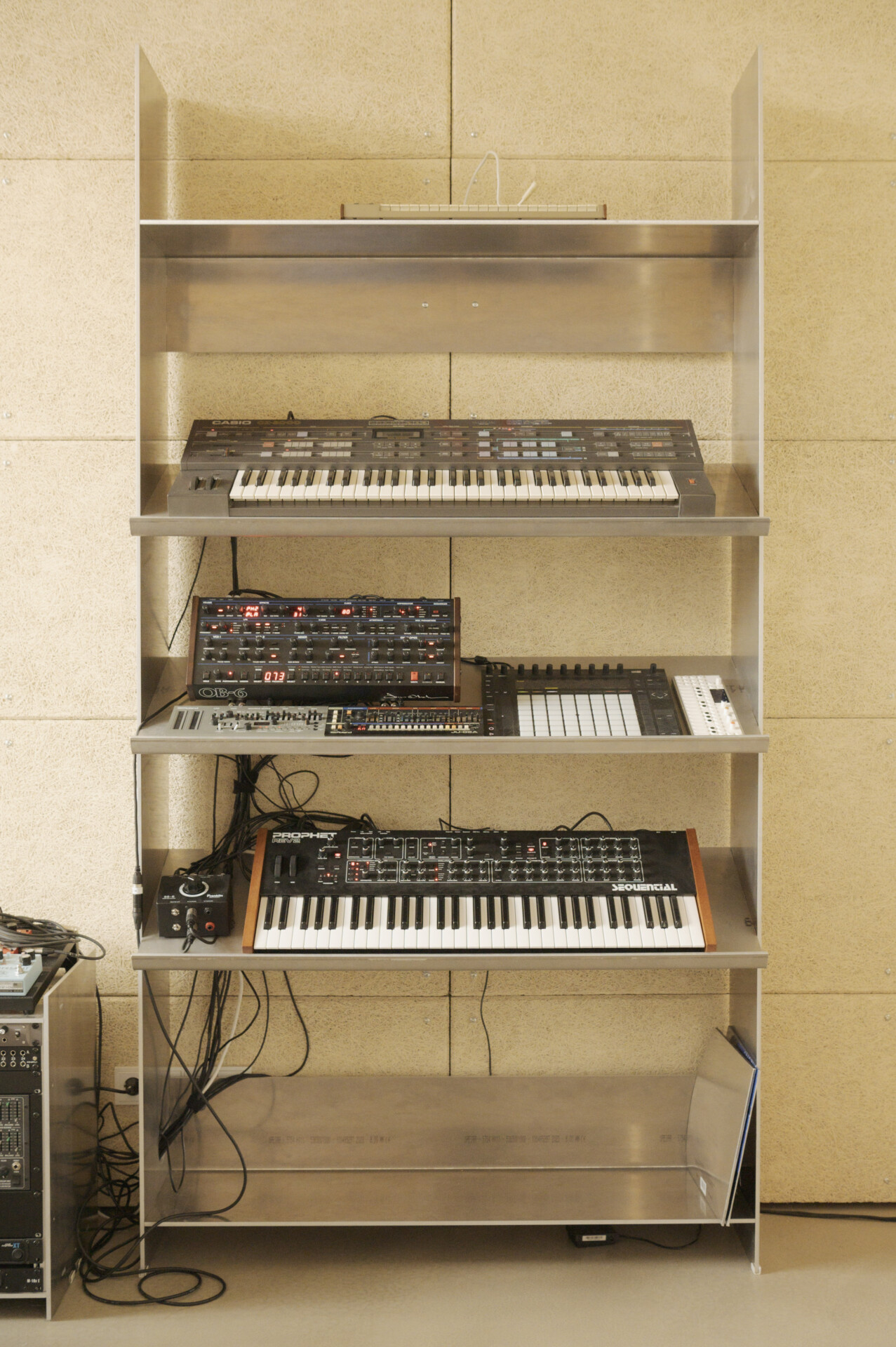
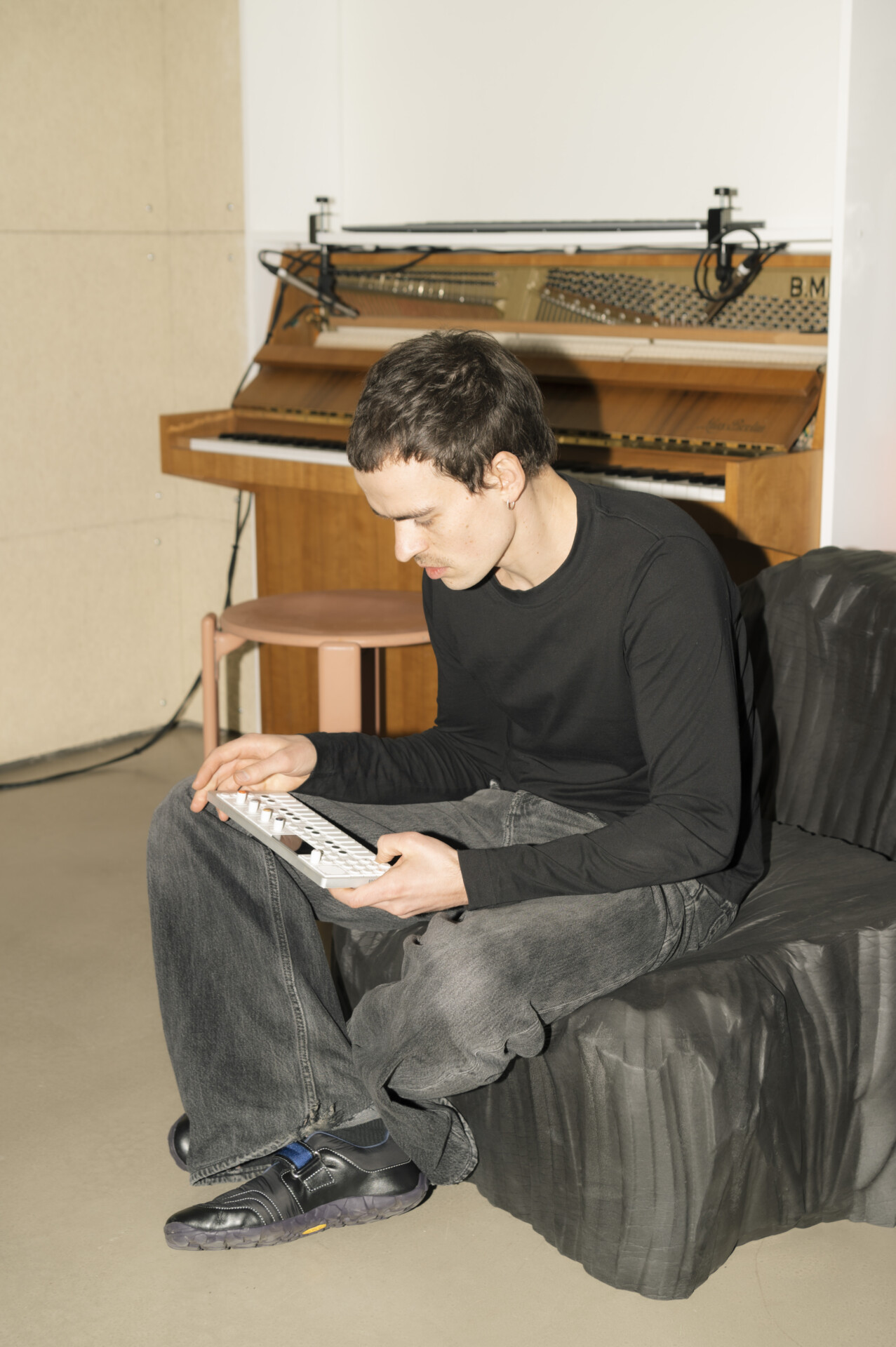
Photography by Sophie Nawova Meyer.

Photography by Sophie Nawova Meyer.
Killing A Friend is Florian Deitermann, Ben Esser, and Valentin Hansen. A trio that came together almost by chance. Florian Deitermann is a producer with a design background, Ben Esser connected through SoundCloud and music collaborations in Berlin’s scene, and Valentin Hansen started as a music video director before becoming a musician himself. ‘I used to produce a lot for others,’ Esser recalls. ‘At some point, a friend said to me, “Why don’t you just start your own label?” I liked the idea, but doing it alone? That seemed too boring. So, I asked Flo and Valentin. They didn’t even know each other, but in my head, we were already a team.’ Today, they function as a collective, which feels almost nostalgic in an era of hyper-individualised careers. ‘We’re still independent,’ says Hansen. ‘But a collective opens doors to possibilities you wouldn’t have alone. Ideas don’t get stuck in one individual head – they keep evolving between us.’ Deitermann adds, ‘You’re braver together. There’s power in saying things out loud instead of just weighing them up in your mind.’
The shared studio, which they set up a year ago, has strengthened their group dynamic and made collaboration much easier. ‘The space was a complete construction site before,’ Hansen remembers. ‘We didn’t want a classic studio look, but something that reflects how we work: flexible, adaptable, yet with a clear structure.’ The studio is flooded with light, with high ceilings, large windows, and a massive royal blue dining-and-work table at its centre. ‘In the summer, it feels like a conservatory,’ says Deitermann. There are no unnecessary distractions, but no sterile coldness either – despite the chrome kitchen unit. ‘A friend once said our studio is like Killing A Friend itself: a framework where everything has its place,’ Hansen explains.
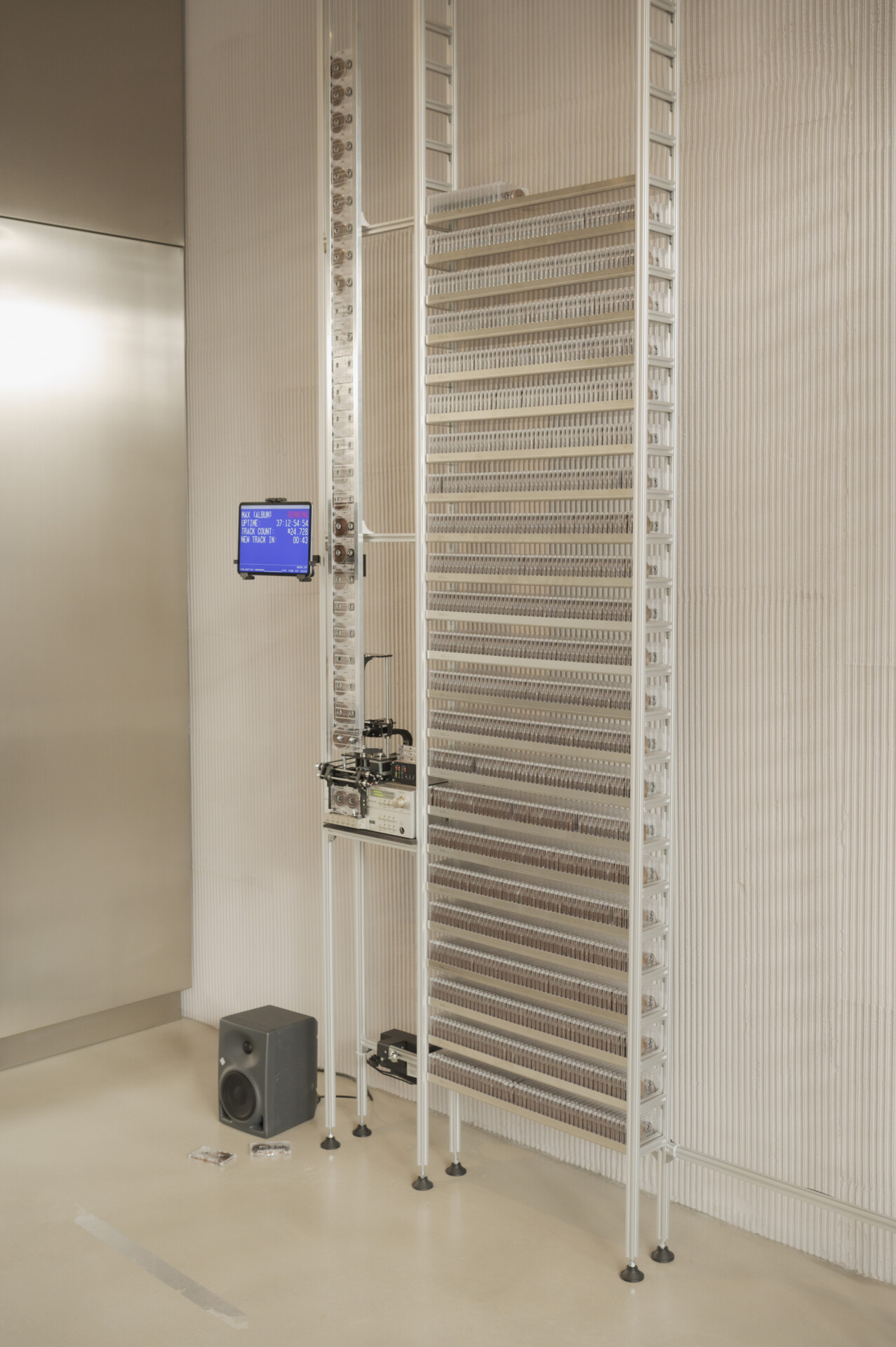
Photography by Sophie Nawova Meyer.
Then there is the modified cassette deck, recording and archiving the infinite album max. The album defies traditional release concepts with its ever-evolving nature. The trio has worked on it for a year and a half – and they could keep working on it forever. It is an organic construct without a definitive endpoint. ‘It’s the opposite of streaming’s fast-paced culture,’ Hansen explains. ‘We let things mature, come back months later, and see if they still hold up.’ This is also their approach to their visual creations. ‘We let ideas guide us without defining everything clearly immediately,’ says Esser. Hansen adds, ‘I come from the fast-paced world of videos, but here we’ve learned to question things. Rather than chasing trends, we want to seek timelessness.’ For them, it is about prioritising the quality and depth of their work. ‘We thought about making a weather app,’ Hansen jokes, laughing. ‘It would just tell you what the weather’s like, so you don’t have to look out the window. Maybe paired with a collab that suggests the perfect outfit for the current weather.’ The collective has no concrete plans for the future, but that is precisely what makes Killing A Friend so exciting. ‘Often, the next project emerges from the current one,’ says Ben Esser. ‘You can sit and wait for an idea – or just keep working. Eventually, the moment of inspiration comes.’
And so, time keeps passing by in this studio, between structured architecture and inventive art, in its own unique way: every half-hour, a new cassette falls to the floor, the minutes slip by, but the creativity never ends.
As featured in SLEEK 84 – CHANGE. Available in print and digital here.