Photography by Erik Schereder and Johannes Rapprich.
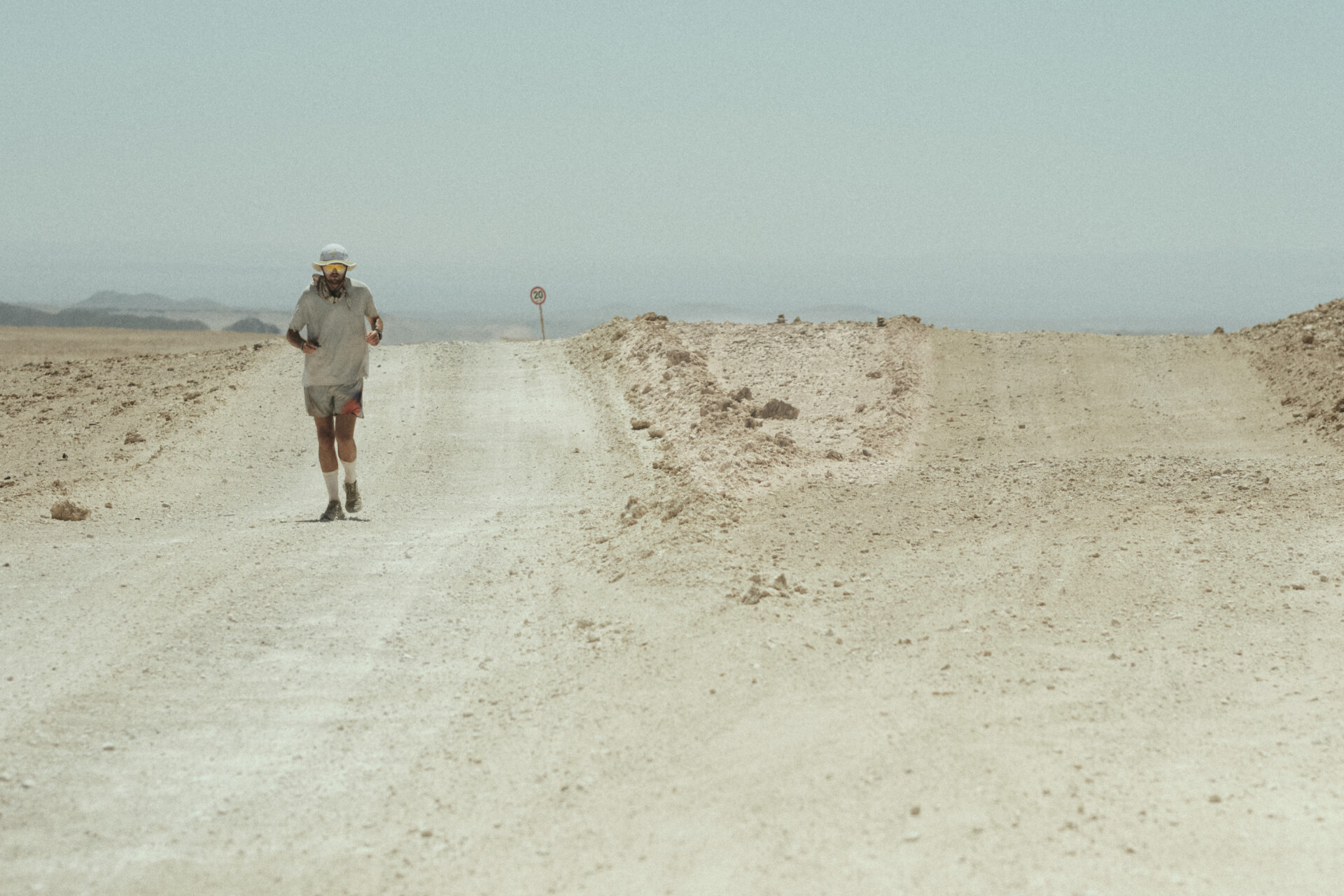
The silence of the Atacama Desert is absolute. No birds, no wind, just the rhythmic sound of running shoes hit- ting hard, salty ground. Nicki Lange faces 500 kilometres – four days and nights across one of the most hostile landscapes on Earth. Here, among the expanding vastness of Chile, the ultra-marathon runner finds a form that goes beyond what most people will ever experience. “For me, immersion means following my passion whole -heartedly – something I want to dedicate 100% of my time to,” says Lange. His definition of immersion is radical: while other people pursue various hobbies, he focuses exclusively on running. “I don’t play tennis, football, or padel – running is all I do.” This clarity also extends to his professional life as an investment banker, where he places a focus on the consumer and healthcare sector, “because I say that’s what I understand.”
A Mental State
Running between 100 and 150 kilometres a week, Lange isn’t just chasing fitness – he’s seeking a mental state that borders on meditation. He describes entering the flow as “the moment when head and mind become disentangled. Where I feel my breath, hear my heart, look left and right, and perceive the nature around me”. This moment of clarity does not come from external stimulation – as a principle, Lange runs without music, often even without a heart rate monitor – “The real freedom lies in the flow”. The intensity becomes particularly clear when he talks about his extreme experiences. On his first attempt to complete the Ultra Trail du Mont Blanc – 170 kilometres through the Alps – he experienced something after about 100 kilometres that fundamentally changed his perception of reality: “Trees turned into people. Stones became skulls. I saw hotels on the roadside, and when I walked toward their doors – the door suddenly vanished.”
Between Hallucination and Transcendence
These borderline experiences, which Lange describes as “all kinds of madness,” are more than just physical exhaustion. They mark a transition to a state in which the usual categories of self and world become blurred. “It’s like there’s a version of me hovering above, watching everything Nicki is doing,” he reflects on these moments beyond the normal limits of consciousness. Paradoxically, it is precisely these apparent defeats on Mont Blanc that led to his most profound transformation. “If I had completed those two races, we wouldn’t be talking today,” he explains. The hallucinations and failure opened the door to new possibilities and ultimately to an invitation to participate in The Speed Project from Los Angeles to Las Vegas – 550 kilometres, which he completed as a solo runner.
Photography by Erik Schereder and Johannes Rapprich.
The Philosophy of Pain
A long relationship with pain reveals another dimension of his immersive practice. Inspired by triathlete Jan Frodeno, he has learned to welcome pain not as an enemy, but as a companion. “Pain is part of the journey,” he says. But he puts it in perspective: “There are people who suffer far more than I do. Compared to their pain, mine is nothing.” This attitude comes from a fundamental gratitude towards his body. Unlike “someone who is in a wheelchair and perhaps would do anything to be able to walk at all,” he has this ability, and so his own pain becomes secondary. A perspective that gives his extreme endeavors a spiritual dimension that extends far beyond sport.
Rituals and Manifestation
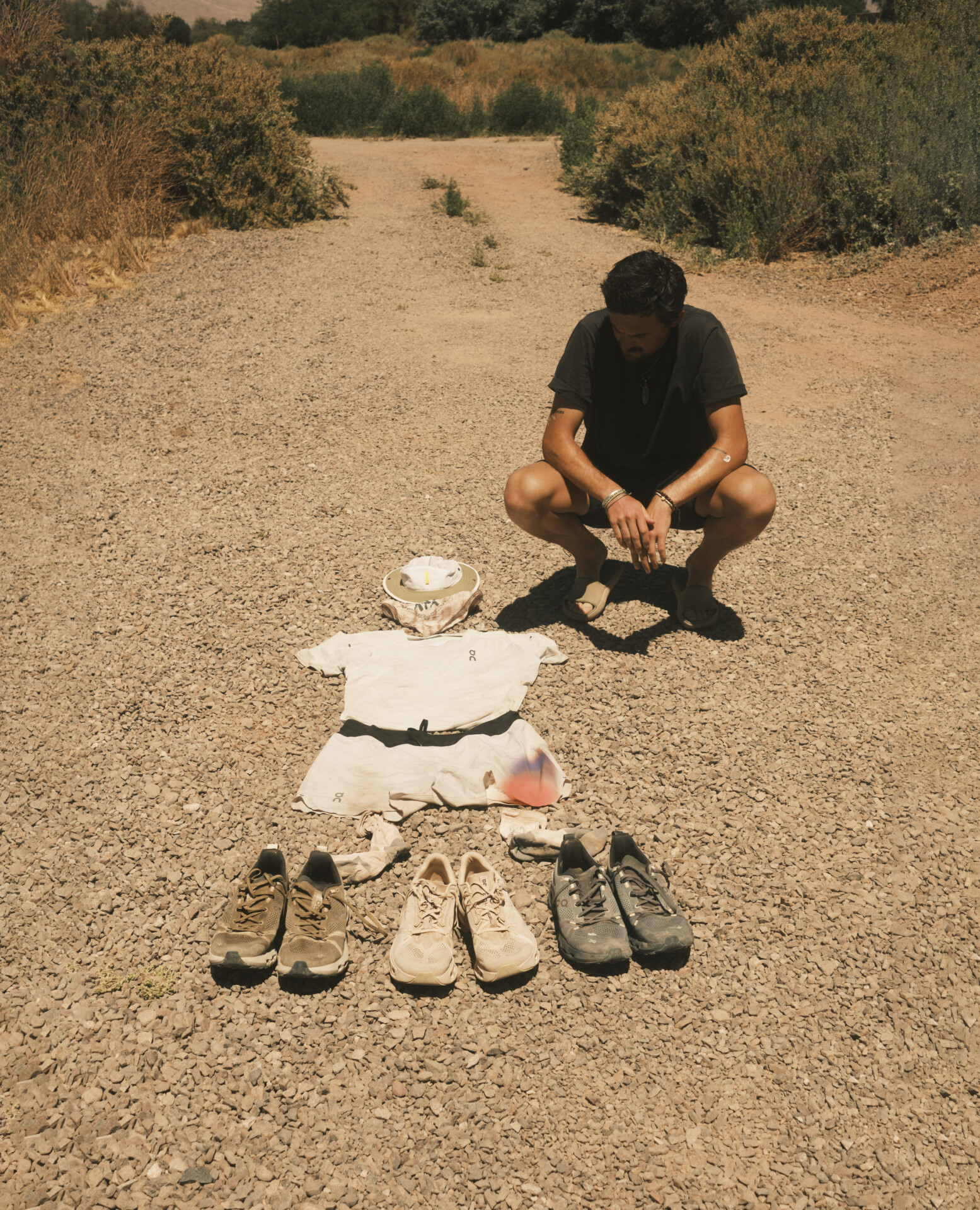
The lengthy preparation for each run resembles a spiritual ritual. He describes himself as “very religious and superstitious” – he manifests his goals through prayer and mental visualisation. “When I’m at the starting line, I already know that I’m at the finish line,” he explains his technique of anticipation. This mental practice, compared to a golfer who knows that the ball is already in the hole, creates a foundation for the radical dedication that extreme endurance performances require. His superstition also manifests itself in specific rituals: the first step must always be done with the left foot – “because that’s the side of the heart, but also my father’s lucky side.” Four is his magic number: four times making the sign of the cross, taking four sips, eating the bar in four bites. These seemingly irrational practices give him “a certain comfort” and structure his beliefs in measurable, controllable elements.
The Art of Letting Go
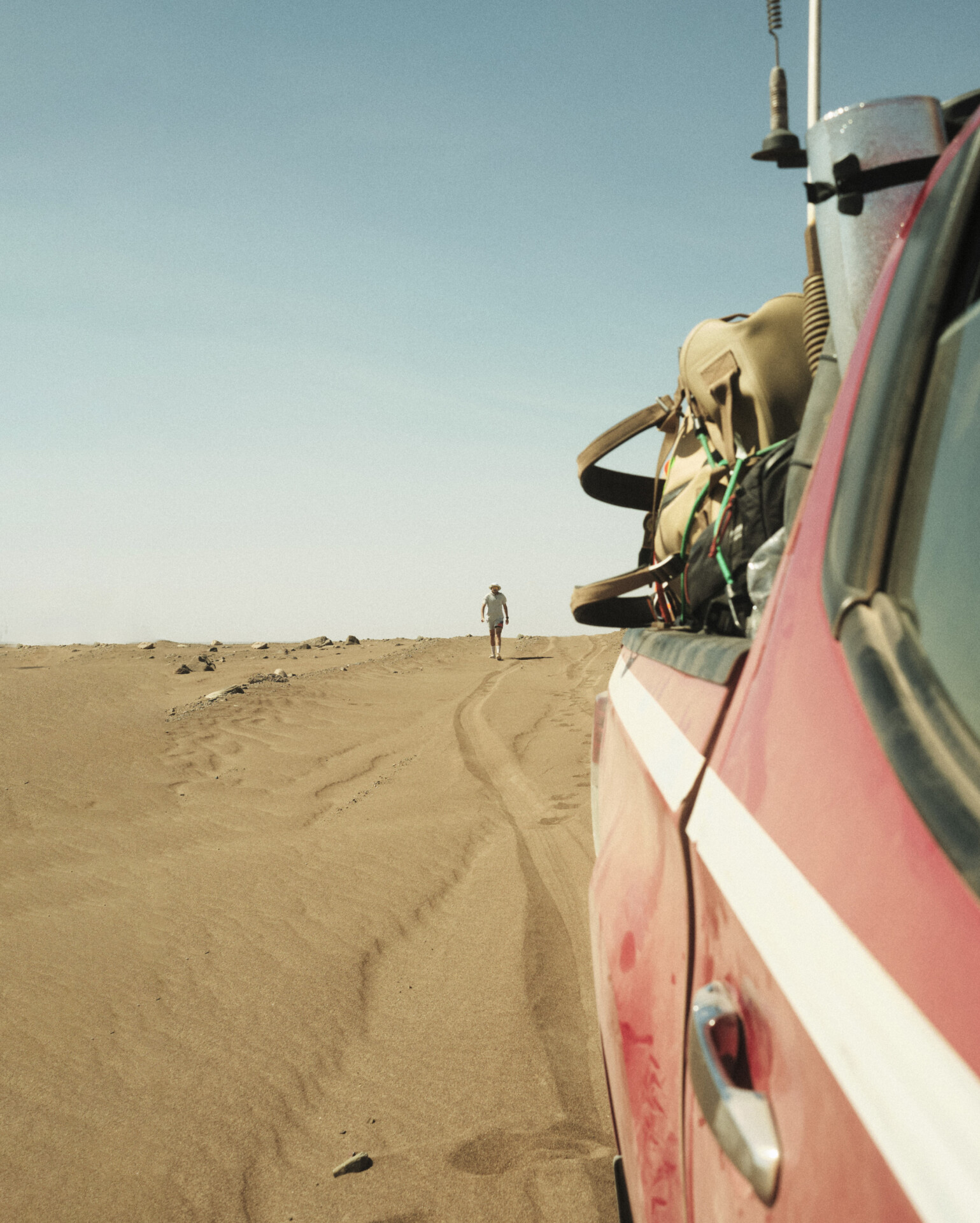
In the most extreme moments – alone in the Atacama Desert, separated from his team, surrounded by life-threatening solitude – Lange finds a form of devotion reminiscent of mystical experiences. “With my faith and confidence, I am very strong and I let myself be guided by it,” he says, describing these moments. “When I surrender to the universe and put something positive out there, I receive that same energy in return.” This attitude transforms potentially deadly situations into spiritual tests. When the support vehicle gets stuck in the sand and he has to navigate the desert alone, the extreme situation becomes an opportunity for radical trust in this very universe.
Photography by Erik Schereder and Johannes Rapprich.
Cosmic Connectedness
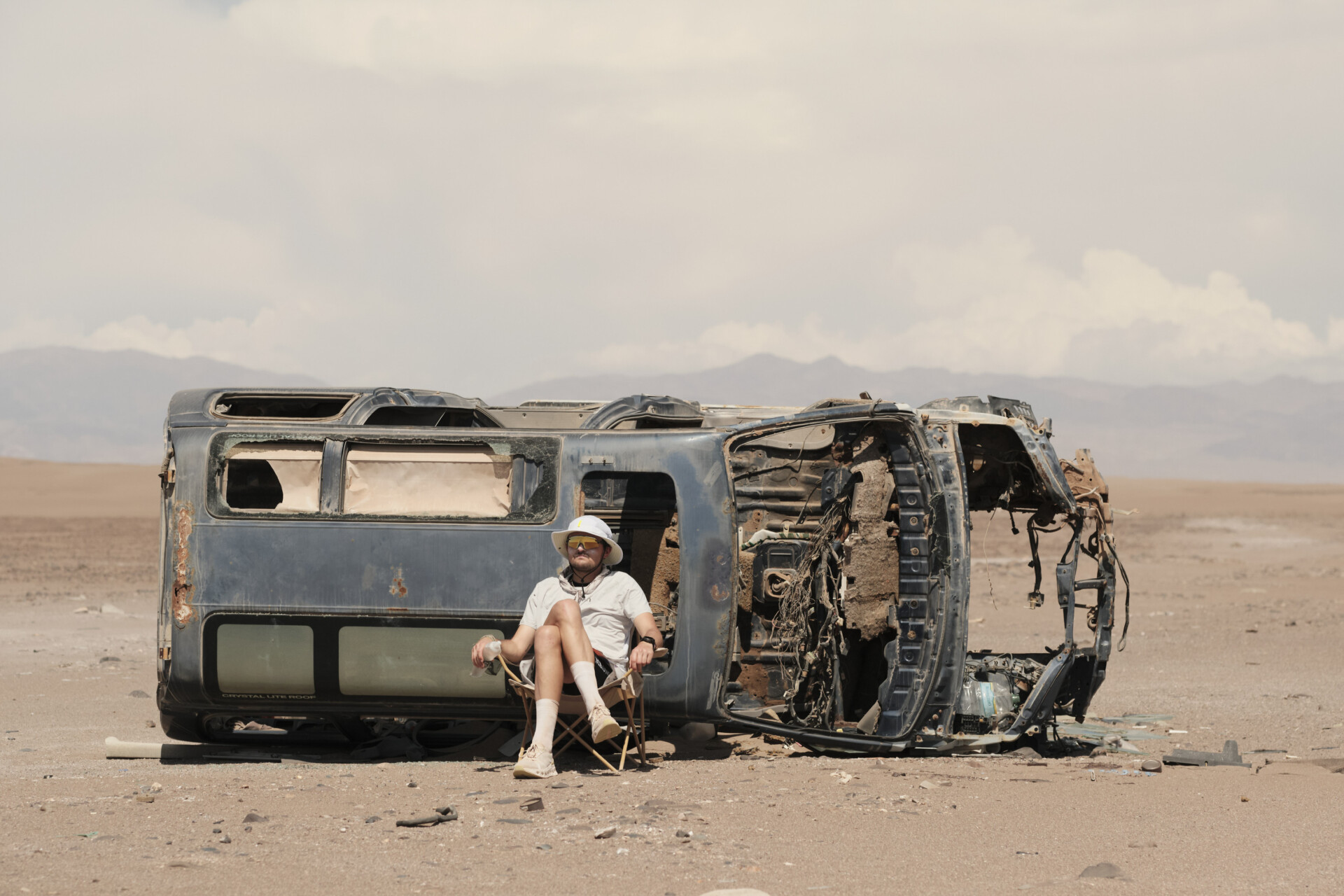
Lange experiences the most intense moments of immersion in the absolute silence of the desert nights. With the memory of “When you walk through the desert at night and look up – where there’s no stray light and you can really see the stars,” he describes moments of cosmic connectedness. In these moments, he understands himself as “a small piece of a larger whole.” The extreme clarity of the desert environment intensifies this experience: “Day and night are really day and night, warm and cold, and the environment is completely pure and real.” This immediacy of the experience of nature creates an “immersive experience” in which all culturalfilters retract and only the elemental relationship between body and environment remains.
Energy Preservation and Awareness
In these extreme conditions, Lange develops a radical form of energy preservation similar to meditative practices. “I don’t talk much – talking drains energy. Even thinking uses energy,” he explains. This reduction to the essentials transforms him into “an atom that simply runs and surrenders itself”. Every movement here becomes a conscious action: “Every step brings me one step closer to my goal.” This microfocus allows him to split monumental distances into manageable units while remaining completely in the present moment.
The Lesson of The First Step
Lange’s most important insight about immersion is surprisingly simple: “Take the first step. I believe in not thinking too much about what and how, but just doing it”. This philosophy of acting before thinking permeates all areas of his life, from meticulous route planning to spontaneous decisions to run a particular race. “You want to lose weight? Fine – just start moving. You don’t need new clothes or fancy shoes. Just go outside,” he says, illustrating his pragmatic approach. Perfection lies not in preparation, but in the willingness to take the first step despite uncertainty.
Transformation through Extreme Experiences
The extreme physical strain has changed Lange as a person: “It has given me a certain gratitude for life and for what I do,” he reflects. This gratitude, born out of direct confrontation with his own limits and the experience of absolute vulnerability, creates a new perspective on everyday challenges. The runs have given him “serenity” because “this sport has allowed me to have a certain borderline experience”. What might be perceived as stressful in everyday life loses its threatening quality in the face of memories of 100-hour runs through difficult environments. Nicki Lange’s path to immersion leads through the conscious choice of extremes. By exposing himself to situations that remove every comfort, every security, and ultimately every filter between himself and raw reality, he finds a form of presence that goes far beyond athletic performance. His experiences in the Atacama Desert, on Mont Blanc, and on the route from Los Angeles to Las Vegas are laboratories for a radical form of expanding the human consciousness. The first step, according to Lange’s central teaching, is often the most difficult – but also the only one that really counts. In a world increasingly characterised by distraction and superficial stimulation, his practice of extreme focus offers an alternative: the discovery of depth through uncompromising devotion to a single thing. Sometimes the path to transcendence leads through hell – or, in his case, through the most hostile desert on Earth.