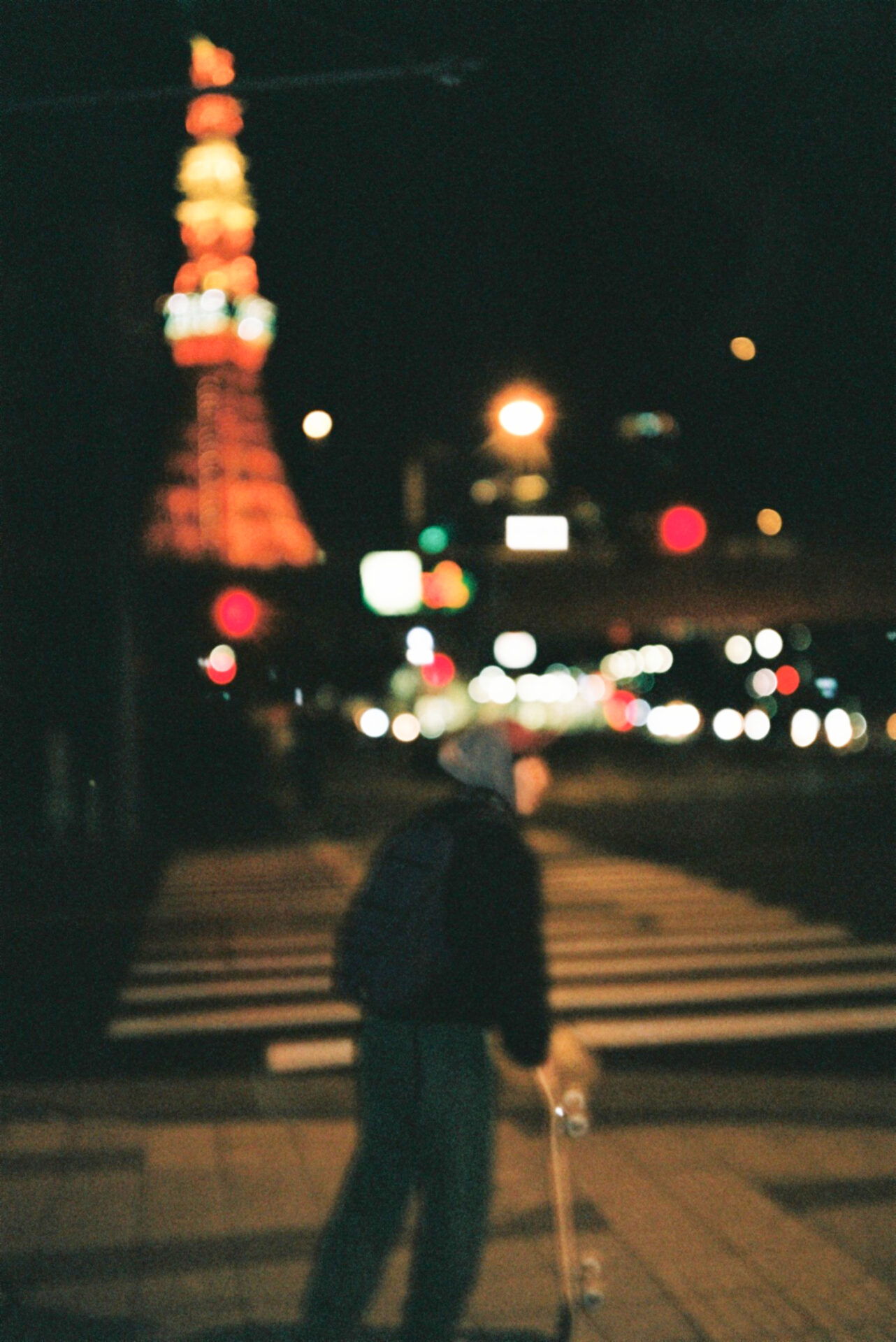
Photography by YUKI AIZAWA. Around Tokyo Tower at midnight, a decade ago. Artists read the grid differently. Every city they move through keeps its own time.
Cities are organisms, wedged between constant change and preservation of the established. And while we are excited to explore the new, we somehow want to hold on to the old. The question is: is both possible? Hiroyoshi Tomite’s answer might just be it – playing in the gaps where temporality rules and the rhythm of the city takes you to where you need to be.
WHAT IMAGE COMES TO MIND WHEN YOU THINK OF TOKYO?
The sentimental, nostalgic atmosphere of Lost in Translation. A neon-drenched labyrinth that never sleeps. The chaos-as-spectacle of Shibuya Crossing – half real city, half manga panel. People from the outside tend to land somewhere in that triangle and stay there. Having lived in Tokyo for ten years, I can tell you: its core holds triple Berlin’s density in a smaller footprint. So, just before the imminent influx of the 2020 Olympics, I stepped out of that tight bubble to find space for myself in Berlin. That was six years ago.
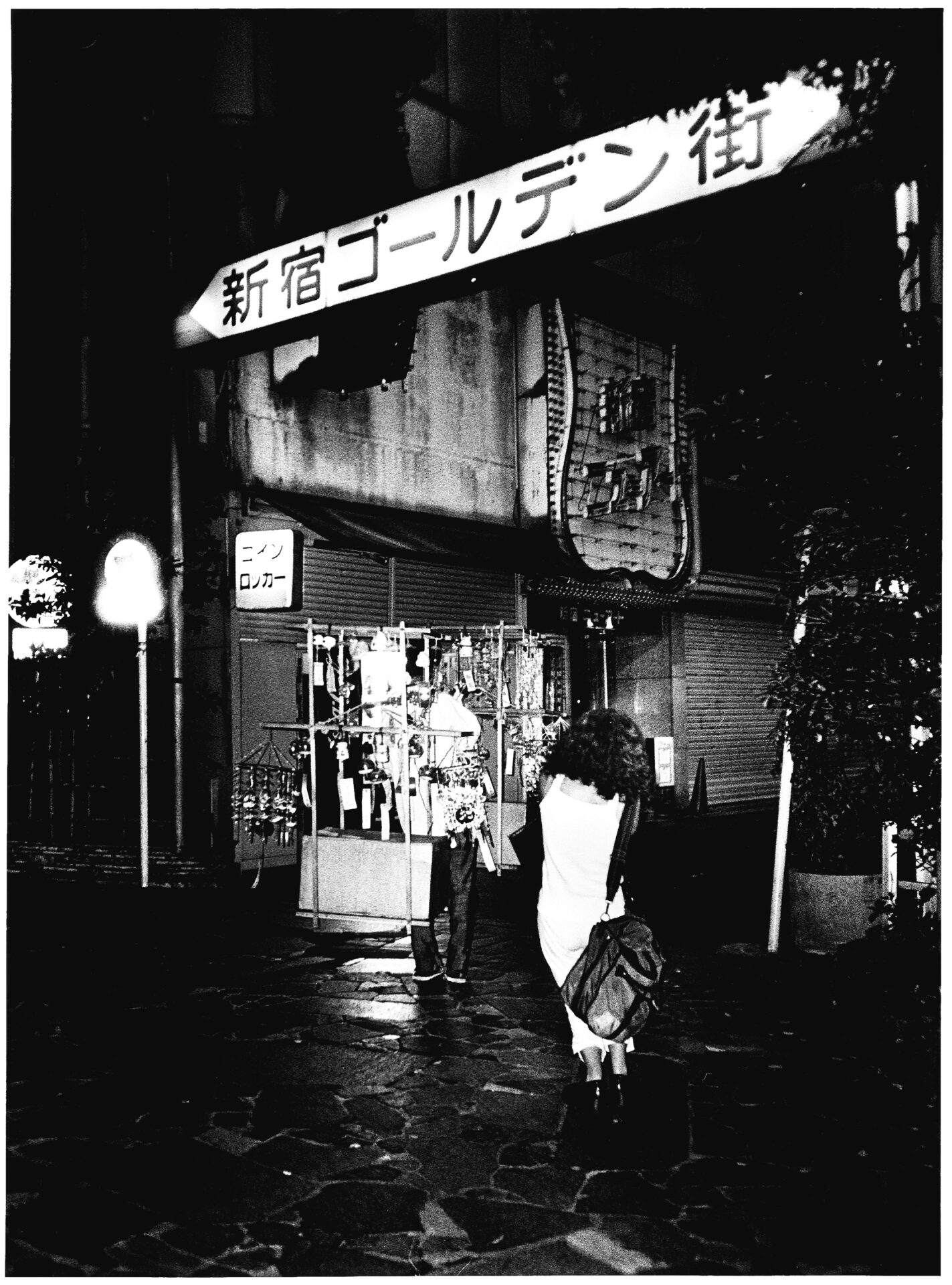
Photography by DAIDO MORIYAMA, COURTESY OF DAIDO MORIYAMA PHOTO FOUNDATION.
The city is over- stimulating in every direction – and the only way to carve out a frame with your people, together, is to squeeze out a yohaku (余白) – a space that wasn’t there before.
Nevertheless, every winter, I go back. It’s not just to catch up with people I’ve missed; it’s something harder to name – maybe a kind of respect for the people who decided to live there. The way they play: operating in high non-verbal contexts and always threading the needle through a system that otherwise leaves almost no room for the individual. Tokyo has capitalism ingrained deep into its foundations. Therefore, the city’s underlying character is less about location and more about the rewriting and recreating of rules from within. Like DUG – a real jazz bar that Haruki Murakami described in Norwegian Wood. As it happens, this month DUG announced it will close after 65 years – city developments are closing in after all.
Located in Kabukicho, Shinjuku an area with a constant lingering chaotic energy that became the lifelong obsession of the iconic photographer Daido Moriyama. It exists because of the chaos and residual freedom the area has carried since the late sixties: desire and order living against each other. It’s a place where pockets of extraterritoriality exist right in the heart of the grid, where the city’s rigid regulations fade, and the only rules of play that matter are the ones created by the people in situ.
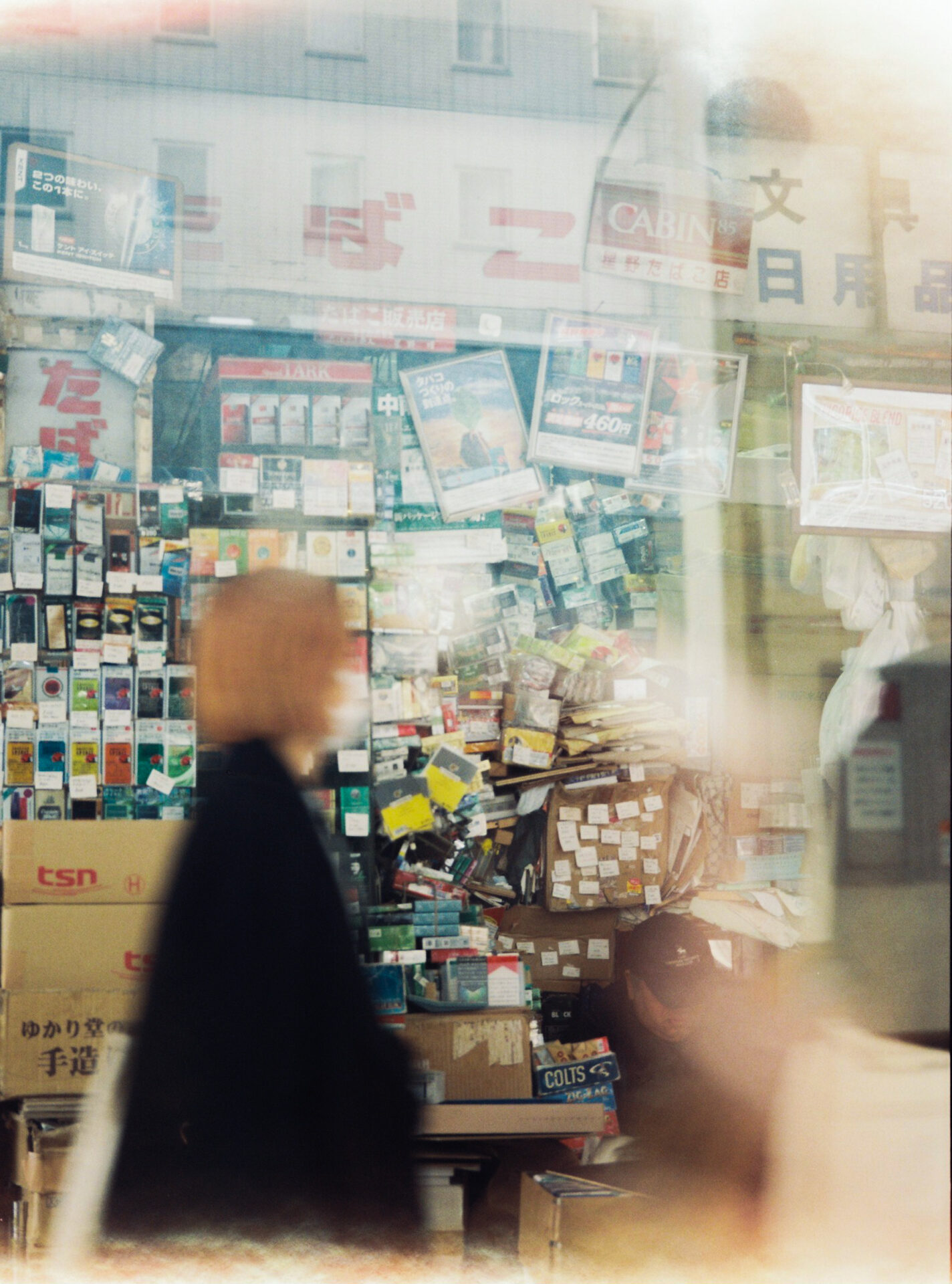
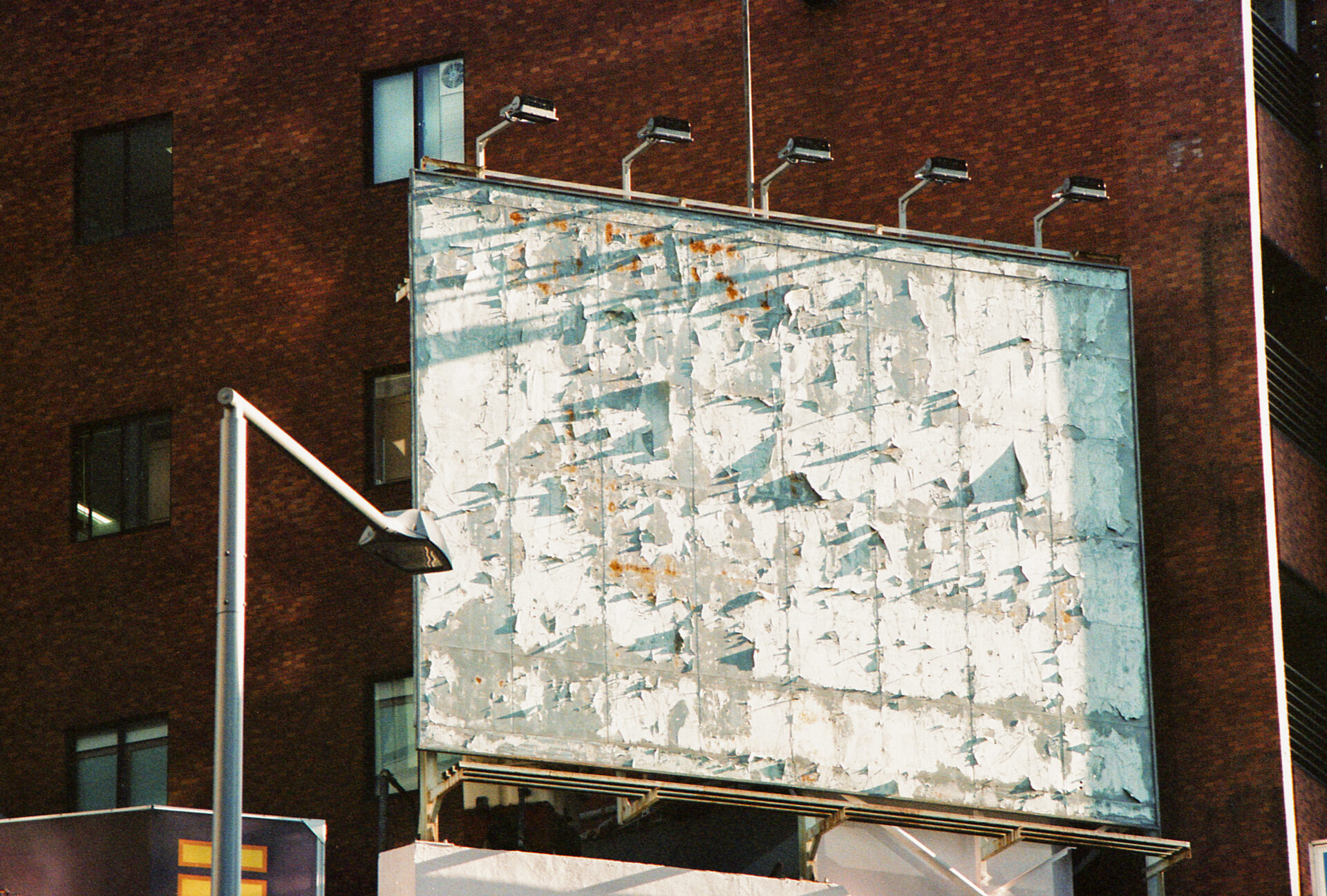
Photography by YUKI AIZAWA. A traditional tobacco shop in Ebisu. A fleeting layer before the city's next overwrite.
These are the pockets where the city’s underlying ‘format’ doesn’t just vanish. Instead, it is where new codes are birthed from those gaps. In these spaces, a different kind of play unfolds: raw, visceral, and governed by a secret code that emerges from the cracks of the system’s polite gaze. This is the Shinjuku Moriyama captured over and over: a landscape where desire and chaos create the only true autonomous zones left in a hyper-regulated world. The strictness of traditional structures and the creative use of the in-between is precisely what provides the friction necessary for true improvisation to spark. “Why so serious?” you might ask. But in Tokyo, you need that seriousness to truly hide out. Take Martha, a listening bar in Ebisu: no talking, no laughter – you simply surrender to the silence and fall into the records’ music. The rule is the escape. Berliners know this logic well through the no-photo stickers in their clubs. It’s not about policy; it’s about protecting the sanctuary to gain freedom. This is one paradox of Tokyo-play. The city is overstimulating in every direction and the only way to carve out a frame with your people, is to squeeze out a yohaku (余白) – a space that wasn’t there before.
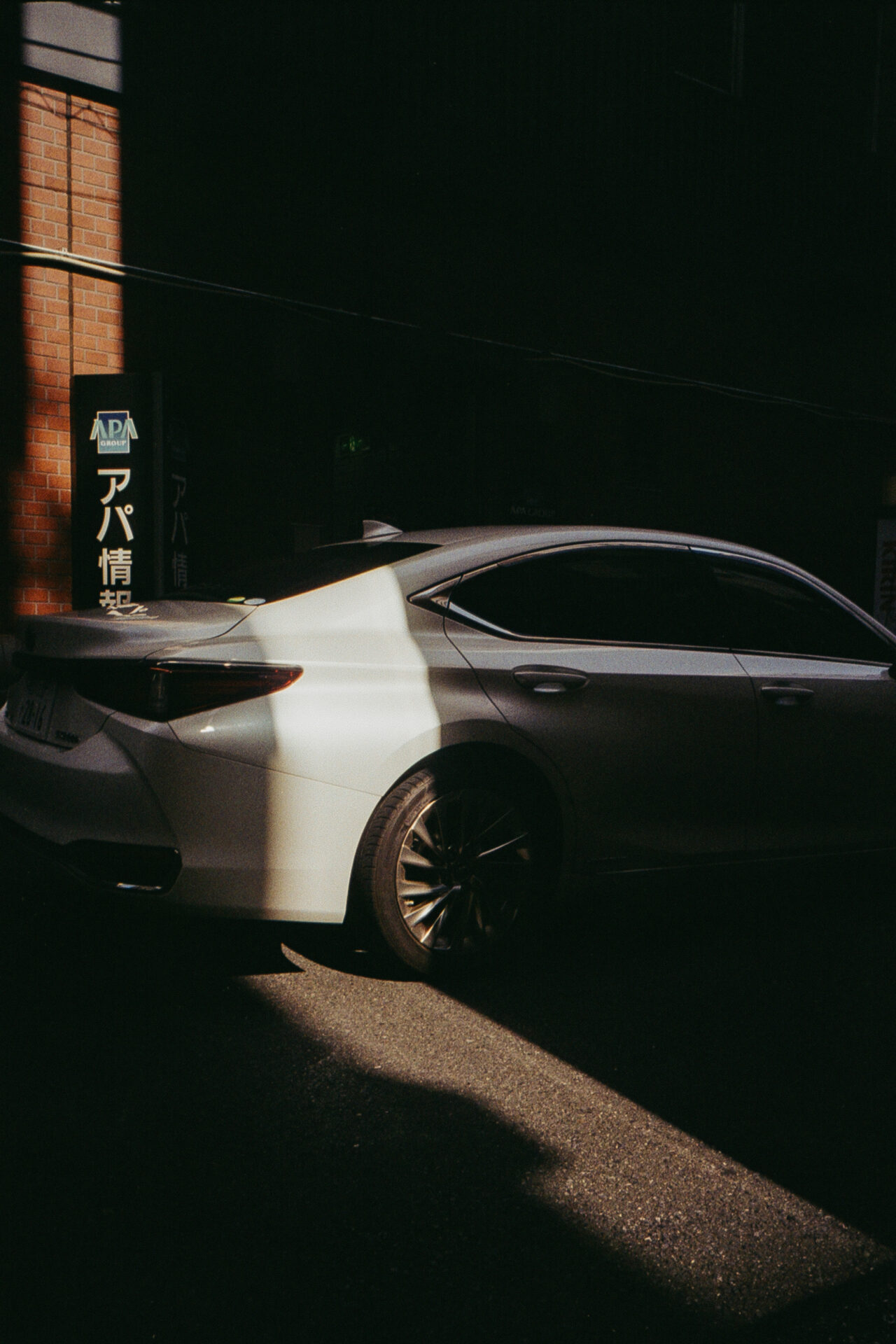
Photography by YUKI AIZAWA. Sharp light piercing through the heavy silence of a business hotel in Akasaka during the pandemic years.
If Berlin is a city that builds things out of vacant spaces – where a shared commitment to the vibe and a passion for play ignite community first – then Tokyo works the other way around. The structure is always already there: immovable, flooded with advertisements. You have to learn to move through it sideways. To the outsider, it might look like passive submission. But it is an essential skill for survival. This past winter, right after my arrival, I went to see a live performance at Kōen (光婉) in Nakameguro – a gallery tucked into a nondescript office building, white walls, no stage. Three musicians: Kenta Tanaka, Takuro Okada, and Shoei Ikeda. Ambient, drone, jazz – categories dissolv- ing as they tested how each sound landed, careful and brave.
In that small alternate space, the music wasn’t a performance; it was a real-time negotiation with the other musicians and the space itself. To my ears, it was ambient music in its wildest form. It didn’t blend into the background; it asserted a singular presence. This is the ‘wisdom’: the ability to command the gargantuan structures of the city while maintaining the hunger to carve out a private sanctuary where, through a raw session like this, you can find a way to breathe. Places like Kōen exist in Tokyo right now, you just can’t search for them. In Shinsen – barely a neighbourhood, a 15-minute walk from Shibuya Crossing – a German guy opened a members-only bar that’s quietly become an international hub. One night someone brought me there, and I felt strangely foreign in my own city. The underground builds fast and specific, but functions invisibly until someone threads you through. This is the unique Tokyo-play: inherently temporary because it simply cannot survive structurally. In a city where the grid is too tight and capital is too heavy, a permanent gap is an impossibility. These spaces don’t exist on a digital map because they aren’t destinations; they are frequencies. You have to be tuned into the city’s rhythm to find them before they vanish. This is the temporality of contemporary Tokyo: freedom is not a place you can occupy, but a performance you must catch in real time. Like that night at Kōen.
This is the temporality of contemporary Tokyo: freedom is not a place you can occupy, but a performance you must catch in real time. In a city where the grid is too tight and capital is too heavy, a permanent gap is an impossibility.
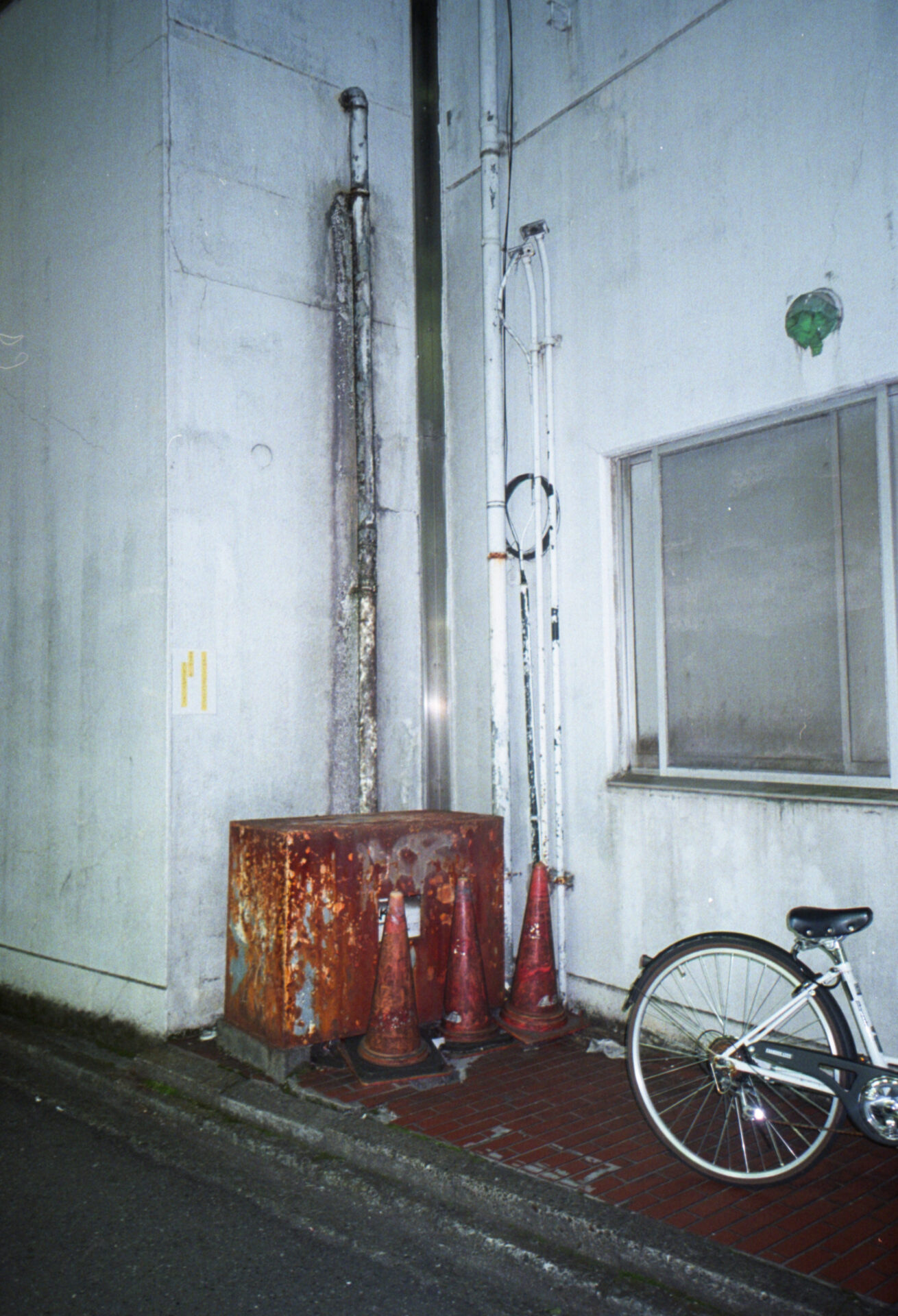
Photography by YUKI AIZAWA. A nondescript multi-tenant block in the Seijo area. Weathered, unhurried—its history marked by rusted traffic cones.
Berliners understand this: in a city with more physical ‘voids’, the magic isn’t in the empty room itself, but in the high-energy miracle that happens when the frequencies align. Whether it’s a basement in Neukölln or a nondescript office in Nakameguro, the sanctuary only appears when you pull the right thread at exactly the right time. It’s a resonance that transcends geography: a moment where the rigid grid of the world – whether social or architectural – yields to the rhythm of the people inside. The large developers and government-backed projects that try to manufacture a Tokyo for export – the officially curated subculture, the cleaned-up spectacle hovering somewhere between tradition and kitsch – always miss the beat. The real thing is somewhere else. Found in the margins of too much noise and too little space, the alternative escape routes people locate through sheer stubbornness. Knowing the rules well enough to move through the gaps without breaking anything. Operating inside the capitalist framework without fully belonging to it.
That, in Japanese, is what we’d call iki – a word that is hard to translate, but points towards something like quiet generosity or an inner chicness. The kind of ease that lets you be kind to the people around you without making a thing of it. Tokyo is dense and exhausting, nevertheless somehow deeply lovable. Berlin, by contrast, has a kind of rough tenderness. There’s an idea I keep coming back to: living in Tokio is easy, but being truly alive is hard. In Berlin, it is easy to be alive, but hard to truly live. Whenever I leave Tokyo, I carry ambivalence and gravitational pull in equal measure. But this year, something shifted. Returning to Berlin, the pull went towards this city’s raw energy, its stubborn aliveness. Maybe that’s what six years looks like. Berlin to Tokyo, Tokyo to Berlin – moving through the gaps, learning to find and connect these spaces. No matter where you go, there’s always a gap to activate, and that might just be the best definition of play.
HIROYOSHI TOMITE is a music journalist and editor based in Berlin. After a decade of work in Tokyo, he now serves as a Contributing Editor at GRIND Magazine, investigating and translates the sonic culture of cities — moving between the margins and global creative work like Nike Tokyo.
YUKI AIZAWA is a Tokyo-based photographer. Alongside his commercial work, he publishes photobooks and zines through his independent label, NUGG FILM, including Tokyo Monochromes.