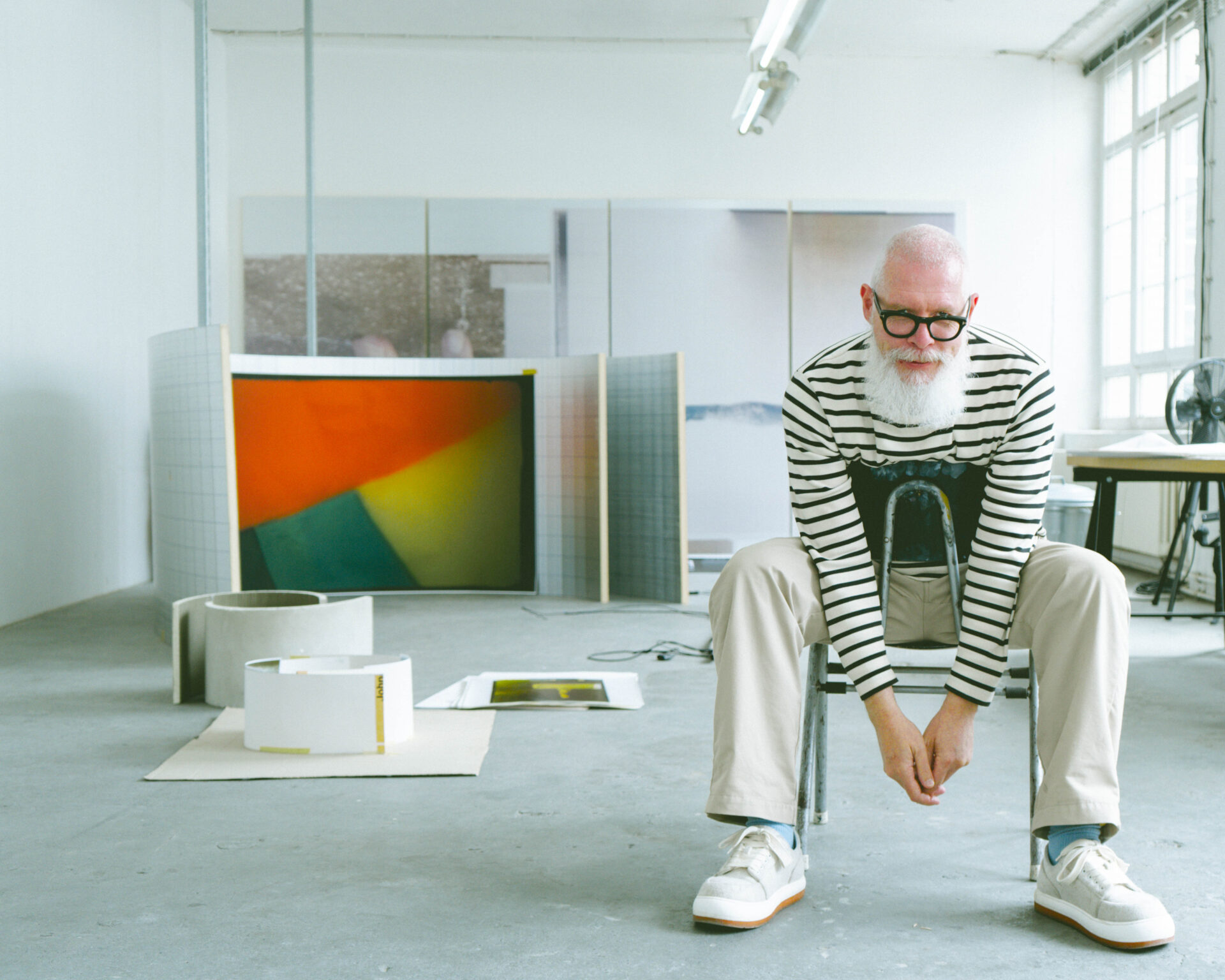
For Peter Welz, curiosity is a small door leading into other worlds. In his words, it might reveal itself in the footnote of a book, or while standing in an airport check-in queue. He calls them “the little doors”, those moments that unexpectedly open onto entirely new ways of seeing. Peter describes curiosity not as a brief impulse, but as a permanent state of “unknowing”. It strikes me that perhaps curiosity doesn’t kill the cat after all. Quite the opposite; it is what keeps it moving, searching and shaping.
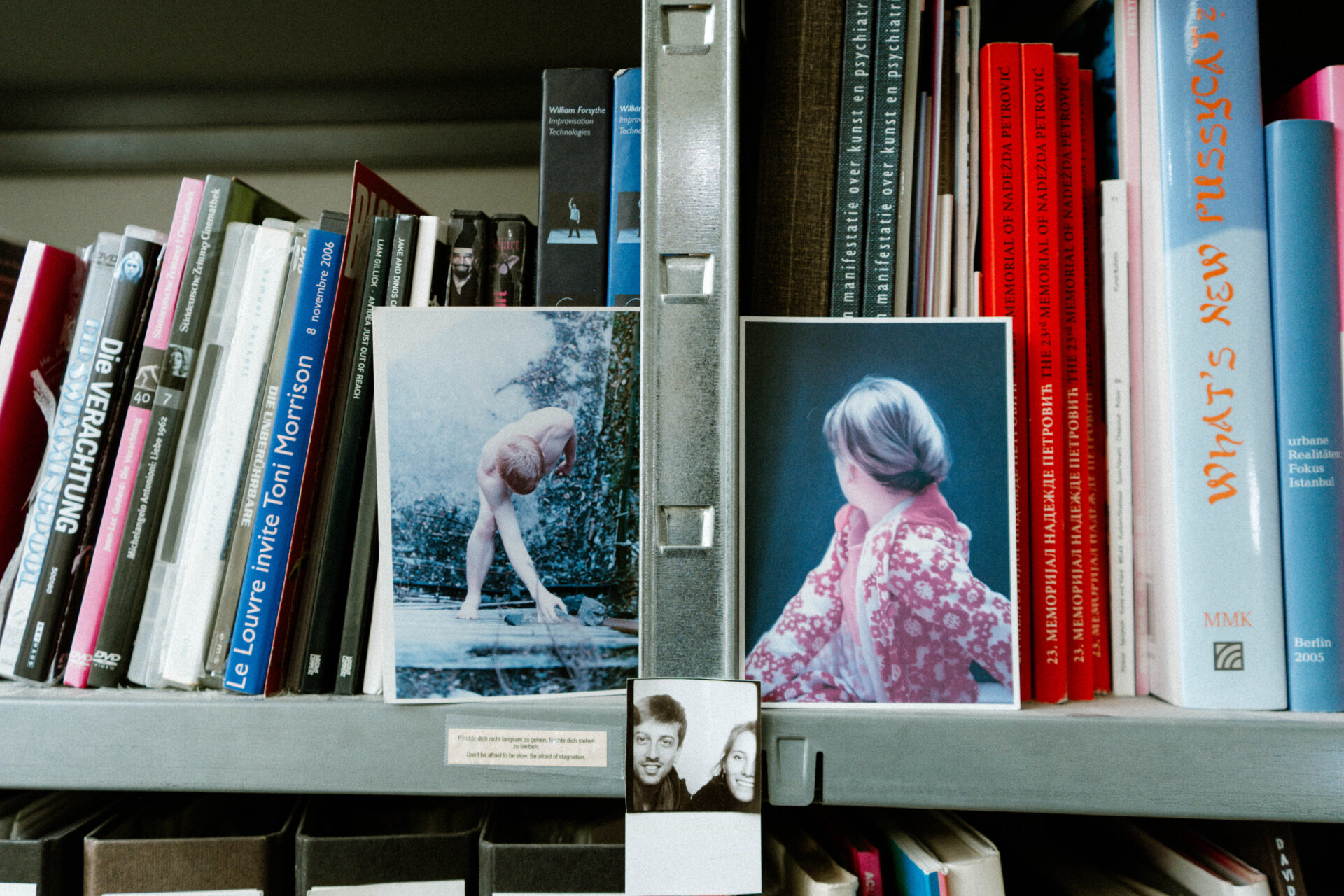
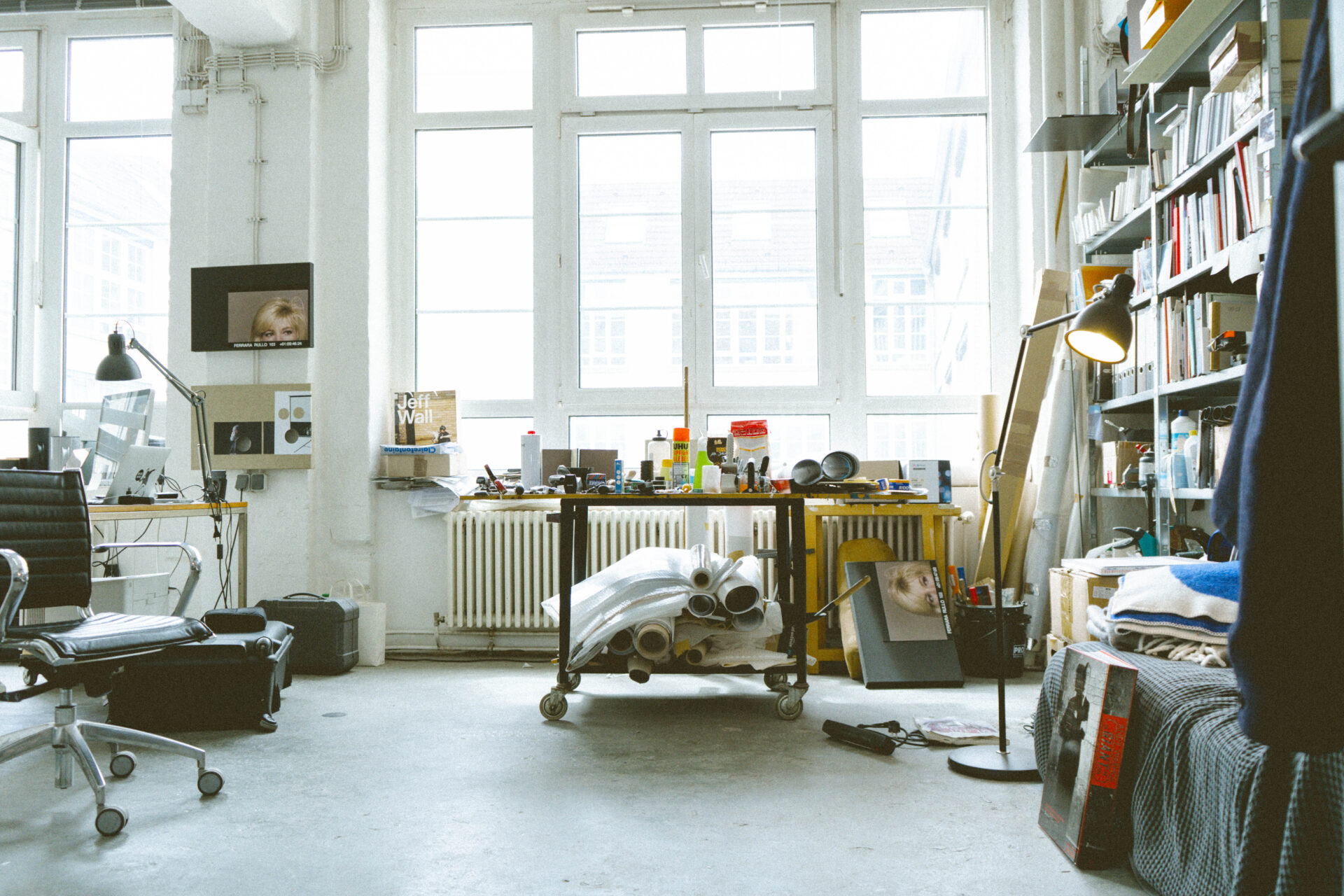
His large studio in Wedding feels like an artwork in itself. It is a place where he creates spaces and figures, always moving within video, sculpture and their fusion in the creation of large-scale installations: “I think of the physical studio as a thinking apparatus rather than a production site. Ideas may originate as intuitions, images, rhythms, or questions, but they only become knowledge through their encounter with material, scale, gravity, resistance, and chance. The studio answers back. I don’t really separate thinking from making. Making is another form of thinking – one that happens through matter rather than language.”
His art practice constantly revolves around the same question: how we relate to and approach the figure in space: “What has remained constant is the conviction that uncertainty is productive. Not uncertainty as hesitation, but as openness – a willingness to remain inside a question long enough for it to transform itself. Every project begins with a gap between what I imagine and what I can know.” With that, he creates dialogues and movements, spaces that transform through the action or presence of the viewer, and even spaces that ask nothing of you – they simply exist for their own silent contemplation.
He often recalls an anecdote about Alberto Giacometti: after passing a friend in the street and watching him walk away, what remained in his memory was not the person, but the distance that opened up between them. It is precisely this elusive space between bodies, movement, and perception that Peter finds himself constantly exploring. “If the saying is ‘curiosity killed the cat’, then I think it misses the point. Curiosity is not simply about searching for answers. It’s about allowing your existing framework to become unstable. Every meaningful discovery begins with the willingness to abandon certainty. For an artist, curiosity is less an attitude than a working method. It means accepting that the work may end up somewhere you never intended to go. If everything unfolds according to plan, there is very little left to discover.” Following his thought, each work becomes a new attempt to capture what resides not only in the figure, but in the encounter between figure and space, and, once shared within a public space, also with the viewer.
Perhaps that is why his work feels so familiar once you understand it. It does not speak of distant concepts, but of the way we inhabit the world. What makes Peter Welz’s practice so compelling is the ability to transform these seemingly insignificant moments into spaces for reflection because, in his words: “The artwork is not the illustration of an idea; it is the place where the idea changes.”