YEREVAN’S NOPA FESTIVAL READS THE ARMENIAN CAPITAL’S LIMINAL SPACES.
A cryptic inscription
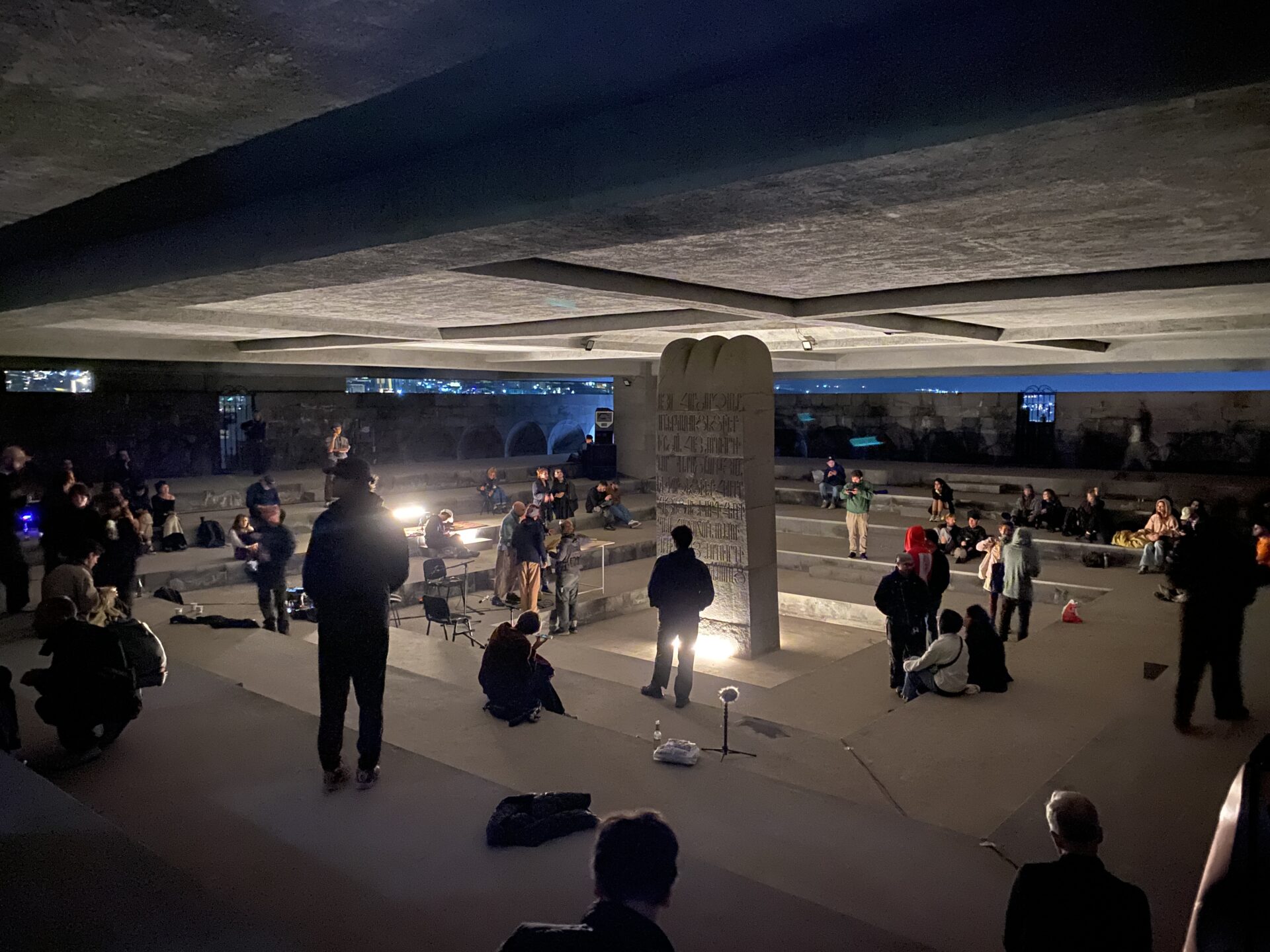
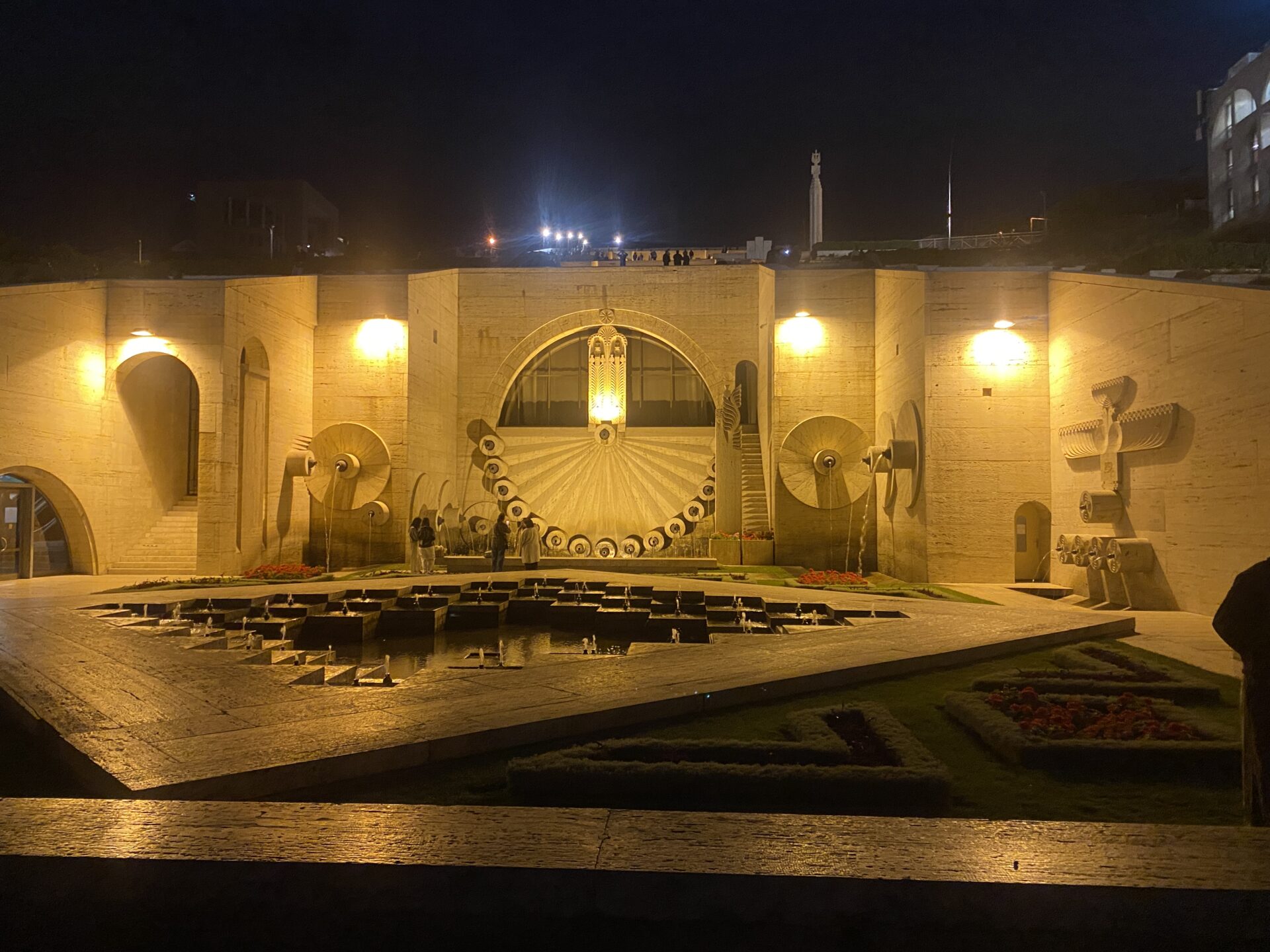
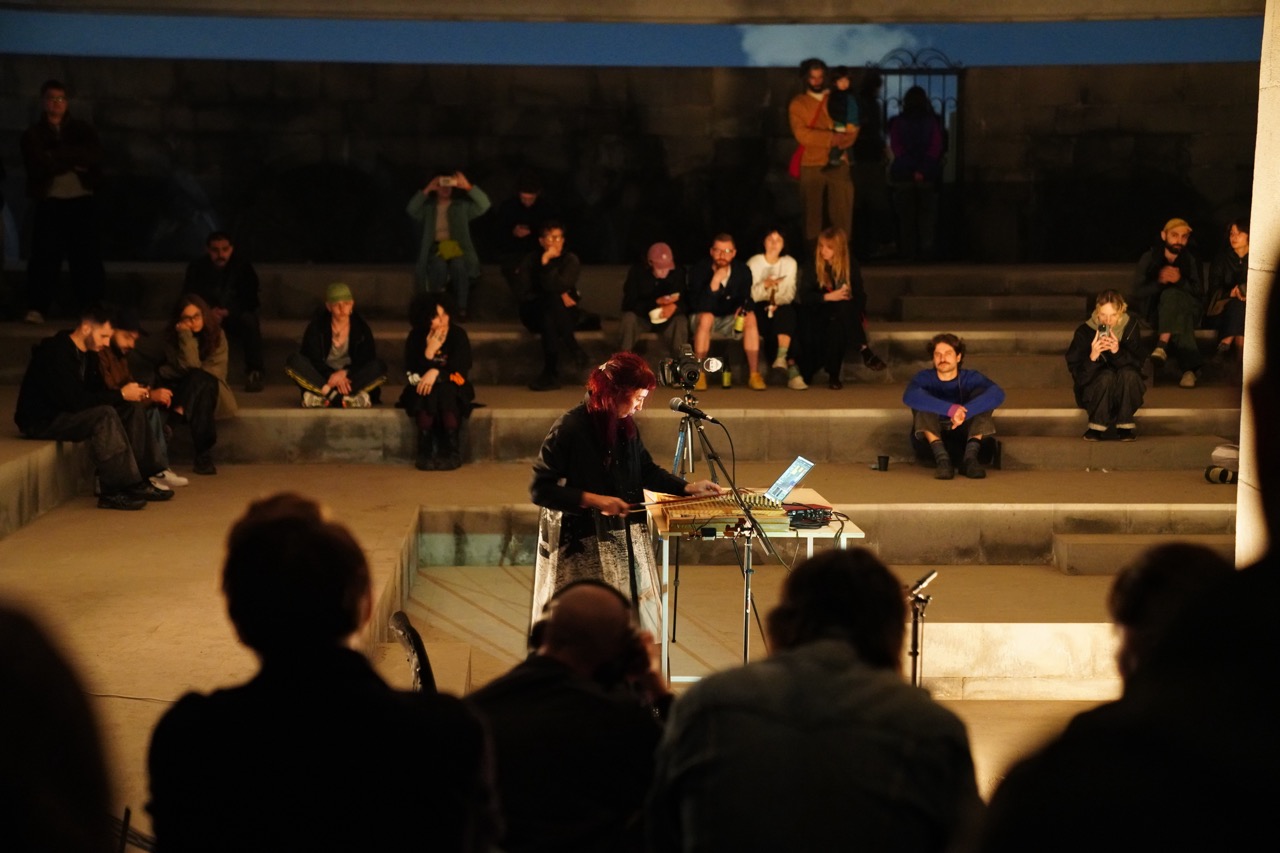
Sublime, solemn, ancient – that is how the words are emblazoned on the stone obelisk in the centre of the hall. Someone translates a line from the Armenian inscription, which is cryptic to me: “To all your souls on fire,” it reads. How fitting, this dedication, I think. For all around me in this bunker-like room, beneath an oppressive concrete slab, there are people standing, sitting and lying down. People who are on fire, for music that bridges the past and the present.
It comes from the musician Mar Margaryan, who is currently playing her qanun, a zither-like stringed instrument more than 1,000 years old, at the Cascade Memorial to the Victims of Soviet Repression in the Armenian capital, Yerevan. But Mar isn’t performing Armenian folk music – she’s hitting and striking her instrument, distorting its sounds, altering them with effects and singing along. It is a ritual that oscillates between silence and noise. “In Armenia, traditions and traditional ways of thinking are still deeply rooted,” she tells me afterwards. “One of my dreams is to see the future.”
Something that doesn’t let you go
Traditions and heritage, and how they can be brought into the present while challenging conservative ideas of culture is one of the central themes of the NOPA sonic arts festival, where artists, researchers and audiences from the Caucasus region and beyond have gathered in Yerevan for the third time. “Nopa” can be translated from Armenian as “something that grabs you and shakes you, something that doesn’t let you go.”
That’s how festival director and sound artist Varoujan Chetirian, 29, a suave Swiss-Armenian who studied in Berlin, explains it to me over a glass of one of those blood-like local wines. Now, in the land of his forefathers, together with Armenian DJ and party organiser Ani Sakhlyan and Russian-born DJ and musician Masha Raeva, he curates ten days of performances and parties each year featuring experimental and electronic music, along with installations, listening sessions and workshops.
At events throughout the city, I meet attendees who don’t look much different from audiences in London or Berlin. NOPA is growing, but it’s still small enough that we keep running into each other. Some of the participating artists are internationally renowned, like the Welsh noise improviser Elvin Brandhi, the Japanese artist Scotch Rolex, or the queer Southeast Asian duo Animistic Beliefs from Rotterdam. Jan St. Werner, a member of the electronic music project Mouse on Mars and a junior professor, has proven himself to be an enthusiastic fan of the city and its culture and has attended the festival several times. But about half of the participants come from the region and culturally related areas. And that means, alongside Armenia, places such as Georgia, Iran, Anatolia, the Caspian region, the Levant and the North Caucasus.
Spaces that have fallen out of time
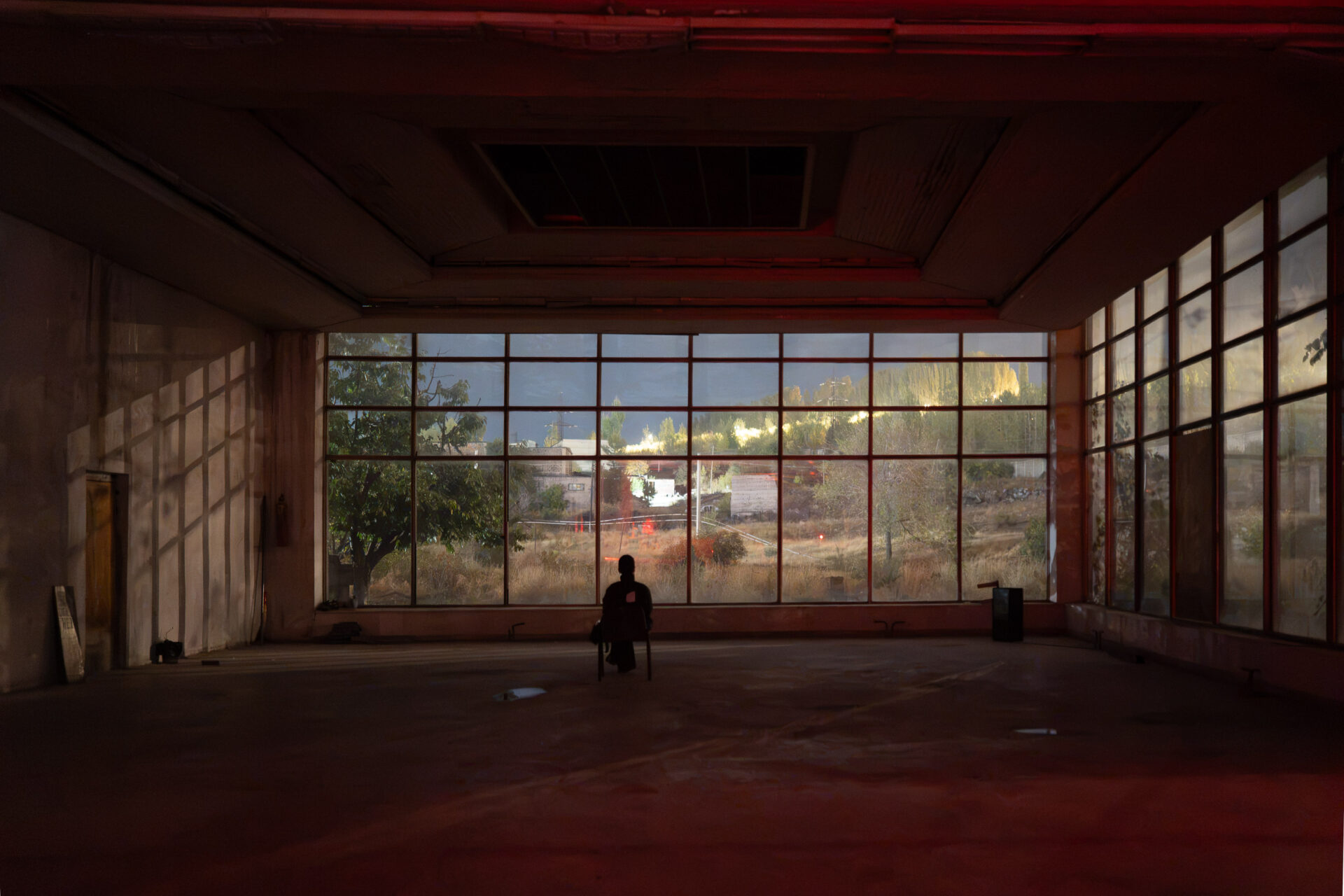
During residencies, this cultural and social mesh gives rise to collective works and spontaneous concepts at NOPA. “Site specificity is super important, as are local materials and local topics,” explains Varoujan. Yerevan is porous enough to accommodate such local initiatives because, in this former Soviet city, there are still spaces that seem to have fallen out of time, as well as government agencies that have no objection to events taking place there. Even if the power supply might be unstable at times or water is dripping from the ceiling. “Here it feels like we can use buildings and places, they’re playgrounds, instead of buildings imposing their rules on us,” Varoujan tells me.
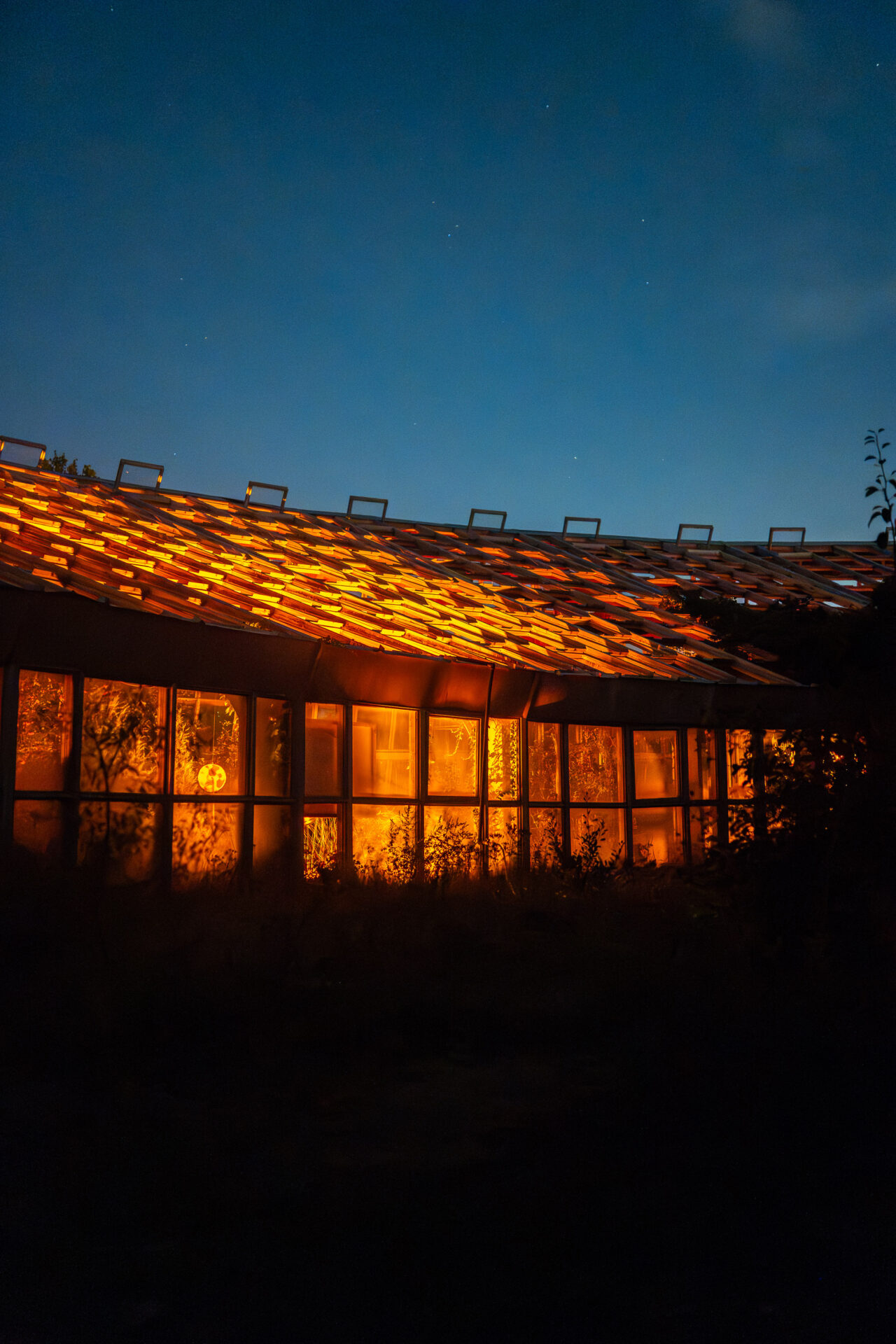
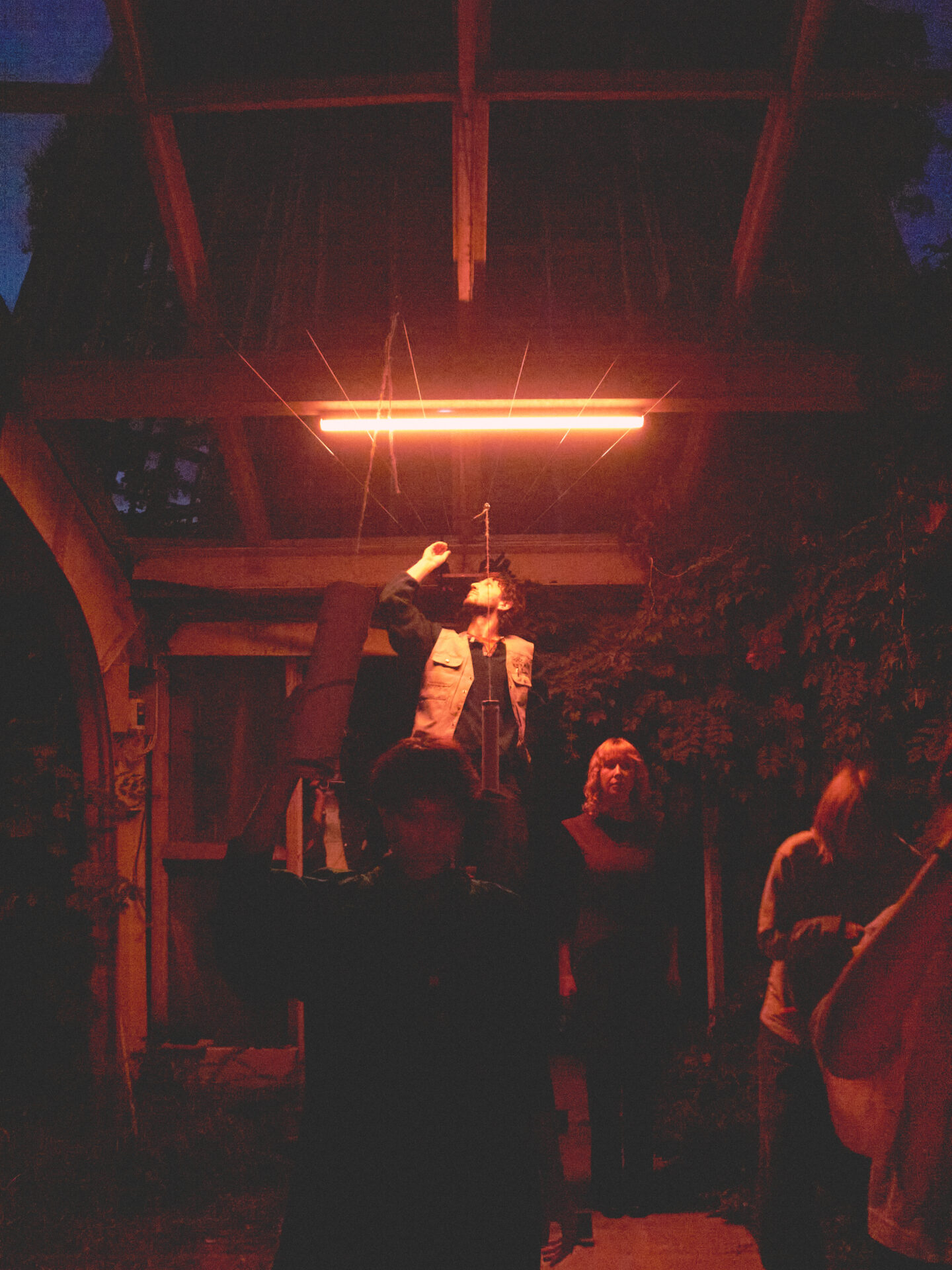
So, in some ways, things here are reminiscent of Berlin in the ’90s and early 2000s. For example, the city’s two major clubs: The HOW (House of Writers, a former gathering place for writers and artists) and HayFilm (the studios where the formerly state-run film company recorded its soundtracks – a kind of Yerevan version of Berghain, but with a plush vibe). Or the half-overgrown, UFO-like greenhouses of the Botanical Garden, where concerts and the “Sonic Ecologies” installation programme take place.
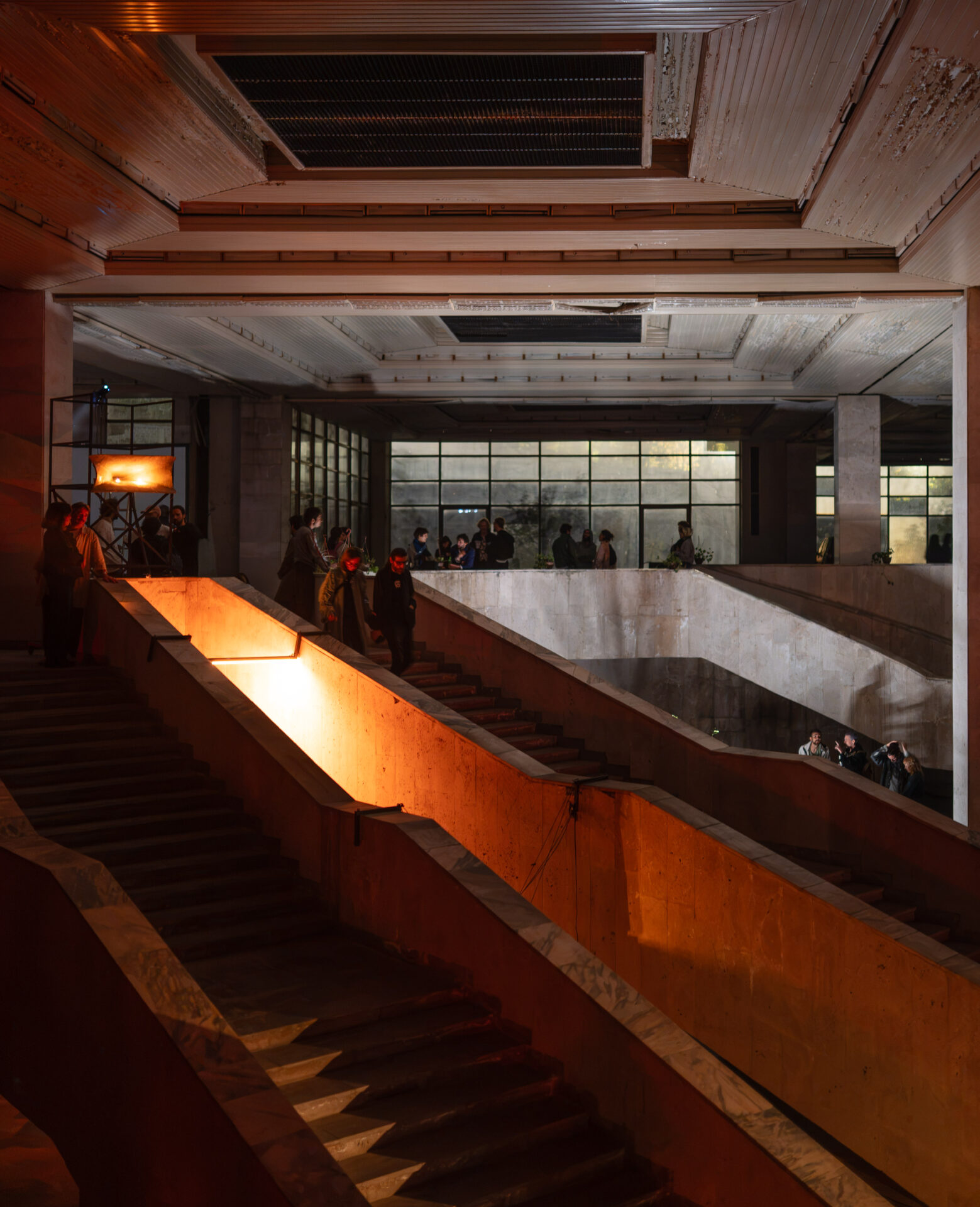
But the most spectacular feature is undoubtedly the raw concrete structure of the Northern Bus Station, where the festival has installed its “Spectra” Acousmonium – a speaker orchestra originally invented by the French musique concrète movement, but presented here in a DIY punk version using speakers sourced from the city’s flea markets. Right in the middle of its walk-in sound spaces, puppies have just been born; local small business owners are selling honey and beekeeping equipment; and outside, minibuses are still departing for the countryside. It’s abstract art right in the midst of everyday city life.
A triangle within a triangle
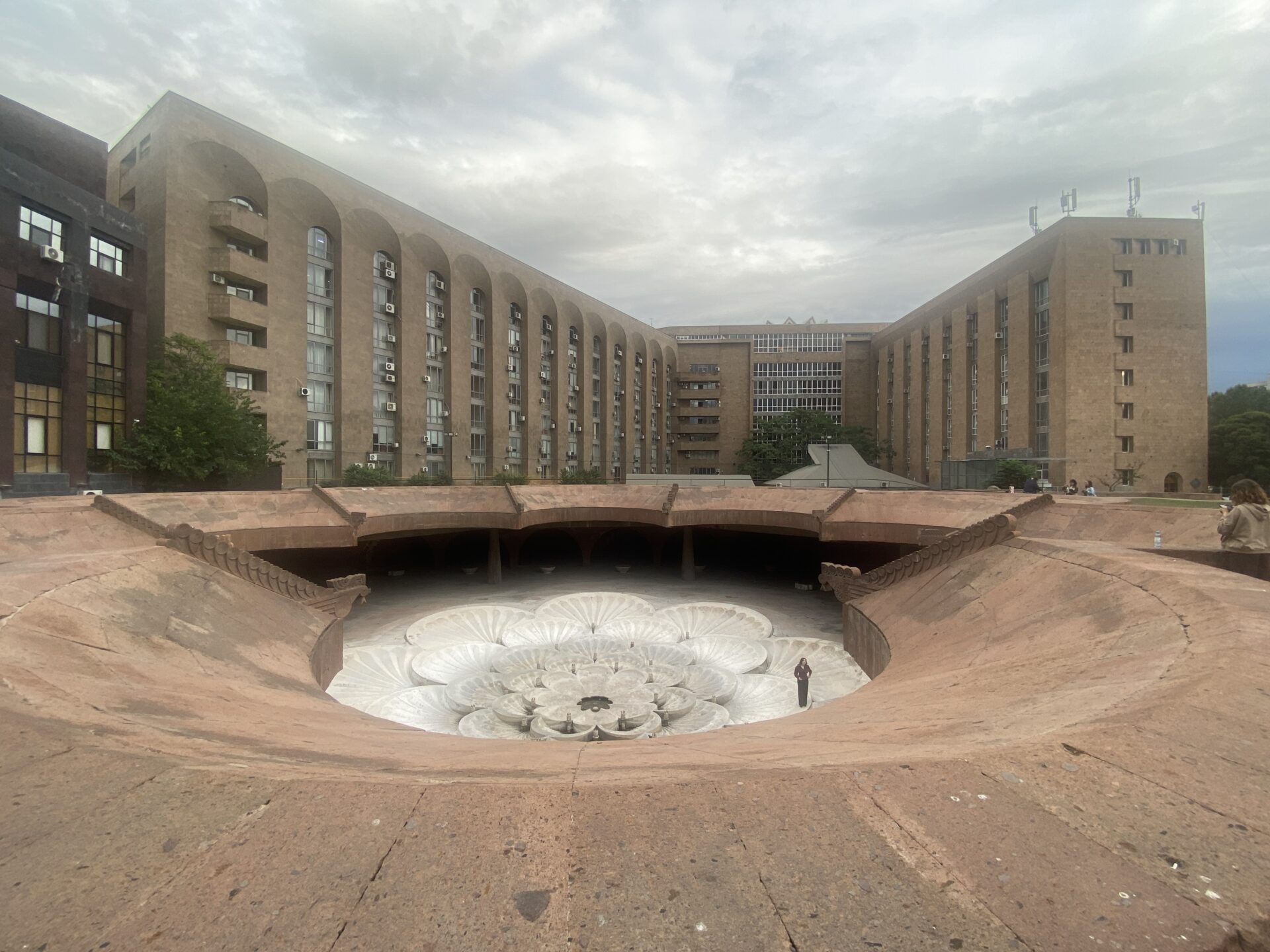
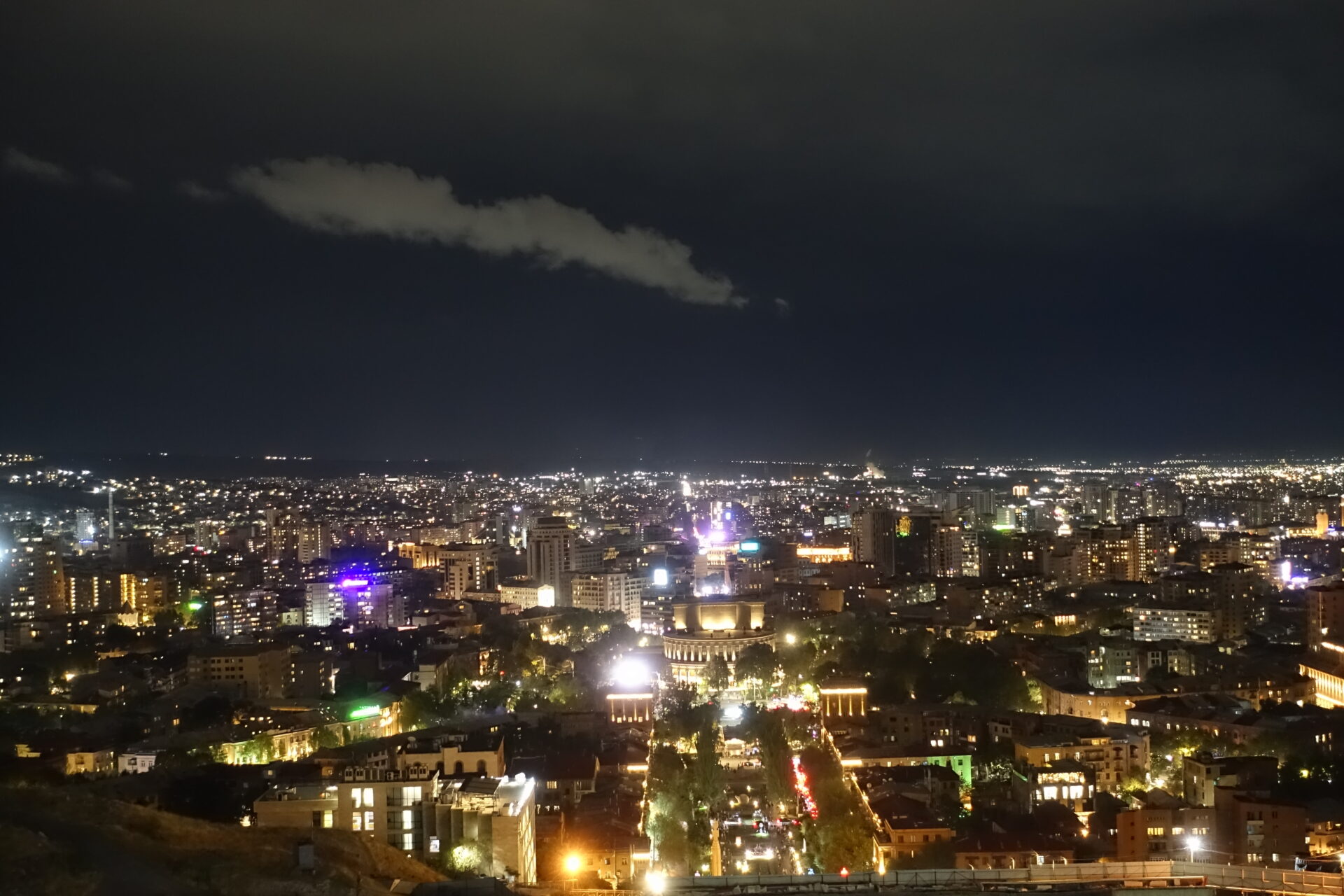
NOPA events like this allow me to experience Yerevan, one of humanity’s oldest continuously inhabited major cities and now home to a million people, through its architecture, history and hidden acoustic landscape. I quickly feel welcome here; the hospitality and willingness to help are remarkable, even when there’s no common language. In keeping with this, the imposing, massive Soviet-era structures are softened everywhere by stylised flowers, slender arches and Art Deco elements. In its centre, the city feels like a blend of Tehran, Moscow and Paris. And when the sun sets, the many buildings made of the region’s apricot-coloured volcanic tuff blend into the sky, while in the background the mighty 5,000-metre Mount Ararat towers with its snow-capped peak. It’s opulent.
Armenia, the country surrounding it, is about the same size as Belgium or Brandenburg and, together with Georgia and Azerbaijan, forms a triangle in the South Caucasus that must hold its own within a larger triangle of tension between Russia, Iran and Turkey. In the world’s oldest Christian nation, Europe and Asia literally collide: tectonically, politically and culturally. And its capital, Yerevan, is a city shaped by layered histories and migration, both outward and inward. More recently, another wave of Russian expats has arrived, having fled possible mobilisation in their homeland. Many of them are liberals, progressives, artists and opponents of Putin.
So, if you don’t look Armenian, people might address you in Russian first. Alex Babayan, 23, is happy about such mix-ups. The Yerevan-based producer and DJ, along with his 140 Crew, sometimes throws parties at hair salons, where he plays dubstep or jungle as a counterpoint to the techno that’s omnipresent here, too. The reason for his joy: at least in the city centre, local ruffnecks no longer hassle him about his facial tattoos. After all, he could be Russian and know how to defend himself. “That feels good,” he tells me. Similarly, Armenian women speak of the new freedoms that self-assured Russian women are currently carving out, benefiting all those perceived as female in the country’s inherently patriarchal society. It’s a community in the midst of fundamental upheaval. One in which many new freedoms and spaces are opening up that are becoming increasingly hard to find in Western Europe.
For the sake of light
One such space had opened up during Mar Margaryan’s concert at the Cascade Memorial as part of the NOPA Festival. Later, someone explained to me that the line inscribed on the stone obelisk in the centre of the hall was from a poem by Yeghishe Charents, who is considered one of Armenia’s most eminent poets of the 20th century. Its title is “Frenzied Masses”, and although Charents was actually describing the explosion of repressed human energy during the Bolshevik insurrection, its lines surely speak to the people who have gathered here tonight:
“To you, comrades near and far,
to you, other suns. In other worlds,
to all your souls on fire,
To all you burning fires, To you burnished spirits
Who light this untamed darkness called life, and death
To you all who are sacrificed for the sake of light,
Greetings.”
FLORIAN SIEVERS is a Berlin-based journalist, author and curator who was trained to write about economics but loves to write about music and art as well – especially from cultures outside the Global North.
CREDITS
PHOTOGRAPHY – FLORIAN SIEVERS, ALEXANDER SHAROV, ERNY AWE, ILLYA RODIN, LILIT GALSTYAN, VIKTOR ZATIKYAN