 Elaine DeKooning “Spring” Image from wikiart.org
The macho titans of Abstract Expressionism, Jackson Pollock and Willem de Kooning, are two figures whose work have become synonymous with the style. Yet, history has widely forgotten the women who were equal counterparts and astonishing practitioners in their own right. Positioned at the forefront of the action-packed painting movement, these marginalised female artists were frequently written off as mere wives and disciples who never graduated beyond student status. Helen Frankenthaler was an exception to the myopic sensibility of this movement and is often referenced in art historian texts. However, many of her contemporaries such as Jay DeFeo and Alma Thomas seldom sold works or received offers to participate in solo shows. In order to challenge the era’s misogyny, artist Lee Krasner even adapted her name so that it was ambiguously gendered. On the occasion of the Royal Academy’s major new Abstract Expressionist show, we have elevated some of the movement’s women practitioners that time (almost) erased.
“Style is something I’ve always tried to avoid. I’m more interested in character” – Elaine de Kooning
 Perle Fine “Surge” Image from fineartcollectorinfo.blogspot.com
Perle Fine
Perle Fine once said: “when I paint something I am very much aware of the future. If I feel something will not stand up 40 years from now, I am not interested.” Fine ditched table tops and worked on the floor, using a plank to protract across her ambitious compositions that swelled with collage and dark motifs. Fine was a vanguard of Abstract Expressionism who united the radical style with Neo-Plasticism forms.
 Lee Krasner “Night Creatures” Image from metmuseum.org
Lee Krasner
Lee Krasner’s fierce, swooping paintings cement her as an early Abstract Expressionist virtuoso. Jackson Pollock’s iconic status can be hugely owed to Krasner who introduced her husband to the movement’s progenitors. And though Pollock’s fame came to overshadow Krasner’s, she is one of the few female Abstract Expressionists who witnessed a retrospective of her work during her lifetime. She was markedly vocal about the movement’s machismo and marginalisation of its female artists and changed her first name from Lena to the non-gendered Lee in the Fourties.
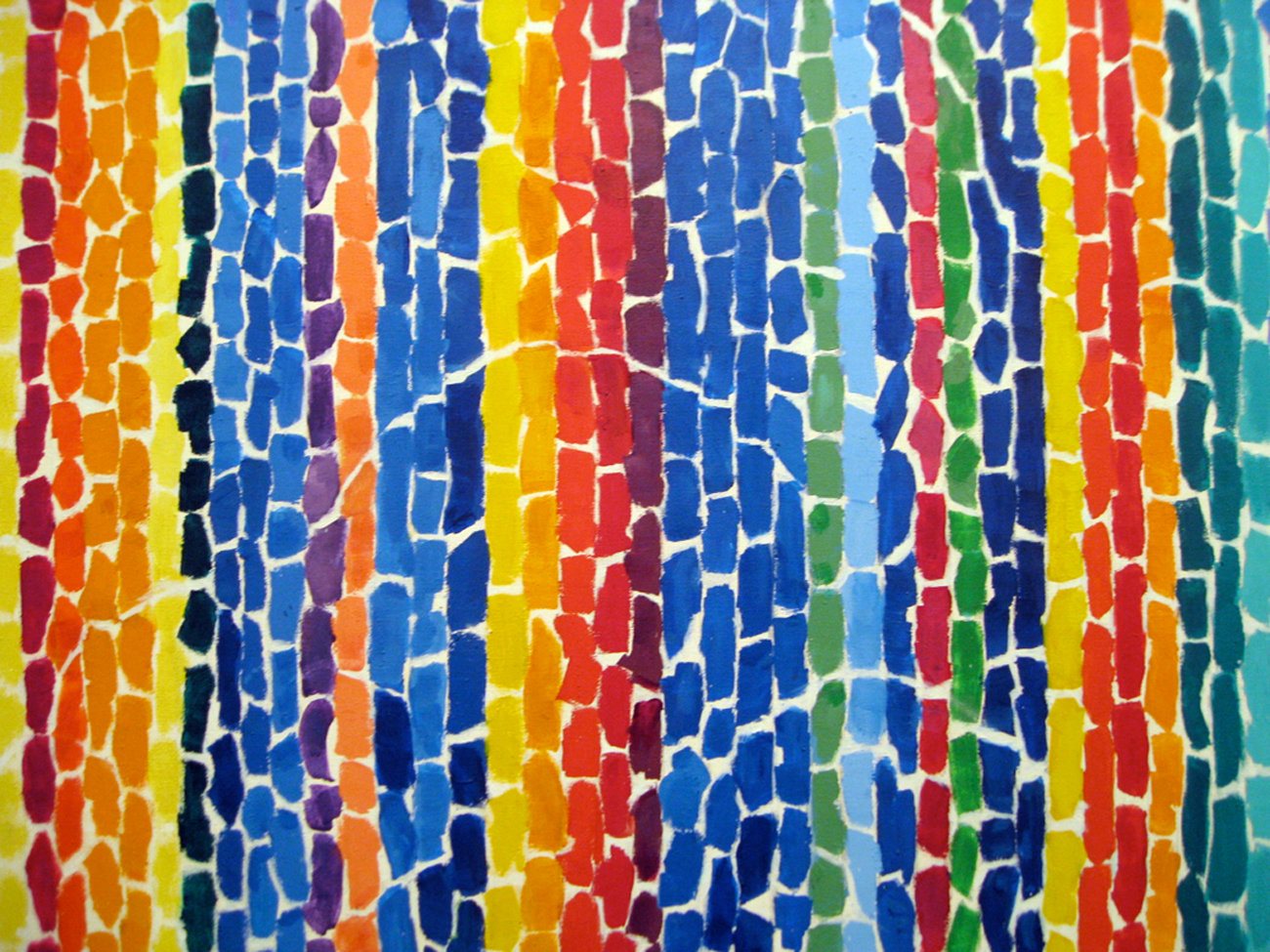 Alma Thomas “Wind, Sunshine, and Flowers” Image from artobserver.org
Alma Thomas
Inspired by landscapes, science and the cosmos, Alma Thomas’ paintings billow with blazing palettes and undulating compositions. Thomas spent most of her life teaching, until she reconnected with her practice again in the Fifties, developing canvases that explore the boundless trajectory of colour and emotion.
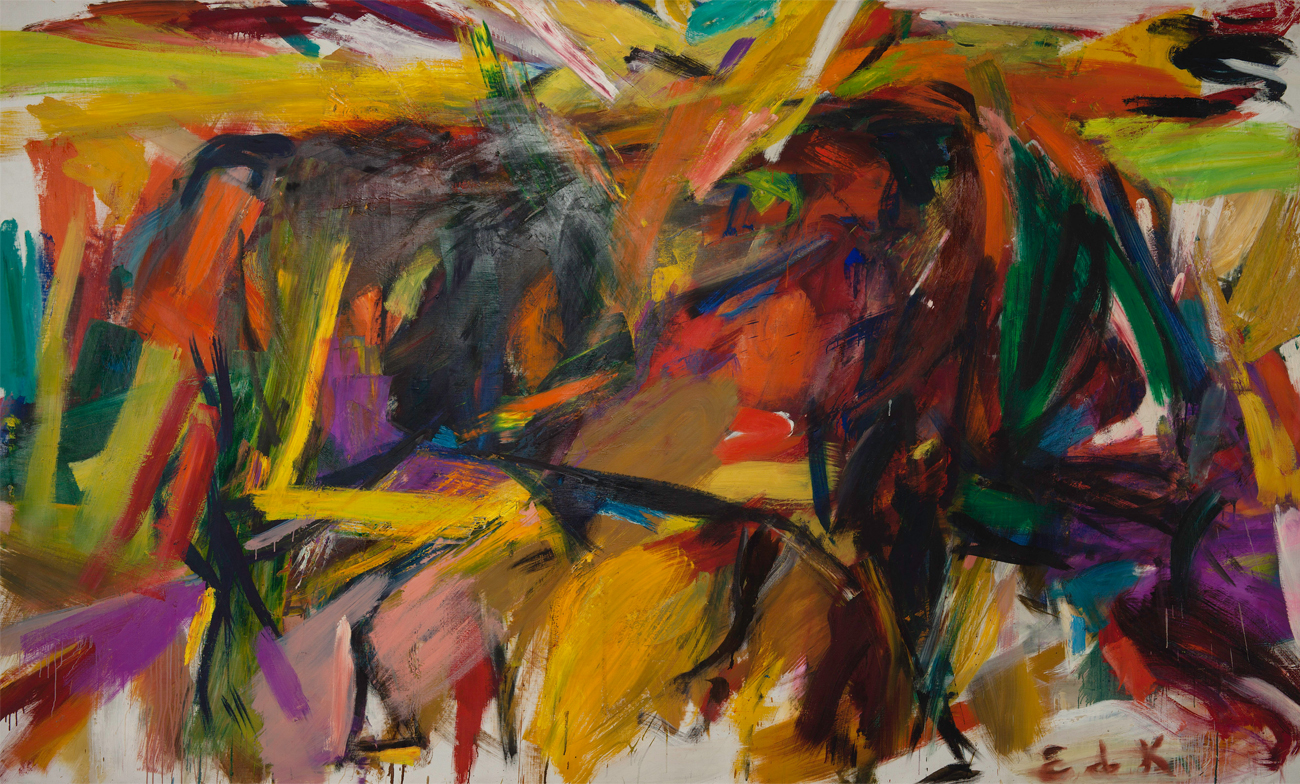 Elaine de Kooning “Bullfight” Image from artnews.com
Elaine De Kooning
“Style is something I’ve always tried to avoid. I’m more interested in character,” are the words of Elaine de Kooning. Married to Willem De Kooning, the artist was a prolific painter, writer, and teacher who embraced all facets of painting genres from realism to abstraction. Her work explored mythology, landscapes and portraiture, and she also designed a stage set for Merce Cunningham and John Cage while studying at Black Mountain College.
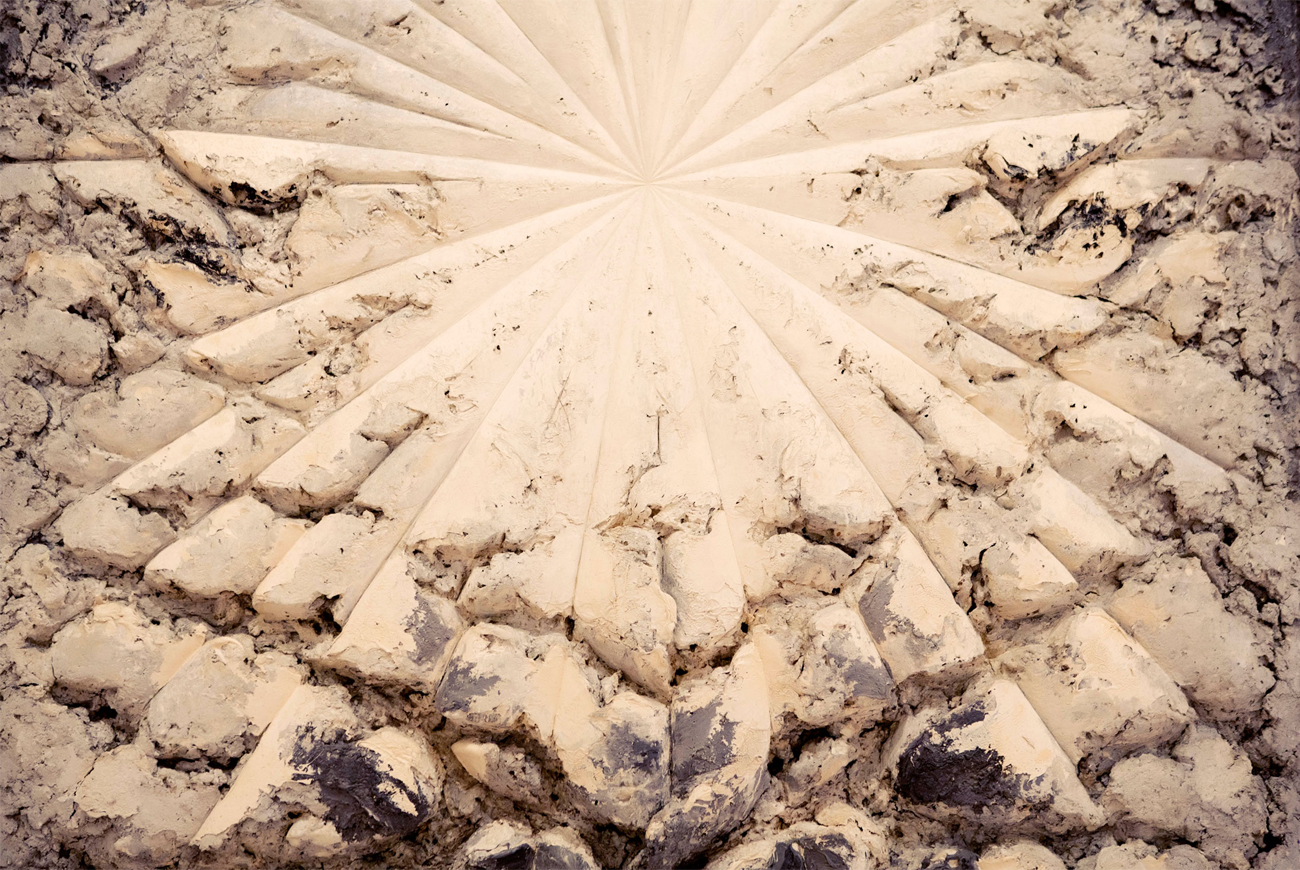 Jay DeFeo “The Rose” Image from bloomberg.com
Jay DeFeo
Jay DeFeo’s work transcends categorisation. Underrepresented in American art history, DeFeo’s retrospective at the Whitney Museum in 2013 elevated her exceptional oeuvre, drawing on her myriad of influences from Italian architecture to Asian, African and pre-historic art. DeFeo completed her career-defining work “The Rose” in 1966 which was, in her words, “a marriage between painting and sculpture.”
“Abstract Expressionism” is on display at London’s Royal Academy until 2 January 2017