
Historically-speaking, the barbershop has not only been a place for men to get their hair cut, but to chat and get together too, so much so that it’s even been referred to as the “last male space”. A male space it might be, but one that’s more often than not exclusively designated for heteronormative men, leaving queer men out in the cold. In his glittering, tactile paintings currently on view as part of his exhibition Cry, Baby at The Andy Warhol Museum, Philadelphia-born painter, Devan Shimoyama reimagines this typically masculine zone as a glamorous queer space bedecked in sequins and feathers.
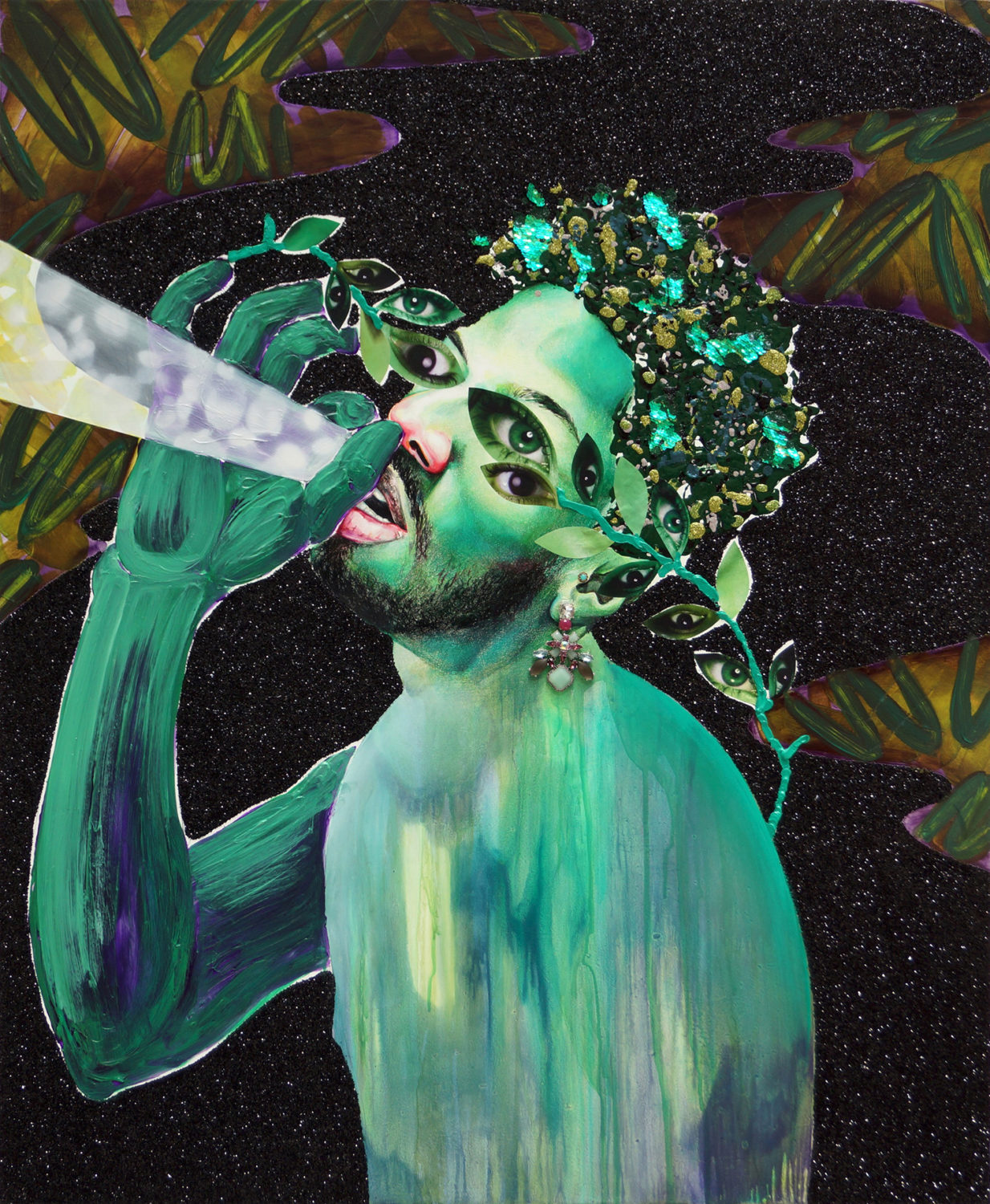
“These paintings spawn from a very personal experience thinking about the barbershop as a place of male personal bonding, but one that’s not the same for a queer individual,” Shimoyama tells SLEEK. Not only does Shimoyama, who was recently listed as an artist to watch in The New York Times no less, repurpose the barbershop as a queer realm, but his paintings in themselves queerify the macho tropes of painting. It’s impossible not to be struck by the playful tactility and the sparkling, multilayered materiality of these works. Here, oil paint sits happily alongside rhinestones and glitter. In fact, as he says so himself, “I’m sort of ripping off a lot different materials that you might find a drag queen wearing”.
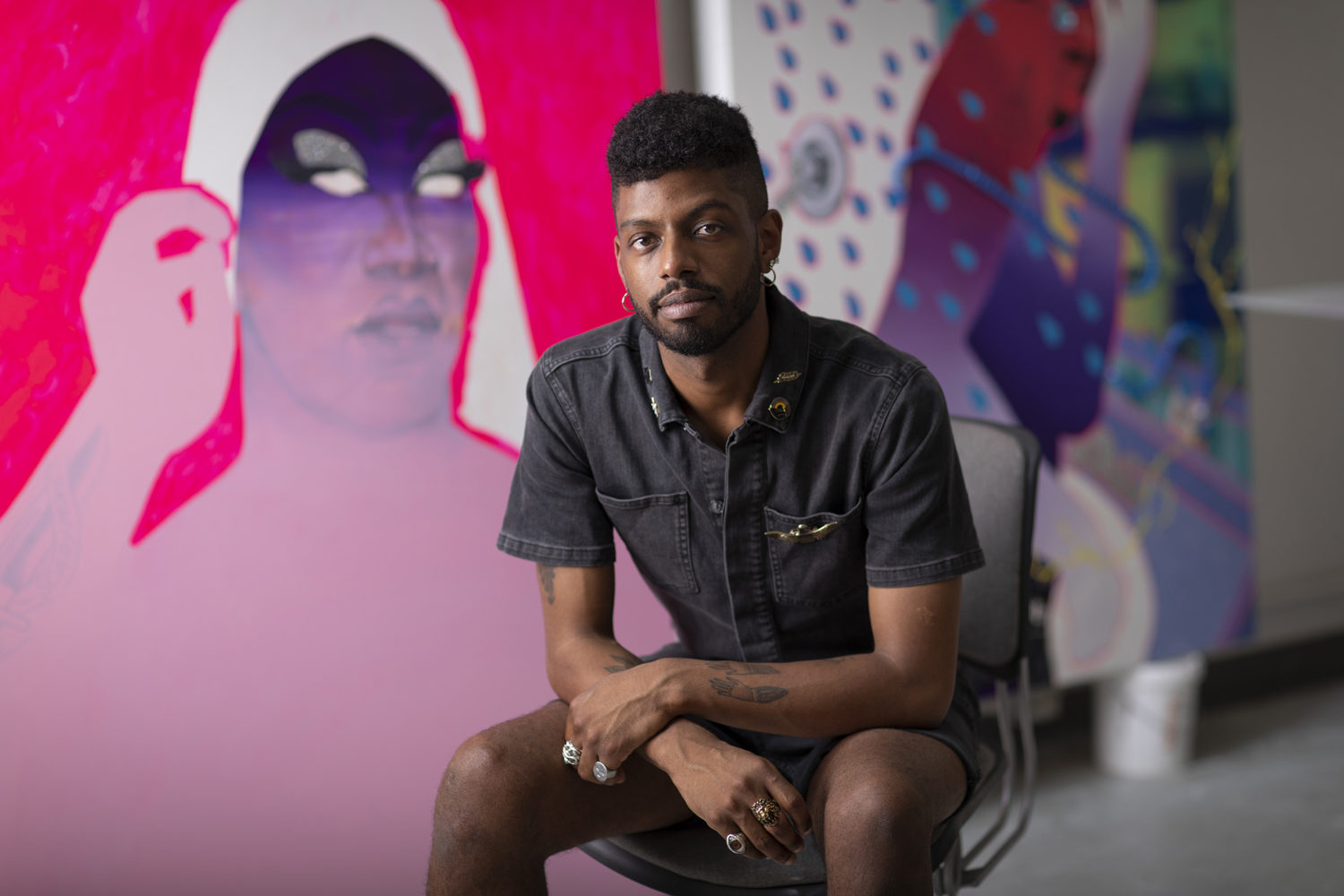
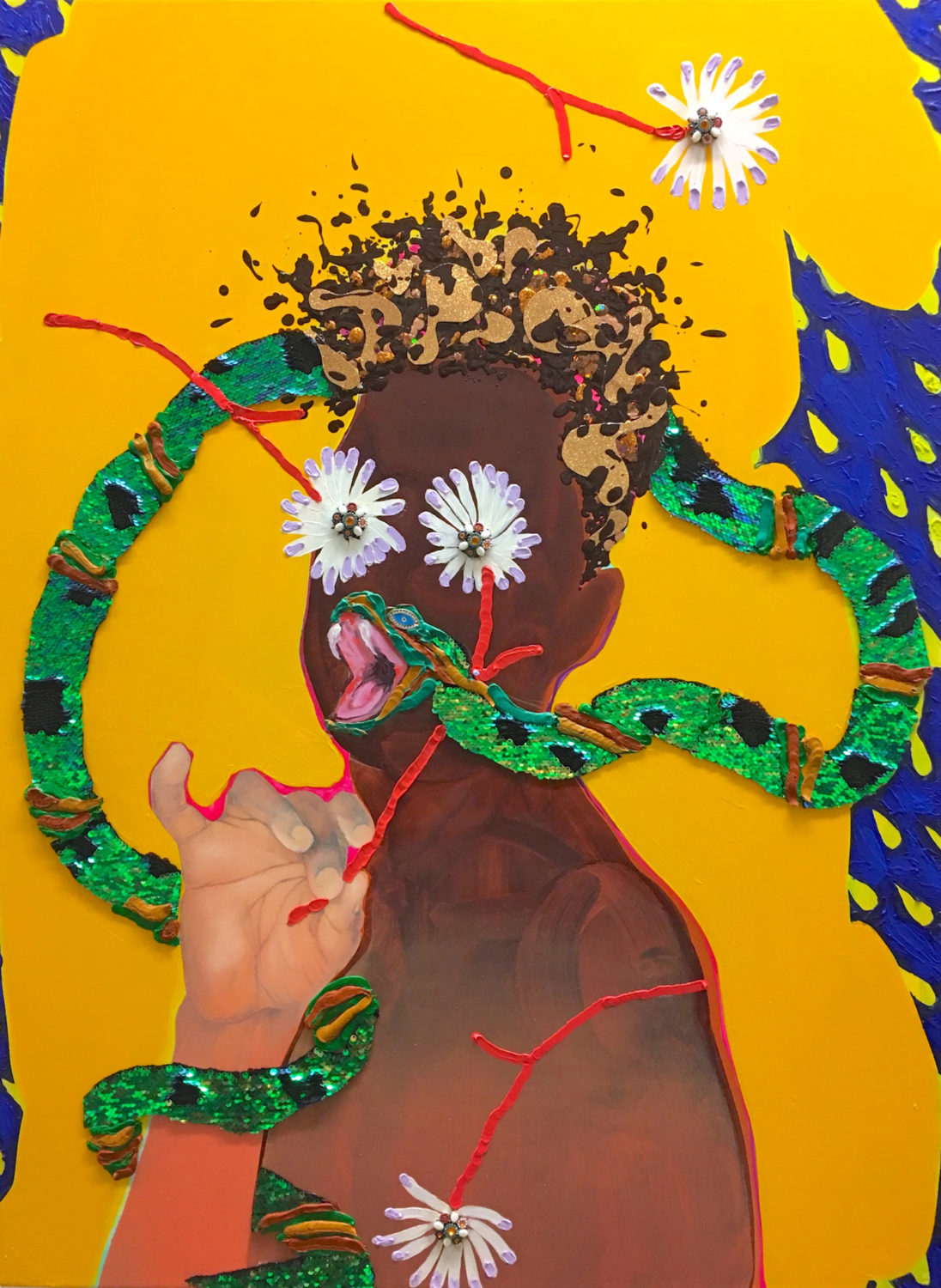
In this way, the materials that Shimoyama employs in his embellished paintings are loaded with meaning. According to the artist, “They create an illusion of glamour,” which has socio-political significance: “I’m conflating drag and queer cultures with a lot of black culture. I’m thinking about how these communities are inhabited by individuals, who have a desire to have a facade of wealth or glamour, whether or not that’s authentic. It’s a mask in order to navigate the world, or to entertain”. Shimoyama sees a correlation between the use of craft materials in drag and queer culture to create a fantasy with the adornment of gold jewellery in black culture.“It’s a peacocking, a positioning of oneself as wealthy, or having more than one has.”
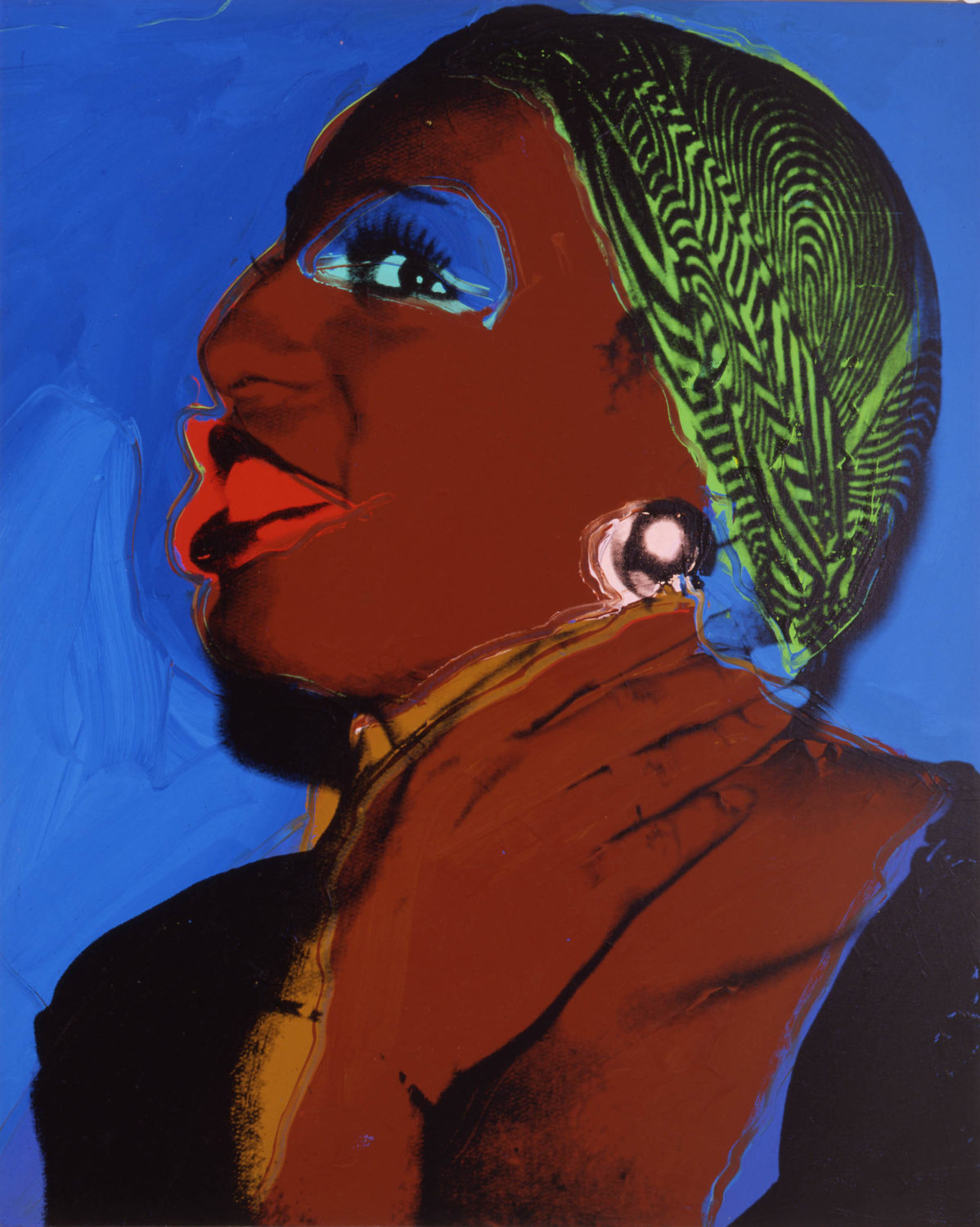
Although Shimoyama has long been a fan of drag performance and is “invested in the materiality of drag culture”, he only started to paint members of the drag community last summer in Miami. By inserting DIY materials associated with the scene into his paintings, his portraits operate as colourful and exuberant celebrations of queer performers. Not only that but as Cry, Baby takes place at The Andy Warhol Museum, these paintings enter into an intriguing dialogue with Warhol’s own series of trans women and drag performers, Ladies and Gentleman, too.
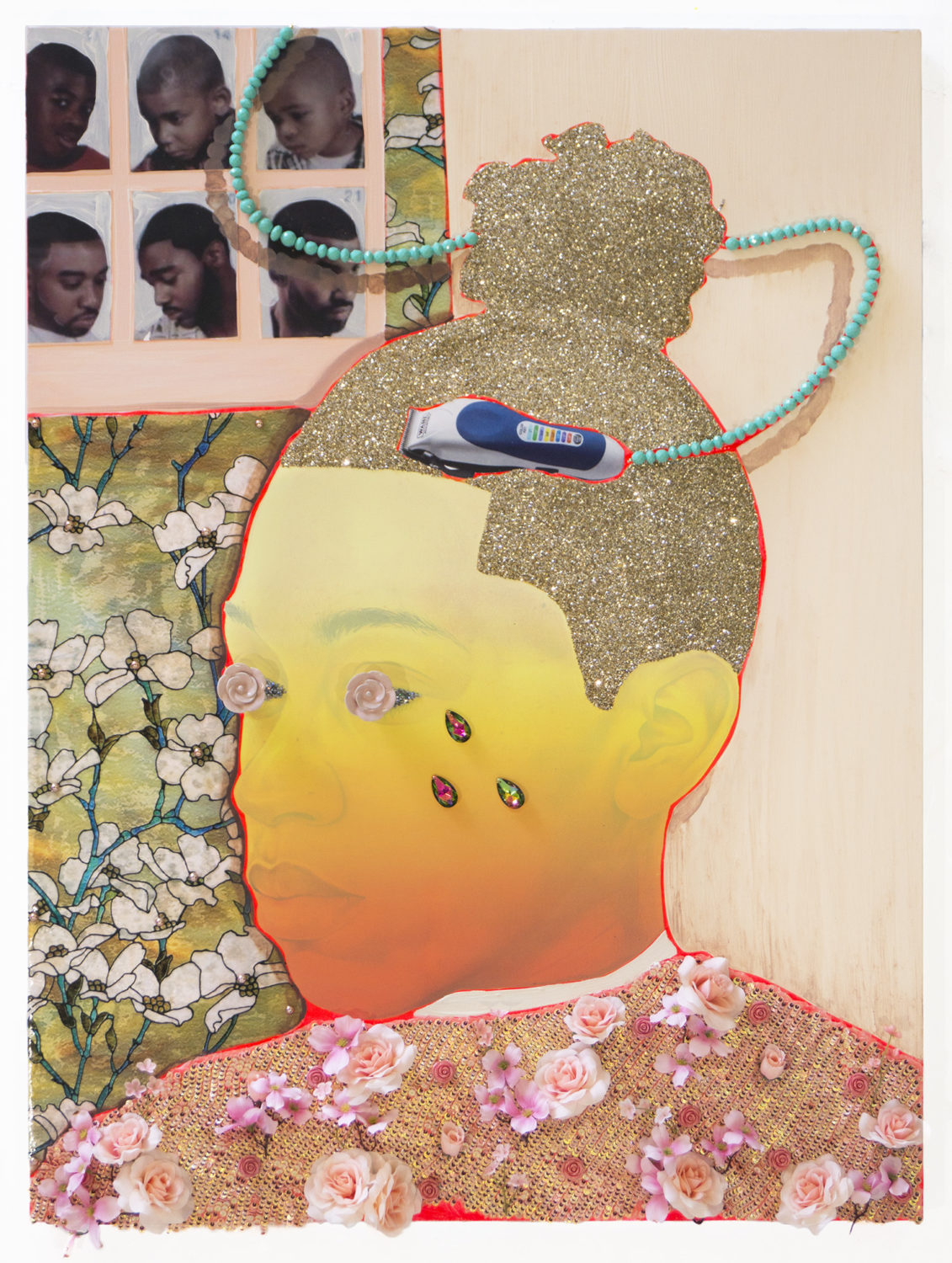
Shimoyama sees differences, however, between his paintings and those by the pop artist. “I think my portraits of drag performers are more of a celebration, almost like fan art, whereas with Warhol’s series, they weren’t given names until much later, until after his death and they were uncovered in his archives,” Shimoyama points out. “I’m really invested in celebrating the individuals I’m portraying right from the beginning, so it’s a slightly different approach.” While Shimoyama agrees that their work shares many of the same themes, he considers there to be a significant difference in how they portray figures also. “I’m much more interested in the details of specific facial features or expressions, trying to capture their flaws and who they are”. In contrast, Shimoyama believes that Warhol’s work often veers towards eliminating his subjects’ flaws.
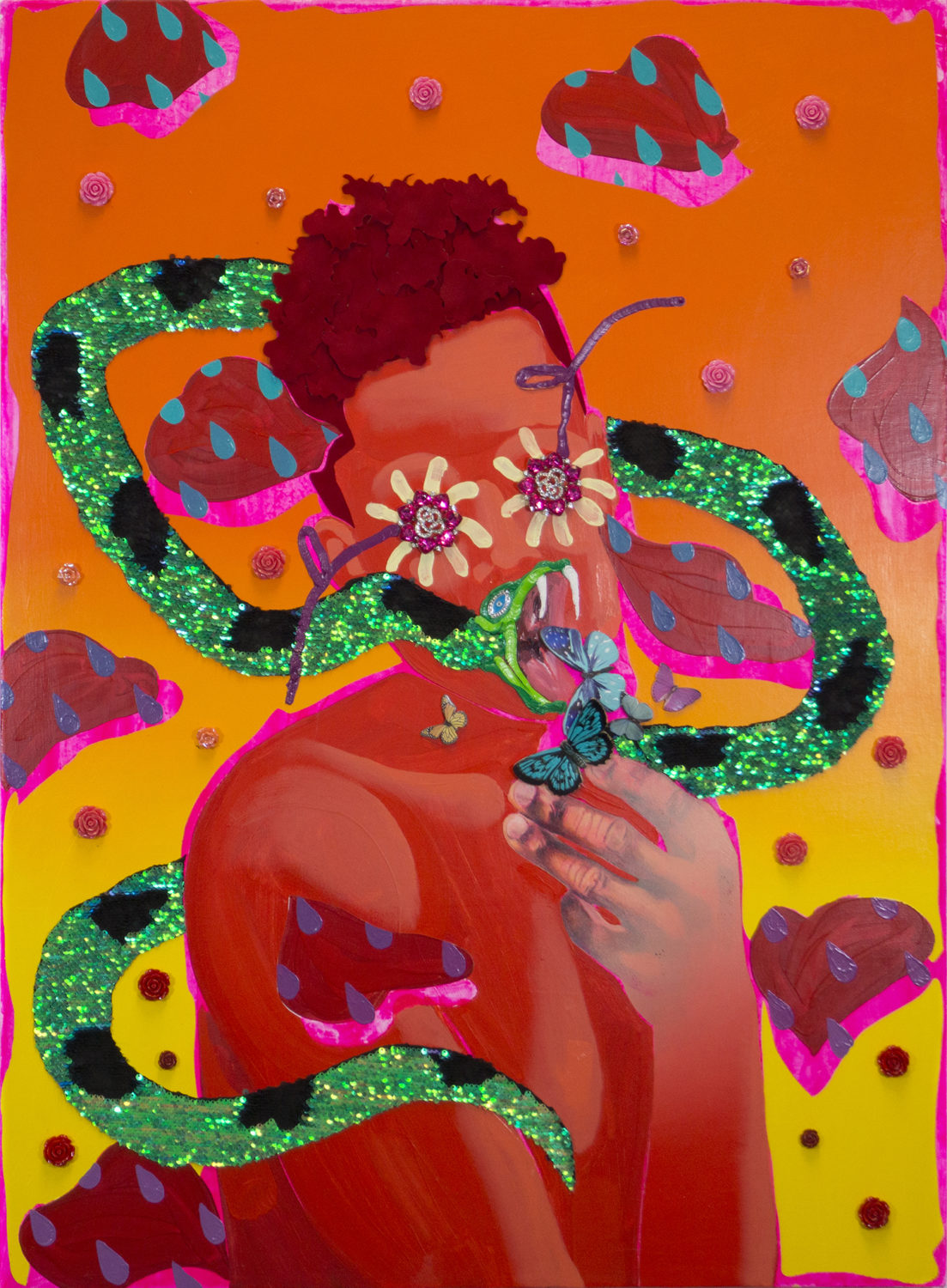
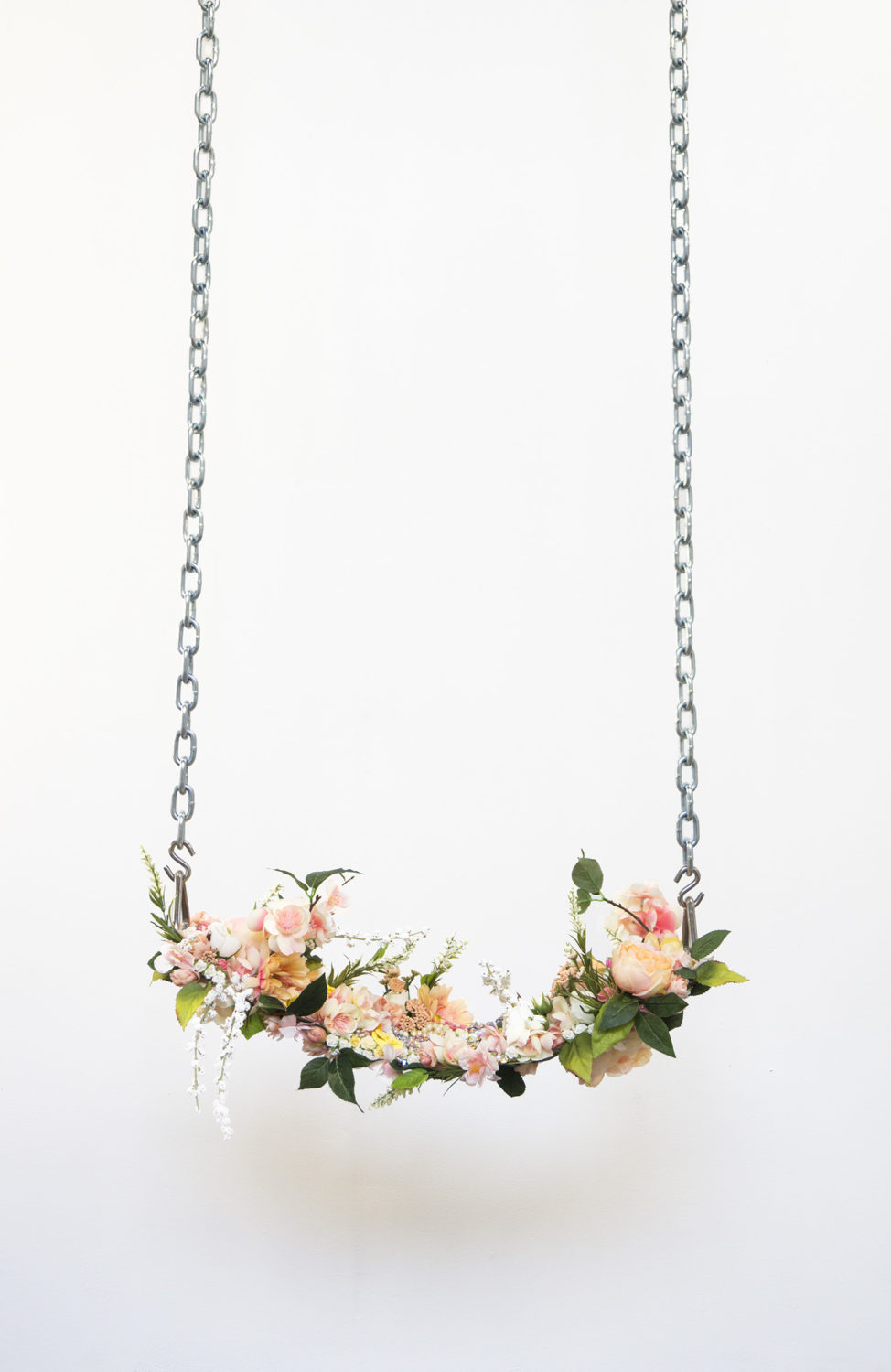
Shimoyama’s paintings shimmer with catharsis as much as they do with celebration. The title, Cry, Baby is as the artist says “a reclaiming” of a derogatory term. Rather than titling the show “Cry Baby”, Shimoyama inserted a comma, which he believes “changes it to more of an allowing someone to cry as a cathartic experience and permitting them to feel comfortable with expressing themselves”. Many of Shimoyama’s paintings depict men with bejewelled tears streaming from rosebud eyes as in the gold-hued Tasha (2018). Meanwhile, there are three sculptural “objects of mourning” in the exhibition, consisting of swing-sets and hoodies poignantly adorned with silk flowers and rhinestones to commemorate Tamir Rice and Trayvon Martin, two young black teenagers who were fatally shot. Here, Shimoyama is riffing off urban memorial traditions, such as decorating the construction site of a burned down building with flowers and teddy bears.
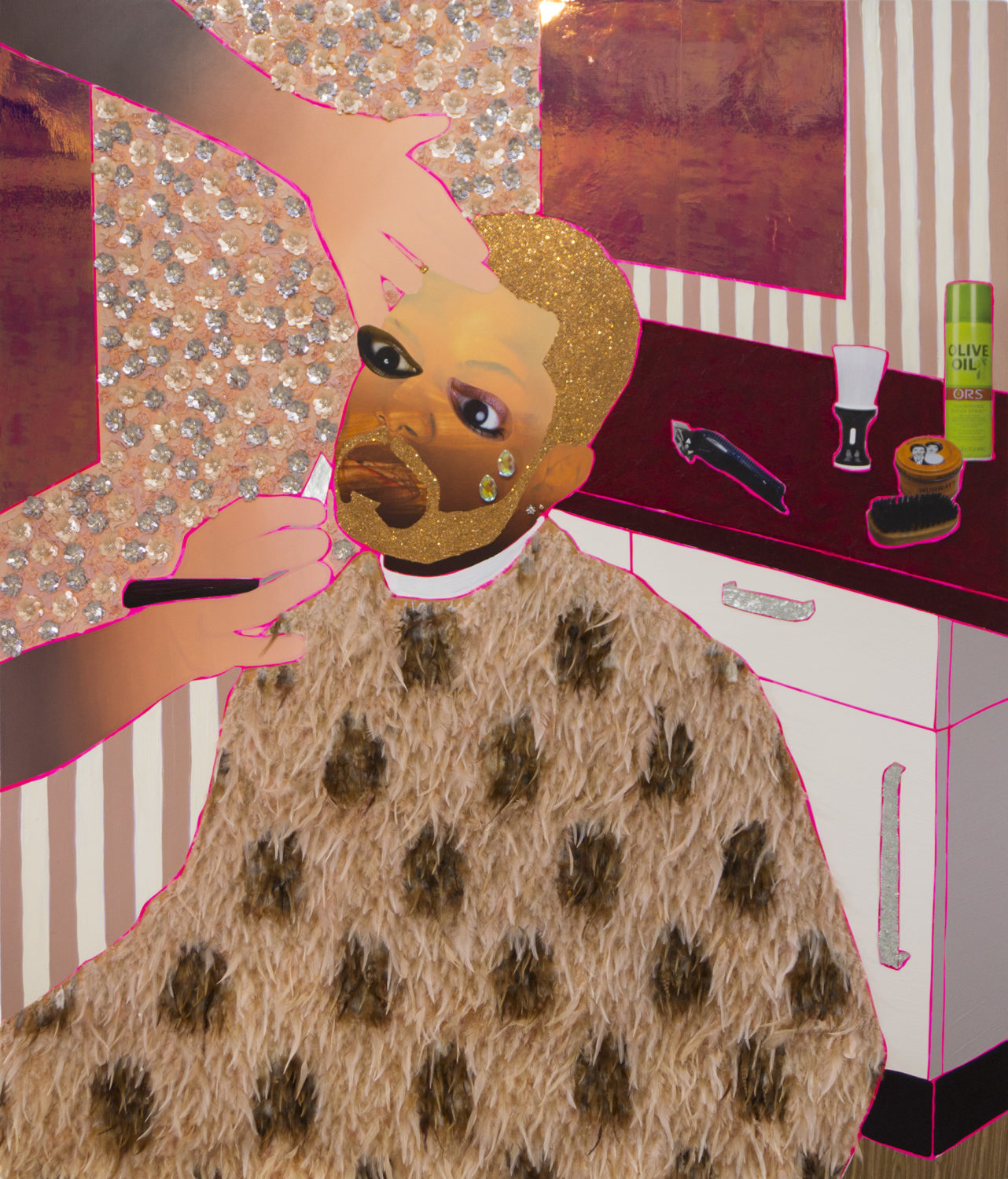
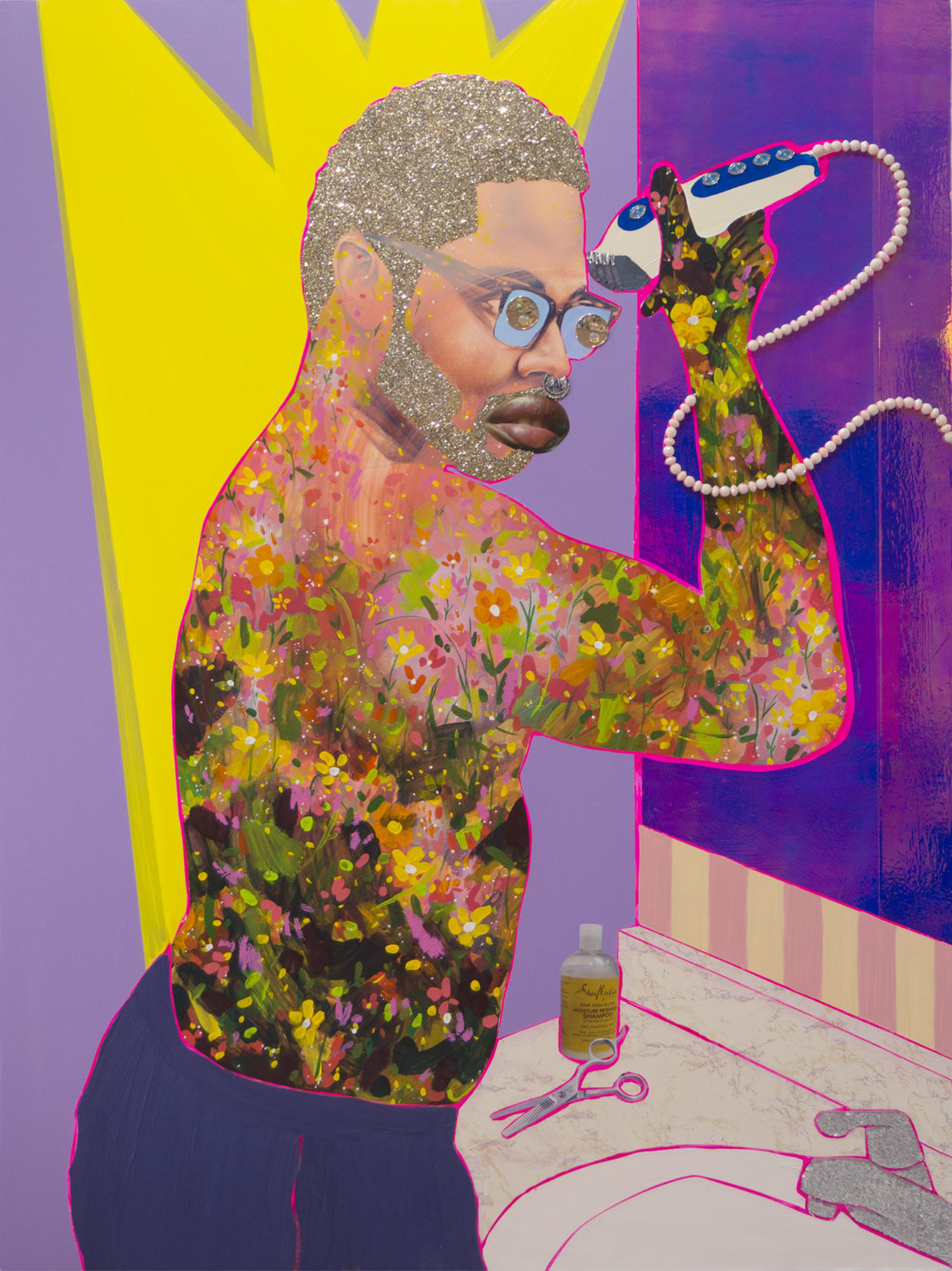
Aside from its socially-conscious undercurrent, Shimoyama’s practice is deeply personal. He often inserts himself onto his lavishly decorated canvases in scenarios ranging from shaving to being caught in a purple current of tears and emerald-skinned snakes. Not only do his paintings offer an idea of what ‘a painting in drag’ might look like, but his work is also very much rooted in fantasy and fiction. “It’s like creating an illusion, a mythological space, where I can use this shamanistic character to navigate stories of my own invention.” It goes without saying that Shimoyama’s versions of illusion, fantasy or glamour are not stuck in some abstract dreamland. Instead by painting himself and the people that he knows, his paintings possess the possibility to intervene in mainstream narratives in order to “to create visibility for people who identify similarly.”
See more works below:
Cry, Baby runs through to 17 March 2019 at The Andy Warhol Museum.