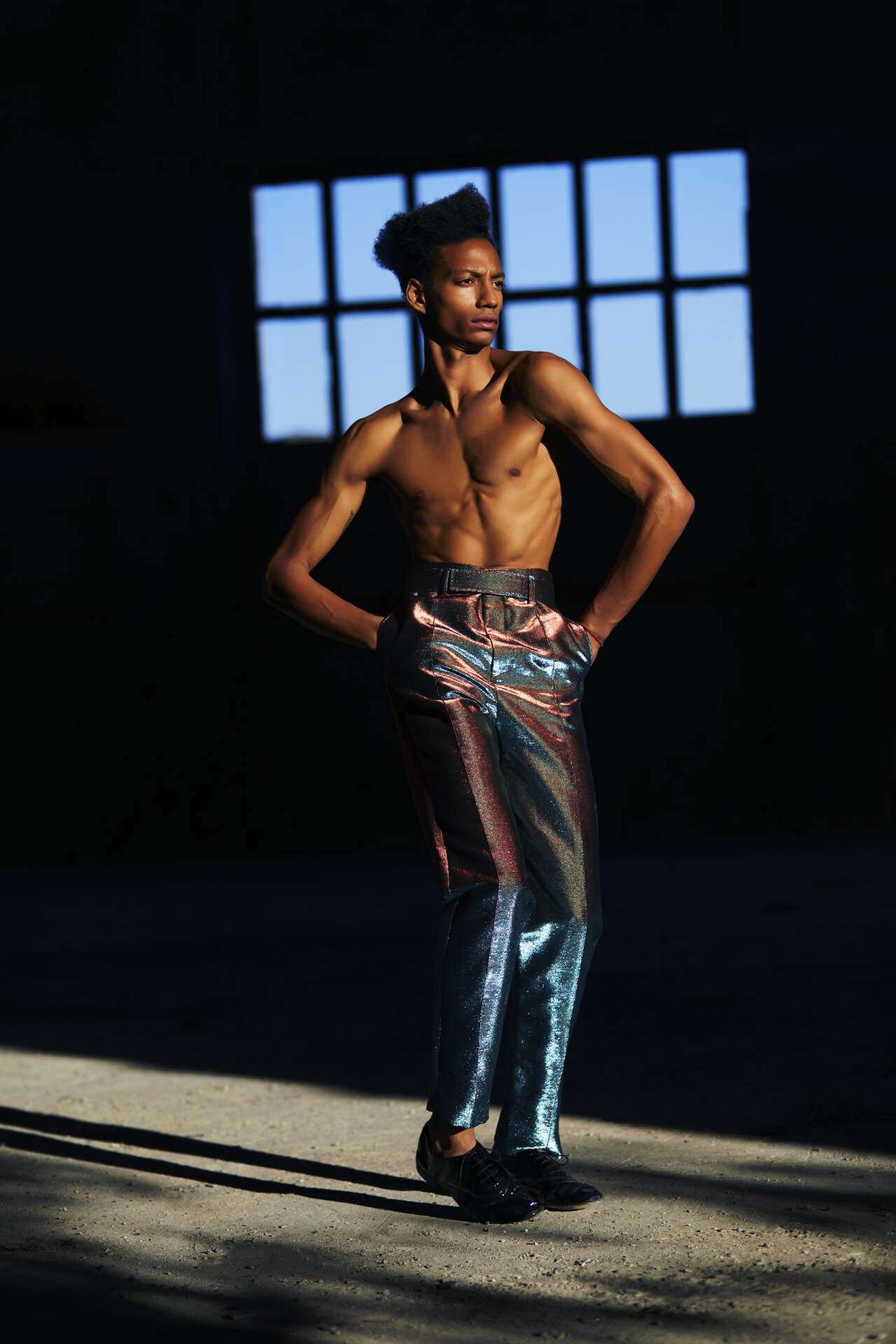
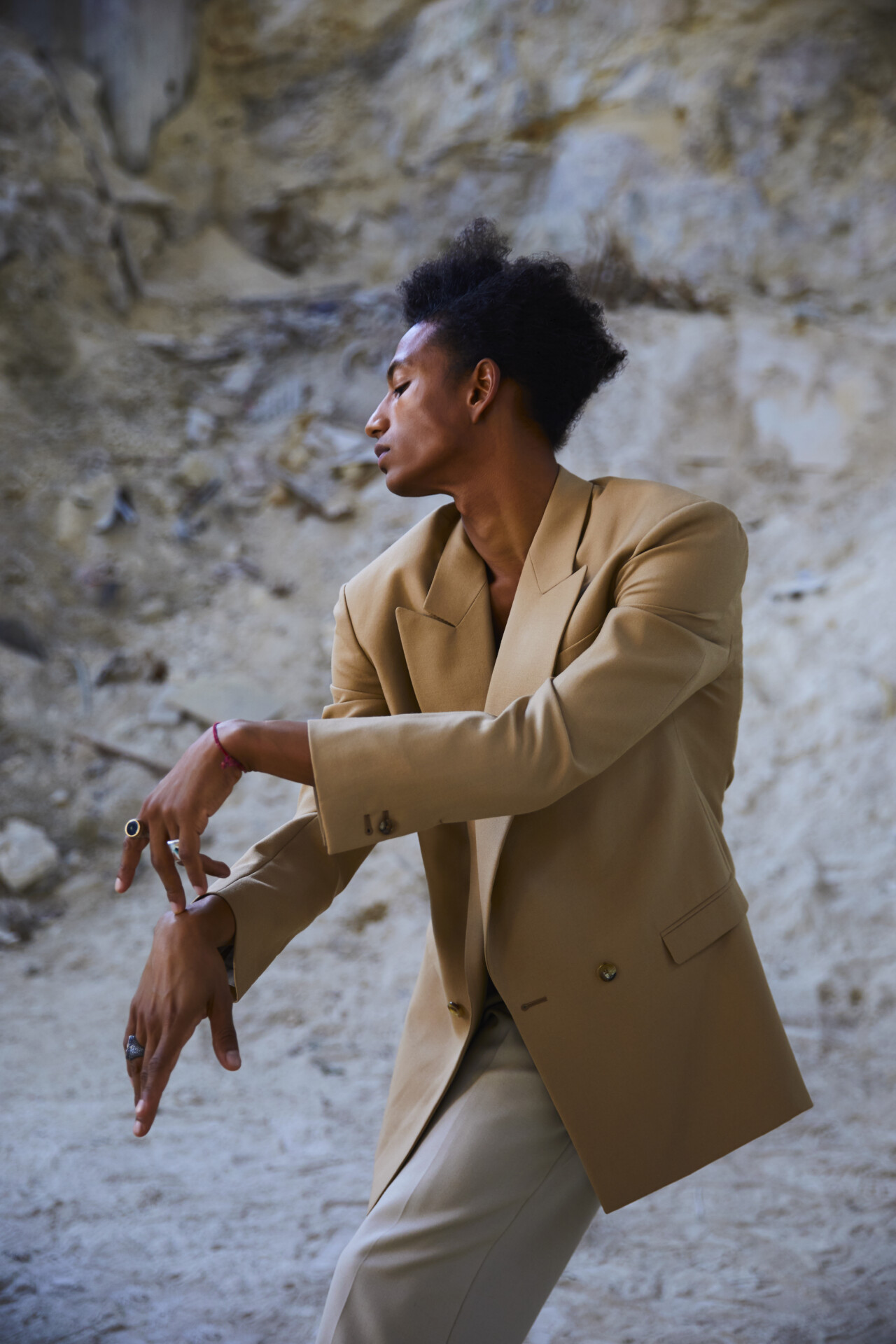
Arms fold and extend in a dreamlike flow through Jamaican-born choreographer M.J. Harper’s rehearsal, before he gently reprimands the group — “It’s not just a step…It’s sacred…That didn’t look sacred at all!” The dancers float across the stage and lift each other to the reverberations of what sounds like a celestial underwater harp — in fact it’s harp music by Harper’s frequent collaborator, electronic composer Mikk Madisson.
The dancers are prepping for creative director Tanja Bombach’s latest work, “NOW YOU MAY TELL THAT I’VE BEEN SEEN BY YOU”, which Harper is choreographing. The event, taking place tomorrow night at Trauma Bar in Berlin, showcases the work of four Berlin-based fashion designers, Don Aretino, Maria Miottke, Olga Khristolyubova and Johanna V. Liebl, with a dance performance of a pastoral scene of nymphs in a forest. It’s a contemporary reworking of the classical ‘Diana and Actaeon’ myth, complete with electronic glitches and static cascading through the Utopian tableau.
Harper’s choreography ranges from the unruly and unformed, to the slickly polished, and it’s gotten him the attention of Europe’s fashion community. He has choreographed runway shows for the British designer Grace Wales Bonner and has collaborated with former Yves Saint Laurent head Stefano Pilati, who can sometimes be seen in the background of his low-fi dance videos. Meanwhile, his Instagram, @harpersletters, features his ephemeral videos, which sometimes border on the absurd. In one Dali-esque snippet, for example, Harper’s hair is slicked back and covered in grease. He writhes around in front of an audience making guttural noises in a jockstrap.
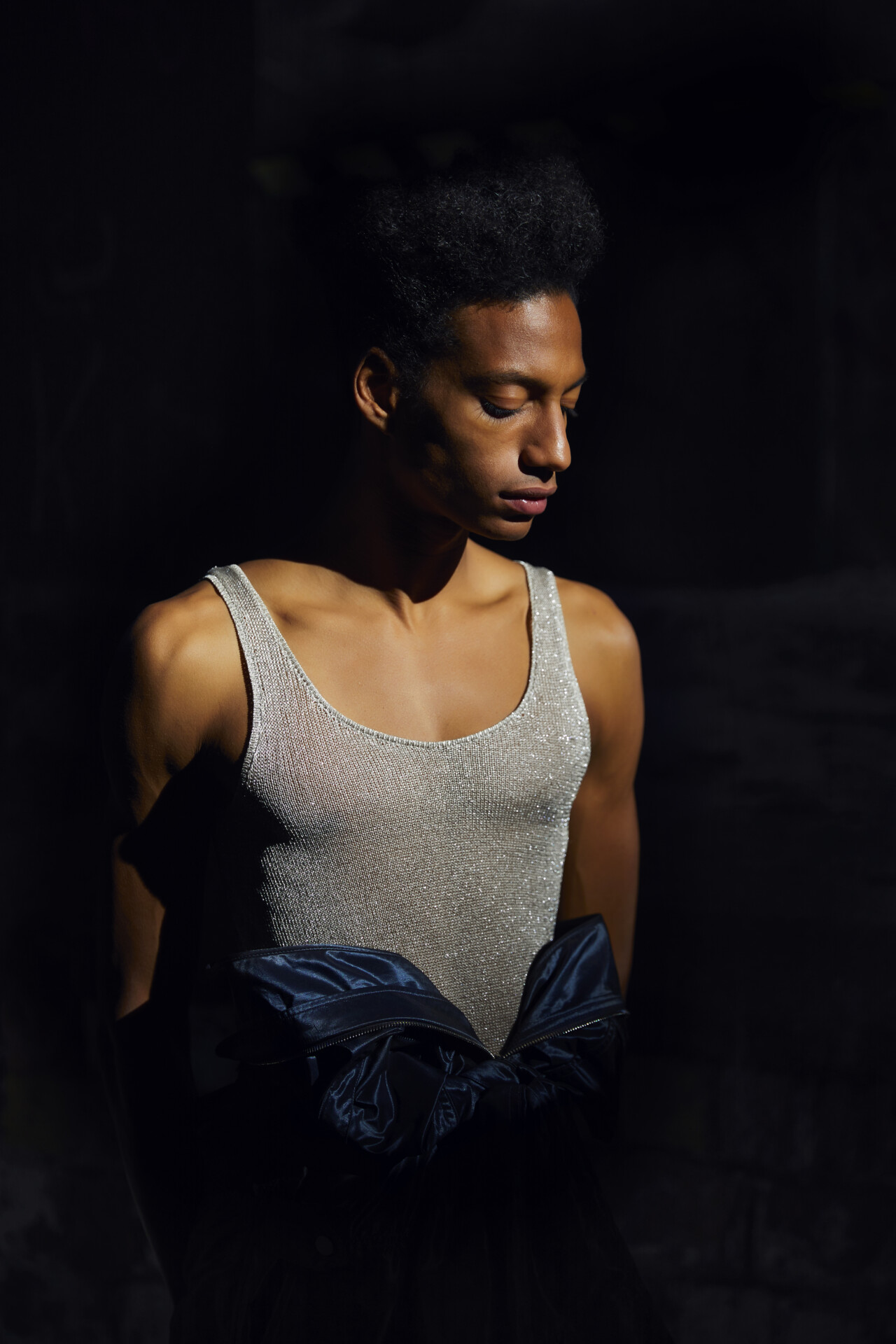
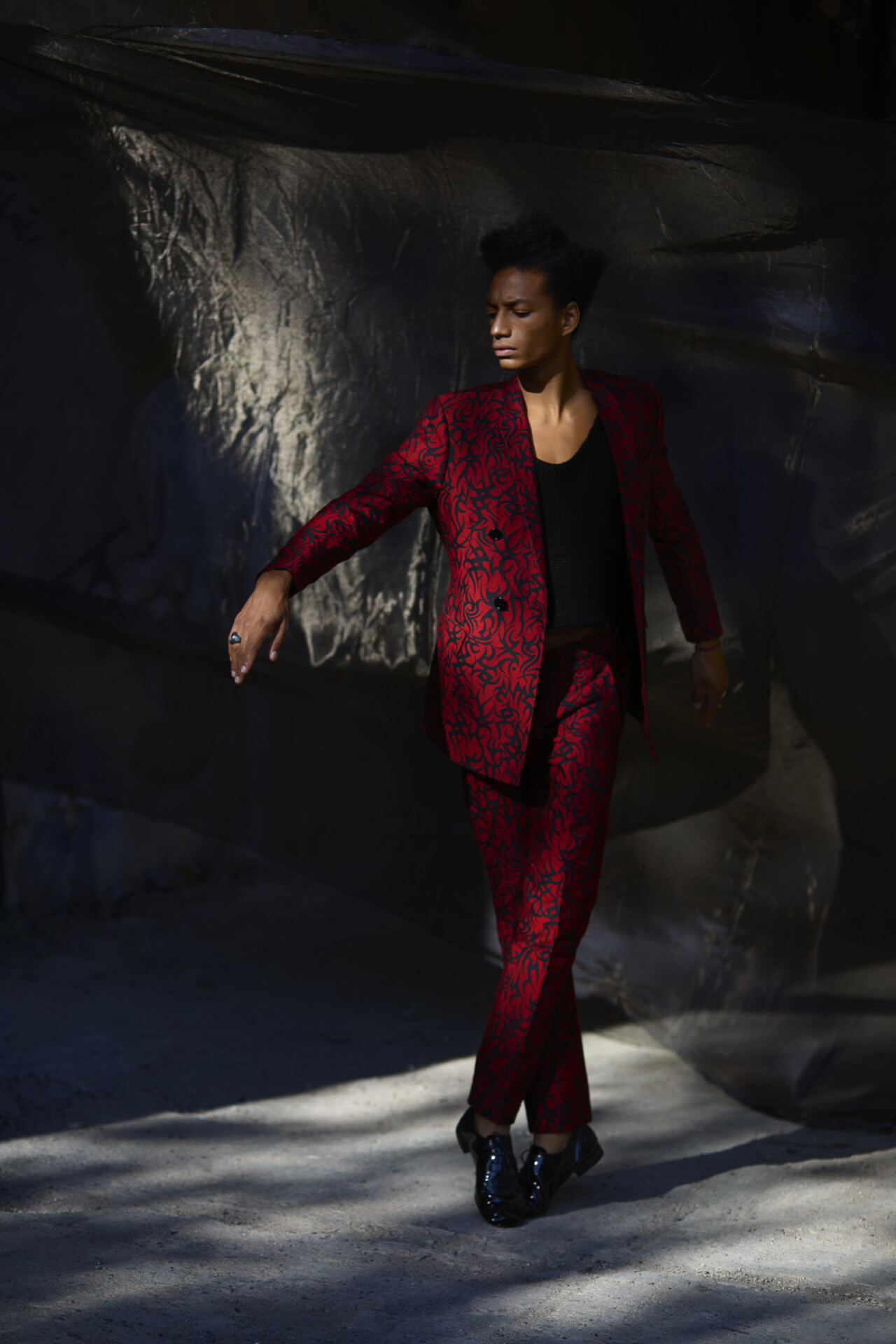
Harper’s work pivots on repetition. “The current state of social media is governed by algorithms, that dictate the things you see most of the time,” M.J. tells me. “I purposely put in repetition in my videos to irritate or make [viewers] question the way they use social media.” His work is simultaneously impressive and confusing: “Part of the ritual is finding structures to support the phone, or weird angles. It’s very architectural.” These experimental video fragments tease what might be expected from his future live performances.
Clad in an ‘80s black women’s bathing suit with red sock shoes, Harper moves tornado-like. He dismantles the traditional rules of ballet. Saxophonist Bendik Giske and Madisson provide an urgent soundtrack each step of the way. Think Philip Glass composing to a swarm of bees.
Born in Jamaica, Harper moved to Florida with his mother when he was 7 years old, Having only returned once since, he says he can’t imagine having stayed on the Caribbean island into his teens. After being bullied on the first day of school for sounding different, Harper worked hard to shed his Jamaicanness. “I realised that I would need to figure out a way to blend in to protect myself.” The dancer quickly found himself adapting to new life as an American. “My Jamaican accent is now gone, I got rid of it so fast.” But blending in is far from Harper’s priority today.
Harper is aware that his identity will be politicised. But unlike many of his contemporaries, he is not overtly political. “It’s important for me to look at my past so I know how to go forward. I am trying to carve out a world for myself that goes beyond the colour of skin or sexuality or gender.” He doesn’t use his work to bang a drum but to dance to one: “I look forward to a world where the energy inside speaks out rather than the skin which is a shell. I don’t know if I will experience this world? Or whether I can play a part in carving that world for other people.”
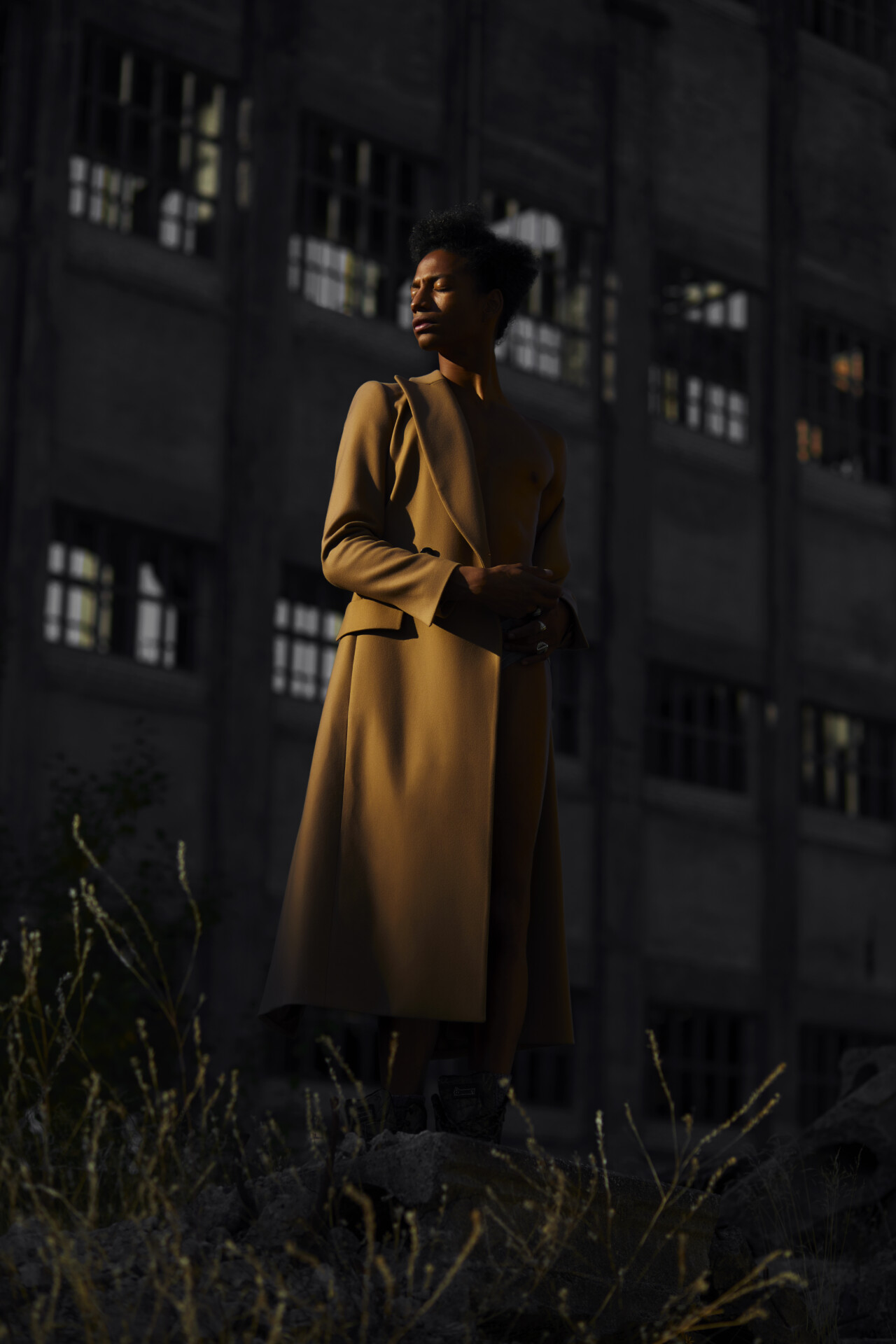
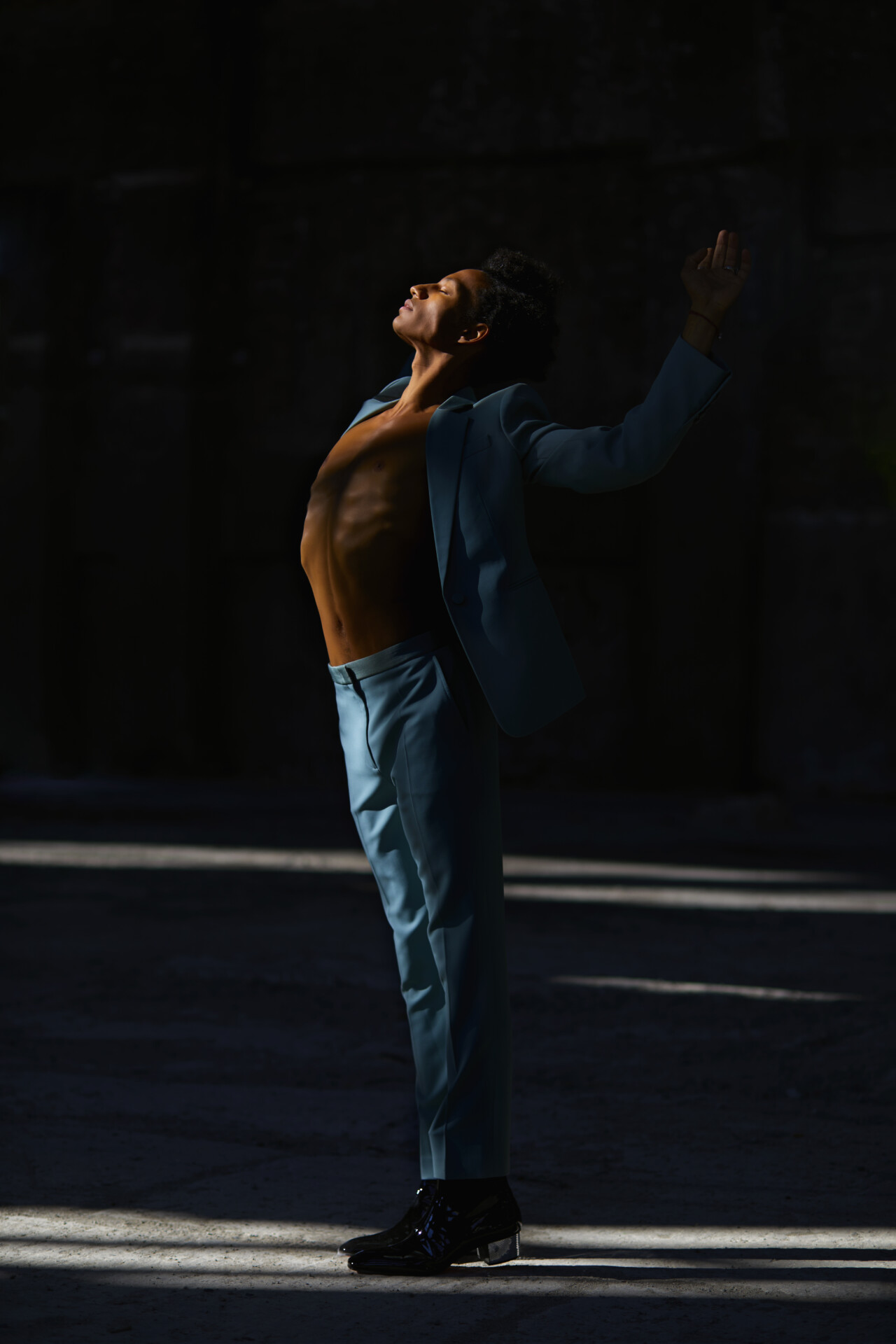
Harper can be contradictory, however. In earlier meetings, he described himself as “a queer mixed-race human, who comes from a tiny Caribbean island,” calling his performing his own “personal form of personal visibility”. He’s more guarded in our next meeting: “I don’t want to be pinned down as only one thing because I’m more than one thing.”
This is part of why Harper feels at home in Europe’s dance scene, when he relocated in 2010, he saw dancers who looked like him. “American male ballet dancers are more muscular, more athletic, whereas in Europe the male dancers embrace female energy. You don’t see that as much in the U.S.” Disregarding gender stereotypes is a staple of his work and that of his contemporaries, with his video’s featuring male dancers wearing the Pilato designed Random Identities men’s heeled ankle boots.
For his upcoming Berlin performance, the diverse group of dancers have their heels closer to the ground: they will dance barefoot, but the collections they dance in will still be resoundingly gender-free.
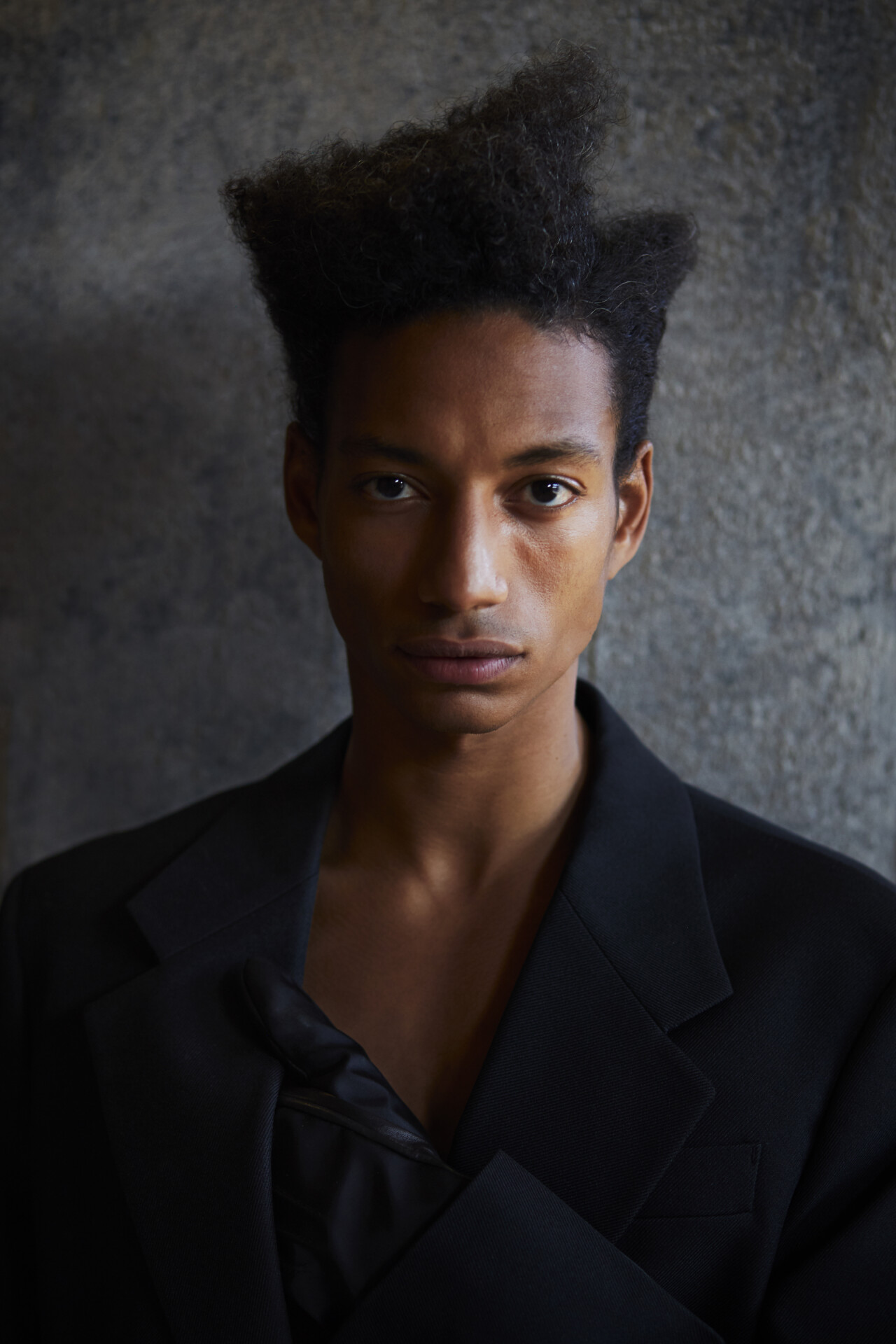
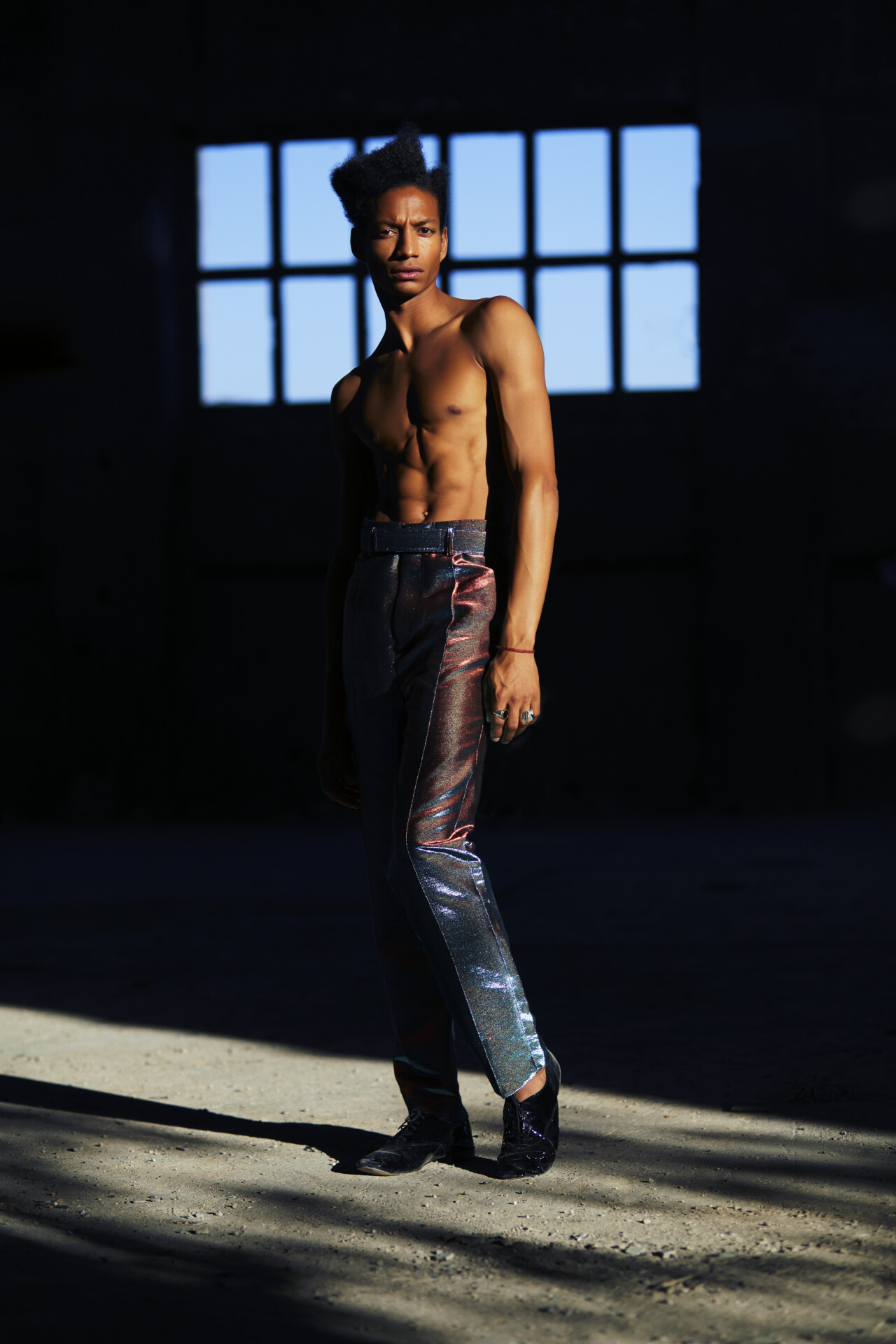
The dancers are prepping for creative director Tanja Bombach’s latest work, “NOW YOU MAY TELL THAT I’VE BEEN SEEN BY YOU” which Harper is choreographing, which premiers Saturday 24 November. His next solo project “I Hope The Long Arc of Life Bends…” opens in 2019. Both events will be performed at the Trauma Bar in Berlin, Germany
PhotographerMichael Wickham
StylistCharlotte Gindreau
Grooming: Attila Kenyeres