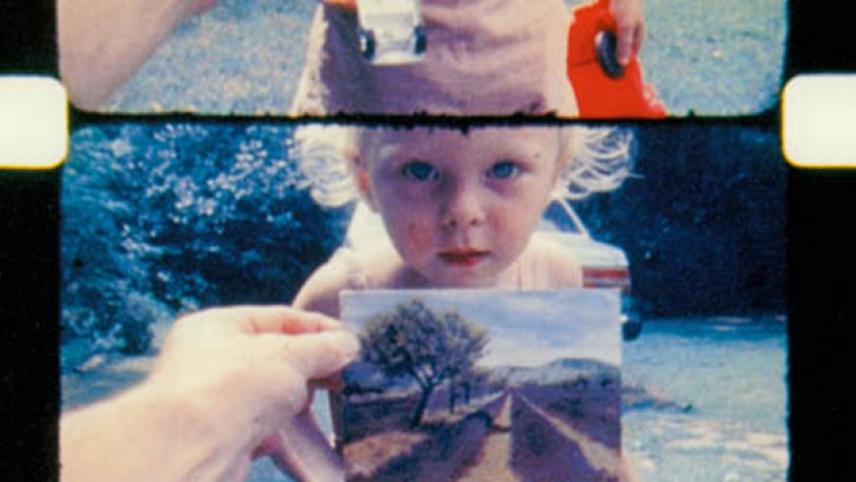
Jonas Mekas, 2000. As I Was Moving Ahead Occasionally I Saw Brief Glimpses of Beauty. Canyon Cinema.
On Wednesday evening, Jonas Mekas, the Lithuanian filmmaker dubbed the “Godfather of underground cinema,” passed away at the age of 96. Born in the small Lithuanian village of Semeniškiai in 1922, Mekas was known for his diaristic approach to filmmaking — fleeting moments caught on his Bolex 16mm movie camera, friends in motion, street scenes, life just as he saw it.
His life was notable from the beginning. In 1944, he escaped Nazi-occupied Lithuania, before being detained in a German labour camp, and living in a series of displaced person camps. He arrived in New York City in ‘49 with his brother, Adolfas, who was also a filmmaker, and together they founded the publication, Film Journal. Throughout this time Mekas made his own films, often recording friends and family on NY’s streets, as well as writing a regular cinema column for The Village Voice. He was also a key player in the development of the Anthology Film Archives, one of the world’s most significant organisations dedicated to the preservation and promotion of avant-garde cinema.
Following his death, everyone from Harmony Korine to Martin Scorsese came out to pay tribute to his contributions to cinema, with the latter noting in a statement, “He was a prophet. He was an impresario. He was a provocateur in the truest and most fundamental sense – he provoked people into new ways of thinking about what an image was, what a cut was, what a film was, what commitment was. Who was more committed than Jonas to the art of cinema?”. But what is it about Mekas’ style and attitude toward filmmaking that makes it so necessary still, and likely to be so long after his passing?
The answer lies in his swift and poetic approach to filmmaking — an approach that’s arguably more relevant today than when he first starting making films. “I want to celebrate the small forms of cinema, the lyrical forms, the poem, the watercolour, etude, sketch, postcard, arabesque, bagatelle and little 8mm songs,” so said Mekas. In short, Mekas noticed the beauty in minutiae, the worthiness in the purple haze of a summer’s evening, a child playing with toys on back garden steps, the creamy dappled light on water, a smile curling on familiar lips. Most importantly, perhaps, he wanted to document the sensation of memory on camera — how these moments merge and fold into each other, how memories are never fully realised but more like waves of light and feeling just touching the shore, but remain out of reach.
Mekas carried his camera with him everywhere — “I always have my camera with me, I never know what I will do with it” — and somehow his instantaneous method to capturing the vital ebb and flow of life feels significant in 2019, when so many of us in some way or another engage in instant filmmaking through Instagram stories and smartphone technology.
Mekas was a pioneer of the digital storytelling revolution, even if handheld film cameras are the medium he’s associated with. In the ‘80s, he switched from 16mm to video and in 2007, he embarked on his 365-Day Project, where he made a short video everyday and uploaded it to his website — sound familiar? Mekas recognised the democratising nature of the Internet, stating in an interview for Studio International, “The internet offers me the opportunity to distribute my videos in a new way and with minimal cost. The internet makes the process (of distribution) much simpler. You make it, and five minutes later your friends can see it in Buenos Aires and Tokyo.” Not only that, but Mekas acknowledged a desire for personal-led storytelling that promoted technological change. “In the ‘40s and ‘50s, we had heavy cameras. Then, gradually, they became lighter. Now, you can put it in your pocket and do very casual filming with it. So, tools and technology determine the style and the content of the images. It is very personal, like a postcard. There is a big difference between a postcard and a letter, and it seems that we need this very personal content. It is this need that produces new technology and not the other way around. There is a reason why this is all happening.”
Mekas’ musings are enlightening, particularly in an age defined by the creation of personalised digital content, but even more so because his practice circulates around the impulse to record, archive and remember. For Mekas, the urge to make films was as necessary as air itself — “I make home movies therefore I live, I live therefore I make home movies”. It’s a sentiment that is embodied in the contemporary cultural obsession with social media and documentation — if you didn’t post it on Instagram, did it even happen? — but Mekas recognised the human compulsion to document, to share, to archive and preserve, and how that might not be such a bad thing, after all. Ultimately, Mekas was fuelled by a desire to savour a sweet and effervescent moment amid the noise and chaos of life, and that can only be commended: “I am standing in the middle of the information highway and laughing, because a butterfly on a little flower somewhere just fluttered its wings, and I know that the whole course of history will drastically change because of that flutter. A super-8 camera just made a little soft buzz somewhere, on New York’s Lower East Side, and the world will never be the same.”