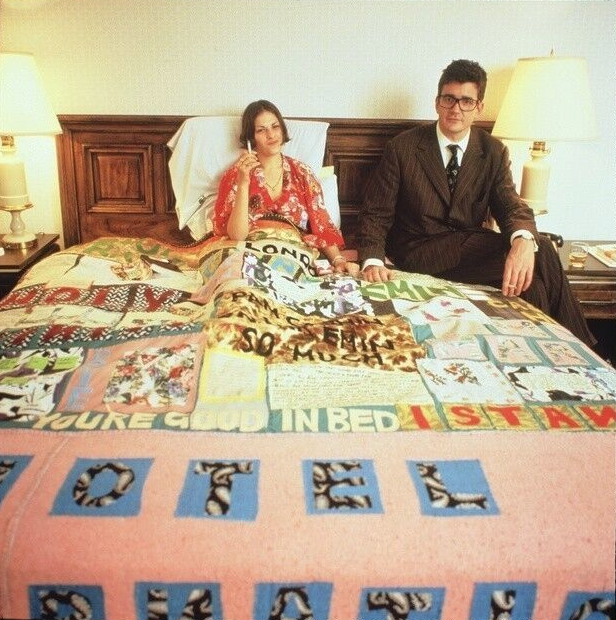
Tracey Emin and Jay Jopling at The Gramercy International Art Fair in 1994. Courtesy Art in America
Sometime in the early 90s, a group of young, downtown-New York art renegades got together with an idea. Colin de Land, Pat Hearn, Matthew Marks, and Paul Morris wanted to create a communal space for emerging artists to show their work in a radical fashion. More than that, they wanted collectors and museums to buy it. But the Big Apple then, was not what it is now: violence had reached an all-time high, and the AIDS crisis had ravaged much of the artistic community, among others. Yet, amid that bleakness, the art mavericks pulled together what would become one of the most successful art fairs in the world.
Now in its 25th year, The Armory Show is known as one of the busiest moments in the art calendar, attracting the international art world’s finest. But its first edition in 1994 was a rather intimate affair. Set amid downtown’s iconic Gramercy Park Hotel, the then-titled ‘Gramercy International Art Fair’ was more of an eccentric jumble than a fair, where artists and gallerists set up camp for four days, showing whatever they could, wherever they could.
“We could not make holes in the walls, so some of the rooms found crazy creative ways to show work on beds, under beds, or as installations in bathtubs,” gallerist Nicole Klagsburn told SLEEK. “The art world did not take itself that seriously back then.”
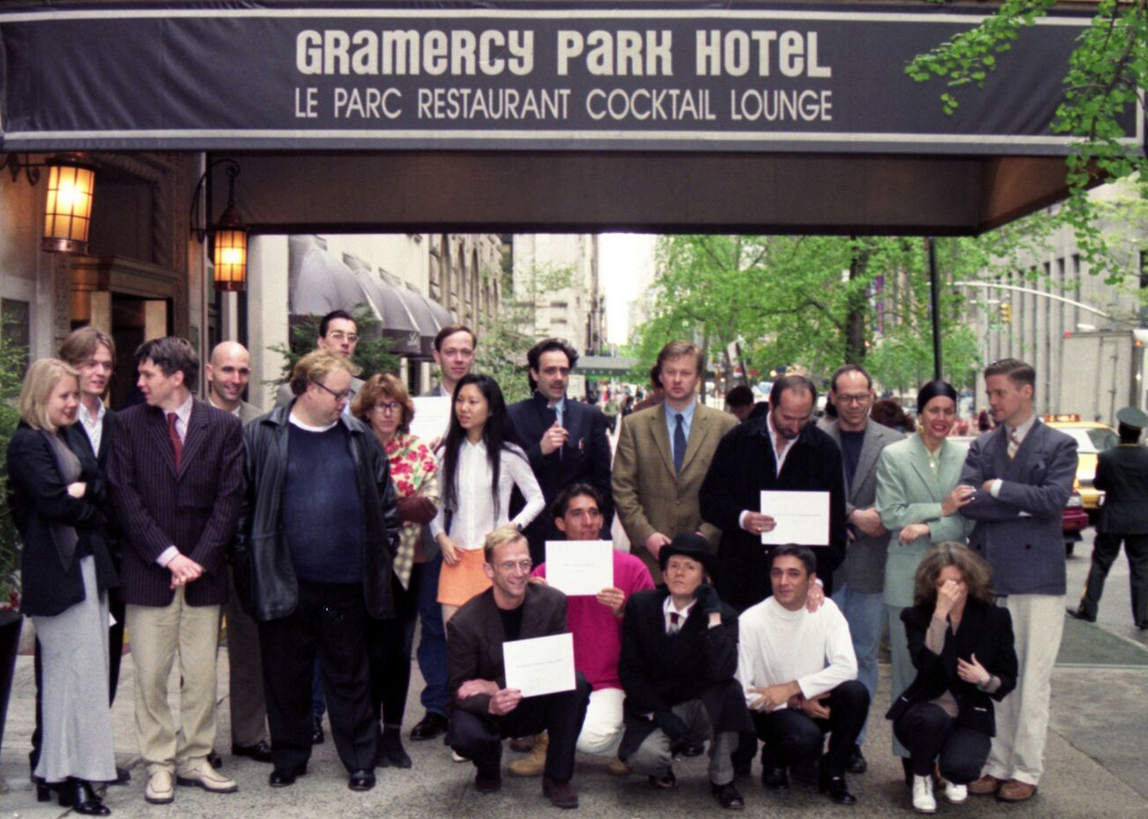
A group photo of The Gramercy International Art Fair’s first exhibitors and artists from 1996. Photograph by Sylvie Ball
Some 35 galleries were featured for this inaugural edition, and each were allocated a room across the hotel’s three top floors. For young artists — many of whom were international — this was a new experience. “It was my first time in New York,” remembers British artist Tracey Emin, who was showing works with White Cube-founder Jay Jopling. “One of the rooms, which displayed my work, doubled up as my bedroom.” (A suitably domestic experience for the confessional artist who, five years later, would gain international acclaim with the inclusion of My Bed at the Turner Prize.)
Following these initial experimental years, the fair migrated to the nearby 69th Regiment Armory in 1999, a few blocks north, where it would host 74 galleries. It was then renamed The Armory Show, an homage to the seminal exhibition, which took place in the same building in 1913, and introduced much of the European avant-garde to the United States.
“You could literally smell the history of these famous artists,” jokes German gallerist Christian Nagel, from Galerie Nagel Draxler. “In the men’s room, there was a graffiti saying ‘Here Marcel Duchamp took a piss’.”
It wasn’t until 2001 that the Armory Show moved to its current location at the then-derelict West Side piers — once a popular cruising spot among the queer community, before the AIDS crisis hit. At that point, the fair was far from its radical beginnings. It had grown into the biggest art fair in the Americas, featuring 178 galleries and attracting some 25,000 visitors — from art lovers to celebrities like Madonna, Joan Rivers and David Byrne. That same year, the fair announced a key partnership with MoMA, creating an acquisition fund, supported by major commissions by artists like John Waters, Gabriel Kuri and Theaster Gates.
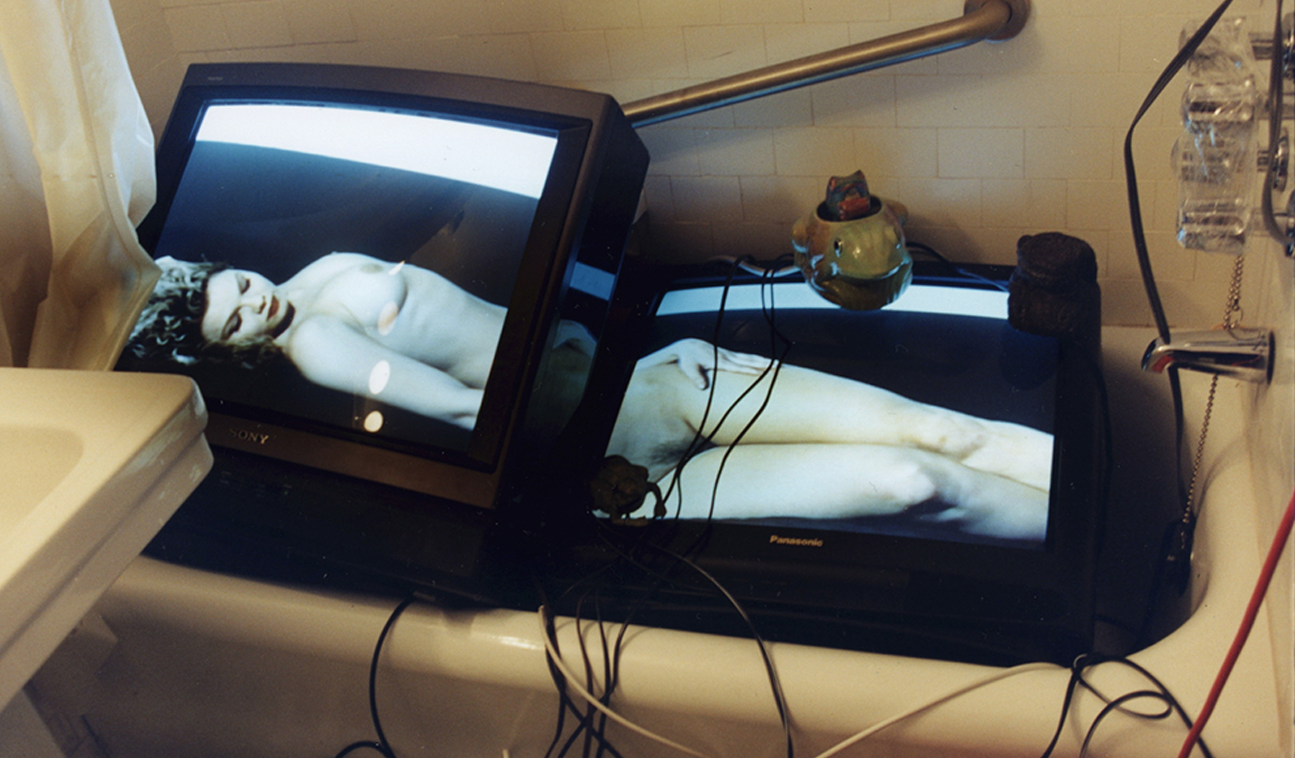
A work by Nam June Paik from the 1997 Gramercy International Art Fair. Presented by Holly Solomon Gallery. Photograph by Sylvie Ball. © Nam June Paik Estate. Courtesy Gagosian.
“The stakes are much higher now, because of the financial pressure,” Klagsburn laments. Reflecting on the early days of the fair, American artist duo David McDermott and Peter McGough recounts that “it was a simple act of showing art in hotel rooms, much before the advent of high priced art fairs with expensive looking booths.”
In an attempt to celebrate its early radical kudos, The Armory Show launched this year the Gramercy International Prize, a yearly initiative that supports the advancement of young and pioneering New York galleries. Judged by a number of influential art world figures, this year’s inaugural prize went to Lower East Side gallery Ramiken, who are presenting works by Montenegro-born artist Darja Bajagić and the Romanian Andra Ursuţa, both based in New York. Meanwhile, a special presentation of works by Mark Dion, Andrea Fraser and Renée Green will take place at the fair as an homage to Hearn and de Land’s championing of neo-conceptualism.
But in light of the recent Volta scandal — which saw the emerging art fair being cancelled only days before its opening, to leave room for Armory’s exhibitors — one might ask if this is quite enough. After it emerged last week that Pier 92 was structurally unsound, the real-estate giant Vornado (which now owns both fairs, under the umbrella company MMPI) decided to cancel Volta in order to rehouse some 60 galleries from the much-more profitable Armory Show. New York’s emerging art circuit, needless to say, is not impressed.
“I’m pretty sad that MMPI has been so careless with the piers,” said Sara Maria Salamone, director of Queens-based Mrs. Gallery. “It’s a disgrace that, at the last minute, The Armory had to shuffle exhibitors and completely cancel Volta. It shows a complete lack of respect for the exhibitors and the artists participating.” Salamone, who previously worked at The Armory Show as Exhibitions Relations Manager, added: “The Armory Show’s staff are committed and hard-working folks who thrive in the contemporary art world, and it’s a shame that they have to battle with such bureaucracy to organise a well-curated and respected art fair.”
As the art world continues to be shaped by the demands of a globalised economy, it is important to remember where its big players came from: affordable studio spaces, gritty galleries and, in some instances, hotel rooms-turned-art fairs. If we are to witness a future generation of radical minds making an impact, today’s large fairs — and their decision-making, corporate counterparts — need to make room for the emerging scene. Not the other way around.
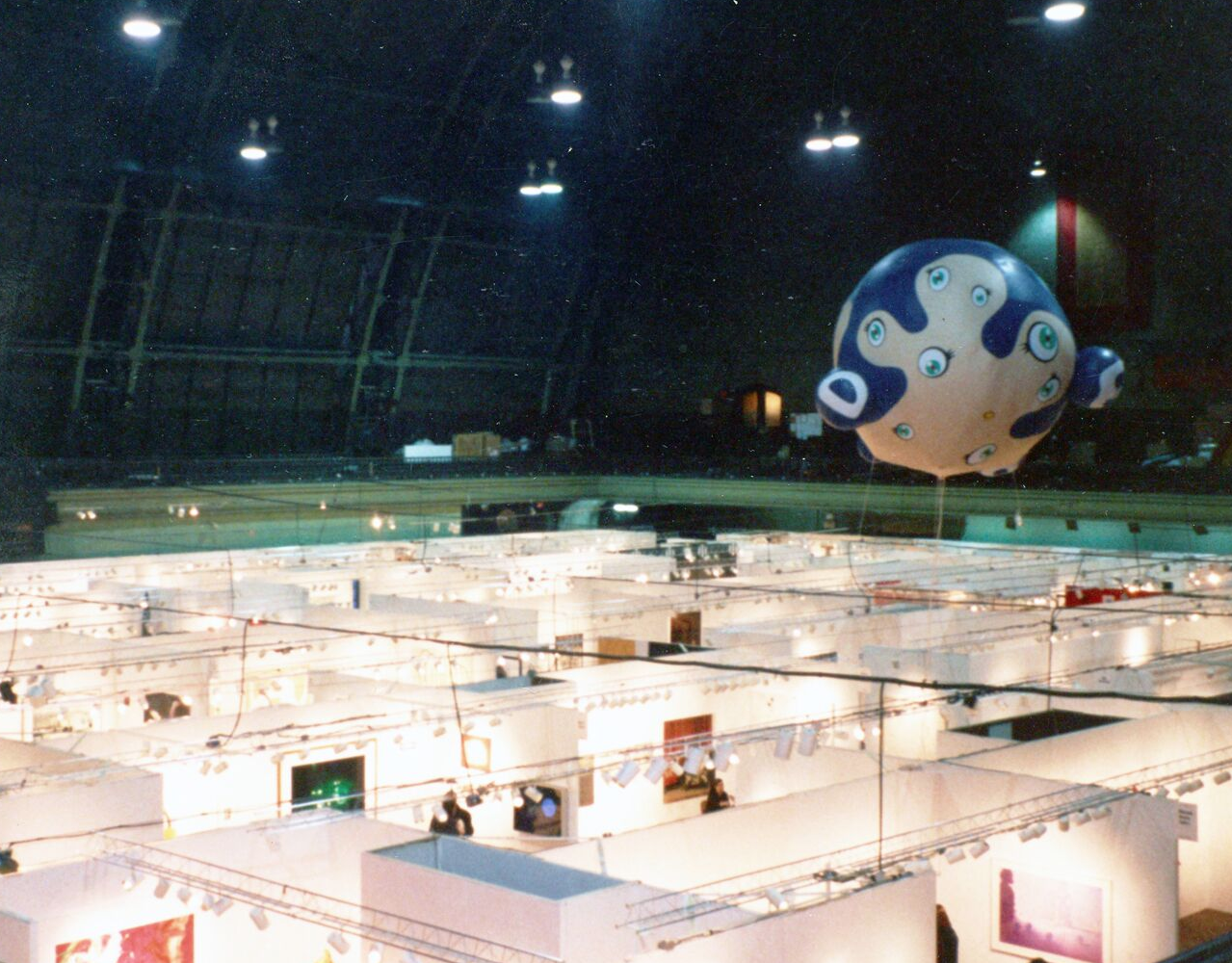
Balloon by Takashi Murakami, The Armory Show, 2002. Photograph courtesy of the Colin de Land collection, 1968-2008. Archives of American Art, Smithsonian Institution.
The Armory Show runs from Thursday 7 until Sunday 9 March at Piers 90, 92 and 94, New York