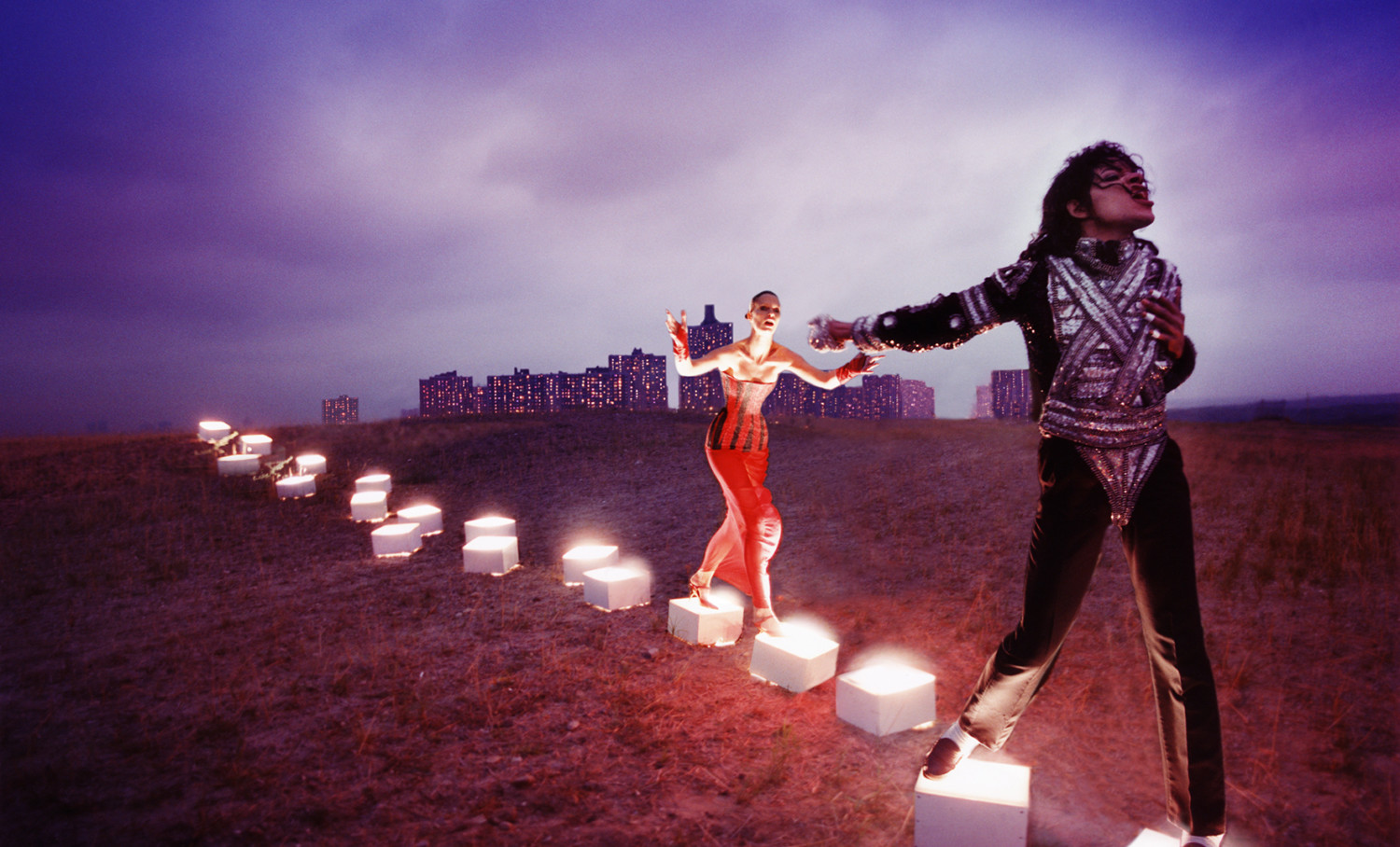
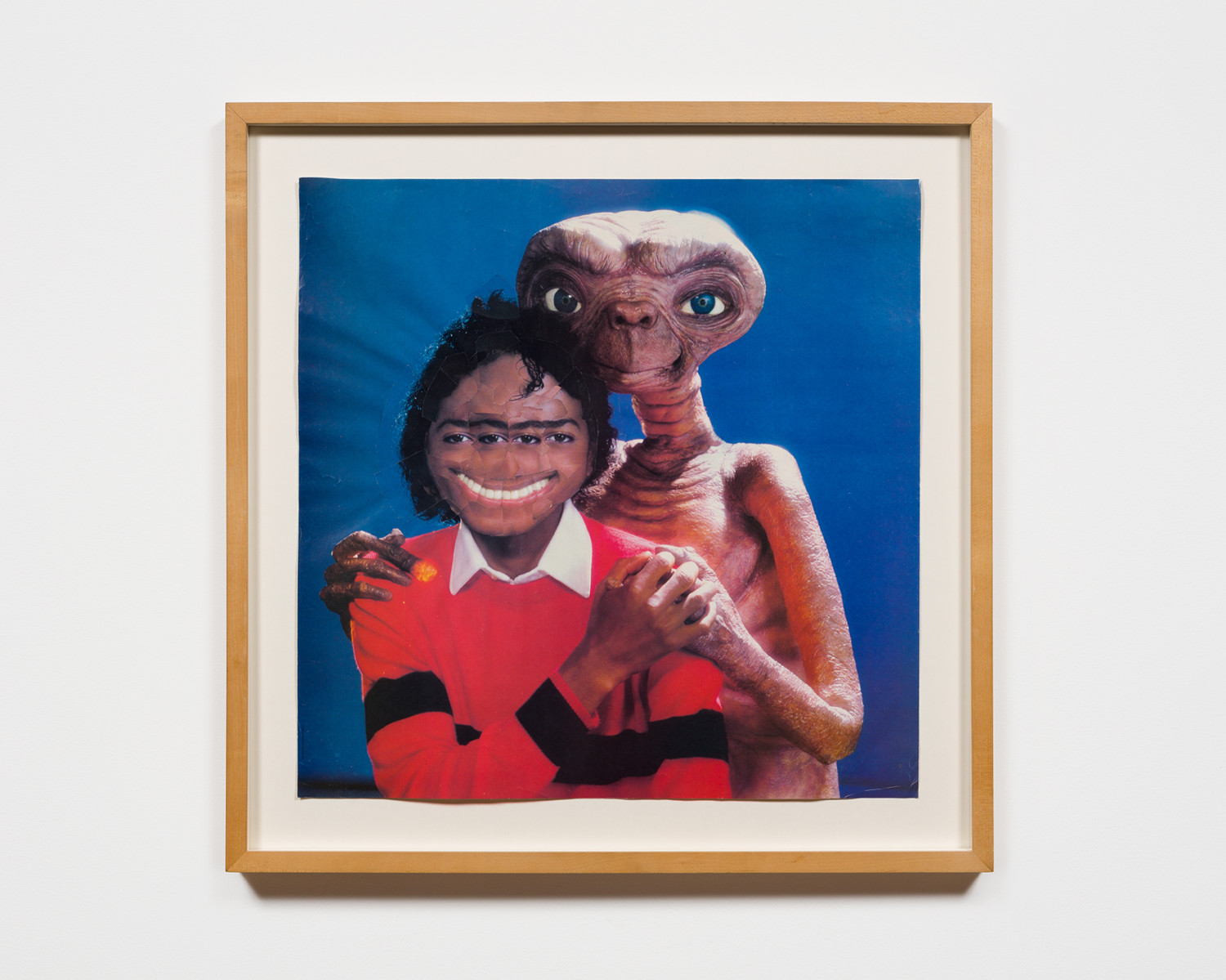
Michael Jackson had an enormous impact on pop culture, but following the airing of the documentary Leaving Neverland, in which two men allege that they were sexually abused by the late pop star as children, public opinion has shifted. With radio stations taking Jackson’s songs off the air and Louis Vuitton cancelling pieces from the much-anticipated Virgil Abloh collection that was inspired by the King of Pop, there is pressure for institutions to distance themselves. Although the exhibition, Michael Jackson: On The Wall, which opened this week at the Bundeskunsthalle in Bonn, presents both positive and critical images of Jackson, questions have been raised as to whether the show endorses a legacy that should no longer be celebrated.
On the Wall, which explores contemporary artists’ responses to the Jackson’s cultural influence — including Hank Willis Thomas, Jordan Wolfson, Rita Ackerman and Monster Chetwynd — and the God-like level of fame he achieved during his lifetime, has been in the pipeline for three years. First opening at London’s National Portrait Gallery back in June 2018, before travelling to the Grand Palais in Paris on a pre-organised run that now opens in Bonn, before ending in Finland at the Espoo Museum of Modern Art (EMMA). The cost and implications of cancelling a show at this notice would be considerable, but this does not negate the moral questions hanging over it.
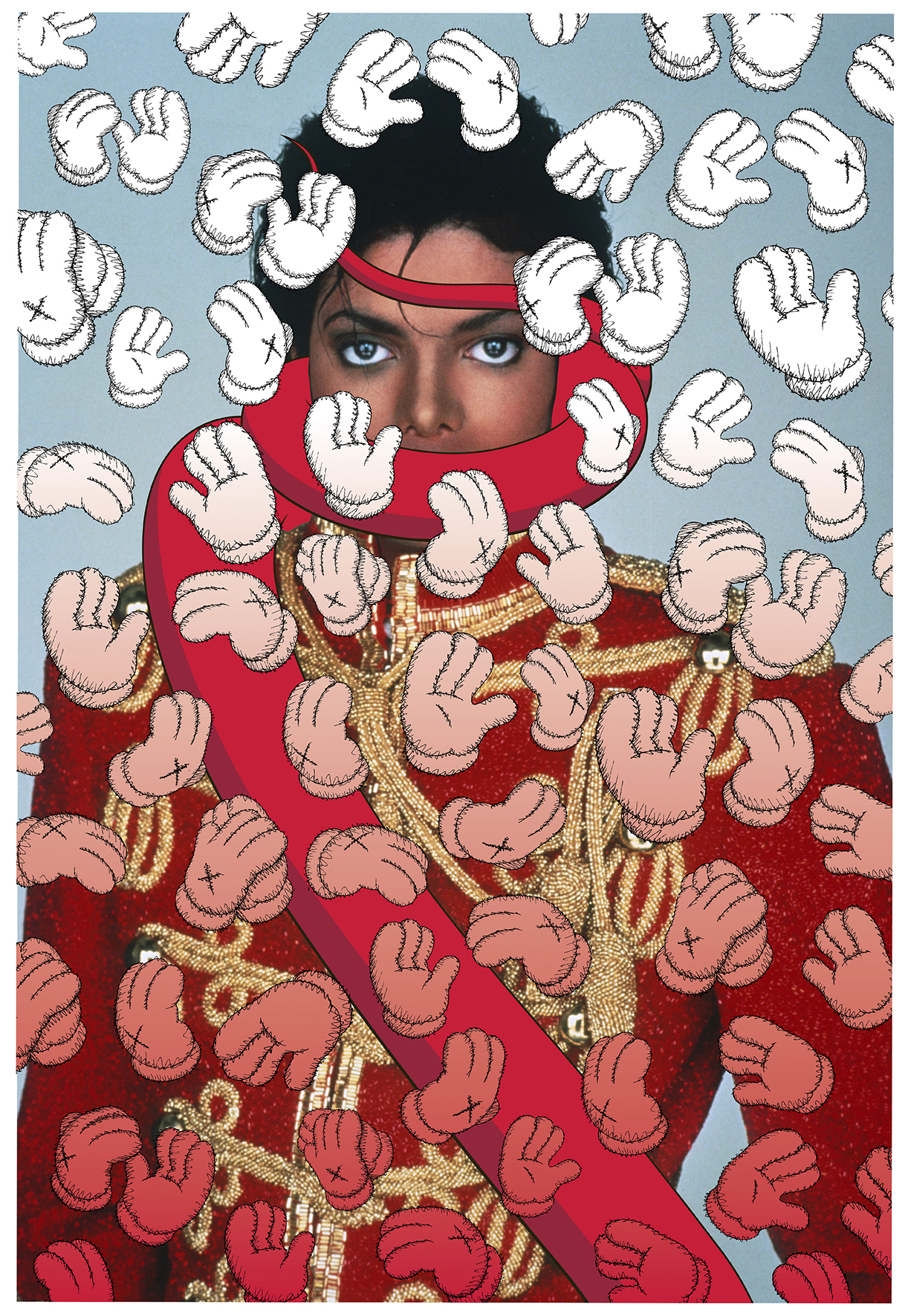
In the aftermath of #MeToo, there has been a cultural shift in sensitivities, increasingly calling for artists who are found to be guilty of sexual abuse to be ‘cancelled’ or ‘deleted’. Not only is this language dangerously close to ‘kill’, but there is also an element of fantasy involved — wouldn’t it be nice if simply editing someone’s creative output out of your daily existence also removed their past actions? Sadly, it doesn’t.
“The Bundeskunsthalle is closely following the current controversial discussion surrounding the film documentary Leaving Neverland,” the German institution said in a statement to Artnews at the start of this month. “The allegations are shocking, but the process is not yet completed and has become much more difficult since the death of Michael Jackson,” it adds.
Allegations of sexual abuse dogged the singer during the last sixteen years of his life, with all cases against him settled out of court. Jackson had many public friendships with children and Leaving Neverland sees one of two of them, now adults, accusing him of sexual abuse. The conversation concerning the allegations have evolved and is less concerned with the veracity of the accusations and has centred, in part, on how we treat victims of abuse. Both accusers and the documentary’s director have been subject to death threats by Jackson’s loyal fan base.
The exhibition, although it contains works that could be viewed as critical, was put together with the support of the Michael Jackson Estate, which is currently suing HBO for $100 million for making the documentary, and has also spoken out strongly against the accusers to discredit them. The documentary, however, has raised sufficient concerns for many radio stations to remove Jackson from their playlists (even a Simpsons episode featuring Jackson was shelved).
“The Gallery has always acknowledged that Michael Jackson is a public figure that was subject to controversy during his life and following his death,” reads a statement from the National Portrait Gallery, confirming that the exhibition tour will continue.“The Michael Jackson: On the Wall exhibition is not biographical. It examines the influence Jackson had on contemporary artists… However, the serious and shocking nature of the allegations made in Leaving Neverland documentary call for solemnity and should be considered with sensitivity. How we deal with Michael Jackson’s cultural legacy now is a question many of us are grappling with…,” the NPG statement reads.
While people may now be raising questions about how to tackle the star’s legacy, the questions about his conduct with children are nothing new. The explicit allegations in Leaving Neverland have altered how many viewed those questions from looking at the actions of someone who appears to be very damaged to looking at the effects of those alleged actions on others. How do we view an exhibition that explores his fame and influence through that lens? If you take the view that Jackson’s fame facilitated him being able do exactly as he pleased with impunity, to the detriment of his victims, then what is this exhibition other than a cavalcade of horror? It could also be seen as a chilling reveal of how we, the public, ignored the ongoing claims of abuse to enjoy reverence of this undeniably talented musician. What does that say about us and our culture?
The exhibition includes work both commissioned to promote Jackson, such as work by the photographer David LaChapelle, and in response to him as a cultural icon, for example that of Catherine Opie. Also, on view are artists who were contemporaries of Jackson such as Andy Warhol and those who grew up knowing him as the world’s most famous pop star like Njideka Akunyili Crosby.
Several generations of us grew up with Michael Jackson as a household name, and if his fame was some kind of international con, then that is something we all need to come to terms with. How do we do that if all material relating to Jackson is censored? The danger here is that if pretending that these figures — like R. Kelly or Harvey Weinstein — never existed, will we ever fully address how they managed to get away with what they did?
While this show has the definite feeling of cashing in on disaster, maybe this is all just too late to stop for the institutions involved. It is easier to take a song off a playlist than to have an empty gallery or museum for three months with the knock on financial implications. That being said, NPG have just publicly rejected a $1million grant from Sackler Trust due to the family’s pharmaceutical company’s role in the production of OxyContin. The family’s role in the arts has come under criticism from high profile artists such as Nan Goldin, who campaigns against their patronage and puts pressure on the museum to reject funds, threatening a boycott. It seems that institutions are taking public opinion more seriously and although On the Wall now feels in very poor taste, perhaps a look at Jackson and our relationship with his fame is no bad thing in relation to Leaving Neverland. Following Jackson’s death a decade ago, there is no one to shed light on the allegations other than the victims, all we are left with is his legacy so perhaps the most productive thing we can do is examine it and move on.
Michael Jackson: On The Wall runs until 14 July 2019 at Bundeskunsthalle, Bonn.