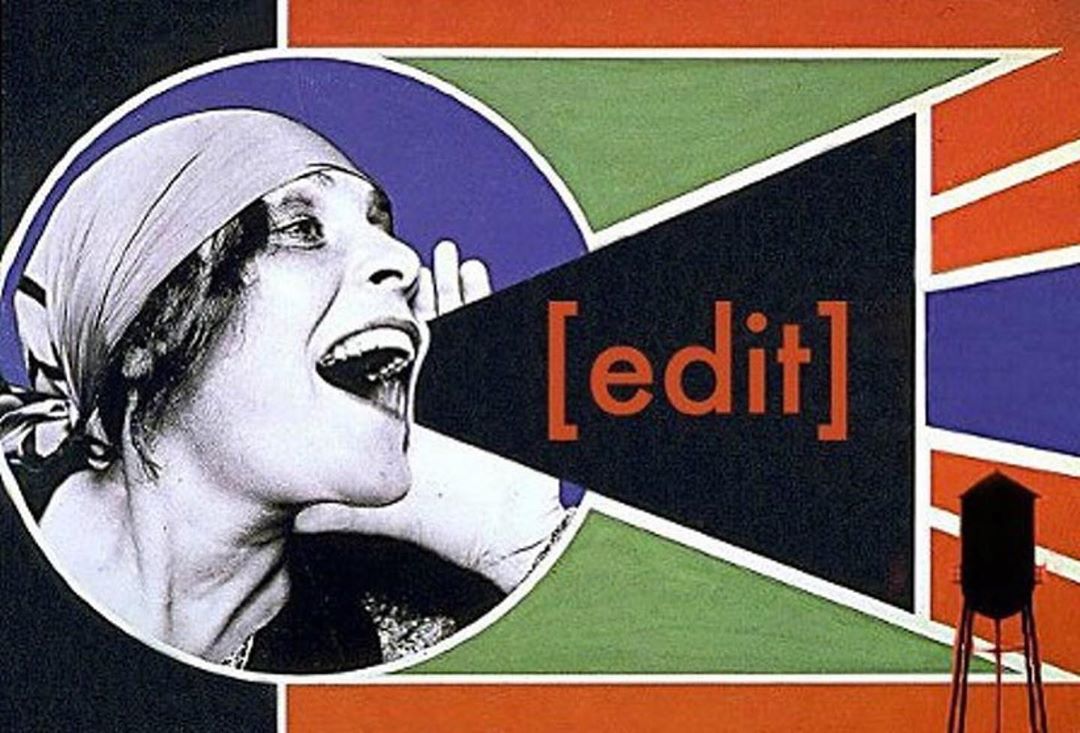
Via Art+Feminism's Instagram @artandfem
Amid memes, selfies and cat videos, it can be difficult to remember the intended use of the internet: as an information system — a source for knowledge, a place to learn and share ideas. In recent years, the Web has become a cesspit not just of clickbait but of racism, far-right politics, homophobia, misogyny and extreme surveillance — so much so that on the 30th anniversary of its founding in March, architect of the World Wide Web, Tim Berners-Lee proposed a new “Contract for the Web” to “stand up for a free, open and safe Web that benefits everyone.” Besides Berners-Lee hope for a more regulated net, one campaign that is seeking to change the status quo of the internet is Art+Feminism — an initiative to address gender imbalance by editing and creating Wikipedia entries of cis and transgender women, and non-binary people working in the arts.
“Wikipedia is the backbone of the internet,” explains Art+Feminism’s co-founders and leadership collective — consisting of Jacqueline Mabey, Siân Evans, Michael Mandiberg, Mckensie Mark and Melissa Tamani — over an email to SLEEK. “It’s Creative Commons-licensed content is used to populate the pages of other websites (e.g. book summaries on Amazon, biographical information on Google) and so, absences on Wikipedia echo across the internet,” the leadership collective states in relation to the necessity of the project.
Art+Feminism was founded in 2014 and is currently based out of The Museum of Modern Art in New York. The campaign emerged from a series of discussions among its co-founders off the back of the Ada Lovelace edit-a-thons to edit and create Wikis of women who have made significant contributions to the fields of science, technology, engineering and mathematics (STEM) in the honour of the English mathematician. According to its leaders, Art+Feminism also emerged from a “very public debate about the potential for structural sexism on Wikipedia” after novelist Amanda Filipacchi wrote an op-ed for The New York Times on the problematic editorial practice of removing women from the category ‘American Novelists’ and placing them in the sub-category ‘American Women Novelists’ in 2013. “The logic of this presupposes that the ‘natural’ novelist is male. Filipacchi’s piece generated a maelstrom of discussion about gender issues on Facebook, Twitter, and other social media platforms,” says Art+Feminism’s leaders.
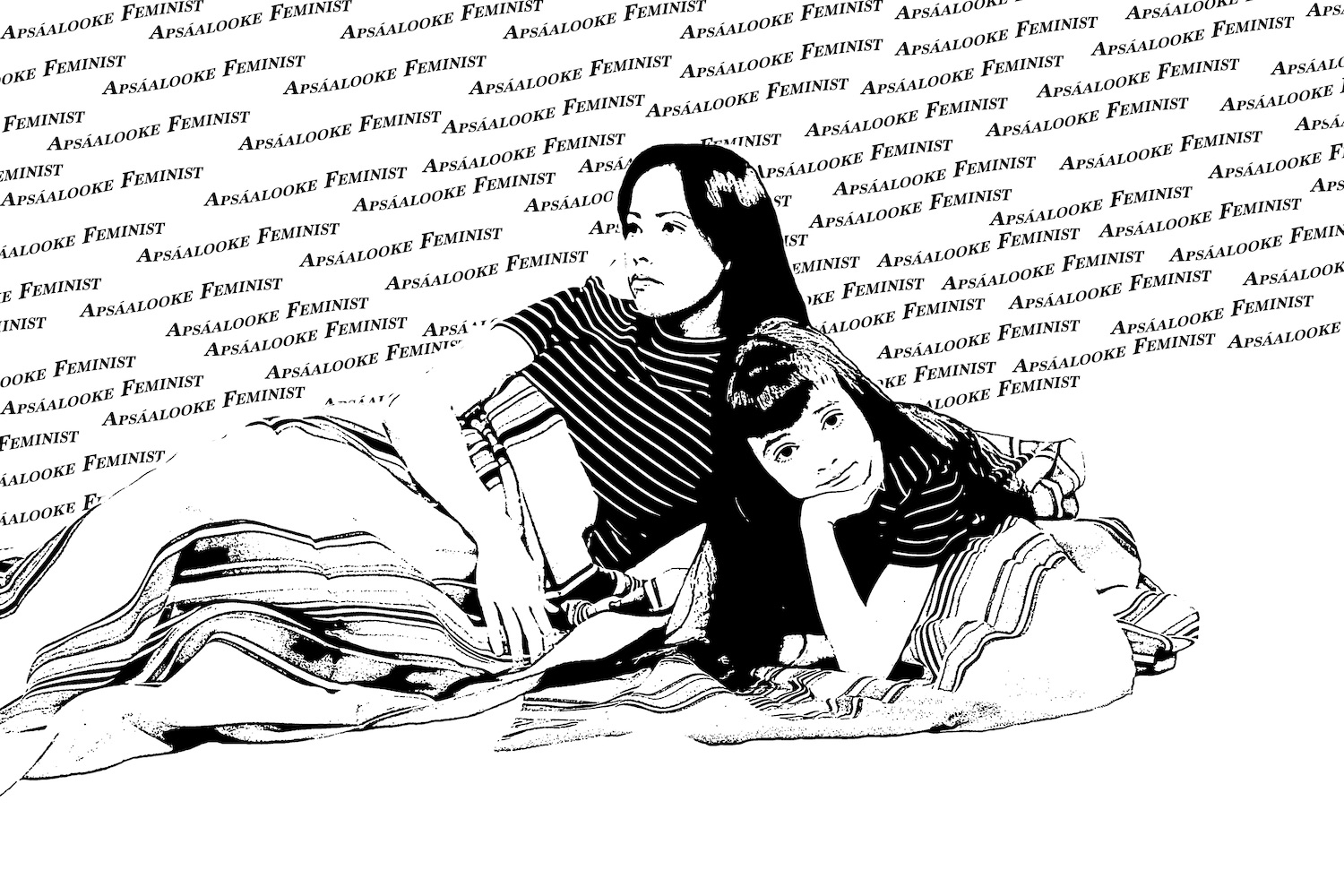
Ashkaamne (matrilineal inheritance). Wendy Red Star (2019).
Now, in the sixth year of its campaign and some 500-plus events later, Art+Feminism is increasingly growing worldwide. Once such event is taking place this weekend at the Ditchling Museum of Art + Craft in East Sussex, England in conjunction with the exhibition Women’s Work, running through to 13 October. Hosted by the museum’s Communications Manager, Abby Butcher, the event, taking place on 1 June, will seek to edit and create new entries for ten craftswomen featured in the exhibition who have not received the coverage they deserve. “The idea of edit-a-thon is that, in thinking, to make sure we create good representation of these women and that there is a record of them and other forgotten craftswoman,” explains Butcher over the phone about hers and the museum’s first edit-a-thon. “We’ll be working throughout the day with expert ‘Wikipedians’ — people who know how to edit Wikipedia — to edit and create new articles because there are a number of artists and craftswomen, who don’t even have a page on Wikipedia. There’s a real lack of representation.” A second edit-a-thon is scheduled to coincide with the close of the exhibition in October.
Among the pages they will be setting up from scratch is one for silversmith Catherine ‘Casty’ Cobb. Without a Wikipedia page, there is very little known about her, all to that she made cutlery from Sheffield steel and was born into a successful arts and crafts family. The drop-in event on Saturday will prioritise three craftswomen featured in the exhibition who are currently without Wikipedias — Cobb as well as weavers Elizabeth Peacock and Alice Hindson.
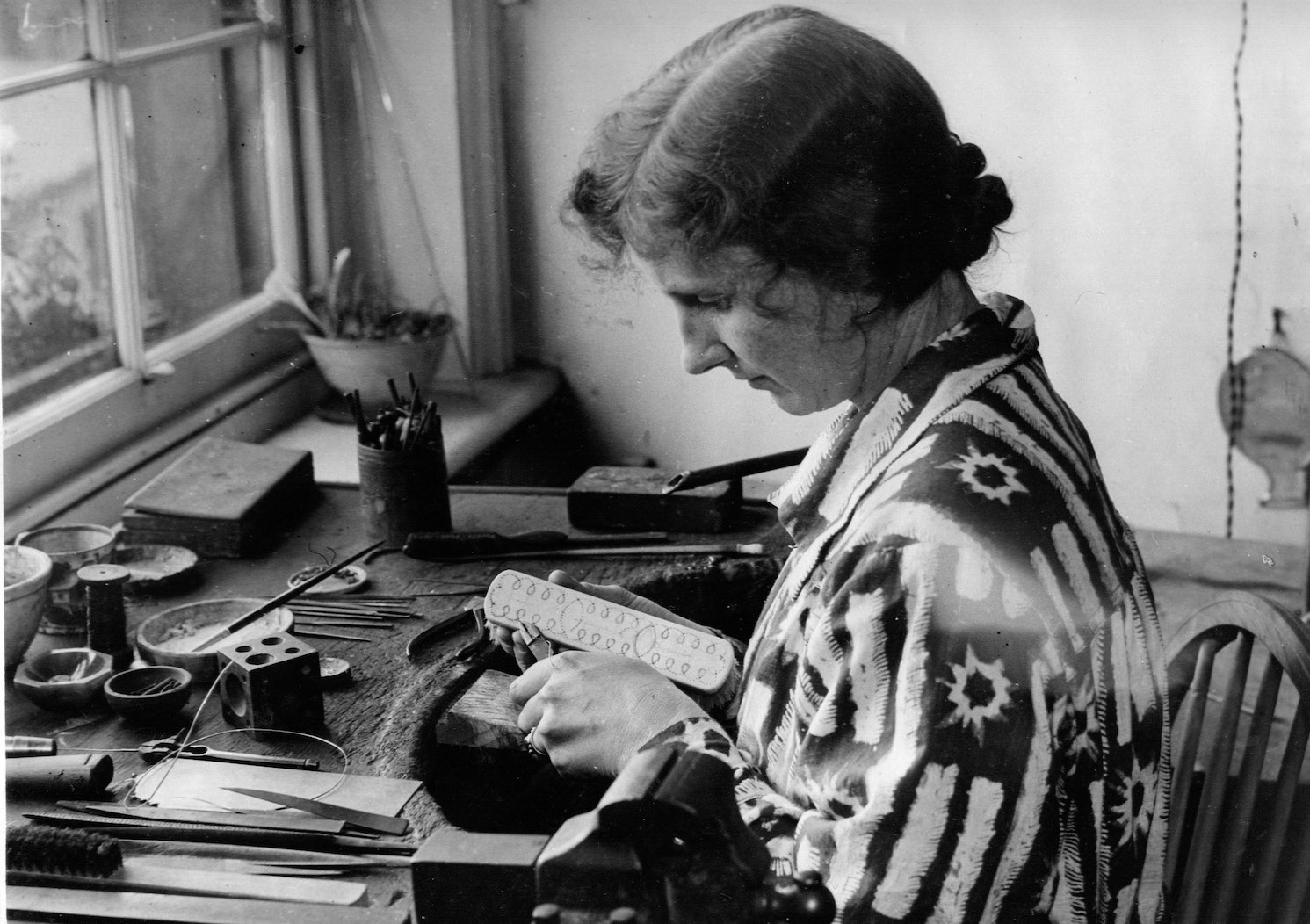
Catherine ‘Casty’ Cobb courtesy of the Ditchling Museum of Art + Craft.
Not only do the edit-a-thons strive to fill in gaps in Wikipedia’s content, but they also aim to address gender imbalance in the editing community. At present, less than 10 percent of Wikipedia’s editors are women. “The ambition behind these edit-a-thons is to get more women and non-binary folk editing, because history has proven that if men are telling the story and only men, it’s only men we hear about,” Butcher points out. “The aim is to get the number up, because otherwise women’s and non-binary people’s histories are getting erased.” Art+Feminism’s leaders agree: “For too long history has been written by the victors. The edit-a-thons are a space to talk about structural inequality in art and education, paywalls and who profits from user-generated content, visibility and vulnerability, and so much more — an Art+Feminism event is like a consciousness-raising meets a study session meets a pizza party.”
Since 2017, Art+Feminism have expanded their campaign to include art commissions, where artists create a Creative Commons licensed work that is hosted on Wikipedia Commons. So far, the winning entries have been Divya Mehra’s Dangerous Women (Blaze of Glory) (2017), Rage/Sorrow (2018) by Tuesday Smillie and Ashkaamne (matrilineal inheritance) (2019) by Wendy Red Star.“Art+Feminism is a campaign to add content related to gender, feminism, and the arts to Wikipedia, with a focus on underrepresented histories, but we’ve always taken a wide view of how that happens,” its leaders posit.

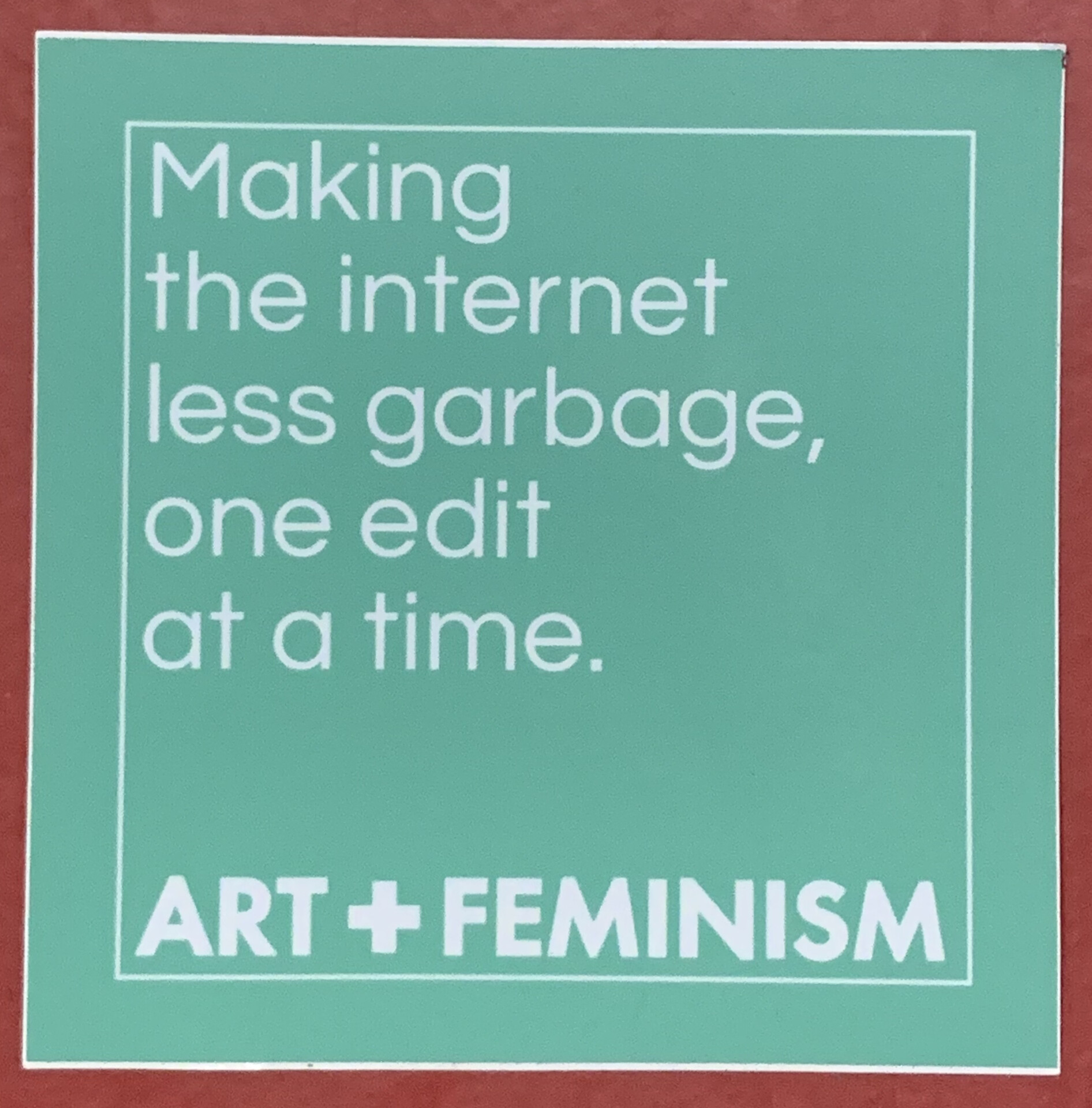
Sticker designed by Art+Feminism.
Although Wikipedia is one of the most visited sites on the internet, there is a tendency to take its content for granted — we absentmindedly scan its entries, without taking heed of its omissions and gaps. “There is this idea that if it’s not on the internet, then it’s not a thing, it’s not legitimate,” says Butcher. “If something’s not there, it seems like it doesn’t even exist. For me, I think all of this information needs to be online — we cannot rely alone on having the right resources, the right books. It’s an access thing, a money thing as well.” When I ask the leadership collective of Art+Feminism what their ideal internet would look like, they respond candidly, “Generally, we feel like the internet should be less garbage and more doggos… At the end of the day, what we want is to make these important shared resources better, a more complete, a more accurate representation of history.” And I’m sure that’s something we can all get behind.
For more information on Art+Feminism visit the site here.
Women’s Work runs through to 13 October at Ditchling Museum of Art + Craft. The edit-a-thons will run on 1 June and 12 October 2019.