It’s snowing outside when Berlin-based sculptor Hannah Dunkelberg dials in to our Zoom call. She’s sporting a simple white T-shirt with a couple of logos or words on it, the kind you get when you run in a marathon sponsored by a bank or major organisation. Hannah’s long blonde mane and broad shoulders give her the air of a modern-day Amazon: strong but also pragmatic; young, energetic, down-to-earth.
The wall behind Hannah looks like it’s been stripped of all previous surfaces and tapestries, speckled spots everywhere. A piano almost completely concealed by her silhouette, a dried-up twig in a vase on top of the piano. I wonder to myself, is it always context that determines what looks like art and what doesn’t? If I had those walls and that loveless formerly-green branch in my house, it would just look semi-finished and wholly sad. Here at Hannah’s, I feel like it is a worthy creation, practically a still life for all I know.
When I ask Hannah how she’s doing, she says she assumes it’s the same for her as for everyone else: too much winter, the pandemic, a moment of “fed-upness” on her face. I couldn’t agree more, which is why speaking to Hannah will prove to have the kind of effect we can all only hope for right now, something new, dynamic, inspiring.
SLEEK: What’s going on for you at this time?
Hannah Dunkelberg: Nothing much has changed for me really, except my social life. I still go to work every day. Luckily, I still have a lot to do. I work all day, just like you would in any workshop, I guess. I’m just home right now because the atelier is new and we don’t have Internet there yet. Otherwise I could show you everything.
"I work with metal and weld a lot, so I spread out there across all floors."
SLEEK: Sounds like a pretty structured day for you, not something I hear a lot from artists these days.
HD: Yes, I wake up and look forward to going to work. My new studio, which for the first time is mine alone, is like a little nest. Before I shared a studio with four or five other people. I work with metal and weld a lot, so I spread out there across all floors.
SLEEK: What made you choose sculpture as the art form to express yourself in?
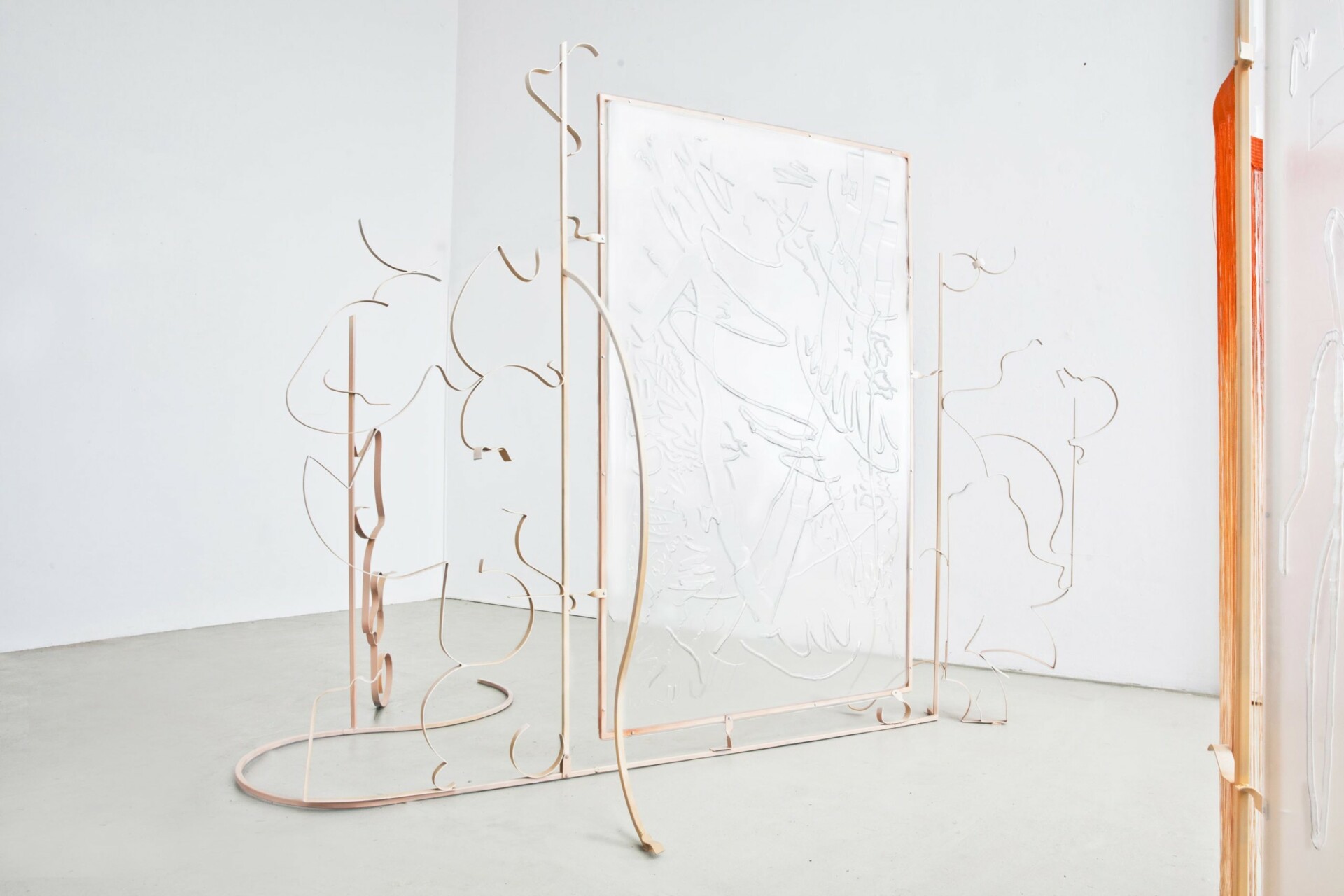
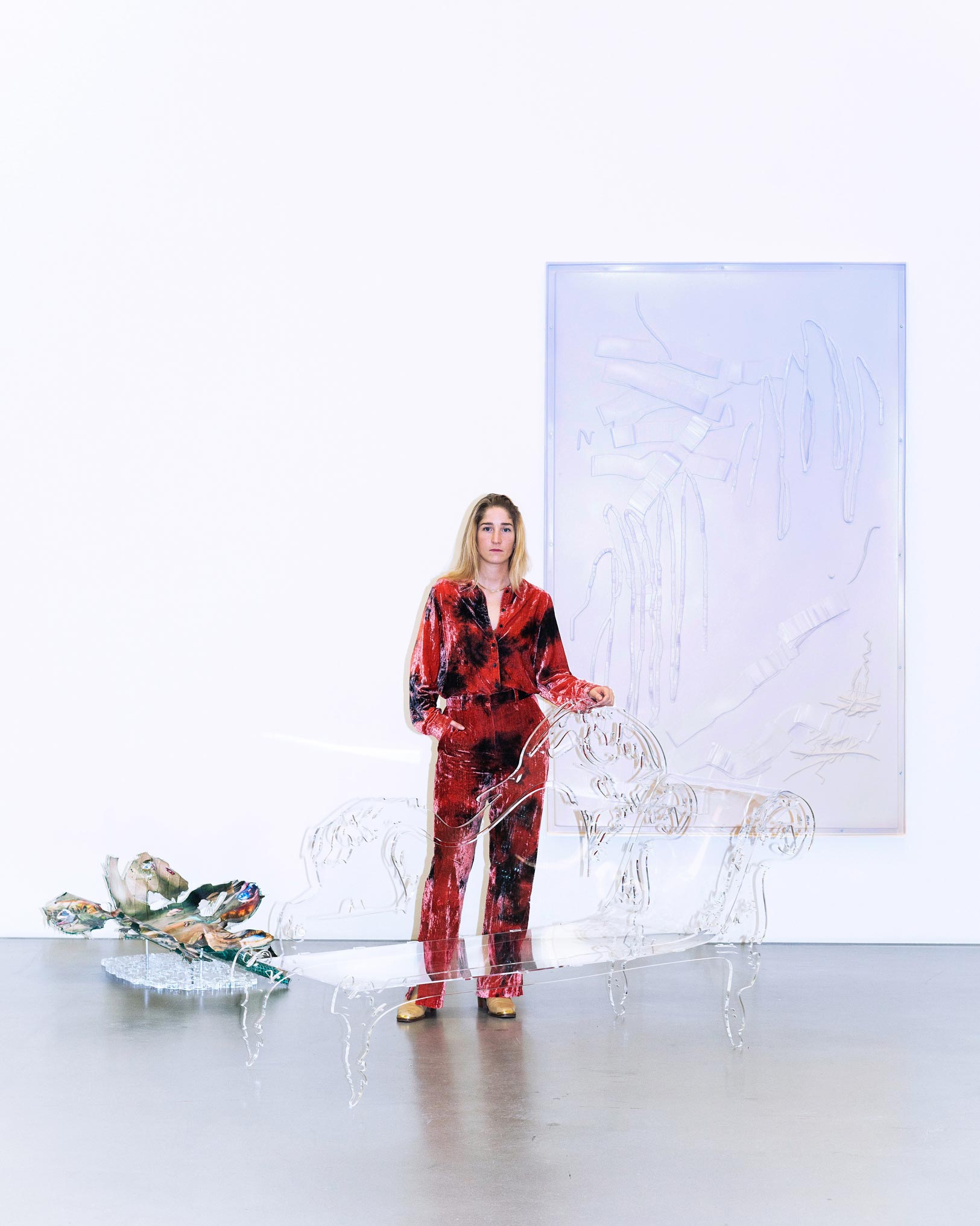
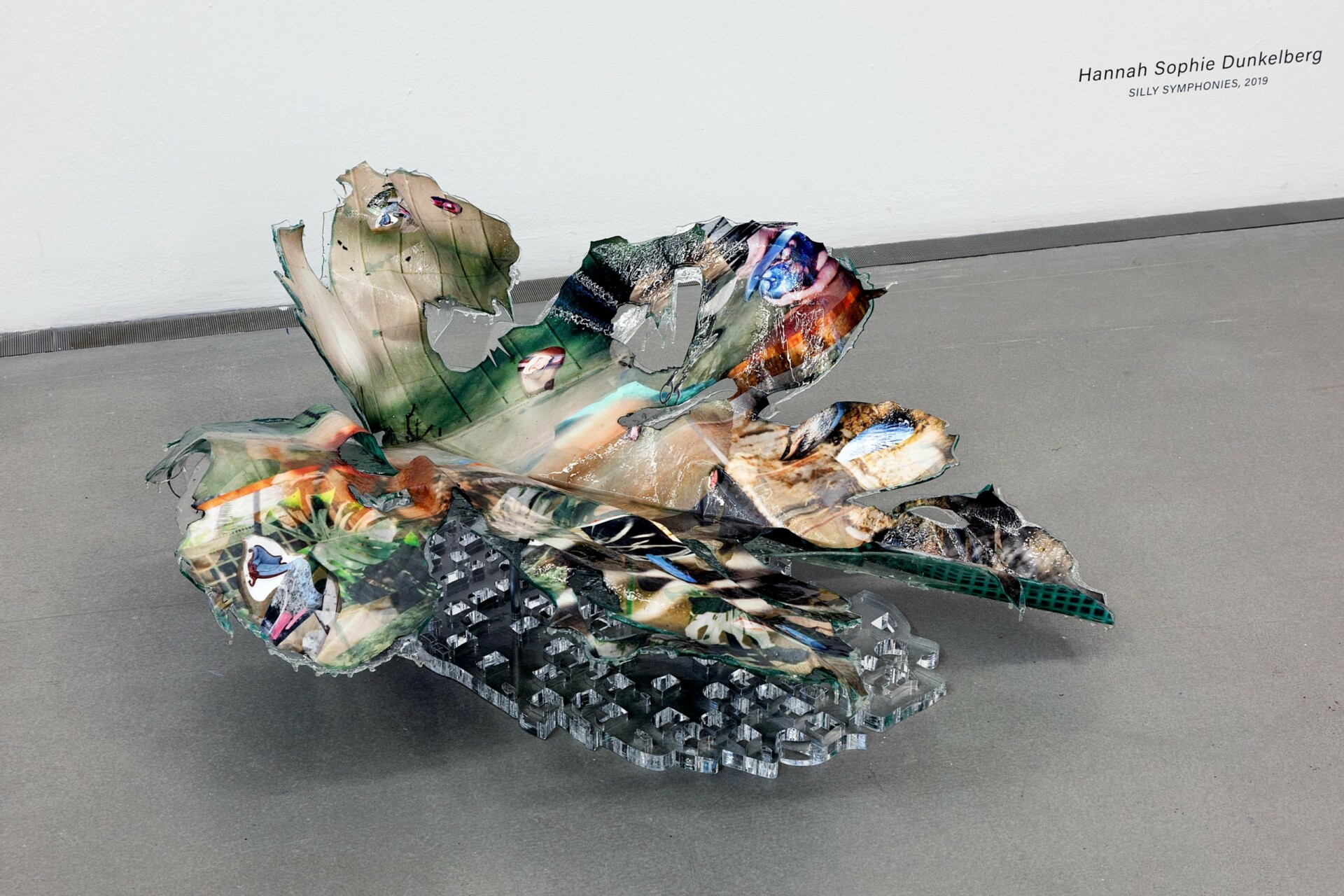
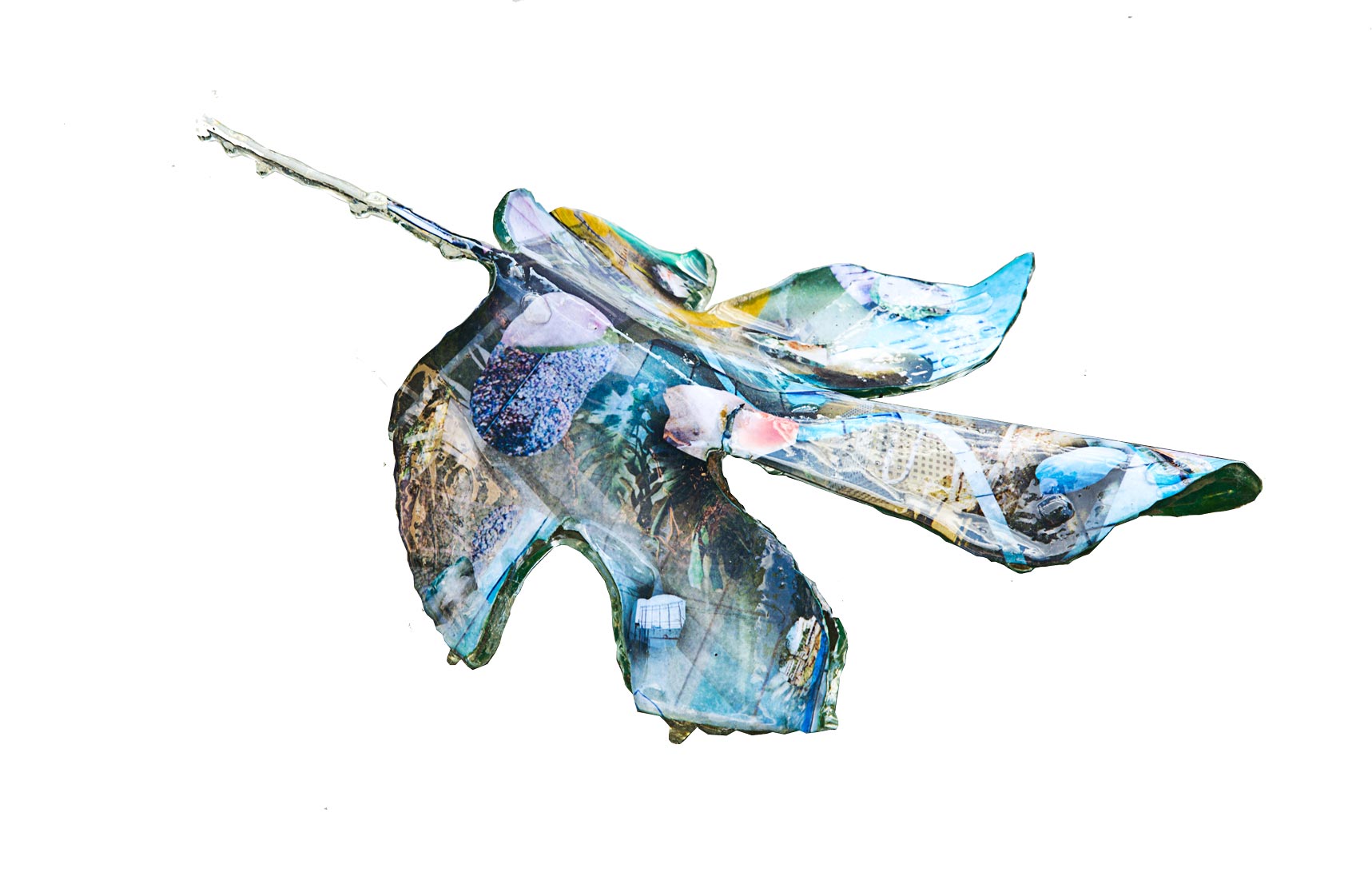
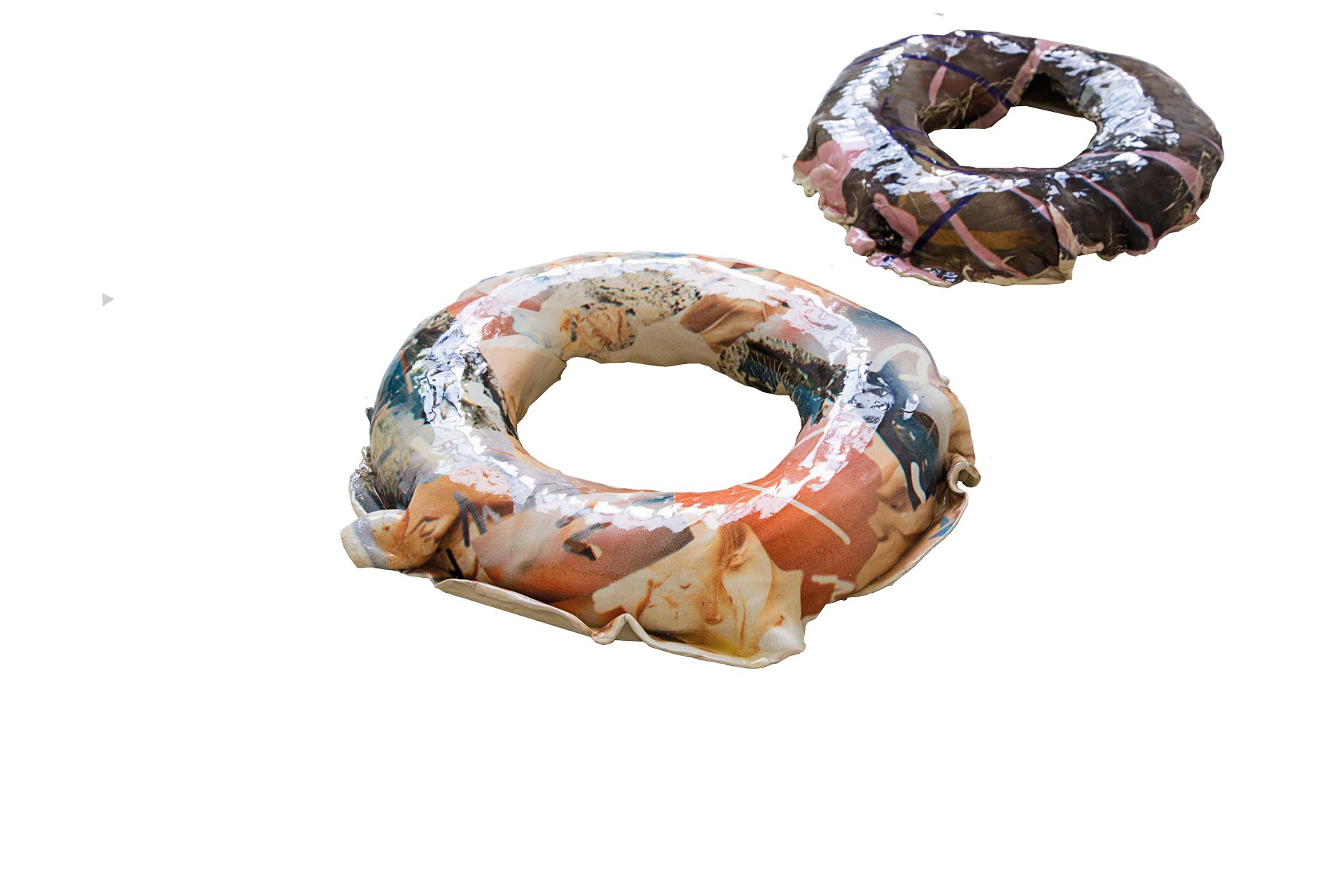
HD: I’ve worked in an artistic way my whole life. Like many sculptors, I first entered the world of sculpting through sketches – drawings, did a lot of paintings – and it’s still the case that I’m not sure you could categorise me as a classical sculptor. I mean we don’t have to think in categories anymore anyway. My installations are usually a mix of photography, painting and sculptural moments. This somehow feels like the most honest way to show what it is I’m thinking about, to work with an image that is also a kind of a material thing at the same time. Taking things from our environment that you see everyday, for example, my reliefs are often made of plastic, which was imprinted on wood … You’re drawn to the material but you’re also repelled by it …

"I think you never fully capture desire. If you did, it would no longer be there."
SLEEK: Wait, why repelled? Do you mean out of reverence of just how daunting a project this might turn into?
HD: No, the material itself. It’s plastic, which doesn’t exactly convey a warm quality and then there’s the environmental aspect. It’s more of a cold material but we’re so used to it, like all those screens we look through. I work a lot with transparent materials because it allows you to take a look at what lies behind, what lies ahead of you. When I build something with transparent material, the whole environment becomes integrated into the sculpture, as if looking through lenses or a camera. It’s a special moment.
SLEEK: When did you know you wanted to work three-dimensionally?
HD: It was always an interest of mine but I didn’t yet know how to execute it. It was during a painting class at university … Then there was a trip to Israel. The wavy surface of the desert sort of wafting up … I couldn’t forget that image long after my return, so I drew it. But you can’t really depict it in a painting alone. I desperately wanted to return the painting to the place of its origin. So, I printed that sketch on a stretchy piece of fabric and in a little suitcase brought it back to the desert. I spread out the fabric there and took pictures. At the time, I was still in my first year of university and the work wasn’t a finished piece meant for public display or projects. But it was that moment I realised I’m stepping beyond the surface and in doing so, automatically moving into space. It was the first stage of changing form and giving it motion.
SLEEK: How do your subjects find you?
HD: That’s a tough one to answer. It’s got something to do with coincidence, although you might say there is no such thing. But you do have to be willing to be surprised, to pay attention in everyday life. I can’t really put into words how it happens but it’s in the mundane day-to-day; the handle of the coffee cup, your neighbour’s paints [laughs]. Sounds banal but it often is banal at first and then ultimately there’s this amazing result. On the way there, there’s so much experimenting that I can’t control it. Often you just have to realise that the detour is the best path forward.
When I ask Hannah about desire, a sound of astonishment and awe escapes from her lips. The word definitely holds a strong meaning for her, it seems.
HD: For me personally, when I think of desire, that, to me, is what other people call “my work”. This strong desire to do what I am doing right now. And I’m so happy and grateful I’ve been able to do this since I graduated. I think a big part of my work is to figure out what human beings desire. [She pauses] I think you never fully capture desire. If you did, it would no longer be there.