The sun is blinding my face as soon as I step out of the subway, making my way towards Kraftwerk In Kreuzberg, where Metabolic Rift is currently taking place. One would say it’s a match to locate one of Berlin’s most alternative art exhibitions into one of its trendiest neighbourhoods, hallmarked by street art and used-to-be-a-warehouse clubs, just like the Kraftwerk building itself.
Photography by Nina Maria Schaarschmidt
Daniel Lie is one of the exhibiting artists at Metabolic Rift. Put on this platform, Lie is working through rather uncomfortable themes in his art, packaged into carefully curated installations.
They are openly non-binary, born in Brazil, a child of Indonesian immigrants, growing up for them has been different than the usual experience, Lie tells me. Being the way they are, they show that anyone can be anything, the world of art is contrary to the world we physically inhabit in, a world fuelled by imagination and possibilities rather than borders.
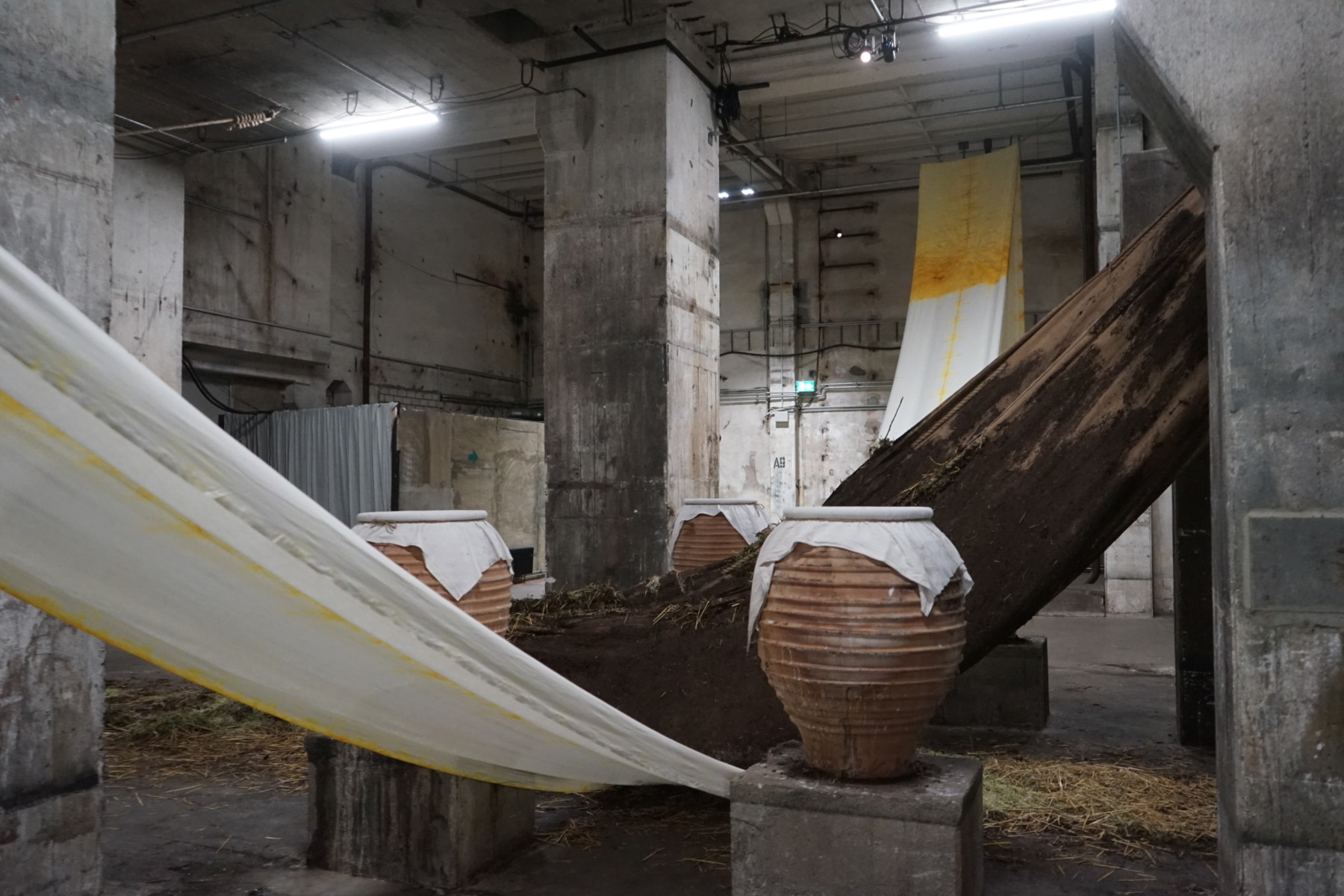
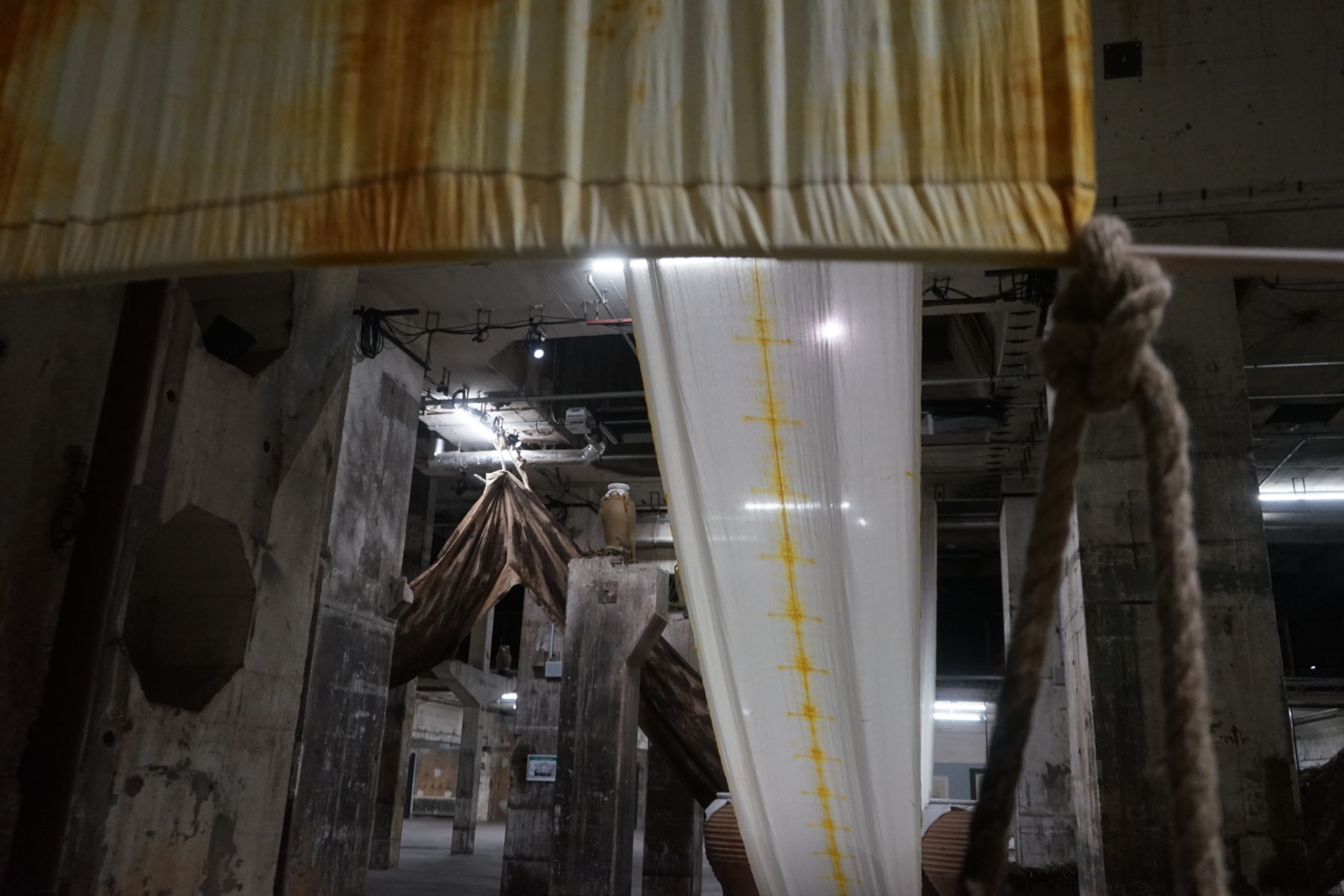
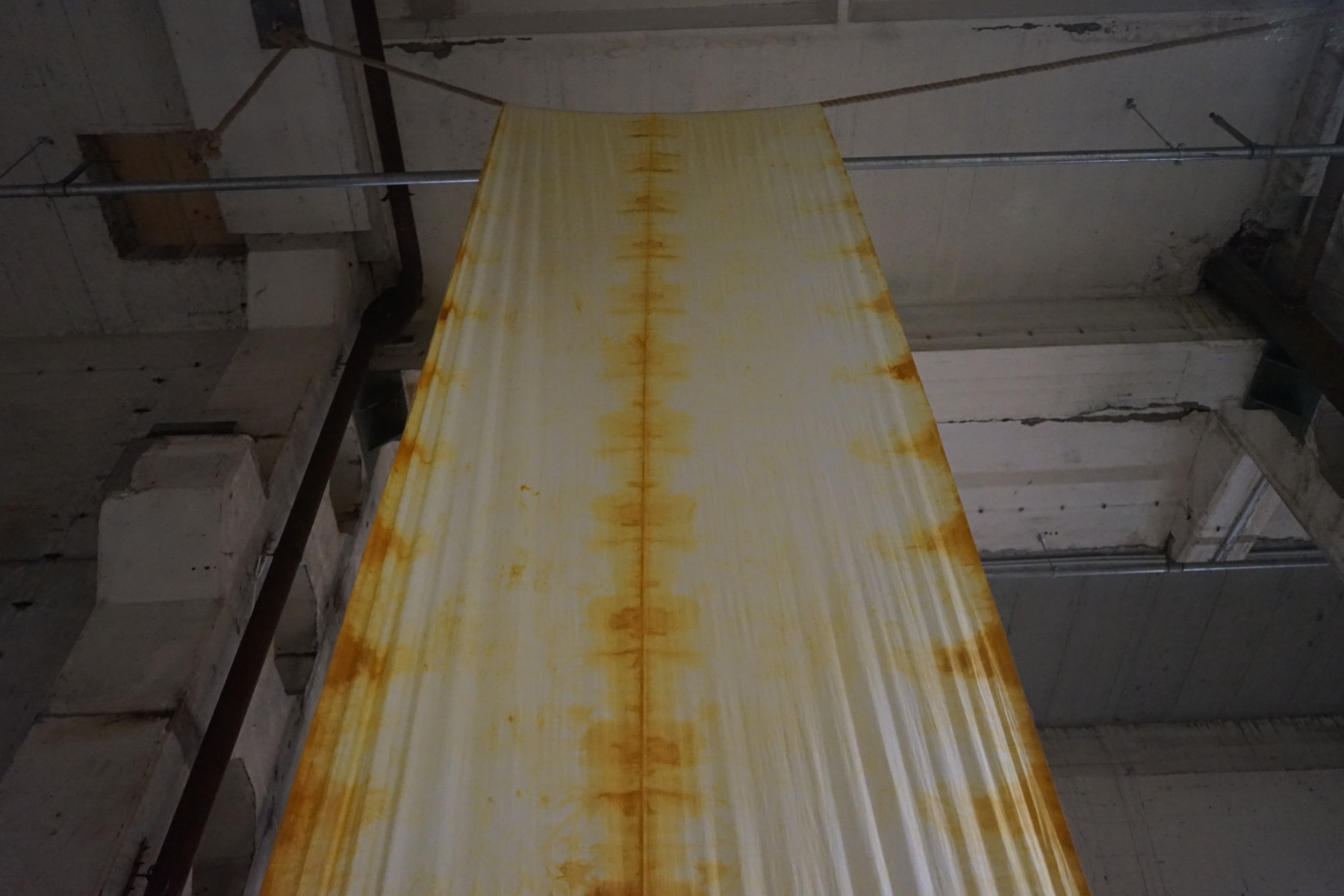
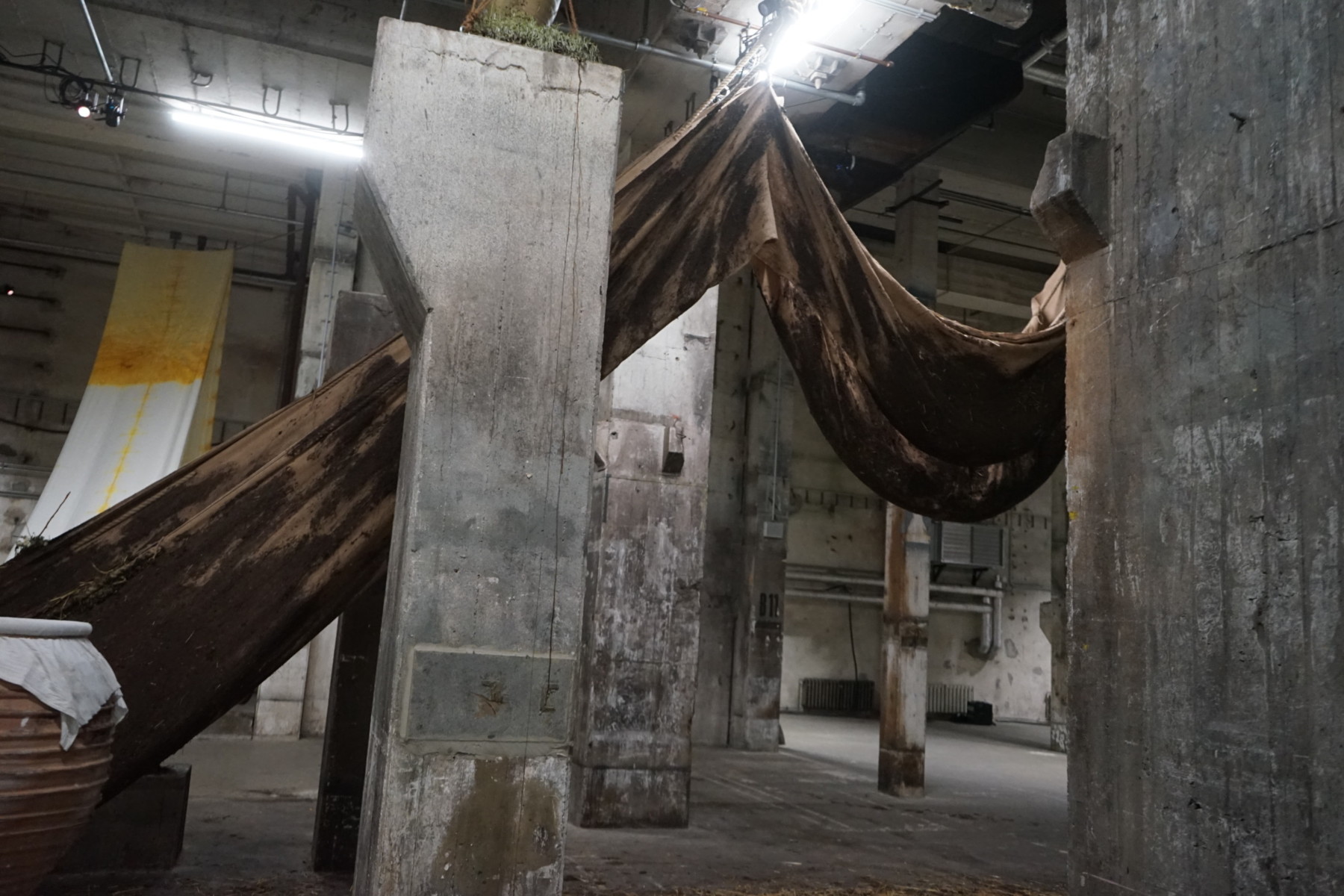
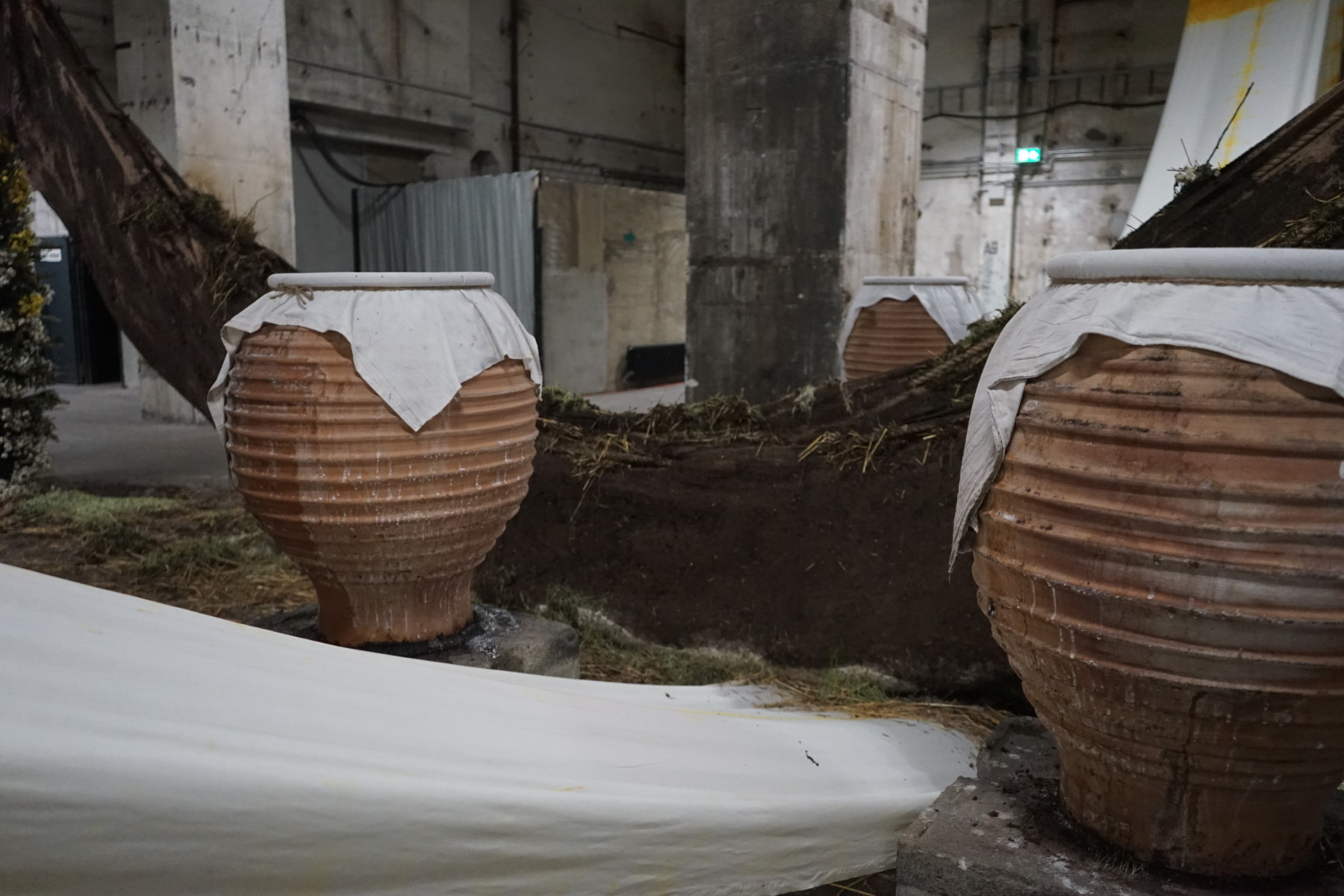
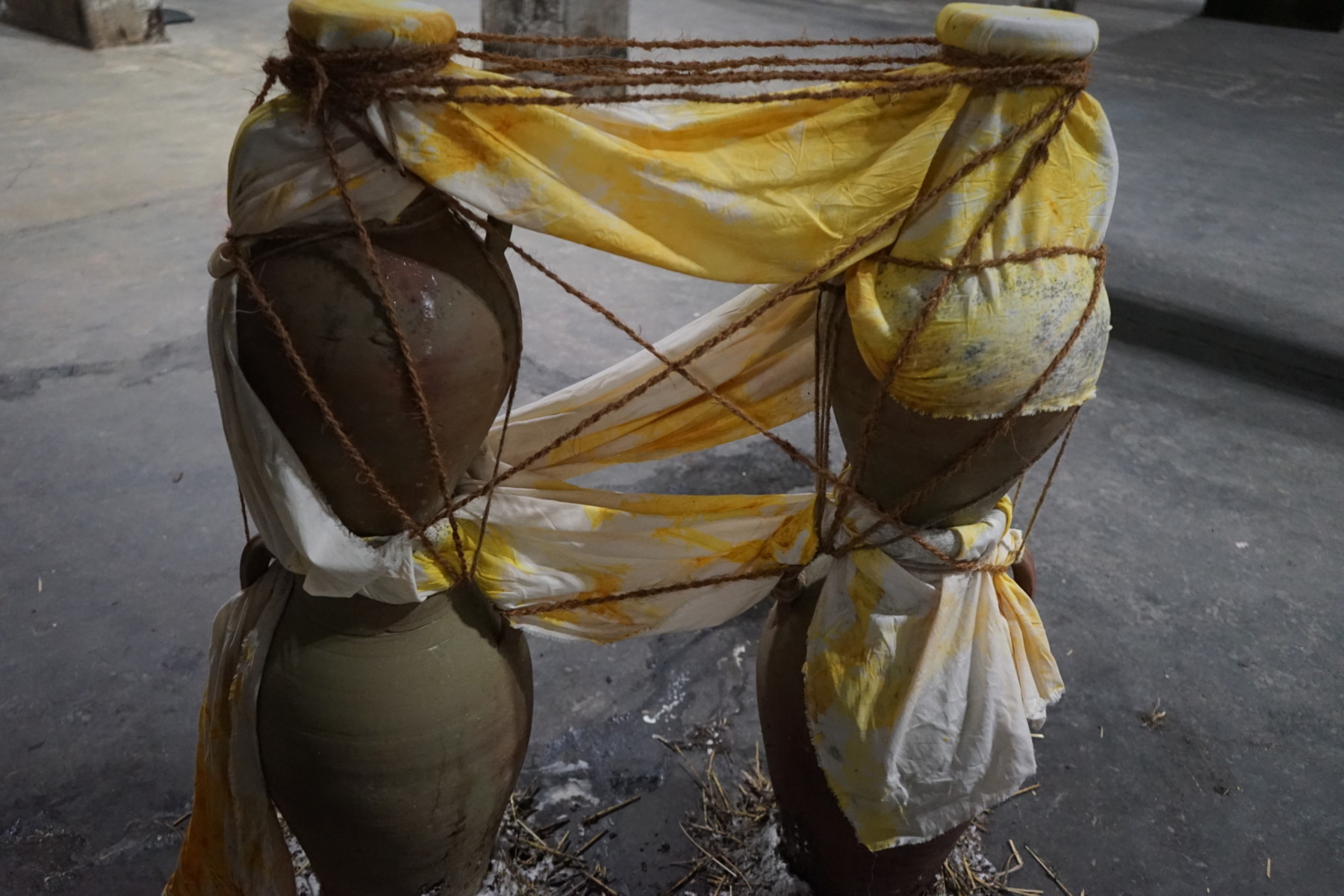
Shutting out the sunlight, we walk into Kraftwerk this Wednesday morning. Looking at their installation Non-Negotiable Condition reminds of a fairy-tale-like scene: a beautifully curated work of art, resembling a mystical forest, gleaming in the brightest greens, draped with turmeric-dyed cotton sheets and accessories with locally purchased clay pots. The name of the installation is reminiscent of conditions we cannot control: loss, life, and death.
Photography by Nina Maria Schaarschmidt
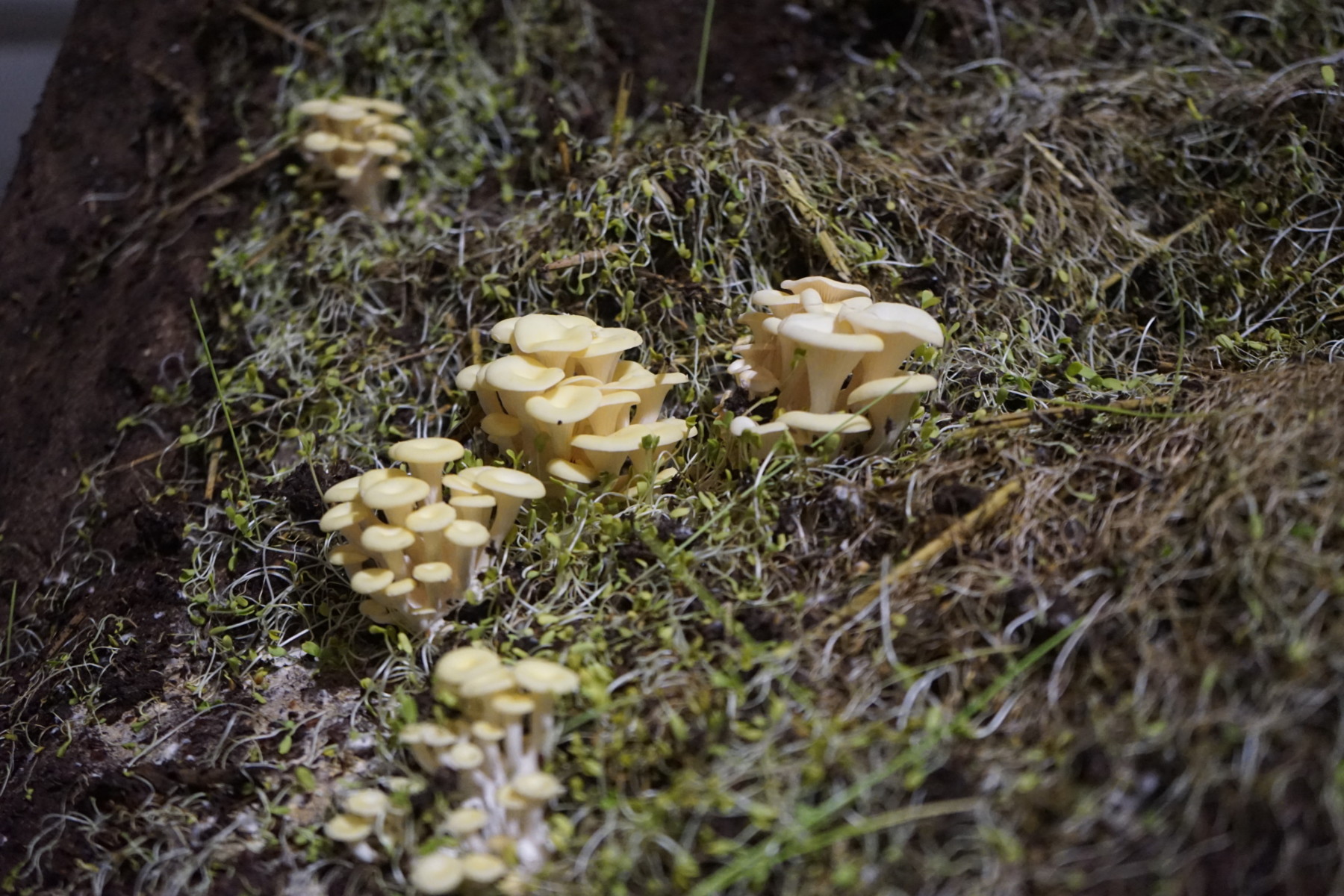
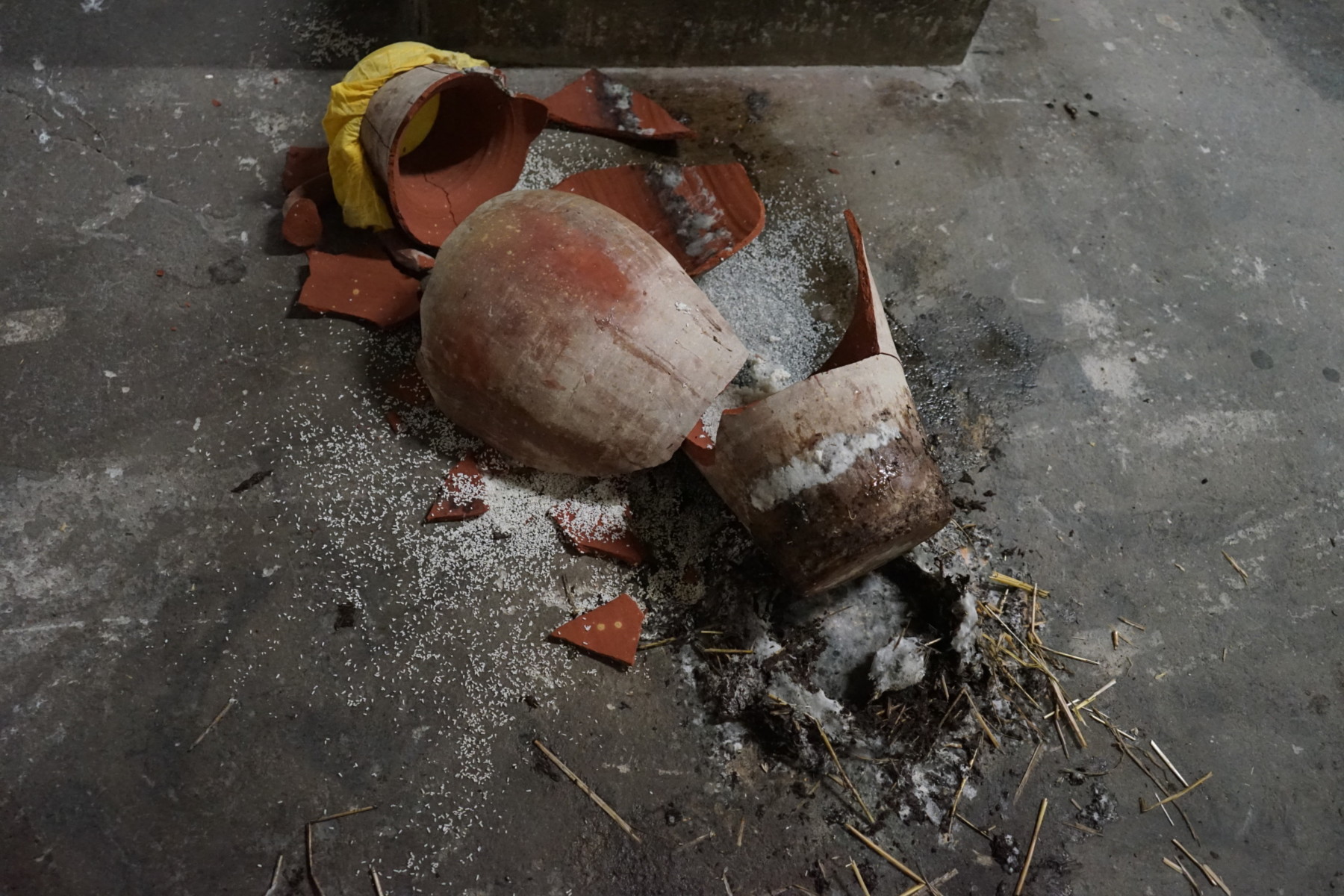
Contrasting to the other rather futuristic artworks in the exhibition, Lie’s installation takes the visitor on a journey of reflection in a forest-like ambience. Lie shows me mushrooms that just grew on the grass they planted, saying “they accepted the invitation” with a smile on their face. Working with nature, every installation the artist creates is different, “it’s a moment in time, just like a relationship”, they compare as they show me around the artwork. The mushrooms are planted every time, but rarely do they actually come out, so it’s a joy to the artist that they accepted their invitation this time. Coincidentally, on the same day, one of the clay pots broke, in beautiful shards on the floor, looking as scenic as a carefully curated means of set design. “It feels like a tension release. Something ended, and a new life has begun, it’s almost spiritual”, Lie confesses.
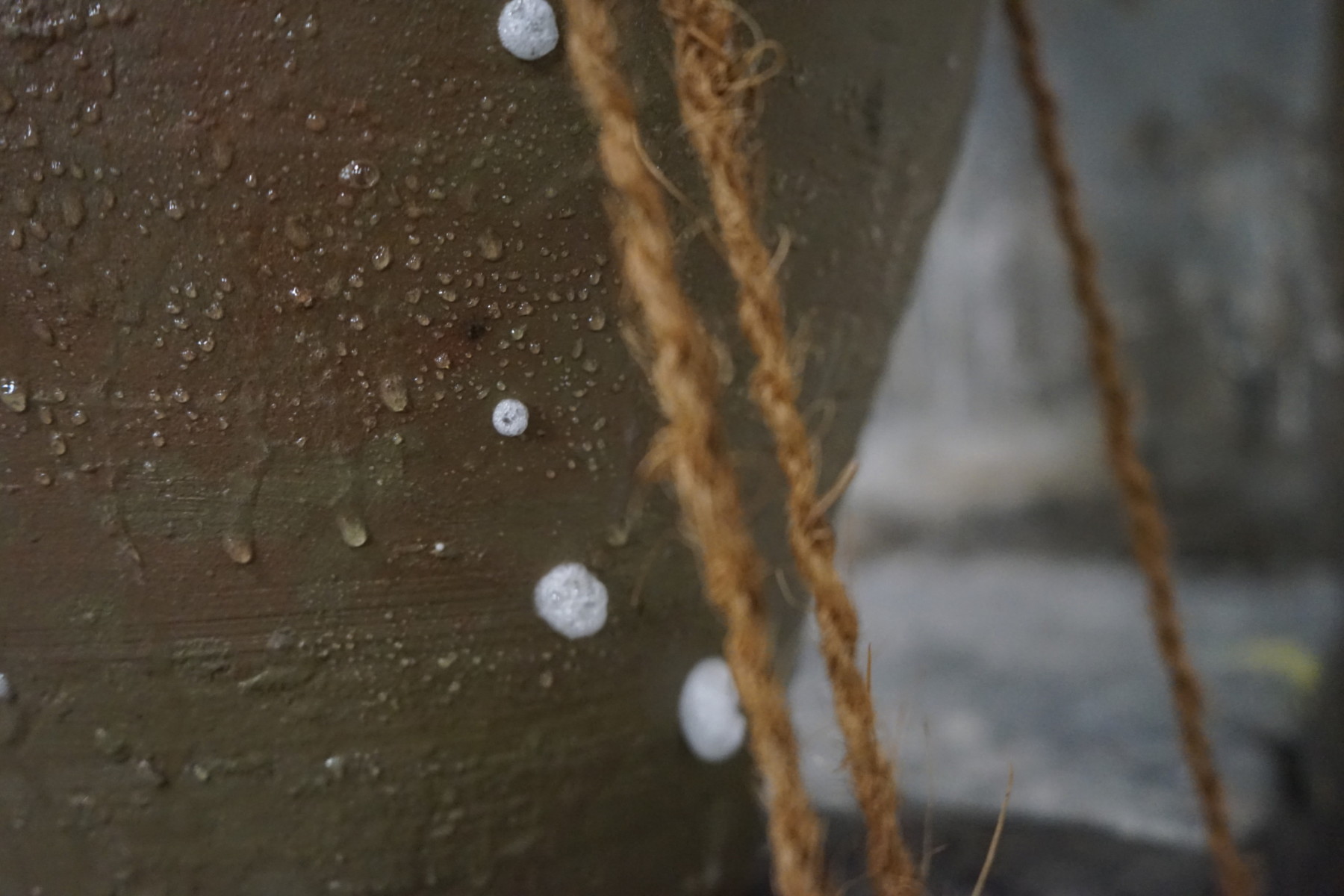
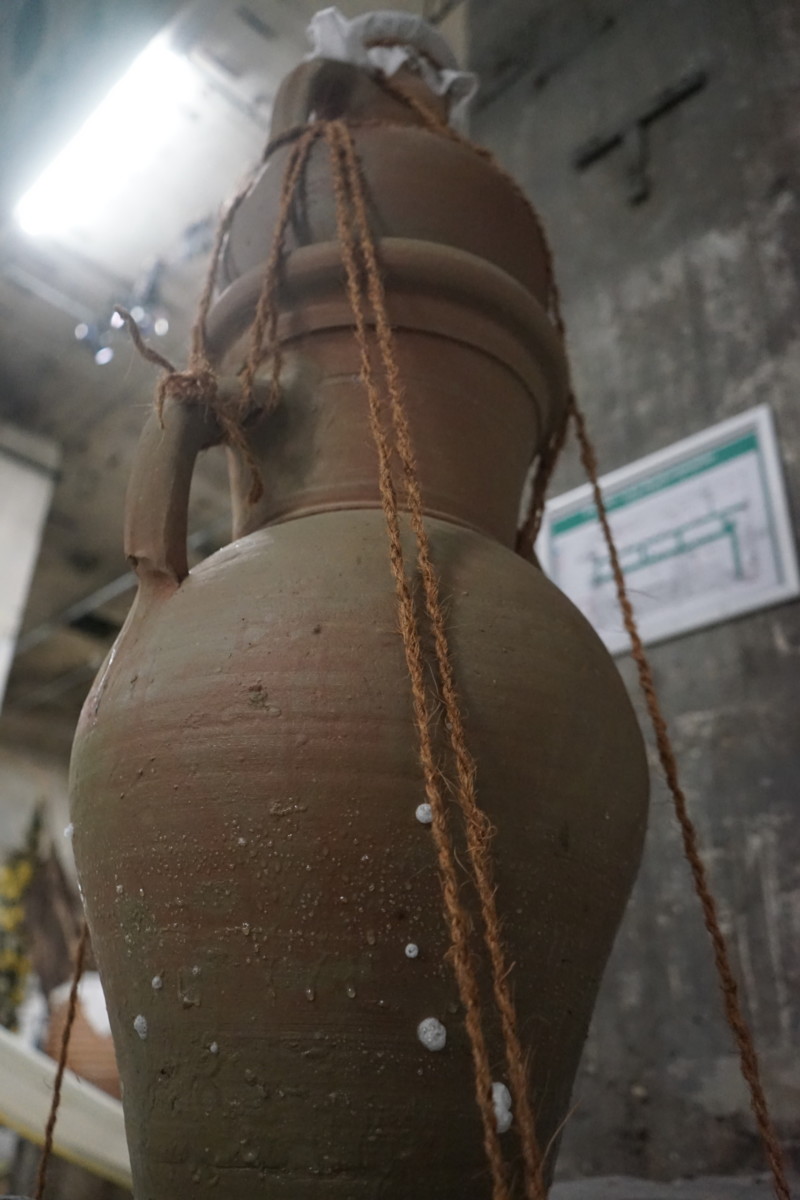
Before the pandemic, Lie travelled through many countries whilst creating their work, and one thing that was common and different at the same time was the presence and use of Terracotta, which is now a central part of their installations. The pots are everywhere and what looks like a still life from afar, is a living ecosystem: the terracotta sweats produces foam and mould. “It’s like an artwork in the artwork, it’s the process of living, a non-negotiable condition”, they say. When the pandemic hit, Lie thought that their next installation wouldn’t happen for another five years. Taking part in Metabolic Rift was one and a half years in the making.
Photography by Nina Maria Schaarschmidt
SLEEK: In your interview with the MoMA, you said that art can be a “queer line that connects many fields of knowledge.” What fields does your practice currently connect to?
Daniel Lie: Currently, I am very curious and interested to go beyond and deeper than reaching out for other knowledge. I am constantly asking people I work with about their perspectives on the process. The people who I work with are looking at the same thing but from different perspectives. That’s where I think art has a certain freedom, which can connect all the different fields of knowledge.
You have recently relocated to Berlin, a city with a blooming artistic scene. Is this what drew you here?
DL: Here in Berlin, there is a possibility to do what you want. Being able to exist as an artist in this infrastructure is amazing. It’s also amazing to know their existence in the first place, coming from the global south where culture is being persecuted and harassed. This city celebrates diversity, which makes me feel very safe. The decision to establish a base here was a process. I also like the resistance movements on the large scale here, for example, a few weeks ago, when people voted against the enterprise control of rental units. Other cities talk about it, Berlin does it. It starts global movements.
Photography by Nina Maria Schaarschmidt
How has your identity as non-binary informed your art?
DL: It’s very much going beyond the vision of gender with being non-binary. Our society pushed everything for a binary perspective, life and death, good and evil and so on. There are just extremes and they leave out the in-between. So, understanding that it’s not that easy with the process of life. For instance, being born, growing, reproducing and getting out there is all a constructed narrative. I think being non-binary is a great tool of existence in this world. Once we believe in something, it’s very still. I feel like binaries are something still and they need to be maintained. The nomad narrative helps to understand that things are always in constant movement.
How was the process of creating the artwork for Metabolic Rift?
DL: First, there was seeing the impressive architecture. And then listening to the space thinking about its use in the past it was our plan to provide the energy of this part of Berlin and its memory. A lot of it was also about the design of the installation and its language. A lot of it is pretty much like giving birth. It’s a long term process coming up to enjoying this, and being able to do this after this whole uncertainty of the pandemic.
Photography by Nina Maria Schaarschmidt
You once said that you are “broadly interested in the philosophical, scientific, and spiritual aspects of death”- which really reminded me of Alexander McQueen’s obsession with the beauty in the grotesque. Where does this fascination come from and how is it reflected in your artwork?
DL: For me, it’s quite interesting how present it is in us. Sometimes, we talk about hitting the bottom of the bottom and sometimes there is a spark of light that comes in. Very specifically, in this pandemic, a lot of things felt like the bottom of the barrel. Going through horrible things is not like the movies, and it feels out of this world, but it actually isn’t.
In this exhibition, the smell, the rotting of your artwork plays a role. Why did you choose to incorporate something rather uncomfortable in the experience?
DL: The smell has never been the part I can fully control. It very much depends on the place, it’s very specific. I am fascinated by this discomfort since it depends on the subjective opinion of a person. There are so many smells and the judgement of them is so subjective. I wonder, what does that judgement tell us about this person? What does this person relate to that smell? Smell is oftentimes such a filter, which is very interesting to me. It relates to so many experiences.
Photography by Nina Maria Schaarschmidt
You were born in Brazil, and according to your website, you live the life of a creative nomad. How has this inspired your art?
DL: First, it was a great privilege to meet many other cultures and explore places in the world whilst working with people. I love connecting, that is always amazing to do. Seeing the complexity and the issues in each place has always been interesting to me as well. Specifically, exploring the ancient history of a place. What has been lost and forgotten over the years? What has happened? It’s a lot of seeing the space and drawing the connections. For instance, Muslim and Indonesian culture. There are so many aspects from spirituality and politics, similar to Brazil, which is 17,000 kilometres away. It’s so intriguing and stimulating. I would also like to bring this to Berlin and explore the culture.
Your debut exhibition ‘Lie Liong Khing’ in 2015 was titled after your father. Do your family and your roots play a big role in your work?
DL: My paternal family was the first Indonesian family to migrate to Brazil. My mother comes from a northeast Brazilian diaspora. I’ve always been fascinated with comic books and being part of a very curious story. I am always interested to go deeper. It does play a great role. I am still navigating how talking about the personal story relates to speaking about the fungi, for instance. Something about this small and larger is connected. Understanding the narratives of the women in my family, I start to think about how violence and patriarchy plays a role. Talking about immigration made me think about political movements on the world scale – from the small relationship with the family to a large political context, the same thing goes with seeing the fungi and the mould happening. It resembles a forest looked at from above. Small, then large again, something about these movements feels similar.
Photography by Nina Maria Schaarschmidt
Nature or natural materials play a big role in most of your works. Why?
DL: There was a moment in 2015, where I felt the need to abolish plastic. I felt something about the passage of time. Having more space for mysterious things to happen, it was being restrained about this material. And then, I wanted to use something perishable and natural. I also wanted to feed the curiosity about what’s going to happen. I was very anxious about if the fungi will come. And yesterday, seeing them accept the invitation was just wonderful.
The exhibition is ongoing until the 30th of October. Purchase tickets here.
PHOTOGRAPHY: Nina Maria Schaarschmidt