Spring is here to stay – that was the meaningful slogan of this season’s Fashion Week Tunis, which took place for the fifth time this year. The bright, aestival city appeared so calm and peaceful that it was hard to recall the images and news reports from the place where the Arab Spring first broke out at the end of 2010. But exactly this is the context in which, two years after the Tunisian Revolution, the non-profit Association of Tunisian Fashion Designers (ASMT) aims to promote local designers in order to help the emerging young scene in finding a new, distinct cultural orientation. The strategy therefore was to put together a multidisciplinary programme, complementing the not-too-hectic runway schedule with music and art events.
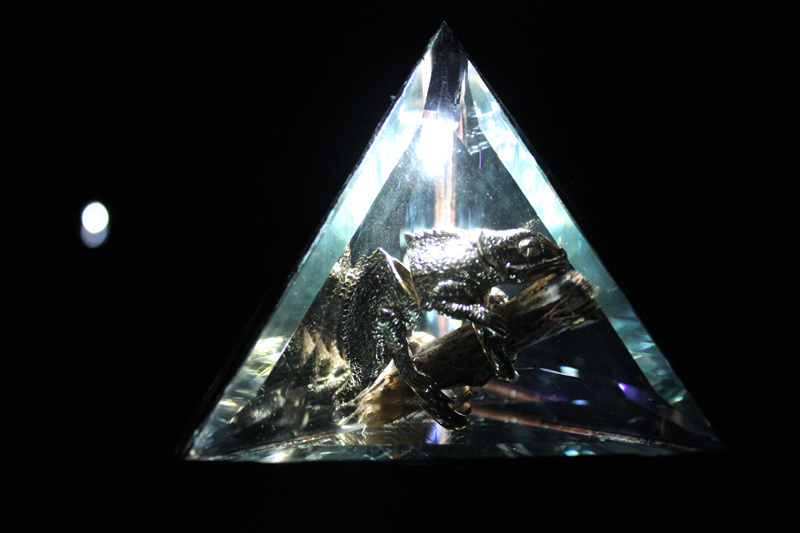
Foreign designers were also invited, which gave this fashion week the characteristic of an open exchange that dealt with “typically oriental” style notes, as well as with contemporary tendencies. In addition, the events took place in the most mind-blowing locations like a splendid palace, an enchanted garden or even an ancient cathedral, that formed the right frameworks for a multitude of presentations. The first day’s highlight was the opening reception of the exhibition “Perspectives”, in the Gallery La Marsa, where amongst others the Franco-Moroccan jewellery designer Bernard Delettrez showcased a selection of his work – impressively staged by German-born, Paris-based installation artist, set designer and cat-lover Nini Gollong, who already worked with Karl Lagerfeld or for renowned fashion houses like Chanel, Louis Vuitton or Azzedine Alaia. Presenting Deletterez’ precious trinkets like dark butterflies in glass pyramids installed in a dark room, Gollong’s installation created a mysteriously morbid yet magnetic atmosphere.
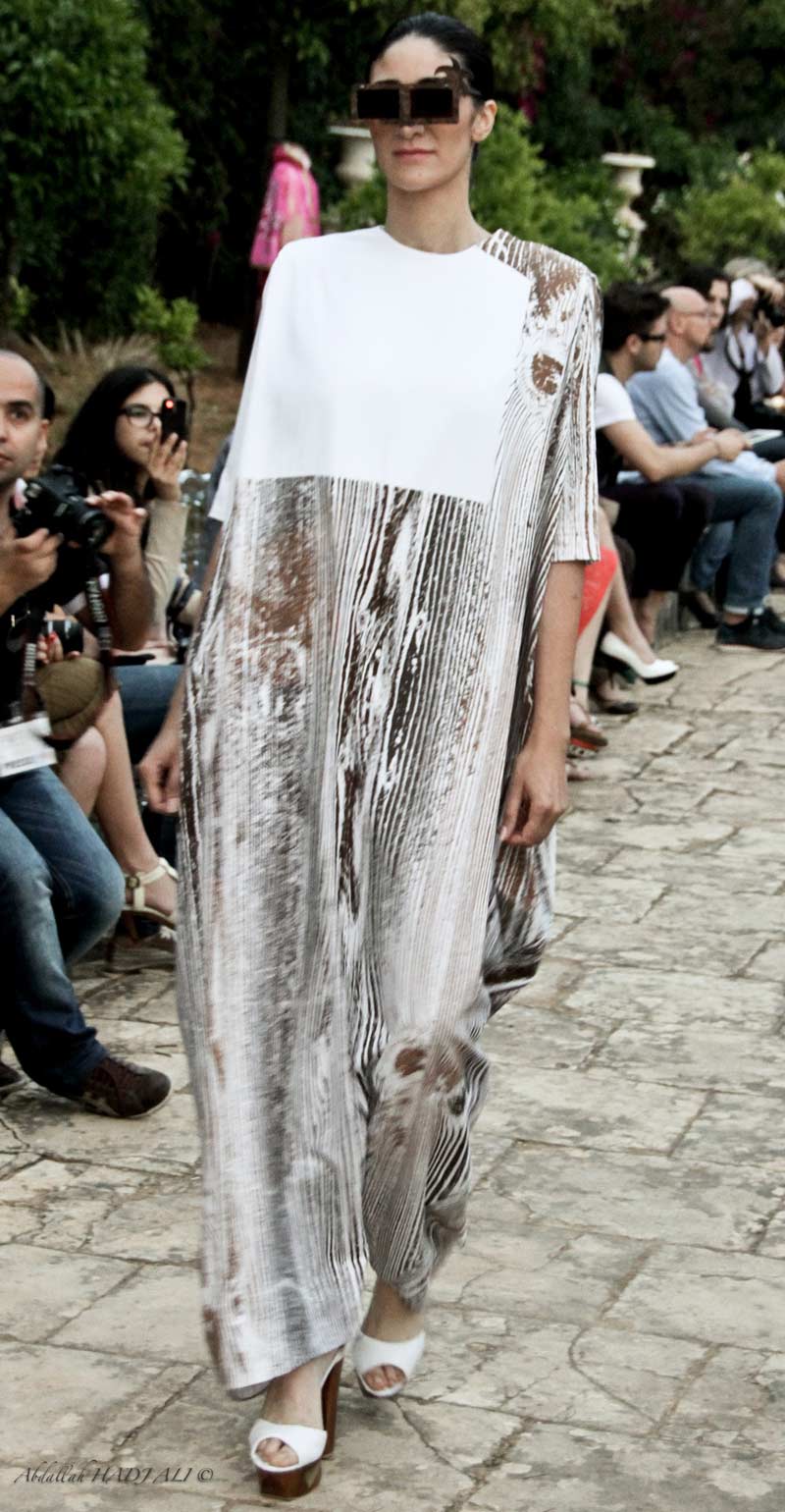
In line with the zeitgeist, the second day had most to offer. It was the day of “Green Fashion”, presenting contemporary labels under the patronage of star-designer Bruno Pieters, who constantly pushes the envelope on all things eco design with his label Honest by. The boyish Belgian came up with a projection of a short movie originally shot for The Avantgarde Diaries, in which he talks with A shaded view of fashion’s Diane Pernet about his work. But it was of course the young designers who were in the spotlight. There was for example the Viennese Nedra Chachoua, whose collection was inspired by the homeland of her parents – Tunisia. All dominated by beaming white, Nedra added funny palm prints and applications on easy blouses and pants, or wooden prints on full-length shirt dresses, giving the strong, modern silhouettes a nonchalant finish. Maybe the most desirable items were the sculptural sunglasses, made of lightwood, some of them also featuring the palm motif. Moroccan designer Amine Bendriouich showed a playful menswear collection that emerged from his collaboration with Moroccan, London-based artist and photographer Hassan Hajjaj. Combined with loosely tailored shorts and harem pants, it was especially the colourful jackets, sometimes plain, sometimes designed with an African touch, on which they printed photography of saints or religious insignias, that got the most attention. Young Dutch designer Natalie de Koning showed up with three collections in tow. It was difficult to find a thread at first, but her love for feminine shapes, monochrome colour games and slightly futuristic details is present in all of her collections. Besides, de Koning always goes for an intensive material handling, thinking about new recycling strategies or using special gowns like a very rare sustainable wild silk, for which not a single domestic silk moth had to die.
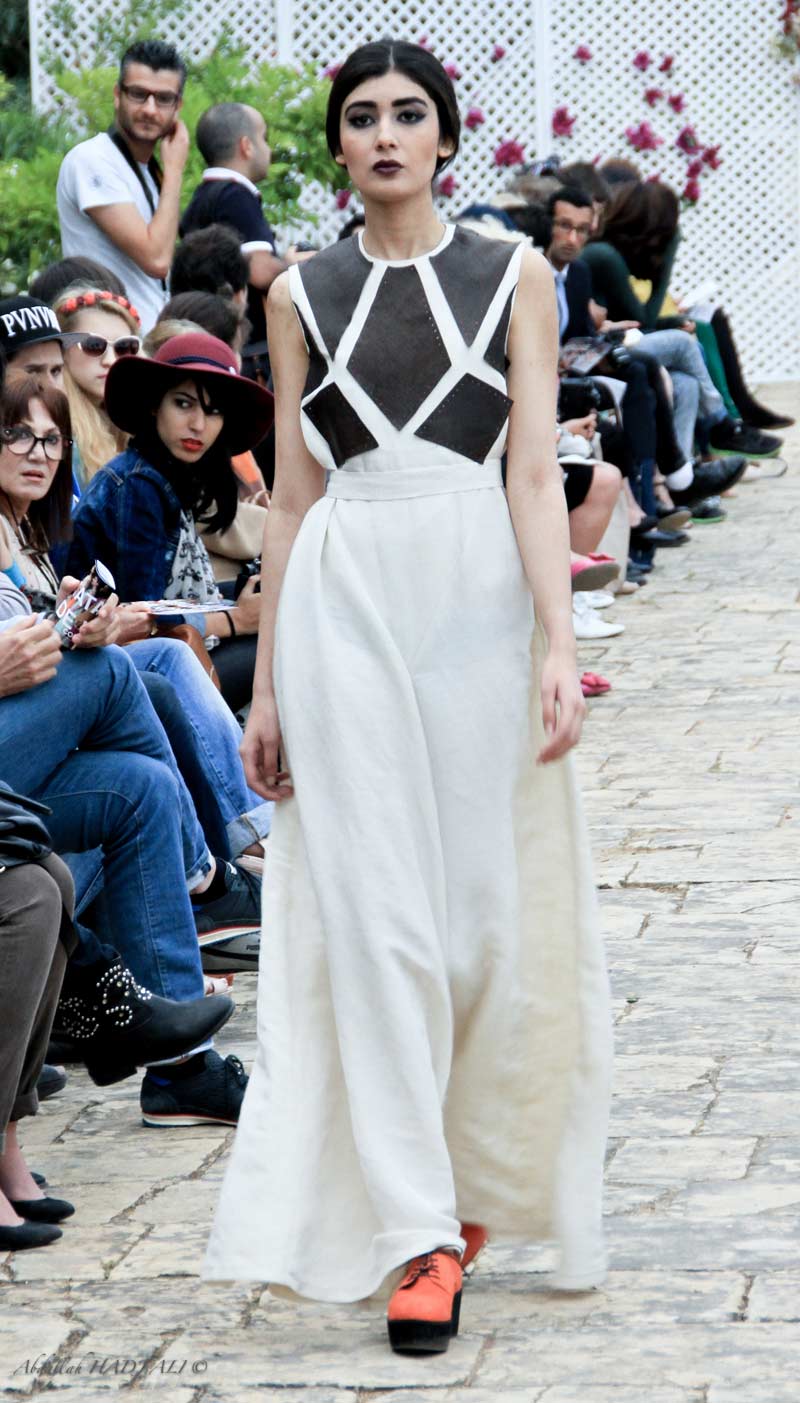
To die for or not to die for: that was the leitmotif of the following days, too, but in a more figurative sense. It was Tunisian fashion at its most opulent manifestations of oriental clichés, which you either like – or don’t. Cleavage here, cleavage there; close-fitting evening gowns in glossy garments, often adorned with billions of glittering stones and sequins, were shown in nearly every collection. But there was a certain fascination coming from this very commercial, sexy style for an oriental clientele, which was evident in the excitement that the runway shows inspired. This hit its peak in the overcrowded Acropolium of Cartage show, where the glamorous designers Ali Karoui and Sondes Ben Moussa Mahjoub with their high-segment jewellery and accessories label Rayhana nearly turned the runway into a rock show. The audience beamed with elated passion – something you rarely see in Europe. Celebrating their designers with such pride exemplified the people’s need for design, fashion, creativity and cultural diversion after years marked by formularised sameness. The revealing styles seemed to send out a clear message: “I decide. I show what I want.” Showing some skin can be regarded as one approach to female liberation in Tunisia. Under this perspective, this years’ Fashion Week Tunis held countless revolutionary fashion moments in stock – and all of them should stay.
Text by Celina Plag