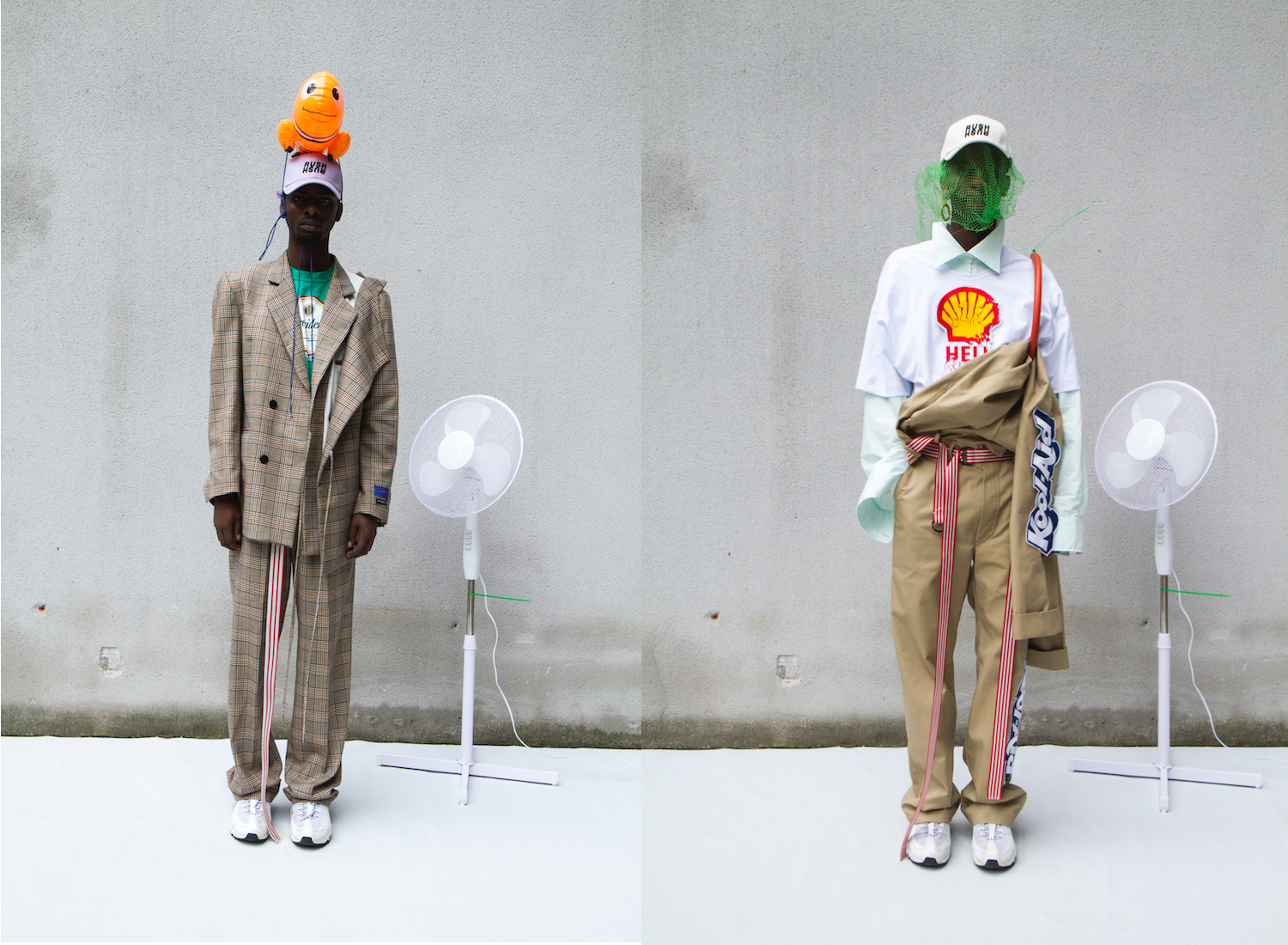
BOTTER is a young and promising fashion brand that stems from Antwerp. The city oftentimes dubbed as Europe’s “unlikely fashion capital”, Antwerp is the place many talented designers call home. The brand’s founders are 31-year-old Rushemy Botter, and 27-year-old Lisi Herrebrugh, graduates of Antwerp’s Royal Academy of Arts and Amsterdam’s Fashion Institute respectively. The duo’s poignant collections, had they even not been as beautifully crafted as they are, could still be valued as valid forms of social commentary – succinct, laconic and very much to the point in today’s fast-changing world, as they bring up fervent issues like discrimination and immigration, exploring the identity-defining potential of fashion.

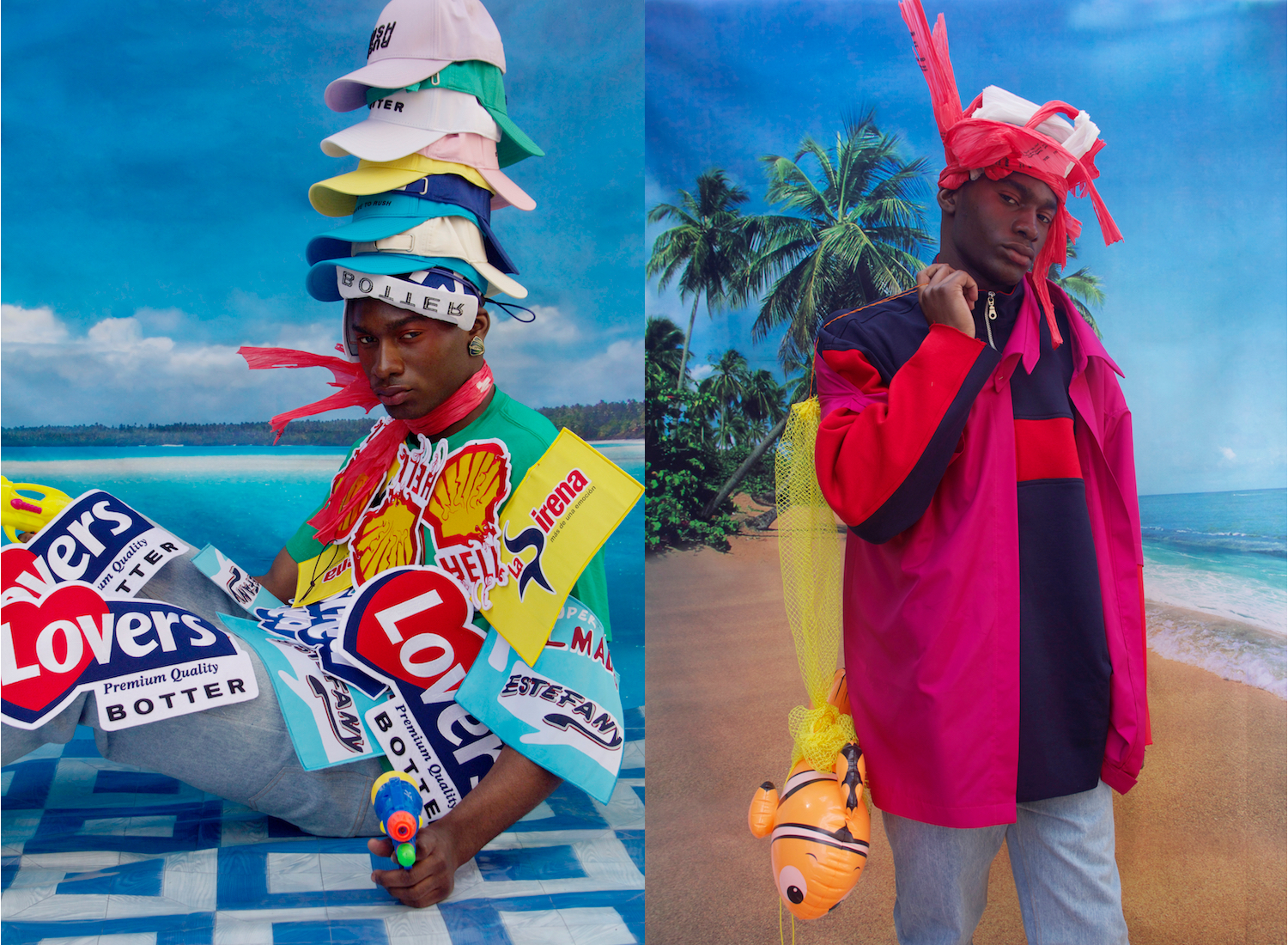
Since its inception, BOTTER has finished two full-fledged collections – both of which have been presented at graduation shows at the Royal Academy. Vibrant and provocative, each collection focuses on the enormous potential of the rebellious youth that – believe the designers – could be a constructive rather than ominous force. An array of patches, inspired by youth gangs, graced the garments from BOTTER’s 2016 collection, aptly titled “My Patch Is My Heart”, whereas the more recent SS18 “Fish or Fight” was accessorised – in what seems to be a deliberately naive way – with inflatable animals and toy guns in neon hues.
Each collection starts with diligent research for images, motives and ideas – something the creative couple do together. Everything they deem useful – from fragments of Renaissance paintings to flashy magazine cutouts – is put inside a “collection’s diary”, a thick notebook that becomes a chronicle of the creative process. Then Rushemy comes up with the overarching concept, while Lisi (“the one with the better technical skills”, agree they both, laughing) takes over the production process.

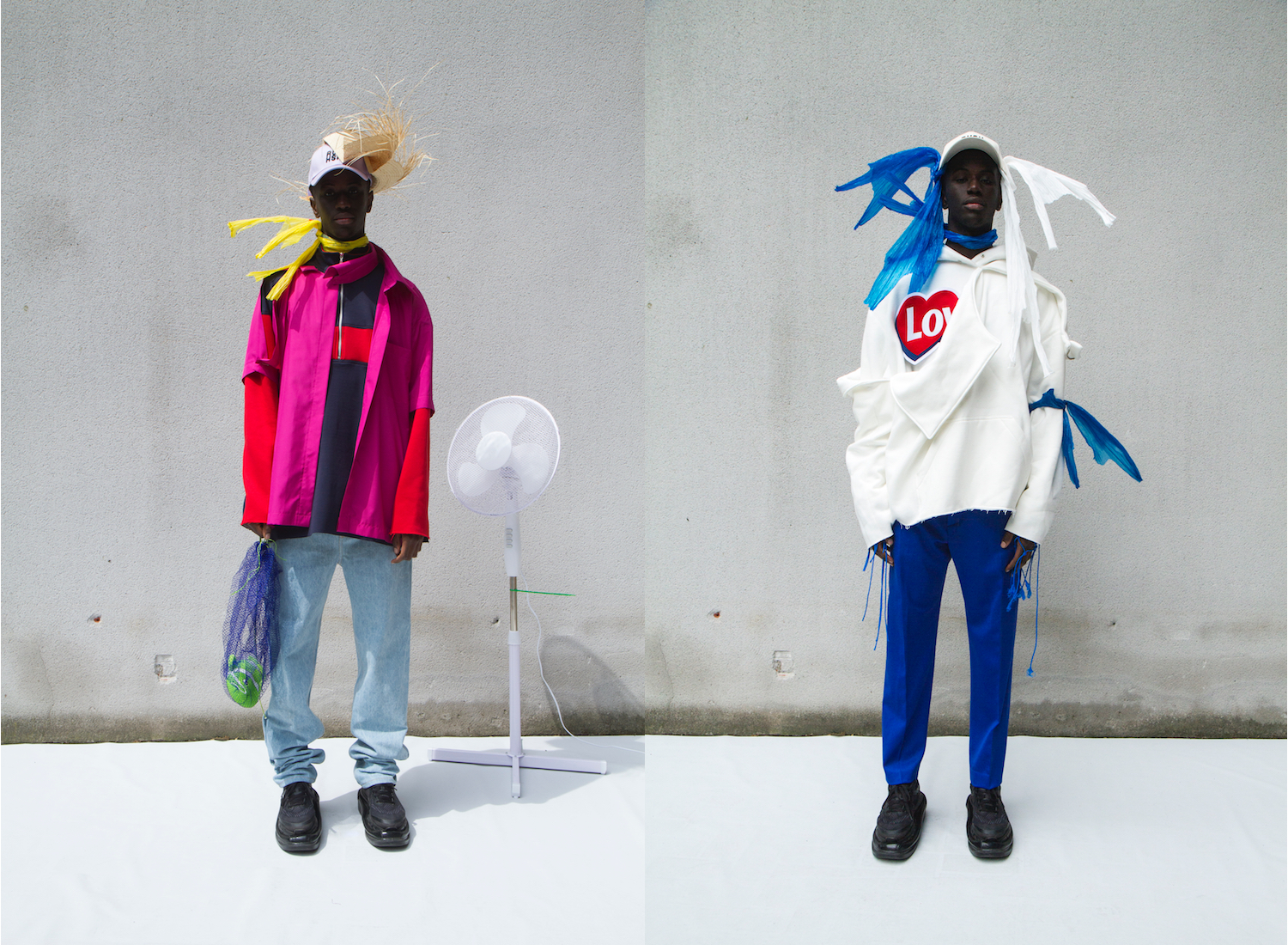
Fish or Fight started from Rushemy’s desire to ‘’dedicate a collection to his Caribbean roots’’ – partly inspired by the designer’s younger nephews, it thematises the role of clothes as contemporary armour that can protect against prejudice and discrimination. “In Europe I can always spot a person from the Caribbean, as they tend to, what one might think, overdress, putting their very best clothes on. It might seem somewhat clown-esque to people here, but I see it as a manifestation of pride and self-esteem. It is as though they are trying to make themselves invincible”, explains the designer. Hence, adds Lisi Herrebrugh, explaining the intriguing leitmotif of BOTTER’s collections, are the jackets, one worn over another – something you do, when you can’t decide, which of your finest jackets looks better. With all its bright colours, sophisticated cuts, satin-y fabrics, oversized silhouettes and intriguing details – Fish or Fight developed into a strong and empowering collection that effortlessly mixes street-style tropes with the power-dressing staples.
The “fight” in the title stands for the hardships one has to struggle with as a young immigrant from the Caribbean in Europe. “Fish”, on the other hand, refers to the destiny of those, who stay in the region, where fishing is one of the few occupations young people can possibly get into. Which brings us to Rushemy’s critical attitude towards big companies that manifests itself in the bitterly satirical “Hell” prints, imitating the recognisable Shell logo. “Companies like Shell mess with the reef, damaging the eco-system of the region, making it impossible to earn money fishing. All the while, the arriving big supermarket chains kill the smaller entrepreneurs”. In the brand’s recent ad campaign, featuring all-black cast and styled by the rising star Ibrahim Kamara this sentiment is translated in the use of mesh, resembling fishnets, and plastic bags.
Whether Botter’s consciousness about the environment extends beyond the eccentric accessories? In fact, it does. Whereas both he and Herrebrugh admit that fashion is one of the most polluting industries, they do try to reduce their own footprint on the planet, working with local eco-conscious ateliers instead of large producers, using recycled fabric and – last but not least – cutting in the most responsible way in order to produce as little waste as possible.
Taking inspiration from the streets, Botter also intends to give his work back to the people. One of the plans for the near future is to show a BOTTER collection in the Dominican Republic, Lisi Herrebrugh’s home-country. Travelling there last year, the designer couple met a boy from the slums, whose bizarre outfit they found inspiring. The child was wearing two sweaters – one as a top and the other as trousers. It is for the kids like that one, that – in a quite Martin-Margiela-spirited way – Botter and Herrebrugh want to organise a fashion show. “Normally fashion shows are for the rich. But we’d like to let in those, who normally do not enjoy the privilege of being invited to a fashion show”, say the designers.
With its refreshing ideas, well-executed collections, and socially conscious attitude BOTTER seems to be a brand with enormous potential – for which, as Rushemy remarks, he owes a great deal to his education and specifically to Walter van Beirendonck, who never spared him criticism. The hard work, however, pays off – the brand’s Fish or Fight collection, presented at the graduation show at the Academy, was awarded a whole paraphernalia of honours, whereas the young brand’s Instagram account is followed by revered avantgardists like Virgil Abloh and Grace Wales Bonner – something that looks like a promising start to a budding fashion career we hope to be hearing about often in the seasons to come.