
BodyCitated via Instagram.
As a writer, I take special notice of words and the influence they hold over us. Living in Berlin, I’m faced with graffiti every day; from crude profanity of childish minds to emotional outbursts of street poetry. I, without a choice, open myself up to the minds of many. I notice this postmodern love for blunt statements not only on the walls of Berlin but also in the world of fashion; statement pieces are all around us. We proudly wear the names of our favourite bands, films and sports teams on T-shirts and hoodies. We send messages to each other with motivational or ironic quotes on tote bags and the backs of our jean jackets.
The fashion industry notices our silent communication. And they put in their word. While both luxury and fast fashion brands tend to employ typography to spell out their own name and raise brand awareness, a young NYC designer, Laylah Dinkins, uses it to wear her heart on her sleeve.
BodyCitated is Laylah’s debut project, making use of typography prints on clothes to spread messages of raw human emotion, dismantling the capitalistic ‘American Dream’, one garment at a time. I reached out to Laylah to gain insight into the life of an independent designer in the modern age.
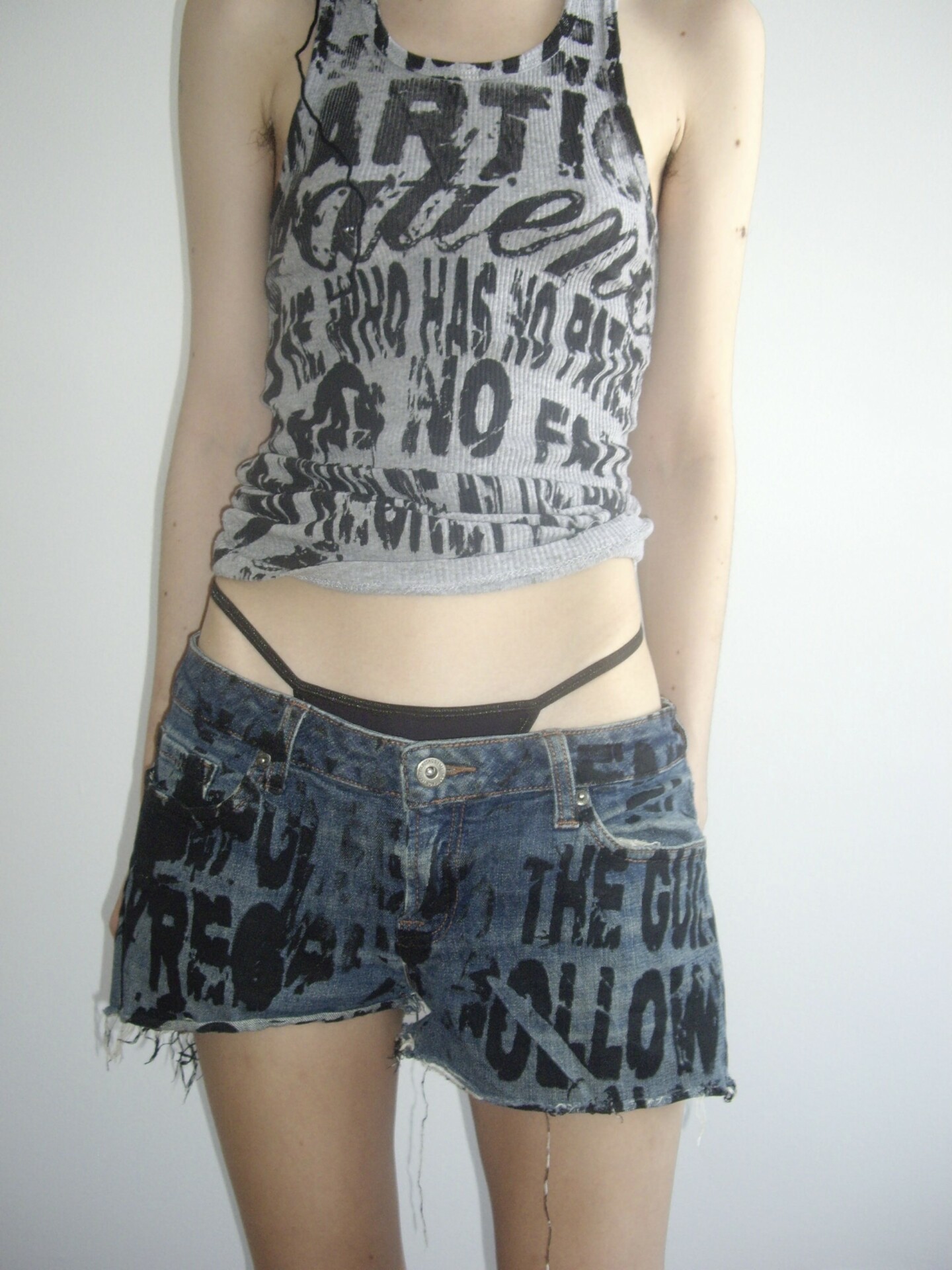

Left Image Courtesy of BodyCitated RIGHT BodyCitated via Instagram.
SLEEK: Tell me about your background and how you came to be a designer.
Laylah: I was born in Chicago but for a long time I’ve been living in NYC. I never meant to become a designer. The fashion industry never appealed to me; it’s the whole trend of commodifying the human experience and overproducing. That didn’t seem like something I would base my life around. My university degree is in Business Administration, which was mostly pushed by my parents. Neither of them went to college but both have kickstarted their careers from the ground up. That motivated me because if they could achieve that, imagine what I could do with a degree. For most of my childhood, we were struggling financially but I’d always see my dad studying the industry and looking for new ways to grow his business. That always inspired me. Business isn’t evil in itself, it’s always about your intentions.
During my last semester at Parsons, a design course was available and I wanted to use as much of my university’s resources as I could, so I took it. It was then that I met Marie Dormuth, a professor who I consider my life coach; she awakened a newfound passion in me. I found myself in silkscreening [an image transfer on fabric through light exposure]. From then on, I began designing.
S: All of your clothes are upcycled. This is something common amongst upcoming designers. What importance does upcycling play in your approach to fashion?
L: Sustainability aside, I love the idea of reusing something existing for a newfound value. It is a means of not only sustaining the self but also being resourceful of material and time. Growing up, I had no choice but to thrift all of my clothes. Now, thrifting and upcycling are used as ‘buzz’’ words in the fashion industry; they draw people in and make for bigger sales.For many low-income families like mine, this was just a way to manoeuvre through life. So, for me, upcycling is something inherent; something I do with the thought of families like mine, not with the intention to fit into the mainstream trend and sell more.
S: What was it that prompted you to sell at all? Was it that desire to spread your message through words packaged in beautiful garments?
L: Initially, I wasn’t planning on selling at all. Some pieces were so special to me that I wanted to keep them private for myself. But emotions are meant to be shared and by using typography on my garments, I’m able to literally wear my heart on my sleeve. I see a lot of evil in the world, so I choose to use my heart as a weapon for this ongoing war between the human body, mind and soul. In the modern world, we’re made to feel like a commodity, not human beings. I fight using my vulnerability; ornamenting my clothes with these sort of diary entry quotes because I want to remind people to protect their souls and to remember; always be a human being first.
“Good afternoon, corporate America. I punch in my number and start acting like I’m working and adding value to the void. I’m sitting down, eating my 12-dollar salad, thinking, ‘is this really my life?’ Cosplaying as a robot so I can be a human later. What sacrifices do I have to make?” - BodyCitated
S: Yes. In a world of overproduction and capitalist-driven algorithms, it seems, the only way you can communicate your emotions is by materialising and selling them. When the industry is so tightly controlled by big companies, how do you, as an independent designer go about promoting yourself? And how important is self-promotion for you?
L: My focus is always on the actual design and the production process since that’s the part I most love doing. I’ve come to realise that most online brands prioritise marketing and appealing to buyers over time spent on the production and improvement of their clothes. This game of social media is a facade; designers like me will never have control of the algorithm; these apps have a way of keeping people running for their money. That’s why I prefer to sell through my own website; that way, I have a direct connection to the people who choose to purchase my work; it’s more organic.
S: Some of your garments are now stocked at Ap0cene und Retail Pharmacy. How did that happen and what effect has it had on BodyCitated?
L: I met the owner of Retail Pharmacy, Sophia, the first time I sold at a flea market. I knew nothing about them or the space, I was very new to the whole process. I saw their flier for a pop-up and reached out in hopes of selling some of my pieces. At the very last minute, Sophia gave me the chance to stock my pieces and to my surprise, almost all of them were sold. It was a real milestone for me; I saw that what I had been creating in isolation was worthy of being seen amongst other amazing creatives.
Then, Ap0cene reached out to me. I’d been following them for a while and during my last university semester, I even wrote a paper on how selling with Ap0cene is a future goal of mine. So of course I took the opportunity. What I love most about selling on these platforms is that it has allowed me to build a small community around BodyCitated and enter a sector of the industry that gives me hope for the future; where the value lies in connecting with like-minded people and sharing visions, not on selling to the unknown masses.
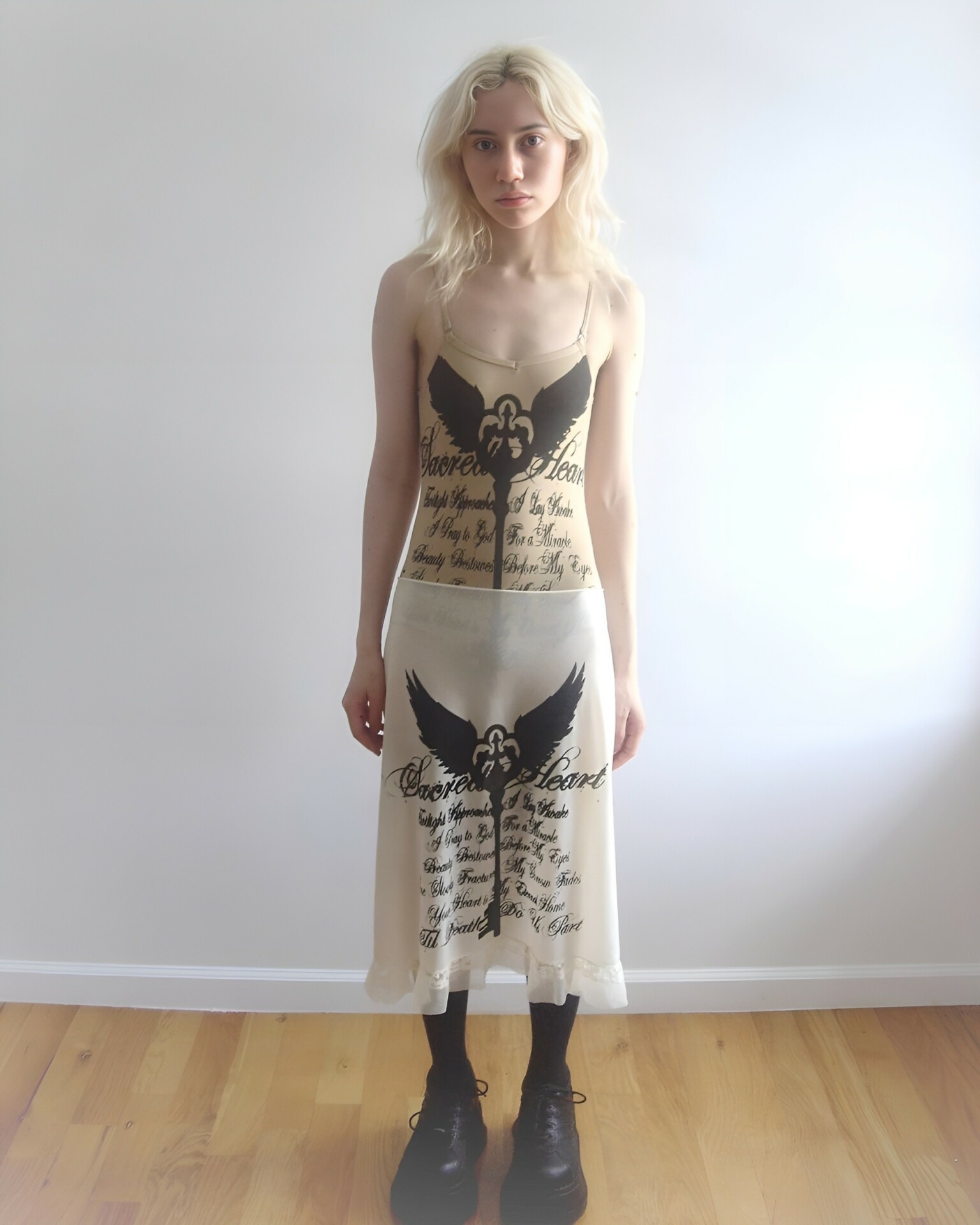
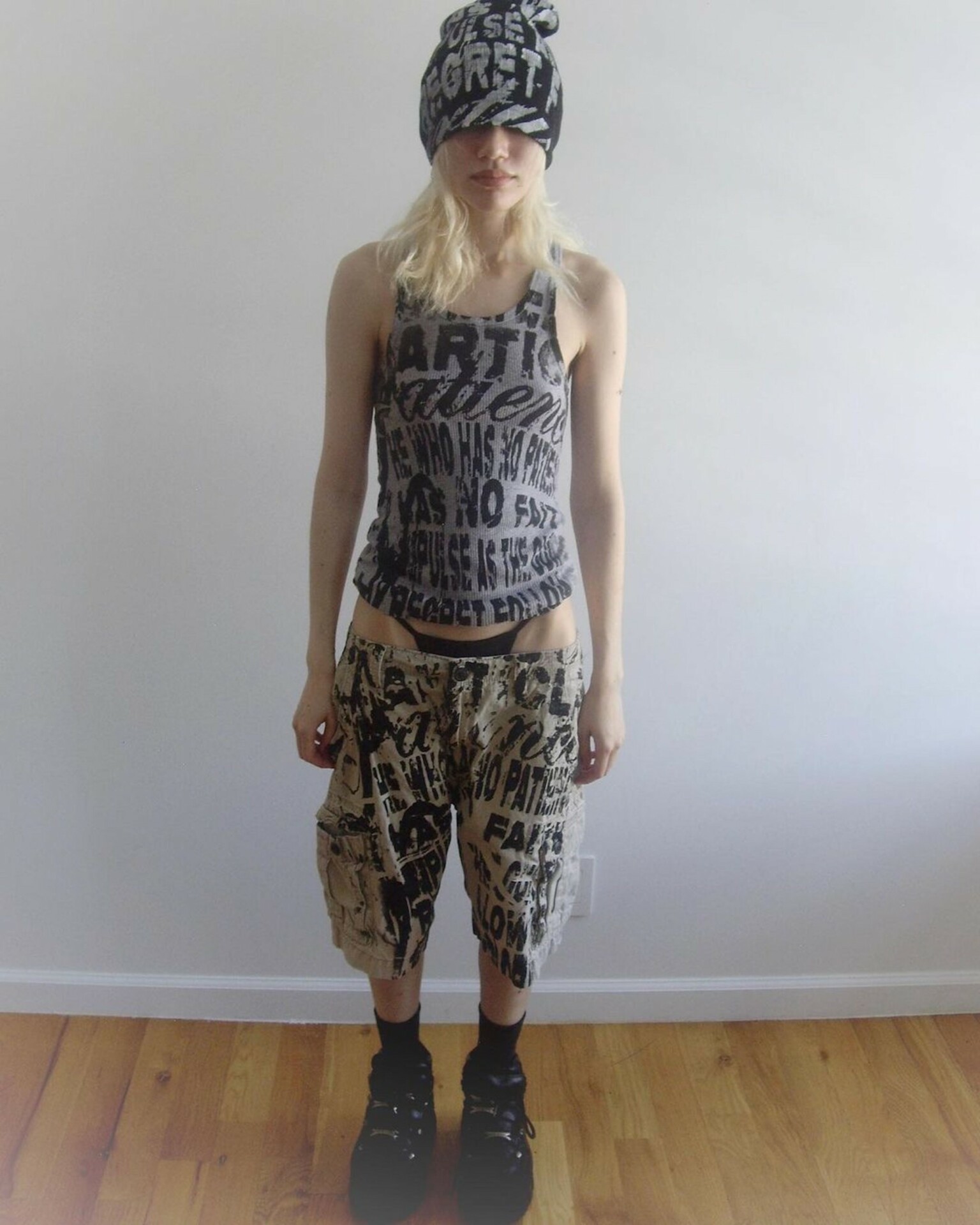
Images Courtesy of BodyCitated.
S: About the hopeful future of the fashion industry, what’s next for BodyCitated?
L: I think I’ve been living in NYC for too long. City life has led me to become a product of capitalism; I’m getting used to being treated more as a machine than a human being. The space in which I create plays an essential role in the outcomes of my designs and in the city, there is no isolation. Having a house in the countryside with a white picket fence, and living off the grid; that’s what I need to create from a place of true emotion.
I hope to grow BodyCitated beyond clothing. It always goes back to the community; I want to be able to see people connect with each other through my clothes, and find each other, in a world that works to make you lose and forget yourself. Connected to the people, disconnected from the machines.