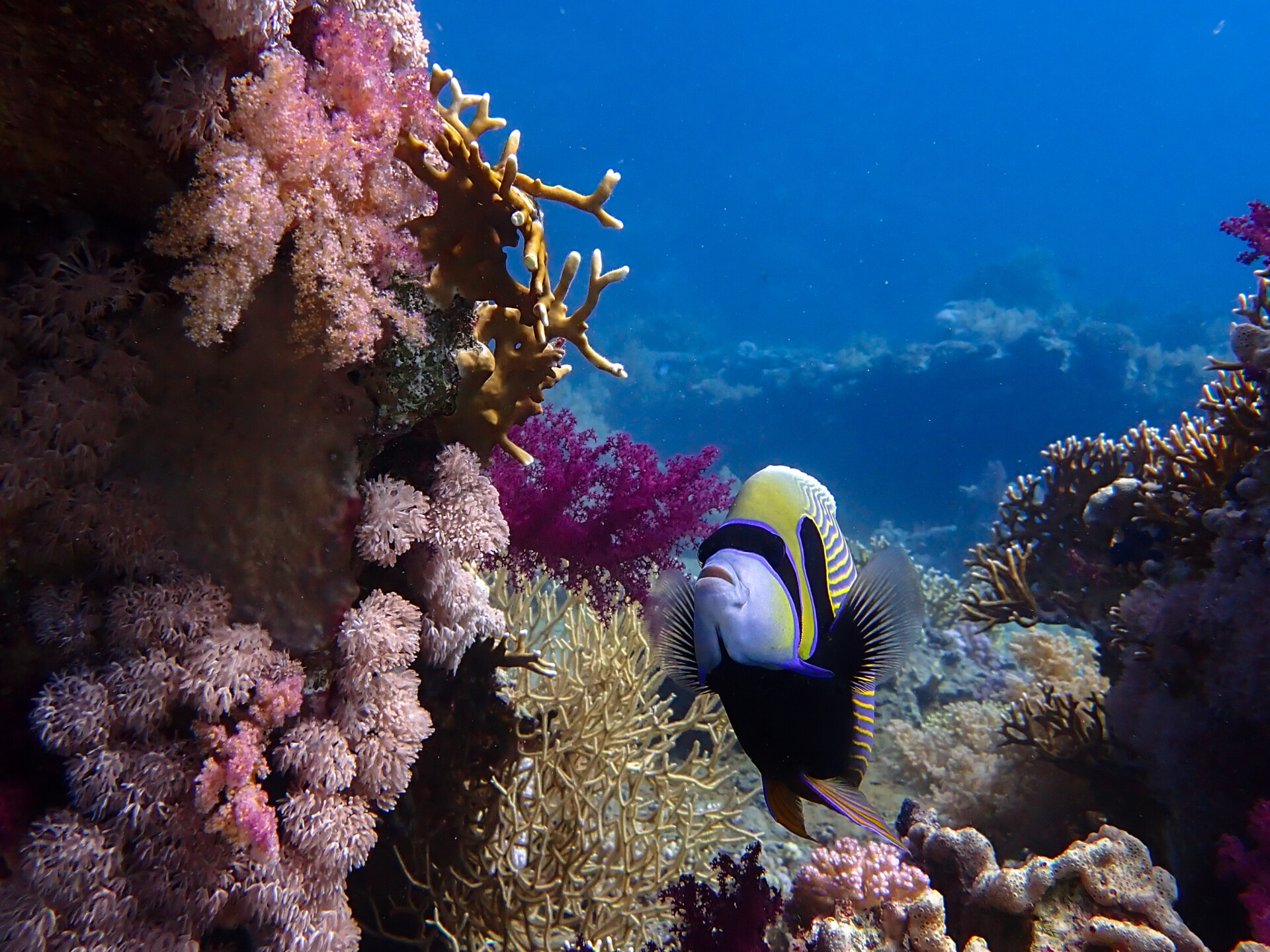
Photography by Leïla Tazi. Image Courtesy of rrreefs.
By 2050, it is predicted that more than 90 percent of the world’s coral reefs will be extinct. With rising sea temperatures and acidification, our oceans and the life within them are disappearing – quicker than ever – in what can be said to be an ecological catastrophe. What was once a dazzling spectacle of colour is now becoming a haunting oceanic graveyard. The survival of our planet depends on coral reefs, which work to support a quarter of all marine species as well as half a billion people around the world. Without them, we can expect serious disasters.
In an attempt to tackle this pressing issue, Zürich-based environmental solutions organisation rrreefs combines science and engineering with art and education to rebuild the lost and endangered ecosystems within the marinescape. Founded in October 2020 by Marie Griesmar, Ulrike Pfreundt und Hanna Kuhfuß, rrreefs is committed to creating a positive impact for our oceans, the life within them and, by extension, the human race.
Marie Griesmar speaks to SLEEK about how the marriage of art and science is reigniting life within our oceans.
SLEEK: As an artist, you’re putting art at the service of the environment. Why?
Marie Griesmar: Very early in my artistic practice, there was always a fascination with marine life. Since I was a kid, I have been scuba diving almost every weekend which has given me this complete obsession with the ocean. It became my muse in a sense, depicted in almost all of my paintings. As the years went on, I began to see how drastically different the ocean was becoming; the coral reefs were dying, there were not as many fish and there was a complete lack of colour. Rather than just being the subject of my paintings, I began to wonder how the ocean could perhaps be the space for my art – a space in which I might create meaningful solutions. I had the idea of developing underwater sculptures that would act as cities for corals and fish: a small contribution towards repopulating the ocean’s missing marine life.
S: You started rrreefs together with Ulrike Pfreundt and Hanna Kuhfuß. How did it come about, and what connects you?
MG: When you’re from the field of art, it’s quite difficult to meet the scientists and activists who are so crucial in the development of such solutions. During my fellowship at ETH (a public research university in the city of Zürich), I was trying to understand how digital fabrication could help me to scale up my idea of creating sculptures for the ocean. At another campus, Ulrike was also investigating how 3D sculpture could optimise the reproduction of coral larvae.
Since we were pursuing similar ideas, our paths crossed, and we started collaborating. Ulrike was missing the artistic element of building a structure and I was missing the scientific knowledge to build such a piece within the parameters of ecology. We complemented each other well. After we left university in early 2020, we decided to actually bring this project to fruition. Ulrike also introduced Hanna to the project, who was equally passionate about corals, and together we founded rrreefs in October 2020. Despite our different disciplines, we’re all connected by a shared joy of helping marine life.
S: How do you transfer the natural elements of the coral reefs into the artificial growth base?
MG: People often forget that corals are animals. These tiny organisms are able to grow skeletons and produce calcium carbonate to create these humongous volumes of oceanic architecture. Like anything in nature, they require certain temperatures, the presence of other organisms and nutrients to survive. At present, these needs are being compromised.
In order to create something that was able to support the needs of the reefs, in a way that didn’t dominate the natural system, we had to ask ourselves a lot of topological and ecological questions. Through our investigation, we were interested in how we could provide the organisms with flexibility, giving them a space where different species could grow freely.
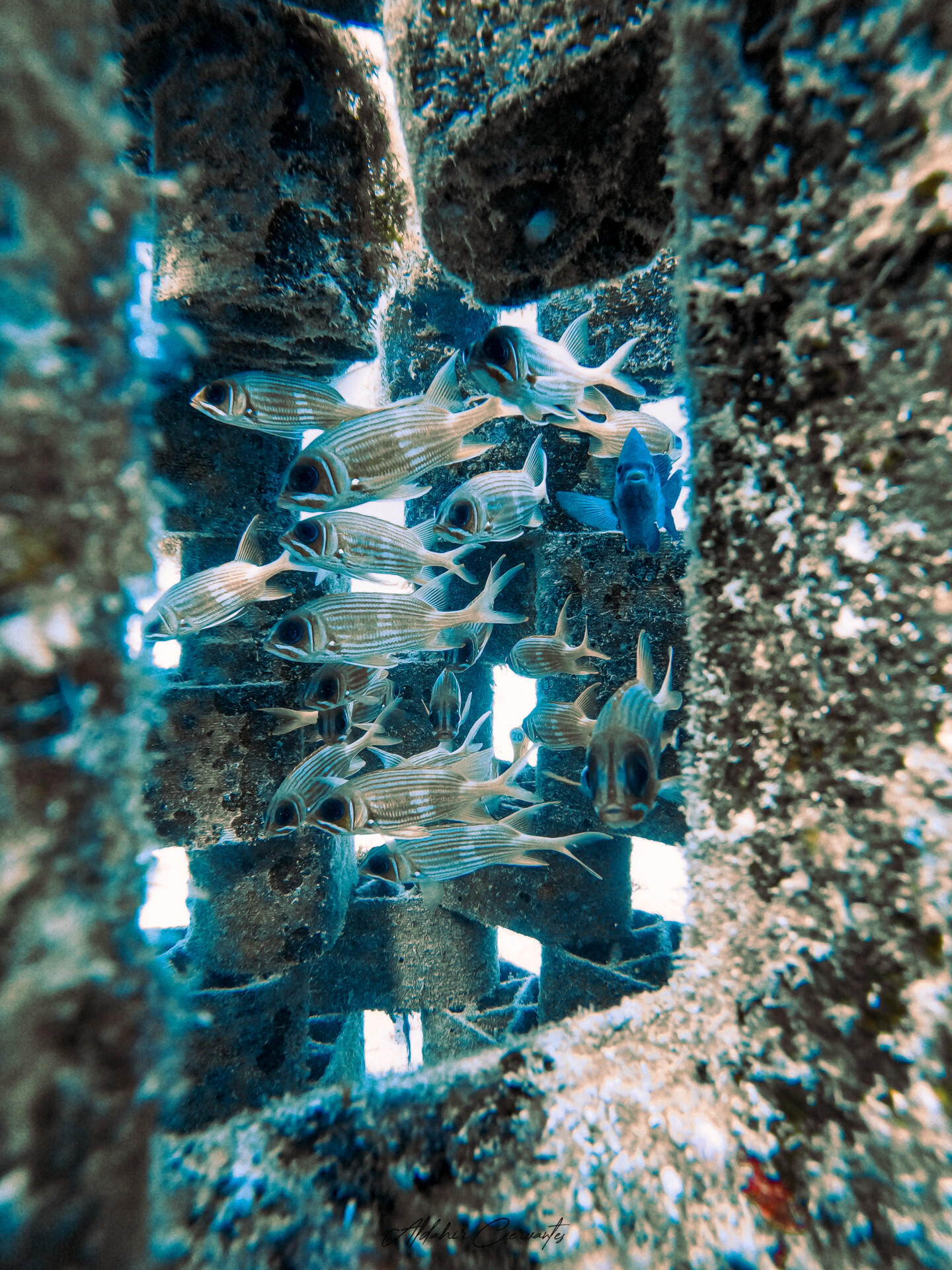
Photography by Leïla Tazi. Image Courtesy of rrreefs.
S: What have you observed? How have the organisms reacted to an artificially created environment? Do they feel comfortable?
MG: In all honesty, there are times when our work can be very difficult and challenging. But, by the same token, there are times when I literally cry with joy because I am so proud to see organisms living within our structures. When we were building our first reef in the waters of Colombia, we had these two fish constantly checking up on us to see what we were doing. As soon as we installed the structure, these exact two fish occupied the space instantly, hiding and playing between the hollow bricks.
After a few months, we returned to conduct a survey of how many fish were in our artificial reef and how many were on a real reef nearby. The number was equivalent. It was insane how quickly nature adapted to the structure and vice versa. Another really important part of our work is that half of the bricks used in the structure incorporate fragments of coral. Already, we’re seeing the young coral attaching from themselves and becoming independent. This is a huge step in the restoration of coral reefs.
S: What do you learn from working through rrreefs?
MG: Patience. Nature can move really fast, but it can also move extremely slowly. You cannot rush things with nature. In our society, we demand instant results and immediate satisfaction. By watching these ecosystems grow, change and develop, I have learnt the importance of patience and the value of working detached from ego.
S: What touches you about your work and what makes it special?
MG: Apart from the obvious emotional reward of being able to contribute positively to marine environments, I think being able to work collaboratively is also very special. Over the last few years, our team has expanded and we often work with students and volunteers. Being able to work in this collaborative capacity gives us the opportunity to understand different perspectives and acquire new knowledges. Community and collaboration are so important; they provide a space in which to share your dreams.
S: What would you like to tell our readers so that they can draw inspiration from projects like yours?
MG: I think it’s important to remember that you cannot fight all the fights. You have to look within yourself and have a connection with what you choose to fight for. And when you have found your calling, find other like-minded people to build a community of encouragement and activism. If you listen to your gut, your intuition, it will take you to the place where you belong.
Zu finden in SLEEK 75 – HAPPINESS. Erhältlich als Print- und Digitalausgabe hier.