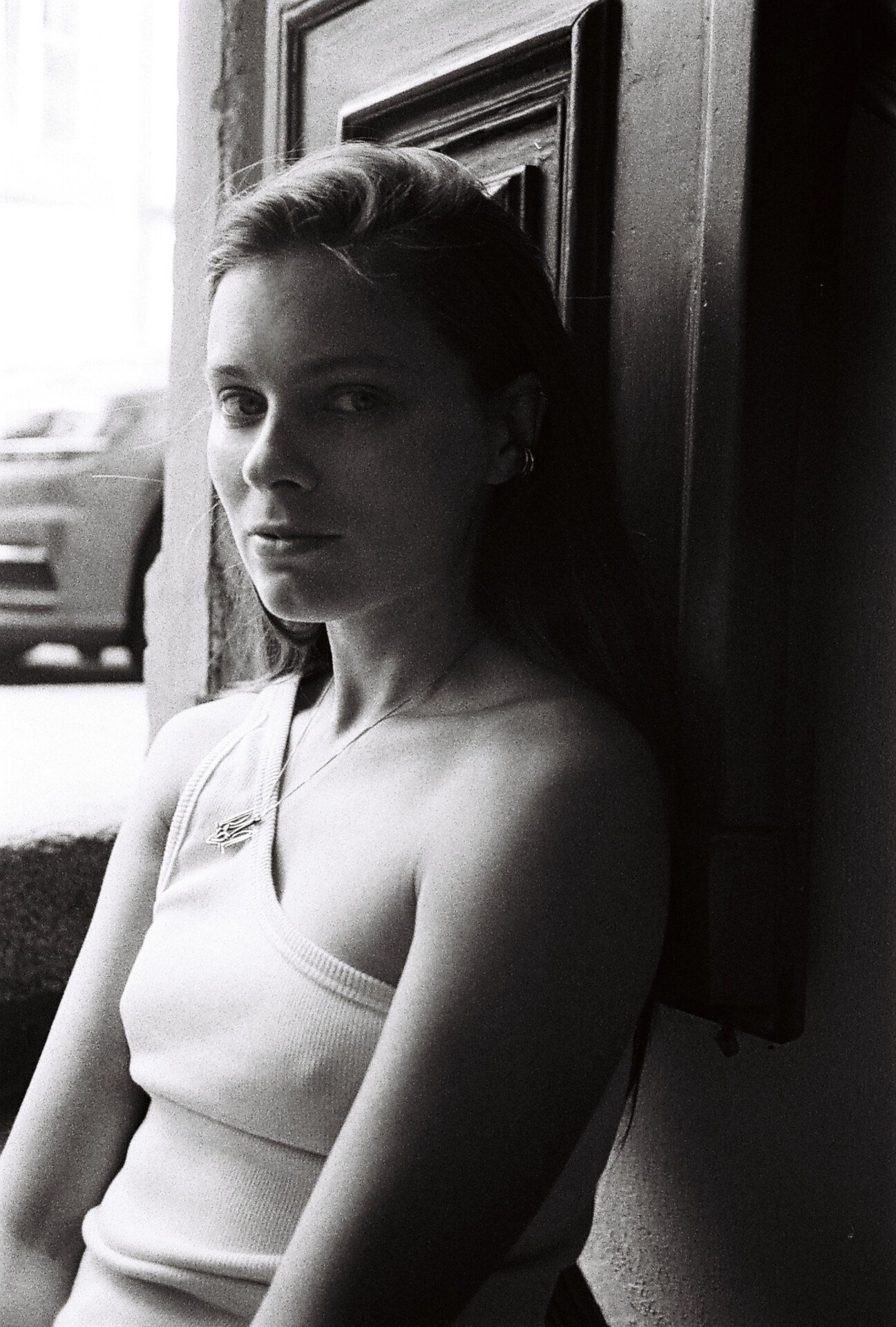
Photography by Zuzana Novak.
Ukrainian-born, Berlin-based Inna Nechyporenko draws on her life, the people she meets, the places she visits and the world around her. Fused effortlessly together, these experiences shape the vision of INNAN; a label focused on simple, striking jewellery and accessories in bold, timeless metal, precious and semi-precious stones. SLEEK speaks to Inna about the inspiration behind her craft and how design becomes a form of healing.
SLEEK: How did you find your way to jewellery?
Inna Nechyporenko: It was very organic. After studying sociology and social work in Kyiv, I started modelling and travelling. It was all so new and exciting. I was entirely charmed by the fashion industry. I decided that I wanted to make clothes but pretty soon after my first sewing class, I realised I didn’t enjoy it at all [lacht]. While I was figuring out what I wanted to do, I continued to model. Sometime in 2011, I was in Paris on set when I met Ugo Cacciatori, the avant-garde jewellery maker. The same day, he invited me to his showroom and told me all about his jewellery. It just really clicked with me. Looking back, that was really the moment I knew what I wanted to do.
Unable to melt metals due to a lack of professional training, I began to sketch. While I was doing so, I quite literally went all over the world asking different designers about gemstones and how to make this and that. As though by fate, I found myself in contact with the Ukrainian jewellery designer Maya Kotelnitskaya, who happened to be a mutual friend. I was in Copenhagen at the time and I asked her if I could come to Western Ukraine to watch her make her pieces. She said yes. Over those two weeks with Maya, I really learnt the technical aspects of jewellery making: the soldering, filing, sculpting.
In 2012, I decided to move to Berlin as my modelling agency was based there. In between modelling and taking short jewellery making courses, I met the jewellery designer Britta Ehlich who became a mentor to me. A few months later, I started making rings and experimenting with sculptural shapes. Stylists started to ask about the pieces I’d made when I would come to set wearing them. That’s how INNAN was born. It was all very organic.
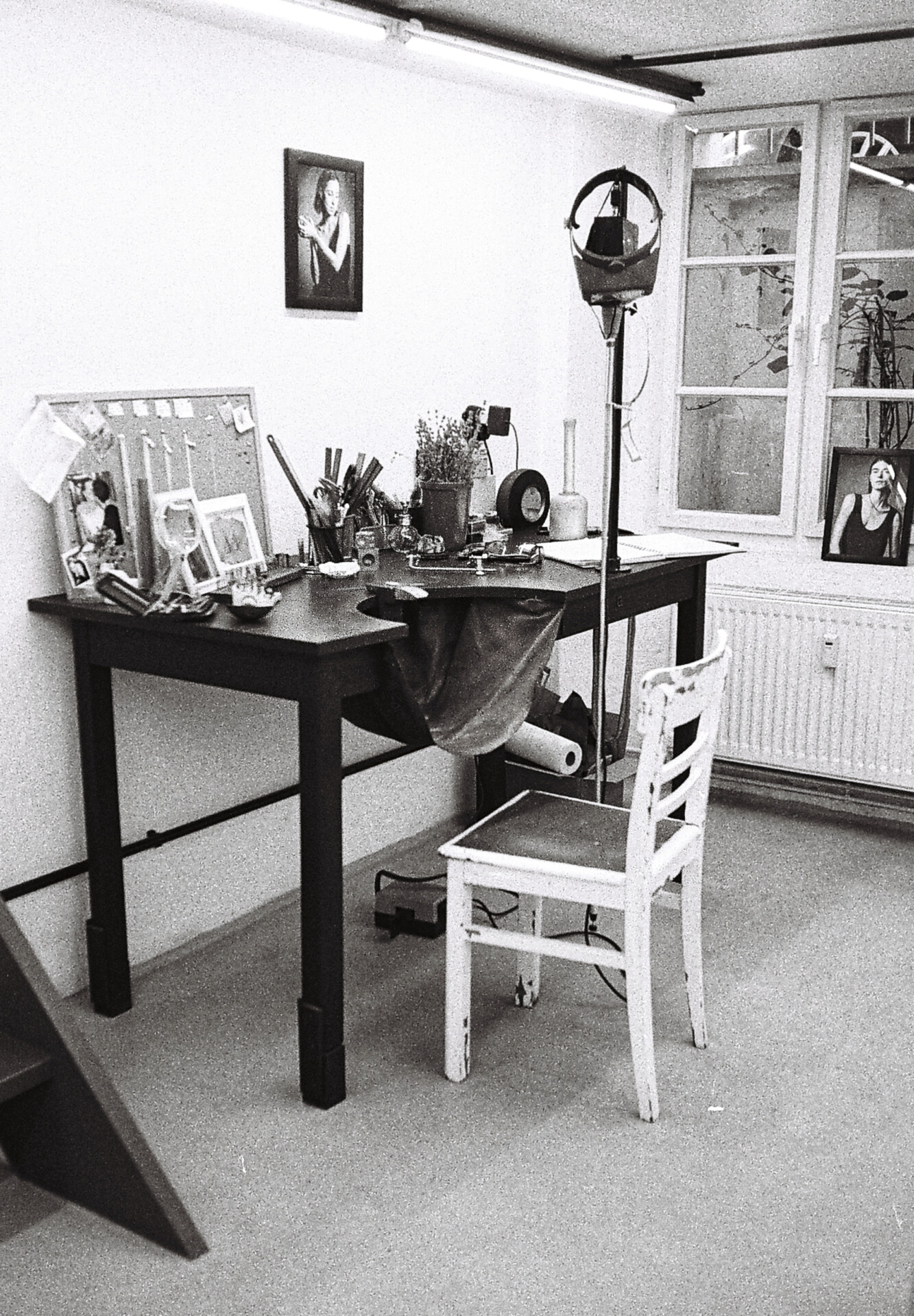
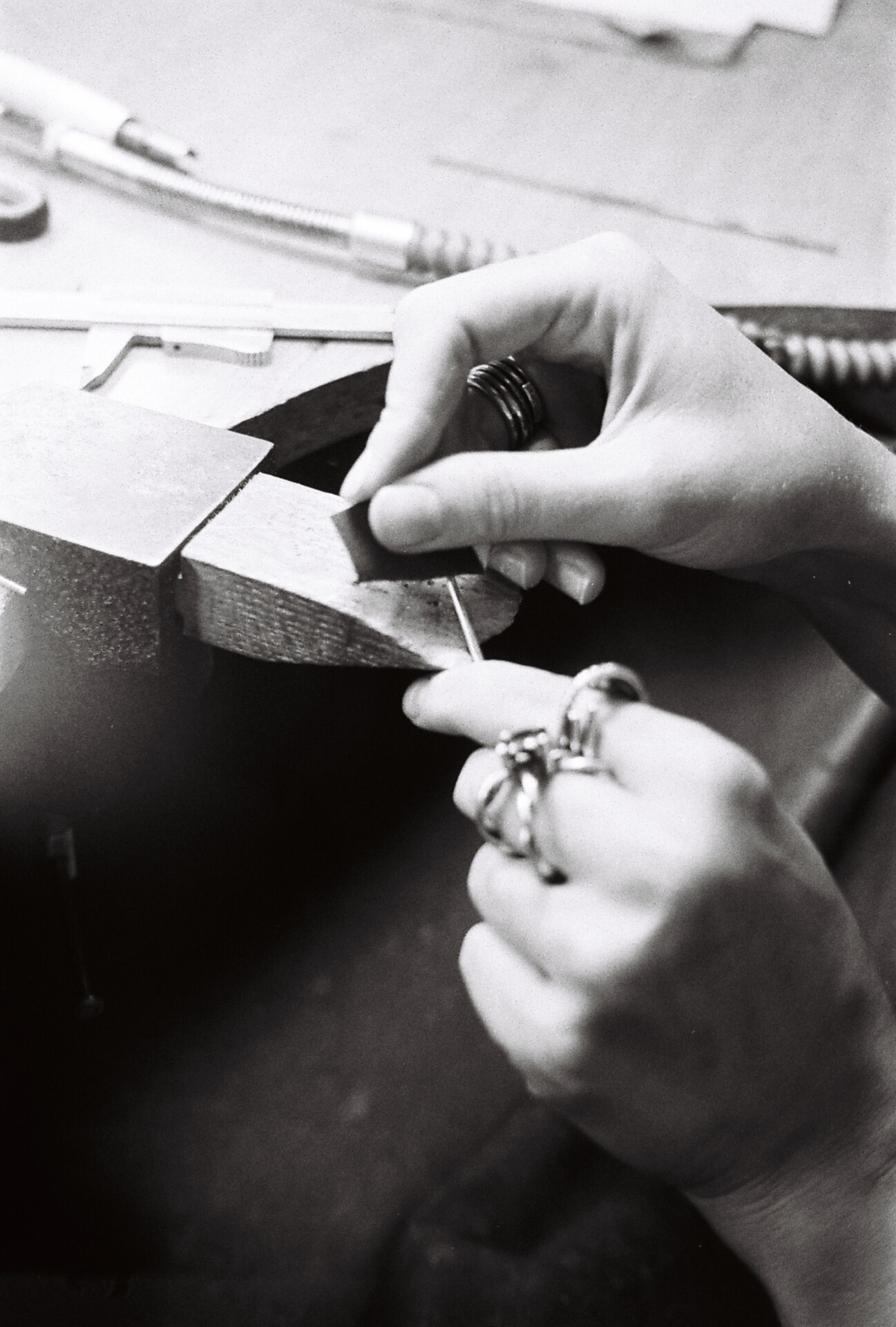
Photography by Zuzana Novak.
S: You are based in Berlin but were born in Kyiv. How do the two places influence you and your craft?
IN: I was born in 1989: the year the Berlin Wall fell. I’ve always felt a strange connection to Berlin. I was born in Ukraine, but I’ve lived in Germany for almost 11 years. For the most part though, I’ve been a nomad; travelling the world and absorbing different cultures. Berlin has been the first place where I’ve really settled. Perhaps because there’s a familiar spirit here in Berlin that reminds me of Kyiv. Even more so now, with so many Ukrainians coming to Berlin to flee from war. Ukraine is a very young country: it only became independent in 1991. I think there’s this similar spirit of rebuilding, of seeing new things appear. There’s a certain freedom in both places. Of course now, that freedom is being challenged. But, our spirit remains.
S: Does your jewellery make you feel as though you’re seeing the landscapes of your homeland?
IN: While elements of it certainly are connected somehow to Ukraine since I was born there, my jewellery feels very universal. I’ve travelled to many places and experienced many things. Each experience influences the way I perceive and design, how I fuse memories together through the act of making jewellery.
S: Your work is inspired by your life, the people you meet, the places you visit. Is there one memory that constantly finds its way into your work?
IN: Capturing a moment, a memory, in a jewellery piece is at the core of my work. Jewellery is my way of communicating. Everything that I see and feel finds its way into jewellery pieces afterwards. I think this approach comes from my time studying sociology and social work. I have this feeling for people somehow. People really are my inspiration. I am inspired by their stories of love, of pain, of loss, of joy. I feel so happy that people can share these intimate stories with me. Each story builds into a greater story inside of me. In a way, I feel that each story and experience can find its way into any piece.
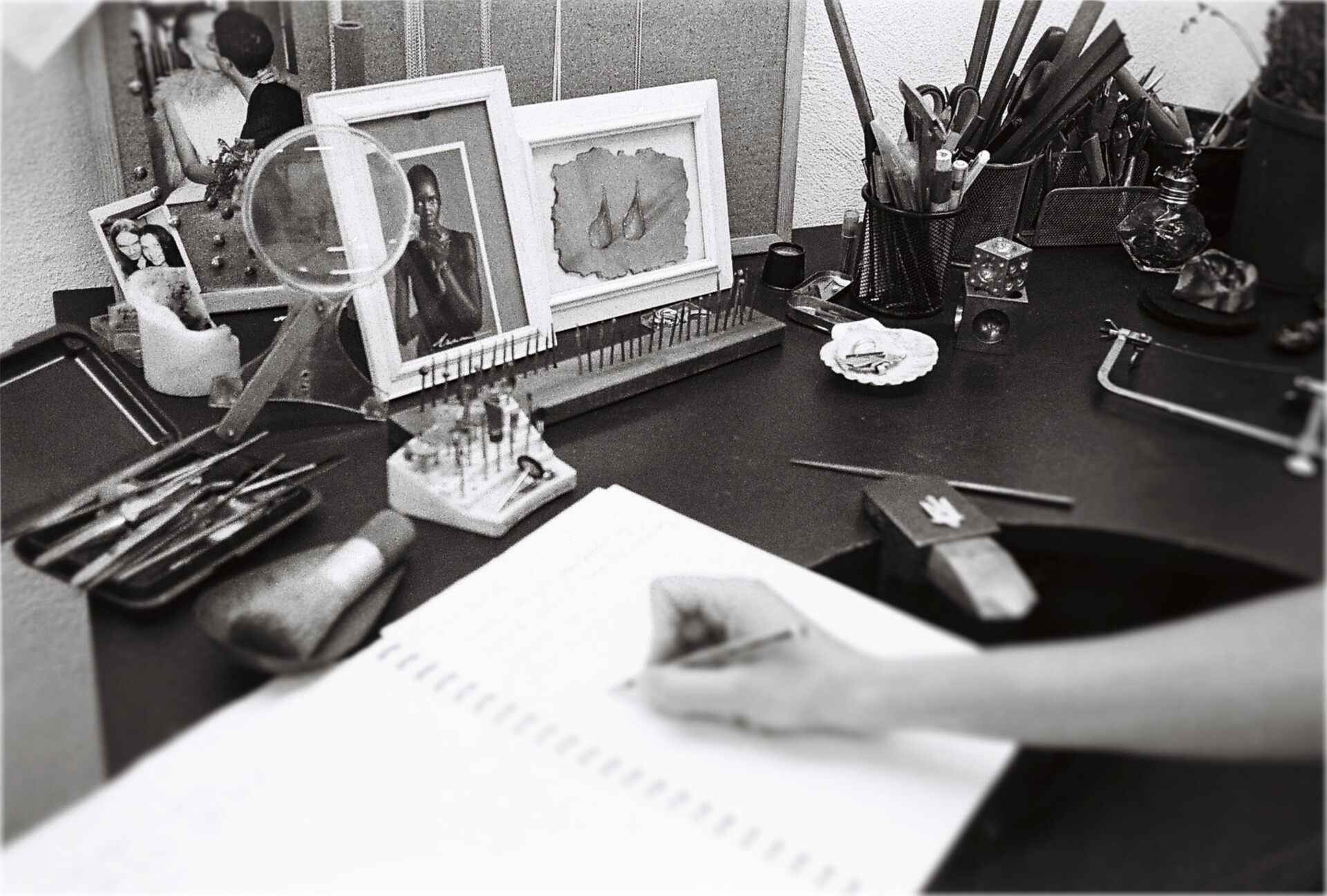
Photography by Zuzana Novak.
S: How are these stories and interactions then translated into jewellery? Is it more about a feeling than the look?
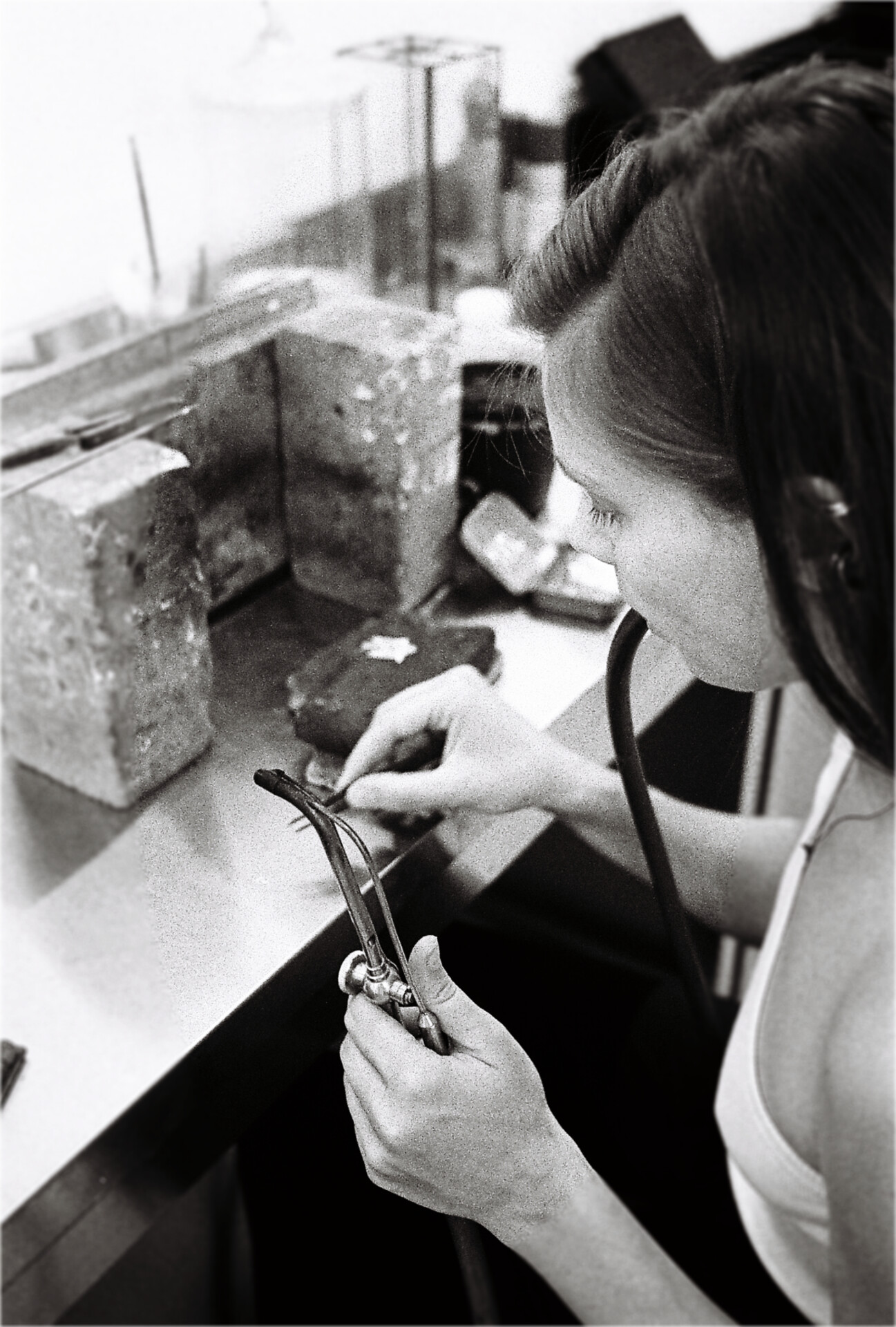
IN: Each piece is made with a feeling. It’s a very analogue process of speaking with a customer, then sketching a design with a pencil, before making it with my hands. I’m never too strict about following the initial design sketch. I leave room for experimentation; to let the feeling carry the creation. For me, if it’s too perfect then I’ve failed. Imperfections are important.
S: In your designs, you create a harmony between timeless elegance and the Brutalism of Soviet-style architecture. Does this become an allegory for something more than jewellery, an allegory for life perhaps?
IN: There’s always a meaning behind my pieces. They represent a moment in time, personally and collectively. Through the way in which they are designed, combining the elements of rough metals and elegant gemstones, my pieces reflect the time in which we live. They become a form of poetry, carved into metal. Through such an approach, one that fuses feelings and memories together, my pieces become powerful.
S: I feel this element of emotion is something that is lost in fashion right now.
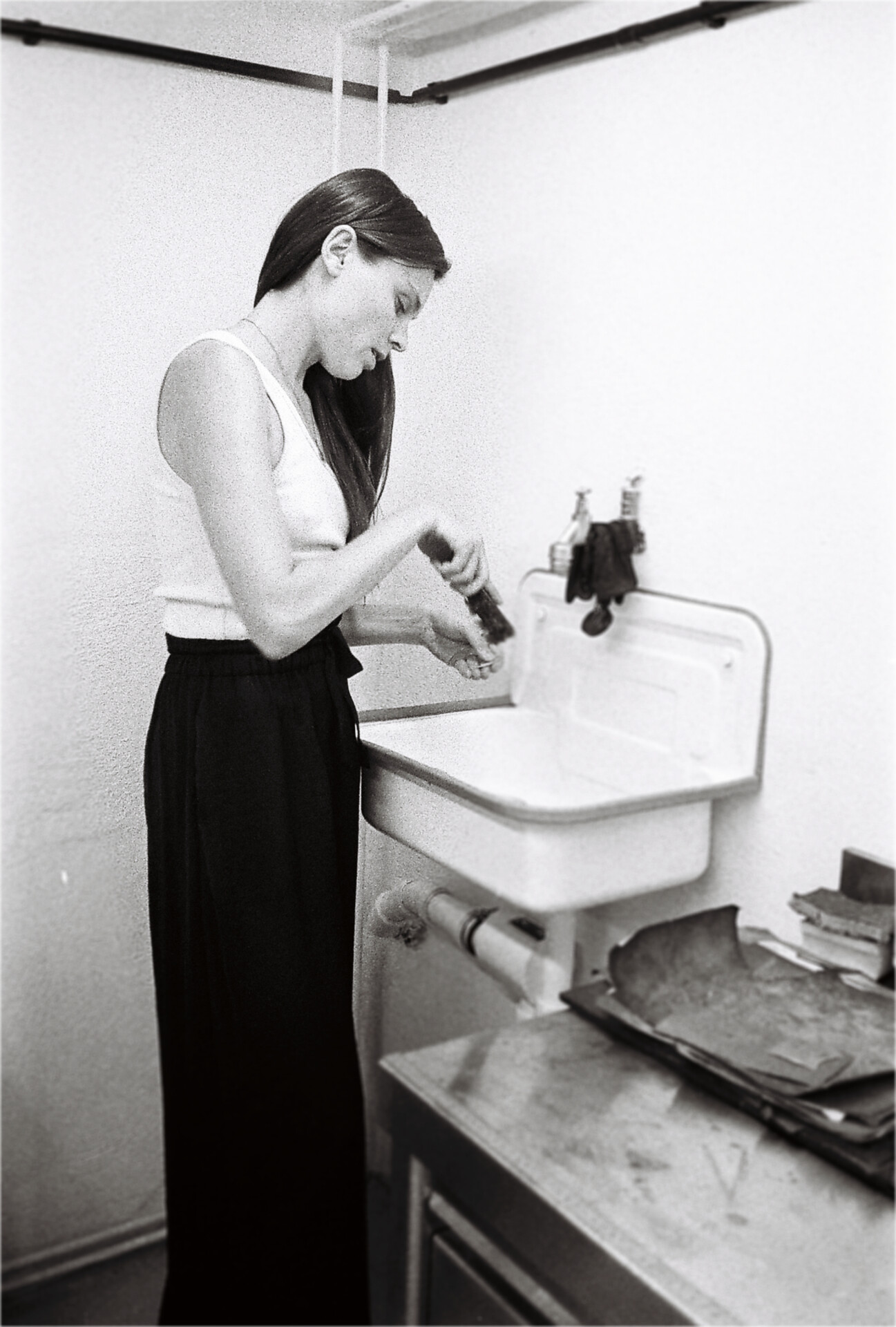
IN: Totally. I see jewellery as an art form. It’s not about trends or the seasons. I don’t call INNAN a brand, instead I call it an atelier – just like in the old days, when people used to go to the designer and talk, and have their measurements taken, and the designer would work directly with their hands to make a piece for their client. Everything is custom-made and comes from a pencil sketch. It’s me sitting here in Berlin, making with my hands.
Photography by Zuzana Novak.
S: You recently made a necklace that used the Ukrainian coat of arms – the Trident (or Tryzub) – which is the symbol of modern Ukraine. Reflecting the past, it also becomes a vital emblem of the integrity of Ukraine today.
IN: Exactly. This piece was really made from shock, from pain. I was numb for so long after the invasion began. One day, I realised that I had to serve my country through my craft. I have never really made symbol pieces before. I’ve never really been into symbolic jewellery; I never had a guardian angel or a cross. But this particular symbol took on a whole new meaning in the context of the war. It felt right to make a piece inspired by it, in my own style.
It’s interesting: not many people outside of Ukraine have ever seen this symbol before or know what it means. It’s a symbol that’s been around for centuries, and it represents our warriors and our connection to the land. All profits from this particular piece go directly to supporting the soldiers who are fighting for our country. Even when the war is over, I will continue to sell this piece to support the rebuilding of Ukraine. I’m proud to tell the story of what this symbol means.
S: Does design become a means of processing and healing for you?
IN: Oh, absolutely! I would’ve probably gone mad in this last year if it wasn’t for my art. For Ukrainians everywhere, this has been a very difficult time and we’ve all found different ways of coping. Jewellery was mine. It became a form of therapy, a way to deal with the copious amounts of stress that I faced every day. But, it was hard for me. I struggled to make any new pieces, I was kind of frozen. I just didn’t have the strength. Designing the Trident piece really reignited my ability to create. It gave me a new purpose.
Zu finden in SLEEK 76 FREEDOM. Erhältlich als Print- und Digitalausgabe hier.