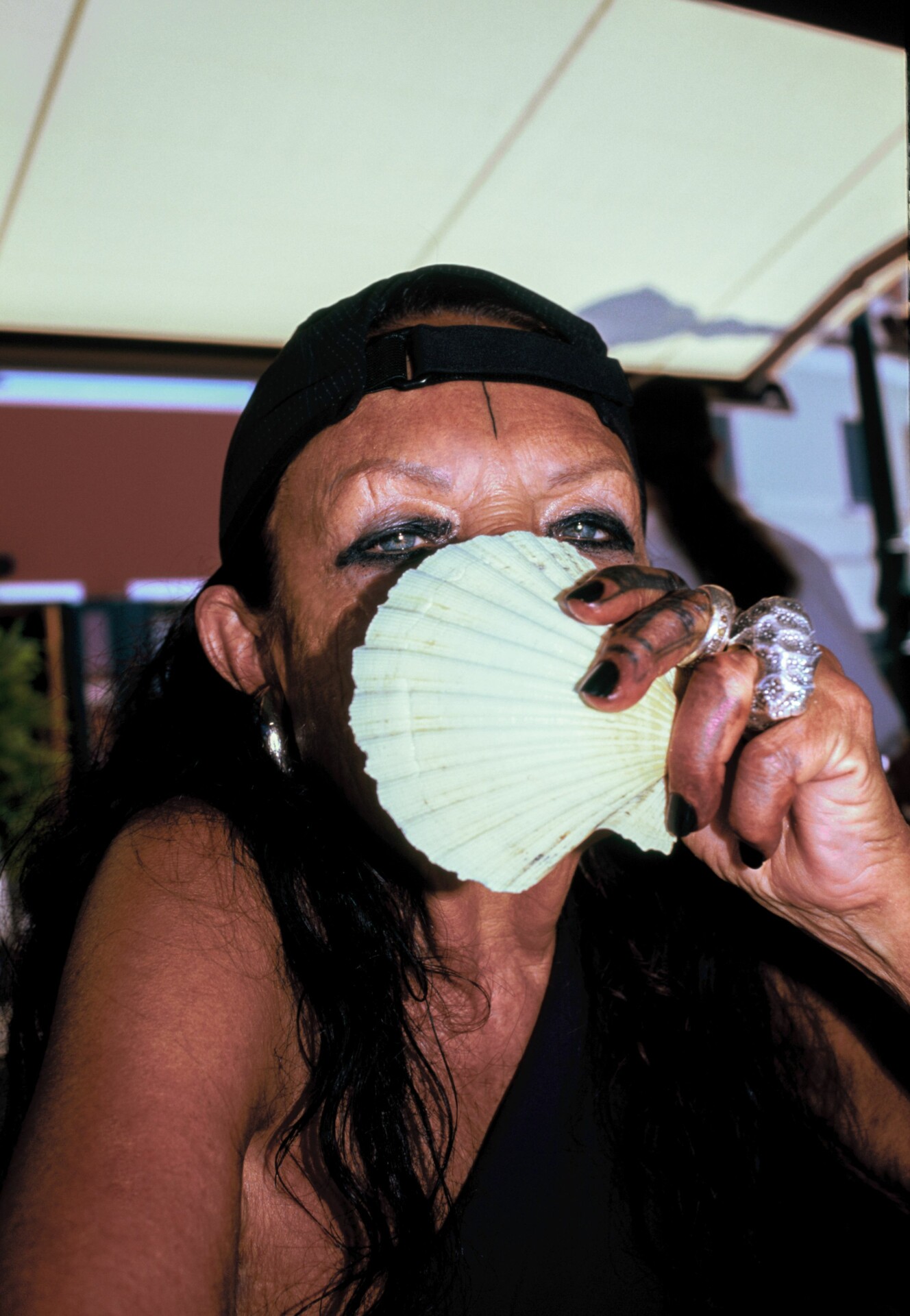
Michéle wears FULL LOOK Rick Owens.
Michèle Lamy resists categorisation. This is proven by the career path that Lamy has consistently followed in all its inconsistencies; paths that seem contradictory to most people all count together. For the entrepreneur and artist, these paths lead to one destination. Everything that surrounds her belongs to LAMYLAND. LAMYLAND is the world of the style icon, which encompasses everything that is an essential element of Lamy’s practice, be it people with whom the artist surrounds herself, places that inspire her, or spaces that she creates and fills with life. Lamy also expresses her love of sports in LAMYLAND. This includes boxing, which Michèle Lamy practises herself, or the art of skateboarding, for which she holds a deep fascination. In conversation with style icon Michèle Lamy, we talk about faith, influences, inspirations, and fashion as a form of expression.
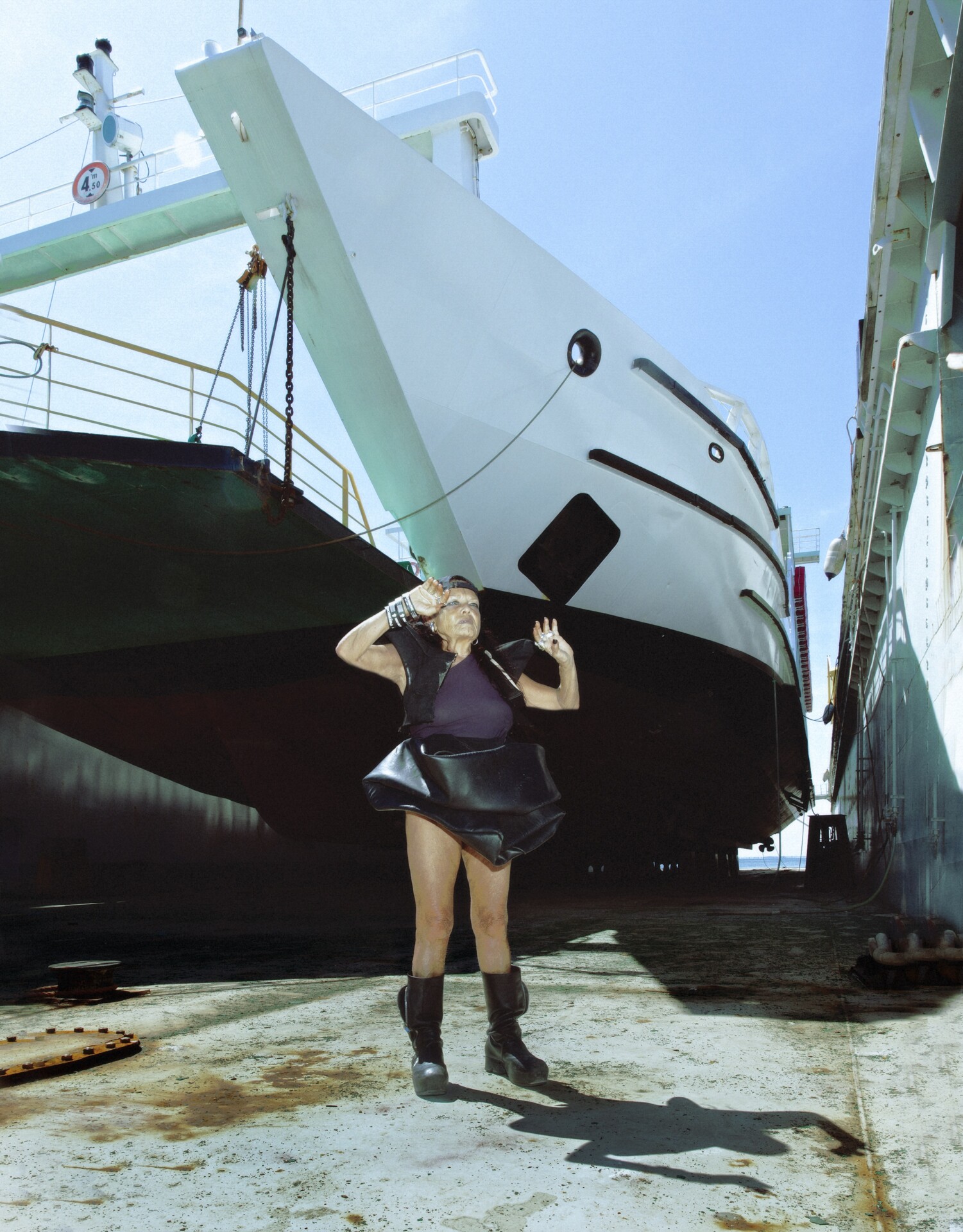

Michéle wears FULL LOOK Rick Owens.
AMELIE KAHL: Michèle Lamy, how do you define beauty?
MICHÈLE LAMY: The Earth is beautiful. I think there is much ugliness in the world in the forms of war, money, power, and hatred, which are all created by humankind. But humans themselves are beautiful. People are beautiful in a way; just as old trees are beautiful. The natural existence of things is beautiful, you know.
AK: Is it important for you to connect with nature and to sometimes go out into nature?
ML: Sometimes? I connect with nature all the time. Nature is everywhere, no? Some believe that there is nature on one side and the city on the other. But the city is made by humans, and humans are part of nature. Of course, I also like being near the ocean, for example. I just love being by the sea. But I don’t see a difference between nature and culture – the city of Paris that has been built around the Seine, for example. It’s all connected to each other. Even though I do believe humanity has messed up the Earth, I still think that nature is everything we are all about
AK: When you were young, you attended a Catholic school. How did the church and religion influence you?
ML: Even though I went to a Catholic school, I was never a believer. Catholicism doesn’t run in my family; it’s not in my background. Even as a little girl, I was forbidden to go to the catechism club because I already doubted the existence of God. My parents and grandparents weren’t Catholic either. My father was a mason and a humanist. So, he believed in humanity and science. That being said, I think every religion arises from humanitarian experiences. These experiences grew over time into belief systems that gave some people hope. Actually, it’s quite similar to science in the sense that it has also been brought about by humanity. Even though we seem to understand more and more, discovering the complexity of the sky or the moon, there is still so much to find out. Mythology is also a creation of humanity in that sense.
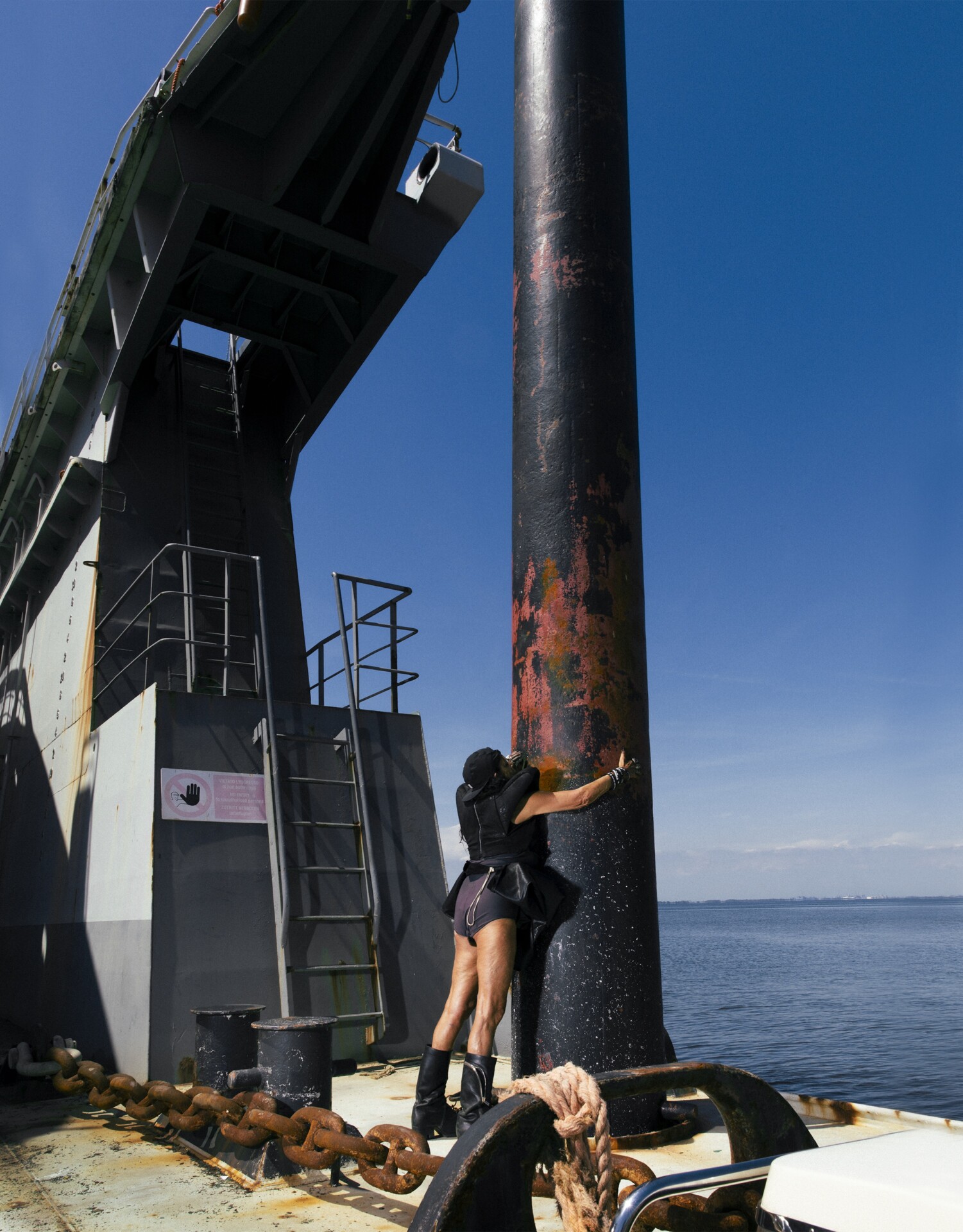
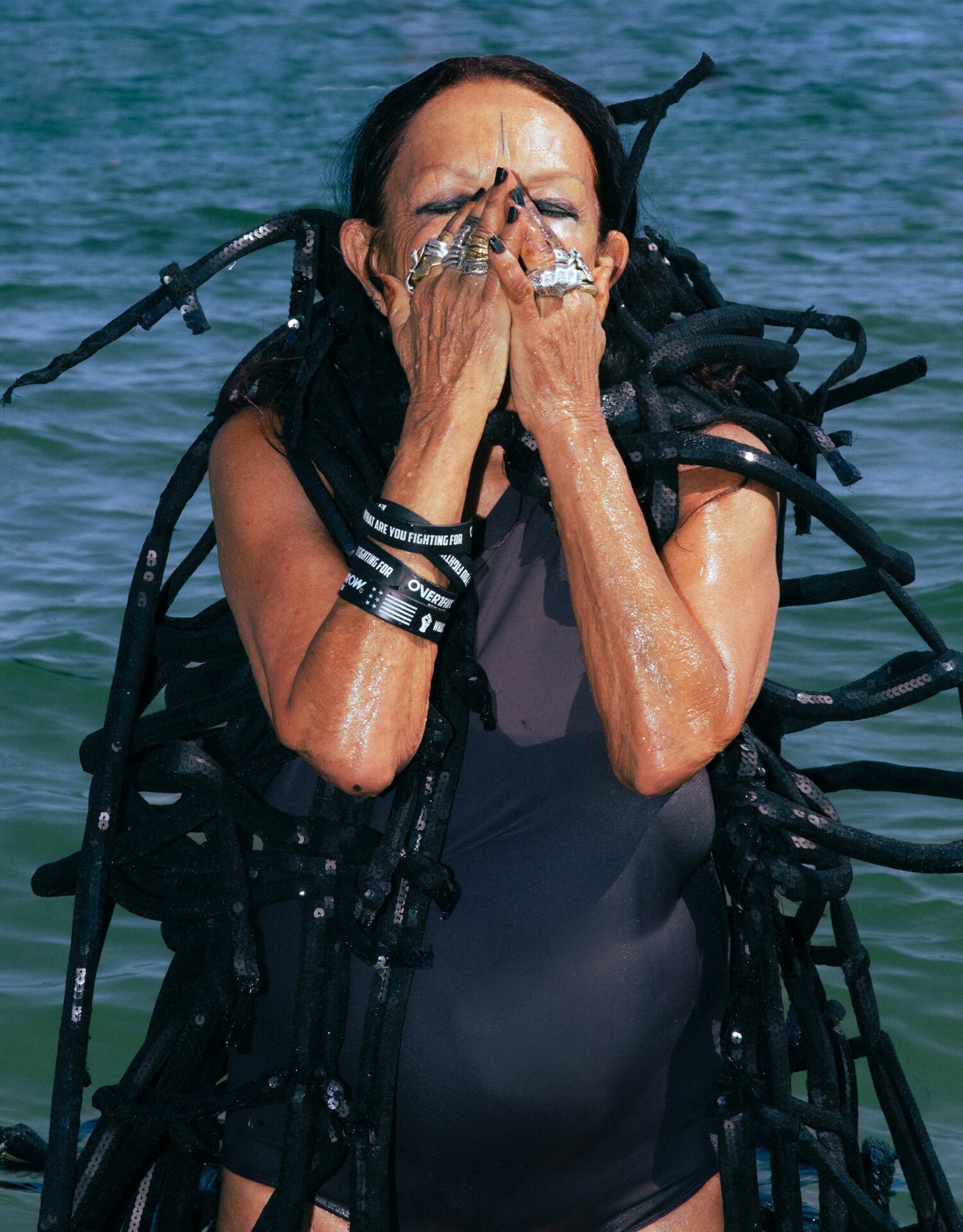
Michéle wears FULL LOOK Rick Owens.
AK: Is there something you believe in?
ML: So many people have belief systems in one way or another. If you ask me which one is the right one, I don’t have an answer to that because there isn’t one. It’s a discovery of different ideas and attitudes in general. To me, belief is about acceptance and transformation in life.
AK: You worked as an attorney, and you became a performer and cabaret dancer afterwards. How did you make these decisions?
ML: I was just curious about different things and wanted to try them out. I can’t really explain to you why because I can’t even explain it to myself. But nevertheless, it was the time of May 1968, a time when so many things happened all at the same time.
AK: How did 1968 influence you?
ML: The year 1968 was a political time. The student revolt campaigned against the crimes of the National Socialists. So, especially at that time, I was interested in criminal law. I was seduced by those criminal attorneys and started to train as one myself. As an attorney, you hold somebody’s life in your hands, in a way. I wanted to be part of that world. The movement and the numerous protests managed to push through psychiatric reform at that time – it was the end of the ward and the psychiatric ward. It was also the time of Deleuze and Guattari, the time of the Vietnam War, and the time of French decolonisation; it was the processing of the Second World War, at the end of which my parents met in the French Resistance. The French Resistance was a movement of groups that fought against the Nazis. I grew up in a political era that naturally left its mark on me.
AK: Your journey encompasses various other creative forms, from fashion, architecture, music, to performance art. How important is the intersection of forms of expression to you?
ML: This is why I prefer poetry to fiction. I like these little pieces coming together as one. For example, being an attorney is one case next to another; it’s neat. When it comes to being on stage, I just like being on stage; it’s intuitive. So, inventing myself every time is very important to me, and everything about it is a part of me. I also like bringing people together, be it for a dinner party or an art project. When people come together, they form their own world. People who have experienced different things in life and are from different eras are all expressing themselves. To me, that’s exciting.
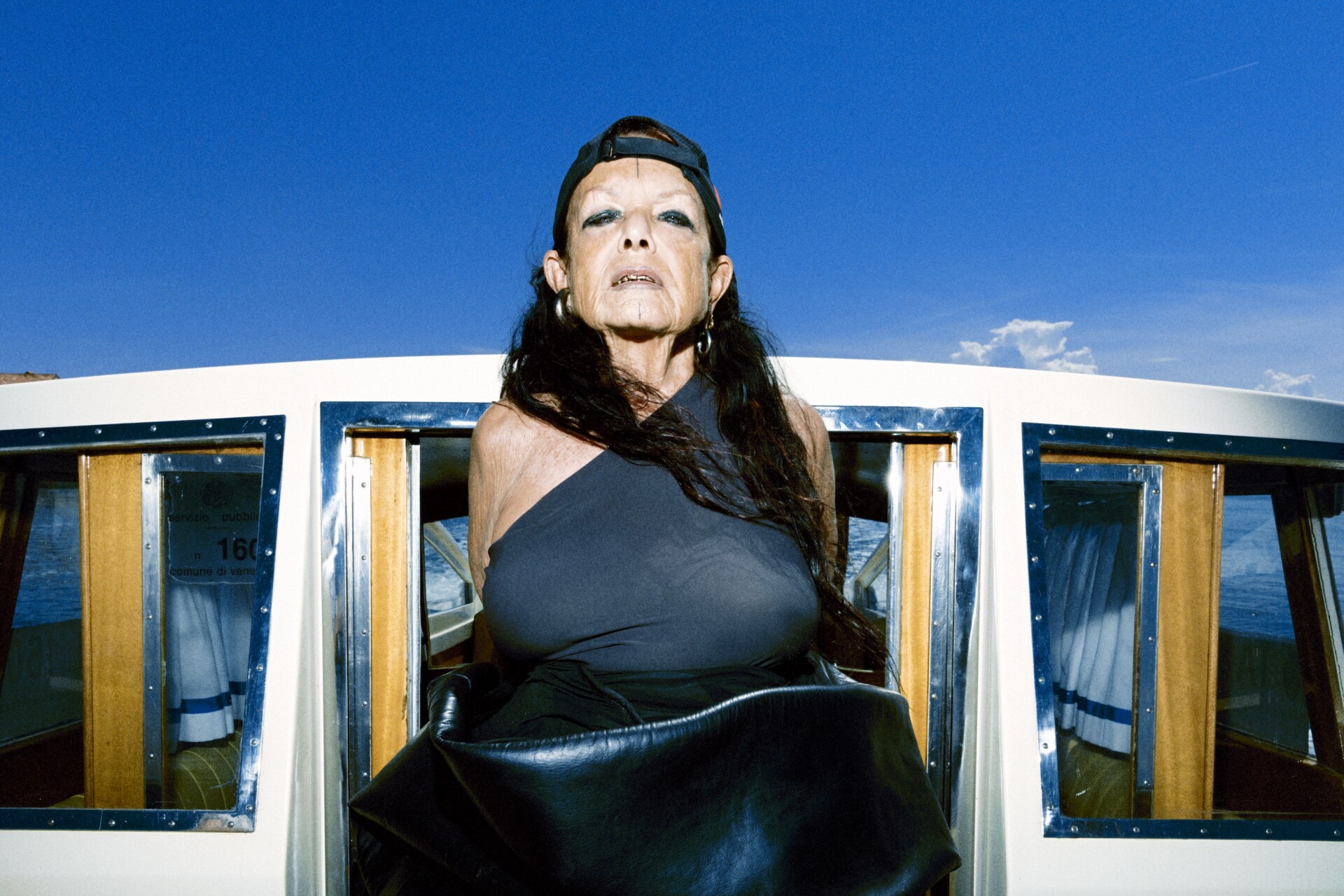
Michéle wears FULL LOOK Rick Owens.
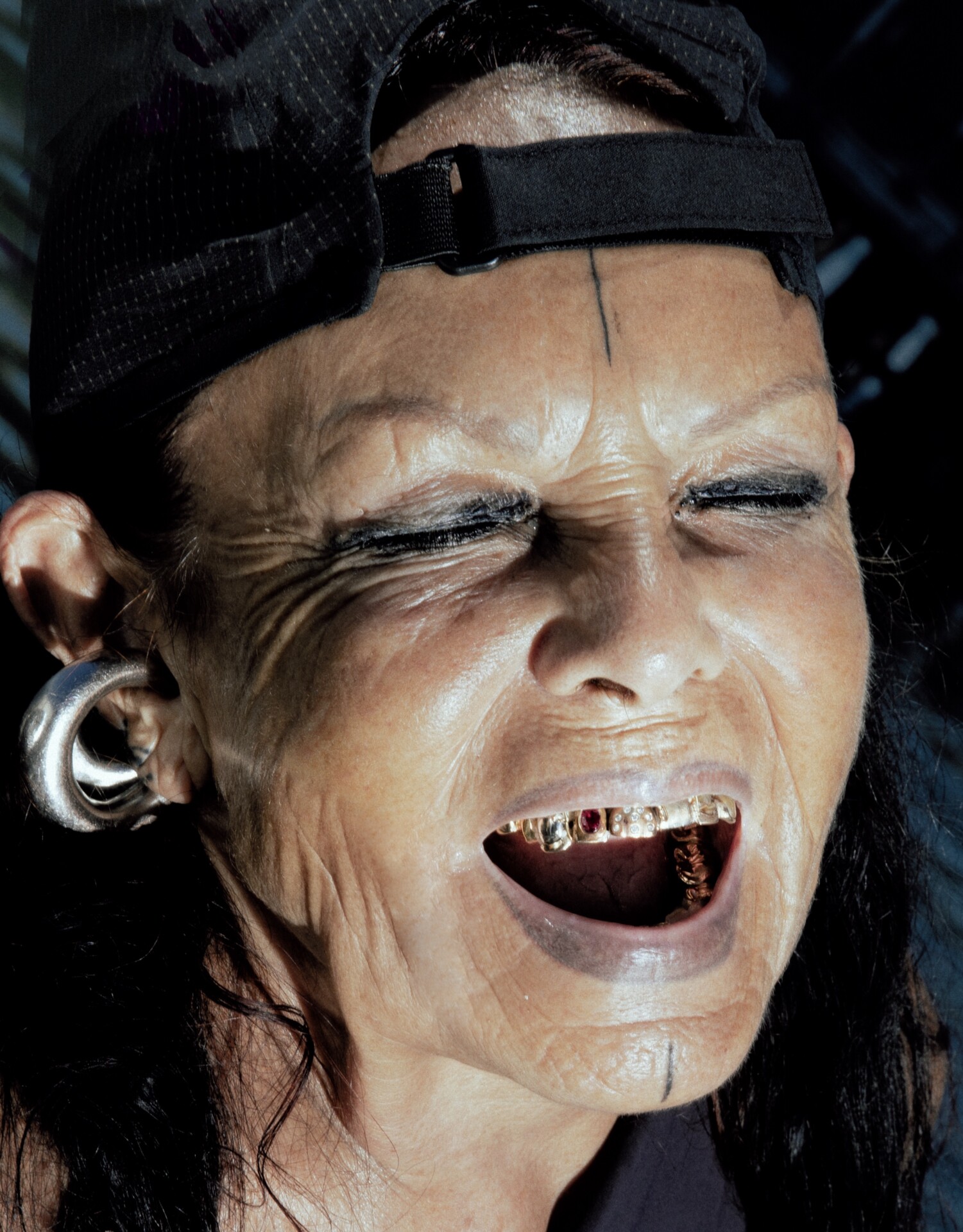
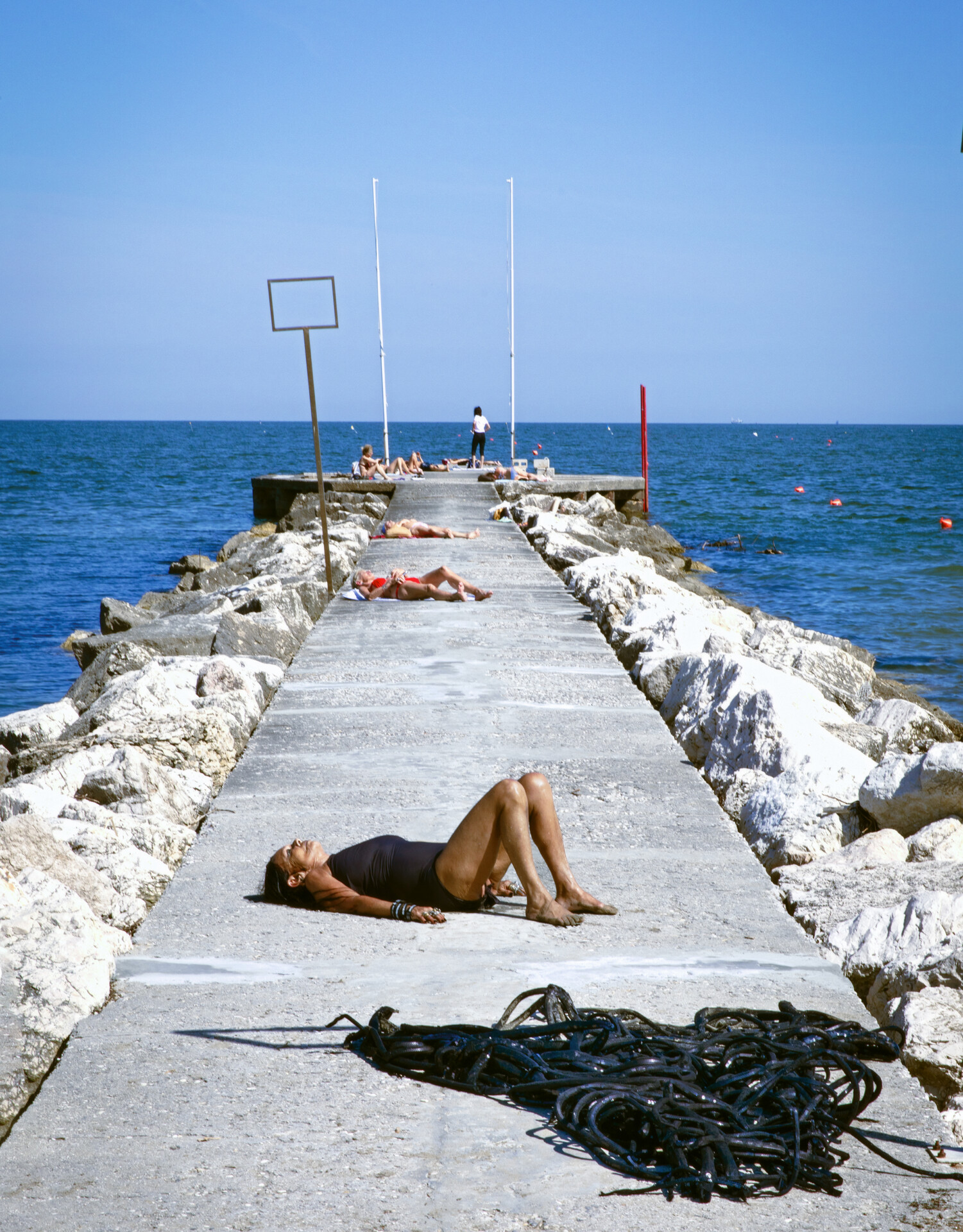
Michéle wears FULL LOOK Rick Owens.
AK: Let’s talk about haute couture and fashion. How did your style evolve?
ML: I wouldn’t say it evolved in that sense. When I came back from the States to Paris after 30 years, nobody thought I had changed. They thought I acted and looked the same.
AK: How would you describe your style?
ML: I think there was always a part of my style that was couture. But if I were to describe my style, it would probably be ‘nomadic’. That’s because of how I live. To me, fashion is not about wearing clothes straight from the runways but about choosing clothes to tell your own personal story. It’s a representation of the self.
AK: So it’s not necessarily a style; it is an extension of yourself?
ML: Exactly. If I wear bracelets, they are part of my wrists and my body. I also love the way they sound – the clattering. Jewellery is so important to me. My rings are part of my fingers. They are the first thing I put on in the morning. My teeth are gilded. My fingers are dipped in black hair dye rather than covered in nail polish; it’s all part of me, a form of expression. And it has been like this for a very long time.
AK: How do you choose what to wear in the morning?
ML: To me, there is no difference between dressing for the day, the night, or an occasion. I don’t have clothes for different events. I never ask myself the question, ‘Oh my God, what am I going to wear tonight?’ I would much rather dress according to my mood. I either feel like wearing pointed things on my shoulders right now, or I just don’t. Dressing for me is the same as talking, acting, and existing. A translation of my feelings.
AK: Is there anything you have found particularly inspiring recently?
ML: There are two films that are particularly inspiring to me at the moment. One is the movie Queendom by Agniia Galdanova. In the film, the director portrays the Russian performance artist Gena Marvin, who transforms her own body into gigantic, threatening silhouettes with her provocative works. Gender and sex get lost in this film, which I find very inspiring. Also, the film Morocco, with Marlene Dietrich playing the leading role, speaks to me very loudly. In the final scene of Morocco, Amy Jolly (played by Marlene Dietrich) kicks off her high heels, and her rich fiancé follows her lover, a foreign legionnaire, into the desert. It’s an iconic scene.
Kredite
Words: Amelie Kahl
Photography: Nadine Fraczkowski
Styling: Michèle Lamy.
Zu finden in SLEEK 81 – REALITY. Erhältlich als Print- und Digitalausgabe hier.