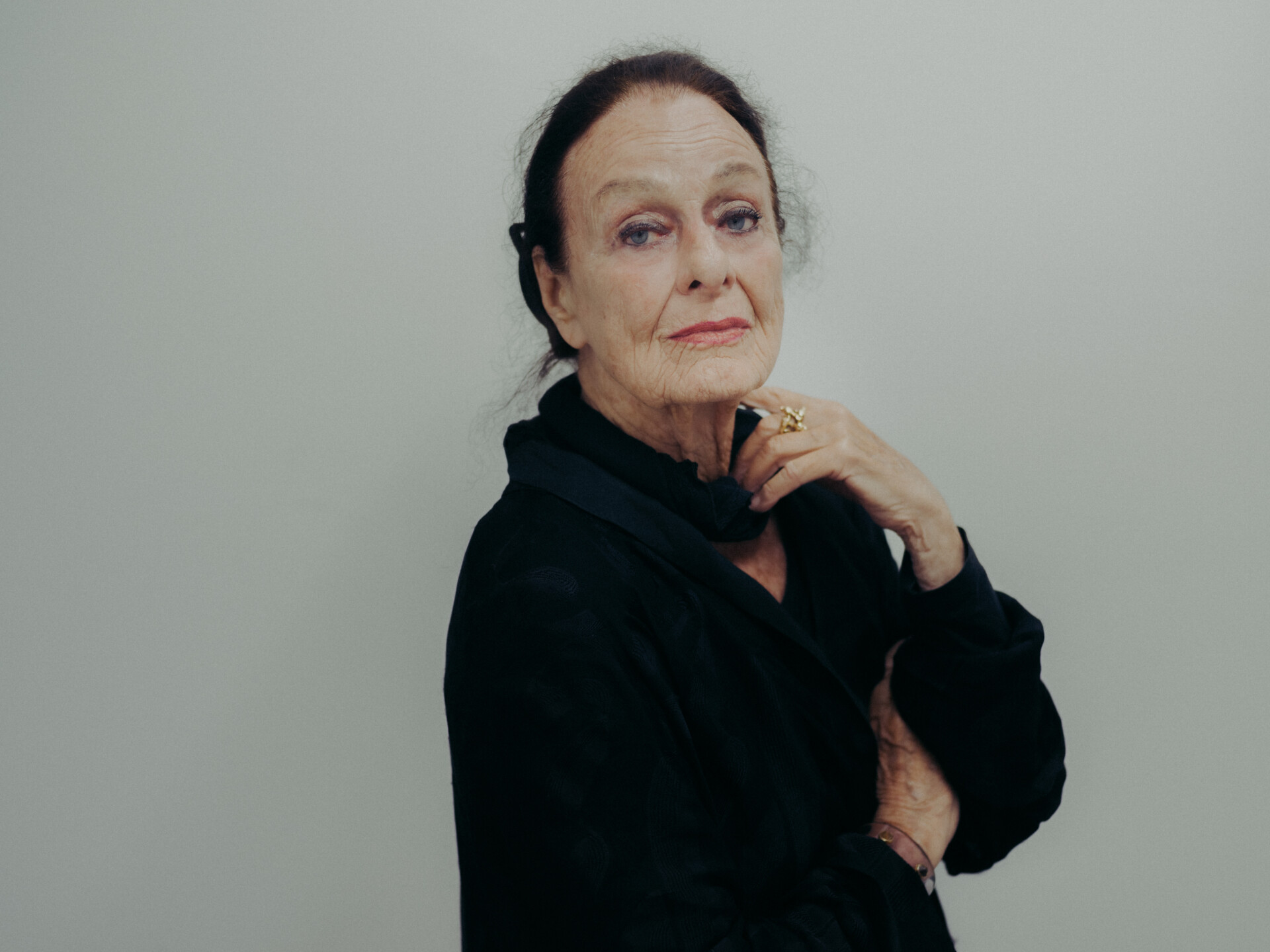
Photography by Antoine Doyen.
Visual artist Ingeborg Lüscher developed her work under the influence of Fluxus and the Nouveau Réalistes. She was featured at Documenta in 1972 and 1992 and later at the Venice Biennale in 2001. Most recently, the grand dame of art was awarded the Hans Platschek Prize for Art and Writing. On the occasion of her current exhibition The Magnificent Seven⁺ at Galerie BASTIAN Paris, art historian Sebastian C. Strenger met with the German-Swiss artist in the French capital, just before her work is due to be shown at the Centre Culturel Suisse. A conversation about image-making, Rubens, a kiss from Beuys and the Prague Spring that changed everything. Her exhibition opens at SLEEK Art Space on 26 June.
SEBASTIAN C. STRENGER Did your interest in art come from your biography?
INGEBORG LÜSCHER My father had quite a winding career path. He eventually became senator for economic affairs in Berlin and a professor at Humboldt University. My mother was a housewife with a strong interest in art. She would take me to museums from an early age. After the war, we went to Dahlem and saw works by Caspar David Friedrich. At home we leafed through large art books on Veit Stoß, Rubens, and Raphael. Those were my fairy tale books.
SCS Was that your gateway into the world of art?
IL I originally trained as an actress and had a solid foundation. Then I went to Prague to shoot a film, Till Eulenspiegel. I stayed there for three months because I wasn’t granted leave to return home. I also had a passionate love affair during that time. But I didn’t see it through because I thought I needed to save my marriage. That didn’t last much longer either. While I was in Prague, I realised I no longer wanted to live the life I had been living. I no longer wanted to be an actress taking orders from a director. Nor a wife submitting to her husband. I came back as a changed woman.
SCS So you were a rebel. Was that your path into art?
IL No, it wasn’t about rebellion. It was actually a quiet, gentle process. In Prague, I had already been given a small corner in a sculptor’s studio where I began working. It was more about self-realisation than making art. I went to an aviary, drew the outlines of the birds, and instead of colouring them, I labelled them with numbers that corresponded to colours. But I lacked the maturity to understand what I was actually doing. A good friend told me, “Order the two most important art magazines, read them every day and force yourself not to form any opinions.” That was the turning point. I read and read, and then I saw the photo of Beuys, How to Explain Pictures to a Dead Hare (editor’s note: 1965).
SCS What happened?
IL Wow. Something just clicked. From that moment, everything that had stood in the way of understanding just fell away. Beuys had done something that previously wouldn’t have been considered art. I had a similar experience as a child when my mother taped a Wols postcard to the cupboard. I remember The Blue Ghost. It blew me away. It looked so completely different from Rubens (laughs).
SCS What did your early work look like?
IL Inboxes – small wall boxes where layers of Styrofoam were placed in relation to one another. I painted and burnt them, inspired by Brecht’s line: “Yes, make a plan. Be a shining light. Then make a second plan; both won’t go right.” I had made my own plan – to be a good wife and a star on stage and television. But that didn’t work out. Prague, just before the Prague Spring in 1968, changed everything.
SCS Why?
IL I met many artists who had been imprisoned for their beliefs. I suppose you need to have a rebellious spirit to seek out those kinds of role models (laughs). When I understood that Beuys photo, I said to myself, if I’m going to make art, it has to have everything to do with me. Deeply personal. No one else can make that work – only I can. From that point on, everything fell into place. In hindsight, it all seems remarkably simple (laughs).
SCS What were the milestones on your path to becoming a major artist?
IL One key moment was meeting Harald Szeemann. That was a great love. It lasted 33 years.
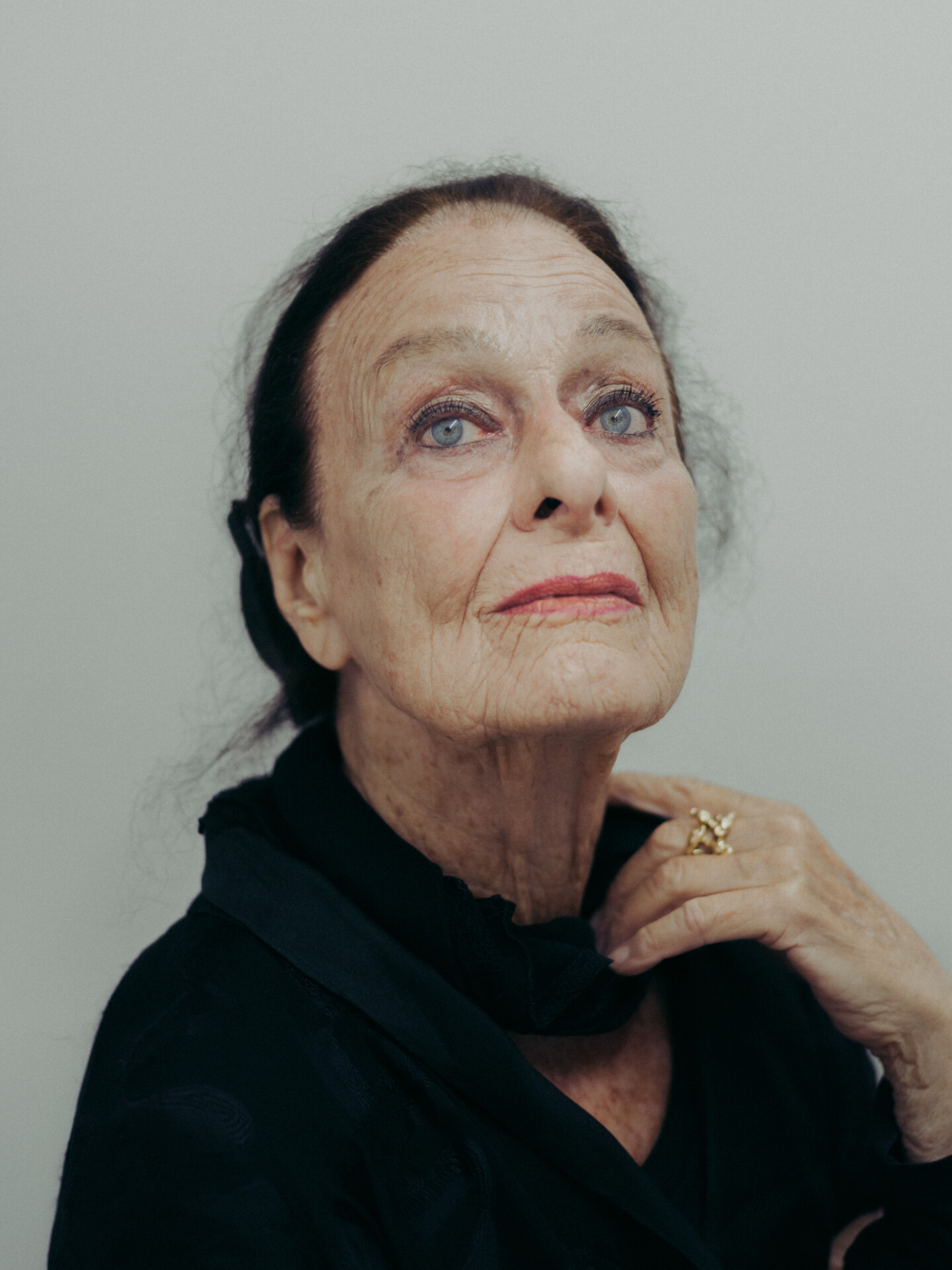
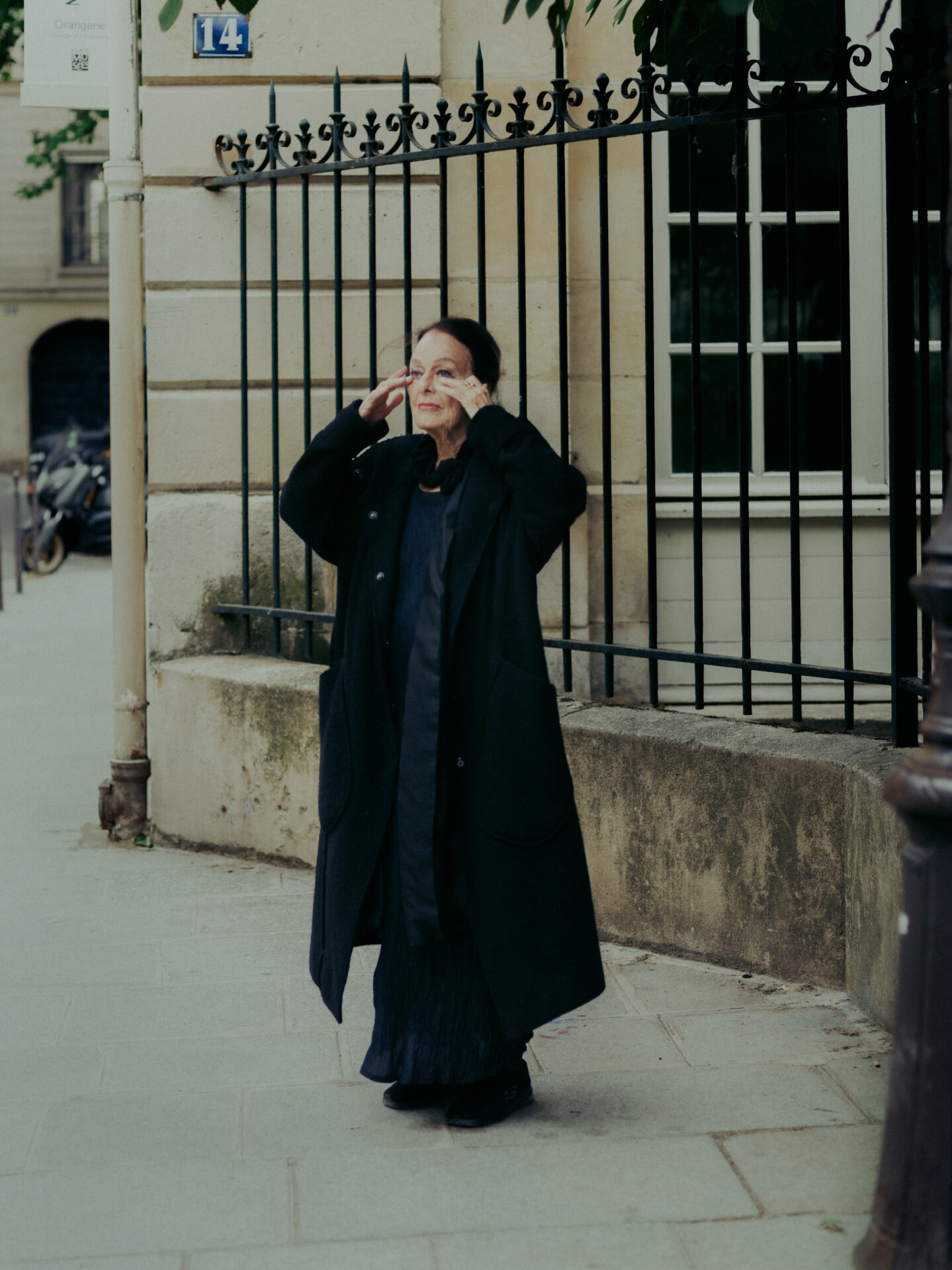
Photography by Antoine Doyen.
SCS It was surely not just love but also an intense exchange about art with one of the most important curators of the time?
IL He only ever wanted to see my work once it was finished. “I don’t want to see any in-between stages.” That was a brilliant line. So during my creative process, I never brought him any problems. He respected my work, but only after it was done. And I had to schedule an appointment to show him.
SCS What bodies of work developed over the years?
IL Armand Schulthess. When I first showed his work at Documenta, it was the work about a hermit from my adopted home in Ticino, associated with Art Brut. He had abandoned his previous life as a businessman and turned an entire forest into an encyclopaedia. I was overwhelmed by the beauty of his work and integrated it into my own.
SCS And in photography?
IL For over four decades, I’ve been inviting figures from art and culture to “perform magic” in front of my camera. More than 500 performances have resulted this way – with Andy Warhol, Buthe, Ai Weiwei or even my neighbour Patricia Highsmith. These photo series I call wizard photos.
SCS Let’s go back to Beuys. What influence did he actually have on your work?
IL My work, despite his sulphur box, has no real connection to Beuys. I think some of his students became disciples. But doing something similar to Beuys was never really the point. I did call him by his first name, and we knew each other. He even kissed me on the lips once (laughs). But that wasn’t a formative experience (laughter on both sides).