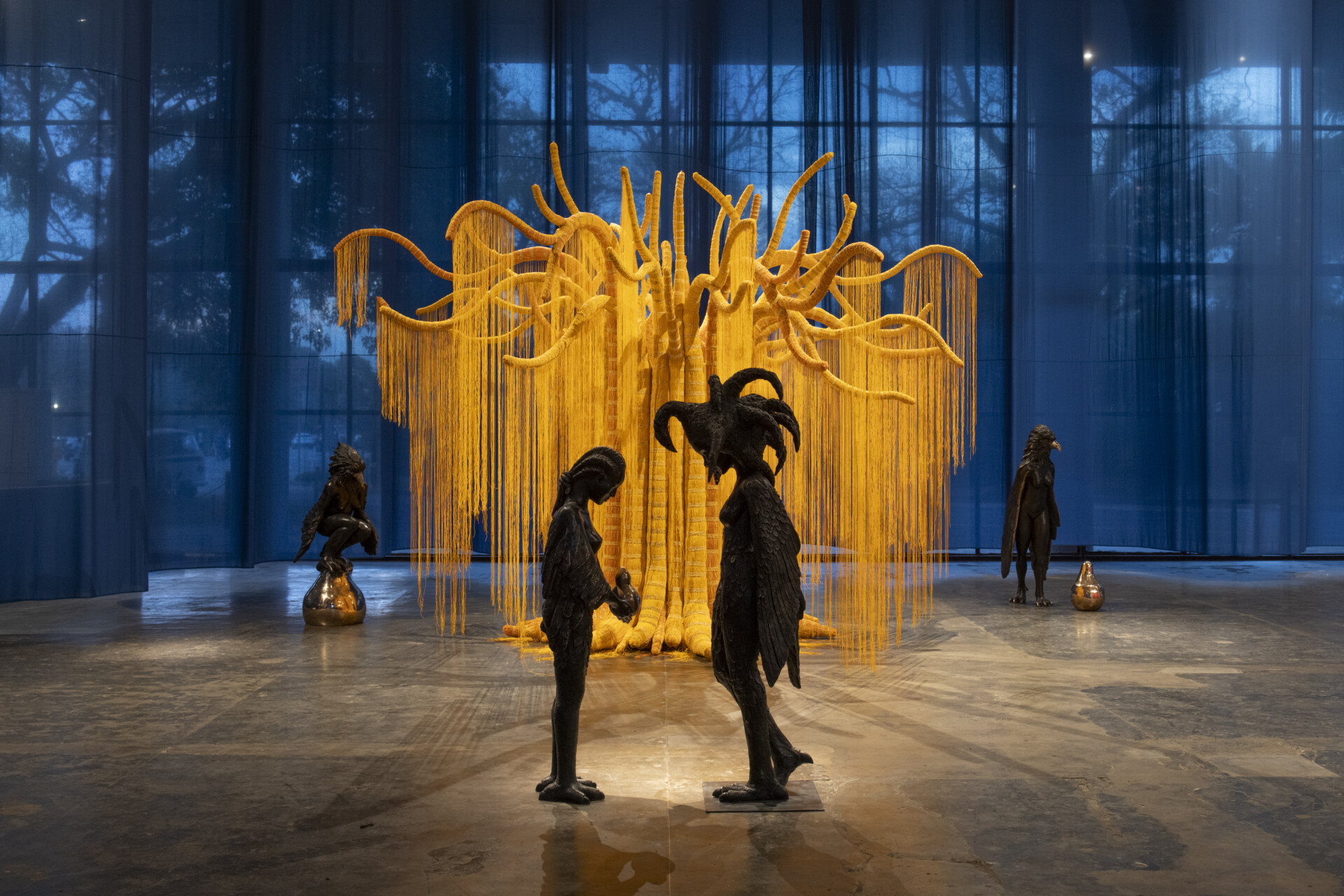
Nádia Taquary, installation view of the 36th Bienal de São Paulo – Not All Travellers Walk Roads – Of Humanity as Practice © Levi Fanan / Fundação Bienal de São Paulo
I remember Bonaventure Soh Bejeng Ndikung from my short stint at Savvy Contemporary, back when it was still this chaotic disrupter in south Berlin-Neukölln, housed in a former electrical substation, its brickwork solid, its walls cold. It was a place of friction, where great ideas sparked against the rawness of the building. With his current position at the HKW in Berlin and so many different projects done over the past years, he made an impressive trajectory. Now he stands on the press conference stage in São Paulo, in his opulent-blue outfit and ubiquitous oversized sunglasses, to open the 36th Bienal de São Paulo. Its venue, the Ciccillo Matarazzo Pavilion, a modernist structure set within Ibirapuera Park. Designed in the early 1950s by Oscar Niemeyer with Hélio Uchôa, it has hosted the Bienal since 1957.
São Paulo is marked by modernism. Amongst them Niemeyer’s curves or Lina Bo Bardi’s radical spaces, the monumental clarity of a past turned into a seemingly unescapable legacy. These buildings remain iconic, celebrated, commanding. And yes, I am a fan – ever since I visited two years ago, experiencing a dash of what is there, meeting many people who are now part of the Bienal itself – a time-lapse of process and growth.
But my admiration for this city’s architecture aside, it is not a simple task to reconcile structural design with the realities of exhibition-making. The Matarazzo Pavilion is luminous, vast, and spectacular, but not an easy space for artworks. Its glass façades stretch across three levels, flooding the interior with light. And although the generosity works for the many large-scale installations, it tends to become imposing to the smaller wall hangings and more intricate works. Video and sound installations are tucked into cubicles that create moments of discovery – if you don’t miss them behind the large rows of fabric. And although one can appreciate the difficult terrain, it did turn into a running joke in many conversations during the opening days: the wavy colour curtains-cum-partitions that became so intrusive they started to compete with the artworks, taking up space and air.
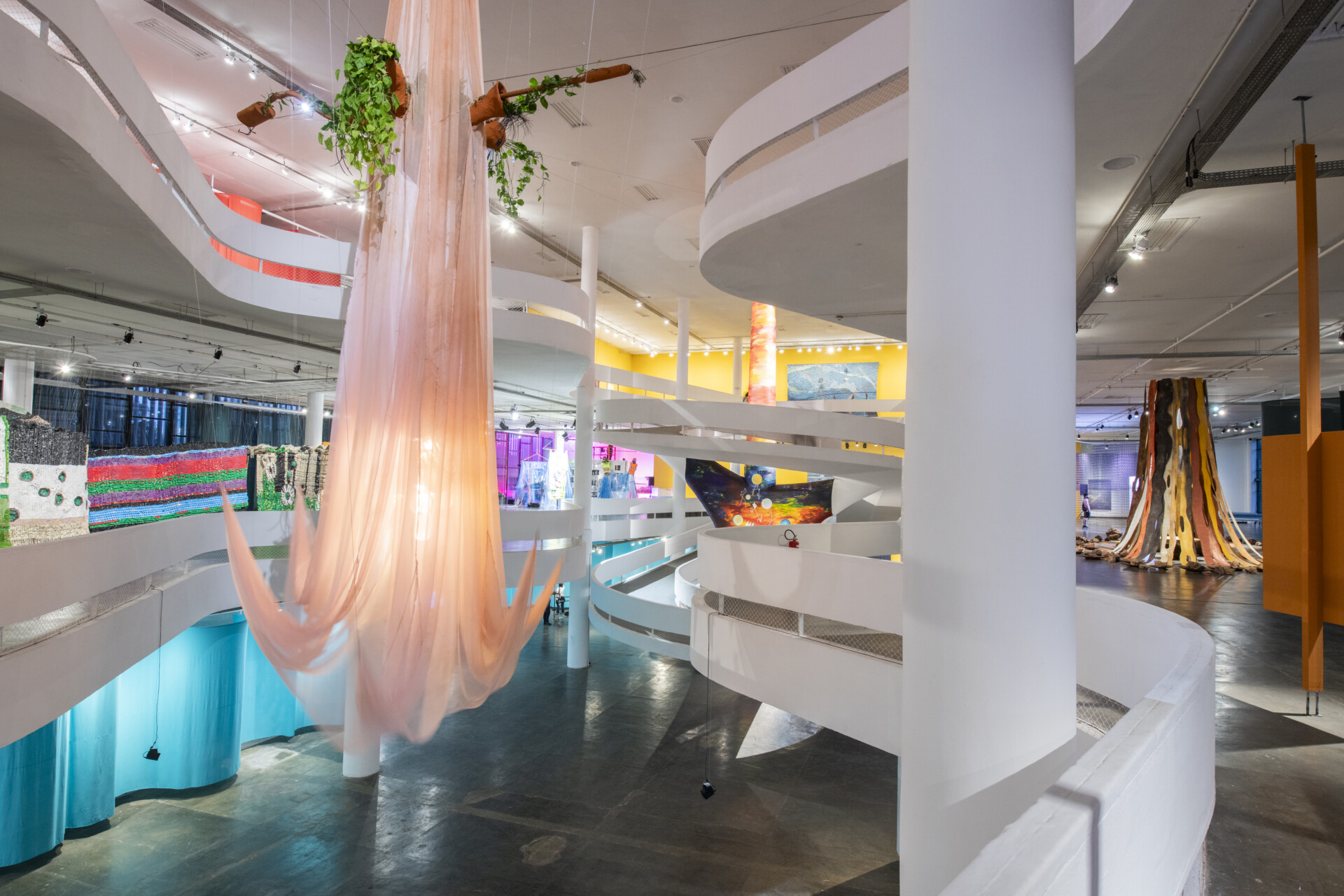
Laure Prouvost, installation view of the 36th Bienal de São Paulo – Not All Travellers Walk Roads – Of Humanity as Practice © Levi Fanan / Fundação Bienal de São Paulo
The exhibition itself clearly bears Bonaventure’s signature, who is this iteration’s chief curator alongside a team of co- and assistant curators – Alya Sebti, Anna Roberta Goetz, Thiago de Paula Souza, Keyna Eleison, Henriette Gallus, André Pitol and Leonardo Matsuhei. Not All Travellers Walk on Roads – Of Humanity as Practice is a title that gestures toward his long-standing methodology: convening as a way of thinking, complexity as a framework. The Bienal is not presented as a singular statement (not shy of big ones though) but as a layered composition, delivered in six ‘fragments’ throughout the floors.
And as the Bienal unfolds within this tension of the psychology of space, São Paulo mirrors it. A metropolis of nearly twelve million, it cannot be understood in a single glance. Its scale is too great, its simultaneity too complex. The verticality of its skyline is exhilarating but disorienting, a geography that erases the horizon. Without a line to orient the gaze outward, one is pushed to trust the ground beneath the feet while constantly looking up, marvelling at the grandeur while somewhat feeling reduced to tininess.
The Bienal presents 120 artists from around the globe – working in vastly different media, practices and constellations – spread across its three floors and spilling onto the building’s surface. Entry is free. Not incidental, it marks the Bienal as a civic institution, porous and open, a space belonging to the public as much as to the international art world, at least for the first three days.
But accessibility also bears the question of mediation. Biennales so often stumble here, veering between opacity and over-explanation. Either everything is stripped away, leaving works floating without names or context, or else audiences are weighed down with information they cannot possibly process. My own conviction leans toward visibility. Let names be remembered. Let works be named. Audiences should not be underestimated. Sure, visitors will not have two years of research; they will have hours, perhaps a return visit. Their understanding will be fragmentary, but fragments are enough – and seemingly the whole point of this particular Bienal. To deny visitors even the possibility of seeing, naming, and having the sound of someone else’s name linger on their tongue is to control. Especially when some artist names are there, and others simply not to be found.
Some of these questions of form and function also came up during a conversation with the artist Brisa Noronha, who works in ceramics and porcelain. Her pieces currently on show at Luisa Strina Gallery explore fragility and transformation, connecting to theories of dissipative systems – forms that hold shape while in continuous change. It was easy to hear in her words an echo of the Bienal itself, imagined as an organism, a living structure. Yet I find myself asking: can this metaphor hold, are we still allowing it to be an organism? Or does it falter under the weight of its own institutional machinery? Have we maybe sold its proposition to its pomp and parade?
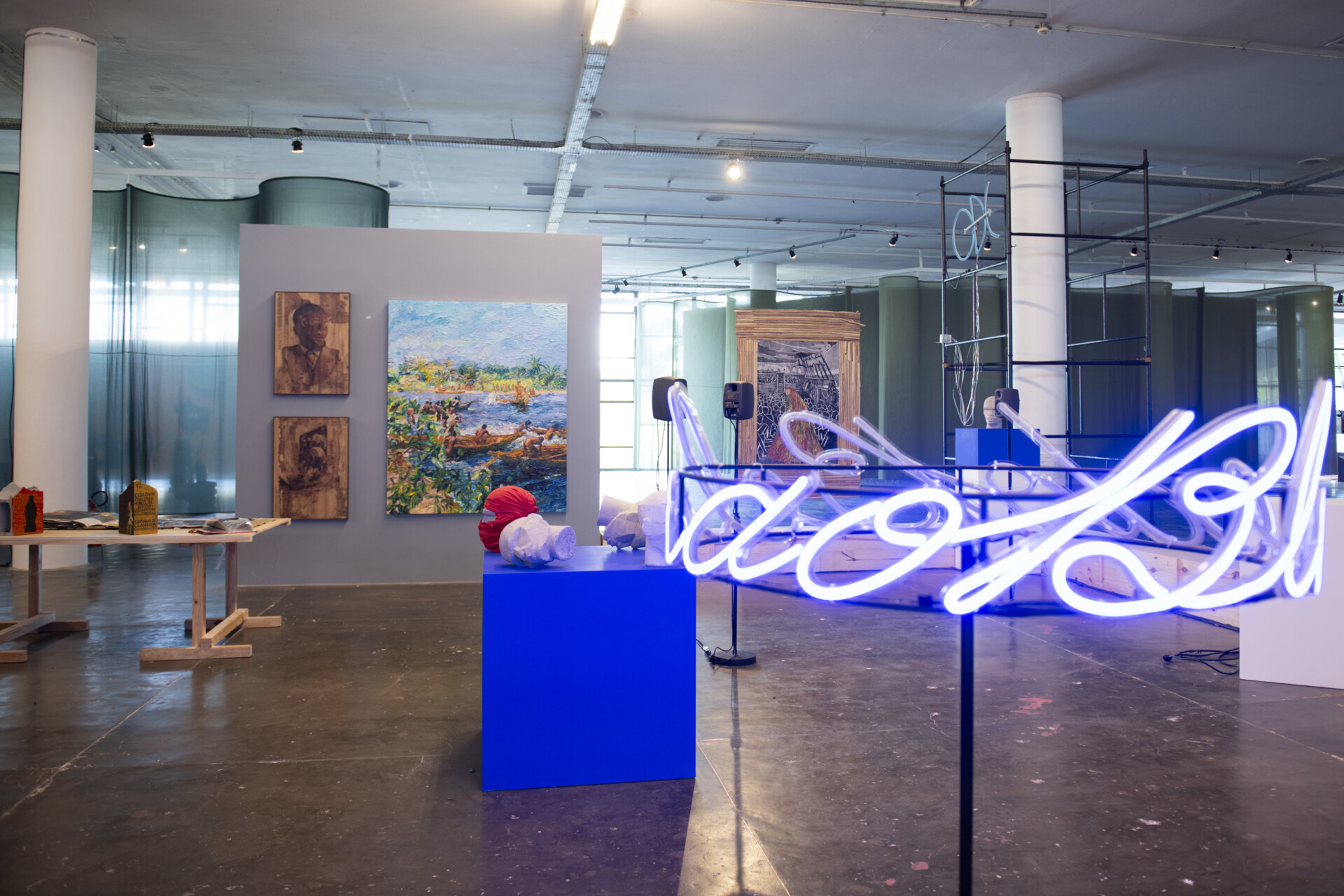
Vilanismo, installation view of the 36th Bienal de São Paulo – Not All Travellers Walk Roads – Of Humanity as Practice © Levi Fanan / Fundação Bienal de São Paulo
São Paulo itself offers a lesson. The city is too vast and too layered to be understood in entirety. It oscillates between beauty and brutality, lush nature and crumbling infrastructure, extreme wealth and systemic dispossession. Its contradictions are visible everywhere: in the vertical skyline, in the divided streets, in the resilience of those who make life here despite and because of it all. To navigate São Paulo is to let go of the whole and to dive instead into its dissipative structures.
And so I dive. Into Desapê, where Rita Barbosa shows rare and delicate artist books in her space on Travessa Dona Paula, a small street of galleries and art spaces. Into Vilanismo’s new studio, another temporary home after displacement by gentrification. Vilanismo, the collective of twelve men, who spoke about the women in their families and how they learned to gather, to support, to build alliances amongst each other from them. Their practice is a structure of care, a way of making together that resists isolation. Their installation at the Bienal is similarly generous, a space of physical engagement and maybe the most conjugated version of humanity. Into Casa de Francisca, where live Brazilian music and a shared drink fold the night into celebration.
The more commercial spaces of the huge gallery scene are often spaces that carry the gravity of an institution. Many publish books, maintain gardens, produce programming beyond exhibitions. Print culture thrives – books, catalogues, magazines – making São Paulo a city where art writing and publishing remain central. This matters. Publications preserve, reference, celebrate beyond the life of an exhibition. They create continuity where exhibitions are by nature temporary. This is something I have always appreciated about Bonaventure’s persistence to print and publish. Thus he contributes to shaping the dissemination of knowledges, rather than citing the same over-referenced Western names and thinkers, highlighting instead names and ideas that often originate in the Global South, diverse in all facets.
Mendes-Wood DM, internationally known, stages exhibitions that read like museum shows, such as the current show by Paulo Nazareth, a substantive view into the artists’ extensive work. Sofia Pappi at the newly opened Yehudi-Hollander-Pappi Gallery, younger and experimental, represents artists such as Ana Raylander, whose wrapped fabric pillars now connect all three floors of the Bienal pavilion, creating monuments that are fragile and resilient at once. Pivô, in Niemeyer’s Copan building, or Casa do Povo (which hosts off site programs of the Bienal) produce ambitious projects and crucial conversations. The more ‘historical’ institutions like MASP und Sesc Pompeia – both designed by Lina Bo Bardi – or Pinacoteca anchor a different strand of São Paulo’s cultural fabric. Each insists that art is not only an object to be viewed but a way of inhabiting the city.
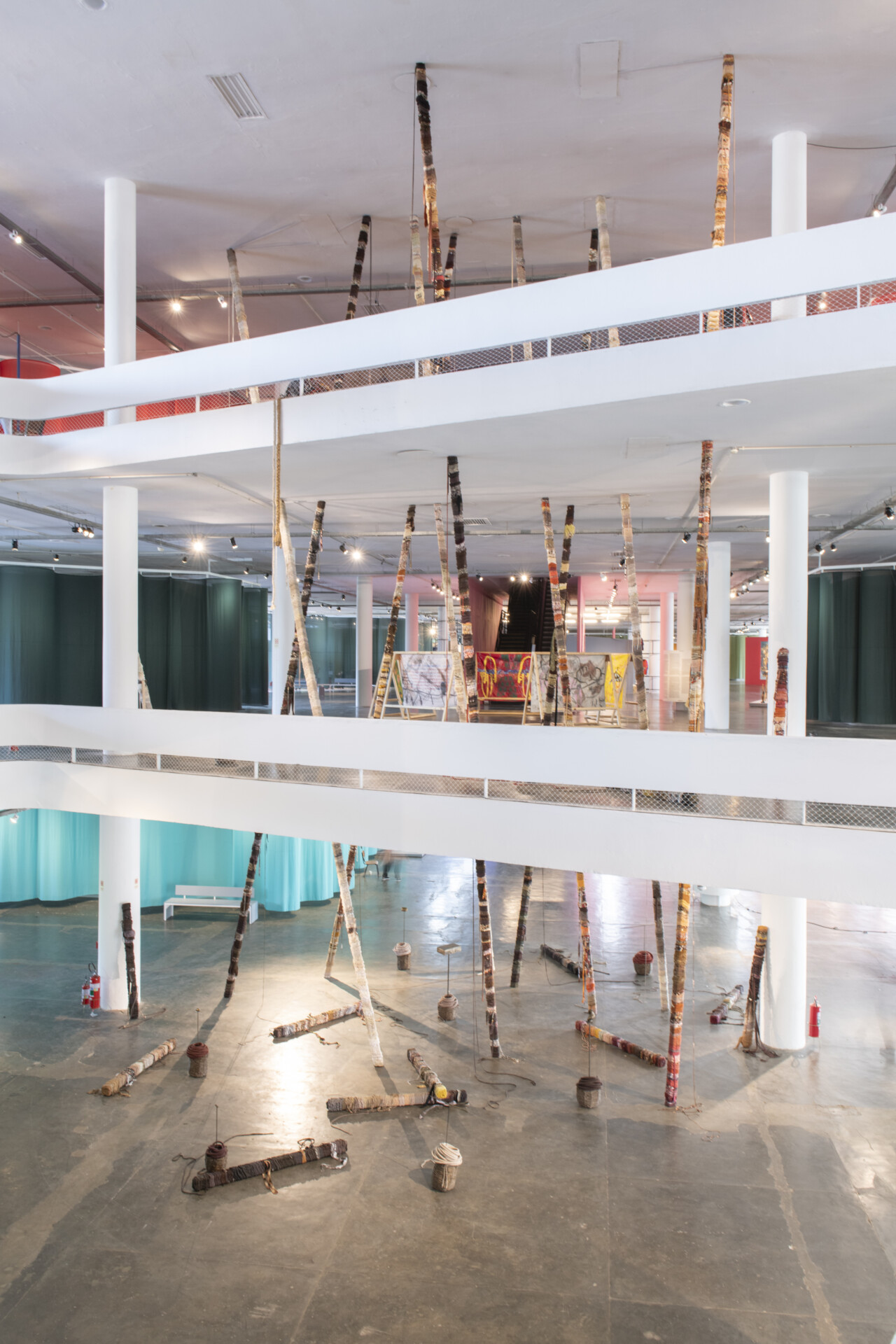
Ana Raylander, installation view of the 36th Bienal de São Paulo – Not All Travellers Walk Roads – Of Humanity as Practice © Levi Fanan / Fundação Bienal de São Paulo
With this quick detour and the prompt of ‘inhabiting’, we return to the Bienal, which will be on until January 2026. With this temporality of being there I wonder about the system itself – what is a biennial? More than a recurring exhibition, it is a structure, a platform, an institution. It invites foreign bodies in, stages encounters, negotiates politics. How much does it support versus exploit? How often does it serve purpose, and how often agenda? How well does it communicate internally and externally? These are not small questions. They determine what such an event can mean.
Having to deal with biennial foundations, people, politics and programs. Artists, mediums, egos. It is a mammoth undertaking. Yet we have all agreed to play the game; none can say they didn’t know. Is it maybe time to change the rules? I think we need all there is, but have we succumbed to feeding the system over the idea?
By nature, scale and time, there is a general discrepancy between the well-thought-through, researched, and ideated curatorial framework versus the translation in space through which we experience art. We cannot escape physical presence, our own body relating to what is in proximity; thus the strategy becomes inconsistent, insufficient, and at times frustrating.
If one is concerned about the psychology of space – which I believe to be important – then the tools should be provided along the whole journey. Navigation through a massive space such as the 36th São Paulo Bienal unfolds with artists that not only tell their own stories but also stand within a referential art world of works occupying the same space or visual field. Part of an ancestry, they are read and deciphered within context, geography, and temporal markers. That alone are multiple estuaries – a central term in Not All Travellers Walk on Roads – Of Humanity as Practice; there is no need to make things further complicated.
One thing that I take away from this Bienal is the possibility of love – not the commodified romance we know from films, but love as resonance, as our common denominator. Love as the shared vibration on which all else is built. Something that is unquestionably needed, desperately, right now. To be human, the Bienal insists, is not a state but a verb. A practice. Humanity is something remembered, reenacted, negotiated. It is encounter. It is fragile, political, necessary. In genocidal times, this cannot be forgotten. Joy and beauty, too, are political. They are gravitational forces, keeping our worlds from falling apart. Perhaps this is why São Paulo and the Bienal mirror one another so closely. Both are too vast to be contained, too layered to be resolved, too contradictory to be simplified. Both demand immersion, not from above but from within. Both insist that one must dive in, listen closely, and linger.
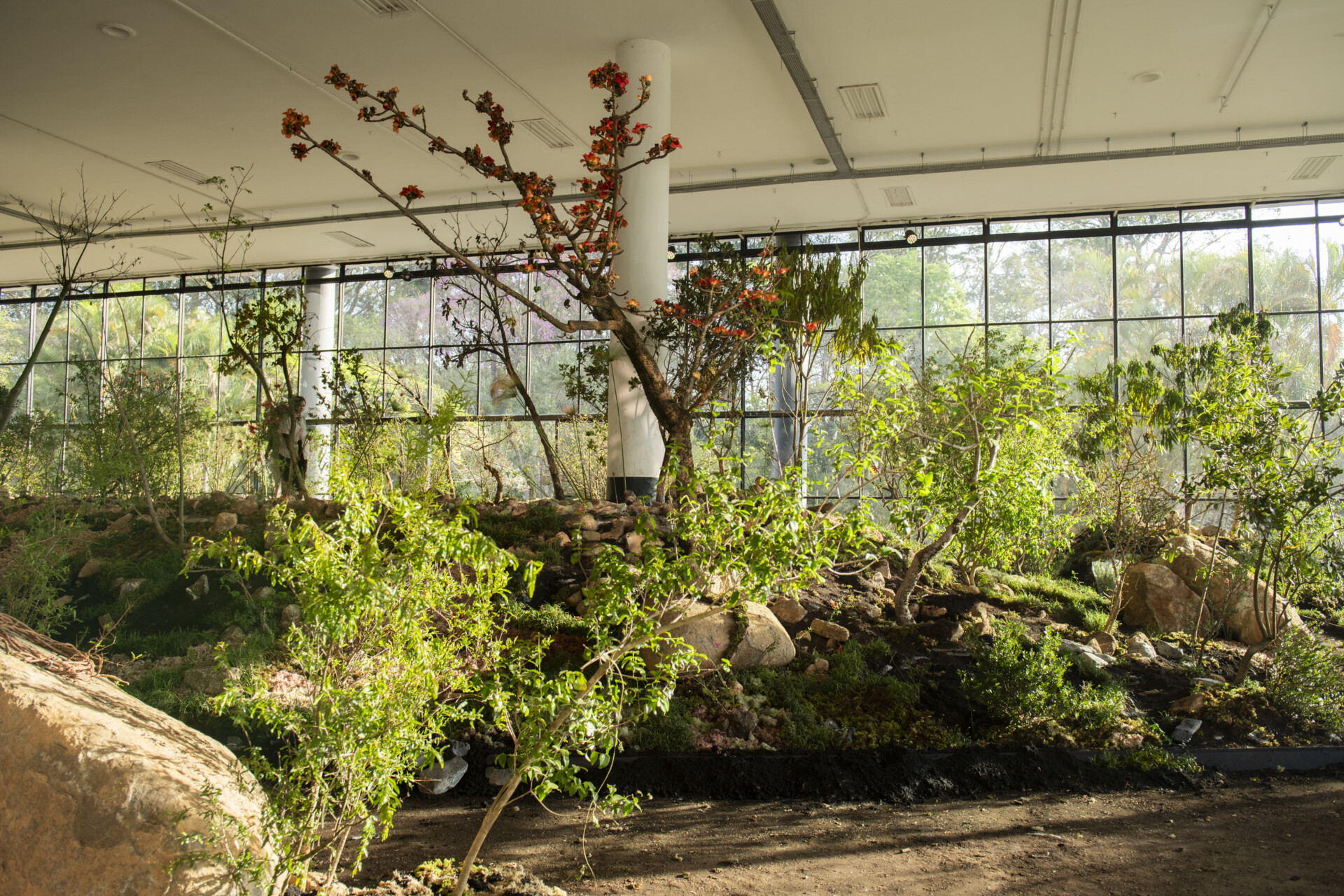
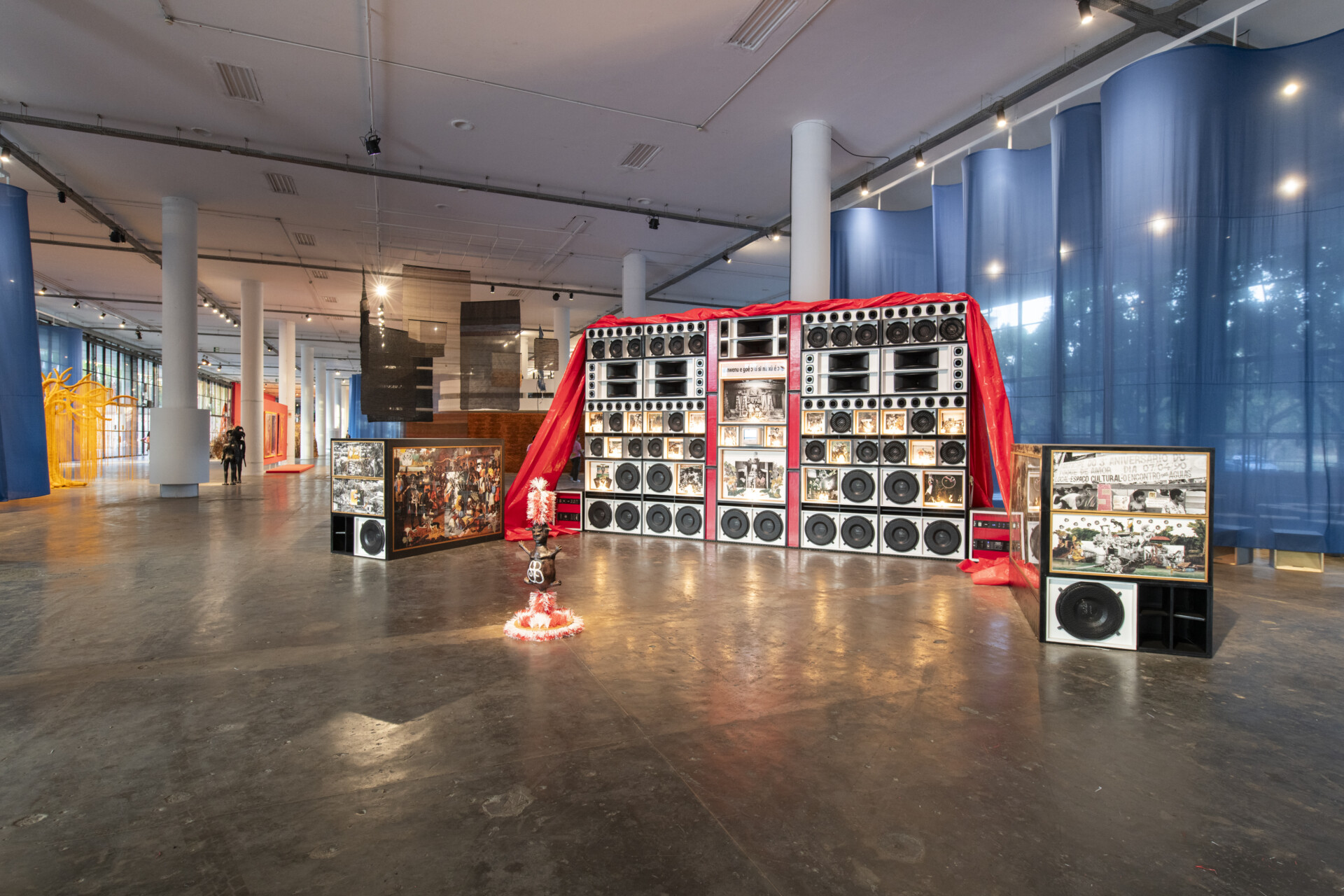
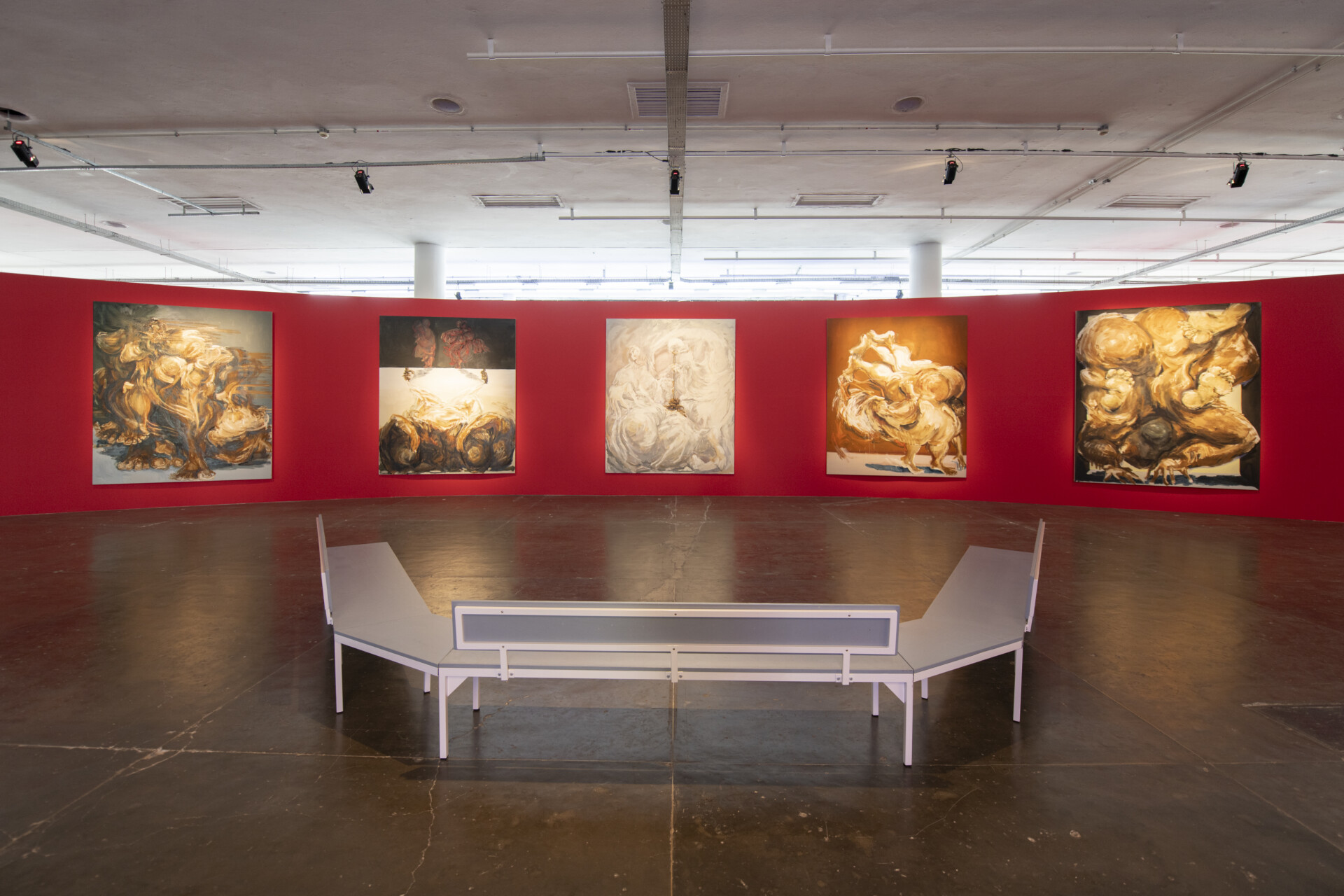
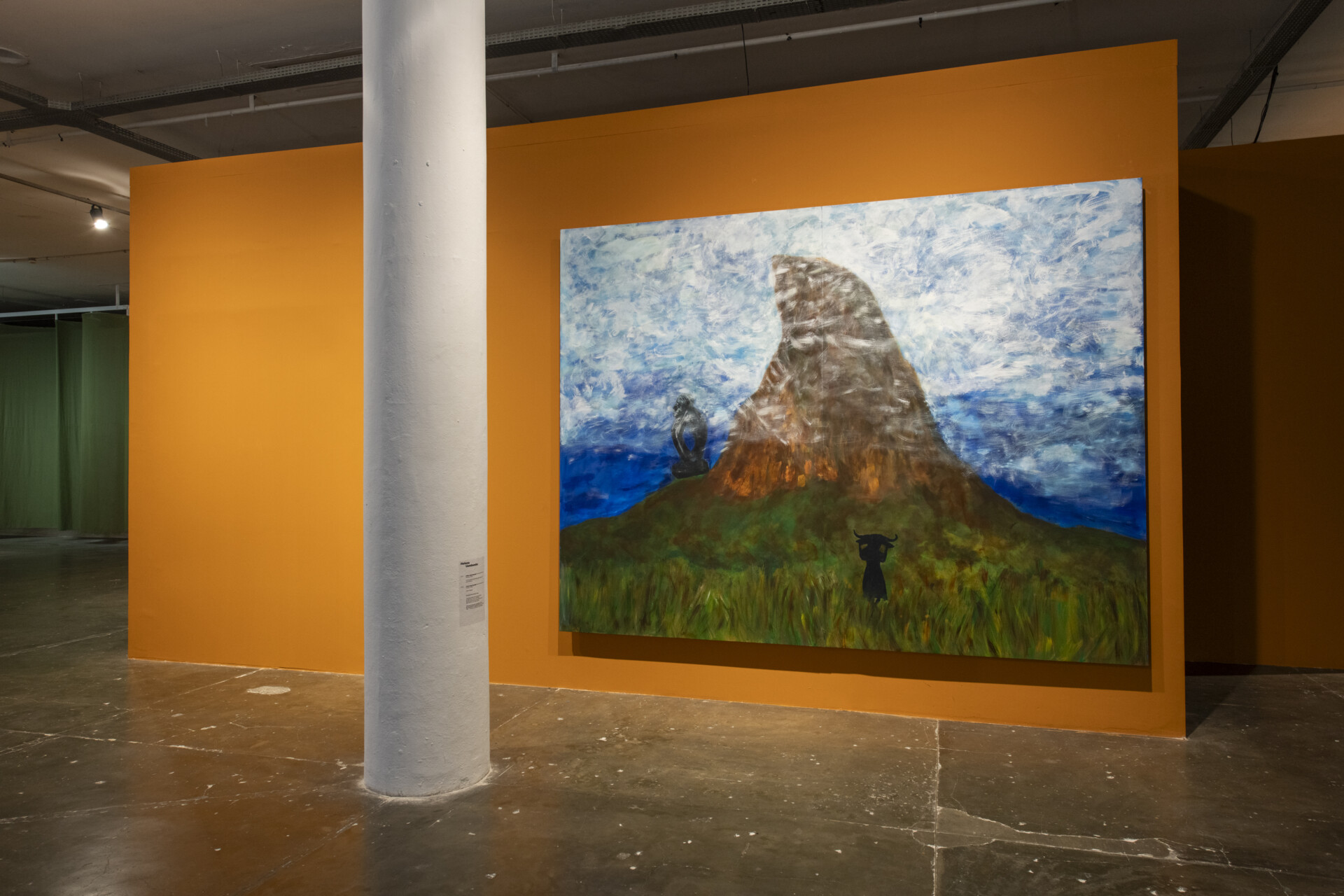
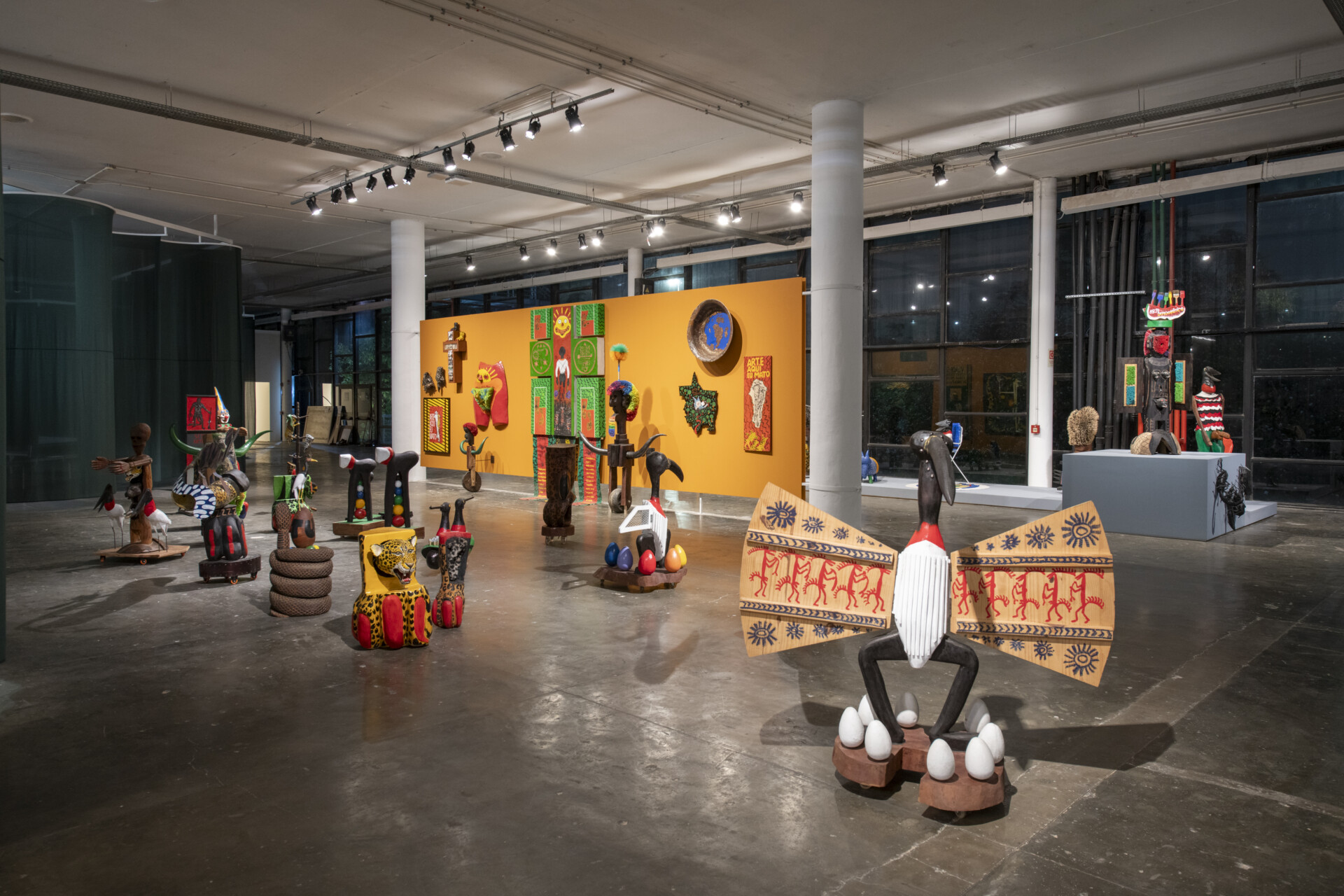
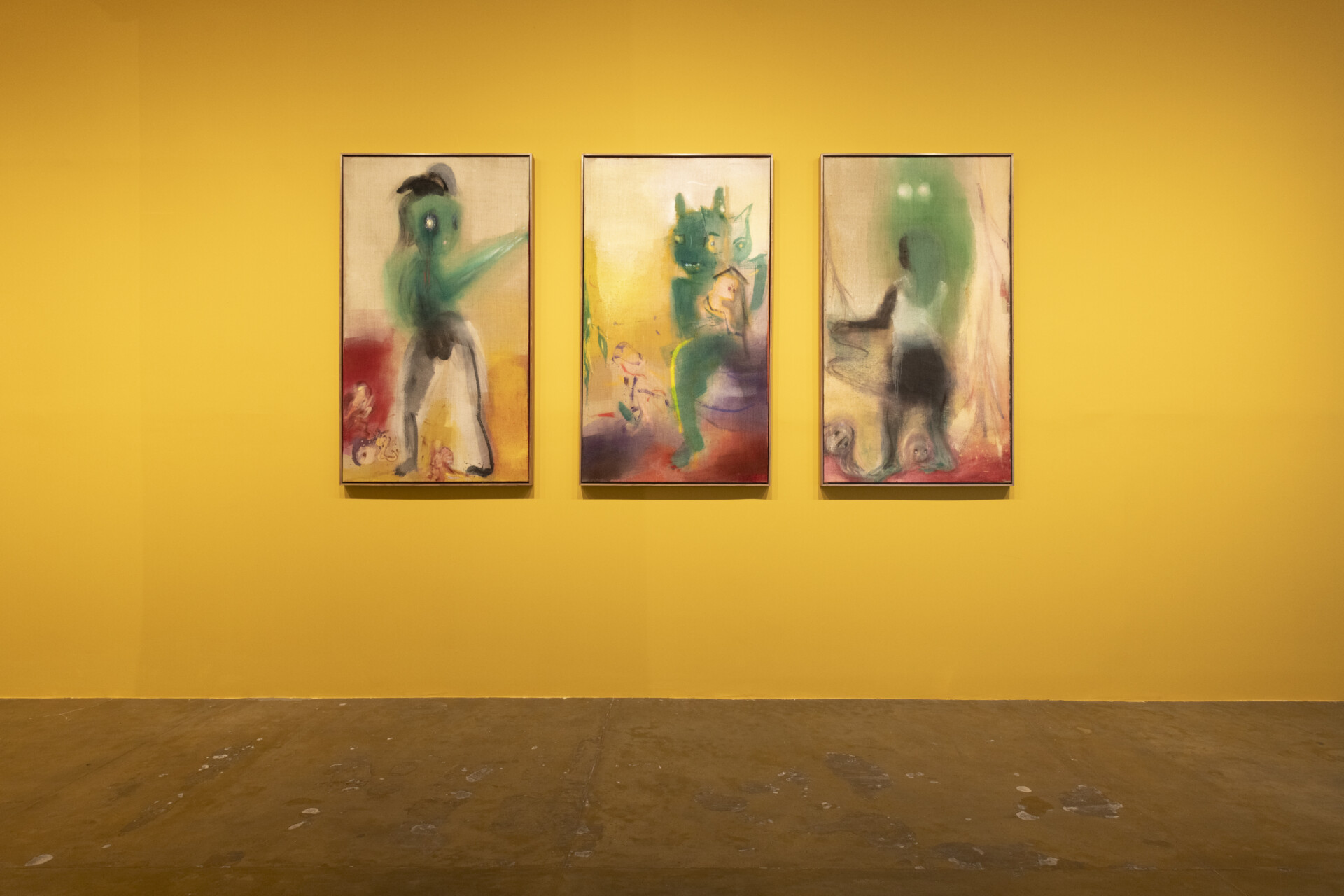
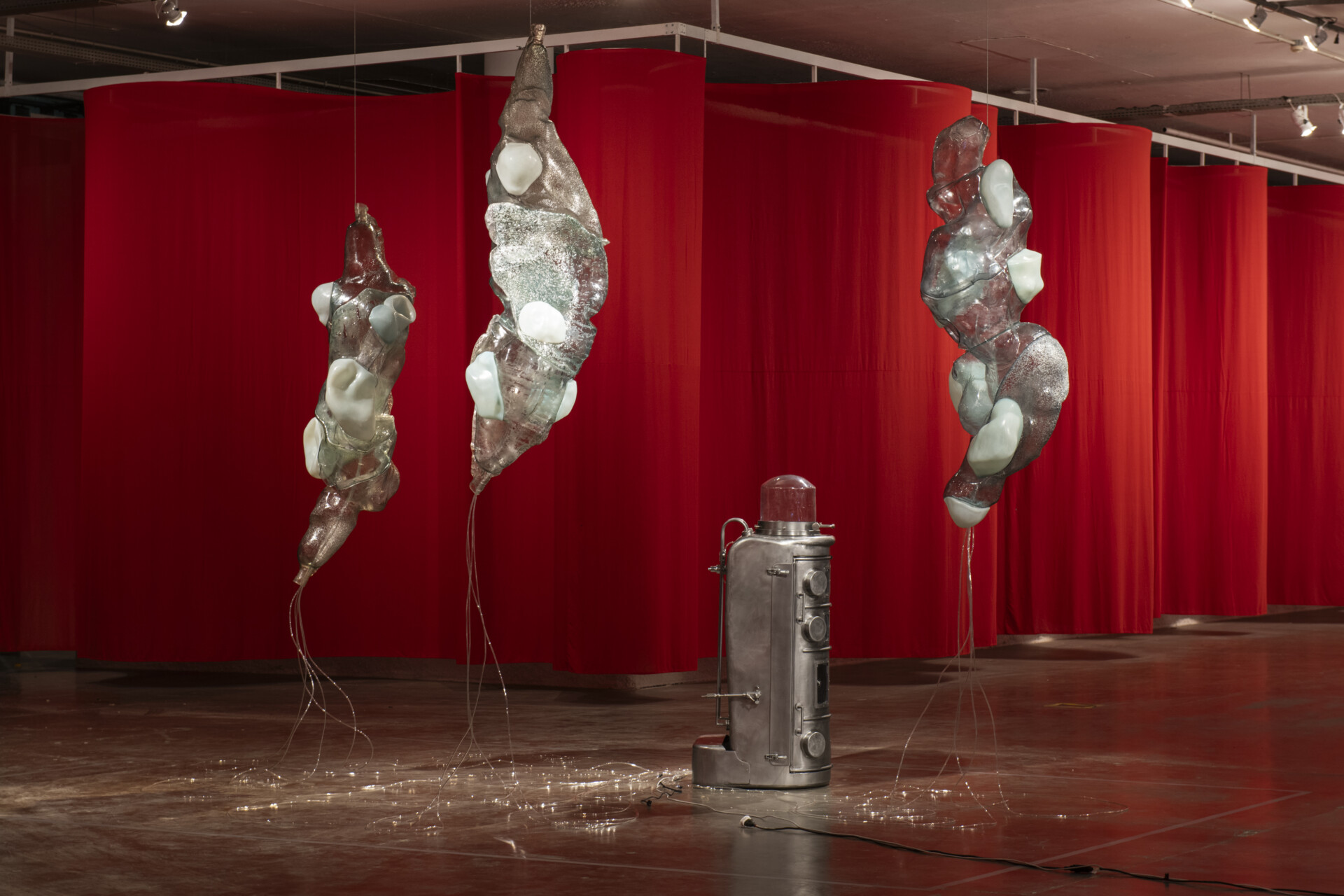
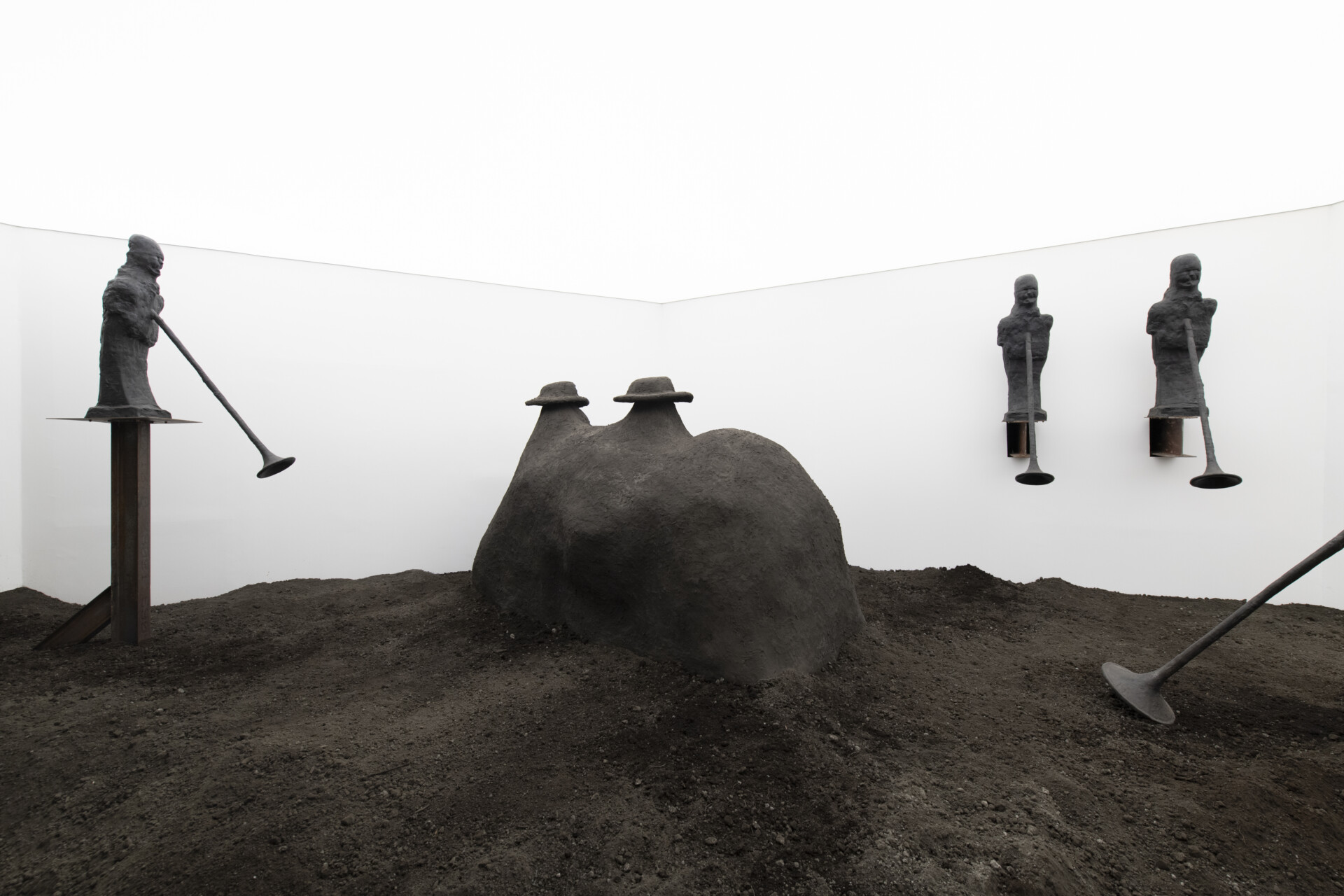
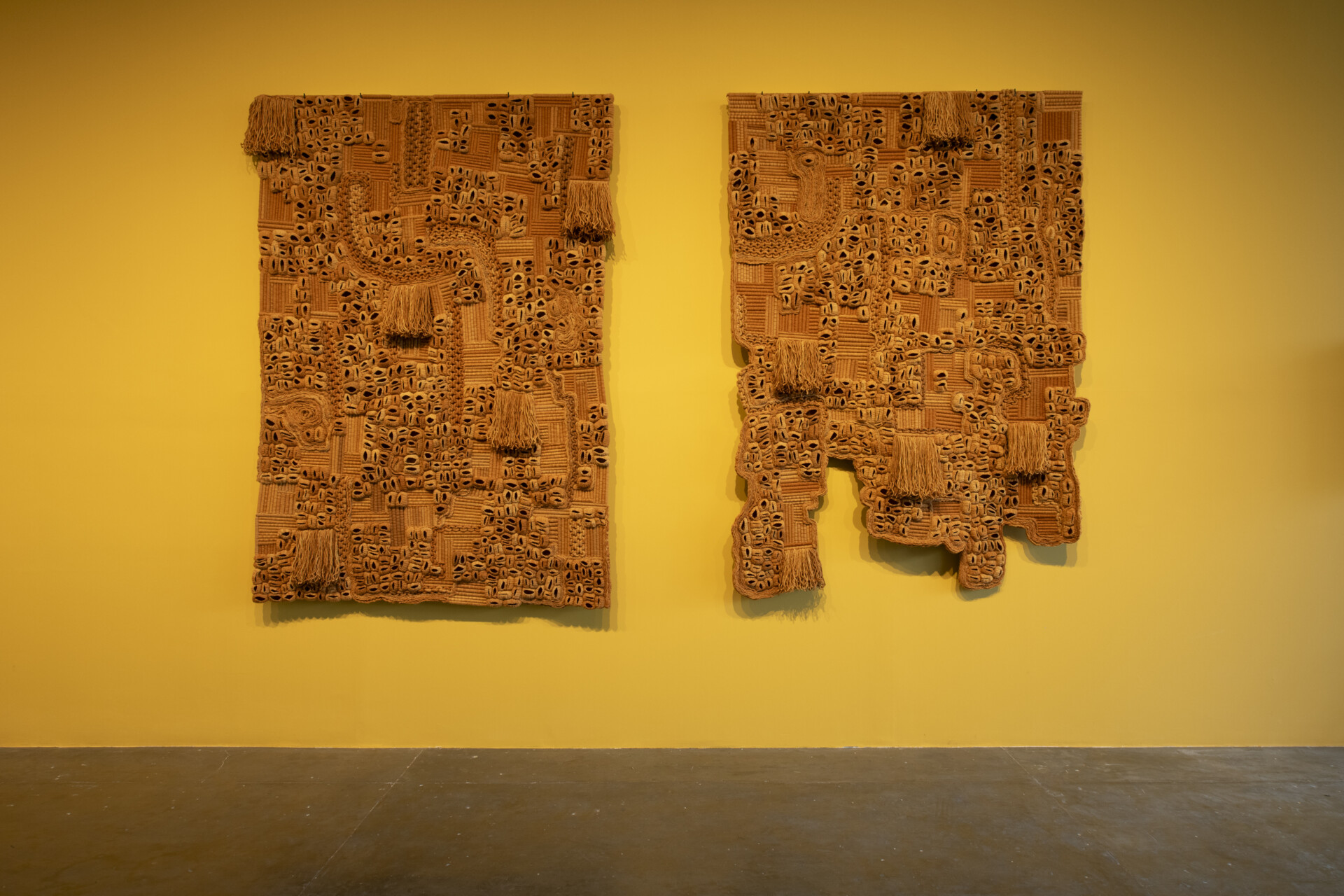
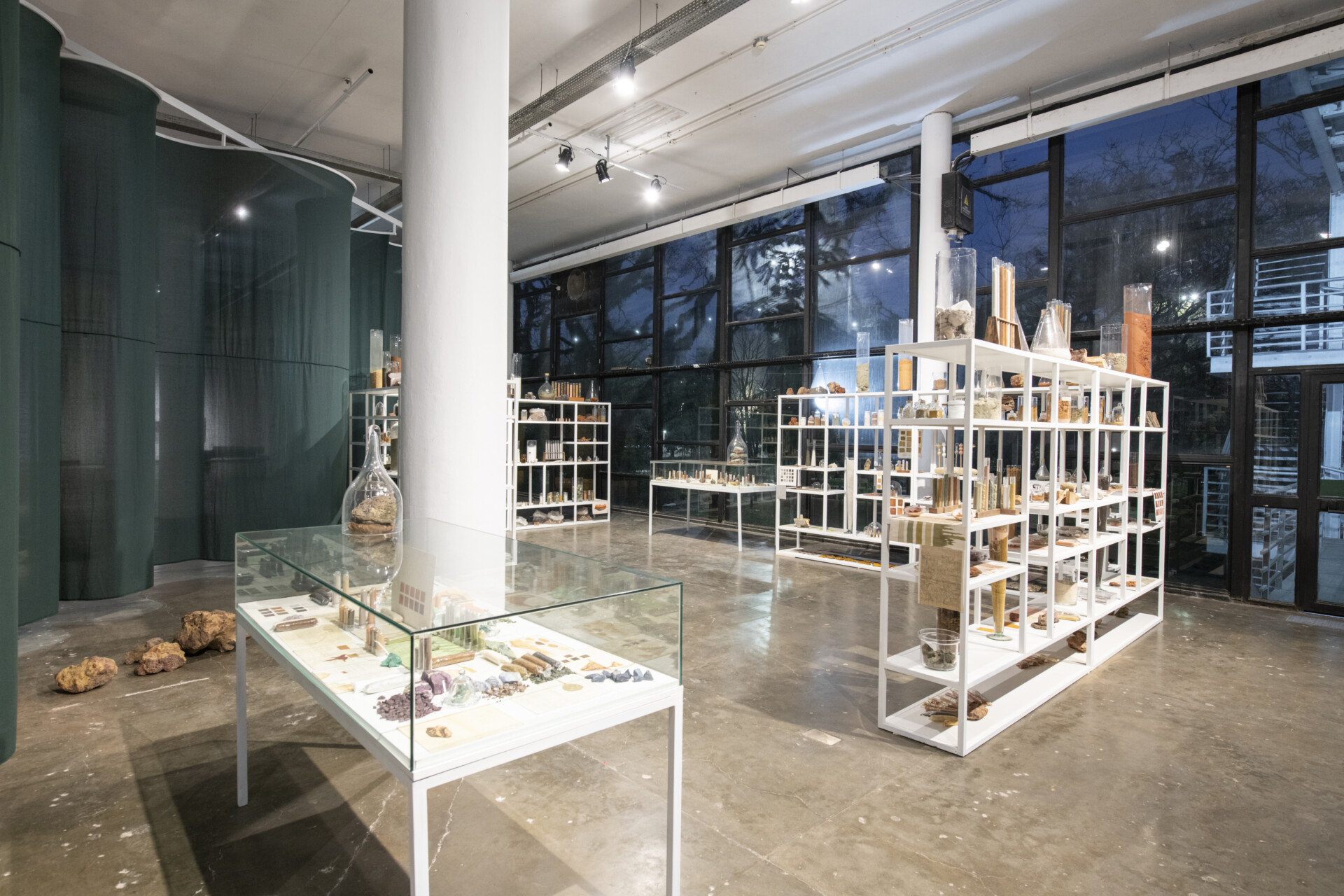
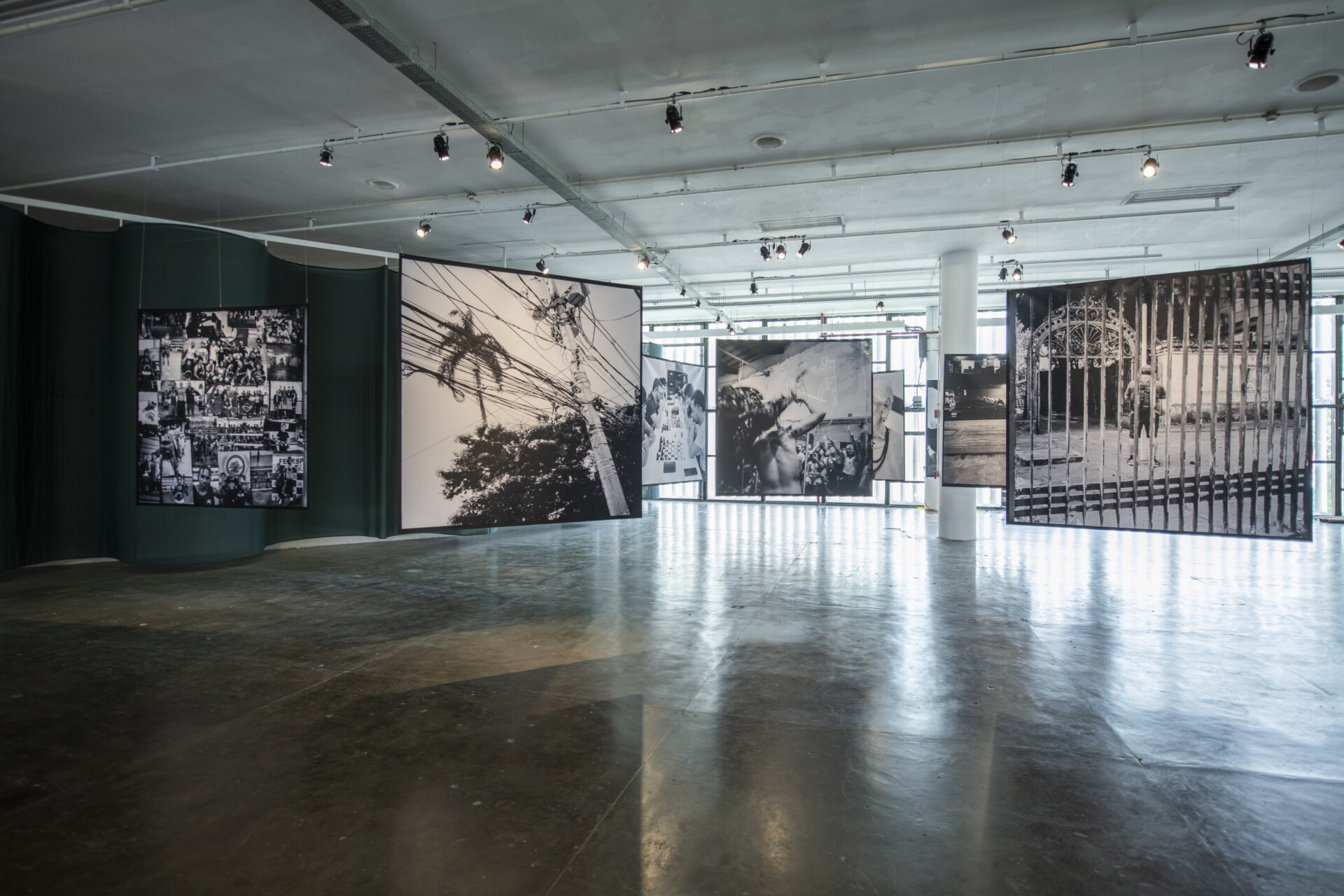
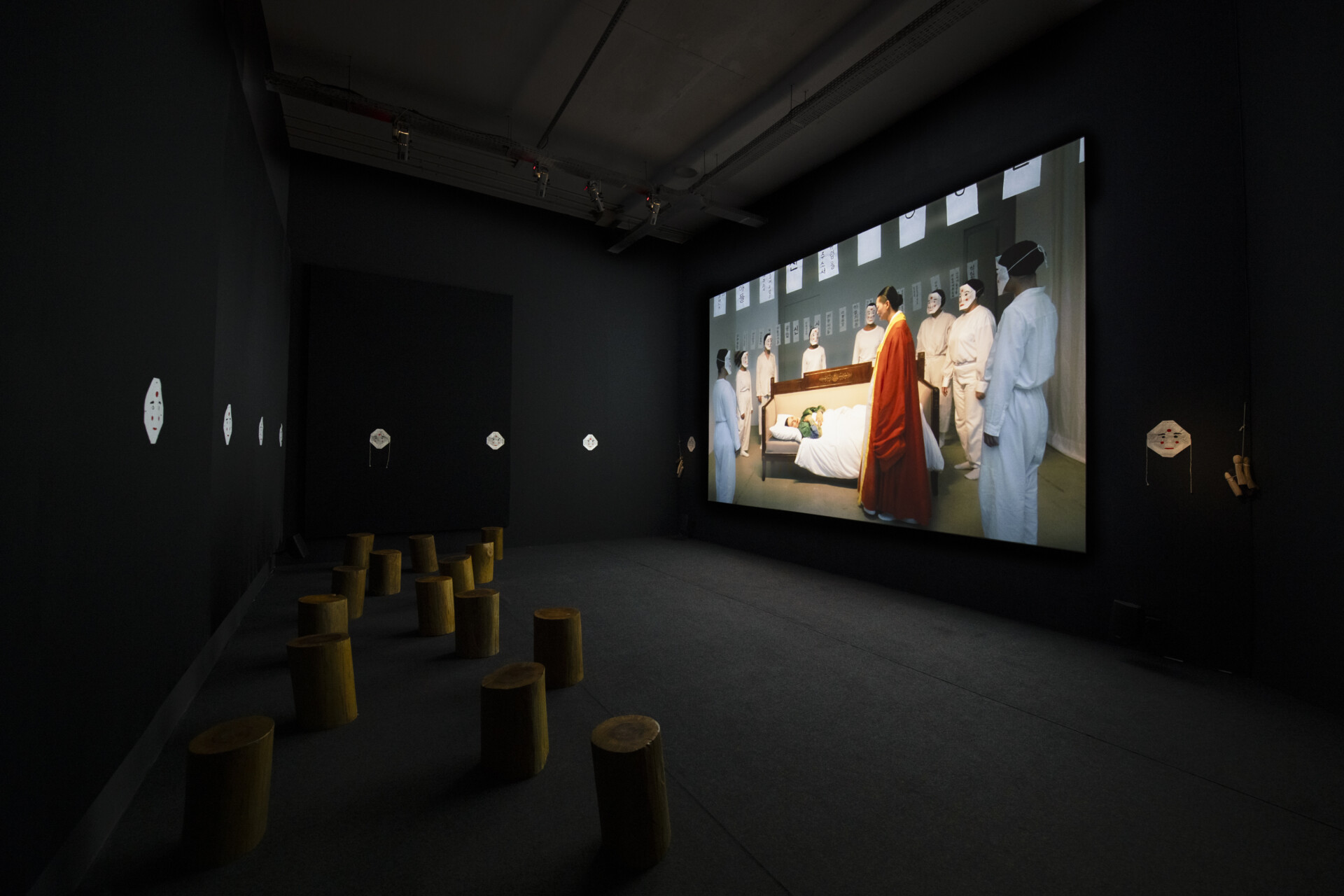
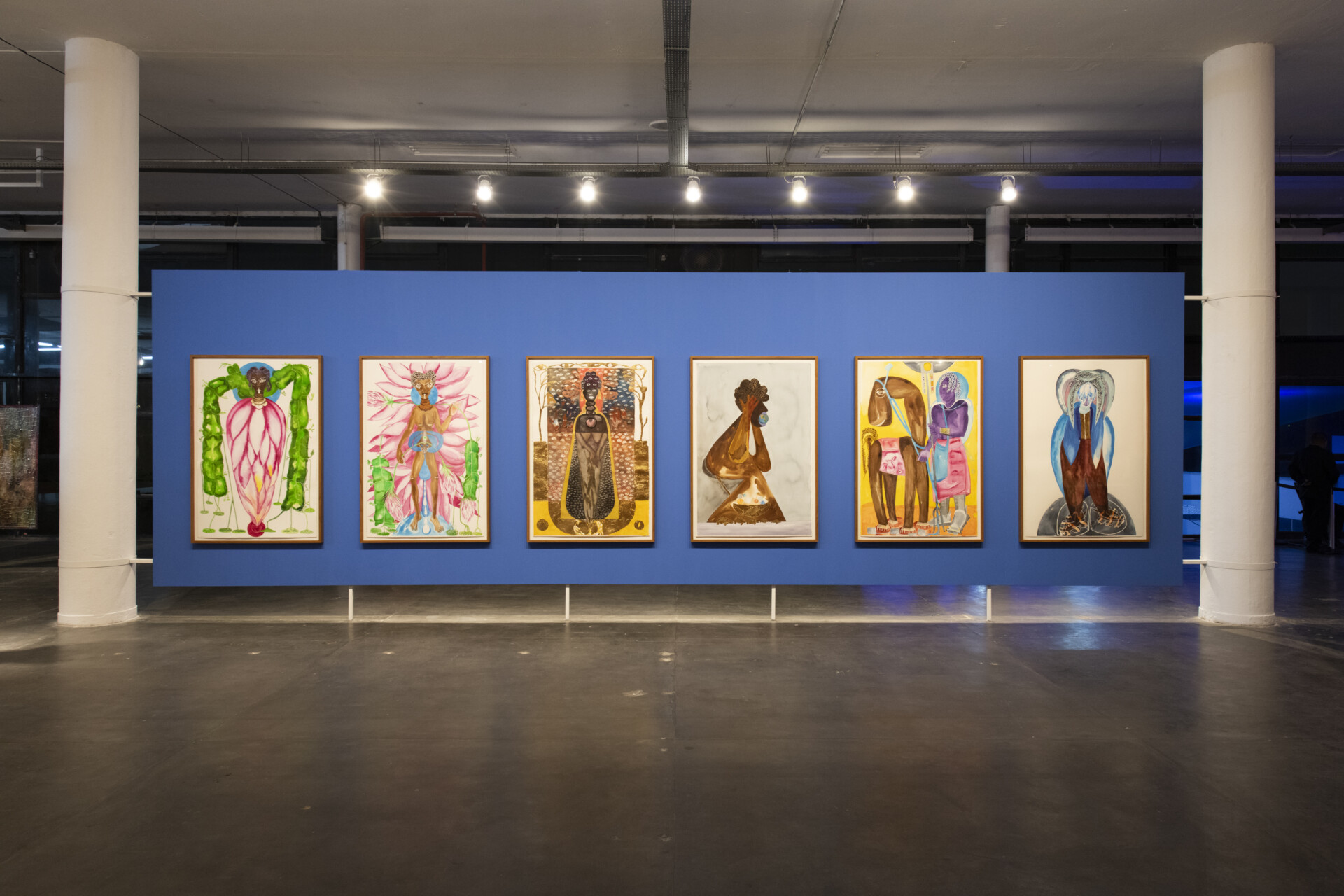
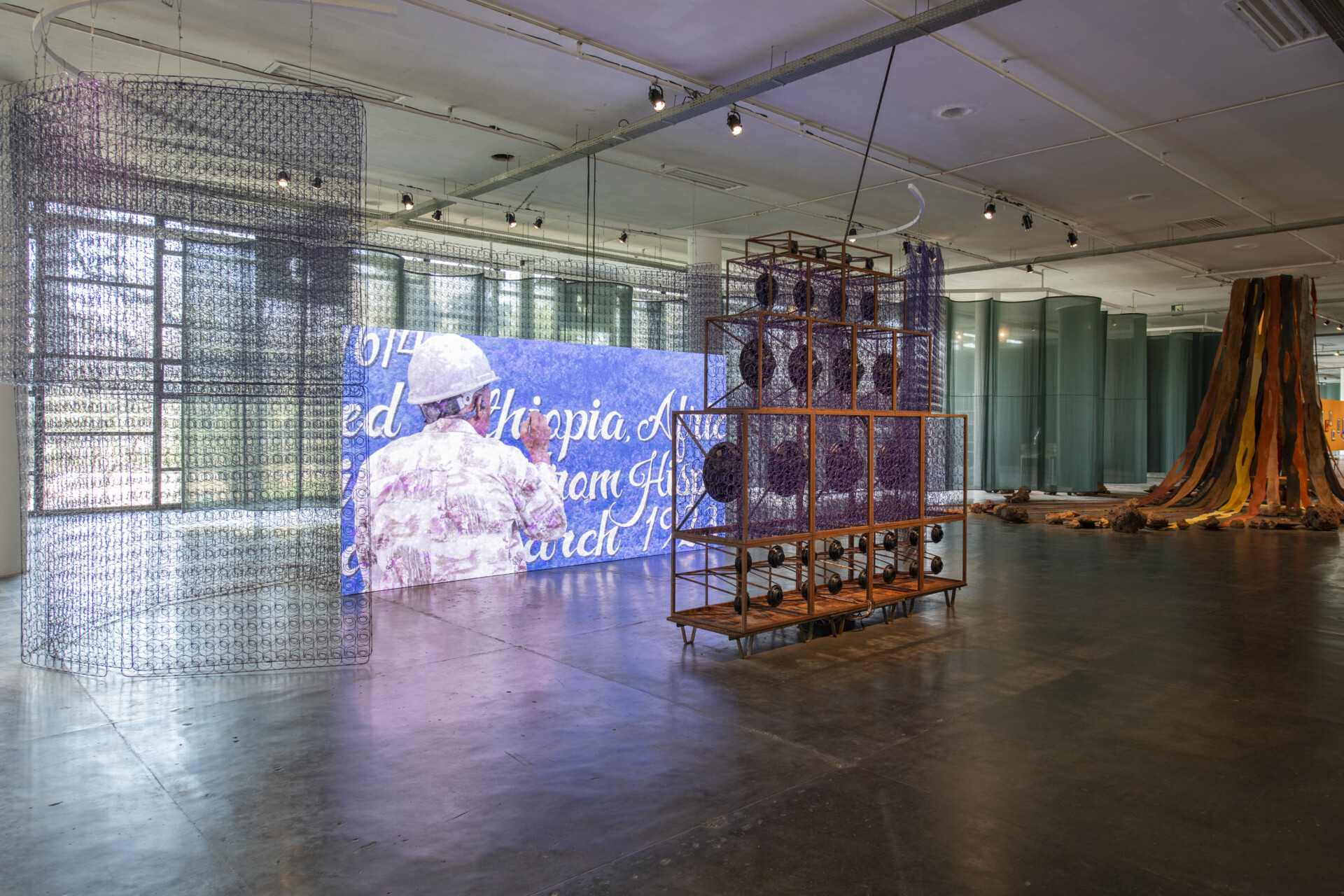
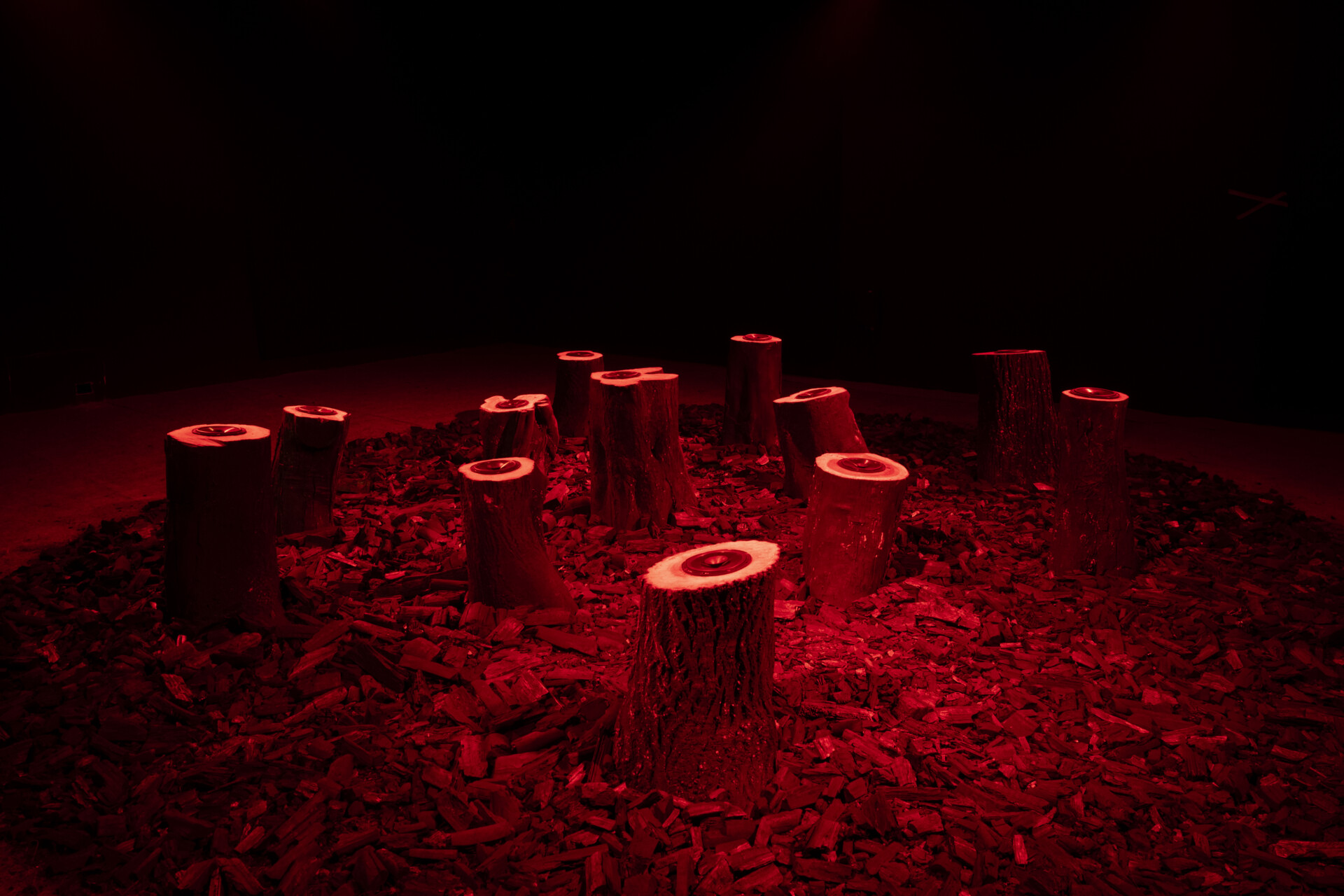
Installation views of the 36th Bienal de São Paulo – Not All Travellers Walk Roads – Of Humanity as Practice © Levi Fanan / Fundação Bienal de São Paulo