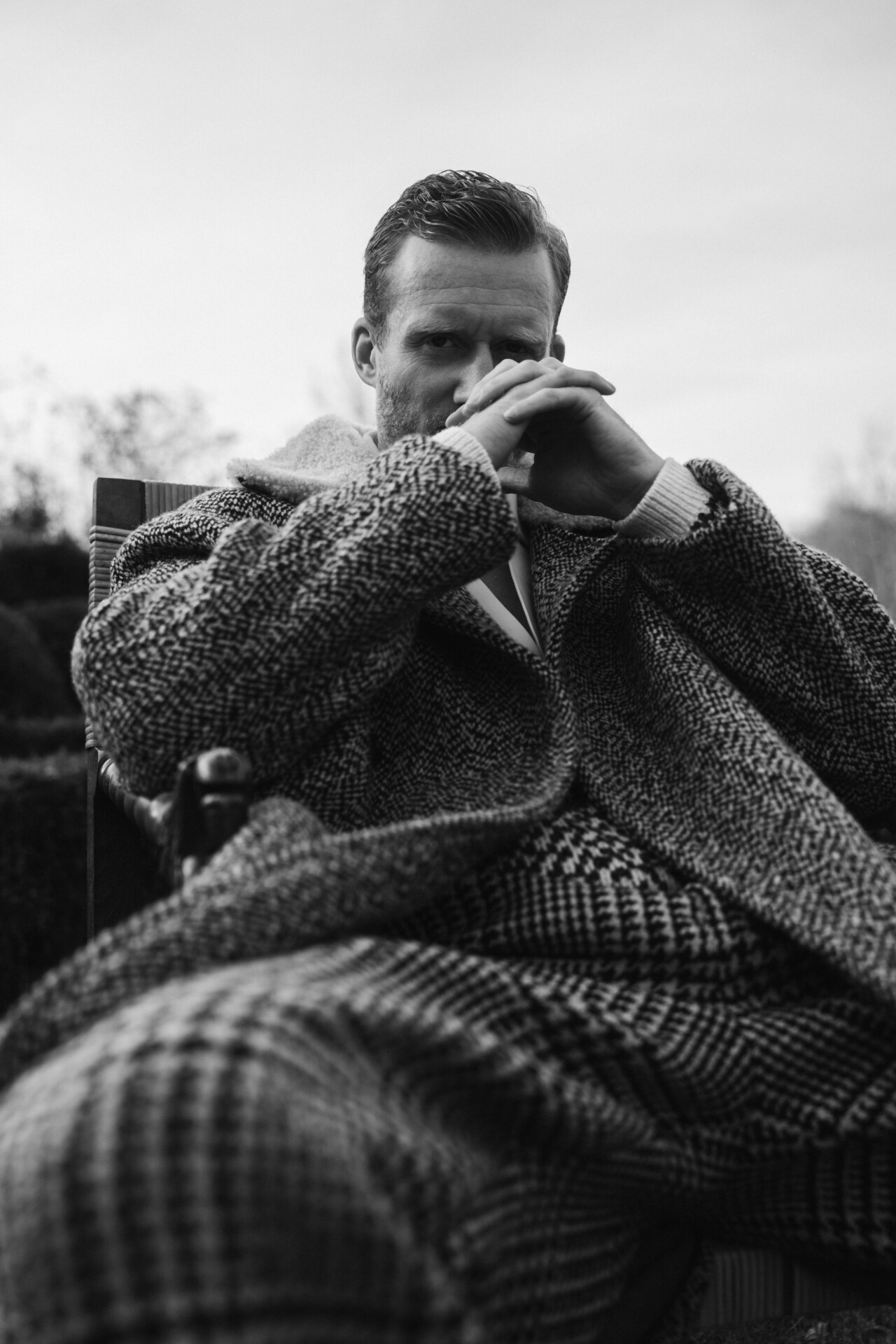
Photography by DENNIS ARNDT.
There is a moment, says André Schürrle, around the tenth kilometer of a long run. Or in the seventh hour on a trail. When your body wants to give up, your Achilles tendons tighten, and every step hurts. That’s when the real battle begins. Not against the distance, not against the clock, but against the question: Is this truly my limit, or is it just my ego trying to pull me back into my comfort zone? Today, Schürrle sits there relaxed, seeming calm and clear-headed. The man who became a world champion in 2014 and ended his professional soccer career at the age of 29 is now deliberately seeking out different arenas. Marathons. Ultra runs. Mountains. Cold. Places where you are completely alone with yourself—and precisely because of that, you learn everything about yourself.
THE MADNESS OF STAYING TRUE TO YOURSELF
“In an ultra run that lasts ten hours, you basically experience a whole lifetime,” Schürrle explains. “At the beginning everything feels good, you’re super happy, then the pain comes, and suddenly everything seems unbearable. Once you push through that low point, it becomes enjoyable again—you cry, you laugh, you feel everything.” He leans forward: “And I think it’s an incredible privilege to put yourself in situations where things get really tough. In those moments, you discover what truly matters to you.” What he describes is a kind of madness—but in the most productive sense. A self-imposed state of emergency that demands emotional intelligence and clear thinking. Because getting up early to run in freezing temperatures when nobody is watching, when no cameras are rolling, when no coach is waiting—that requires a completely different kind of strength. “My training is entirely self-directed. I tell myself: even if it’s five degrees in the morning, I’m going out. That makes me feel much better than if someone else had simply put it in my schedule.” The difference may sound subtle, but it’s fundamental: it’s about self-determination—about the freedom to consciously choose your own path, including your own small dose of madness.
It is strategic thinking in the midst of hardship — the ability to stay clear-headed even when completely exhausted. To distinguish between the pain that drives you forward and the pain that breaks you.
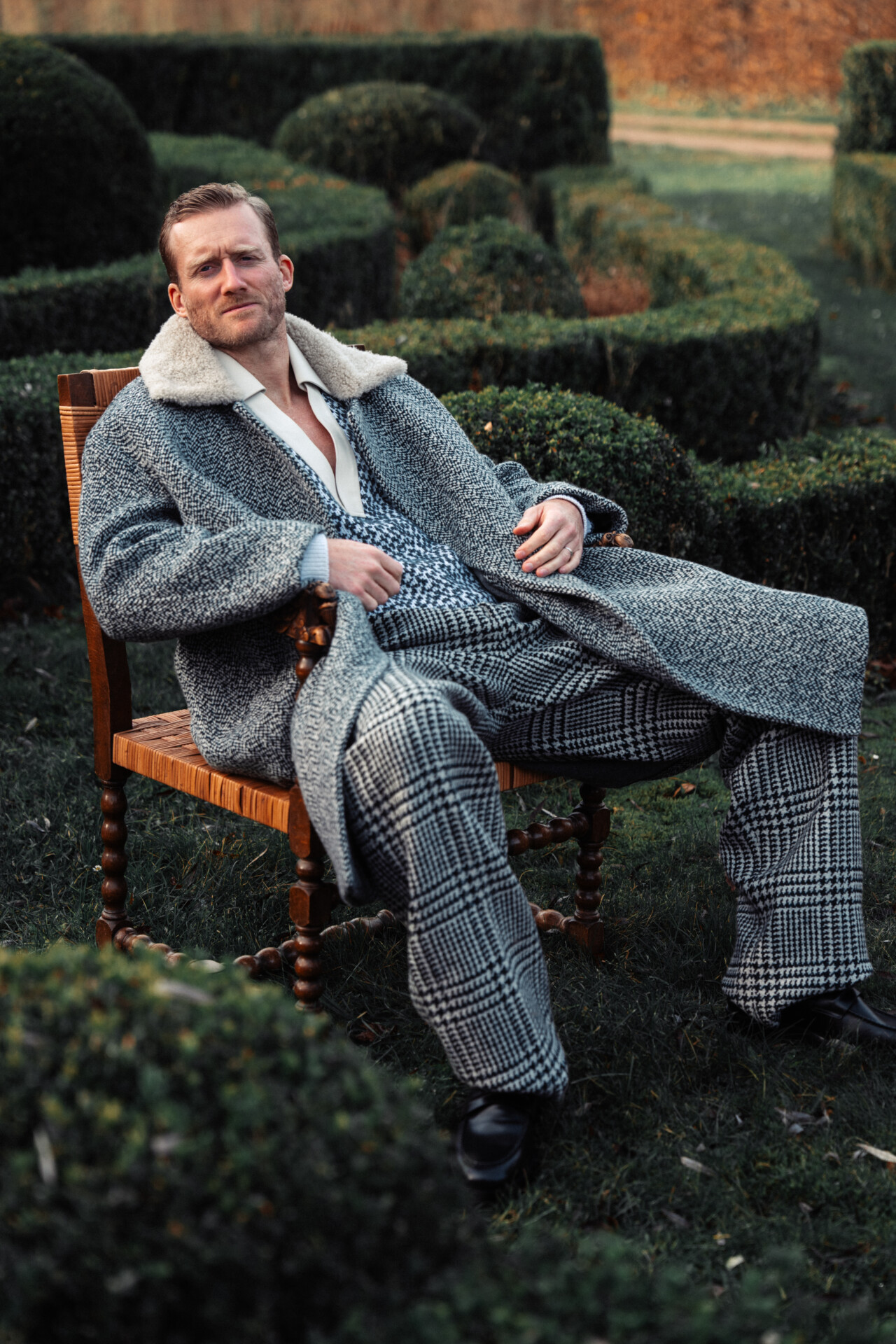
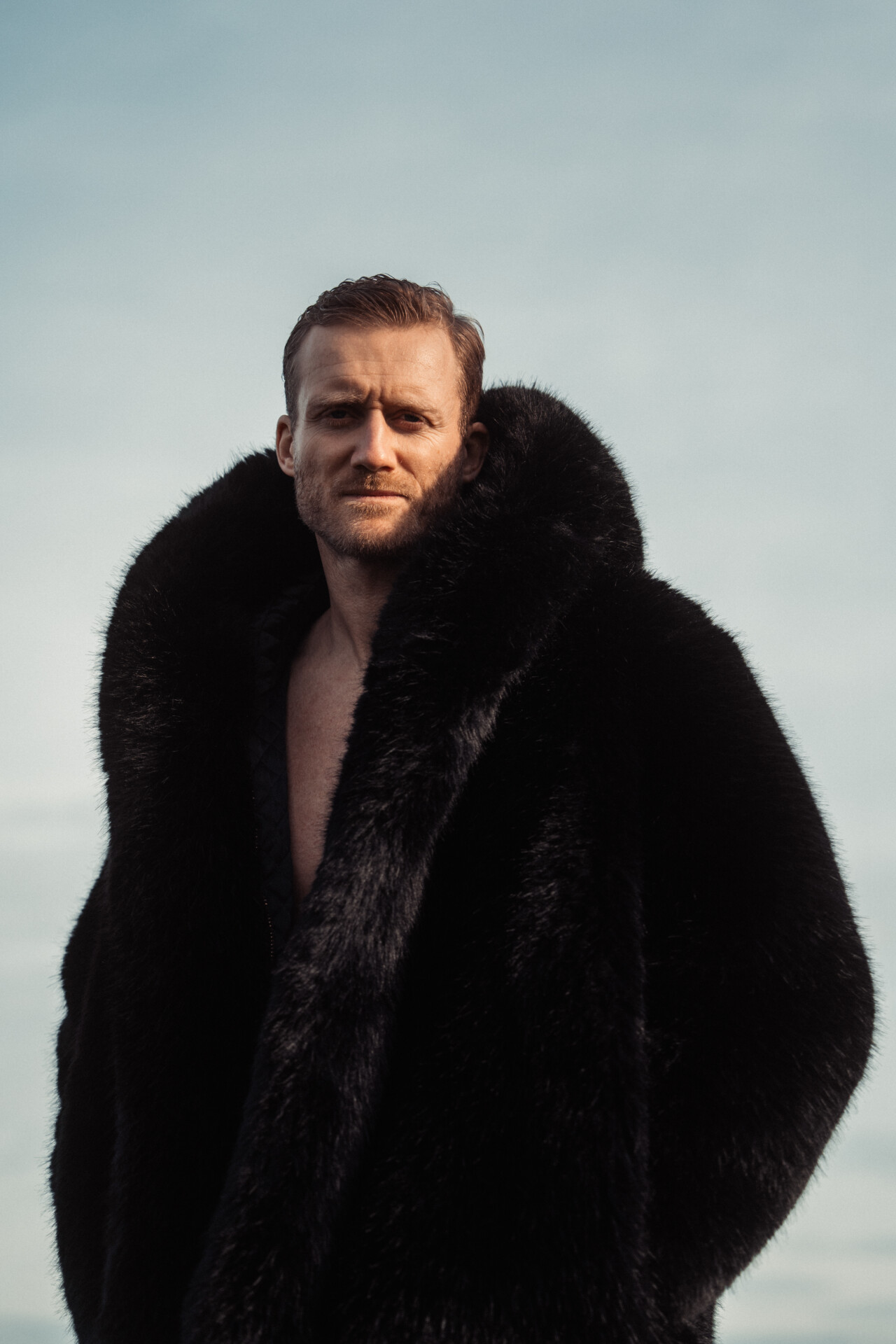
Photography by DENNIS ARNDT.
SEVENTEEN HOURS WITH YOURSELF
Most recently: 17 hours on a trail in Switzerland. His Achilles tendons tightened. He felt them seize and feared they might tear. He still had an hour to go, downhill. He could have pushed through. But then that moment came. “The question isn’t: do I slow down or not? The real struggle is what’s happening in my mind, which says: don’t take any risks, you could seriously injure yourself. At the same time, I can feel my ego trying to lure me back into my comfort zone: you don’t have to walk that last bit. And then I ask myself: is it truly risky, or is it my inner resistance—my longing for comfort—that’s holding me back?” The line between reason and willpower, between constructive and destructive madness, isn’t always clear. Schürrle has two children. He loves running around the city with them, doing everything together. “That means that even for me, there’s always this voice of reason that says: if I take one more step, I risk being out for six months.” It’s a difficult dilemma for someone who likes to push him- self to the absolute limit and beyond. “I think that’s what life is about: constantly challenging yourself. And yet I know the line is thin—taking that one step too far, I’d almost call it stupidity, because it would simply be too risky.” He smiles. “But I still believe that sometimes you have to dip your toe into that madness.”
KNOWING YOUR LIMITS WITHOUT CROSSING THEM
As a former professional athlete, Schürrle knows his body better than most amateurs ever will. He knows where his real limits lie. And yet: “I almost always listen to that little voice of reason. I push myself to my limits, but I don’t try to destroy myself.” It is strategic thinking in the midst of hardship—the ability to stay clear-headed even when completely exhausted. To distinguish between the pain that drives you forward and the pain that breaks you. “Maybe those 17 hours are so important because you spend them entirely with yourself,” he says quietly. “You’re utterly alone—and in that time, you go through everything.”

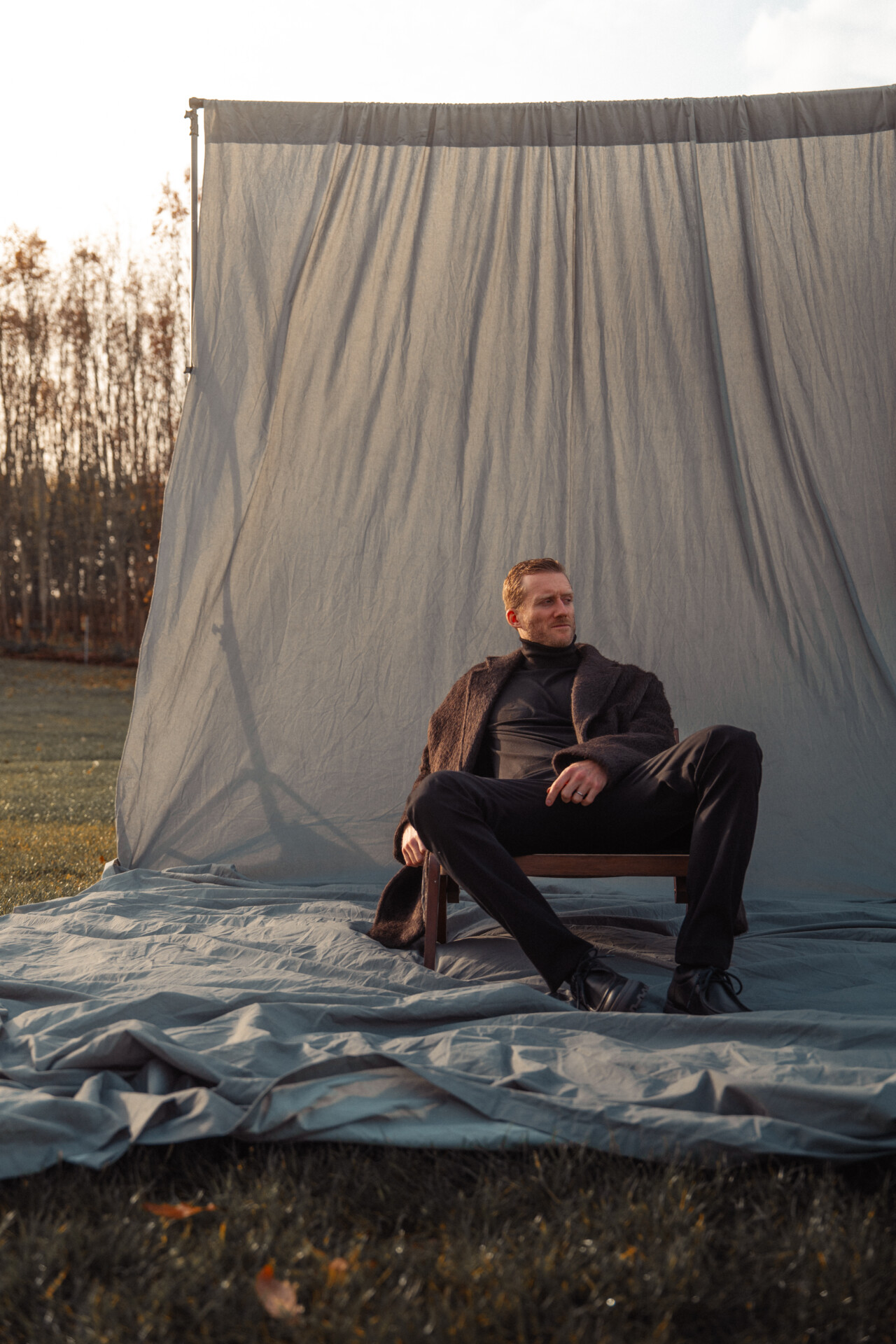
Photography by DENNIS ARNDT.
THE MADNESS OF HARD WORK
What Schürrle considers normal is simply this: “Working hard. I give everything to pursue my goals. I want to improve and keep developing. For me, that’s a completely normal mindset. Many people ask: why? Why does he do that? Why does someone sit in an office seven days a week, twelve hours a day, just to achieve something?” With DRYLL, he has founded a startup for electrolyte products—hydration at a high-performance level. “I was training for a triathlon and trying out different products. You sweat a lot, you want to perform well, but I just couldn’t find any products that I really wanted to have in my fridge.” What he wants his brand to communicate is this: that it’s okay when things get tough. “It’s okay when your run gets hard at mile ten. It’s okay when things don’t go smoothly at 2 p.m. in the office. That’s okay—and the good things are ahead if you keep going.”Schürrle has an intrinsic drive to perform. “I want to make progress, even if the goal exists only for myself.” The principle of performance is always there. What’s different from before: “I’m not doing it to be better than someone else. It’s unlikely I’ll ever win a marathon or an ultramarathon. It’s about the thing itself, ego-free. I’m competing against myself to improve. But I’m not competing against others.”
In the end, that is what Schürrle’s story is about: the art of choosing the right kind of madness. The productive state of emergency in which you feel every emotion and learn everything about yourself.

Photography by DENNIS ARNDT.
THE DEFINITION OF SUCCESS
What does success mean to him today? Schürrle pauses. “I haven’t found a 100 percent definition yet.” In the past, it was simple: win the match, earn money, move to a bigger club. Today? “A successful day is one where I just feel good through-out. Seeing my family, my children, having a hard training session, having a good conversation.” He ended his career at 29. From the outside, it looked like a loss of control. For him, it was the opposite. “I had gained control. There were many things I didn’t want anymore. But I also didn’t know what would come next. And that’s the difficult part: having the courage to see that as freedom.”
INNER PEACE
What followed wasn’t emptiness, but liberation. Today, Schürrle has found inner peace. “I feel that life is very good. I can do anything I set my mind to, and I trust myself to always find my way.” A peace he never knew before. “It was always such a struggle with myself. There was never any real inner quiet.” Now, he enjoys not always knowing what comes next. He enjoys doing exactly what he feels like doing. “I’ve always been someone who reflects a lot—very much in my own world, lost in thought. Never fully extroverted, but someone who appreciates silence.”
SELF-CHOSEN MADNESS
In the end, that is what Schürrle’s story is about: the art of choosing the right kind of madness. The productive state of emergency in which you feel every emotion and learn everything about yourself. Not the imposed madness of a system that does not allow weakness, but the self-determined madness of someone who knows that the most important decisions in life are made by oneself. The madness he lives today is one he has chosen—and that is where his true strength lies.