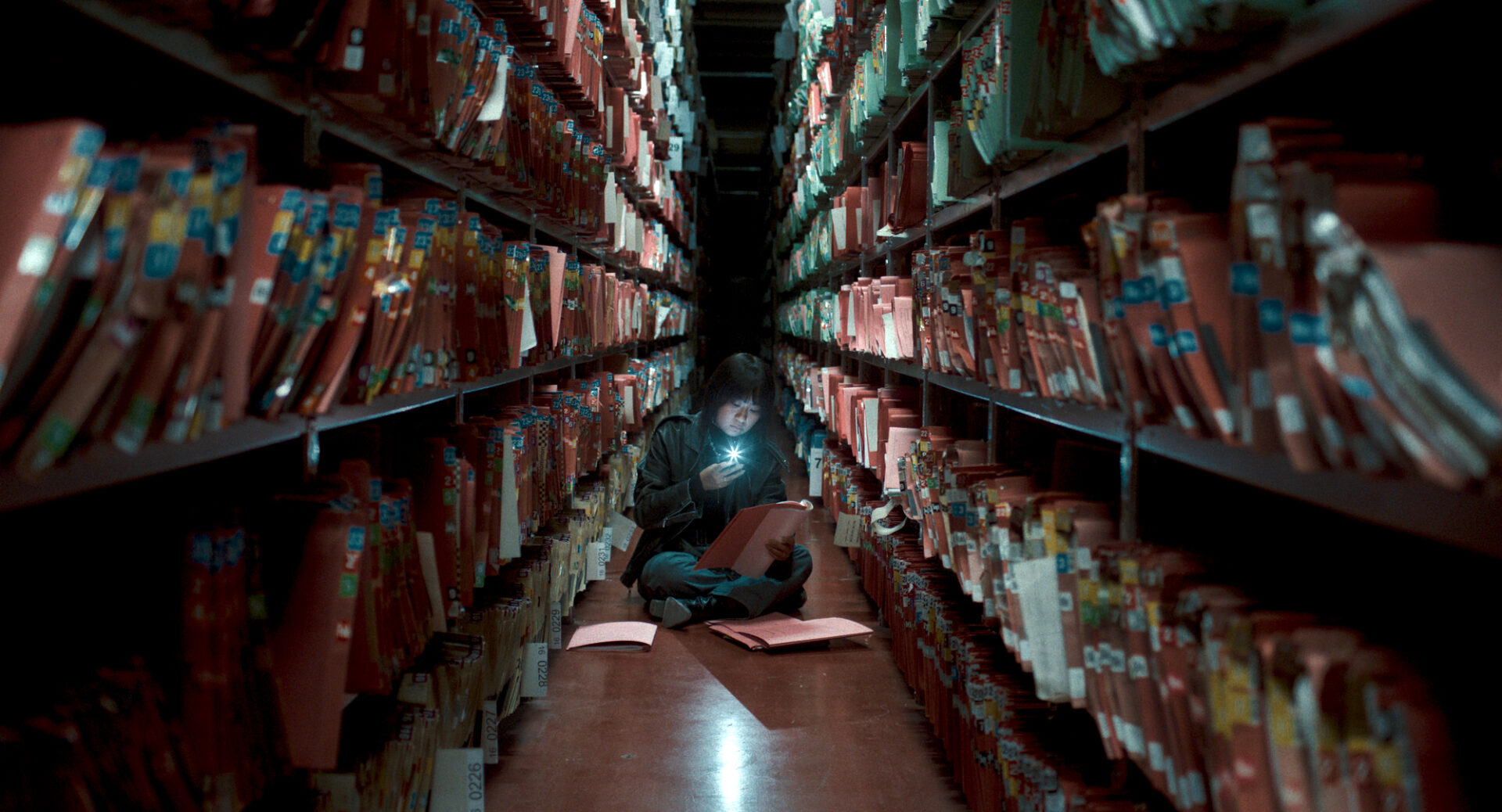
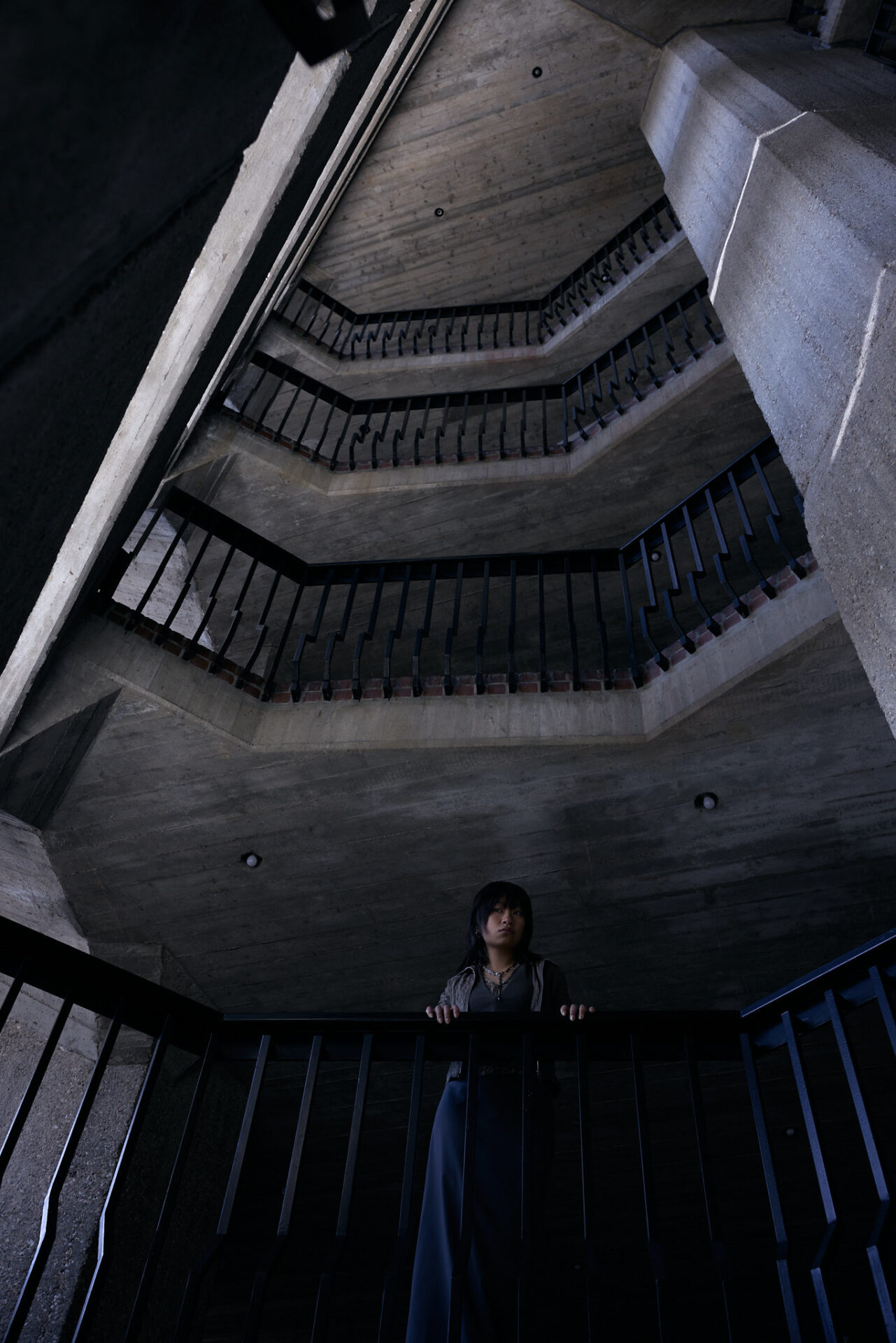
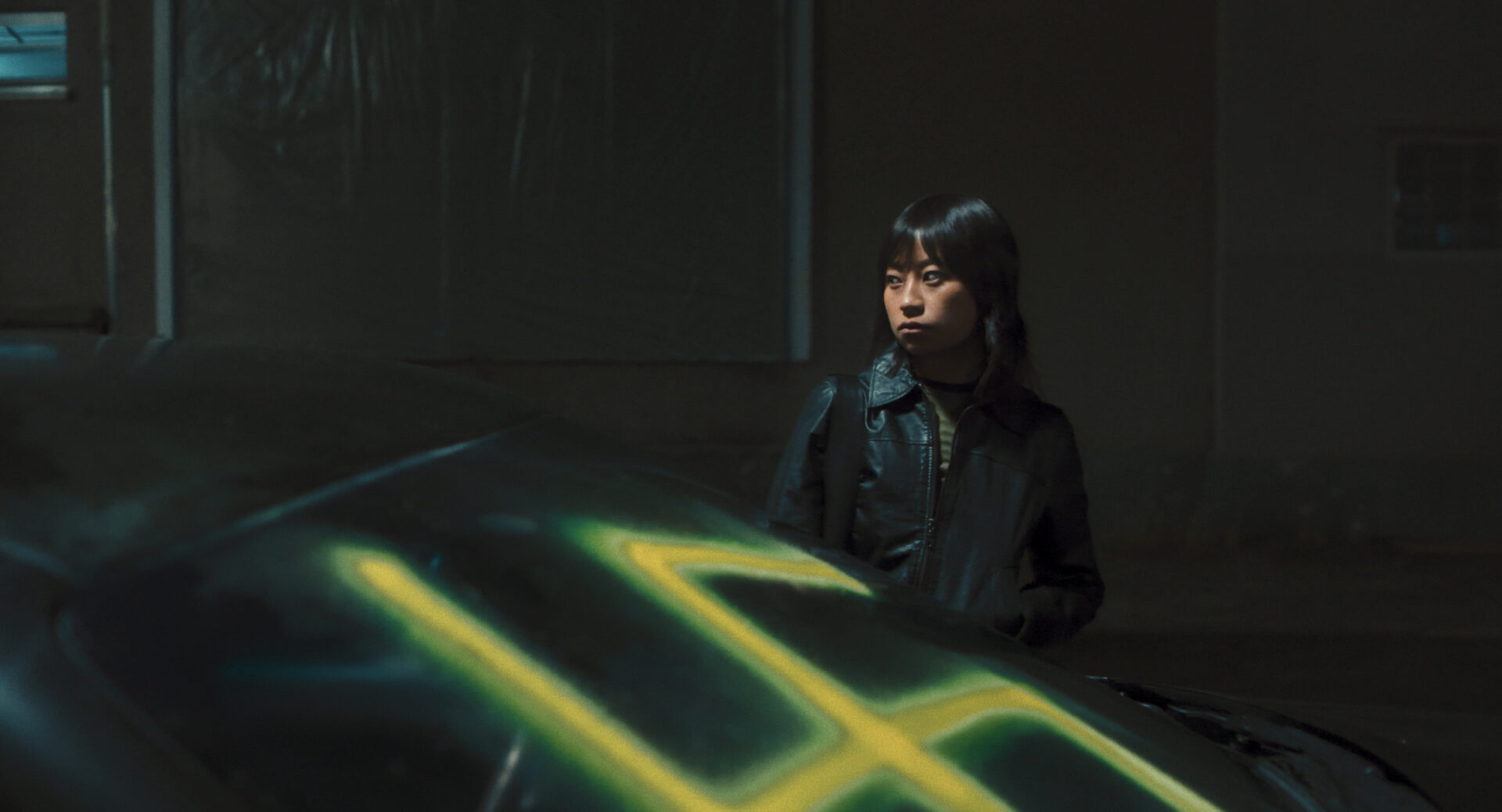
Can film change society? Watching STAATSSCHUTZ (2026), internationally titled PROSECUTION, you can’t help but hope that it can. Winner of this year’s Berlinale Panorama Audience Award, the film follows young public prosecutor Seyo Kim, played by Chen Emilie Yan, who takes her own case to court after surviving a racist attack. What follows is a long and exhausting fight to be taken seriously. As she begins investigating on her own, Seyo gradually realises that the very system she’s part of repeatedly downplays far-right extremism and leaves those affected by it behind.
Written by Claudia Schaefer, Sun-Ju Choi and Jee-Un Kim, the script is the result of years of extensive research, turning real experiences and systemic failures into a gripping thriller. Under the direction of Faraz Shariat, STAATSSCHUTZ finds a visual language that is dark, unsettling and, above all, deeply authentic.
Shariat has become one of the most exciting, bold and polarising voices of a new generation of German filmmakers. His work often explores queer, anti-racist and feminist perspectives. With STAATSSCHUTZ, he has created his most politically urgent film yet: one that asks whether a flawed system can truly be changed from within, and what resistance looks like when you’re part of the very institution you’re fighting against.
Ahead of the film’s cinema release tomorrow, we had the chance to watch STAATSSCHUTZ early and sit down with Shariat. What began as a conversation about Seyo’s story soon turned into a wider discussion about anger, trust in public institutions, sexuality, and what resistance can look like in Germany today.
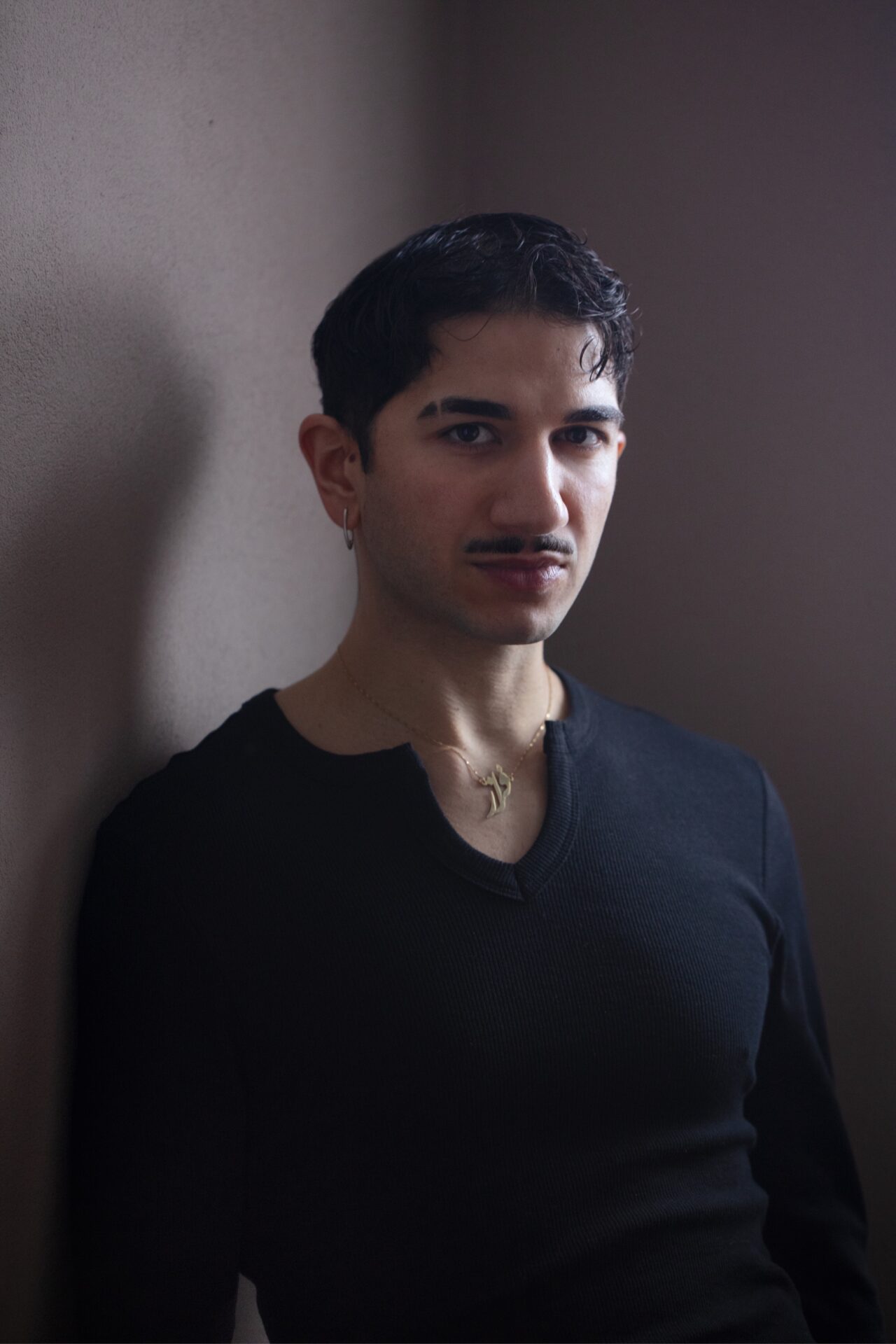
AMELIE BACHERT Hi Faraz, which film do you think everyone should watch in school?
FARAZ SHARIAT Well, I guess I have to say STAATSSCHUTZ, right? No, but seriously, I think discussing political films in school is incredibly important. They encourage young people to see themselves as active members of society, to take a stand, ask questions and not simply accept the status quo. Back when I was at school, we watched Happy Feet (2006). Cute, sure, but whether that’s really the best way to approach civic education in Germany? I don’t know…
AB STAATSSCHUTZ comes out tomorrow. I think it’s a fantastic film. In many ways, it’s an angry one. How do you stop anger on screen from becoming one-dimensional?
FS I think strong emotions are always a productive starting point for filmmaking. Anger grows out of conflict and friction. It pushes us to act, stand up for ourselves and demand change. There’s an activist slogan, “From grief to anger to resistance”, that really resonates with me. The challenge is to embrace complexity and ambiguity without losing sight of what you’re trying to say. For us, the central question was always: How can Seyo Kim resist within this system? There are no easy answers.
AB How did you research for the film, and what was it like working with Claudia, Sun-Ju and Jee-Un?
FS The research had so many different layers. I spoke a lot with Claudia, Sun-Ju and Jee-Un, especially Claudia, who had spent years researching the topic, really digging into the grey areas of the German justice system. For my own preparation, I also spent a lot of time in court. I honestly didn’t know much about the German justice system beforehand, so I spoke with public prosecutors, but especially with co-plaintiffs. They centre the victims’ perspective, something the justice system often doesn’t give enough space to. I wanted to understand what it actually feels like to enter a courtroom as someone seeking justice, and why so many people report experiencing structural racism within the legal system. Capturing that emotional reality on screen became a key part of my preparation.

AB STAATSSCHUTZ has a few very strong dialogues. Which line from the film affected you the most while shooting it?
FS There are a few. One moment that really stayed with me is when Seyo, who never gives up and keeps fighting no matter how dangerous things get, suddenly allows herself to doubt. She tells her best friend, “Maybe I should just stop.” What I find so powerful about this scene is that her friend, who has always tried to protect her and convince her to leave, responds by saying, “I don’t know, Seyo. Maybe you shouldn’t.” In that moment, they completely switch roles. Her friend finally understands how deeply everything is connected and recognises that this kind of resistance, and even self-sacrifice, may be necessary when you’re fighting fascism. That really moved me.
AB One line that really stayed with me personally was, “Leave the country while you still can.” How much truth do you think there is in that?
FS I think there’s unfortunately much more truth to it than we’d like to admit. Ethno-nationalist ideas, whether in the context of so-called “remigration” or more broadly, are gaining more support. More and more, we’re seeing the idea that anything uncomfortable or politically unwanted should be excluded, deported or pushed out of public life. You can see that reflected in today’s political debates, for example in the case of Abdullah A., who is currently facing the loss of his German citizenship over politically unpopular statements. At its core, it’s the same way of thinking.
AB You often work with queer, feminist and anti-racist perspectives. Why was it important for you to portray Seyo’s sexuality in the film?
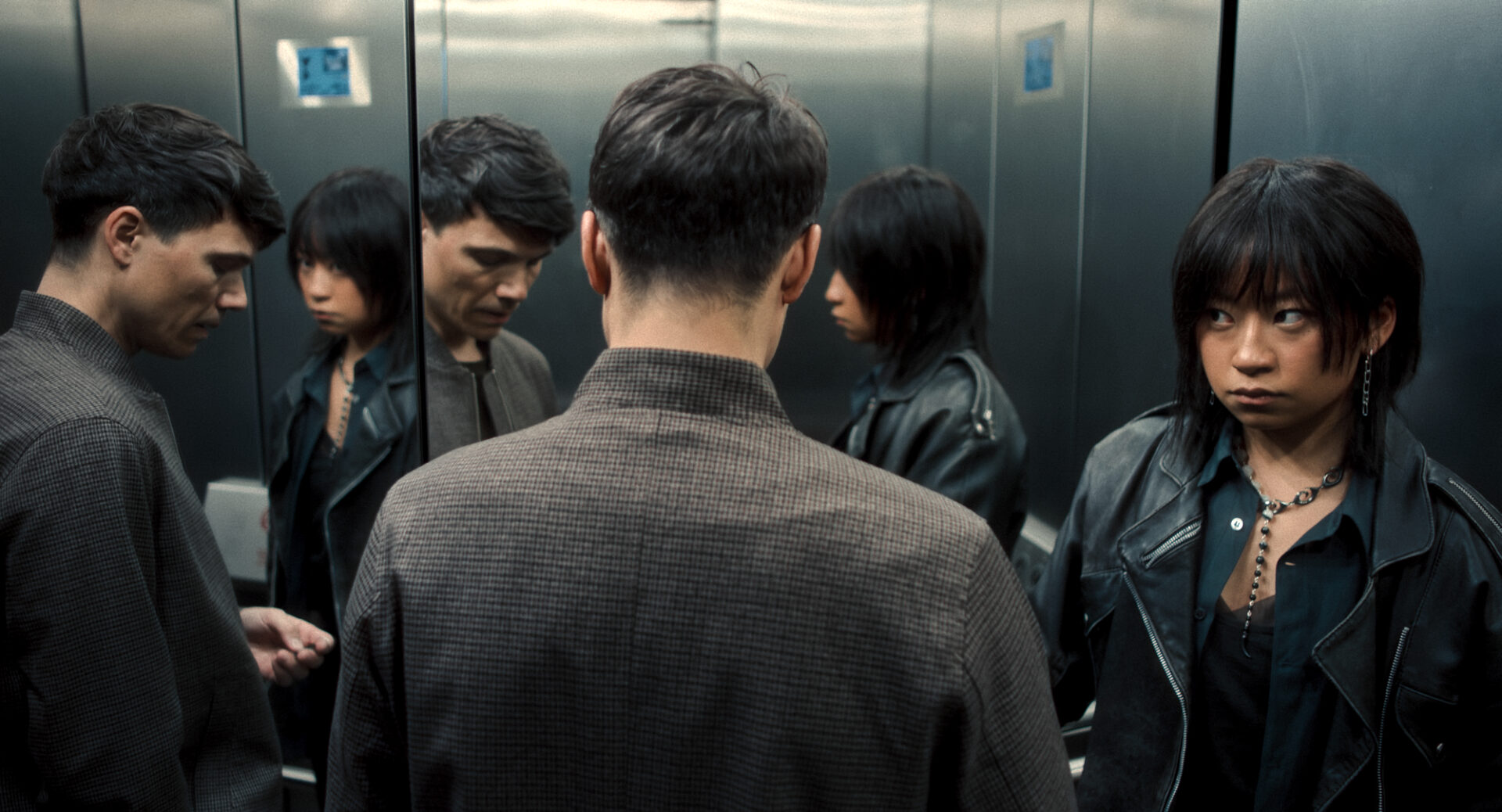
FS I think my perspective is naturally shaped by queer, feminist and anti-racist ideas, so they find their way into pretty much everything I make. With STAATSSCHUTZ, though, I didn’t overthink it. What interests me is showing queerness without making it the central conflict or defining feature of a character. At its core, this is a thriller about a public prosecutor fighting back against a system. But I also wanted to make room for non-normative ways of living without turning them into the story itself. I find that much more interesting.
AB I found that really refreshing. There aren’t many films that approach queerness that way. Staying with Seyo, what do you think we can learn from her?
FS Seyo is probably one of the bravest characters I’ve ever had the chance to spend time with. When I first read the script, I was in a place of real doubt myself. I was struggling with the rise of the far right in Europe, European migration policy and everything happening at the EU’s external borders. I kept asking myself what it even meant to make films in that political climate. Then I read Claudia’s script and met Seyo. She reminded me that you don’t give up on your ideals, that you keep fighting and that resistance doesn’t only happen outside institutions, but also from within them. Despite all the pressure, the contradictions and the way she’s perceived, she keeps going. I think that’s an incredibly inspiring quality to have, and something we can all learn from.
AB The film leaves you with the impression that trust in public institutions has become more fragile. Do you see that outside the cinema as well?
FS Absolutely. One of the central questions behind the film was why so many people, especially migrants and victims of far-right violence, are losing trust in the state, its institutions and the justice system. There’s still this myth that the German justice system is neutral and somehow untouched by the broader shift to the right. But if society is moving in that direction, why would the justice system be any different? Recent studies and reports on the judiciary and far-right extremism have sparked exactly those questions. The same applies to migration policy and the growing criminalisation of protest and solidarity. More and more journalists are pointing out that authoritarian tendencies often begin when the state increasingly controls what people are allowed to say and do. All of that inevitably erodes trust in public institutions.
AB Overall, STAATSSCHUTZ asks whether a corrupt system can be changed from within. Do you still believe that?
FS I do. If there’s one thing I learned while making this film, it’s that resisting fascism needs people in many different places. That’s exactly why Seyo is such an interesting character. She chooses to fight from within a flawed system. But resistance also needs societal, structural movements, activism, people organising from the outside, as well as people working in culture, the arts and social work. We need all of those perspectives if we’re going to face the growing strength of the far right in the years ahead. So yes, I think change from within is both possible and necessary.
AB Many people feel that the shift to the right is no longer coming just from the political fringes. How has that changed the way you see Germany?
FS It has changed a lot. There are definitely moments of fear, moments where you ask yourself what kind of future you can still see for yourself in this country. And when you’re part of the group the far right has turned into an enemy, you feel that shift very directly. Even in Berlin, I have the sense that people are becoming more aggressive and that the overall atmosphere is changing. At the same time, I think we all have to ask ourselves what solidarity and resistance actually look like, especially towards the most vulnerable people in our society, many of whom have already fled war, persecution or genocide.
AB Now that you can feel the shift yourself in everyday life, how do you deal with it personally?
FS Shortly after the federal election, I was on holiday with my parents, who fled the Iranian regime nearly 40 years ago because of political persecution. I asked them: If Germany keeps moving in this direction, should I leave or stay and resist? It was a difficult question for my father. He left his country so his children could grow up in freedom. Seeing his children face similar questions today really affected him. For me, though, the answer hasn’t changed. The only real answer is to resist. It’s unsettling that we’re having these conversations at all, but I think they’re real, and I believe we all need to confront them.
AB To come to an end, what conversation do you hope STAATSSCHUTZ will start, and what conversation do you think Germany isn’t having often enough?
FS I hope it sparks a broader discussion about how resilient our institutions really are, what legal tools already exist to confront far-right extremism and whether we’re actually using them. Ultimately, though, the film asks a simple question in my opinion: What does resistance look like in Germany in 2026? If people leave the cinema still thinking about that and discussing it with others, then we’ve achieved something.