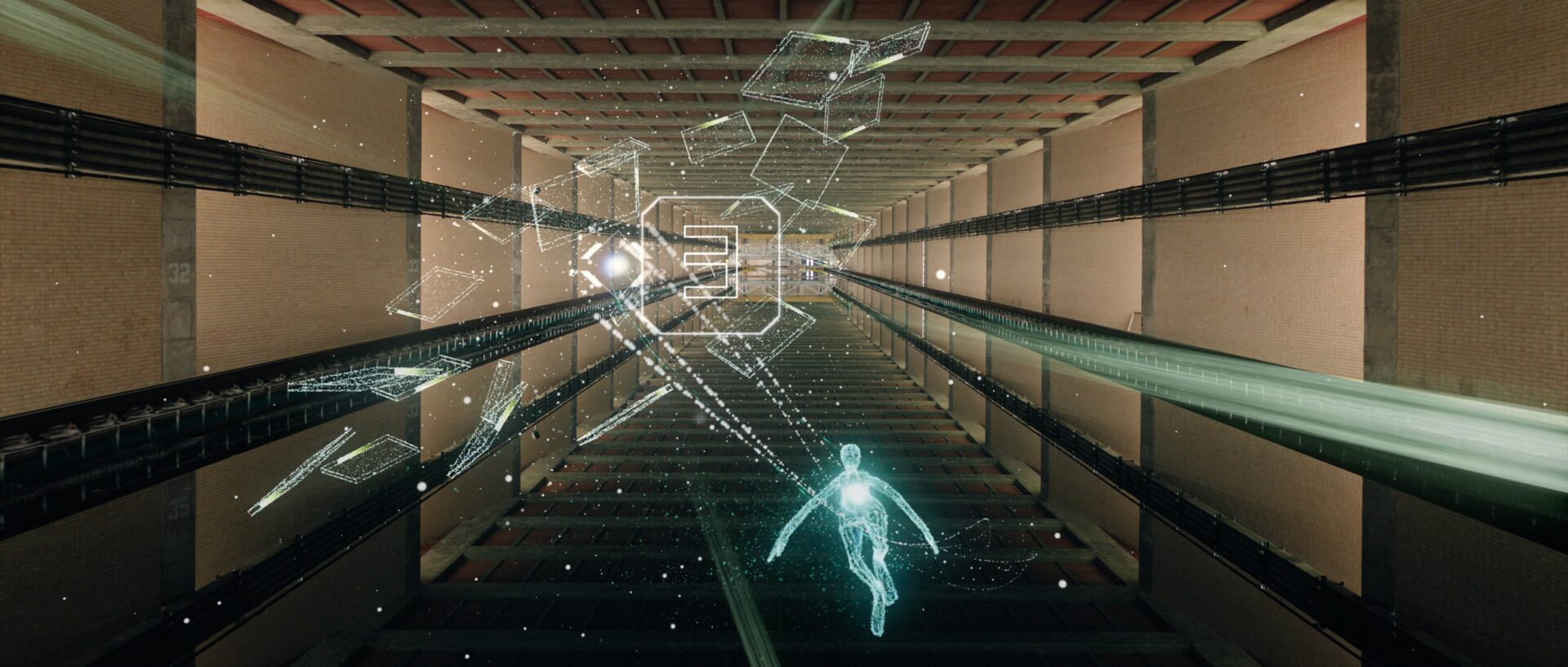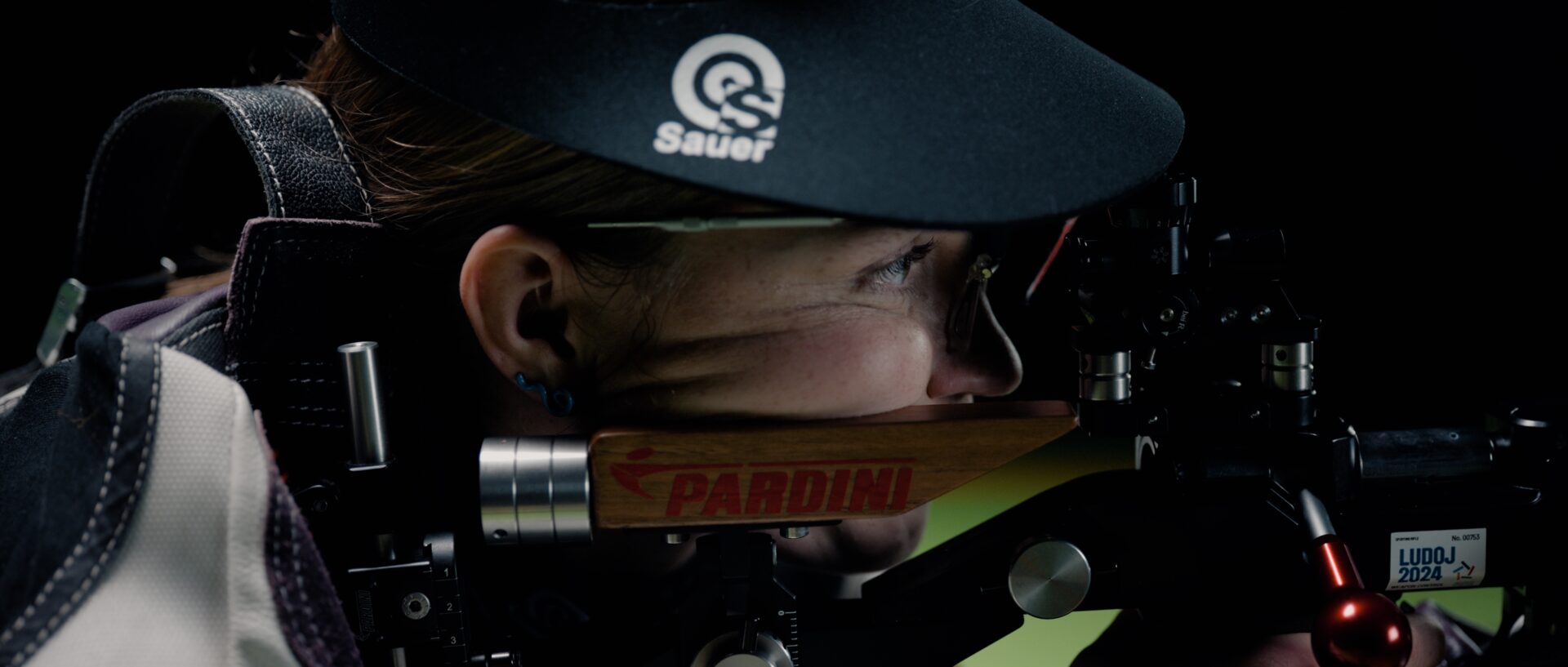
Photo JORGE BISPO. © AGON
TECHNO NEOREALISM AND AN ATHLETE WHO MAKES FILMS.
There’s a scene in AGON that was never scripted. During an anti-doping test – staged with forensic authenticity, every piece of real gear sourced and accounted for – lead actress and Olympic gold medallist Alice Bellandi starts answering the officer’s questions before he finishes asking them. Not impatience but muscle memory. She’s done this hundreds of times. “If I were a really good writer,” director GIULIO BERTELLI reflects, “I would have added that detail already when writing the scene. Because I know that situation.” Although it was not preplanned, he kept it.
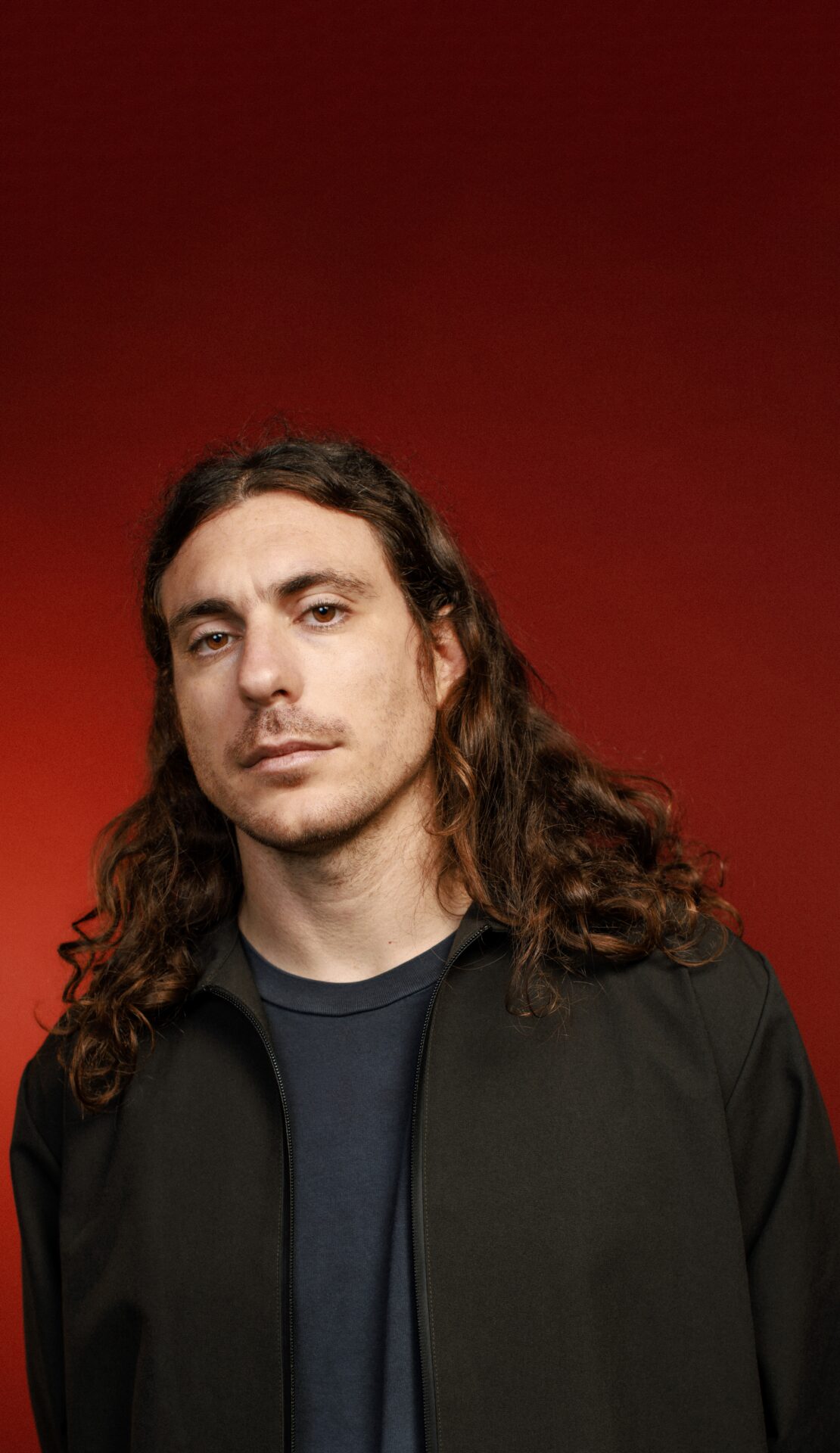
This is the kind of filmmaker Bertelli is: present enough to recognise the truth when it appears in front of his camera, and experienced enough – as a former athlete, not just a director – to understand exactly what it means. Born in Milan in 1990, Bertelli studied architecture at the Architectural Association in London. He then took what one might call an unorthodox path: he became a competitive offshore sailor for a decade, competing in the America’s Cup and taking part in The Ocean Race. Cinema came later, which he approached with the discipline of someone who had already learned to perform under extreme conditions, far from any audience. “The moment you leave the dock, you’re just with your crew in the middle of the ocean. Maybe that unconsciously helped me translate the idea that when you’re at the peak of your performance, you’re actually kind of alone,” he says.
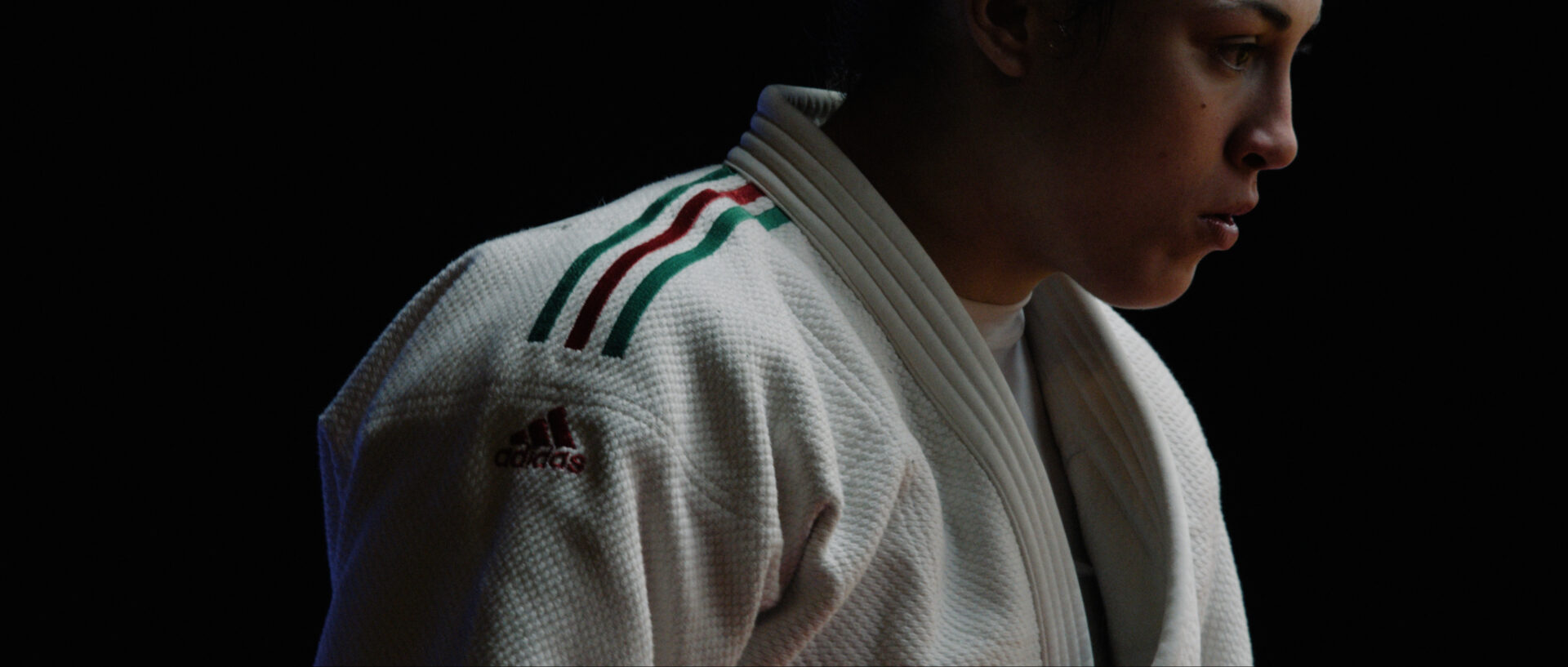
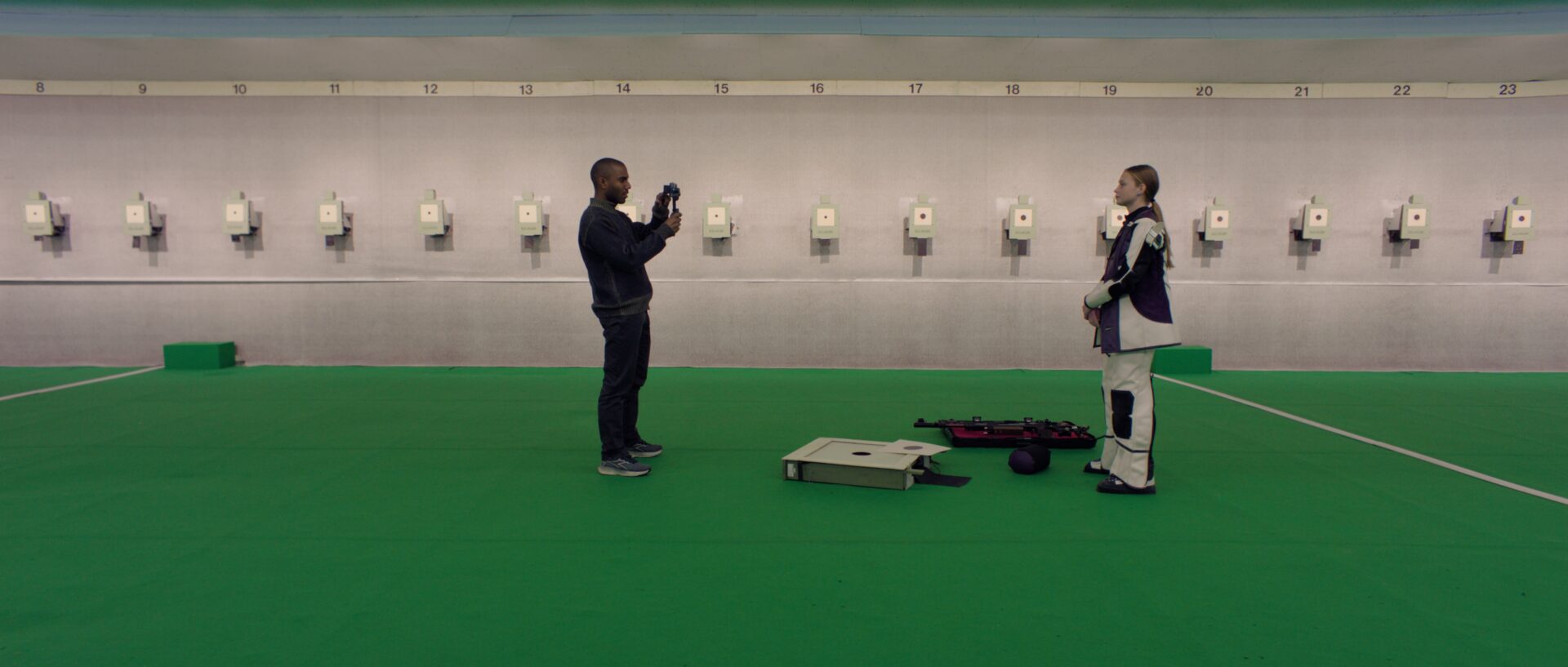
That aloneness is the emotional core of AGON. The film premiered at Venice Critics’ Week, where it won the FIPRESCI Prize and is now available on MUBI. It follows three female athletes preparing for and competing in a fictional Olympic Games: judo, fencing, rifle shooting. No crowd noise. No medal ceremony. Just the machinery of elite sport laid bare: surgery, simulators, anti-doping protocols, video game training tools, the slow violence of physical recovery. The term Bertelli coined for it “techno neorealism” lands somewhere between Italian political cinema of the 1970s and Jonathan Glazer’s Under the Skin, where familiar genre frameworks quietly dissolve from within.
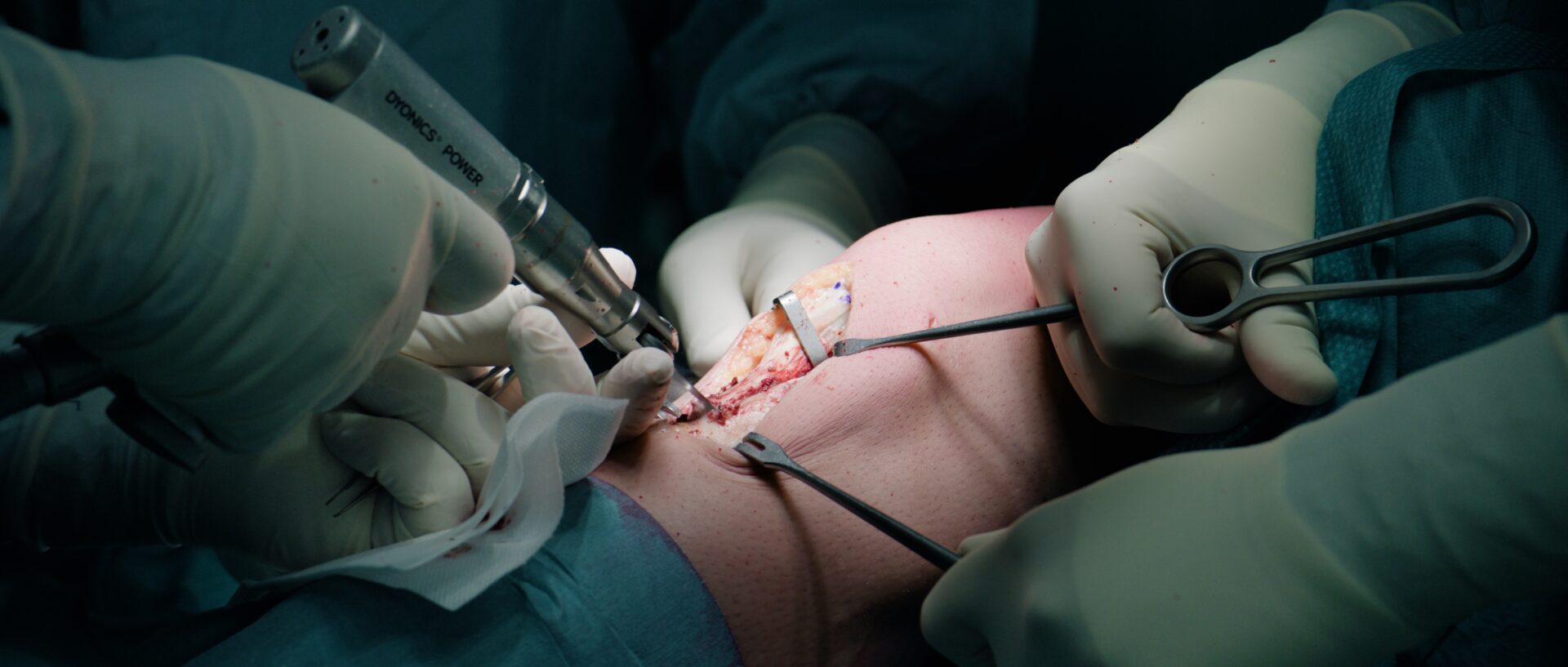
He is the son of Miuccia Prada and Patrizio Bertelli, a fact that tints every conversation about him, and that he addresses with characteristic directness: “I was very lucky from a cultural point of view, and clearly cinema was always there.” What he did with that luck was deliberate: architecture, sailing, research, a freeze-dried food start-up and finally, film. AGON is not a film about inheritance. It’s a film about what excellence costs, particularly when the person is female in an institution built entirely around men. The recovery from an injury is the most personal passage in the film. Bertelli had surgery himself; the psychological toll, he says, was harder than anything physical. He put it in the script. The best material, it turns out, was always his own. He’s already writing the next one.