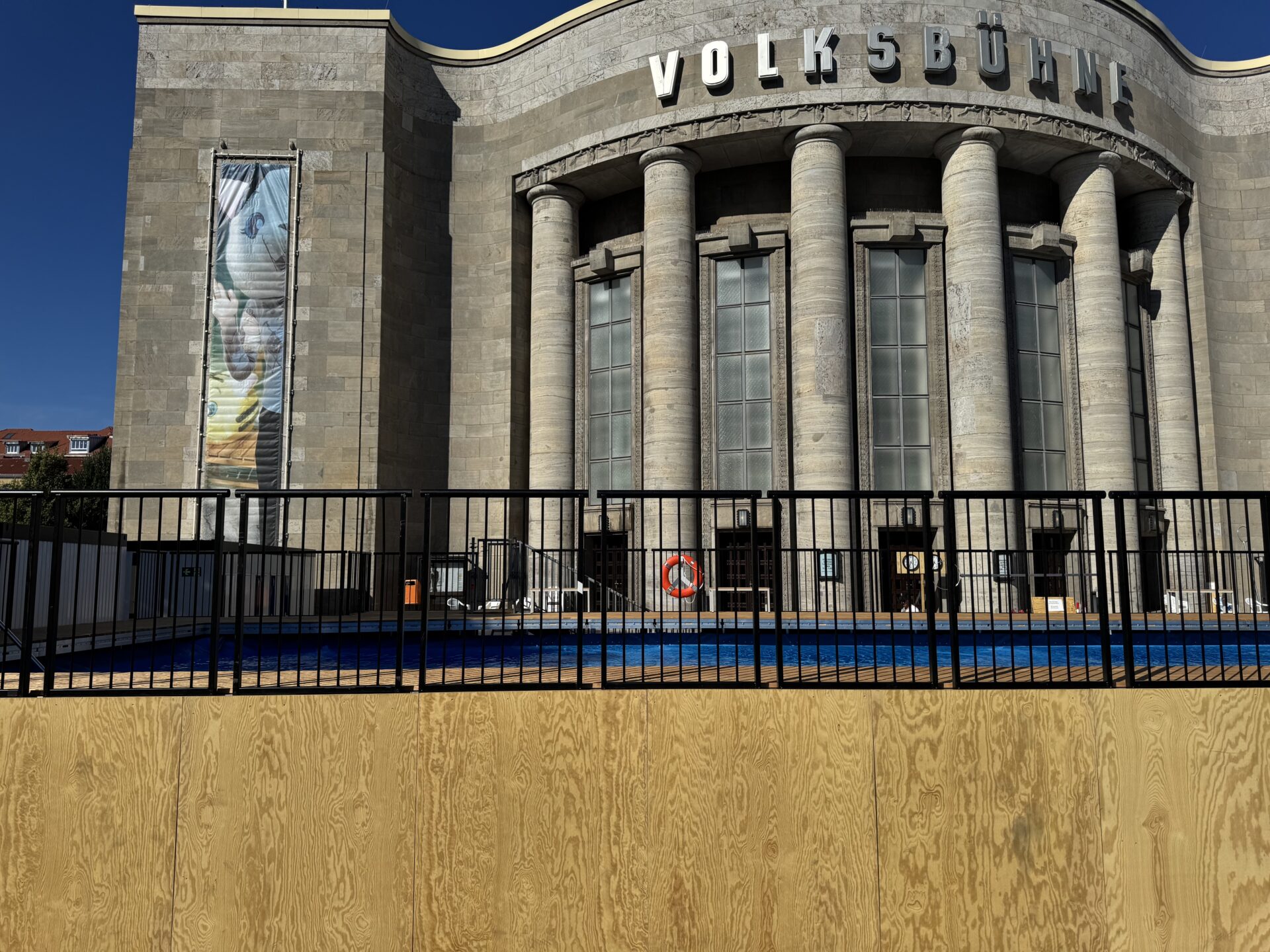
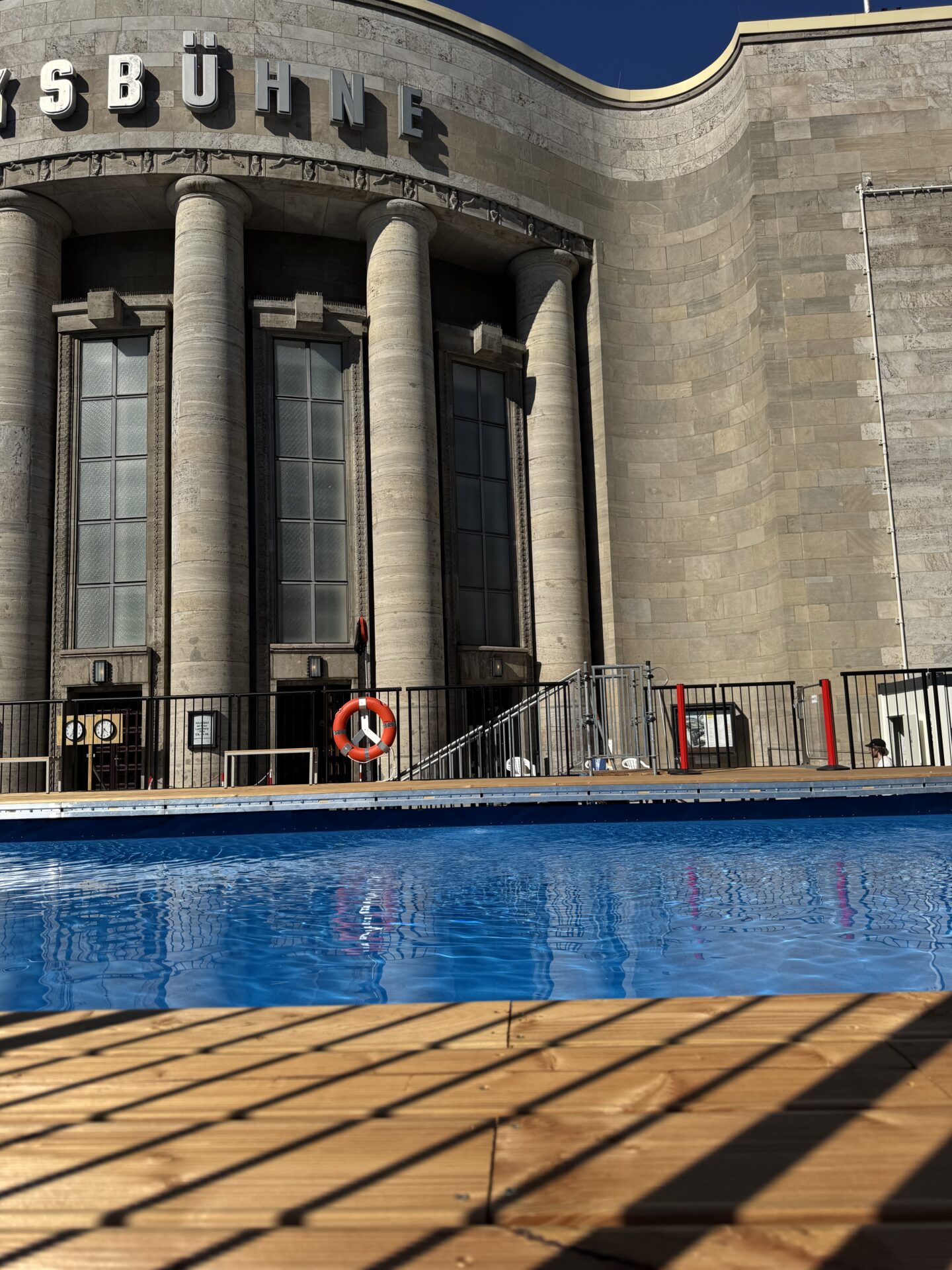
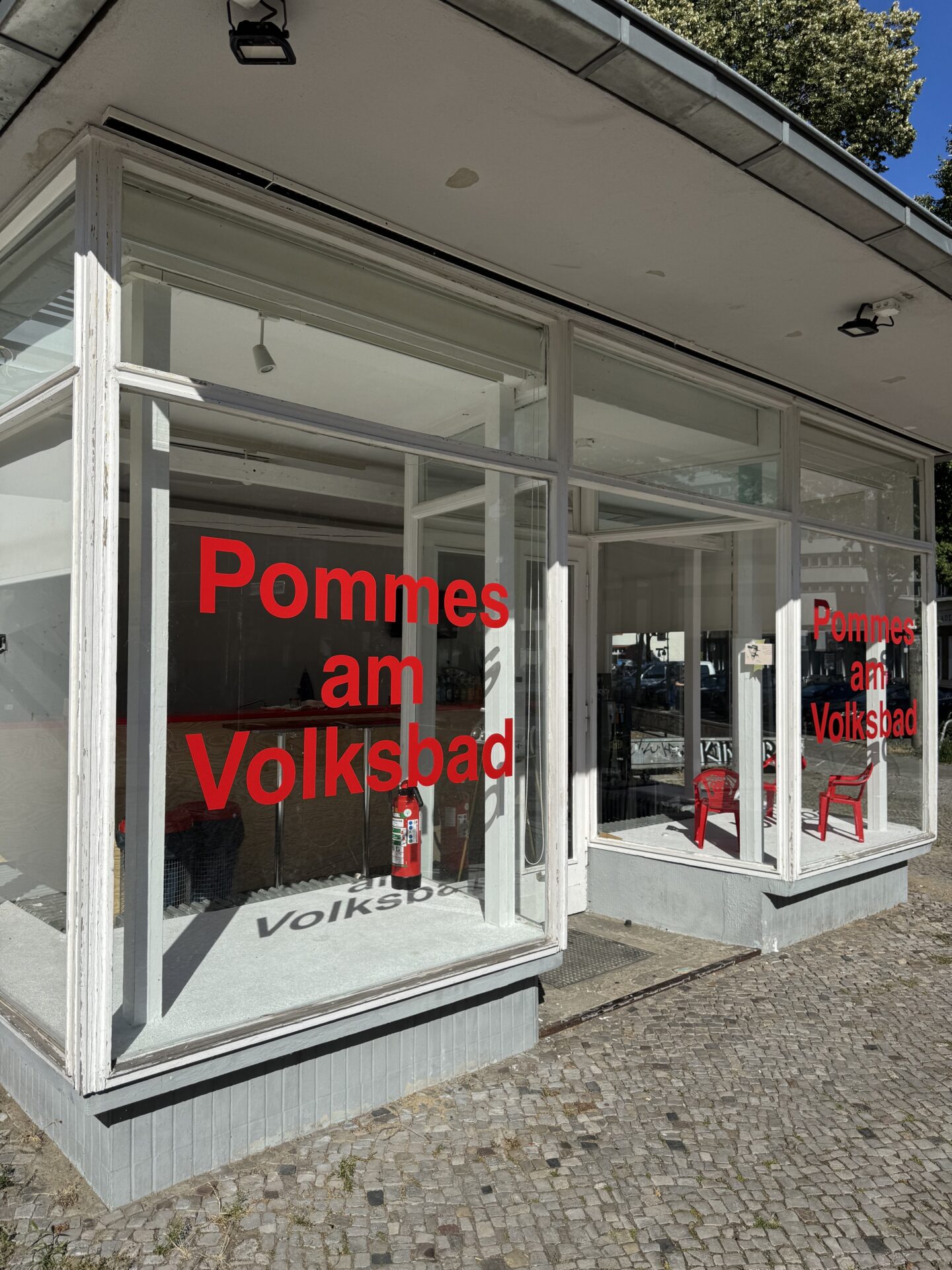
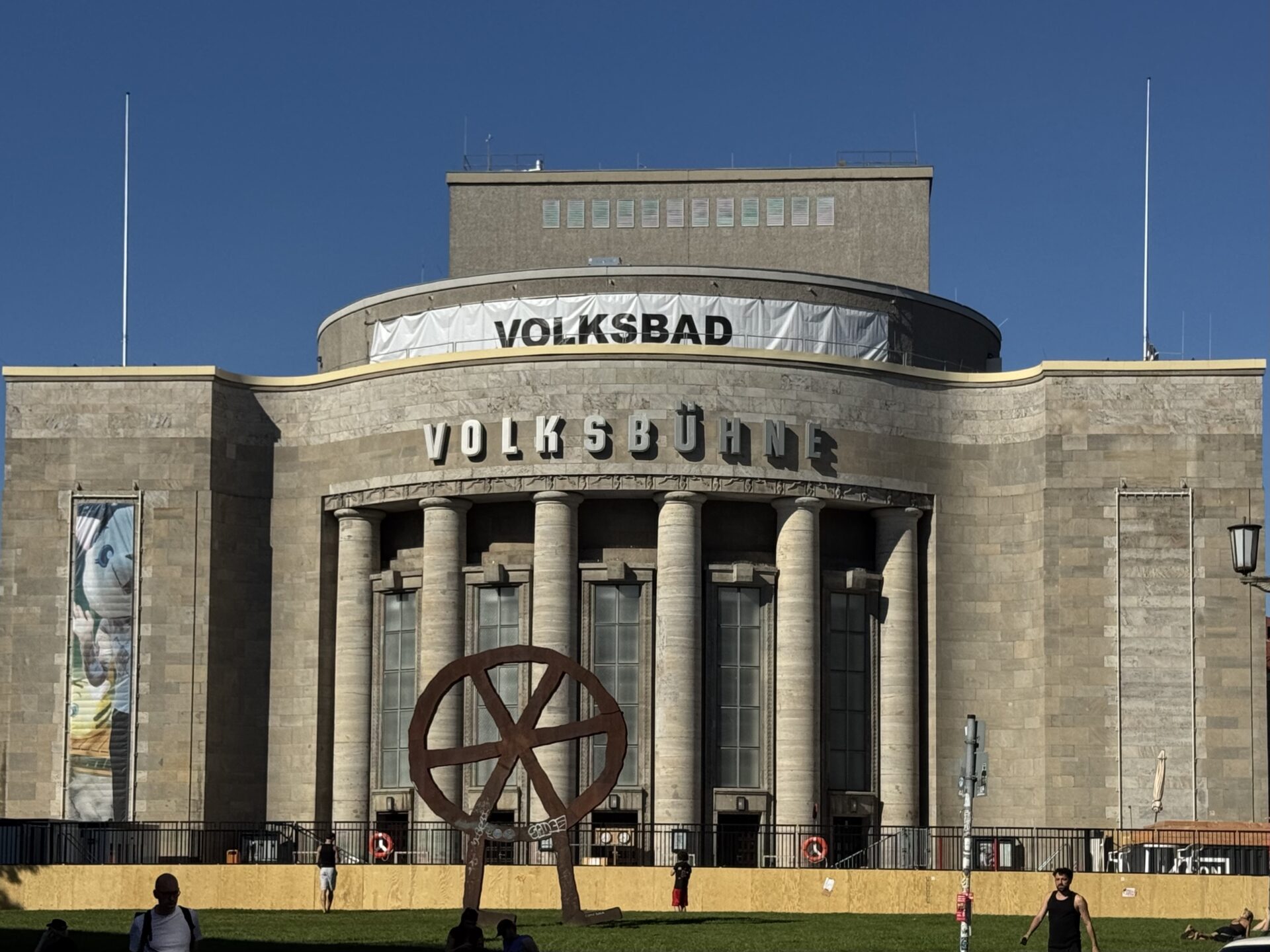
Wusstet ihr, dass vor der Berliner Volksbühne derzeit ein ganzes Schwimmbecken steht? Eine echte 25-Meter-Bahn, mitten in Mitte. Das klingt ein bisschen lächerlich, aber es gibt buchstäblich Rettungsschwimmer, Umkleidekabinen, Pommes und, ja, man kann darin schwimmen. Kostenlos. „VOLKSBAD“ ist die erste große Initiative unter dem neuen künstlerischen Leiter des Theaters, Matthias Lilienthal. Und damit setzt er ein deutliches Zeichen. Warum?
Denn die Volksbühne möchte die Vorstellung davon, was Theater sein kann, erweitern, und die eigentliche Bühne muss nicht an den Türen des Gebäudes enden. Acht Wochen lang wird die Straße davor teils Schwimmbecken, teils Treffpunkt und – was besonders wichtig ist – teils Aufführungsort. Das heißt, man kann dort seine Bahnen schwimmen, mit den Nachbarn abhängen oder einfach gar nichts tun. Das fühlt sich längst überfällig an, besonders in einer Stadt, in der so viel öffentliches Leben mit Kosten verbunden ist, dass selbst das Herumhängen, ohne etwas zu kaufen, schon fast radikal wirkt.
Weißt du, Berlin im Sommer und Schwimmbäder haben eine komplizierte Beziehung zueinander. Einmal, nach einer SLEEK-Produktion, fuhren wir zurück ins Büro, aber was uns vom Auto aus auffiel, war die wahnsinnig lange Schlange vor einem Freibad. Unruhige Teenager und Eltern mit langen Gesichtern, weil ihre Kinder schon seit Stunden draußen in der Hitze herumjammern. Und wieder einmal wurde uns klar, dass Berlin trotz seiner Größe irgendwie nur eine winzige Anzahl an Orten hat, an denen man seine Freizeit verbringen kann.
Und wann immer wir einen Ausflug zum See planten, rechneten wir bereits mit den Menschenmassen und der Mühe, einen Platz zu finden, an den wir uns gerade noch quetschen konnten. Jeder will rein, der Platz ist begrenzt, und die jahrelange Vernachlässigung der öffentlichen Infrastruktur ist dabei nicht gerade hilfreich. Und nun wird VOLKSBAD zu einer Antwort auf eine Stadt, in der die Infrastruktur systematisch abgebaut wurde und öffentliche Räume zunehmend kommerzialisiert und kontrolliert werden. Selbst Schwimmkurse an Bildungseinrichtungen, die ohnehin schon finanziell knapp bei Kasse sind, müssen derzeit enorm hohe Preise zahlen.
”Das ist (…) ein politisches Statement gegen die marode Infrastruktur dieser Stadt.“
“Wir helfen Grundschulkindern dabei, schwimmen zu lernen, und bauen hier ein Schwimmbad”, sagt Matthias Lilienthal, künstlerischer Leiter der Volksbühne Berlin.
Deshalb bietet das VOLKSBAD Vereinen auch die Möglichkeit, ihre Kurse dort abzuhalten. Gestern beispielsweise war es von Jeder unterrichtet einen anderen, einer von Schwarzen geführten Organisation für Bildung und Empowerment. Wohlgemerkt, es handelte sich lediglich um einen vorübergehenden „POC-Only-Space“. Aus heiterem Himmel löste dieser sechsstündige Zeitblock jedoch Kritik im Internet aus, unter anderem von einem TikTok-Creator, der die Entscheidung als diskriminierend bezeichnete und für eine Welt plädierte, in der die Hautfarbe einfach keine Rolle spielt. Das Problem ist jedoch, dass wir noch nicht in dieser Welt leben und dass dies keineswegs der Realität entspricht.
In diesem Zusammenhang steckt auch eine belastende Geschichte hinter dieser Diskussion. Sie erinnerte uns an die Zeit der Rassentrennung in den USA, als Schwarze aus öffentlichen Schwimmbädern ausgeschlossen wurden. Im Jahr 1964 drangen Bürgerrechtsaktivisten sogar in das ausschließlich für Weiße bestimmte Schwimmbecken der Monson Motor Lodge in St. Augustine, Florida, ein. Der Manager reagierte darauf, indem er vor laufenden Kameras Salzsäure ins Wasser goss. Wenn also Themen wie Zugang, Hautfarbe und Schwimmbäder aufeinandertreffen, schwimmt auch historisches Ballast im Wasser mit.
Denn “jeder” erlebt die Stadt nicht immer auf dieselbe Weise. Hautfarbe, Herkunft, Geschlecht, finanzielle Situation und die Art und Weise, wie wir wahrgenommen werden, können nach wie vor beeinflussen, wo wir uns willkommen fühlen und welche Chancen sich uns bieten. Die Schaffung eines vorübergehenden, sichereren Raums durch die Volksbühne ermöglicht es einer Gruppe, einige Stunden in einem Raum zu verbringen, der ganz auf ihre Erfahrungen zugeschnitten ist. Und das fügt sich ganz natürlich in das Programm des Theaters ein, das auch mit queeren, feministischen und anderen Gemeinschaften in der Stadt zusammenarbeitet.
Und dann gibt es da noch etwas, das uns an diesem Wort gefällt Freibad. Streng genommen bedeutet das auf Deutsch einfach nur „Freibad“. Aber wenn man es in zwei Teile zerlegt, erhält man frei und Schlecht: Freiheit und Baden. Und vielleicht ist das eine schöne Möglichkeit, neu darüber nachzudenken, was ein öffentliches Schwimmbad sein kann. Ein Ort nämlich, an dem “Freiheit” mehr bedeutet als nur freien Eintritt. Vielmehr frei davon, etwas kaufen zu müssen. Frei davon, weitergeschickt zu werden. Frei – und sei es nur für ein paar Bahnen – von einer Stadt, die zunehmend von Kontrolle und Kommerz geprägt ist. Wir sind überzeugt, dass genau das ein öffentlicher Raum uns bieten sollte: Raum zum Atmen, zum Zusammenkommen, zum Zugehörigsein. Und, ausnahmsweise einmal, einfach unsere Sorgen wegzuschwimmen. Das scheint zu funktionieren und kommt auch bei den Besuchern gut an:
“Eine ältere Dame ging an mir vorbei und sagte: ‘Du bist völlig verrückt.’ (...) Ich bedankte mich bei ihr für das Kompliment, und dann sagte sie, sie freue sich schon sehr auf das Schwimmbad.” – Matthias Lilienthal, künstlerischer Leiter der Volksbühne Berlin