Bitte sagt mir, dass ich nicht der Einzige bin, der beim ersten Lesen von Kafkas Die Verwandlung. Ein Mann wacht als riesiges Insekt auf, und irgendwie ist das einfach die Realität, die wir akzeptieren sollen. Niemand erklärt wirklich, was passiert ist, oder versucht, dem Ganzen einen Sinn zu geben. Ich erinnere mich, dass ich das zunächst völlig absurd fand, aber sobald ich aufhörte, die Regeln der Realität anzuwenden, die ich mein ganzes Leben lang gekannt hatte, hatte das Ganze etwas seltsam Befreiendes an sich.
Obwohl Kafka streng genommen kein Surrealist war, war es wohl die erste Begegnung mit dieser Art von Absurdität, die dazu führte, dass ich mich später in diese Bewegung verliebte. Anstatt zu fragen, ob etwas passieren könnte, könnte man sich fragen, was passiert, wenn man akzeptiert, dass es einfach so ist. Frage dich selbst: Was wäre, wenn ein Mensch nicht unbedingt ganz und gar Mensch bleiben müsste, ein Traum nicht völlig von der Realität getrennt wäre oder das Unmögliche nicht wirklich unmöglich wäre?
"Die Verwandlung ist nicht nur ein ikonografisches Thema: Sie ist eine Art, in der Welt zu sein.” – Dr. Mylène Ferrand, Kunsthistorikerin und Kuratorin
Wenn Sie ähnliche Gedanken haben, möchte ich Ihnen das Werk von Leonora Carrington vorstellen. Denn mehr als ein Jahrhundert nach der Geburt der britischen Künstlerin, Leonora Carrington: Die Kunst der Verwandlung Die Ausstellung wird am 8. September in Almine Rechs Galerie „Turenne“ in Paris eröffnet. Es handelt sich um ihre erste Einzelausstellung, in der Werke aus ihrem gesamten Schaffen zu sehen sind.
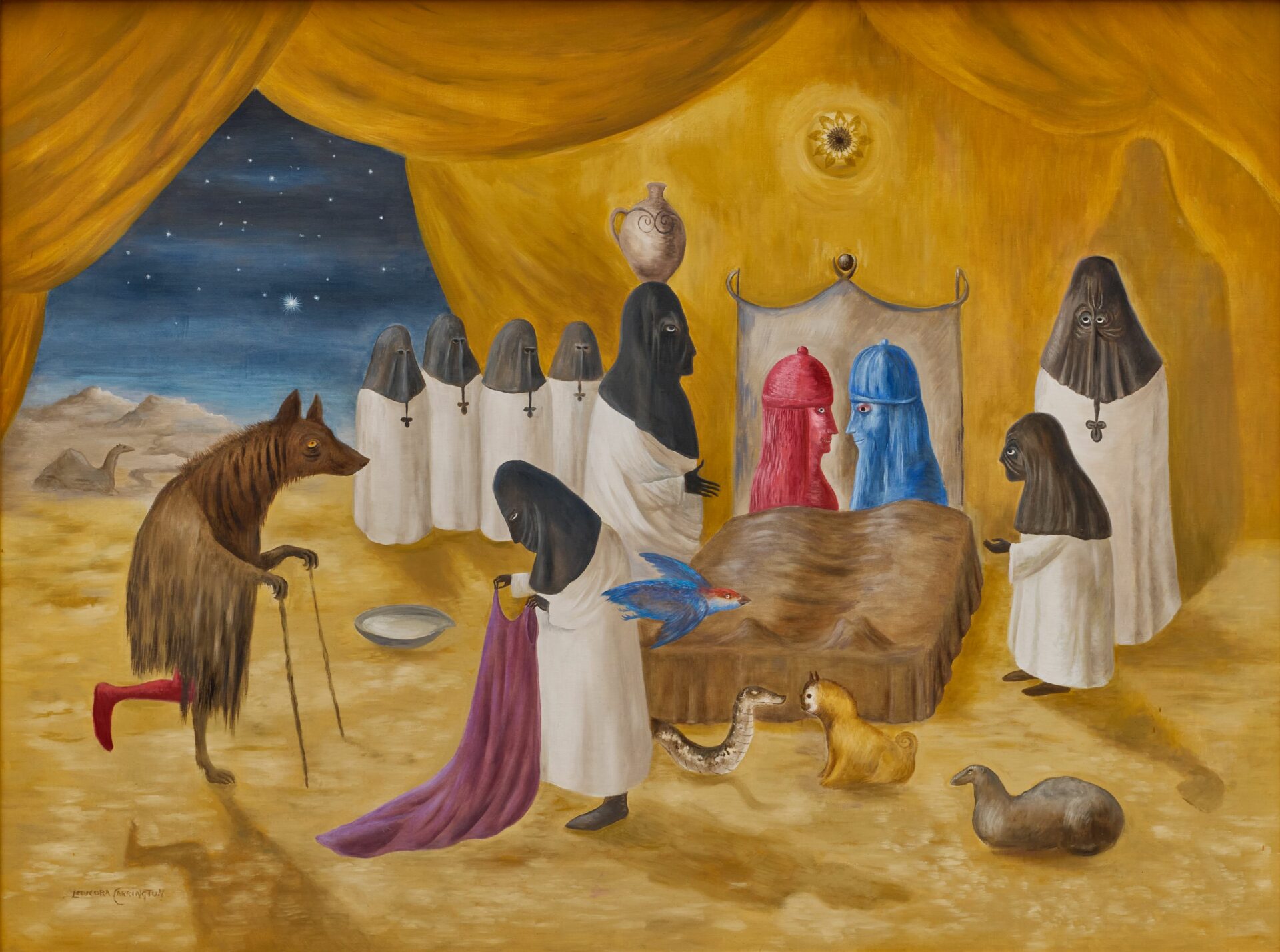
Wenn ich Carringtons Gemälde betrachte, erinnere ich mich genau daran, was mich ursprünglich an dieser Art von Kunst fasziniert hat. Menschen begegnen Tieren, Geschlechtergrenzen verschwimmen, Pferde, Vögel, Hyänen und Mischwesen tauchen in Welten auf, in denen Mythologie, Natur und Realität nebeneinander existieren. Kein Wunder also, dass Carrington eine führende Figur des internationalen Surrealismus war – jener Bewegung, die in den 1920er Jahren rund um das Unbewusste, Träume und die Ablehnung rein rationalen Denkens entstand – nur um hier mal ein kleines „Surrealismus-101“ einzubauen. Was Carringtons Werk auszeichnet, ist die Art und Weise, wie sie diese Freiheit selbst nutzte, um eine visuelle Welt zu erschaffen, die von Alchemie, keltischer Mythologie, Tarot, spirituellen Traditionen und später auch von ihrem Leben in Mexiko geprägt war.
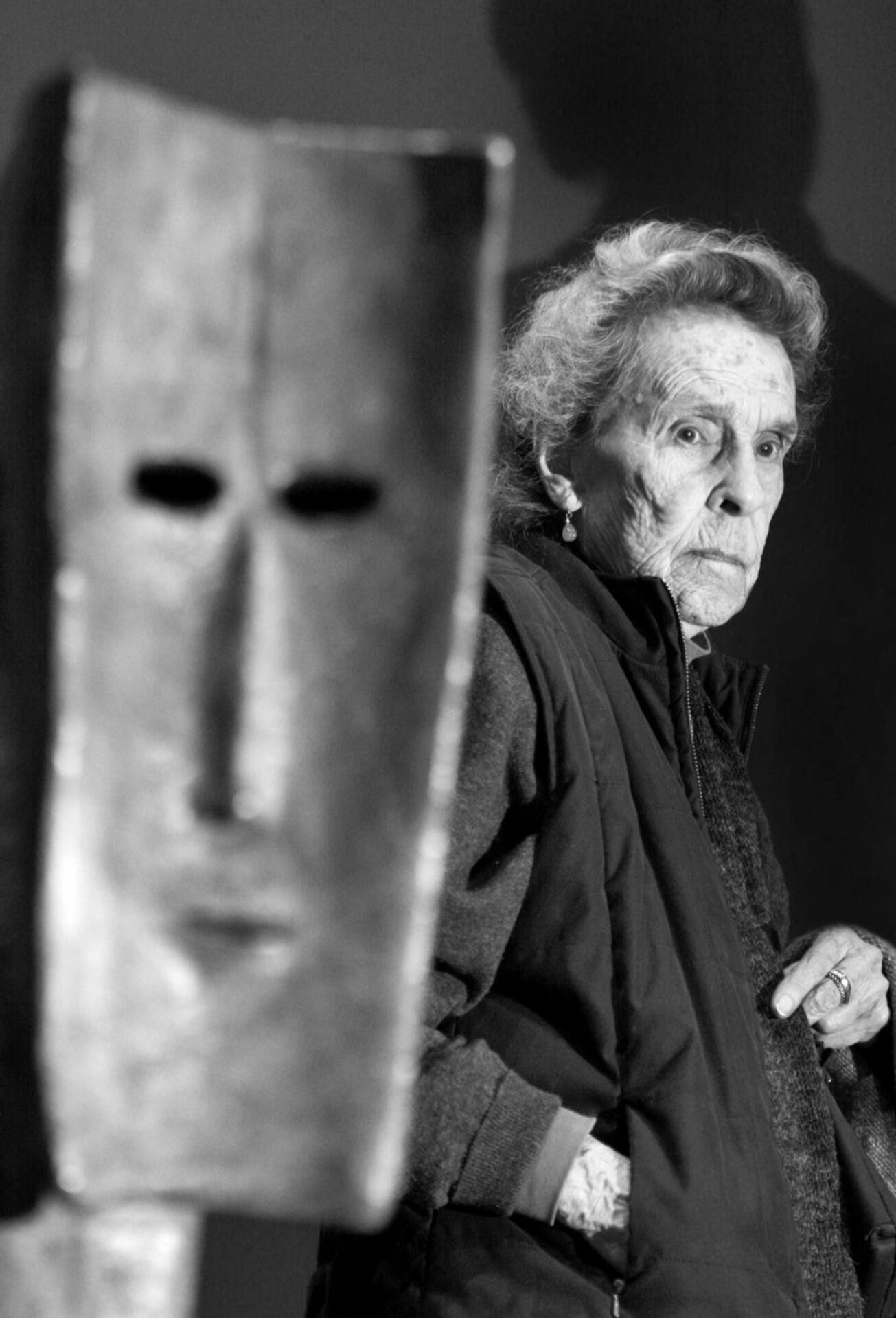
Porträt von Leonora Carrington (2010), mit freundlicher Genehmigung des Consejo Leonora Carrington, rossogranada und Almine Rech.
Wie so oft verrät bereits der Titel der Ausstellung in Paris, was all diese Einflüsse verbindet, auch wenn das Wort selbst vielleicht einer Erklärung bedarf: „Transmutation“ bedeutet, dass sich etwas vollständig in eine andere Form oder Substanz verwandelt – was hier fast schon verdächtig treffend ist. Carringtons Wesen wandeln ihre Gestalt, und die Grenzen zwischen verschiedenen Welten beginnen zu verschwimmen: Mensch und Tier, weiblich und männlich, sichtbar und unsichtbar, Traum und Materie sind keine klaren Gegensätze mehr.
Genau wie die komplexen Welten, die sie schuf, war auch Carringtons eigene Realität alles andere als einfach: Auf der Flucht vor dem Krieg in Europa erreichte sie 1941 den amerikanischen Kontinent, bevor sie sich endgültig in Mexiko-Stadt niederließ, wo sie den Rest ihres Lebens verbrachte. Dort wurden indigene Kosmologien und mexikanische Volkstraditionen Teil einer Vorstellungswelt, die bereits durch ihre britischen Wurzeln, die keltische Mythologie, die Alchemie und das Tarot geprägt war. Als sich diese Einflüsse zu überschneiden begannen, vermischten sich auch unterschiedliche Vorstellungen von Zeit, sodass Vergangenheit, Gegenwart und Zukunft ebenso frei nebeneinander existieren konnten wie die Wesen, die ihre Gemälde bevölkern.
Wie lässt sich das nun auf die Leinwand übertragen? In einer Szene sitzen rote und blaue Figuren einander gegenüber auf einem Bett, umgeben von vermummten Menschen, einem vorbeifliegenden Vogel, einer Schlange und mehreren Tieren – und irgendwie wirkt das alles gar nicht besonders seltsam, sondern gehört einfach dorthin. Der Versuch, jedes Wesen und jede seltsame Begegnung zu entschlüsseln, lässt einen fast den Spaß daran verpassen. Folglich fordert uns die Künstlerin auf, mehrere, manchmal widersprüchliche Realitäten gleichzeitig zu akzeptieren. Kommt einem bekannt vor, oder? Dalí schenkte dem Surrealismus schmelzende Uhren, Magritte platzierte einen Zug in einem Kamin, während Carrington weniger daran interessiert zu sein scheint, ein unmögliches Element in eine erkennbare Realität einzufügen, als vielmehr daran, deren Regeln gänzlich zu verändern.
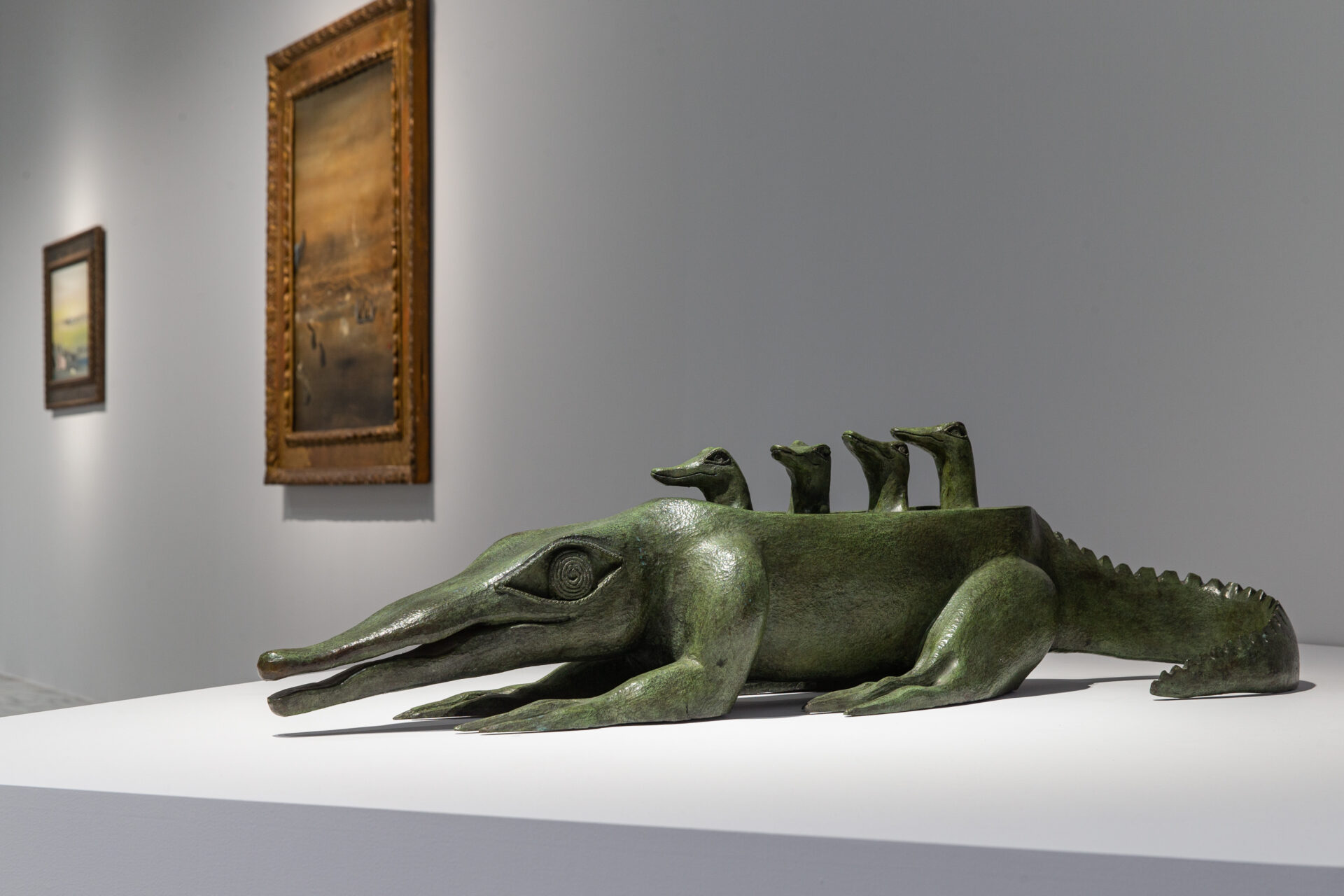
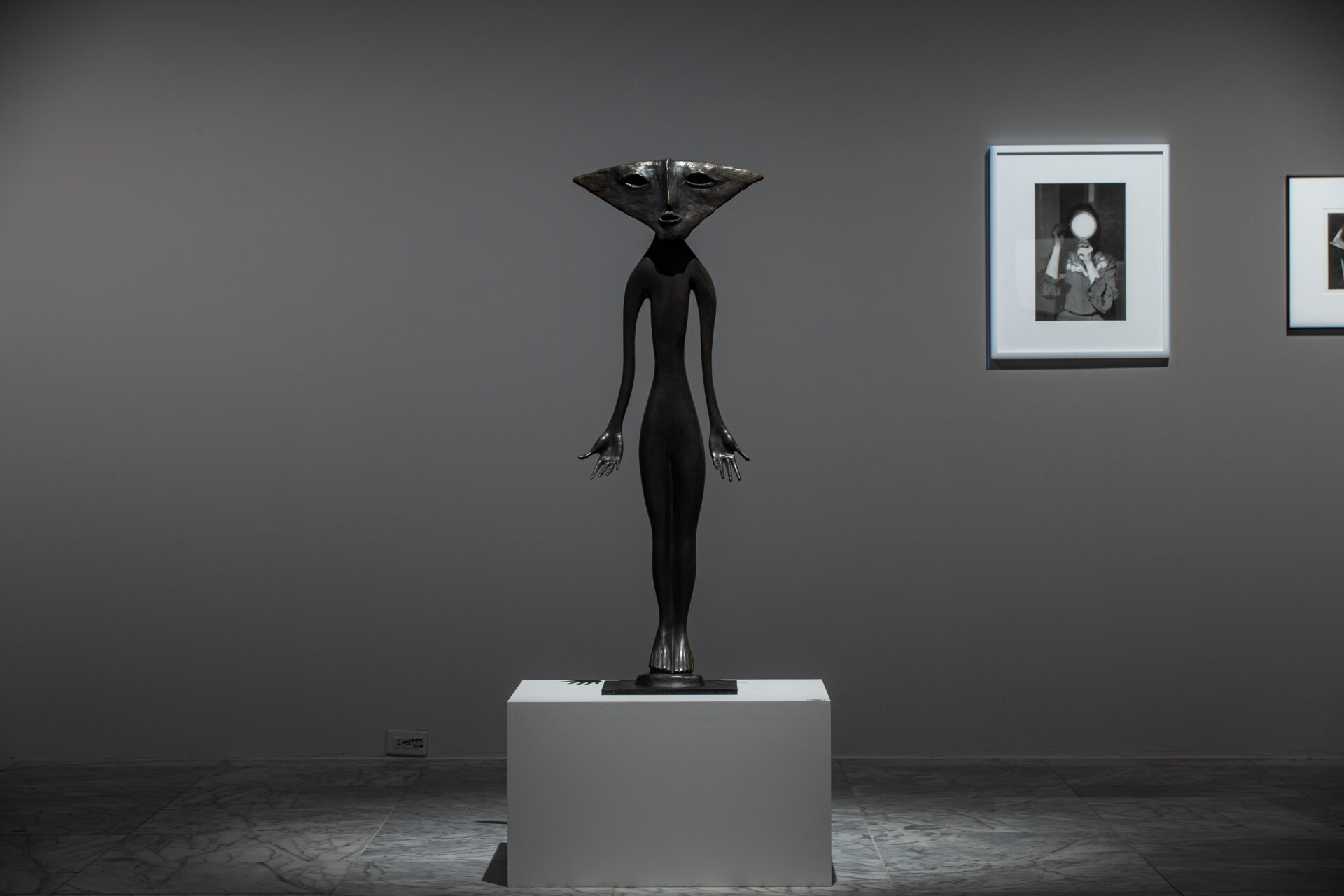
Wie viele Künstler beschränkte auch sie diese Ideen nicht auf ein einziges Medium. Sie zeichnete, schuf Skulpturen, entwarf Kostüme und Schmuck, fertigte Wandteppiche und Masken an, arbeitete am Theater und schrieb Literatur. In Bronzeskulpturen fand sie eine wahre Verbündete, in der ihre Verwandlungen greifbar wurden: Ein Reptil trägt vier kleinere Köpfe auf dem Rücken, während eine andere Figur einen erkennbar menschlichen Körper hat, auf dem ein Gesicht thront, das alles andere als menschlich ist. Du erkennst das Muster, oder?
"Ihr Werk lädt uns dazu ein, unsere Beziehung zur Welt, zu anderen Lebewesen und zur Vorstellungskraft selbst neu zu überdenken.” – Dr. Mylène Ferrand
Auffällig ist, wie wenig davon den Eindruck vermittelt, im 20. Jahrhundert verhaftet zu sein. Lange bevor ökologische, feministische und posthumanistische Fragen in die zeitgenössischen Debatten Einzug hielten, stellte Carrington bereits die Trennungen zwischen Mensch und Nicht-Mensch, Frau und Mann, Natur und Kultur in Frage. Frauen dienten in ihren Werken auch nicht einfach nur als Blickobjekte, sondern traten als Hexen, Göttinnen und eigenständige Figuren in Erscheinung.
Es ist also in gewisser Weise keine Überraschung, dass ihr Werk in Europa in den letzten Jahrzehnten eine so starke Wiederentdeckung erlebt hat. Im Jahr 2022 übernahm Cecilia Alemani den Titel von Carringtons Buch Die Milch der Träume für die 59. Biennale von Venedig, bei der Metamorphose, Körper und sich wandelnde Definitionen des Menschseins im Mittelpunkt standen. Technisch gesehen gehört der Surrealismus als historische Bewegung einem anderen Jahrhundert an, doch Carrington gelingt es offensichtlich, der Zeit zu trotzen – und das nicht nur in ihrer Kunst.
"Ich hatte keine Zeit, irgendjemandes Muse zu sein … Ich war zu sehr damit beschäftigt, gegen meine Familie zu rebellieren und zu lernen, eine Künstlerin zu sein.” – Leonora Carrington
Wenn ich an Gregor Samsa zurückdenke, bin ich mir nicht mehr sicher, ob seine Verwandlung überhaupt noch das Seltsame daran ist – wenn man bedenkt, wie verzweifelt wir anfangs nach einer Erklärung dafür suchen. Carrington lässt uns genau dieses Bedürfnis hinterfragen: Ist es endlich an der Zeit, in eine Welt einzutreten, in der Mensch, Tier, real oder imaginär von vornherein nie strenge Entweder-oder-Fragen waren? Vielleicht fühlt sich ihr Werk gerade deshalb immer noch so wichtig an, weil wir ständig auf seltsame, irrationale und völlig unerwartete Dinge stoßen, aber dennoch irgendwie davon besessen sind, ihnen einen Sinn zu geben. Indem sie genau das Gegenteil tat, gab sie dem Seltsamen Raum zu existieren. Wenn ich mich lange genug mit ihrer Kunst beschäftige, verspüre ich den Wunsch, meine eigene rationale Realität zu erweitern. Und mal ehrlich: Wäre das Leben nicht furchtbar langweilig, wenn alles vollkommen Sinn ergäbe?
Leonora Carrington: Die Kunst der Verwandlung ist vom 8. September bis zum 10. Oktober 2026 bei Almine Rech in Paris zu sehen.