Simon Denny on Blockchain’s Promises, Speculation, and AI.
Tech founders no longer seem content with building the systems that shape everyday life. They are increasingly making claims about culture itself. Palantir CEO Alex Karp has described himself as an artist. Venture capitalist Marc Andreessen invoked Italian Futurist Filippo Tommaso Marinetti in his Techno-Optimist Manifesto. For artist Simon Denny, these gestures are not simply provocations. They point to something he has been examining throughout his practice: the cultural power of the people who build technology.
Denny was looking at Bitcoin and blockchain long before NFTs entered the mainstream. At the 2016 Berlin Biennale, he imagined competing blockchain ideologies as emerging states. Two years later, he co-curated Proof of Work at Schinkel Pavillon, experimenting with blockchain-inspired forms of distributed decision-making. Even then, he was less interested in technological utopias than in examining the stories being told around decentralization, value, and ownership, and what happened when those ideas encountered markets, speculation, and the existing structures of the art world.
Im Gespräch mit Anika Meier for SLEEK, Simon Denny discusses what became of blockchain’s early promises, why speculation may have been the defining medium of the NFT era, and why prediction markets matter now. He also reflects on the relationship between contemporary technology and Italian Futurism, his attraction to problems that resist resolution, and why ambiguity remains central to his art even when his writing takes a clearer position.
ANIKA MEIER Simon, who shapes culture in the age of AI?
SIMON DENNY Through the lens of my artwork, I often focus on the people and companies making consumer products and, more generally, the infrastructure that we all end up using, directly or indirectly. That might include technology products or services for governments, individuals, or businesses. My default assumption is that the people who make these technology products have a lot of power over what is possible and therefore what culture can be.
This dovetails a little with the protocol art thesis. I’m currently in a show at Palazzo Diedo, at the Berggruen Institute, framed by Mat Dryhurst, Holly Herndon, Hans Ulrich Obrist, and Adriana Rispoli. I first got to know the idea through talking to Mat and Holly about their interests. Their thesis is similar: the people who design the protocols we use are making decisions about what culture can be. I’m not overly deterministic about this. I also think users have agency, so I’m maybe less radical than some people on this thesis. But I do think paying attention to the people building the products is a very important cultural signal.
AM What’s left for artists to do when tech founders suddenly start calling themselves artists? Alex Karp, the co-founder and CEO of Palantir, for example, has described himself as an artist.
SD While I think those actors are really important, I also think there’s plenty of space for artists to act. And I guess that relates to the second part of what I just said. I think users, and people in general, still have things to do in the face of these very powerful systems and people. I also don’t think that the fact that Alex Karp considers himself to be an artist is necessarily a misreading. I think he probably does. And why should I question how he presents himself? There’s space in the world for Alex Karp to be an artist, and for me, my friends, and my students to be artists as well. Or anybody else who wants to be.
That’s the great thing about being an artist. You call yourself an artist, and nobody can challenge it. You’re the one who decides whether you’re an artist or not. Whether other people are interested in what you do is another story, but nobody can tell you that you’re not an artist.
AM How much influence does art actually have today?
SD I don’t think it’s necessarily mutually exclusive for something to be both niche and influential at the same time. The art world we operate in is a little bit like that. Its direct audience is small, but people from other spheres often look to the people involved in it. That’s been a conventional pathway of art’s influence. A small group of people make something, powerful actors either pay for it, show it, or frame it, and other people encounter it, either at the time or later. Those pockets of activity can have influence far beyond the direct audience of art. That’s a possibly modernist way in which art can ultimately have a big influence, even though it’s produced by a small, niche community.
AM Blockchain is a good example of what you just described: artists engaging with something while it’s still relatively niche, before it becomes much more influential. You were working with blockchain before NFTs were even called NFTs. I remember seeing your work at the Berlin Biennale in 2016, and in 2018 you curated Proof of Work at Schinkel Pavillon. How did you become interested in blockchain so early?
SD It followed from my interests as an artist at the time. I’d already spent at least half a decade looking at where the conversation was going among technologists. I started paying attention not only to the technology I was using but also to who was making it. Around 2014 or 2015, I started hearing a lot about Bitcoin and blockchain from technologists I was getting to know through my research, both in Berlin and in the US and other parts of the world. I was hearing about it from other artists, too. They were getting really interested in it, and I thought, “Oh, this would be a really interesting thing for me to meet in my own work.”
I’m also interested in stories and storytelling about technology, and there were lots of interesting stories being told about blockchain then. The scope was huge: This is going to change the world in this particular way. What is value? What is money? Who should be designing it? What can it do? These are massive questions. I was really compelled to look at that because that was fundamentally what I was doing in my practice at the time—unpacking the stories technologists were telling.
AM How did you translate those ideas into an artwork?
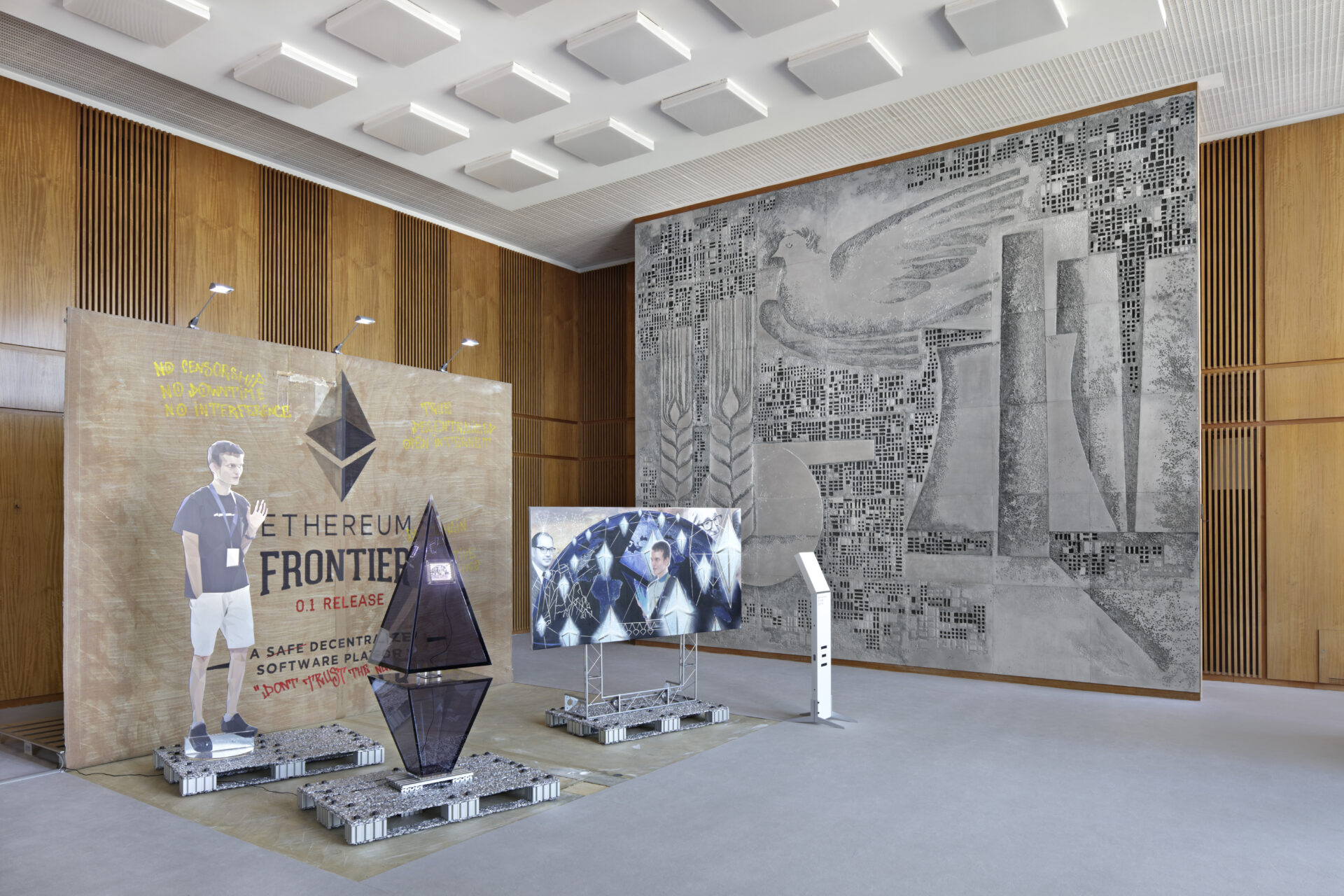
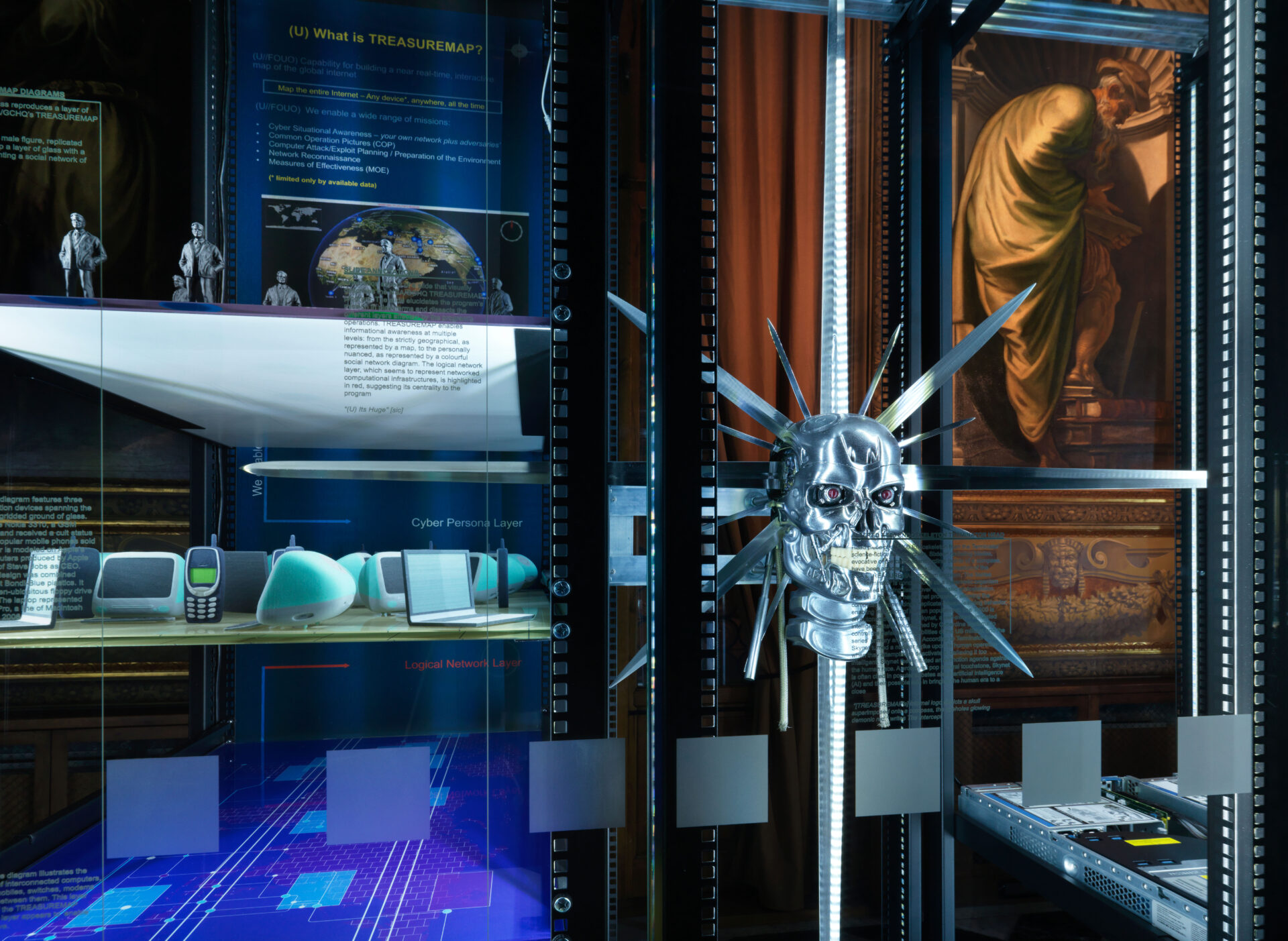
SD I made an exhibition that speculated on three different blockchain positions as if they were three different countries being formed. I was also interested in people using technology to make new countries at the time. I speculated about Ethereum co-founder Vitalik Buterin being in charge of a country: What would that vision of a blockchain-led country look like? I also looked at Balaji Srinivasan, who had a Bitcoin startup at the time, and what his view of the world could look like, as well as Blythe Masters, who came from banking and had been very influential at JPMorgan. I also made a video introduction to blockchain because a lot of people in the art world hadn’t heard of it at the time. So I wasn’t only presenting speculative positions through installations, sculptures, and postage stamps that I made for each of these future countries, but also a kind of primer on what blockchain actually was.
That was at the Berlin Biennale in 2016, and it was the first full project I framed around blockchain. I had made a few pieces about Bitcoin and blockchain for an exhibition at the Serpentine the year before, in 2015, but this was the first project entirely devoted to it.
AM You mentioned that people in the art world didn’t know much about blockchain back then and that part of the work functioned almost as an explainer. Do you feel they understand it better today?
SD They’ve heard the term and often have ideas about it. But I think there are still a lot of conflicting ideas about what it is and what it means, which is also interesting. A lot of people really hate the idea of it. Back then, people were more bemused. It seemed complicated, but maybe interesting. Now, people in the art world I intersect with through my teaching at HFBK Hamburg, for example, are often pretty hesitant about blockchain, if not outright hostile to what they think it is.
AM Why do you think that changed?
SD I think a lot of people have the understandable impression that it’s kind of scammy, a kind of trick, and therefore not worth serious engagement. You can understand that because some of the most famous uses of crypto have those qualities. I’ve actually been writing a text recently trying to parse some of this. I got to know a lot of artists who were working with crypto and really believed in it at the time, as you did as well. There was a real spike in interest around NFTs and blockchain art between 2020 and, let’s say, 2023 or 2024, with a particularly big spike in 2021.
I remember being on a panel at Art Basel that I co-organized at the time, where one of the people I’d invited said that the medium was speculation. I still think that’s kind of true. Crypto is more speculative by design than other areas of art, even though speculation has always been part of the art world beyond NFTs and existed long before them. But if you say that, a lot of people understandably respond, “Why should we focus on speculation? I’m interested in culture.” They see the two as opposed. Whereas I think speculation often happens around culture and has for a long time. NFTs and crypto accelerated that, for better or worse.
AM I was more interested in blockchain as a solution for something like a paid Tumblr than as a market for blue-chip digital art. A platform like objkt also still works a bit like that. Artists such as Travess Smalley or Lorna Mills, who have long released work online, can turn that work into editions and actually get paid for it. In that sense, the model still works.
But with the exhibition Proof of Work in 2018, you were also asking a larger question: What could blockchain infrastructure actually offer the cultural sector? Could artists and curators use it to work together differently, perhaps in a more democratic way?
SD I was interested in it from all sorts of different angles. And just to be clear, I don’t have a problem with blue-chip art. The notion that these technologies could provide solutions for blue-chip art is also interesting to me. I tried to do that as well. That’s my main business model. I’m a conventional artist in that sense, at least in the art world I come from. I sell expensive things to a few people for a lot of money, and I really like what that business model affords me. So I’m not necessarily looking for an alternative. The idea of posting something every day on a blog and getting a small amount of money from a lot of people wouldn’t work for me personally. But having said that, I do think it’s a nice idea.
AM Both things can be true at the same time.
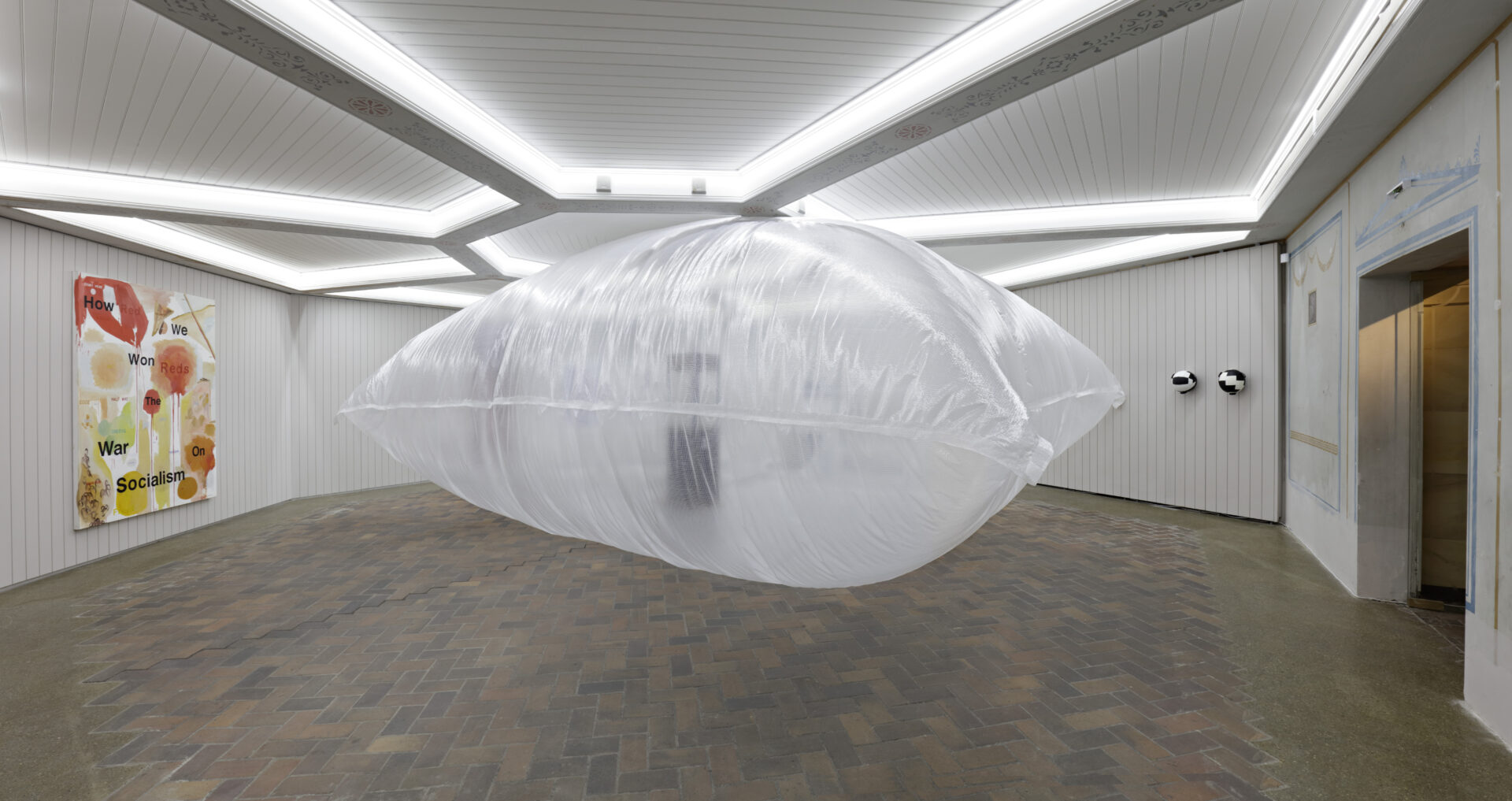
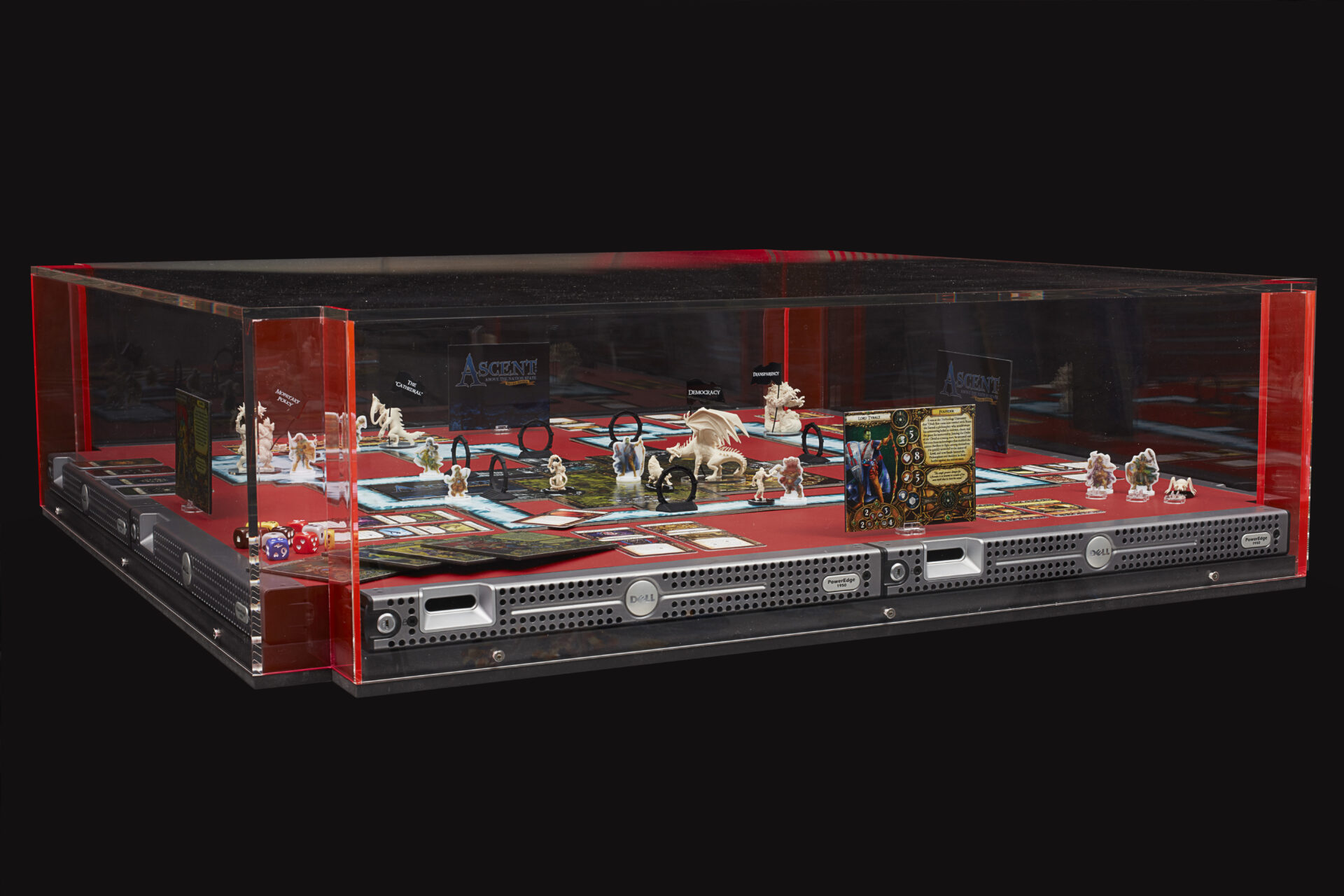
SD Genau. Proof of Work, the exhibition I co-curated in 2018, was about what other people thought art could be with blockchains. Some of that was about alternative infrastructure and more democratic ways of channeling money through digital things, and some of it was about networks and how to manage them. I also tried to change the way I thought about curating, inspired by what I was seeing in blockchains. I didn’t choose everybody who would be in the exhibition. Instead, I designed a kind of protocol that mirrored what I found interesting about distributed decision-making. I asked a series of people to participate, and they in turn proposed a series of works. We even had a protocol diagram at the beginning showing who had chosen whom. The exhibition was great, and all the works were really interesting, but I hadn’t chosen at least 50 percent of them. Some of the things other people selected that I might not have chosen myself ended up being among the most interesting works in the show.
So it became an exercise in how distributed decision-making, inspired by the stories I’d heard about blockchains and by the technology itself, could be reflected in curating. And I think you’re right that all of these possibilities were suggested by blockchains at the time. I found all of them interesting, even if I didn’t necessarily use all of them myself as an artist.
AM Do you feel that this utopia failed?
SD You can try experiments like what I did with Proof of Work, where you distribute decision-making without necessarily hoping that the entire cultural sector will adopt similar practices. I saw it as an interesting thing to try, but even at the time, I could have imagined that it wouldn’t become a widely adopted model. That’s just not how the art world I know, and that I grew up and started working in, operates. And I knew there were people who simply wouldn’t want to work that way. But it’s still interesting to try because once you have a proof of concept, people can look back at it, return to it, and reflect on it.
For me, the satisfying narrative wouldn’t be: We were promised all of this, and then none of it happened. What happened follows a familiar pattern in how technology tends to develop, especially technology that messes with things that are fundamental to people. Value and money are really important, and Bitcoin and related technologies challenged the idea of what those things should and could be, who gets to issue them, and how they’re made. That came with some utopian stories. But with commercial technology, it’s always difficult to separate the promotional stories from the truly aspirational, utopian ones that aren’t driven, at least partly, by selling something. Not that those things are always opposed, but commercial incentives can be very strong. So I think it’s fine that there were moments when these things were really tried at scale, followed by moments when they crashed and people became angry with them. These technologies are still around, and the story of Bitcoin and blockchains is definitely not over.
AM Are there ideas from that early blockchain period that you see becoming relevant only now?
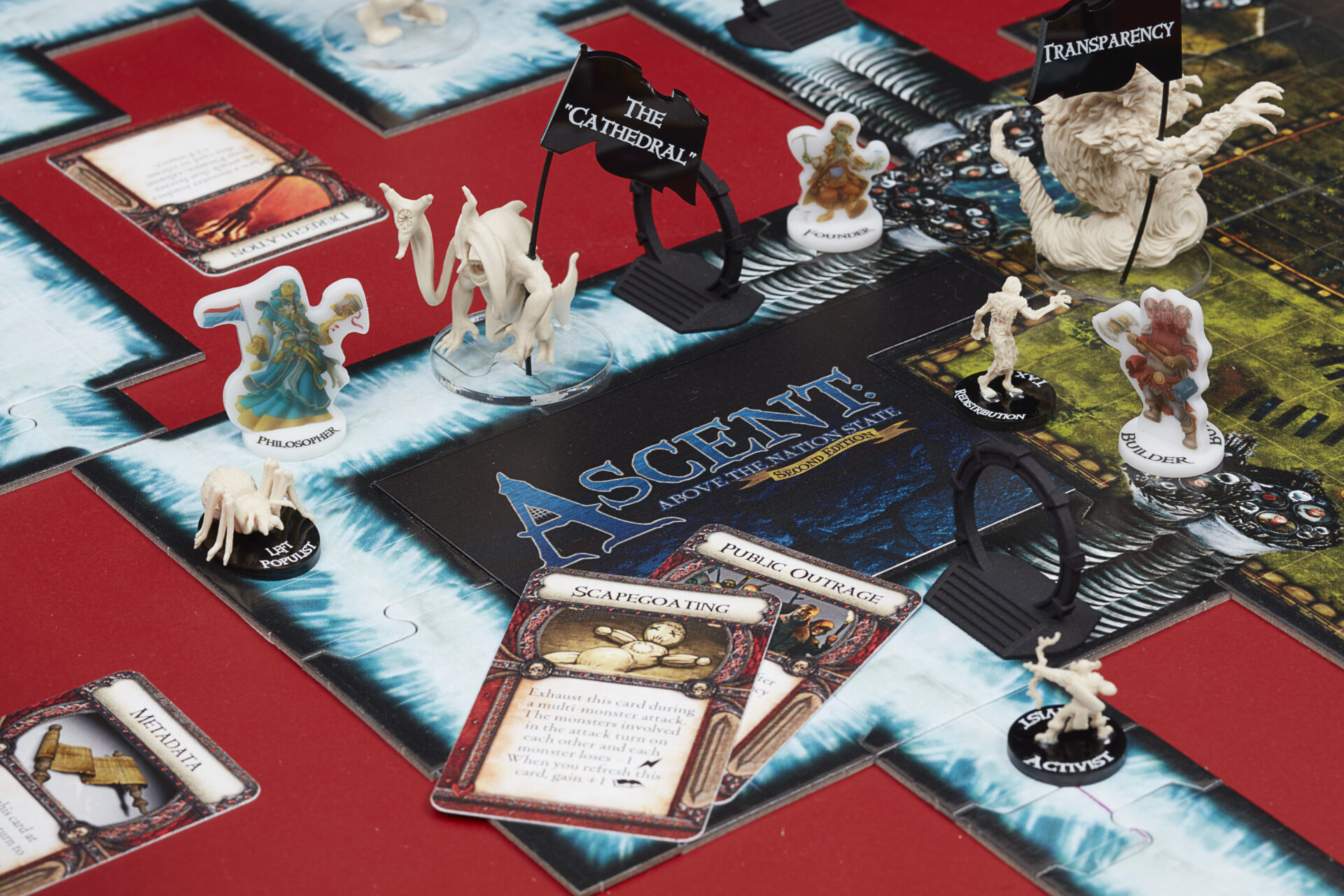
SD I’ve become really interested in prediction markets recently, for example, because they finally seem to have taken on more importance. Throughout the 2010s, from Augur to Gnosis and other early crypto prediction markets, they had so much trouble getting going. They were among the earliest kinds of crypto companies I encountered when I was researching the space. Now the world has changed, and Polymarket and Kalshi have become some of the most impactful technological and financial products today. We famously “live in a casino now.” I think some of what happened to culture during the NFT period is reflected in and runs parallel to what’s happening with prediction markets today.
AM How seriously did you take the promise that blockchain could create a more egalitarian distribution of power and wealth?
SD I knew those stories were being told, but I never saw much equal distribution happening in practice. I saw the opposite: a hyper-speculative, very uneven distribution of assets in crypto. Again, that’s not necessarily a problem. Often, people who build things early are disproportionately compensated if those things work out because they’re taking a high risk. I can understand the reasons for these things. But did I think it was going to provide an egalitarian world, even though those were the stories being told? No. Does that mean there’s no value in these technologies now? Also no. Does it mean you can’t do other things with them now that we’ve seen some of these experiments play out? No. I could imagine somebody issuing a new Bitcoin today that was programmed and structured differently and might match those original stories more closely. It’s not necessarily great, but it’s not a surprise.
AM What’s striking is how pragmatic your perspective on these technologies has remained. Has that always been your approach?
SD Just because I’m pragmatic and try to acknowledge what’s actually going on doesn’t mean it isn’t interesting or exciting as it happens. It doesn’t mean there’s no value to this type of work. I spend much of my life thinking about this stuff, so there’s obviously an attention-allocation indicator on my side that says I think it’s really important. But of course, you learn to take claims about what technologies can deliver with a grain of salt. I guess one gets used to that over time. This is how these things tend to go. And it’s not separate from the direction the world is moving in more generally. Things indeed have become much more casino-esque everywhere.
AM Is looking at the world, and particularly the tech world, part of your medium as an artist? There’s so much research behind your work, but then you translate that research into objects and installations.
SD There is a lot of research behind my artworks. As I said, I think it’s really important to take seriously the voices of technologists and the people who make technology: what they’re interested in and what they’re up to. But the goal is still to make art. It’s not only about presenting research or giving people information when they encounter the work. I hope to do what art is good at and what I want from art: to move me emotionally and inspire me through looking at beautiful things. Even though my work is based on research, I still try to make artworks and experiences that can do what art does well. It’s not a report. It’s art.
AM The work you made for the Berlin Biennale in 2016 is a good example.
SD The craft of production is very important to me. How you make something and how it’s presented are as important as what it’s about. I often talk a lot about what the work is about because narrative is easier to discuss. Politics and all these things that I look at can be very verbal. But the material production of the artwork is equally important. For that installation in particular, we spent months looking for the right venue. We eventually chose the former DDR Staatsratsgebäude, which was partly being used as a business school. That was really interesting in terms of context, but also in terms of its materials and textures. There was the old carpet, these beautiful DDR-era panels, and all this aluminum and woodwork.
What I made was inspired by exhibition design in Messehallen and trade fairs. All the stamps I produced were printed with the Bundesdruckerei, and I got really involved in the collaboration with the stamp designer. So there’s a lot of craft, meticulous rendering, spatial design, and experience design that goes into the work. It just seems a bit more pedantic to many people to talk about the textures and craft of exhibition making than saying, “The world is being changed by this massive, incredible technology. What does it mean to put that in dialogue with the past?” That feels more urgent, of course, in comparison.
AM But that’s also what people criticized at the time, right? That artists were making work that could almost have been a presentation by a startup.
SD Yeah, and that was an idiom I deliberately adopted. If I was going to make exhibitions about these worlds, I thought it was interesting to use some of the material language that those worlds themselves used to make presentations and exhibitions. Some people thought that was too direct, too one-to-one, and weren’t able to see it as aesthetic in the same way as other formats. But I think they were wrong. (laughs) think I was right, and my peers were right.
I think people now look back on the 2016 Berlin Biennale as something really interesting aesthetically and artistically. And I think DIS, who curated it, are ripe for reassessment. They’ve actually been incredibly influential in many of those moves. But that’s good, right? That’s what we want. We want conflict about what art should and could be, and we definitely got it then. Die Guardian review of that show was brutal. But it was a really good biennale.
AM Speaking of what art can be and of adopting the aesthetics and language of the worlds you’re looking at, is that also what you’re doing with your most recent body of work?
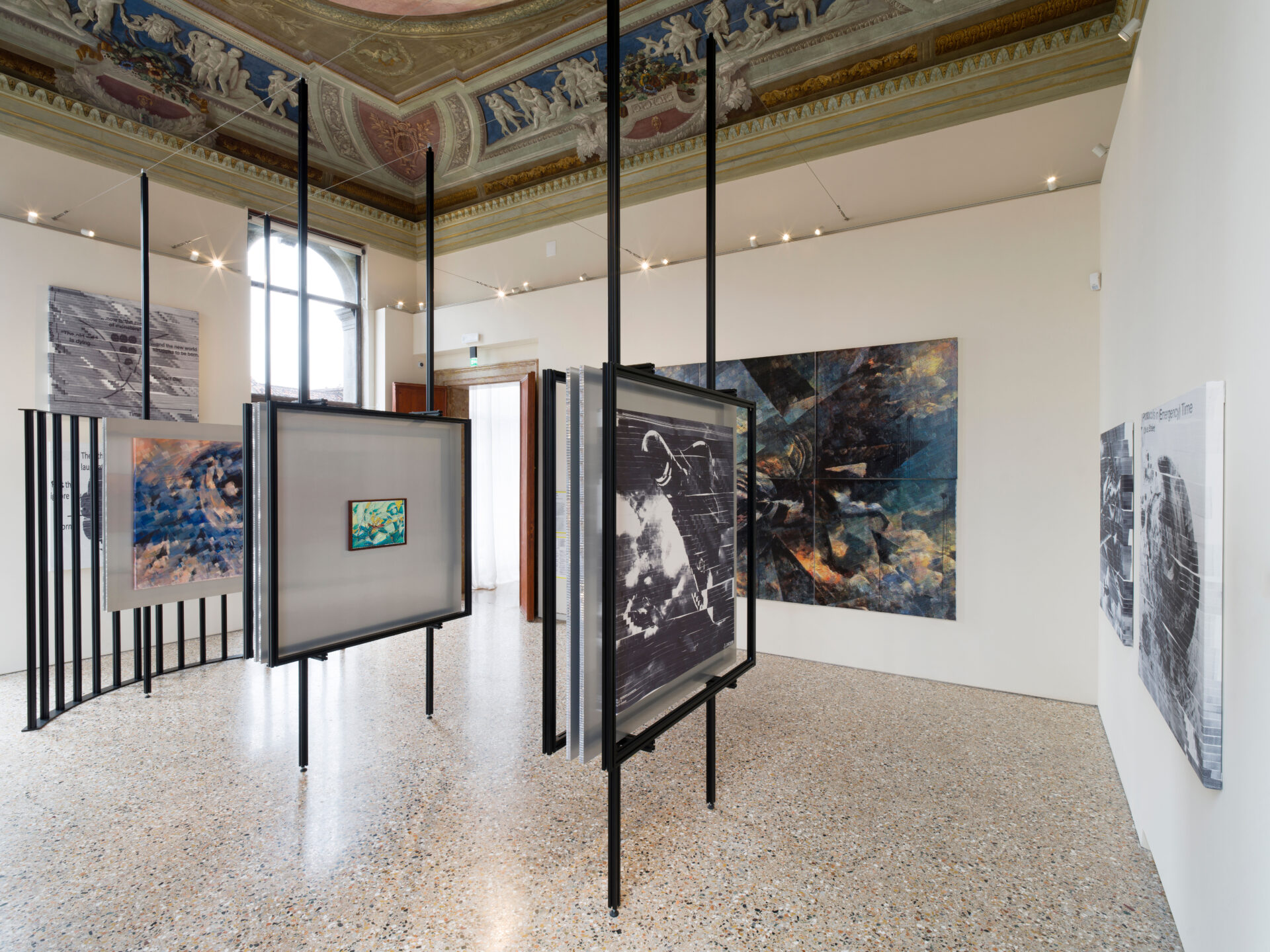
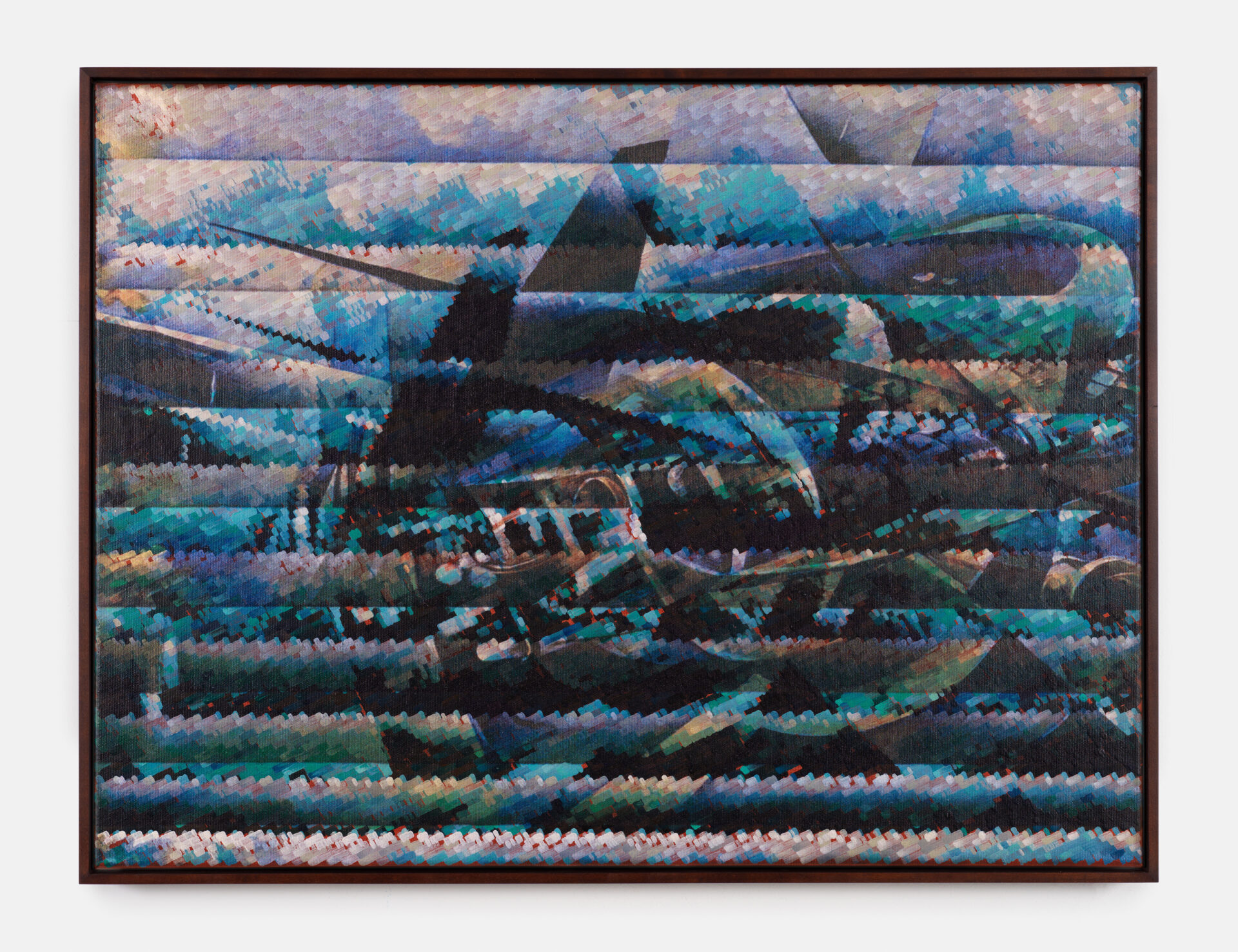
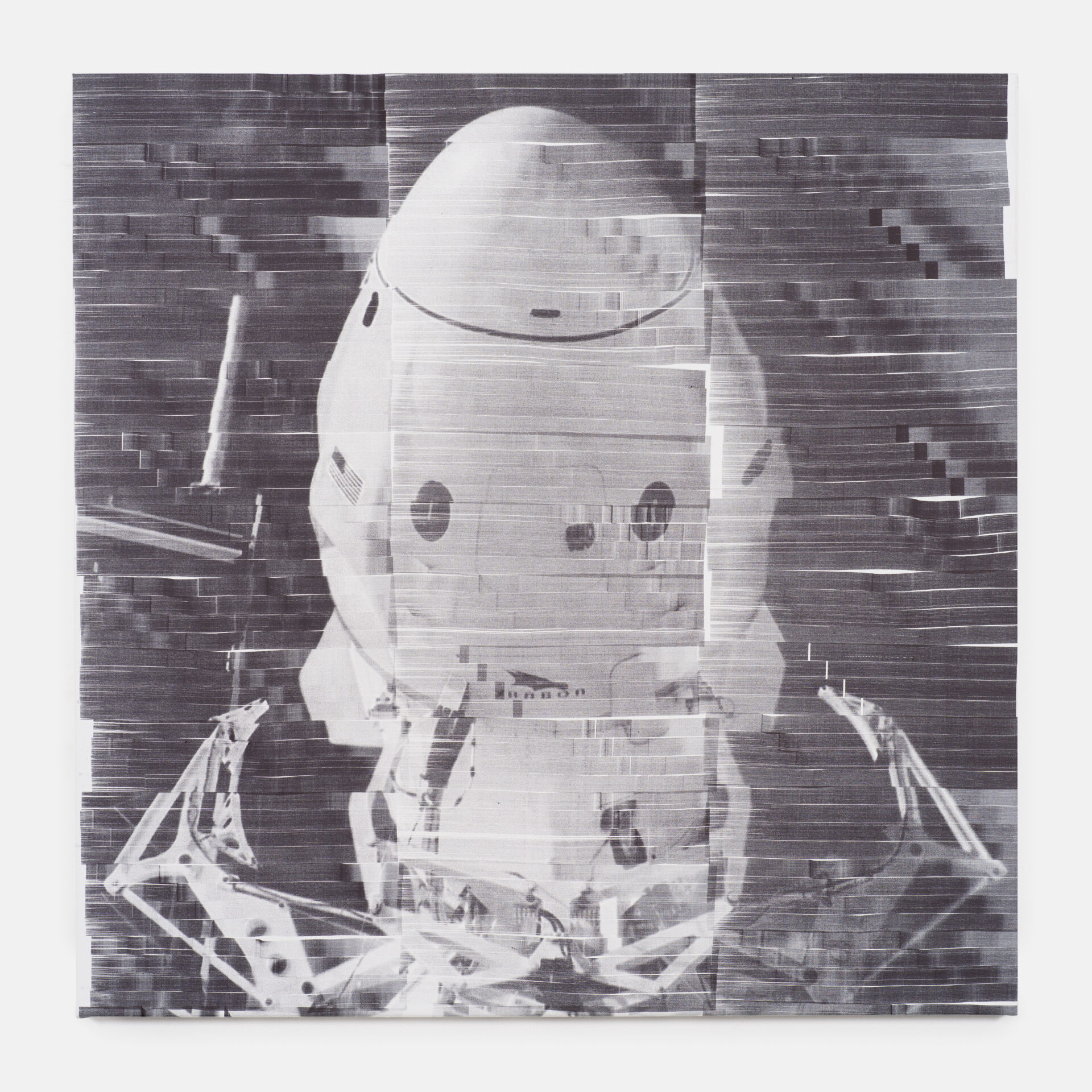
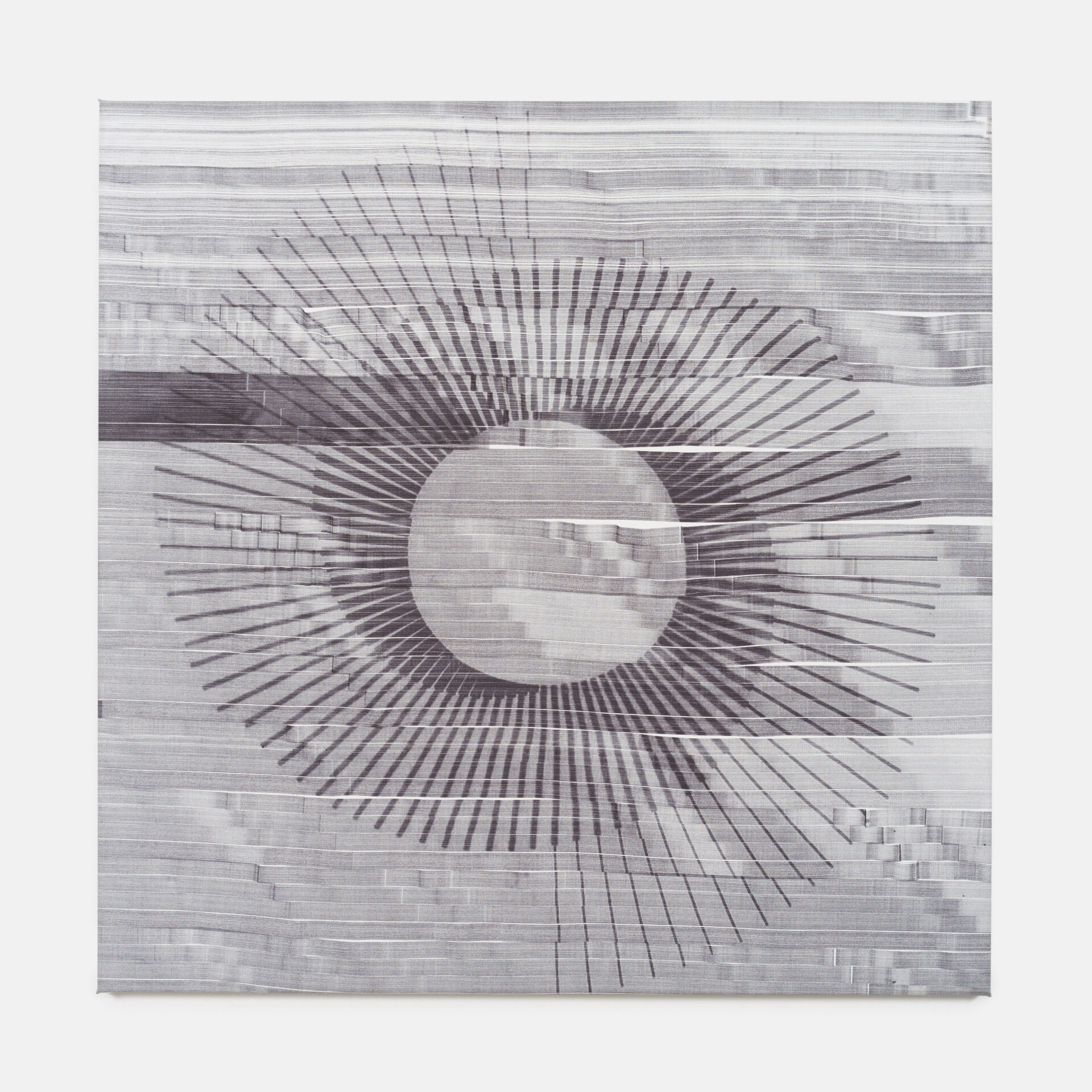
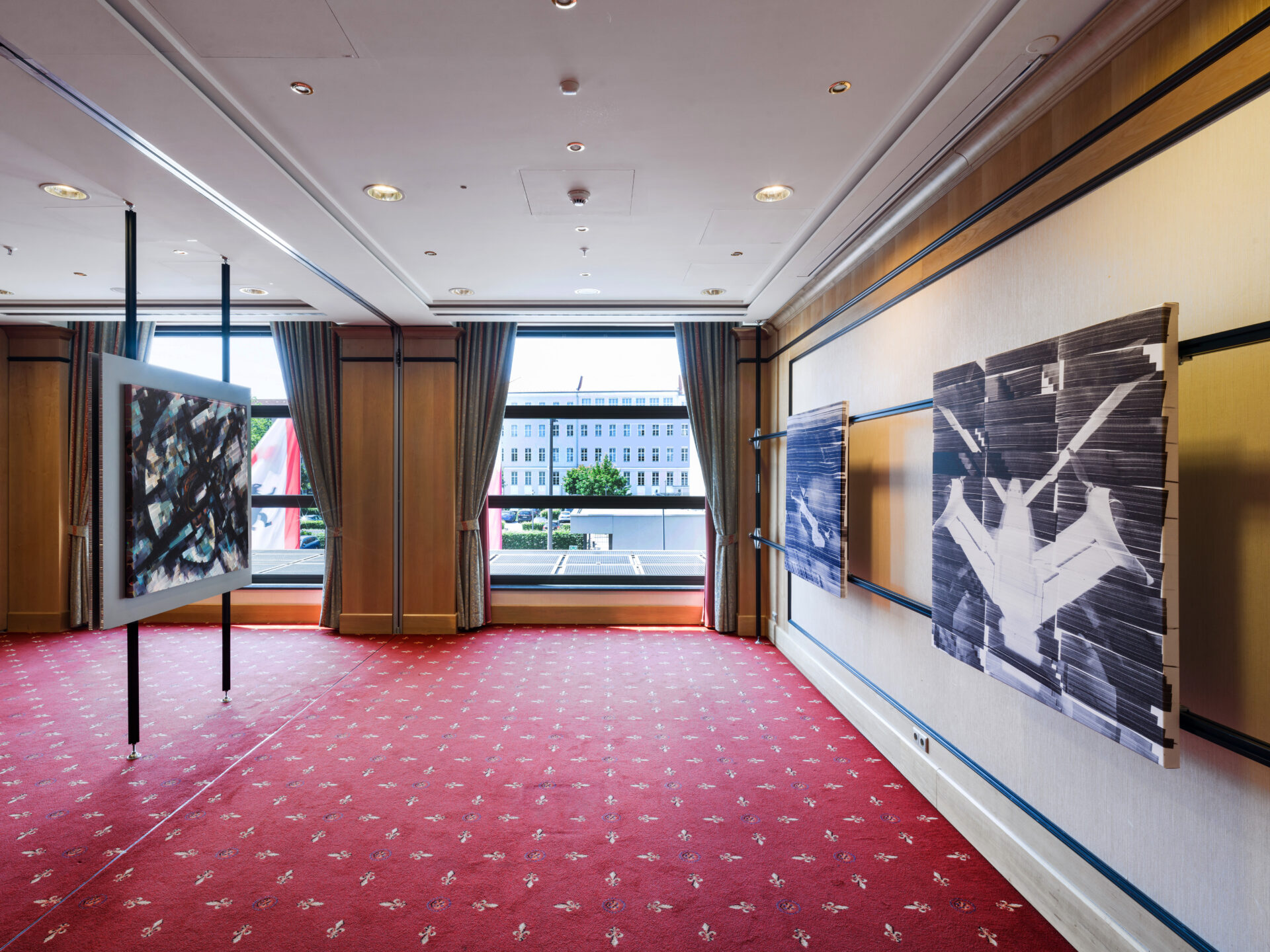
SD The recent body of work is something I’m still very much in the middle of. I’ve been looking at defense-tech advertising: again, at technologists, their thinking, and the aesthetics they’re producing. One starting point was Marc Andreessen’s influential Techno-Optimist Manifesto from 2023 and his invocation of Marinetti, one of the founders of Italian Futurism. Futurism obviously comes from the art world, so I started going deeper into that history while also looking at the aesthetics coming out of influential defense-tech companies like Anduril and Helsing here in Germany. I’m bringing those things together and assessing them from the position of art and culture.
I’ve also been combining that with older forms of computational art-making, like plotting and plotted paintings. Essentially, I’m making painting shows. In contrast to what I was making around 2015 and 2016, these are almost entirely visual. There’s almost no text in the exhibitions I’m making at the moment. In a way, they’re very conventional artworks: they’re image-based and craft-based. But again, they’re looking at what technology and technologists are claiming as culture. Reassessing Futurism through today’s lens has been really interesting. I wouldn’t have looked at Italian Futurism in the same way had Marc Andreessen not written that text.
AM We learned about Futurism when I studied art history, but largely as a historical movement.
SD Right. It was one of those older “isms” that I knew was a little dodgy because of its proximity to Fascism, but I hadn’t looked at it as closely as I have recently. And I found so many incredibly interesting and beautiful things to think about and look at. That project also reflects something about my work more generally: I’m very comfortable sitting with problems and not resolving things that are thorny and difficult. Italian Futurism is almost unresolvable. It’s full of innovation and beauty, but also violence, a reverence for militarism, and complicated political currents, including a strong relationship to Italian Fascism. It’s difficult to resolve exactly how I feel about the mix of those things, and I find that compelling. I’m interested when things are full of problems.
AM That’s a very good statement: you enjoy problems you can’t solve.
SD They stick in my head longer, and they stick in my heart longer, too. While I’m quite analytical as an artist, researcher, and writer, I’m also as emotional and intuitive as everybody else. I go for things that I really feel I want to deal with. When I look at Futurism, I feel something, for better or for worse.
AM What do you feel when you look at Futurism in relation to what’s happening in the world today?
SD I feel there’s a lot in there that’s very relevant to what’s going on today. It’s a world full of conflict, a world that’s fragmenting and putting up borders. A lot of that makes me really sad. These are things I would rather not have seen happening in the world, and the realities of conflict are very intense. So I find it interesting to look at these historical, independent avant-garde artists who eventually also produced propaganda as part of their practices. They engaged with scientific and photographic imagery as it was being produced and worked with and in reaction to that material from their positions as artists. And then some of that was co-opted in complex ways by a very destructive political regime.
There are a lot of echoes of that in the world today. A lot of talented people are working on potentially horrible things. Looking at those tensions in something that’s closed, in a sense, because it’s in the past, helps me think about the world now.
AM Where does AI enter into that for you?
SD AI is so much a part of all of this and of everything today, and it’s a technology that, by definition, messes with the past. My post at HFBK Hamburg is in time-based media, and I think that term feels more appropriate than ever in an age when AI is becoming part of everything, precisely because AI messes with time so much. When I studied art history in New Zealand, I learned the term “media art.” At the University of Auckland, the department was called Intermedia. There have always been different terms, and different communities at different times feel more comfortable with one formulation or another. The post-NFT art world, if it exists as its own little sub-zone, tends to prefer “digital art.”
AM Speaking about your most recent body of work and the relationship between Italian Futurism and propaganda, are you concerned that people might misread the work?
SD Misreading is something I encourage to some degree as part of my strategy, and I have for a long time. Over the last ten years, there have often been people who walk into an exhibition of mine and think, “Wow, he’s making a big deal about this thing that I have a lot of problems with, and it looks like he’s promoting it.” Other people walk in and think, “Man, that’s a deeply critical reflection of what I thought we were doing.” I often get reactions from both sides. With this body of work, I anticipated reactions along the lines of, “This is a bit dangerous. You’re promoting this violent material.” Although I’ve actually heard that less than I expected.
What I didn’t expect was colleagues saying, “Why are you calling some of the most essential technologists out there fascists when we’re in the middle of World War III? You’re not a patriot. You’re not on the right side.” Misreading is part of what I do because I deliberately keep ambiguity in the work. That has its upsides and downsides as a strategy. I find it compelling not to work all the problems out of the material.
AM What’s interesting is that you’ve described these new works as almost purely visual. But around the same time, you published an essay in Artforum dealing with some of the same subjects. Does writing allow you to be less ambiguous?
SD These things happened independently. Making exhibitions and artworks comes first. But at certain moments, many more people probably encounter something I write or say than the objects or exhibitions I make. The Artforum essay was about the same material, and I mentioned my own work at the end as a way of summarizing my response to what I’d been describing in the text. So the writing and the exhibition did play off each other.
In fact, the “Are you a patriot?” response I just mentioned was more a reaction to my writing than to the artwork. Writing is more definite. I find that when I write, I end up being less ambiguous than when I make exhibitions, for better or worse.