Gabriella Furno’s practice is shaped by an enduring dialogue between movement, material and the human body. Having started dancing at an early age before making her first sculpture at eight, she has carried both disciplines with her ever since. Today, Furno creates monumental works that approach the body as a form of architecture, exploring physical presence, energy and the tension between opposing forces.
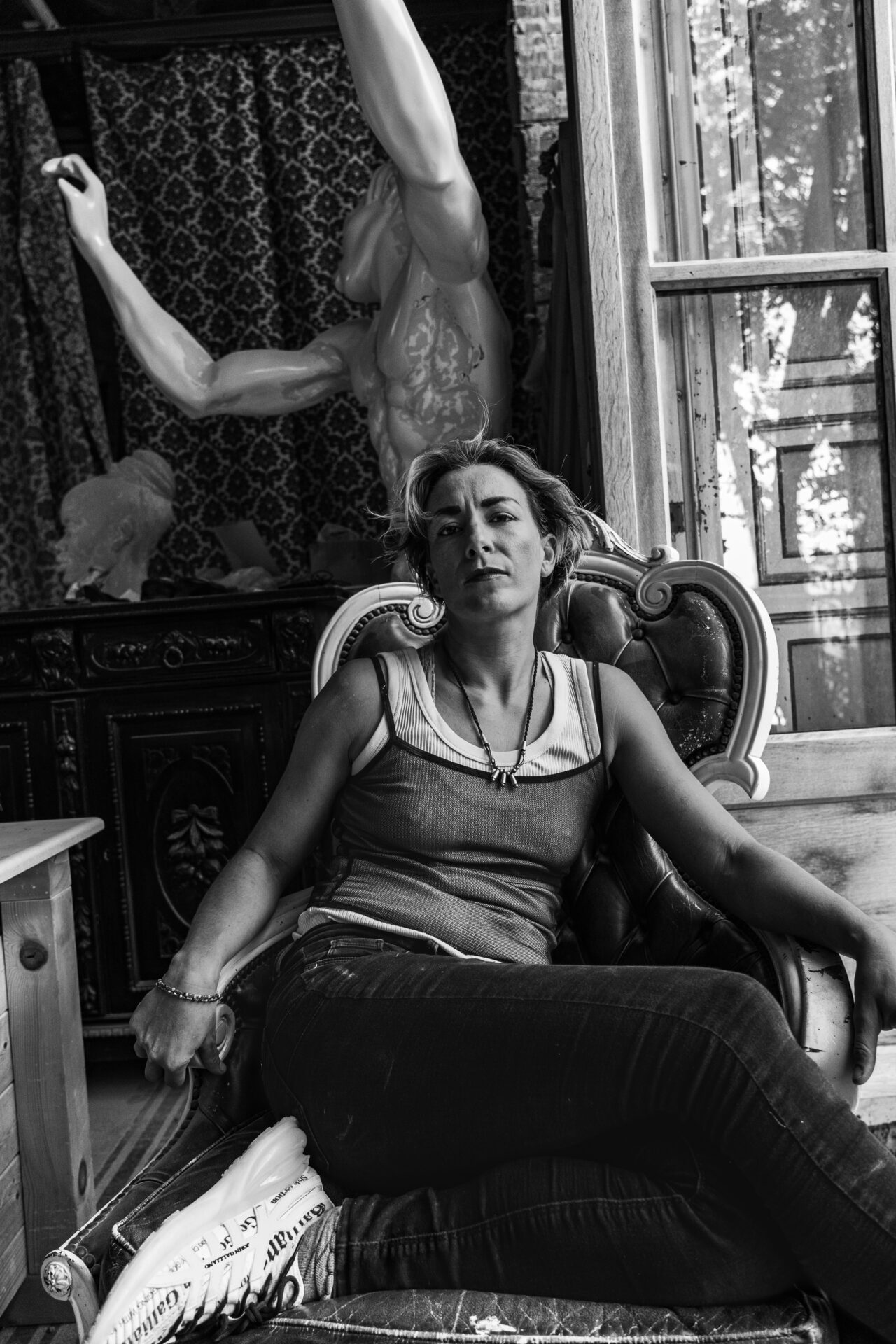
Photography by Gabriele Lentini
That sense of duality runs throughout her practice. Metal meets clay, structure meets fluidity, and fire meets water. It is also reflected geographically: Furno divides her time between Palermo and Berlin, two cities whose contrasting rhythms, histories and cultural landscapes continue to inform her work.
Her Berlin studio, Schattenlos – meaning “without shadows” – extends this philosophy beyond sculpture. Conceived as both a workspace and a place for artistic exchange, it reflects Furno’s desire to bring overlooked subjects into the light and create space for conversations that might otherwise remain unspoken.
SLEEK How did your art practice start?
GABRIELLA FURNO I started dancing when I was very young, around five years old. Then, at the age of eight, I made my first sculpture. From that moment on, both sculpture and movement have always stayed with me. I practised dance extensively while also spending a lot of time working with pottery and ceramics, until I eventually decided that sculpture would become my main practice. My grandmother played an important role in that decision – there are two generations of sculptors in my family, and she really encouraged me.
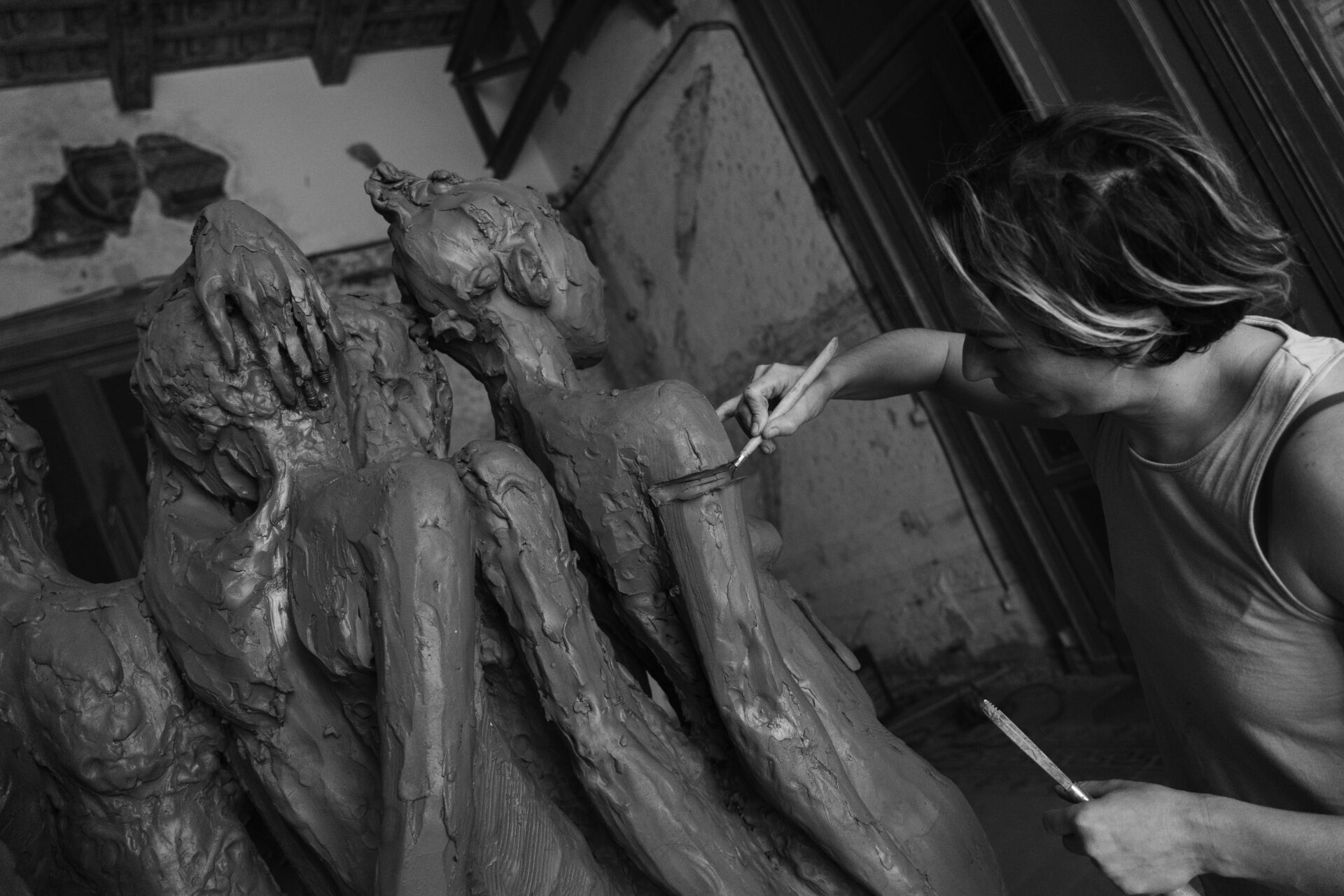
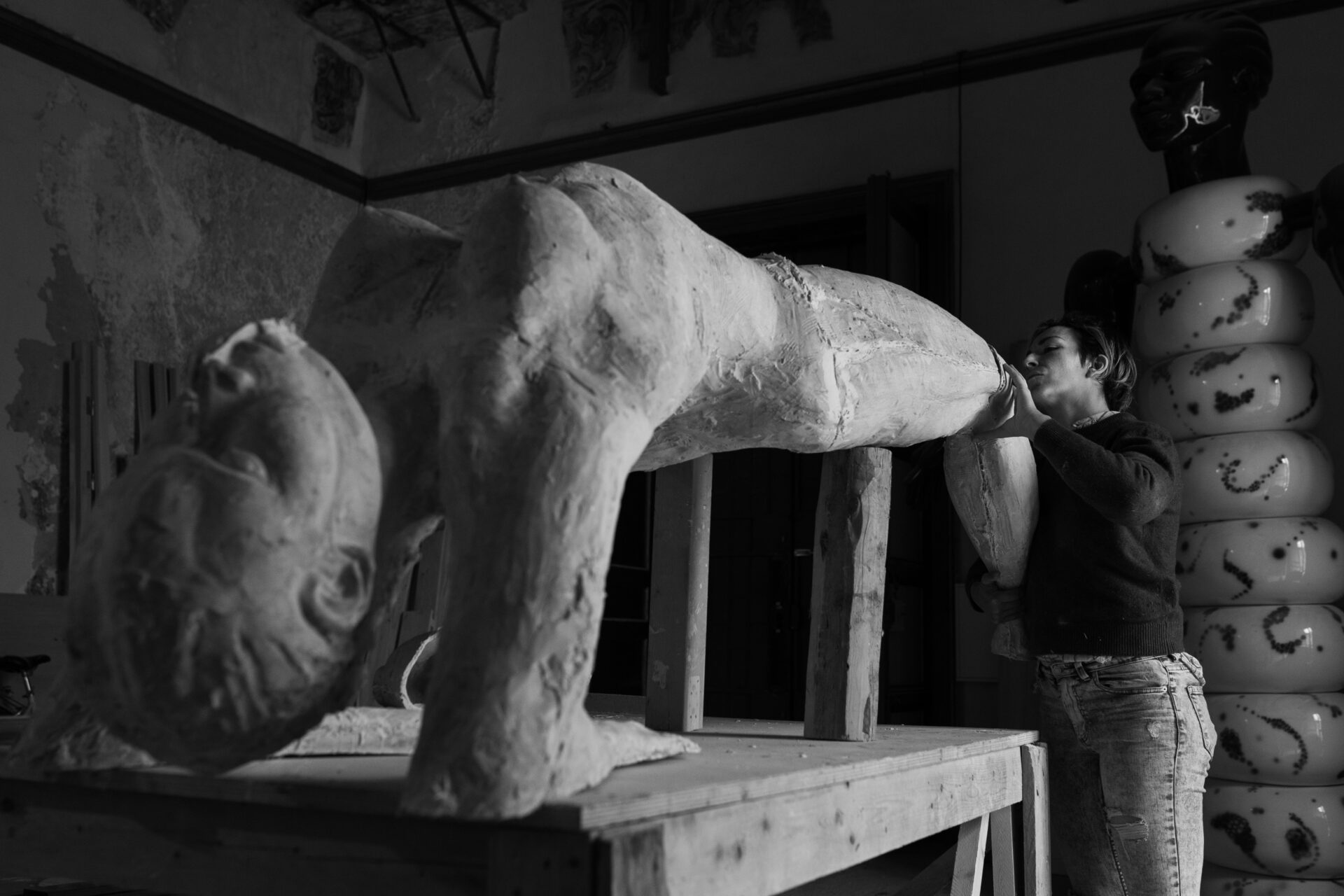
Photography by Gabriele Lentini
S What draws you to the human body, which holds a major influence on your practice?
GF I think my desire to create large-scale sculptures is connected to my own body. I love working on a monumental scale because my whole body becomes part of the process, and it requires a lot of strength. The way we build form through movement is like architecture. For me, the body is an architecture and an endless source of inspiration.
I always begin with drawings and small sketches to understand the larger piece, but making the work big is a necessity for me. I need to feel the form, to feel my own strength around the sculpture. In the same way that I immerse myself in working with my models, I also immerse myself in the material itself.
The human body has an incredible language that I find endlessly fascinating. I’m always curious about the energy we all carry inside us. With every person who becomes my model, I try to discover an energy they may never have recognised in themselves.
This practice is also connected to philosophy, particularly the Chinese idea of yin and yang – water and fire, and the search for balance. When I paint my sculptures with colour, those colours relate to this invisible energy that exists within us.
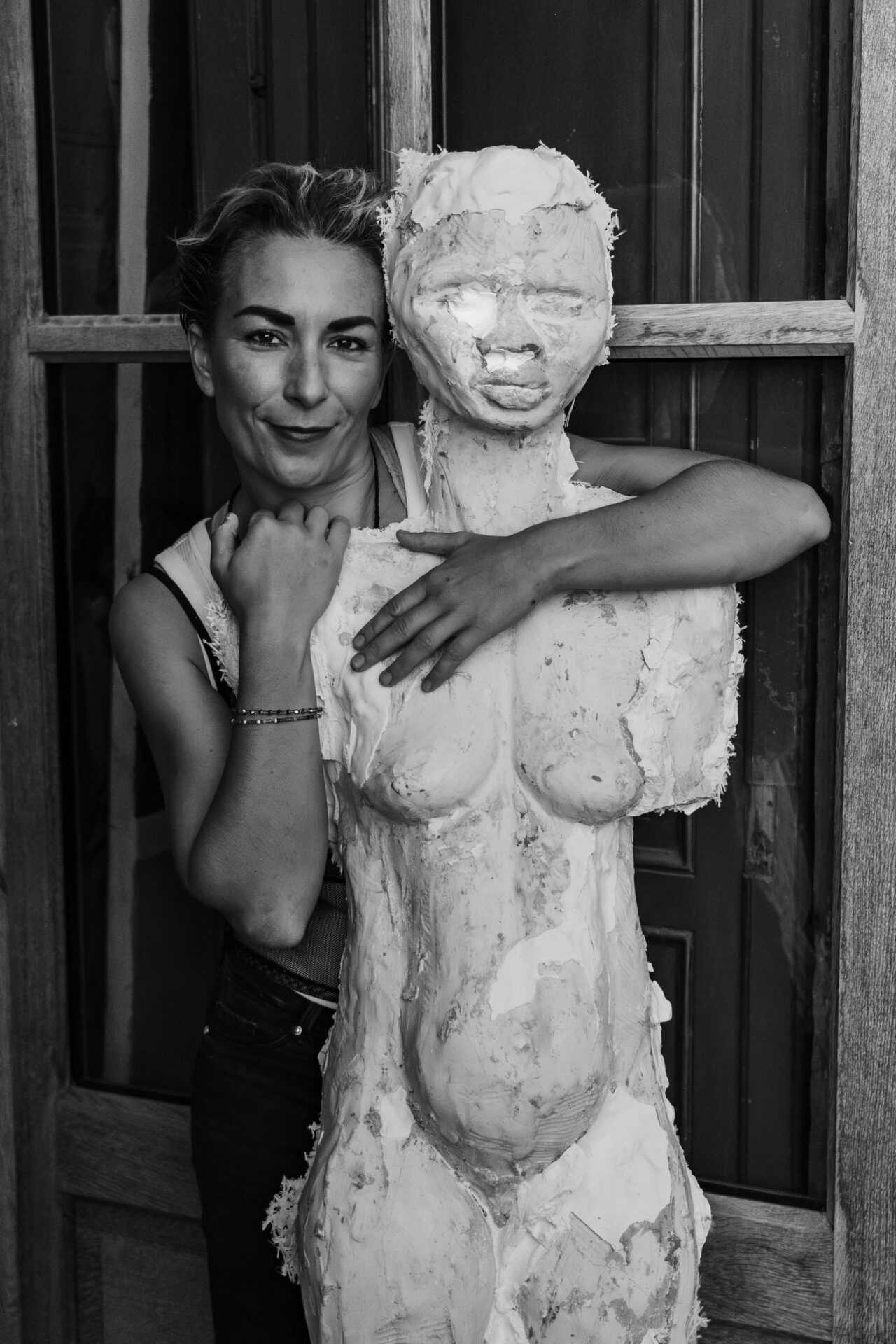
Photography by Gabriele Lentini
S What materials do you use for your sculptures?
GF I like combining materials that are opposites. Metal is structured and architectural, while clay is fluid and connected to water. When clay surrounds the metal, it creates a dialogue between those two elements. Again, this relates to the balance of fire and water. For me, fire is connected to the masculine aspect and water to the feminine. Working with sculpture always means working with natural materials – metal, clay and wood – so there is always a dialogue with the earth itself.
I also work extensively with plaster, which allows me to create my moulds. It’s part of the process in which the sculpture is born, disappears into the plaster and is then reborn in another material.
Some of my sculptures have already been cast in aluminium and bronze. Several more recent works currently exist in resin and are intended to be cast in aluminium and bronze as well, but the costs are substantial, so I am currently seeking support and production partners to realize them in metal. My long-term goal is to cast in stainless steel.
S What would you say is the task of an artist today?
GF As artists, we can’t be blind to what’s happening around us. We are inspired and guided by the world we live in. For me, moving back to Sicily, where my family comes from, made me increasingly aware of what’s happening in the Mediterranean – of people crossing from Africa and of those who lose their lives at sea. Sculpture has a powerful role as a testimony to humanity and mythology. For me, everything begins with looking towards the Mediterranean, which I think of as the cradle of civilisation.
I believe it’s important to bring art to the public in a way that encourages people to think differently and opens another perspective beyond what we see every day in the media. Art should be a place where people come together to talk and exchange different ideas about life.