Journeying Through Its Evolution
Looking at Idan Gilony’s practice today, its origins feel almost like an expanded version of everything it has since become. Before fragrance took centre stage, there was an apartment in Berlin where the boundaries between fashion, work and private life barely existed. Clothing racks stood next to the bed, friends gathered, conversations flowed late into the night, and candles burned while garments were stitched, tried on and made ready to be sent out. Life and creation occupied the same room: dense, instinctive and inseparable.
It was there that scent first entered Gilony’s work. In fact, it was partly Berlin itself that made its way into the clothes. Customers would occasionally complain that packages arriving from the studio smelled of cigarettes, prompting Gilony to reconsider what might otherwise have been seen as an imperfection. Rather than simply removing the smell, he began to think about what it represented: the studio, the people in it and the atmosphere in which the clothes had been made. “There’s actually something interesting here,” he remembers thinking. “This was becoming part of our identity.” Fragrance offered a way of translating that atmosphere without reproducing it literally.
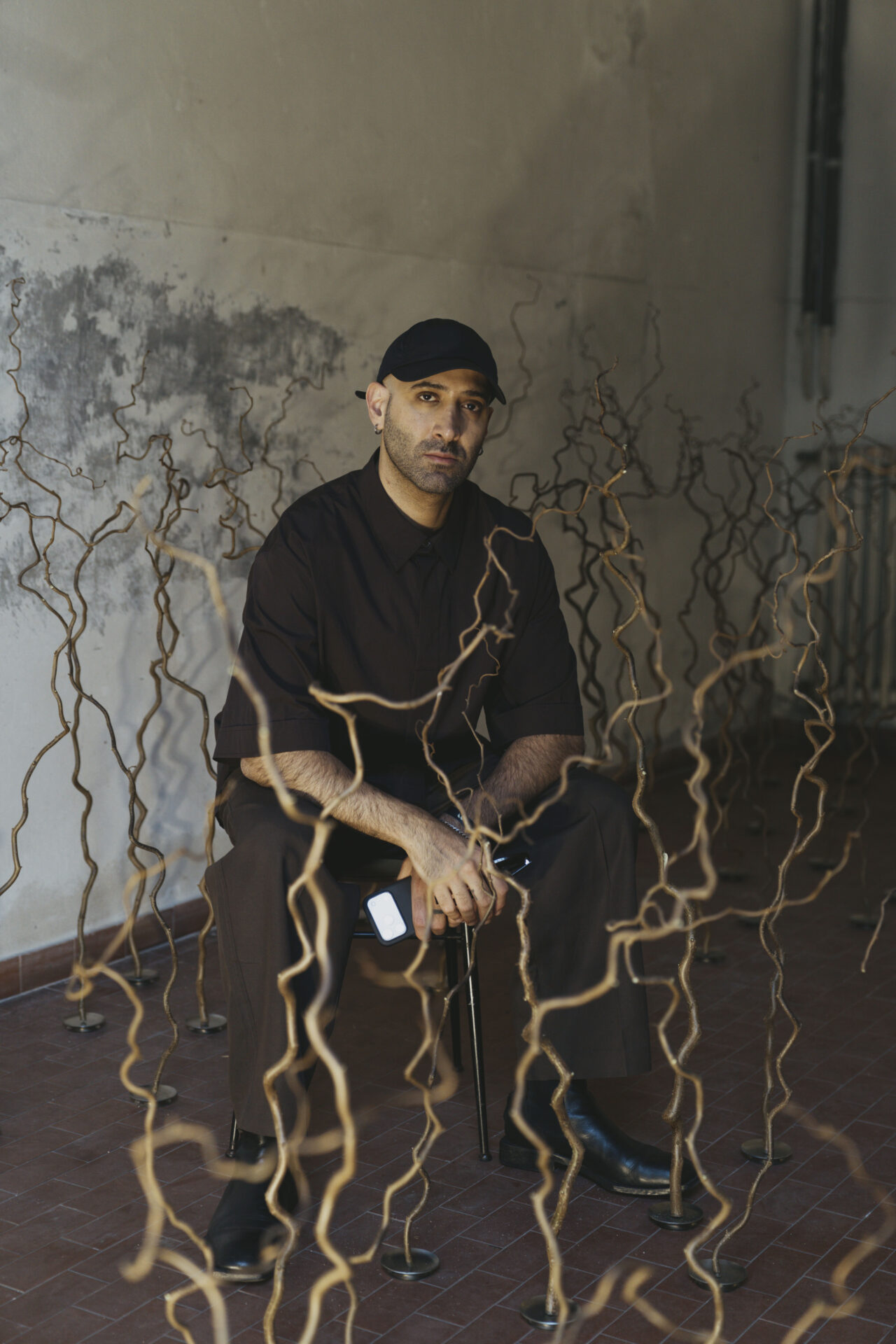
Photography by Ilenia Siciliano and Lilly Wetzel
A conversation with a friend eventually led him to a fragrance laboratory. His first fragrance, Sie, emerged from a mood board built around those evenings of hosting: red wine, candlelight, smoke, clothing and people moving through the same space. It became the signature scent of the brand and marked the beginning of a gradual evolution away from seasonal fashion towards fragrance and homeware. The transition, Gilony says, felt less like a calculated decision than an instinctive one. “I had this vision and everything came really naturally.”
Moving beyond the darker, club-culture aesthetic of its beginnings, the studio is gradually shifting towards what Gilony describes as “what light reveals”, while the underlying idea remains surprisingly close to those early evenings. “I want to offer an experience. I want to offer something that you feel and something that stays with you.” The apartment may have grown into a larger creative universe, but hosting, atmosphere and human connection still form its foundation.
In an increasingly screen-mediated world, this emphasis on physical experience has only become more important to him. Gilony is interested in the tension between our desire to document experiences and our simultaneous craving to actually inhabit them. A photograph might preserve where we have been, but it cannot replace the encounter itself: the half-hour coffee squeezed between meetings, the conversation with another artist, the feeling of entering a room. Looking back, he realised that what appeared to be a departure from fashion was perhaps not a departure at all. Even then, he says, “it started from this gathering moment between me and my community.”
This idea of connection also manifests materially. Gilony is drawn to contrasts: soft textiles against brutalist forms, delicate glass and stone alongside harder architectural elements, romance placed against severity. Rather than seeking a single aesthetic language, he allows seemingly opposing references to sharpen one another. “I love brutalism with romance, or something hyper-modern with something Baroque,” he says. His fashion background remains visible here, not only aesthetically but through an increased awareness of the lifespan of objects. Materials are chosen with their wider cycle in mind, and he actively avoids creating elaborate, single-use objects simply for spectacle. Sustainability, in this sense, becomes less an aesthetic statement than a way of deciding what deserves to exist in the first place.
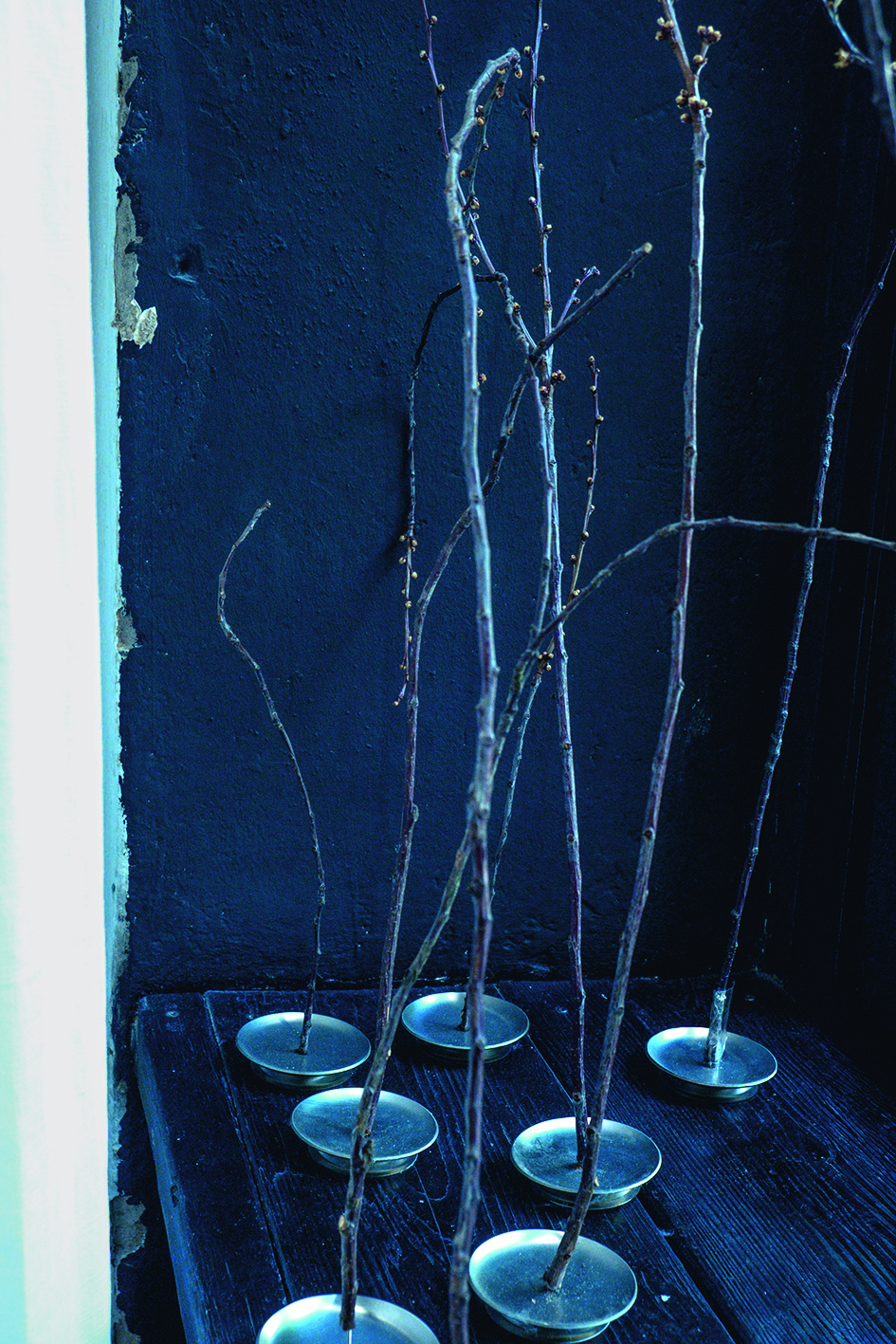
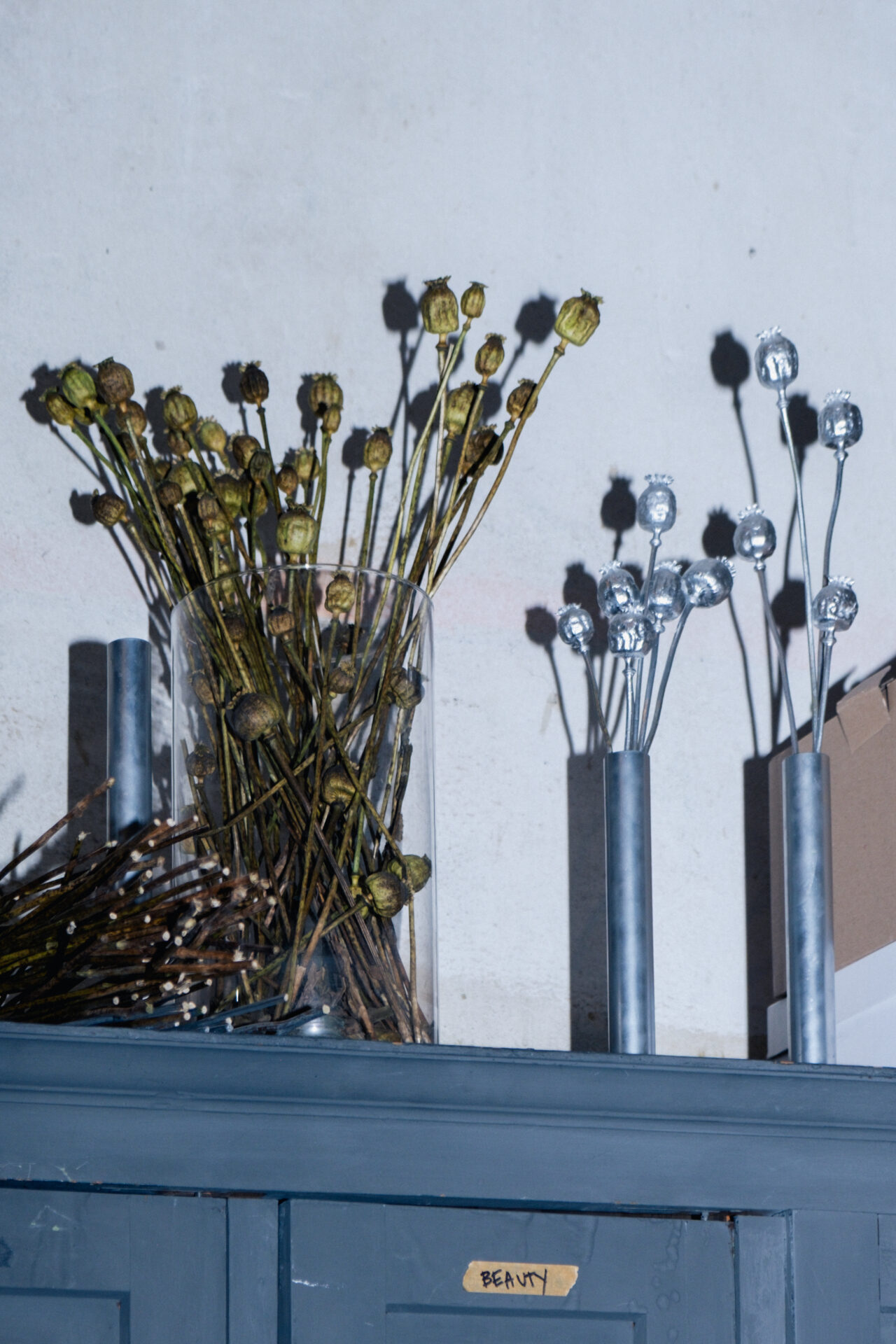
Photography by Ilenia Siciliano and Lilly Wetzel
Fragrance has become perhaps the most intimate expression of this approach. Gilony’s scents resist simply smelling pleasant, instead drawing on earthy warmth, saltiness and subtle traces associated with the human body. Their emotional significance became particularly clear when Gilony decided to step away from seasonal fashion collections. One customer came to see him, devastated by the possibility that his signature fragrance might disappear, telling Gilony that the scent had become part of his identity. The encounter shifted his understanding of what fragrance can hold: memories, confidence, encounters and versions of ourselves. Since then, this psychological dimension has become integral to his approach, with scents designed to connect to something familiar on a subconscious level.
That familiarity can emerge through unexpected notes. Hints of sweat and other traces reminiscent of what the body naturally produces become a way of recognising rather than disguising our physicality. It is an approach that feels particularly connected to Berlin, where Gilony sees a greater openness towards self-exploration and sensuality. The city influences UY less through its visual appearance than through its climate, its habits, its gatherings and the openness of the people inhabiting it. The fragrances reflect this sensibility: intimate rather than decorative, darker rather than overtly fresh, moving between warmth and cold while retaining a certain weight and character.
Yet scent, for Gilony, is not necessarily a fixed declaration of who we are. Instead, it can operate like clothing: another layer through which identity can temporarily shift. There is a core self, but around it sits the freedom to decide how one wants to enter a particular room or moment. A fragrance might feel richer and heavier for an encounter one evening, fresher and more welcoming for another. “The relationship between fragrances and fashion is really, really similar in its foundation,” he explains. Both allow us to dress not only the body, but the version of ourselves we want to bring forward.
The process through which these worlds take shape is equally intuitive. Gilony recently realised that music is often the first trigger. Faced with a new campaign, activation or launch, he puts on headphones and moves between sounds until an environment begins to form in his mind. “It’s like the seed,” he says, “and from there I start to see where it grows.” Rather than beginning with an object, the process begins with atmosphere; products, materials and spatial decisions follow once the scene has become tangible.
Even the name UY carries this sense of intuition. It originated while Gilony and his former partner were studying fashion in Barcelona, making T-shirts for themselves before other students began asking to buy them. When they needed a label for a small sale in their flat, they chose “uy”, an expression used casually within their circle. There was no brand strategy or elaborate mythology attached to it. Its significance only became visible in retrospect. “It really came out of a purely naïve project, without ever thinking that one day we would sit here and discuss it.” Over time, even the visual duality of the letters seemed unexpectedly fitting for a brand that would come to resist fixed categories of gender and identity.
That same openness has continued to shape UY as its spaces have grown and its disciplines multiplied. Gilony brings a quieter focus on everyday rituals, considered choices and human connection, while the underlying impulse remains unchanged: creating environments in which scent, objects, people and memory can converse. What began with friends, clothes, smoke and candlelight in a crowded apartment has not disappeared. It has simply been given more room.