
Working through a multicultural lens, Nimisha Bhanot is an Indo-Canadian artist dismantling misconceptions of South Asian women through art. Though she initially focused on abstract painting, Bhanot eventually switched to portraiture for its wider scope, especially regarding depictions of female identity. Her resulting collection of paintings portrays Indian women in traditional attire – including the mangalsutra, an auspicious chain denoting marital status – in poses that challenge patriarchal notions of what it means to be a “good Indian woman”.
Here, Bhanot speaks about the inspirations behind her work and how she’s using art to express her views about traditional norms of behaviour.
How did you begin painting figures?
I took a class on figure painting in the summer of 2012 as a way to better understand working with oils. I immediately enjoyed how even the most nuanced change possesses the ability to completely alter the mood of a painting, from the subject’s gaze to the lighting, brush handling and even colour. I still love abstract painting, but I am unable to find a personal connection with it. Eventually I began using the female gaze to express issues regarding identity and found it very effective. I haven’t stopped since.
“I want to paint wedding-style portraits featuring the types of brides that are rarely portrayed in magazines but are very real”
 Left: Nimisha Bhanot, “Money, Kitty Parties & Clothes Is All A Bahu Knows”, 2015. Right: Nimisha Bhanot, “Ironing Out Wrinkles In Your Perception”, 2015. Oil on canvas, 36×48 inches. Images Courtesy of The Artist. Copyright Nimisha Bhanot 2016
“Sexual liberation and empowerment is often considered “un-Indian” but the individual should dictate how to express oneself.”
What was your inspiration for the “Badass Bride” and the “Badass Bahus” (daughters-in-law) series?
The “Badass Bride” series was inspired by Indian bridal magazines, specifically my dissatisfaction with the lack of representation for inter-faith brides. Young South Asian women are traditionally taught to aspire to marriage, to save their honour so they are “good enough” for marriage. I want to paint wedding-style portraits featuring the types of brides that are rarely portrayed in magazines but are very real. Interfaith brides, although they are becoming more and more accepted over time, still receive a considerable amount of backlash from people in our community. I want to make art that speaks out to this issue.
“Badass Bahus” is inspired by the “Badass Bride” series. Serving as a continuation of my previous work, it also focuses on South Asian bridal culture. However, this project places increased emphasis on each woman’s gaze as well as expressions of identity. Clothing, tattoos and props are all aspects that I found lacking in my previous series, so I worked very hard to include them this time around. I’ve also started incorporating specific motifs into each background so each work is more dimensionally intriguing.
What statement are you making with your paintings? What kind of impact are you hoping for?
With my recent work, I’m trying to portray women’s issues from a dualistic bicultural perspective which hopefully shines a light on how identity is constructed, especially when you have to balance two ideas that are so culturally diverse. There is a carefree rebellion in wearing a sleeveless saree blouse with a tatted sleeve or short shorts and a mangalsutra. Sexual liberation and empowerment is often considered “un-Indian” or “un-South Asian” and I don’t think nationality, society or anybody but the individual should dictate how to express oneself.
I want people to find comfort in themselves when they look at my work. I get emails, messages and comments everyday from people that say they really resonate with the message behind my art and that they are so happy to see representation of a struggle they have encountered at some point in their lives. I love getting these emails because it reaffirms what I’m doing and just drives me to keep producing more.
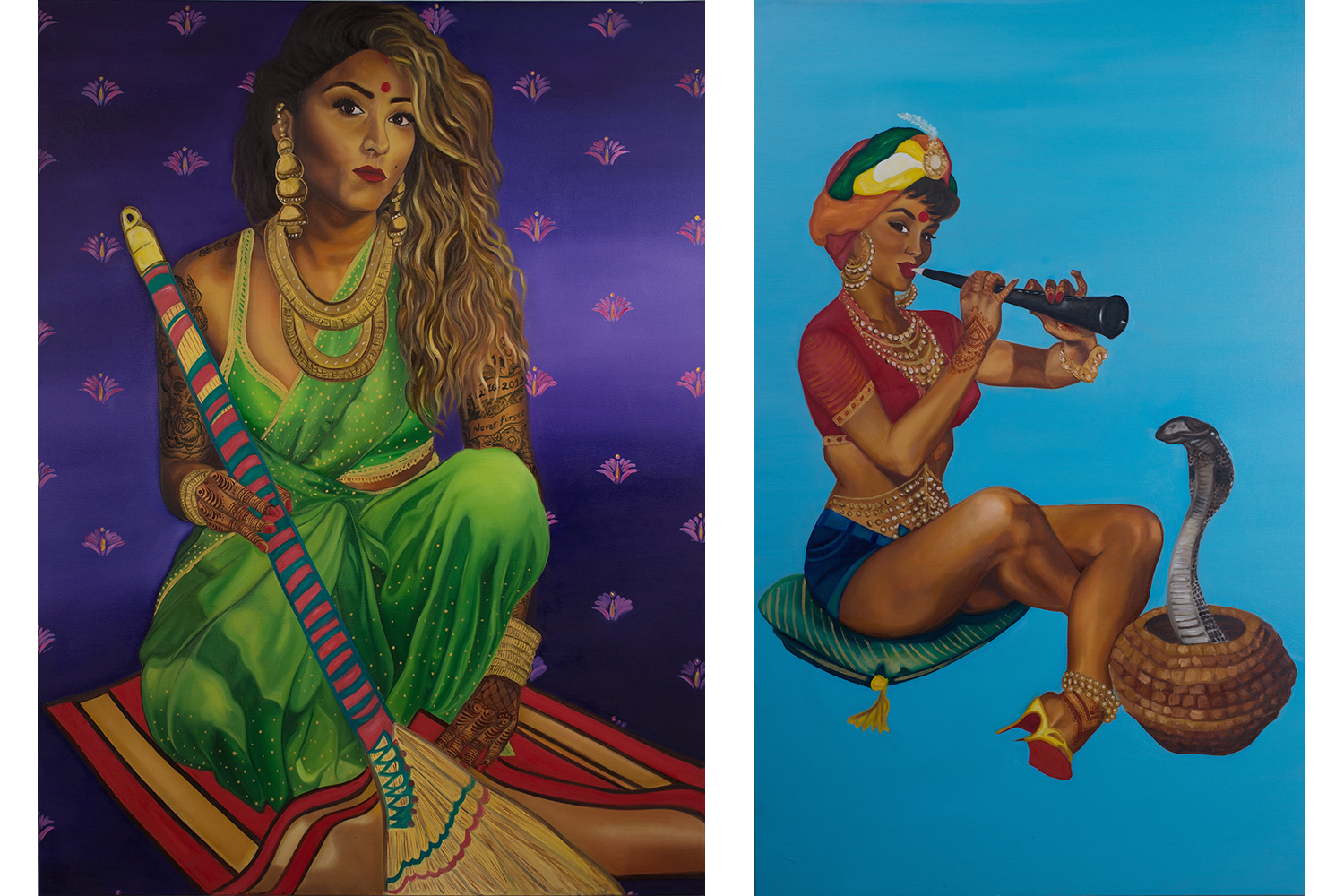 Left: Nimisha Bhanot, “Sweeping Patriarchy Under The Rug”, 2015. Oil on canvas, 36×48 inches. Right: Nimisha Bhanot, “Nagini”, 2015. Oil on canvas, 30″x48″. Images Courtesy Of The Artist. Copyright Nimisha Bhanot 2016
How was the reaction from your family and friends when you started on the series?
My parents were always supportive of my “Badass Brides” and “Bahus“, but had definite reservations to my Indian pinup series. They became a lot more supportive as they gained a better understanding of what I was doing, though.
My friends and siblings have always cheered me on from the beginning, I have a great support system and I’m very thankful for all of them because they’ve always been there for me. They come to my shows and give me constructive criticism, which is all I can ask for.
Where do you see your art going forward? Is there any particular theme you want to explore?
My upcoming series is going to pay homage to South Asians using social media to spread their unique message about identity. This series will be exploring racial, sexual and gender identity. So far, my subjects include Tanya Rawal of Saree Not Sorry, Dark Matter Poetry, Sanam Sindhi and Vivek Shraya. Going further into the year, I will be starting a new series about complexion and body image. I’m very excited about these paintings so stay tuned!
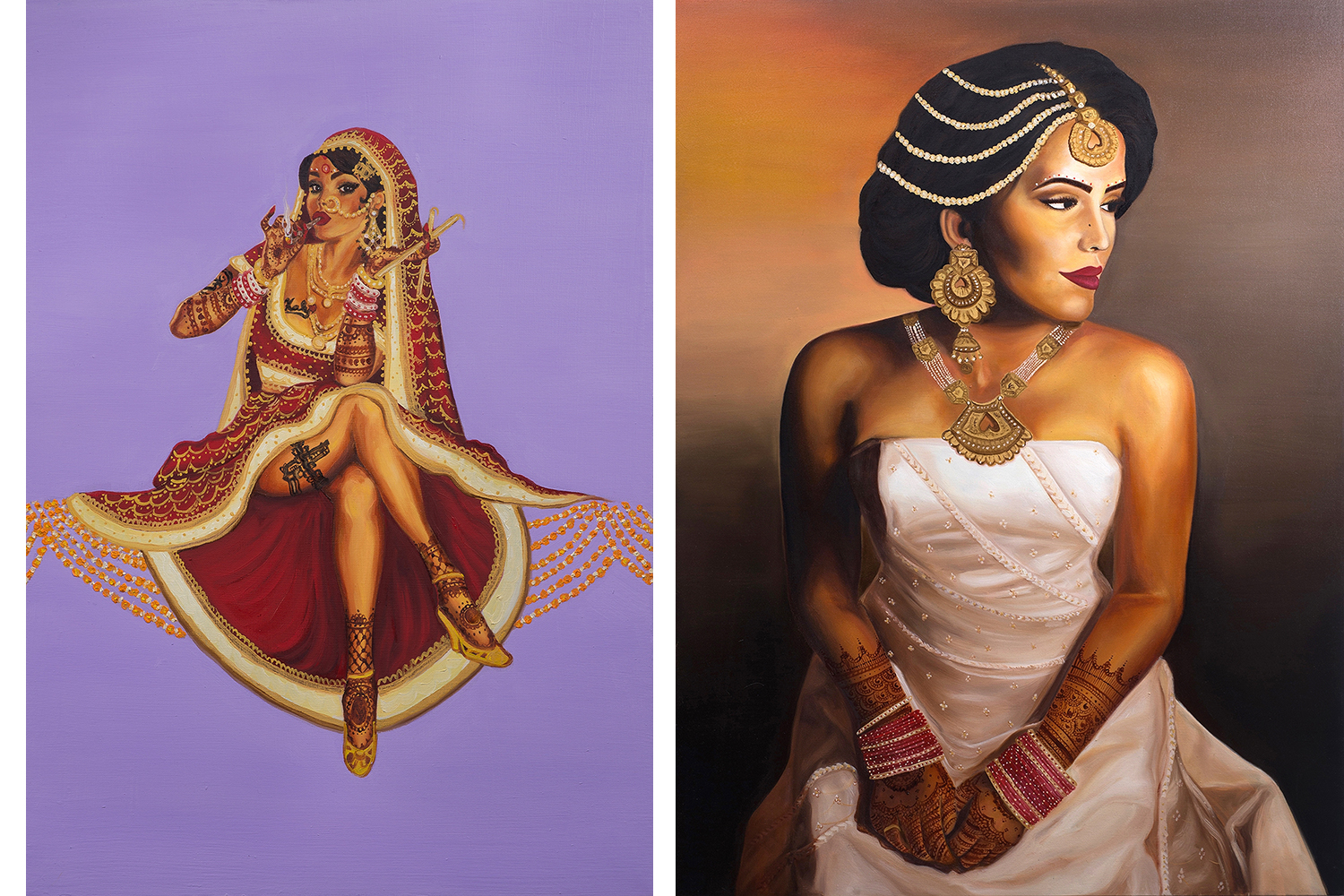 Left: Nimisha Bhanot, “Not Your Mom’s Bahu”, 2015. Oil on canvas, 20″x28″ Right: Nimisha Bhanot, “Badass Indo-Canadian Bride”, 2015. Oil on canvas, 36″x48″. Images Courtesy Of The Artist. Copyright Nimisha Bhanot 2016
 Left: Nimisha Bhanot, “Badass Indo-African Bride”, 2015. Oil on canvas, 36″x48″. Right: Nimisha Bhanot, “Serving Looks, Not Nashtha”. 2015. Oil on canvas, 36×48 inches. Images Courtesy Of The Artist. Copyright Nimisha Bhanot 2016