Only three months away, the anticipation for the Venice Biennale is already palpable. Yet without much ceremony, the organisers of the event have just released the full list of artists who will be participating in the international pavilions. With 120 artists currently listed on their website, the most prestigious artists include Denmark’s Olafur Eliasson, the UK’s Hassan Khan and American cult legend John Waters. Yet the most interesting takeaway from the list is Berlin’s dominance as a place to work. Eighteen Berliners are attending — including Andy Hope und Agnieszka Polska — as opposed to 7 currently working in London, 12 in New York and 14 in Paris. While we can’t help but suspect that Chris Dercon might be scratching his head, why is it that Berlin has become the destination of choice for those looking to make it as artists? Here, we highlight four of the most likely reasons for this trend.
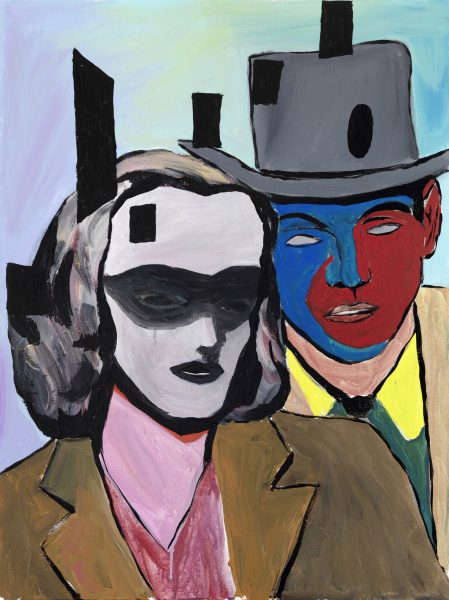 “X-Medley 2,” 2012 by Andy Hope
It’s Not prohibitively expensive (yet)
It’s common knowledge that living in Berlin is way cheaper than in New York, London or Paris. Renting a mere room in London can cost upwards of £650, whereas an entire Berlin studio apartment clocks in at just €800. And while the average main course in Paris sets you back €25, many of the German capital’s tastiest restaurants offer up filling meals for only €10. Even a simple beer in New York is $6 (€5.60), but a refreshing lager in Berlin is around €3. Truth be told, in Berlin you can have a life – and an enjoyable one at that – without having to break the bank every time you fancy a night out.
Artists, especially when they are starting out, simply don’t have much money to live on, so being able to dedicate themselves to their craft without necessarily needing to get a full-time menial job is part of what makes the German city such a compelling place to live.
 Still from “I Am the Mouth,” 2014. Agnieszka Polska
The Government can be Helpful
In addition to Berlin’s affordability is the government’s kind incentives to anyone wishing to be an artist. Admittedly the paperwork is positively Kafkaesque, but once that swamp of awfulness has been cleared through, an artist can expect subsidised studio space courtesy of Kulturwerk Des Bbk Berlin GmbH. Higher education is also free and galleries are funded. Think of it like the 90s in the UK: yeah you can’t apply for anything on the internet, and you can’t really use a credit card; but social welfare still exists and the prices of things are at times dirt cheap.
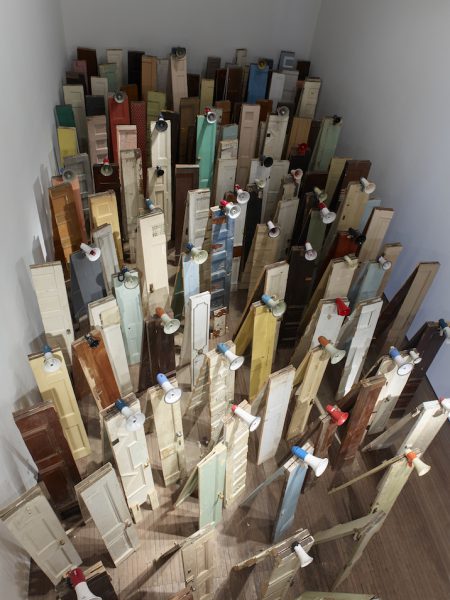 Kader Attia, Show Your Injuries, Installation view, Lehmann Maupin. Courtesy the artist and Lehmann Maupin, New York and Hong Kong
It Has A Bohemian Atmosphere
Ever since 24 hour bars were mostly removed from NYC’s streets in an attempt to stop American soldiers from starting fights inside their favourite watering holes, Berlin has taken its spot as “the city that never sleeps” – literally. As opposed to London (last call 2 am) and New York (last call 4 am), Berlin really doesn’t care if you want to spend your whole life drinking. I know that there are obviously exceptions in both cities — there’s always Vauxhall in London — but Berlin never makes it difficult to get to these places either because they are literally everywhere. This makes it particularly conducive to young people, who flock to the city in droves. Keeping in mind how much artists love to drink; Berlin’s easy life make it a strong draw.
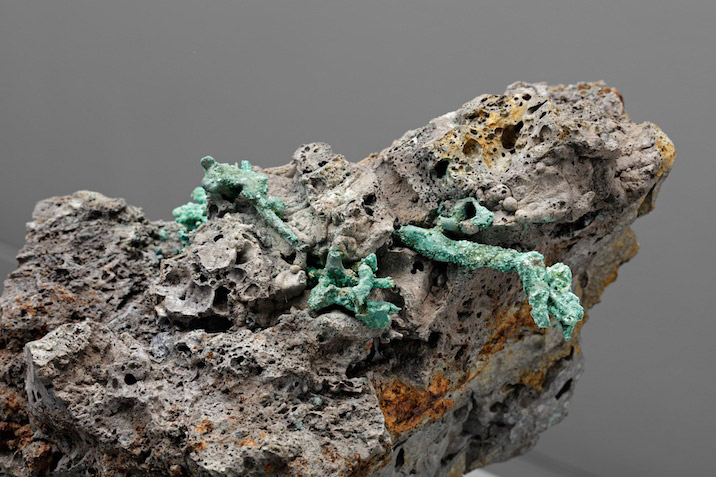 Julian Charrière, Metamorphism XVII (Detail), 2016, Copyright Julian Charrière, VG Bild-kunst, Bonn, Courtesy DITTRICH & SCHLECHTRIEM,Berlin, photo by Hans-Georg Gaul
It Has A Strong Cultural History
While most cities try to move on from their terrible history, Berlin stands as a living, walking, talking museum. Simply taking a stroll along somewhere such as the East Side Gallery, an artist could not help feel inspired by the past and see art as the tool to try and build a better future. This is also reflected in the architecture, re-appropriating old Nazi and Stasi-era buildings as helpful social institutions and even techno clubs. Participating in a city that is still in a state of becoming, as opposed to frozen-in-time Paris or owned-by-oligarchs London, seems like a good deal for any budding artist wanting to build a new life for themselves that in turn shapes the space around them.