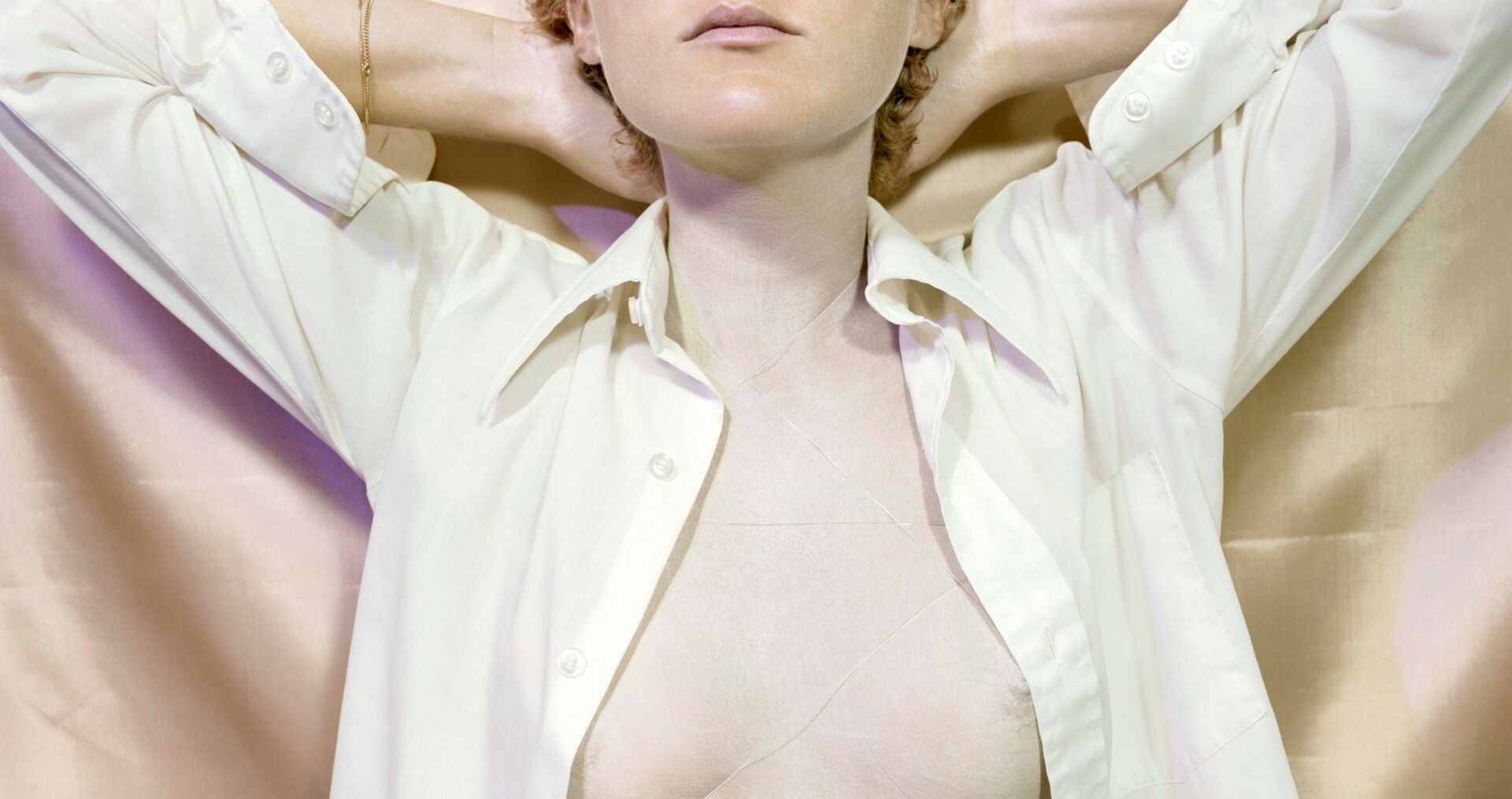
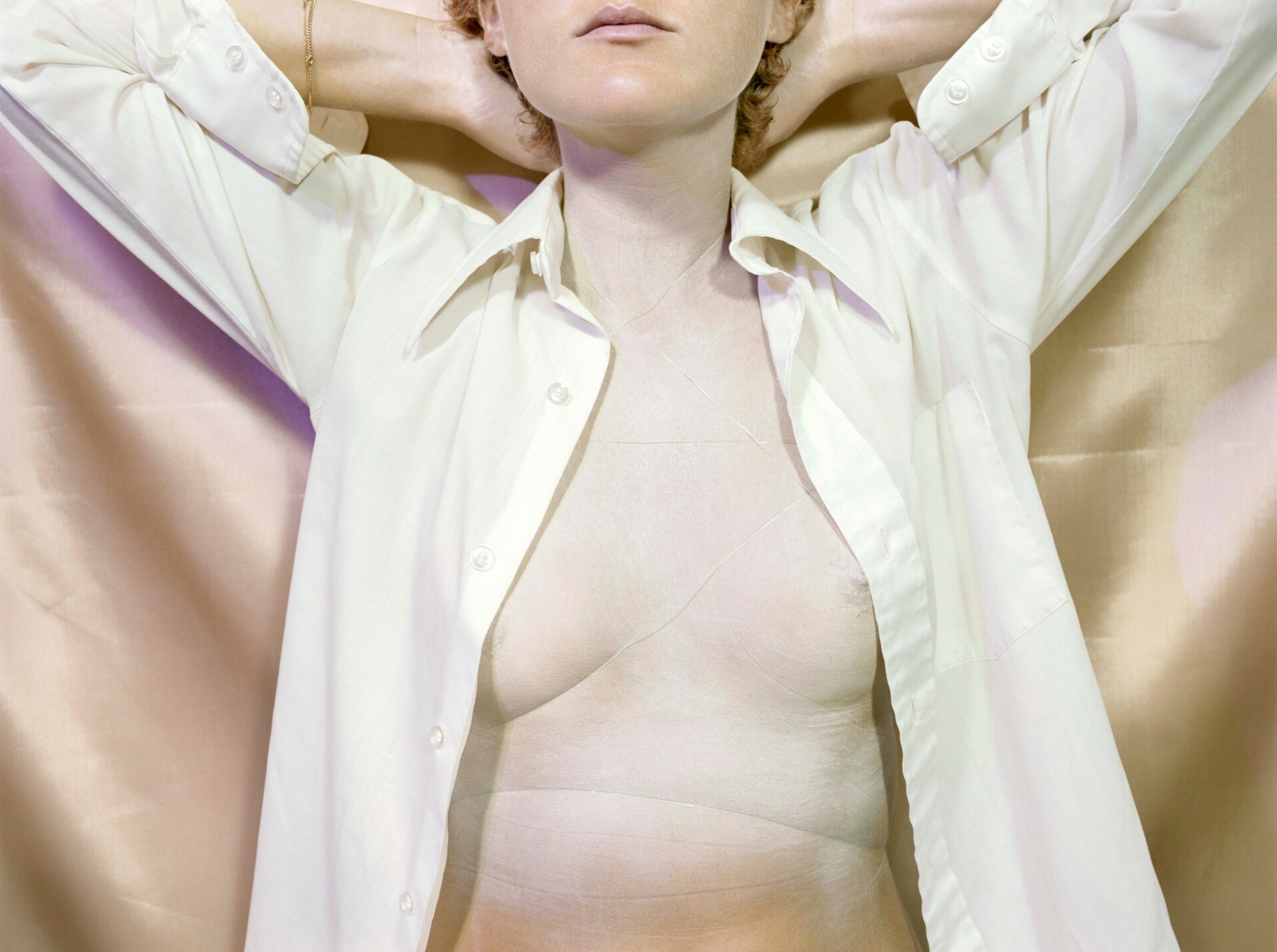
Untitled from Early Color portfolio, 1976, Jo Ann Callis. Courtesy ROSEGALLERY.
Paris Photo is turning eroticism on its head this year with Curiosa — a new sector dedicated to sexually-charged photography — curated by Martha Kirszenbaum. Curiosa aims to show a new side to erotic imagery, no mean feat in an era awash with explicit content, be it on the internet or shared and swapped via personal texts and sexts. Featuring a range of images across self-portraiture, photomontage and mise-en-scène, from archival to present day, Curiosa delves into the complexity of human sexuality, attempting to shed light on fetishism, fantasy and power dynamics. Although the male gaze is still (unsurprisingly) much better represented in the exhibit, we decided to foreground the sector’s female practitioners, to see what we can learn about desire and eroticism from their photographic representations.
Lesson 1: Any position can be dominant
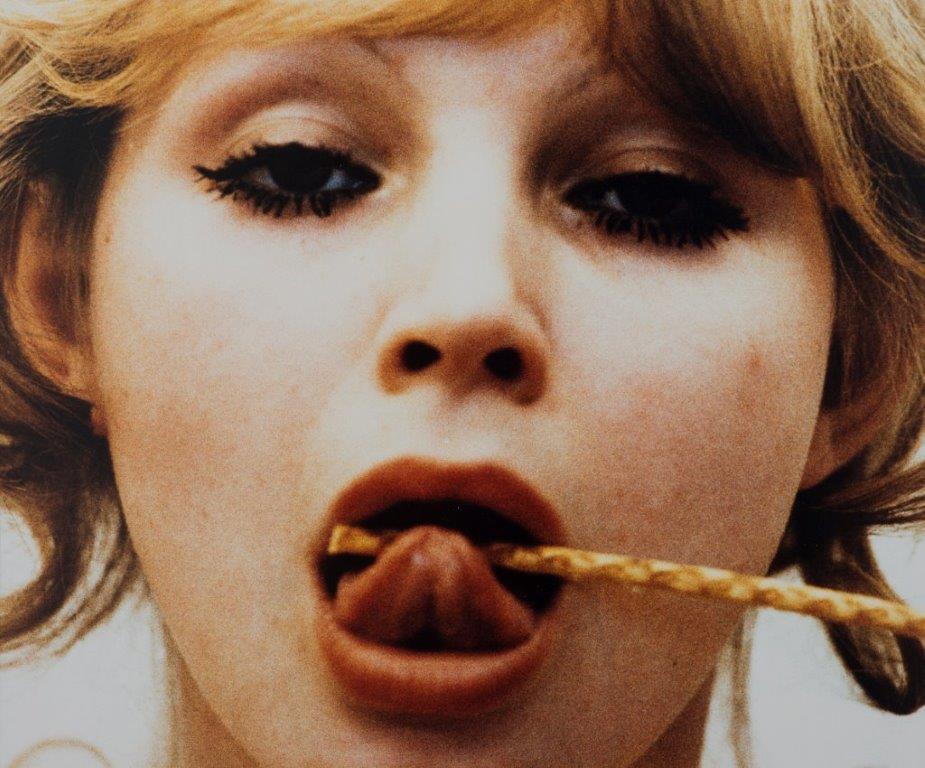
"Consumer Art", 1974, Natalia LL. Courtesy Natalia LL and lokal_30 gallery Warsaw.
There is something unashamedly bold about confidently eating – or even just posing – with a phallic object. Polish photographer Natalia LL’s Consumer Art (1974) shows, however, that there can be a dominant side to a pose normally thought of as submissive. While many “sexy” photographs objectify women, somehow you get the idea that the pretzel stick should be the one filing for sexual harassment here. Communist Poland was not quite ready to see LL’s take on sexuality in the ’70s. Her installation, Intimate Photography (1968-71), featuring a wooden box structure adorned on the outside with self-portraits and with photographs of copulating couples (including the artist herself) on the inside, was shut down after just two days by Polish authorities. But, times have changed, and we are more than ready to see, post and share her work now.
Lesson 2: Breakups can be an aphrodisiac
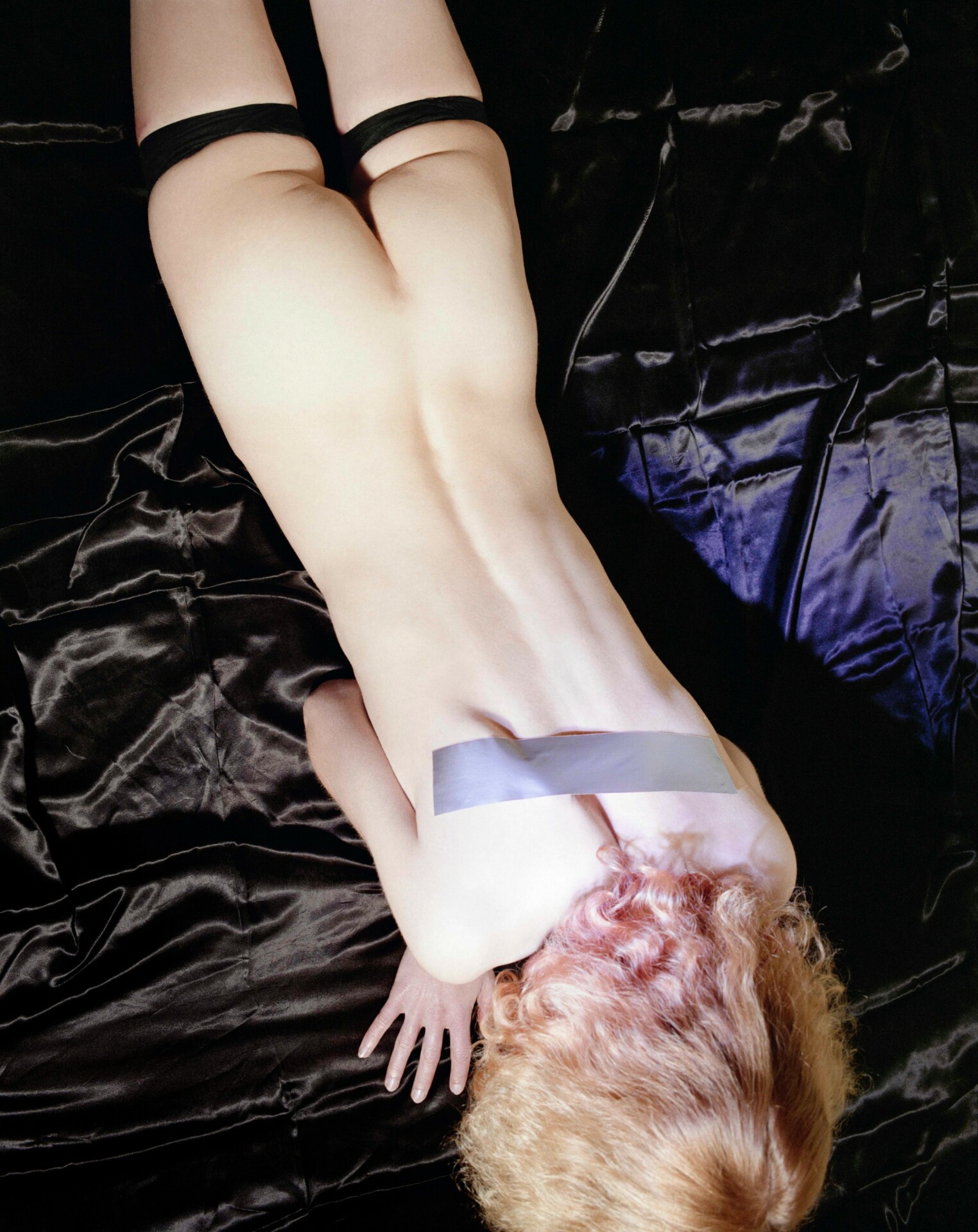
"Untitled" from Early Color Portfolio, 1976, Jo Ann Callis. Courtesy ROSEGALLERY.
The work of American photographer Jo Ann Callis is breathtaking in its unflinching representation of sexually-potent scenarios. Her series Early Color (1976-77) depicts women in domestic environments — their naked bodies bound and swaddled in contrasting materials, from palest pink silk to duct tape, leather to taut string. Created while she was “in the midst of leaving a marriage and trying to break into the art world at the same time” (as she told The New Yorker), Early Color is fiercely erotic and fetishistic, evoking the sort of BDSM imagery that has only recently entered the mainstream thanks to the likes of Fifty Shades of Grey. But the sexually-charged aesthetic is not the only level on which the works can be appreciated, they also provoke an interesting discussion about the pleasures and restrictions of domestic life and relationships.
Lesson 3: Protection is key
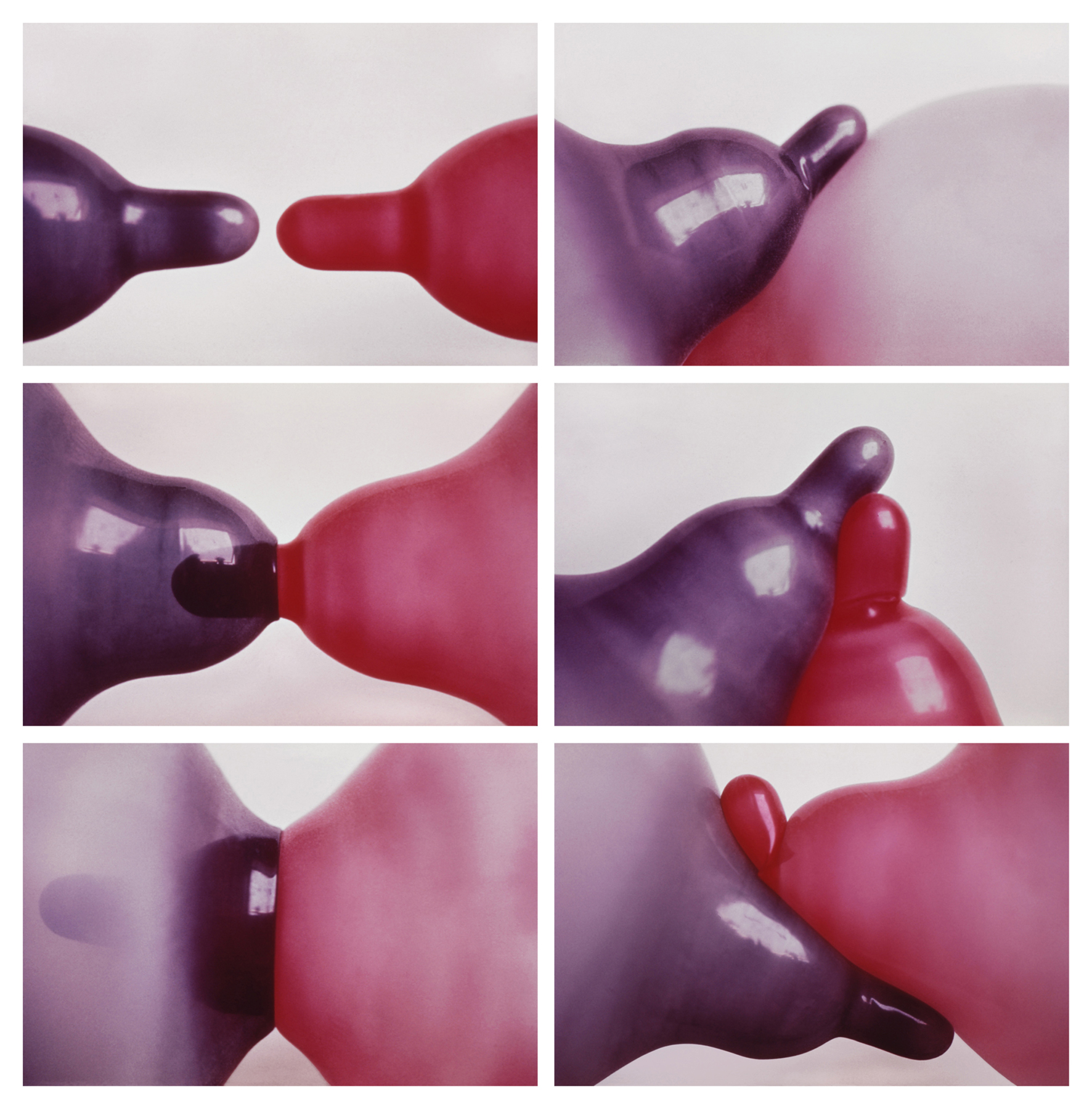
"Tendres caresses", © Renate Bertlmann 95,5 x 97 cm - Photographie couleur montée sur dibond
If there’s any lesson women can take away from Austrian photographer Renate Bertlmann’s work, it’s that in order to obtain power in sexual discussions, men need to be beaten at their own game in terms of dry, erotic humour. “Pornographic jokes have always been a male domain, made at the exclusive expense of women,” Bertlmann told the Tate back in 2015. Instead, she aims to combat this imbalance by targeting “the deadly serious, male sexual arrogance” by making her artwork “an obscene female joke”. Just take her work Tendrescaresses, which depicts two inflated, colourful condoms caressing one another, looking almost like cheeky cartoon characters rather than contraceptives. This approach is typical of Bertlman, who originally adopted crude comedy in contrast to the vitriol of the women’s art movement in the 1970s. She is quoted as saying: “ I did not resolve my anxiety about male sexual violence by joining the call by militant feminists to ‘cut off their balls’. I thought it was more directional and also more subversive to look ironically and in a cartoonish manner… at the phallus in order to disarm it”.
Lesson 4: A sext can be sentimental
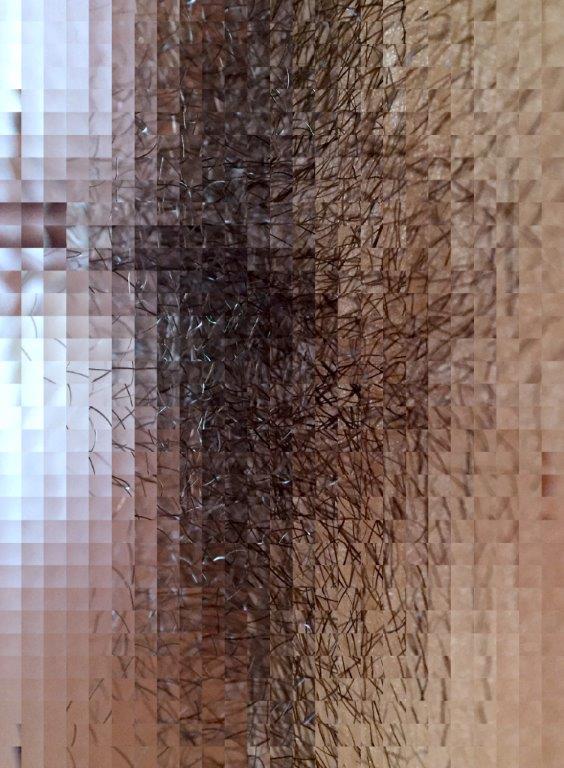
"Sexxx-2305", 2018 from the series "End-to-End Encrypted". Courtesy of Galerie Tanit and Janine Rubeiz.
Sexting with an absent lover can feel empty and desperate, unless you are Jeanne & Moreau who have literally made it into an art. This artistic and romantic duo, made up of Randa Mirza and Lara Tabet, is separated by geographical distance, and therefore relies heavily on digital technology and social media to keep their relationship afloat. Although their virtual romance has been forced upon them, it has inspired their photographic work, resulting in obscured, glitched-out and blurred imagery such as Sexxx-2305, which just about hints at something sexy and bodily underneath. In works like this, the duo explore how love and sex exist in the digital realm, and how people can reclaim ownership of the presentation of their own bodies.
Paris Photo runs until 11 November at Grand Palais Paris.