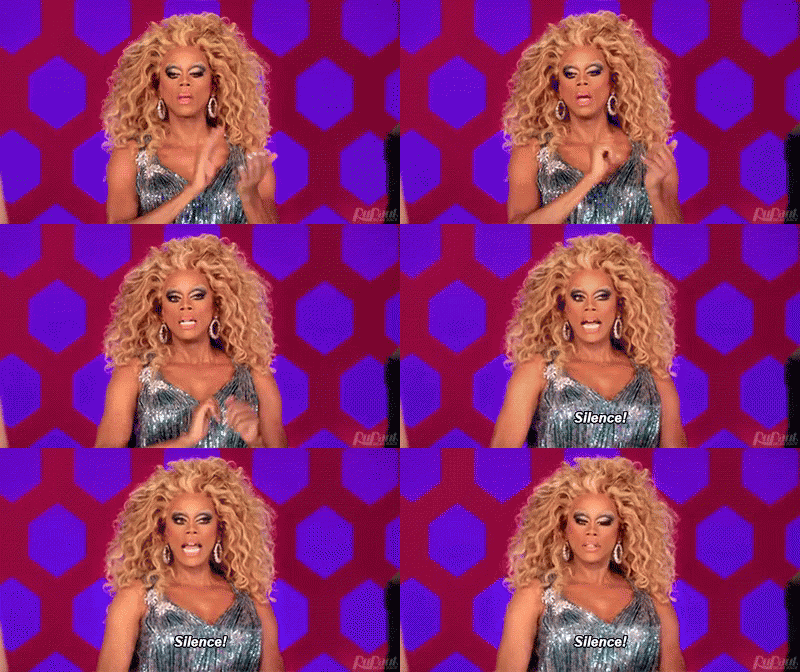
RuPaul’s Drag Race Season 9, courtesy of VH1
It’s been known for a while that RuPaul’s Drag Race fans can get pretty nasty, but last year things came to a head when Asia O’Hara shared that a fan had threatened to burn her alive for being black. The season 10 finalist explained that the threat had resurfaced old trauma; a group of local boys had actually attempted to set fire to a young O’Hara for being gay. “That strong and resilient person I had become was instantly reduced back to that 11-year-old boy,” she wrote.
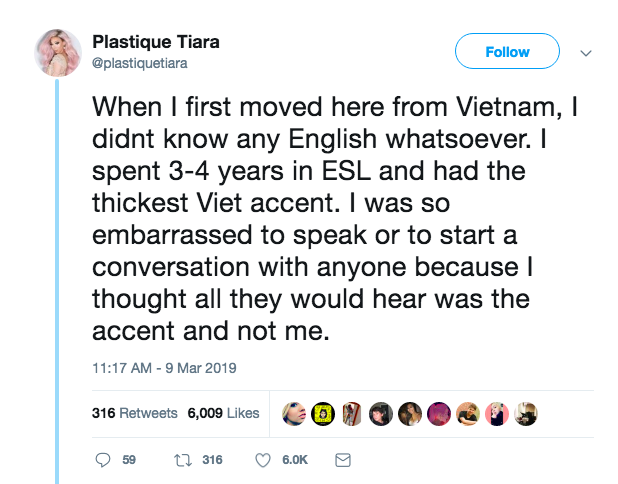
Fast-forward just a few months and it seems the problem refuses to go away. Naomi Smalls recently received death threats for sending home a fan favourite during All Stars 4; only two weeks ago, season 11 contestant Soju war forced to defend herself online after being cruelly mocked and told she was “less of a drag queen” for wearing flats (she has tendonitis); even Vietnamese season 11 queen Plastique Tiara caught some serious heat for comically exaggerating her own accent in a recent challenge. From mindless verbal attacks to threats of actual violence, it seems there’s no predicting the Drag Race fandom.
But one thing is predictable: queens of colour will receive the most hate. Countless queens have described the show’s fandom as explicitly racist, and season 10 finally saw the show address race relations – albeit terribly – by making somewhat of a scapegoat out of the Vixen, who called out fellow queen Eureka for racist rhetoric. She was tarred with the ‘angry black queen’ trope so often used to undermine people of colour, and when the reunion episode came, only Asia O’Hara came to her defence. This sparked an altercation with Ru, who explained: “I have been discriminated against by white people for being too black, by black people for being too gay and by gay people for being too femme. But did I let that stop me from getting this chair? No.” Ultimately, The Vixen’s politics proved too radical for the show and its capitalist ‘by the bootstraps’ rhetoric.
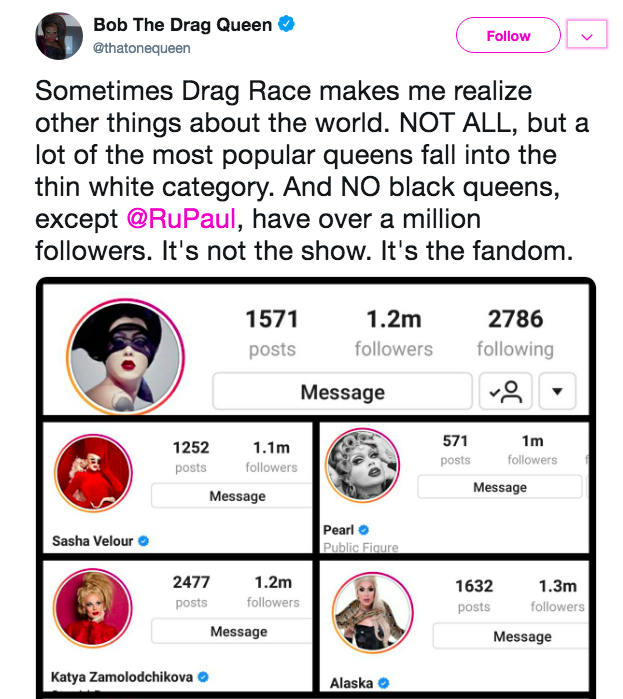
These conversations had already been happening, but not actually on the show. “Queens of colour are less celebrated than our white counterparts,” said season 9 queen Shea Coulée earlier last year in a roundtable discussion. “But that’s life, we have to work twice as hard to get half the recognition.” The same is true of social media, too – even the most successful queens of colour have significantly less followers.
There are other factors at play when it comes to deciding which queens receive the most vitriol. “There’s also that ‘traditional’ trope of gay men targeting queens of size and transgender performers,” says Berlin-based superfan and fellow drag queen Christoph. “Still, it certainly seems like many fans are all too willing to jump at any tiny character trait of a queen of colour that rubs them up the wrong way; they’re also willing to give white queens more free passes.”
This hatred is at odds with the show’s overarching message of self-love, but Carolina Are – a social media consultant, lecturer and researcher whose work focuses heavily on online trolling – argues that fans are just trying to mimic queens that ‘read’ each other and ‘throw shade’. These terms are rooted in queer ballroom culture, and they describe a back-and-forth exchange of clever insults which are playful and shady, but never eigentlich mean. The show’s ‘roast’ challenges are a prime example: queens are praised for witty put-downs, but punished when they cross the line into straight-up nastiness.
“When you watch the ‘reading’ challenges, the editing and reactions make it clear when someone crosses that line,” Are tells me. “Online, it’s trickier to get that moment of reckoning. You just post, and there’s no editor there to tell you you’ve gone too far.” She also points to the show’s growing popularity and highlights that Drag Race now propels queer people – and their culture – to international celebrity status almost overnight. This celebration of subcultural art in mainstream culture has undeniably tinged drag with capitalism – queens are expected to be ‘polished’ when they arrive – but it’s also made stars of marginalised people.
Sure, Drag Race is subversive by mainstream standards, but certainly not by international standards. When RuPaul was called out for transphobic comments in a Guardian profile (he insinuated that Peppermint wasn’t quite trans enough to be classed as a woman contestant; an apology later ensued) the limitations of Drag Race became evident.
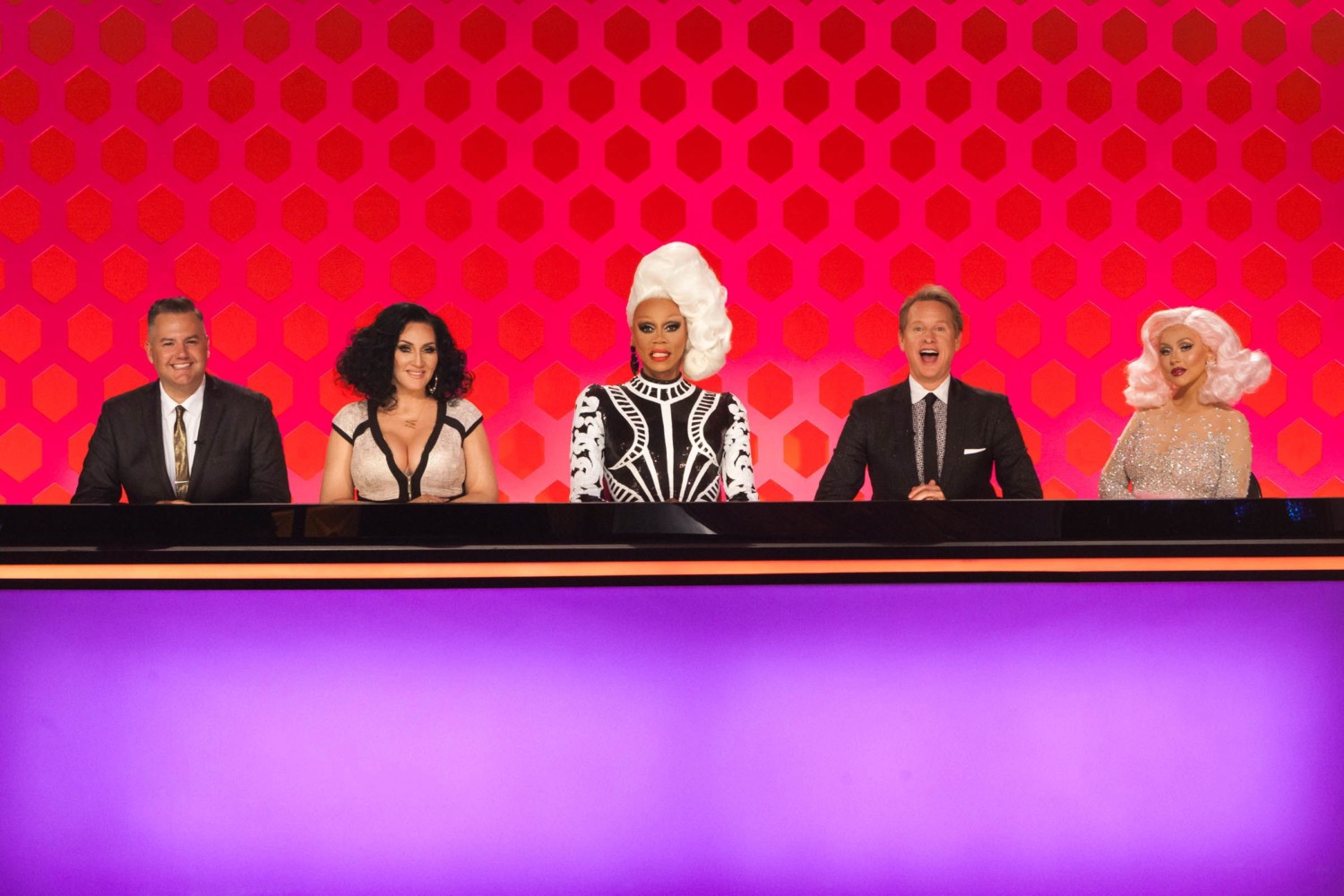
RuPaul's Drag Race judges, courtesy of VH1
Ru is of the opinion that drag is more subversive when cis gay men are the artists behind it, but there are countless trans, non-binary and cis women performers worldwide bending gender to their will and battling misogyny on top of that. In-depth conversations of trans identity on the show have been largely missing despite some queens ‘coming out’ mid-season, although Peppermint and Gia Gunn (who was featured on All Stars 4 after this controversy) have both spoken about drag as a tool to explore their gender identity and make a viable living. Drag is social commentary first and foremost, and marginalised performers are harnessing that potential to radical effect.
As for fans, it’s also hard not to read their comments in a wider cultural context. The rise of racism and right-wing rhetoric has been swift over the last few years, and it just so happens that queens are being caught in the crossfire – and despite coming to each others’ defences, it seems the show is reluctant to officially call it out.
“I definitely think that queens of colour are targeted more frequently and aggressively than others,” says Jasmin, a UK-based PR consultant and self-identified superfan. “But I don’t think that’s something that’s unique to the fandom. A combination of Brexit and Trump’s election have emboldened racists; they’re now so openly vile because they feel it’s acceptable. As much as the fandom wants to declare that it’s completely unprejudiced and loving, there are evidently some prejudices being pulled to the surface in this current social climate.” Incidentally, a recently-announced UK version is in the works – although it remains uncertain whether the cast will mirror the country’s more DIY, genderfuck approach to drag.
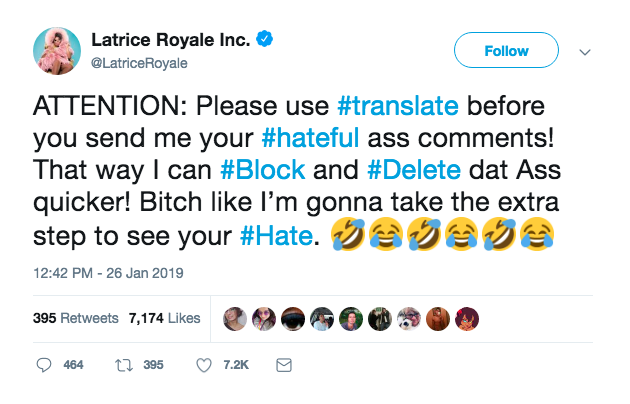
The problem is complicated and multi-pronged: sometimes queens are attacked by self-anointed ‘critics’; at other times they’re targeted by straight-up homophobes and racists; but more frequently it seems they’re torn apart by overzealous fans who take what is essentially a reality show way, Weg too seriously.
“Sometimes queens fight to the death on-screen but then take an Instagram selfie together, so you never know whether feuds are scripted or – if not – if they’ve been resolved,” explains Are. But even if these are storylines custom-built to spark controversy, the reality is that queens are dealing with the consequences. “There have been some instances where Ru or other queens have addressed the trolls; But ultimately I think the show would do more; it needs to publicly and properly distance itself from the trolls.”
This is the core issue – accountability. It’s all well and good to turn marginalised performers into stars, but how ethical is it to throw them to the fandom wolves without adequately calling out their behaviour?