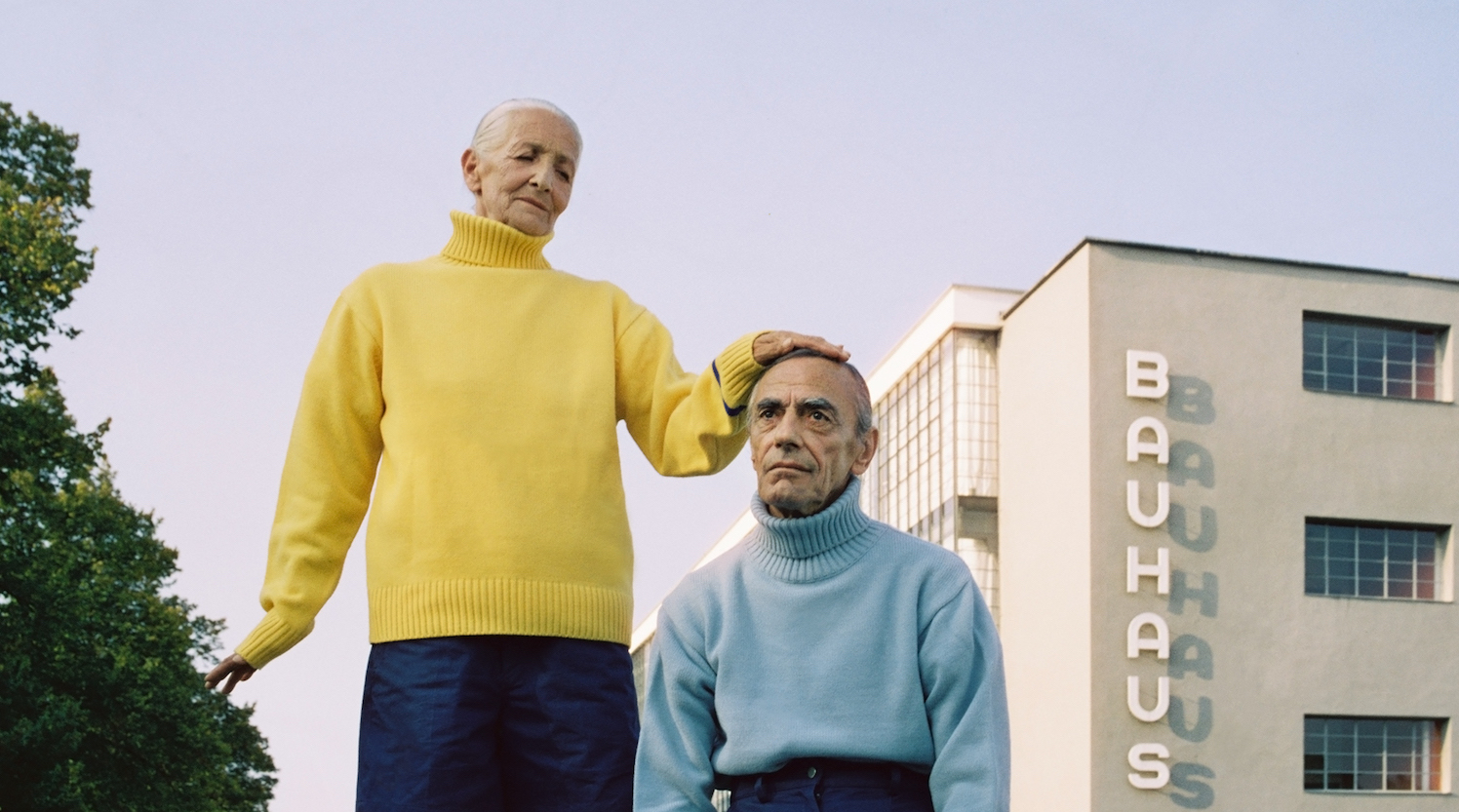
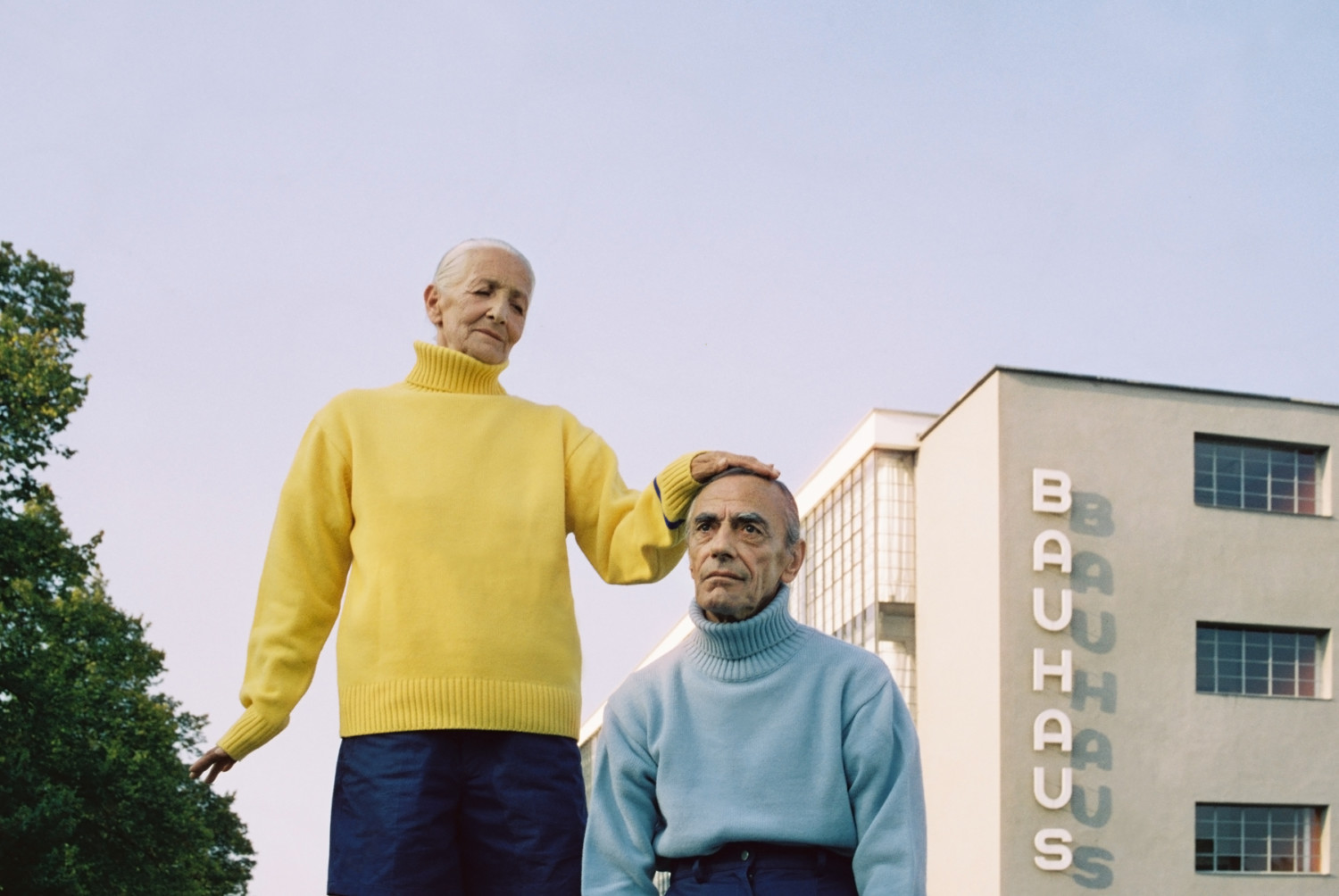
Serenity courtesy of Can Dagarslani.
This month saw the Bauhaus school turn 100, which means that there’s no better time than the present to reflect on its ongoing influence across the design and art worlds. We spoke to a number of artists and designers — some whose work has been more obviously connected to the movement and others not at all — to find out whether the Bauhaus still matters now and in what ways, if any, it has inspired their work.
The answers were varied: many of the commentators acknowledged it as an influence, whereas others did not. What is interesting is that for the ones who said it wasn’t an influence initially, on further reflection they recognised an element — be it its philosophy, aesthetic or approach to production — to be present in their work. Significantly, nearly all of these practitioners commended the Bauhaus’ ethos to bring art practices together — design, photography, architecture, topography, dance, textiles, sculpture, you name it — in its all-encompassing vision of a Gesamtkunstwerk. As Berlin-based design studio, Sucuk und Bratwurst remarked, “Could that also be DJing, designing merch, magazine covers, making sculpture?” It certainly could, and that’s where Bauhaus’ impact is most keenly felt today. International architecture and research hub, WAI Think Tank said it best when they said, “As design and art have been turned into commodified consultancies under the control of capital and exchange and accumulation of wealth, a school that bridges disciplines, allows for the exchange of knowledge through different platforms and media and blurs the boundaries between life, design, art and architecture is ever more relevant.” We couldn’t agree more.
Alexis Christodoulou — 3D Artist
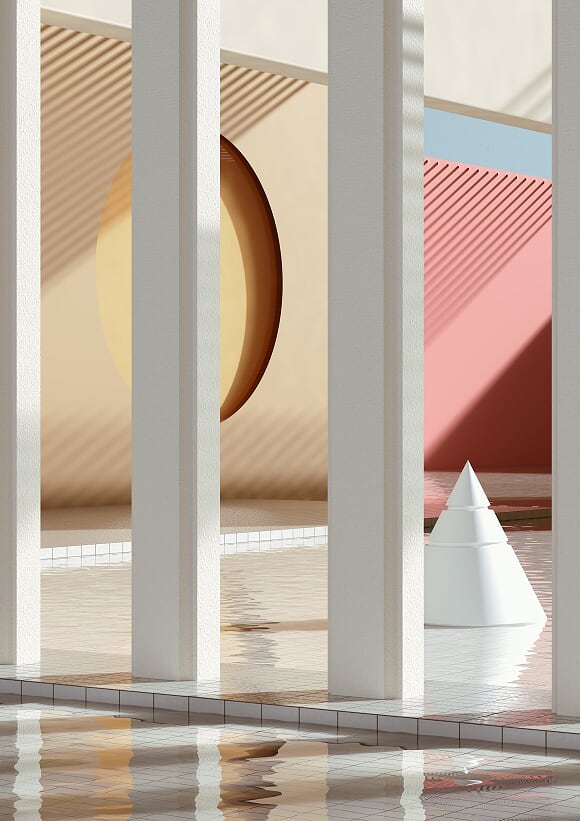
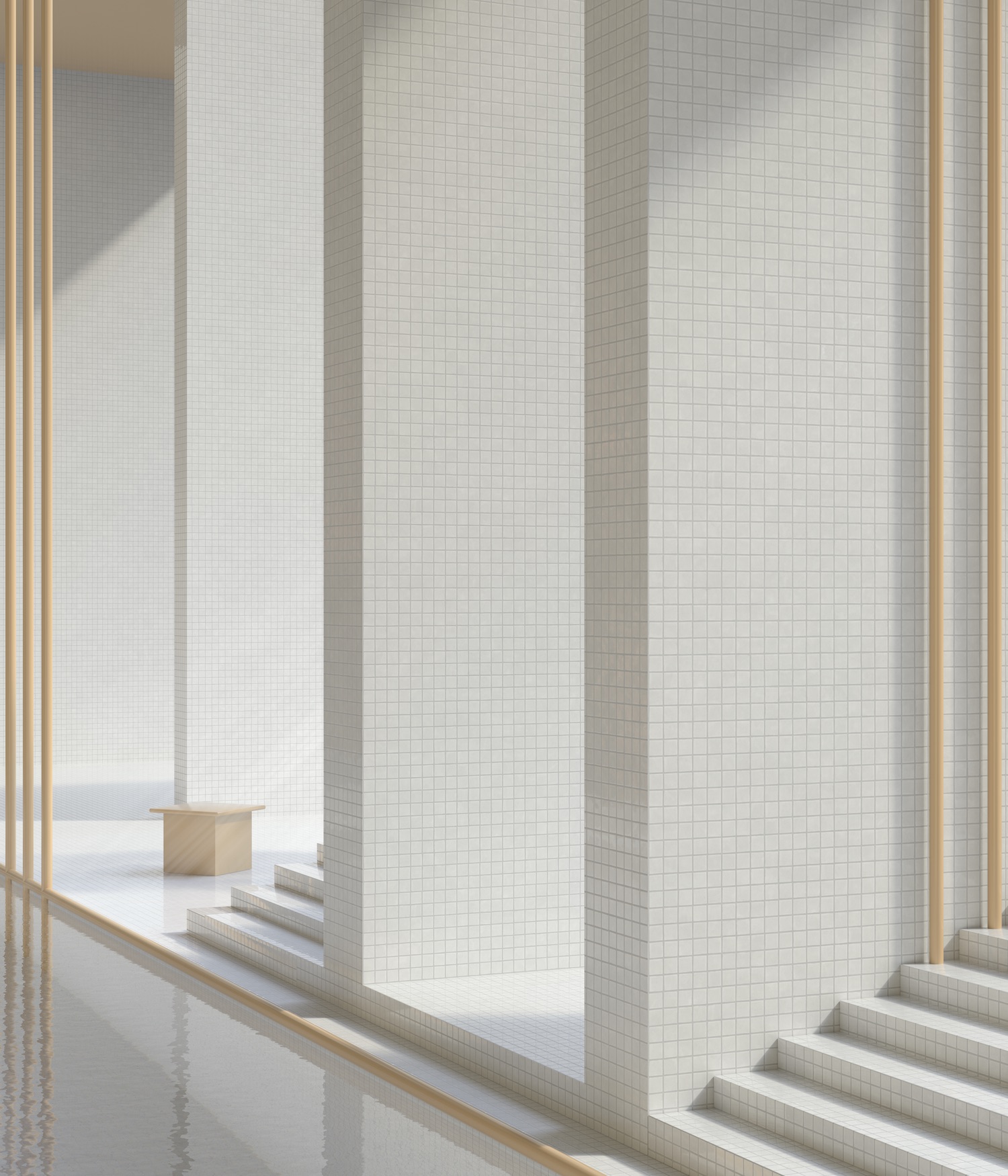
Courtesy of Alexis Christodoulou.
Artur de Menezes Fernandes — industrial designer
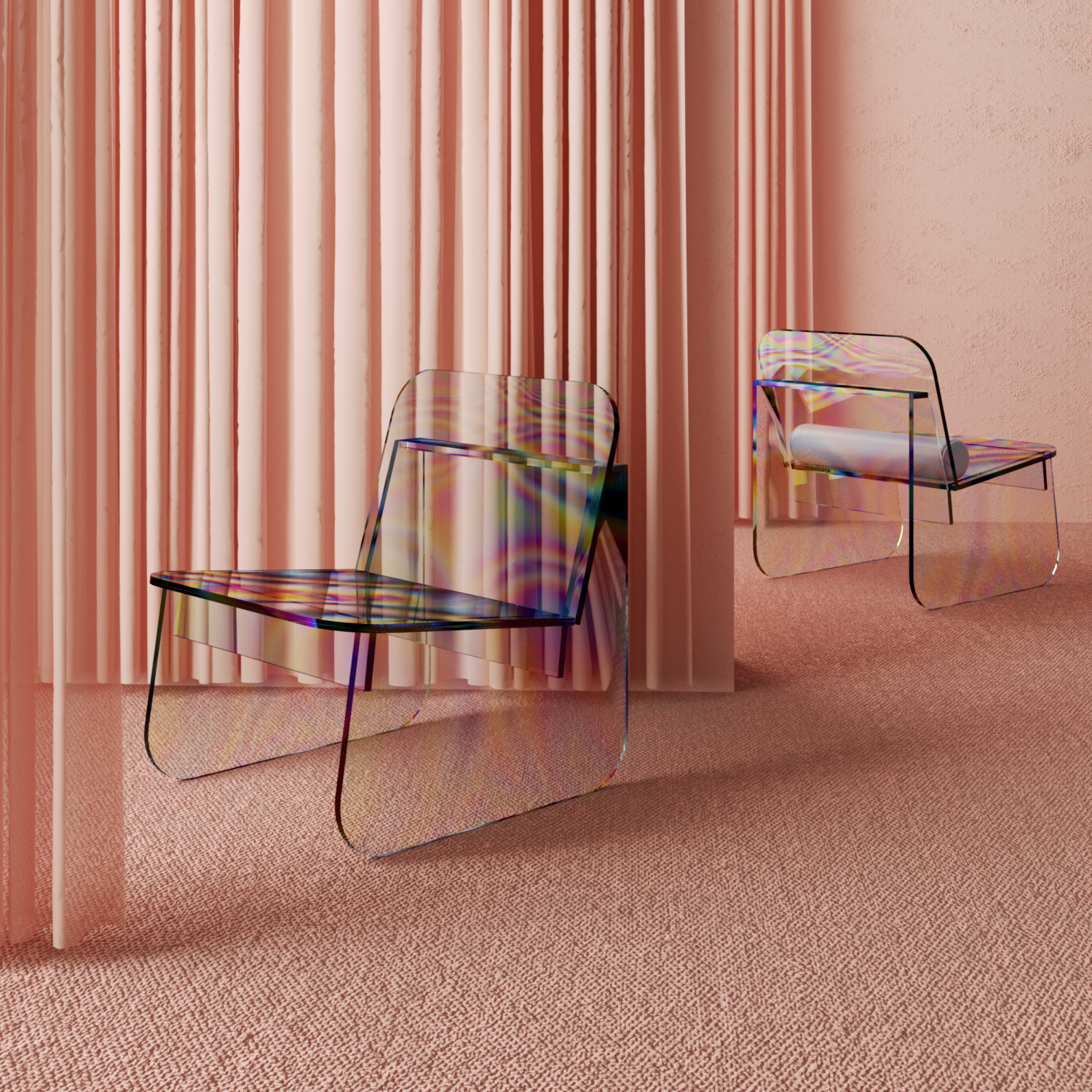

Oil Chair courtesy of Artur de Menezes Fernandes.
Veronica Ditting — Director of Studio Veronica Ditting and Creative Director of The Gentlewoman
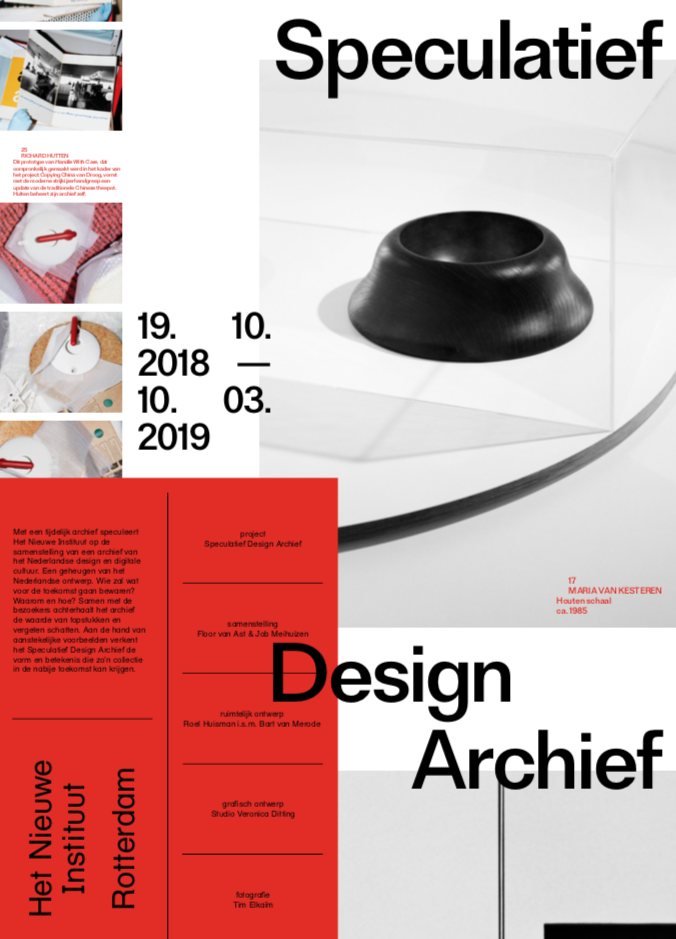
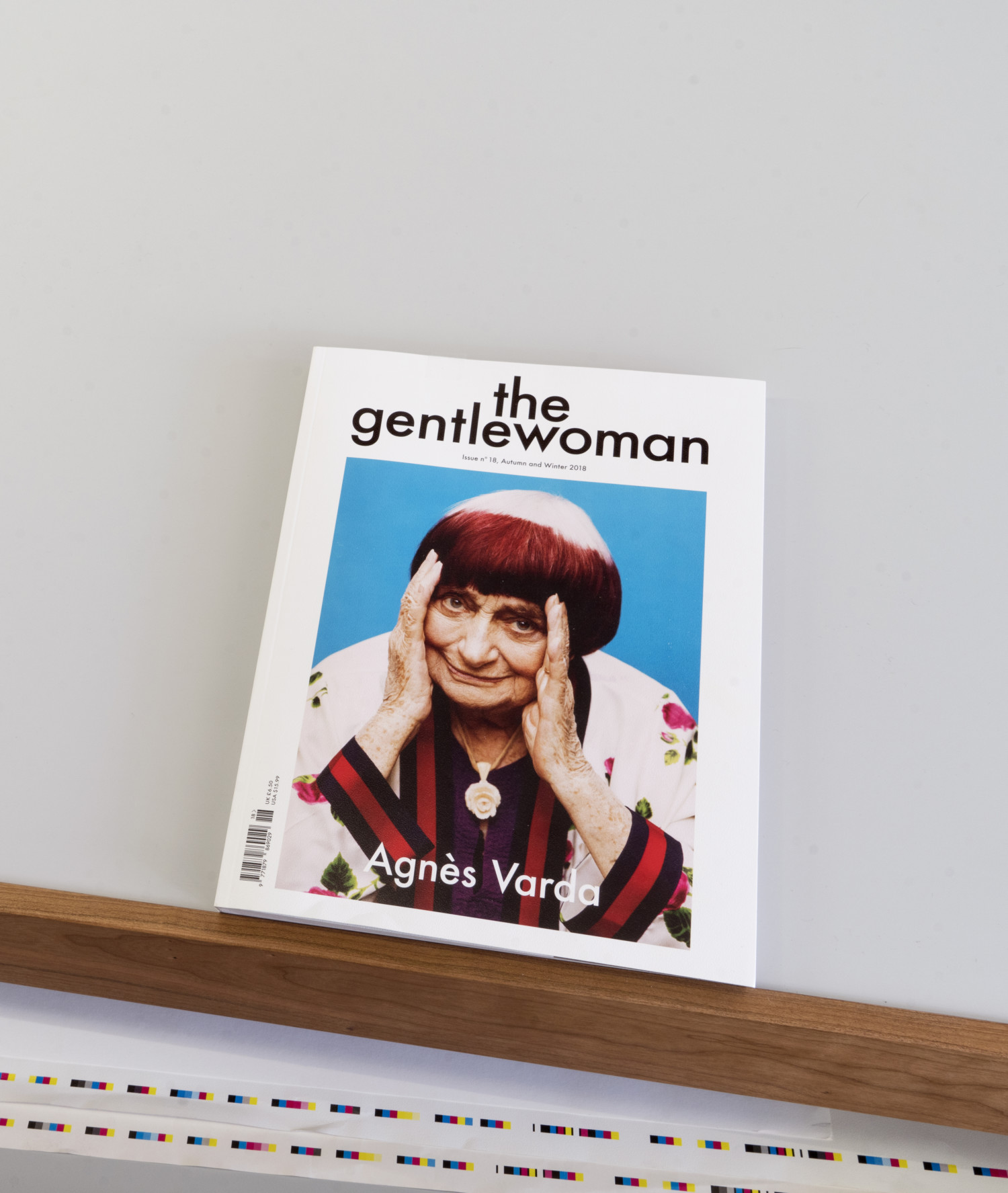
Can Dagarslani — Photographer and Architect
Serenity courtesy of Can Dagarslani.
“With utopian ideals for the future, the Bauhaus school developed a pioneering fusion of fine arts. The fact that it embraces the outlines of completely utopic ideas from numerous disciplines such as painting, sculpture, architecture, film, photography, textiles, ceramics, theatre and installation, the impact of the school remains until today. There is no doubt that it will also live on in times ahead.
The school fostered charismatic and creative exchange between teachers and students, all varied in their artistic styles and preferences but united in their idealism and interest in a “total” work of art across different practices and media. I also aim to render as a studio delivering ideas and projects which influence each other on both architecture and photography fields.”
Dominique Teufen — photographer

Circumvention courtesy of Dominique Teufen.
“Why Bauhaus still matters today is a very broad question to answer and I think that many people have already said a lot about it. For me, the Bauhaus language speaks of strong innovation and transformation and I think this still is of great matter today. Not only in the fields of art, where we have to reinvent our selves constantly, but it is a fundamental necessity for all of humanity. In order for us to survive the coming century, we must start questioning our prevailing views on life, we need to be innovative, we need to change our perception of reality and transform our way of living now.”
Sucuk und Bratwurst — creative studio
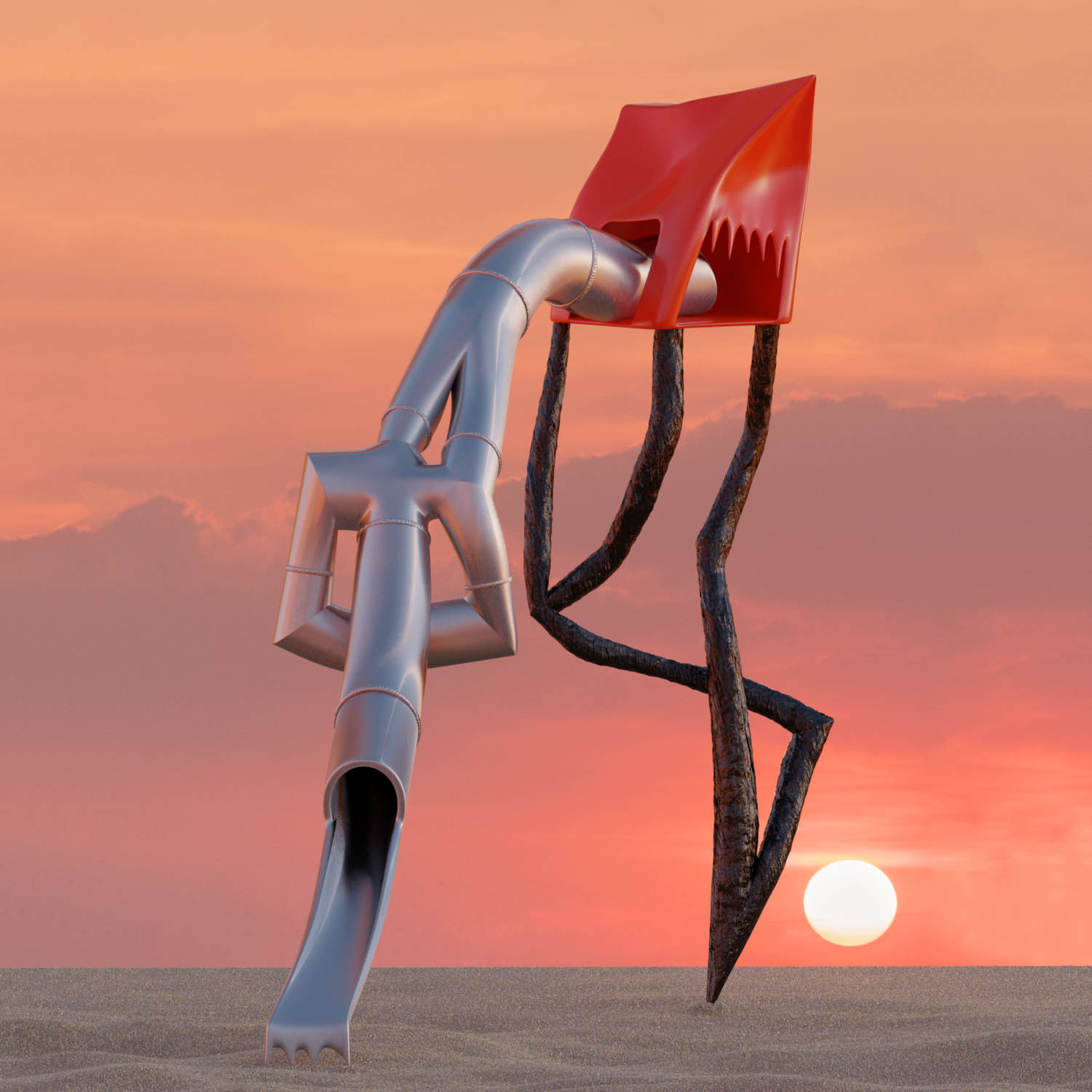
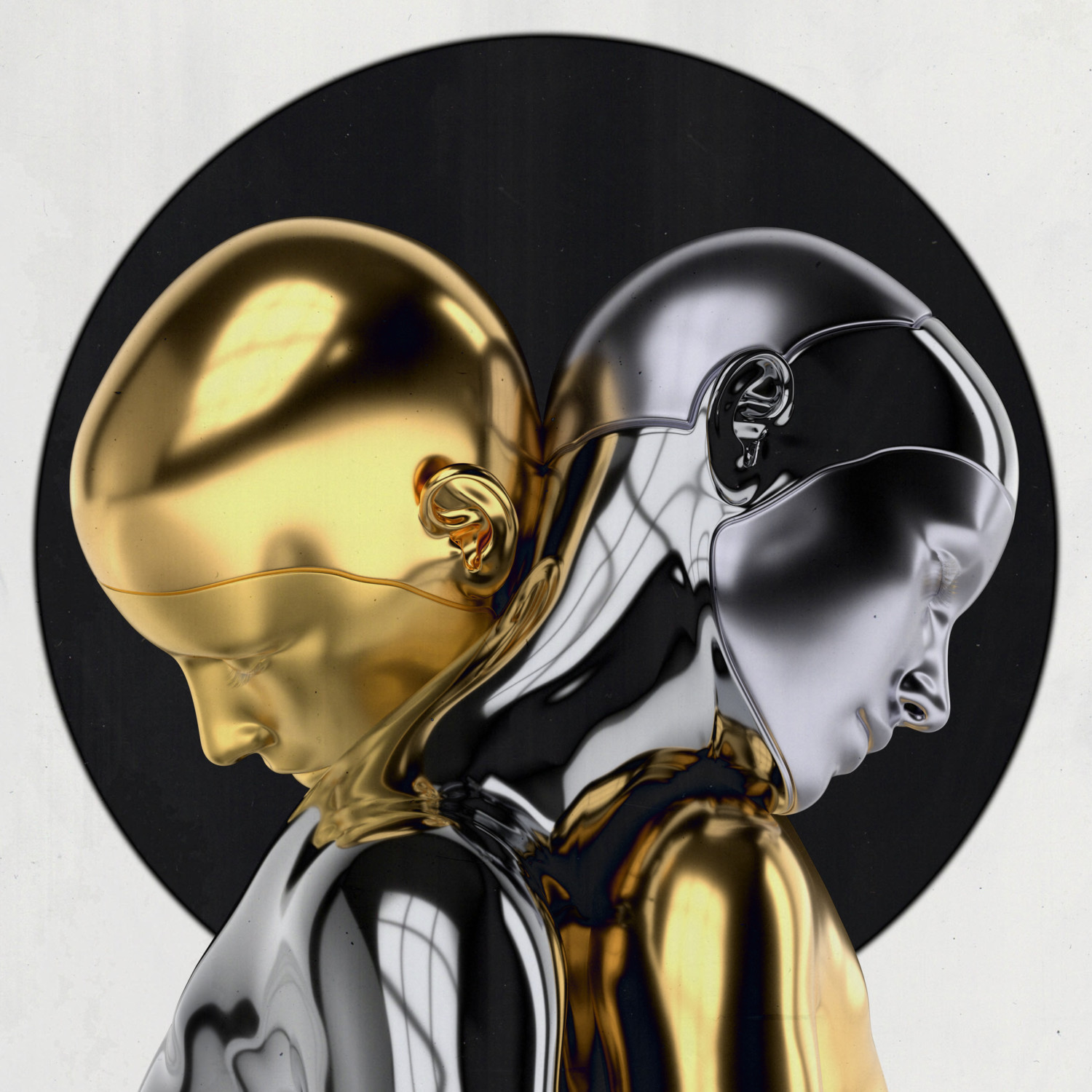
Courtesy of Sucuk & Bratwurst.
“What is Bauhaus? On the surface it doesn’t seem like a 100 year old architectural movement has anything to do with what we do. But unifying mediums to create Gesamtkunstwerk starts to sound familiar. Could that also be DJing, designing merch, magazine covers, making sculpture? The presentation of all means and methods online, and the accessibility of so many tools of creation, means that it’s more possible than ever to express a singular vision across different media. It’s also important not to get lost in the details of one specific field too much, to be able to create the kind of work that speaks to a large audience. There is a kind of minimalism and efficiency in our approach. We keep it simple and understandable. We are good at working with the tools we have, to make something that looks good, fun and no compromise. Maybe someday we will be invited to design a building too.”
WAI Think Tank — international architecture and urbanism studio
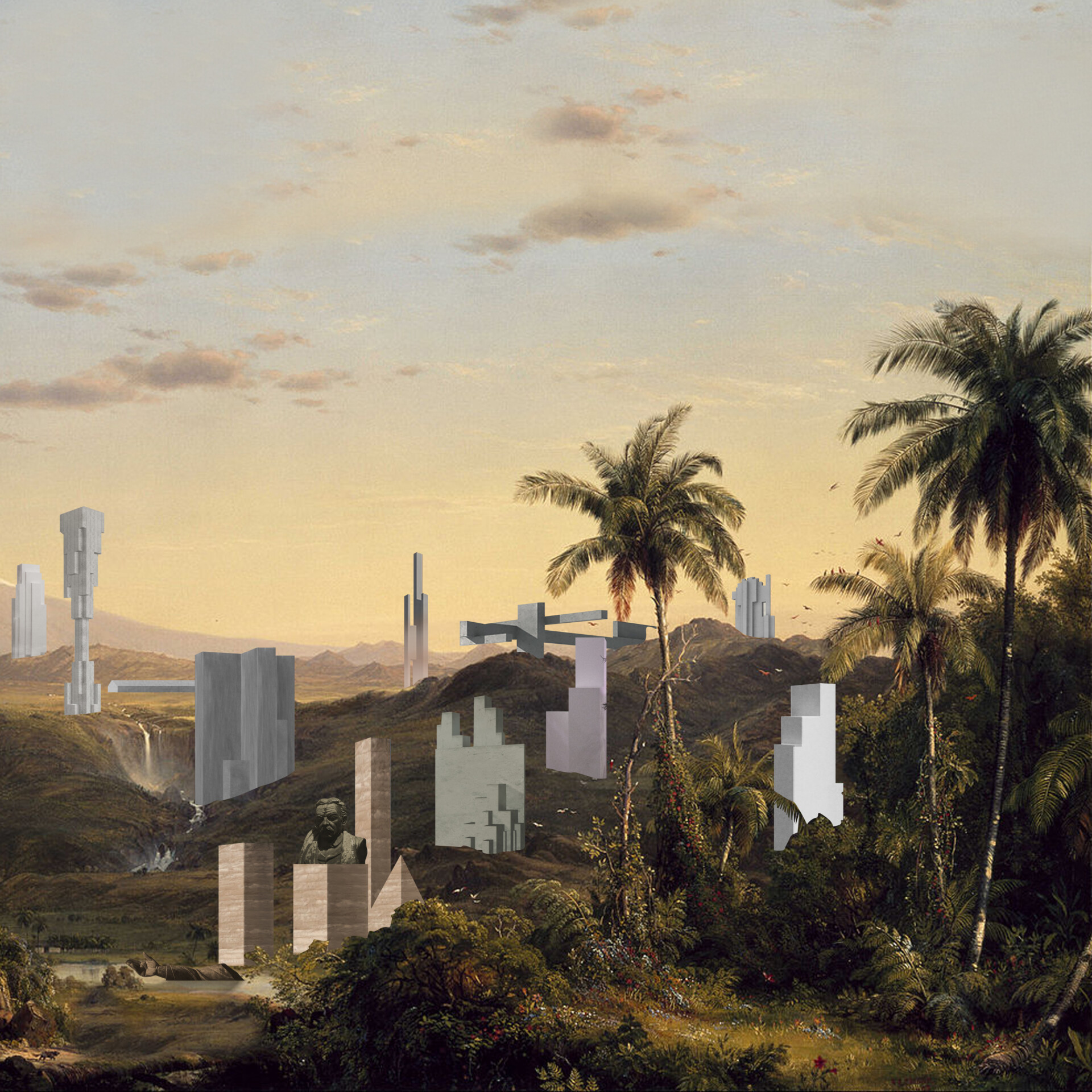
Post-Novis courtesy of WAI Think Thank.
“We should celebrate any institution that challenges the status quo, right-wing politics and that includes among its ranks international professors and students fleeing the menacing threats of political persecution, intellectual isolation and ideological oppression. The Bauhaus (among many of the avant garde movements operating at the ideological background of the school), driven by the understanding of the ethics of aesthetics, pursued a universalisation of strategies, models of making, thinking and producing. The school believed in the incorporation of modern models of production and reproduction and aimed (up to a degree) to blur the boundaries between so-called different disciplines (photography, textiles, architecture, painting).
In an age of hyper-specialization, as design and art have been turned into commodified consultancies under the control of capital and exchange and accumulation of wealth, a school that bridges disciplines, allows for the exchange of knowledge through different platforms and media, and blurs the boundaries between life, design, art and architecture is ever more relevant.
We believe in experimental pedagogies and practices that are able to challenge predetermined forms of design, art and architecture. But, rather than serving as a reference to emulate, the Bauhaus — or to be more precise the centenary of the Bauhaus — has allowed us to reflect on another, less known avant-garde school that we believe is even more historically urgent today. While in the manifesto of the Bauhaus, Walter Gropius stated that the school was open to “any person of good repute, without regard to age or sex” his exclusion of women from architecture due to what he claimed was their incapacity to think in three dimensions proves that contrary to popular belief the Bauhaus was not critical enough.
A year before the Bauhaus was founded, Marc Chagall inaugurated the People’s Art School in the small Belarusian town of Vitebsk. With women among its leadership ranks, the following year Vera Ermolaeva invited Kazimir Malevich to move from Moscow and join the school, where he co-founded one of the first collectives (the work produced defied authorship and was signed as a group). Through their collective work in UNOVIS ((an abbreviation of Utverditeli novogo iskusstva – Champions of the New Art) Ermolaeva, Malevich, Nina Kogan, El Lisstizky, Lazar Khidekel, Nicolai Suetin, Ilia Chasnik, looked for an architecture to transcend the impasse of the times.
Our project Post-Novis starts from the premise that at the same time Walter Gropius (Bauhaus founder) claimed that only men could do architecture other forms of pedagogy and practice formulated even more critical ways to make new worlds. Post-Novis offers other models of education and practice to celebrate, while reflecting on the centenary of the Bauhaus.”
Stefanie Seufert — artist
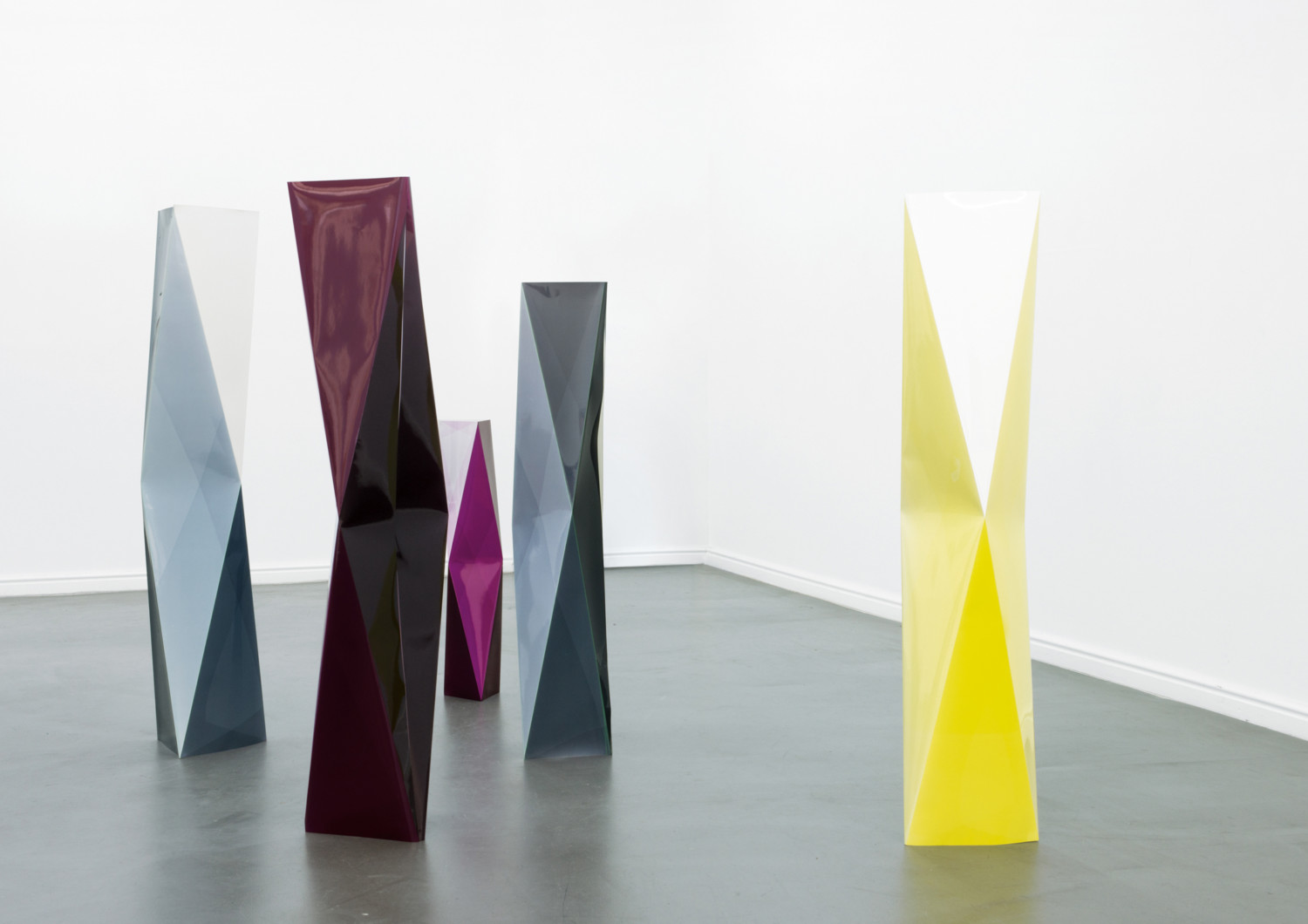
Towers, Option #2, Just Yellow, Atlas Grey, Dark Aubergine, 2016. Installation view Laura Mars Gallery Berlin. Courtesy of Stefanie Seufert.
“It’s rather the idea of Bauhaus than its design that has an impact on my work — learning from the material I’m working with to find new approaches. Hans Finsler was one of the photographers of this generation who inspired me.”
Dinamo Typefaces — Type design agency
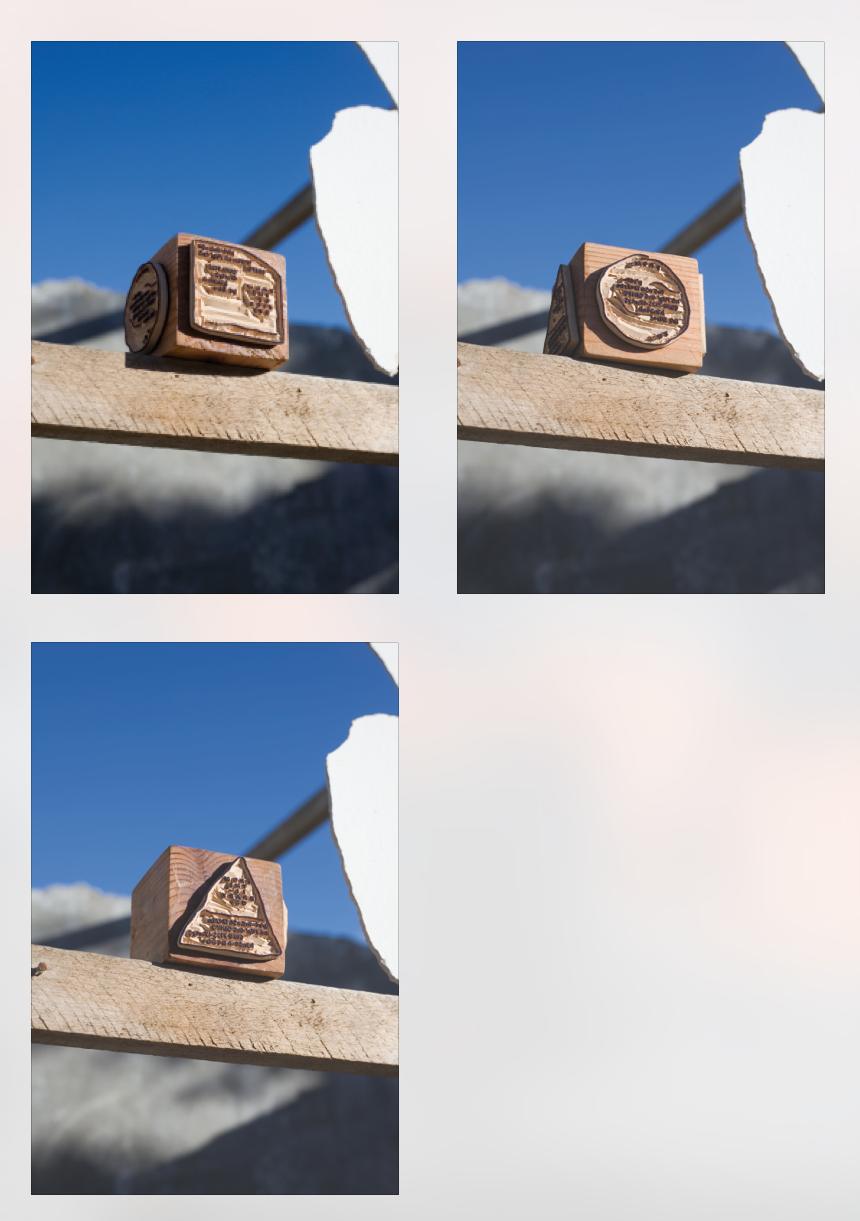
Bauhaus-Shape-Vocabulary courtesy of Dinamo Typefaces.
“Of course, the Bauhaus is present in a lot of approaches and aesthetics still. But there was so much before which lead to it and so much after that leads to now that it is maybe a bit simplistic to honour the Bauhaus alone … But then the current over-presence is a great proof of how good they were in public relations and advertising themselves – which certainly is still relevant today.
Cyril Lancelin (town.and.concrete) — artist and architect
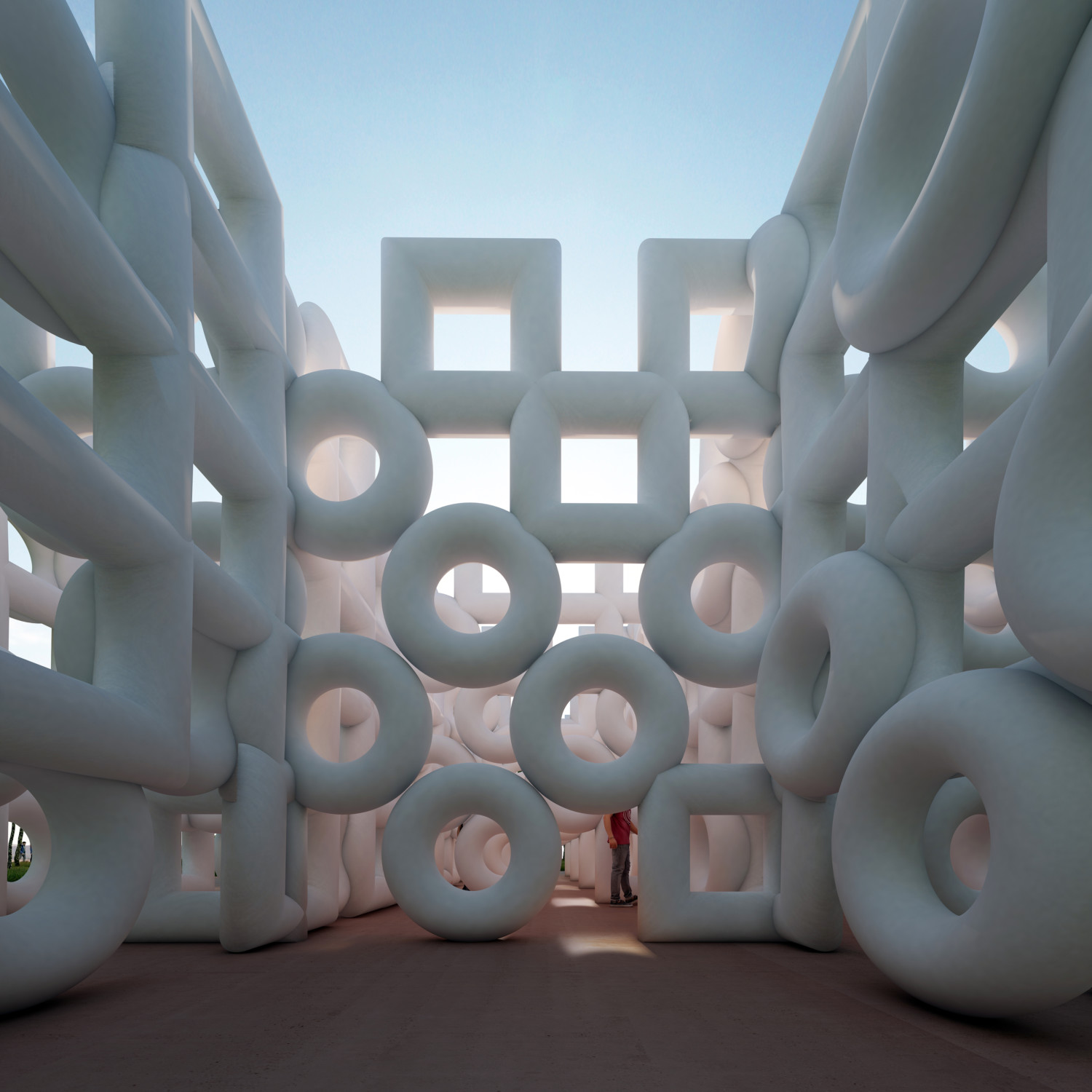
Courtesy of Cyril Lancelin.
“These guiding ideas, such as bringing arts and crafts together, and creating multidisciplinary workshops are the foundation of our current work. In my daily life, I use a lot of computer tools, both for the design but not only — it is also to discover and meet craftspeople, or train myself to craft practices. Multidisciplinarity is paramount. In my work architecture, art and design are inseparable and connected.”