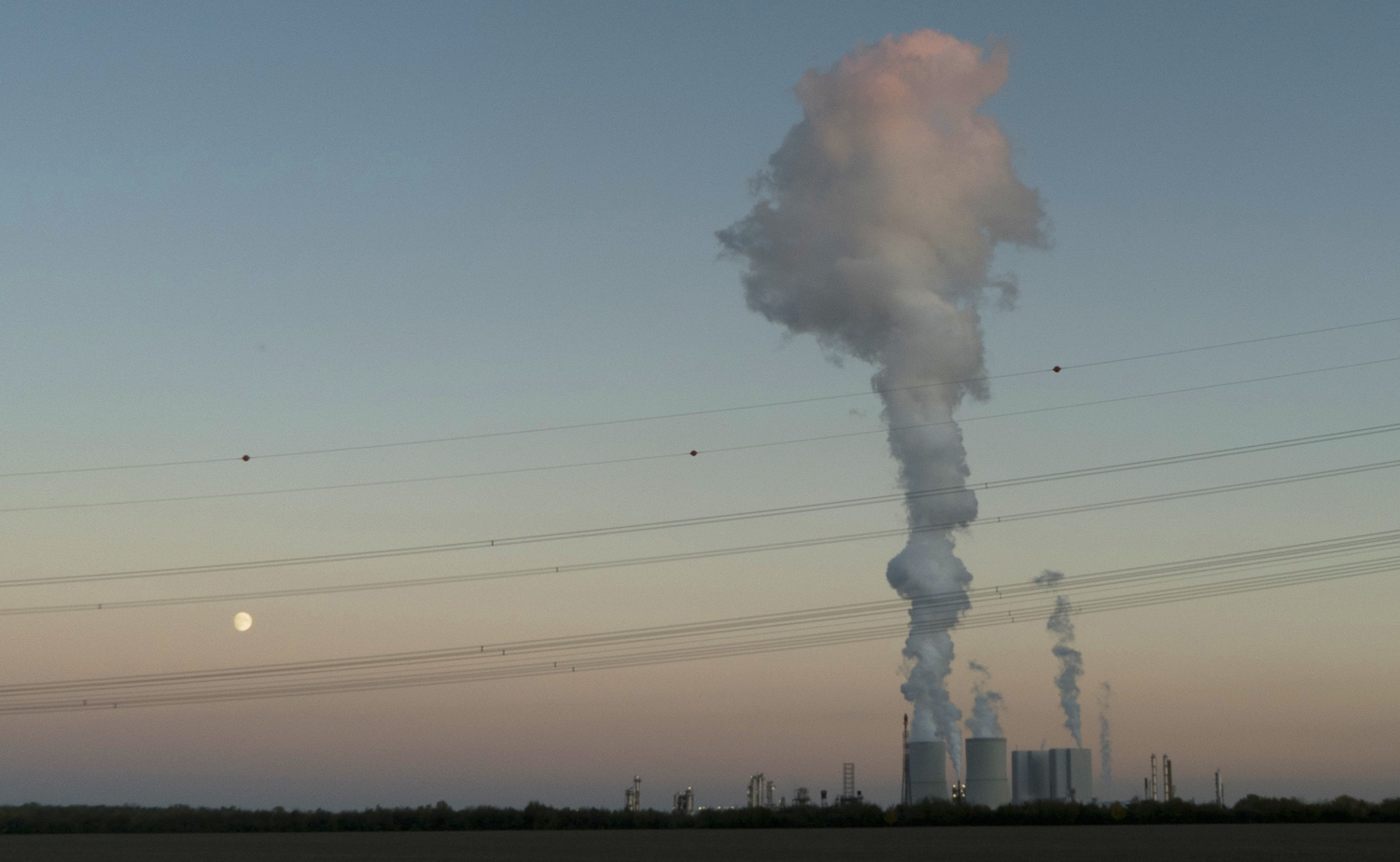
Copyright realities:united, 2018. Photo: Moritz Friese.
In the first episode of the recently-aired—and highly acclaimed—HBO miniseries Chernobyl (2019), the citizens of Pripyat (still unaware of the fatal levels of radiation they have been exposed to after the accident at the plant) gather on a bridge to marvel at nuclear particles burning in a hypnotic myriad of colour. The scene is one you might expect on a frosty Bonfire Night or warm Fourth of July evening: families huddle together; children’s faces are lit up by the luminous spectacle as they frolic in a miasma of radioactive dust. “It is beautiful,” a woman says as she rests her head on her husband’s shoulders.
Media platforms such as the The Irish Times picked up on the strangeness of this scene, describing how here, nuclear disaster is “unsettlingly lovely to look at.” It is one of the rare moments that the science behind the catastrophe is positioned as a thing of beauty. For the rest of the five-part series, viewers are inundated with harrowing sequences showing the effects of radiation and contamination: unctuous blisters, corroding flesh, stillbirths, vomiting plant workers—not to mention open season on domestic pets. But for a brief moment in this episode, we are asked to consider how atomic science has been paradoxically presented as both terrifying and rapturous in contemporary culture.
In this regard, HBO’s Chernobyl can be seen as the latest in a long line of artistic responses to nuclear disaster, which have proliferated the popular imagination since the Cold War. The same spectre of doomsday hangs over us today as climate change and mounting tensions with North Korea dominate the news. In these uncertain times, what is it about artistic and visual representations of nuclear catastrophe that appeals to us?
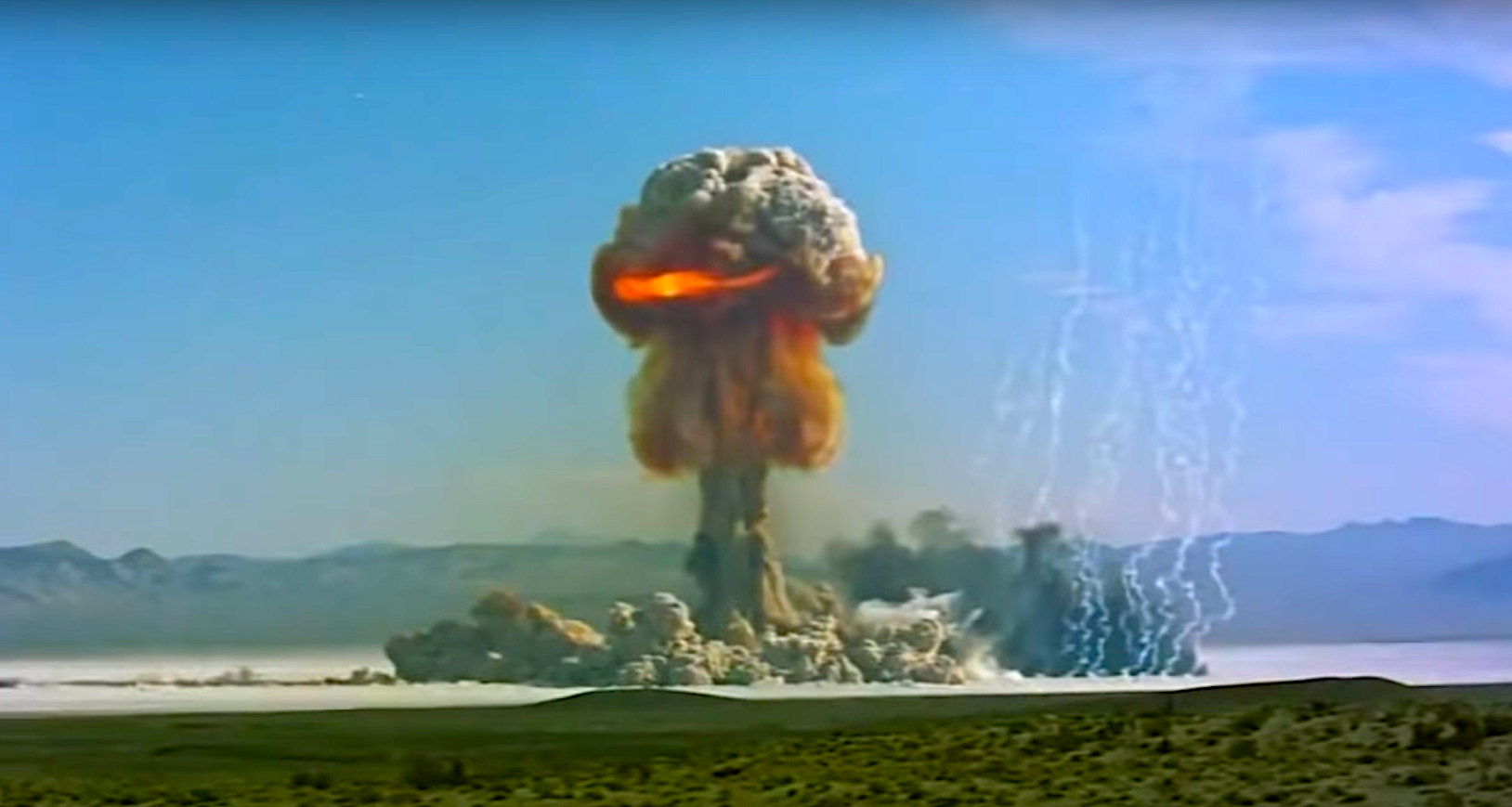
Still of a mushroom cloud of the atomic bomb via YouTube.
Nuclear energy, as both a symbol of scientific progress and cataclysmic devastation, has been one of the most powerful artistic stimuli in modern culture—ever since the atomic bomb was dropped on Hiroshima at the end of WWII and activated imaginations forever. With this catastrophe, humans were confronted with the prospect of self-annihilation on an apocalyptic scale hitherto only described in the Book of Revelations. As nuclear energy forced itself into collective consciousness, it indelibly forced itself into culture.
Significantly, these cultural manifestations have been highly aesthetic in nature, undoubtedly because the atomic age was ushered in with the spectacular visual phenomenon of the mushroom cloud. Observers of the first atomic test in New Mexico in 1945 described the event in exalted visual terms: “At the appointed time there was a blinding flash lighting up the whole area brighter than the brightest daylight … a huge multi-coloured surging cloud boiled to an altitude of over 40,000 feet.”
The mushroom cloud became the emblematic symbol of the atomic age as it was repeatedly evoked in film and art. In his 1964 film Dr. Strange Love: Or How I Learned to Stop Worrying and Love the Bomb, Stanley Kubrick assembled a montage of mushroom clouds from real footage of test explosions conducted in the 1950s and early 1960s. Through an unsettling mix of fiction and reality, Kubrick allowed viewers to confront their nuclear fears within a fictional framework.
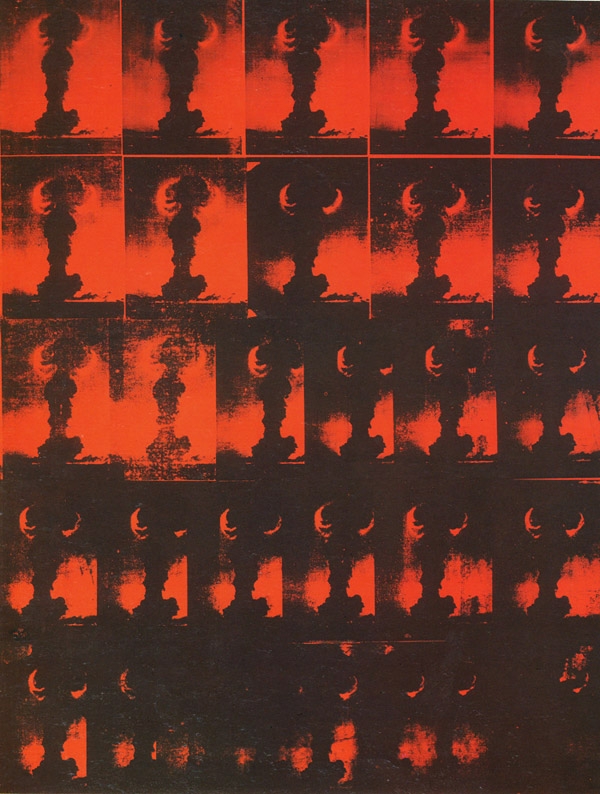
A similar nuclear vernacular infiltrated painting and sculpture as the mushroom cloud began to resurface in works such as Salvador Dali’s The Three Sphinxes of Bikini (1947), Andy Warhol’s Atomic Bomb (1968) and Henry Moore’s Nuclear Energy (1964-66). In these ambiguous works, we see both a fixation on the visual ecstasy generated by nuclear energy and an anxiety towards its devastating powers. Arguably, atomic art—art which engages with nuclear and atomic themes—is one of the most significant genres of the modern and contemporary era. As an artistic movement it calls the centuries-old cult of progress into question, emphasising its puzzling contradiction: for one culture or person to succeed must be at the expense of another.
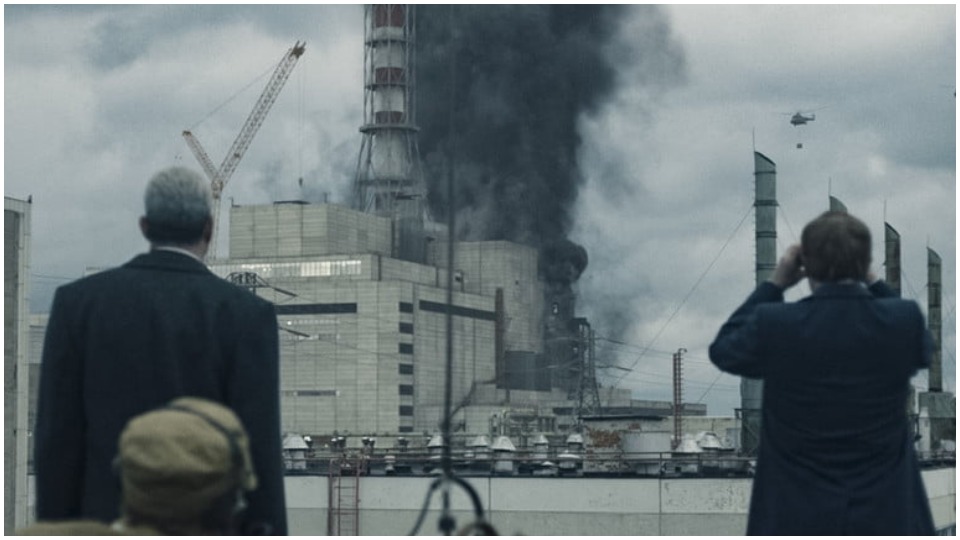
Although we should be wary of conflating military and civil uses of nuclear power and the effects of the bomb with that of a reactor explosion, it’s clear that directors capitalise on this mushroom cloud imagery to call on our collective nuclear anxieties in Chernobyl. One of the most foreboding shots in the whole series is of Soviet scientist Valery Legasov (Jared Harris) and government tough-guy Boris Shcherbina (Stellan Skarsgård) staring in disbelief at the black cloud billowing into the sky from a burning reactor. As soldiers and government officials scramble to contain the disaster, this image looms in the background and is burned into viewers’ minds, reminding us that some mistakes are too egregious to be undone; some images, too dreadful to be unseen.
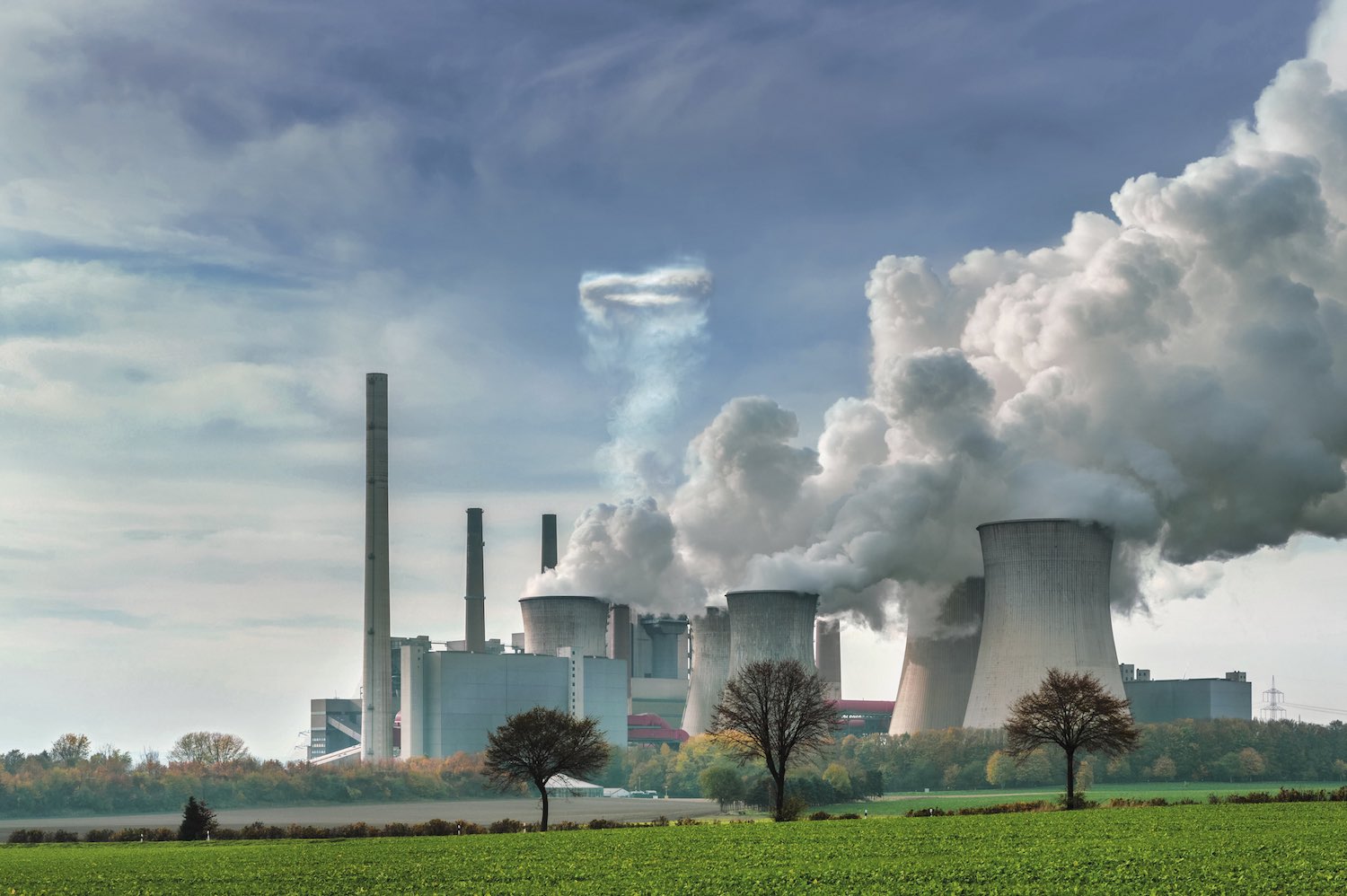
Fazit (Neurath), © realities:united, 2019, digitale Montage basierend auf einer Fotografie von Frank Roeder/picture alliance/Westend61.
According to cultural critic Tonnie A. Perrine, “nuclear fear exists as a deep-seated part of our psychological make-up that can never be completely denied.” Art helps us exorcise these fears. We cannot see radiation, and its effects are beyond the scope of the human lifespan. Like climate change, nuclear disaster is a theme so monumental, so pervasive, that it exposes the limits of language and human imagination. Yet, it is through art that we can make the invisible visible and articulate the inarticulable, and thereby come to terms with trauma.
In an ongoing Ausstellung at Berlinische Galerie, the mushroom cloud is being evoked once more: this time, not as an ominous death star, but as a symbol of resurrection. The Berlin gallery’s Realities:United exhibition presents an art project by architects Jan and Tim Edler who see the importance of harnessing the visual to express nuclear concerns. As Germany phases out nuclear energy to near totality, the pair hope to take over cooling towers of plants across the country so that they emit massive steam rings which can be seen far and wide to represent this transition into a post-nuclear future. Here, art is used as a cathartic means: past ills are transformed, anxieties are allayed—all released into the air in the form of a glorious white cloud.
Realities:United runs through to 19 August at Berlinische Galerie.