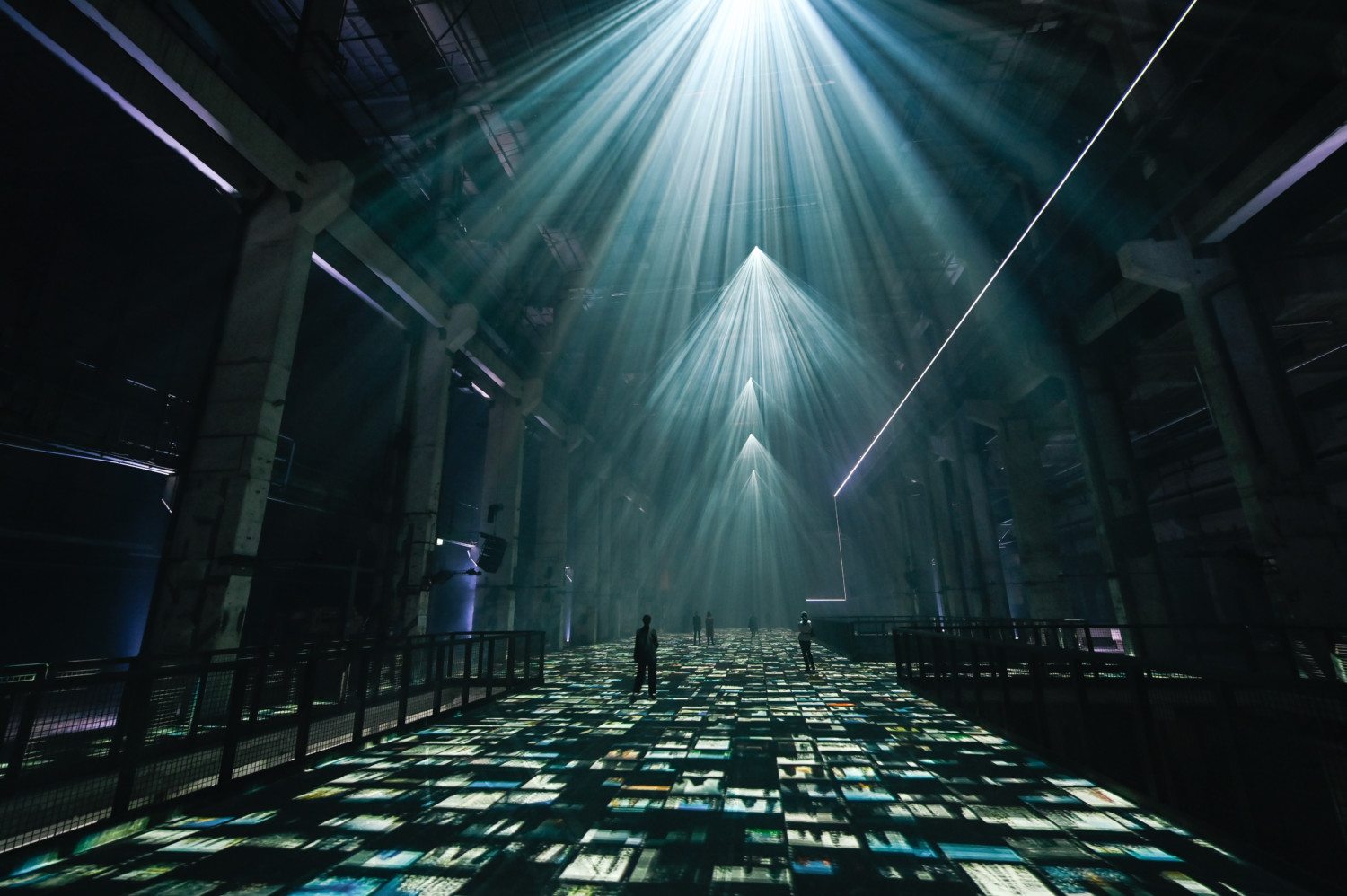
Refik Anadol, „Latent Being“, 2019. LAS Light Art Space im Kraftwerk Berlin © Camille Blake. Mit freundlicher Genehmigung von LAS.
Auch wenn jeder die deutsche Hauptstadt auf seine eigene Weise erlebt, hat der KI-Künstler Refik Anadol schafft eine Art kollektives Unbewusstes der Stadt. Seine Installation Latentes Wesen Die von Light Art Space (LAS) im weitläufigen ehemaligen Kraftwerk präsentierte Installation nutzt Algorithmen, um eine datengesteuerte, immersive Fantasiewelt von Berlin zu erschaffen und die Besucher zu verfolgen, um das Werk zu gestalten.
“Maschinen ermöglichen es uns, über unser lineares Leben hinauszudenken und eine neue Art von Vorstellungskraft zu entwickeln”, sagte Refik bei der Vorbesichtigung der Installation. “Welche kulturellen Erzählungen können wir schaffen, wenn Maschinen uns sagen, welche Erfahrungen geteilt werden?” Die Ausstellung beginnt mit Projektionen von 10.000 Fotos aus Berlin, die wie auf dem Laufband eines Laufbands über den Boden laufen – eine Mischung aus Archivaufnahmen und zeitgenössischen Bildern, die Anadols Team im Internet gefunden hat. Der von Kerim Karaoglu komponierte Soundtrack basiert auf einer KI-bearbeiteten Feldaufnahme aus Berlin – von dröhnendem Techno im Berghain bis hin zu Straßengeräuschen und Radio-Gesprächen – und kombiniert diese mit älteren Klangstücken, die im Internet gefunden wurden. Obwohl nur Licht die Rückwärtsbewegung erzeugt, täuscht der Gang durch die Bilder dem Körper vor, er würde gegen eine physische Strömung laufen.
Im zweiten Akt werden die Projektionen ausgeblendet und mit bunten Lasern entsteht eine geometrische Architektur – eine abstrakte Darstellung der Schichten des neuronalen Netzwerks (VGG16), aus der später in der Show das Kunstwerk entsteht. Einer der Gründe, warum Anadol gerne architektonische Werke mit Licht statt mit Baumaterialien schafft, ist, dass Menschen mit ihnen interagieren können, ohne sie zu verändern. “Licht ist das einzige Material, mit dem Menschen mit einem Raum interagieren können, ohne Probleme zu verursachen oder Dinge zum Einsturz zu bringen”, sagt er.
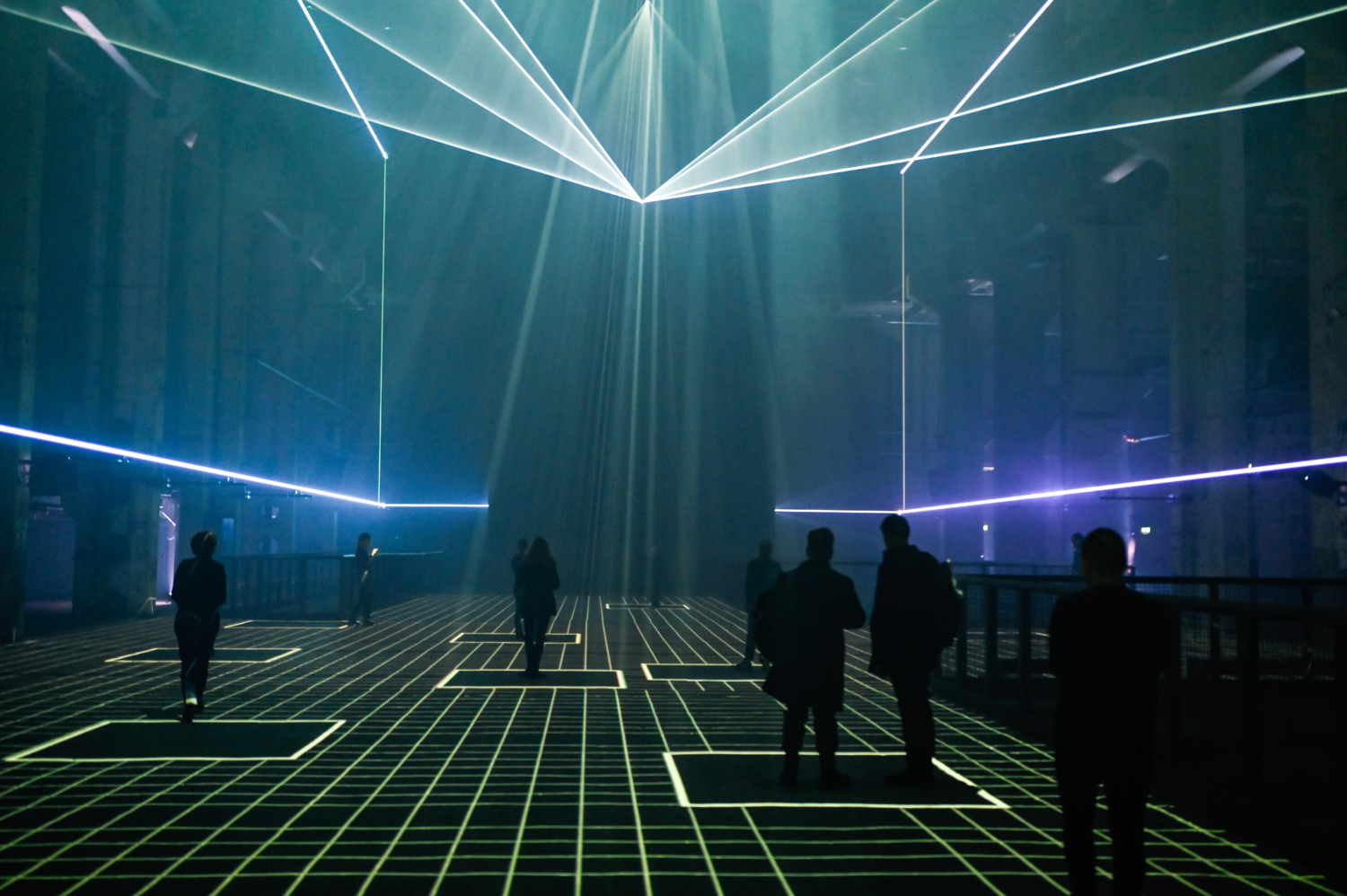
Refik Anadol, „Latent Being“, 2019. LAS Light Art Space im Kraftwerk Berlin © Camille Blake. Mit freundlicher Genehmigung von LAS.
Beim Betreten des Raums erhalten die Besucher ein Ortungsgerät. Die Auswirkungen des Trackers bleiben weitgehend unbemerkt, bis auf dem Betonboden projizierte Quadrate mit Koordinaten erscheinen, die den Besuchern bei ihren Bewegungen folgen. Doch Standortdaten sind nicht das Einzige, was der Algorithmus erfasst. Neben den Bewegungsmustern registriert die Maschine auch, wie lange sich die Besucher in der Installation aufhalten, was sich auf die Bilder und das Tempo der Show auswirkt. “Letztendlich sind wir es, die die Maschine füttern und steuern”, sagt Anadol. “Sowohl durch unsere körperlichen Bewegungen innerhalb der Installation als auch durch unsere alltäglichen Handlungen im digitalen Raum.”
Der Höhepunkt des Stücks ist die Enthüllung, wie sich der GAN-Algorithmus (Generative Adversarial Networks) Berlin vorstellt – Bilder der Stadt, die von neoklassizistischen Kathedralen mit grünen Dächern zu brutalistischen Betonkonstruktionen übergehen. Obwohl alles vertraut wirkt, ist nichts davon zu 100 Prozent real. Auf dem Bildschirm erscheinen zudem Gesichter, die sich verschieben und neu zusammensetzen und dabei nahtlos Geschlecht, ethnische Zugehörigkeit und Ausdruck wechseln.
“Die dargestellten Gesichter sind niemals echte Fotos von Personen, sondern Zusammensetzungen, verzerrte Versionen vieler Bilder, die die KI als ‘ähnlich’ klassifiziert hat”, sagt der Künstler. “Das neuronale Netzwerk wurde anhand einer riesigen Anzahl von Gesichtern trainiert, um die realistischsten ‘Fälschungen’ von Gesichtern zu erzeugen, wie man sie in Berlin sieht.”
Während Träume und Halluzinationen oft mit der Freudschen Psychoanalyse in Verbindung gebracht werden, lässt sich Anadol eher von der kognitiven Schule der Psychologie inspirieren und hegt eine Neugierde für den Kodierungsprozess, durch den Erinnerungen im Geist gespeichert werden können. Ohne Erinnerungen, auf die man zurückgreifen kann, kann es keine Träume geben.
“Anstatt zu versuchen, Menschen maschinenähnlicher zu machen, finde ich es interessanter, Maschinen menschlicher zu machen”, sagt er.
„Latent Being“ läuft im Kraftwerk Berlin bis zum 5. Januar 2020.