All photography by Kitty Lee Schumacher
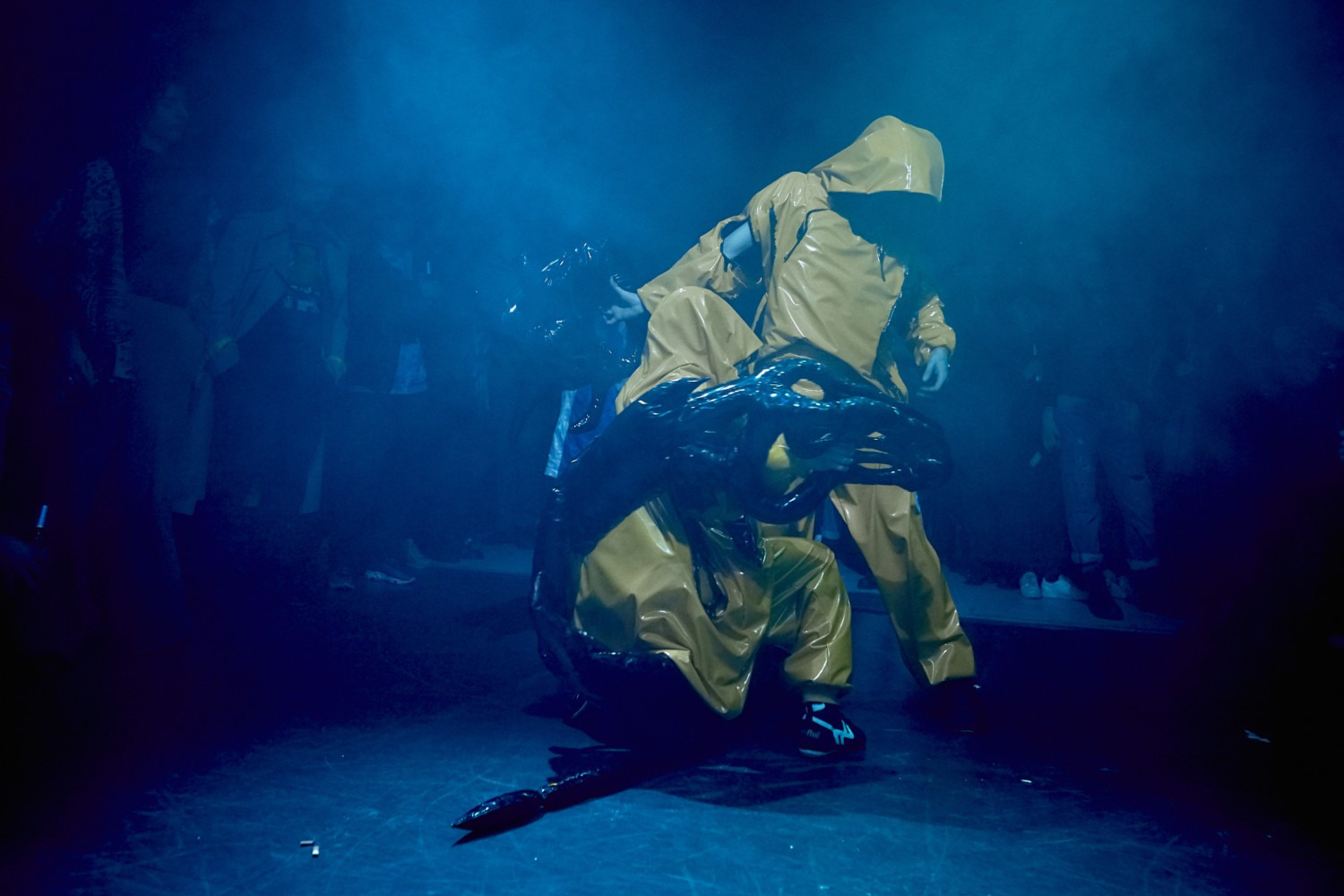
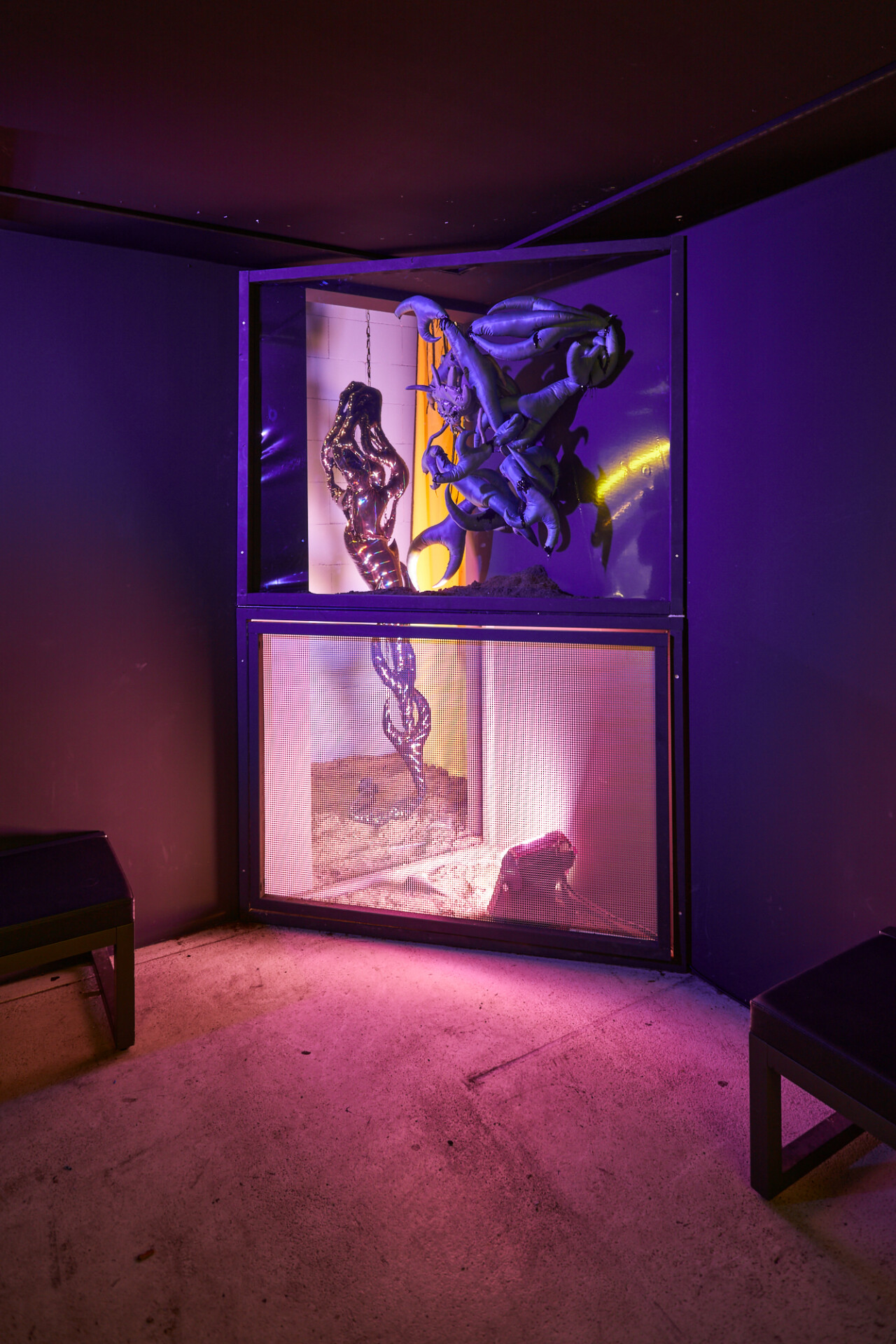
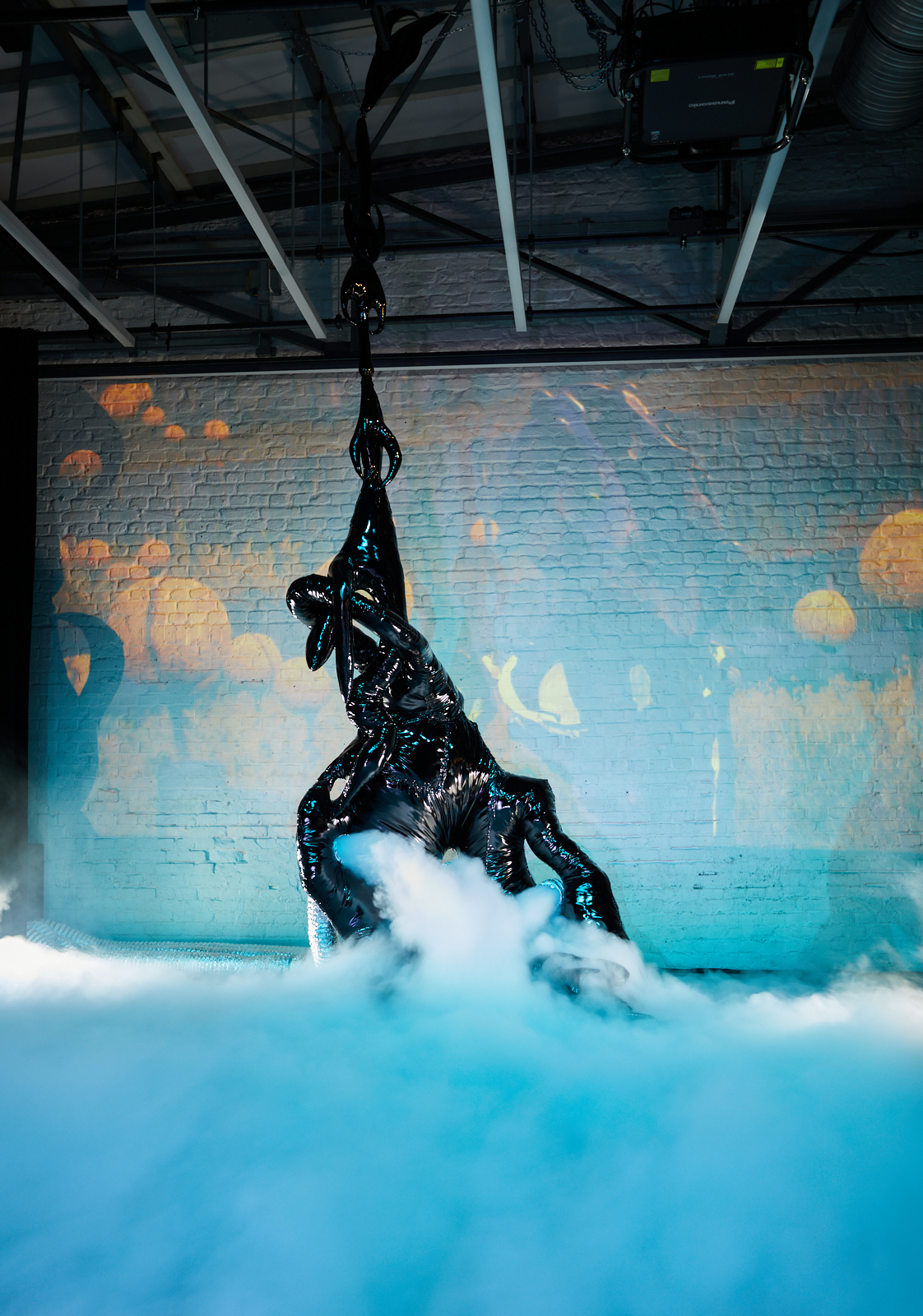
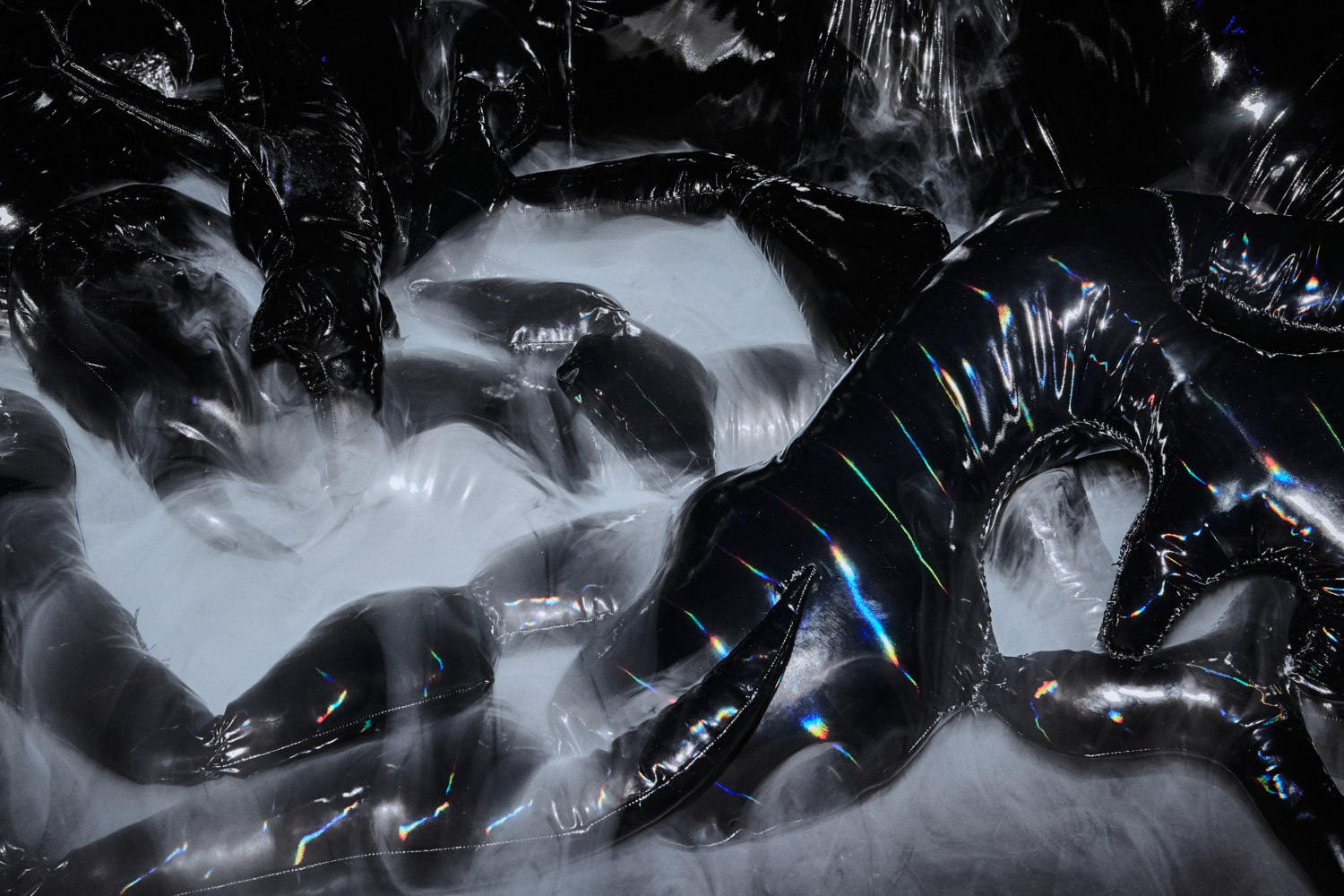
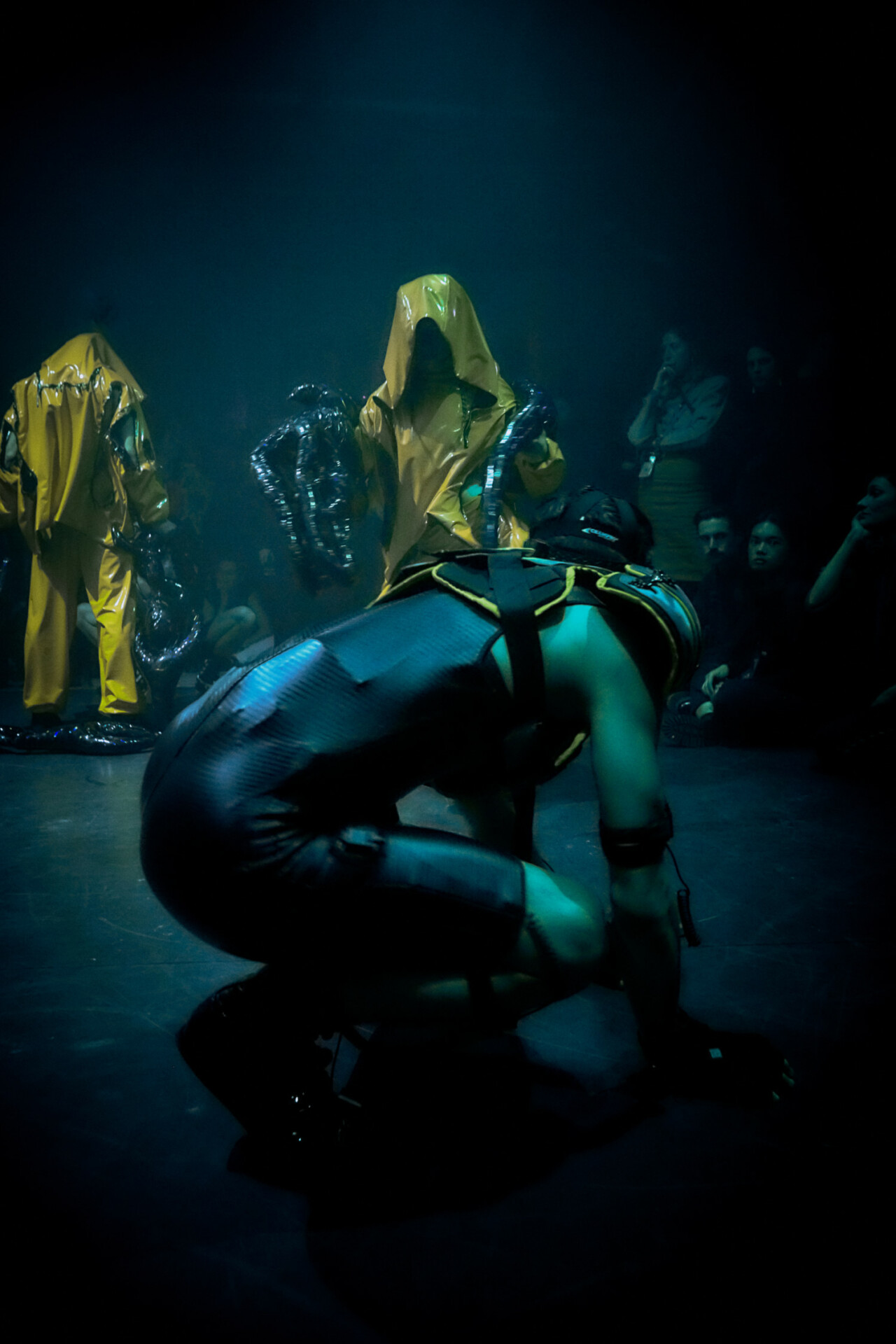
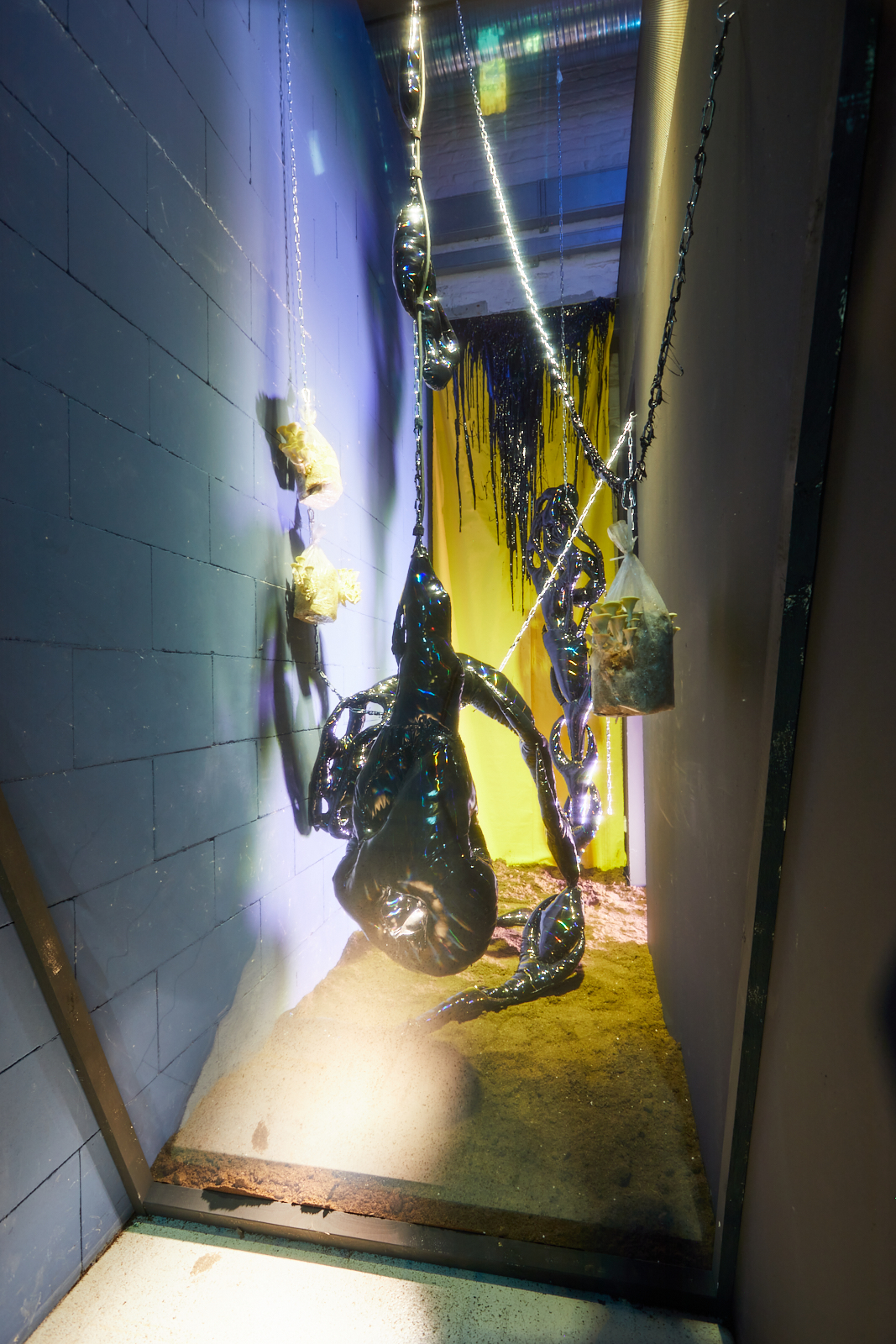
Walking into the installation QT UR EA at Berlin’s Trauma Bar und Kino, you immediately feel like you are stepping into a video game. Between the fog, jewel-toned lighting, shiny black sculptures and performers wearing dystopian American football gear scattered across the metal balconies and secluded corners of the performance space, there are few edges to the immersive reality. Screens around the venue play digitally-constructed worlds, while little alcoves host fluorescent installations with moving creatures . Within this surreal exhibition space, dance performances with techno soundtracks take place creating a multi-dimensional experience—with moments of elaborate choreography broken up with quieter periods allowing the audience to explore the venue. At the end of the performance, the venue turns into a club. SLEEK spoke to digital artist, LUKAS8K, installation artist Mary-Audrey Ramirez and curator Madalina Stanescu, who brought the piece to life.
How did the project come together?
We wanted to make use of Trauma as it was intended to be: a space combining different media. The traditional events within the visual arts world and events within the club world we experienced didn’t ever seem to be fused together. There was always an unsatisfying clear cut ending to both formats. In this exhibition, you experience the artworks and the club all together and all at once.
Whenever you go to a gallery space, there’s a list of expectations—it’s pretty stiff. And of course, people go to the galleries not to see the artwork but to socialise. Most of the time, there’s so many people you can’t see the art. In Trauma, the art enables you to escape the socialising situation and have something to do. “I’m going to look at the artwork, bye!” And somehow, this means people wirklich go and see the artwork. This cruising element is something that we think comes from club culture.
What is the significance of the different elements: video installations, movie theatre, dancers, and physical installations?
Earth, water, fire, wind.
Is there a narrative thread to the piece? And do you think it follows the world of dance or gaming more closely?
This project’s approach to narrative is definitely very influenced by Fumito Ueda, who made the video game ICO: Shadow of the Colossus und Last Guardian. These games use a fictional language. As a player, you are given hints and there are some written translations on what you can do, but you don’t ever know the full story. Nobody knows the full story and nobody has seen all of the game’s world.
We’re also inspired by the game Dark Souls, which is the complete opposite of Fumito Ueda‘s work. In the Dark Souls series, every monument has pages of written description and background. In these games, you invest a lot of time researching and experimenting to understand the story, but there are fan communities with theories, and a guidebook that is almost as extensive as a lexicon.
There is a story behind QT UR EA, but we like an experience in which you can’t immediately grasp everything, can’t immediately understand it. We let people know character names, for example, but the narrative itself, what is really happening here… we keep that veiled. For an audience, it’s seductive to be given little nuggets, little bits of information, and they make the connections themselves. The guidebook coming out for the Finissage will give more insight and help people think about this, too.
What was the inspiration for the world that was created?
From the beginning, the project had to be involved with gaming and gaming culture—something that both Mary and I are active in and inspired by. The Trauma space itself looks like the environment in a first-person shooter game made up of multiple levels and hidden corners, with industrial metal staircases and platforms…
For the world of QT UR EA, we were thinking about how portals through space and time are conceptualised in games, and about how the states of winning and losing are designed for a player. The failures and disappointments that people often experience with interactive software are really interesting to us, and for this piece, we combined that with ideas on the consequences of conflict – like looting, and decay.
The piece follows the world of gaming very clearly. It’s closest to interactive software. Dance had a translation function for us—it supported the connections to movement in physical space, and helped to communicate how we imagine the different characters.
Where there things about the live performance that differed from the rehearsal and surprised you?
We were so worried about the transition from performance to club night, and were surprised that it worked so well in the end! The choreography really motivated the people to dance. The audience formed a circle around the performance, adrenaline was super high. All the performers were so pumped, and people watching were almost in a trance. In some cases, audience members were even imitating the dancers’ moves. The music played a big role in that, too. At some point, it even felt like we need to finish up the performance because people are so ready to take over the floor.
“QT UR EA” runs at Trauma Bar und Kino through 14 March.