Reynaldo Rivera, Gaby, La Plaza, 1994 Courtesy of the artist and Reena Spaulings Fine Art, New York/Los Angeles
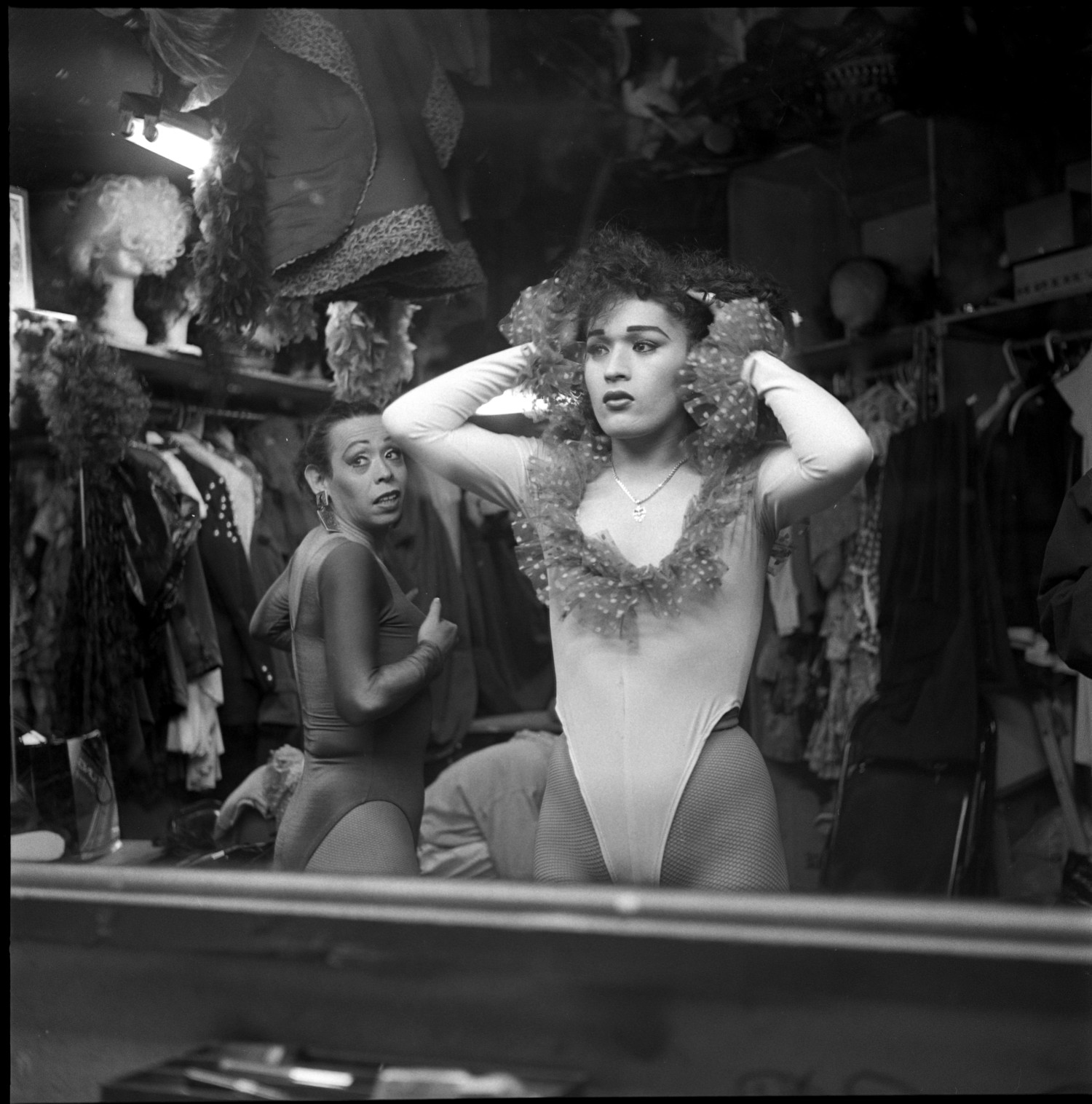
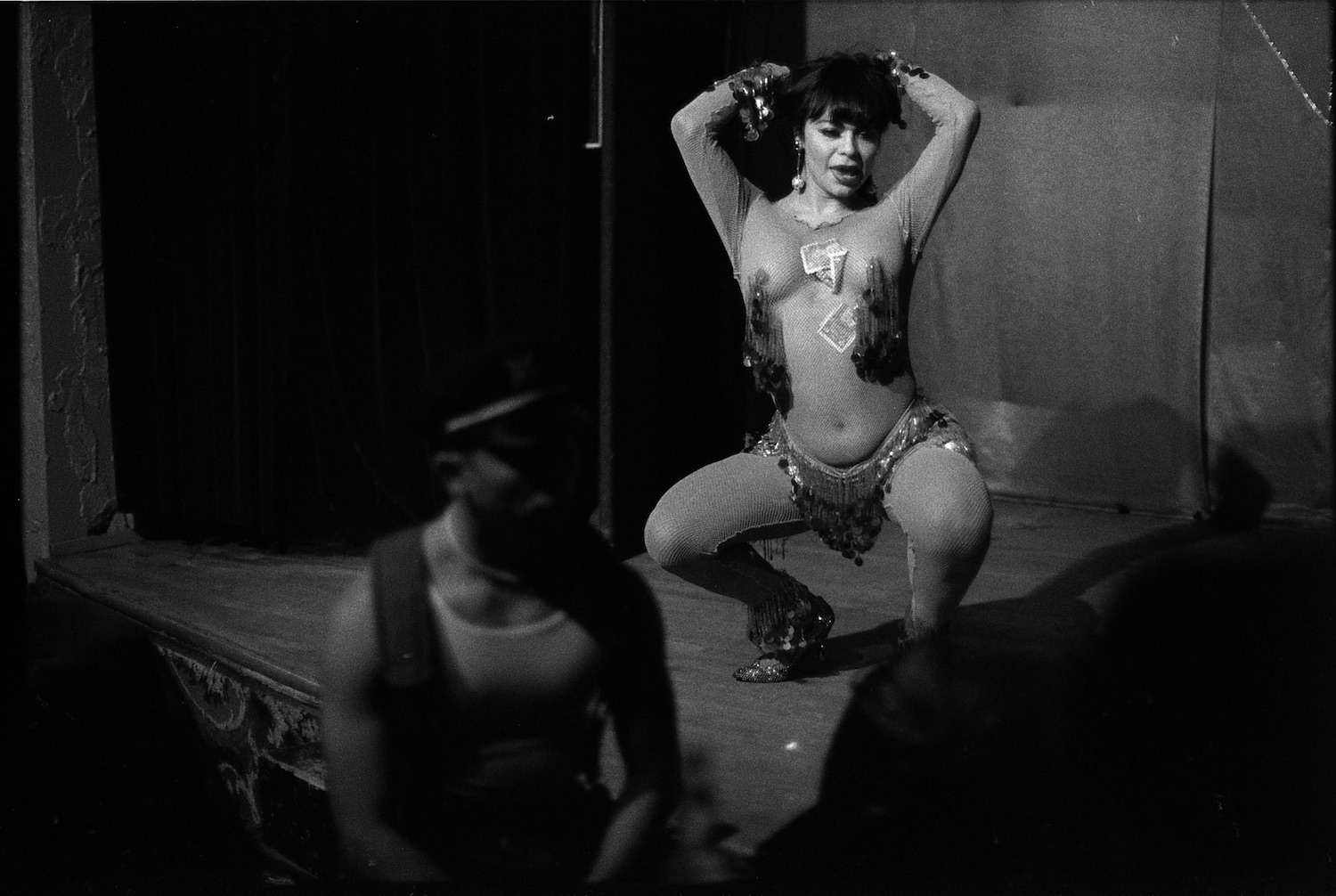
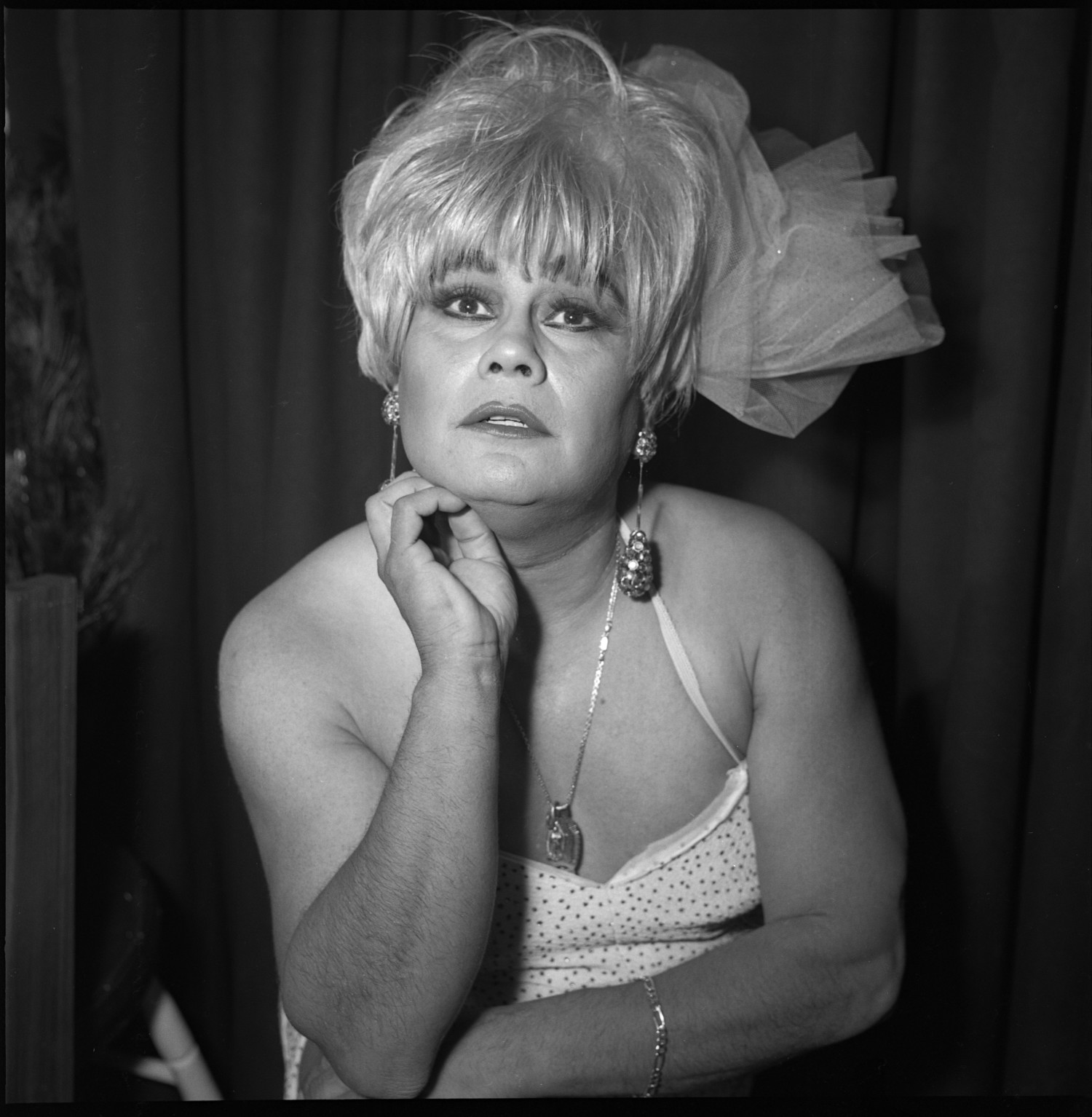
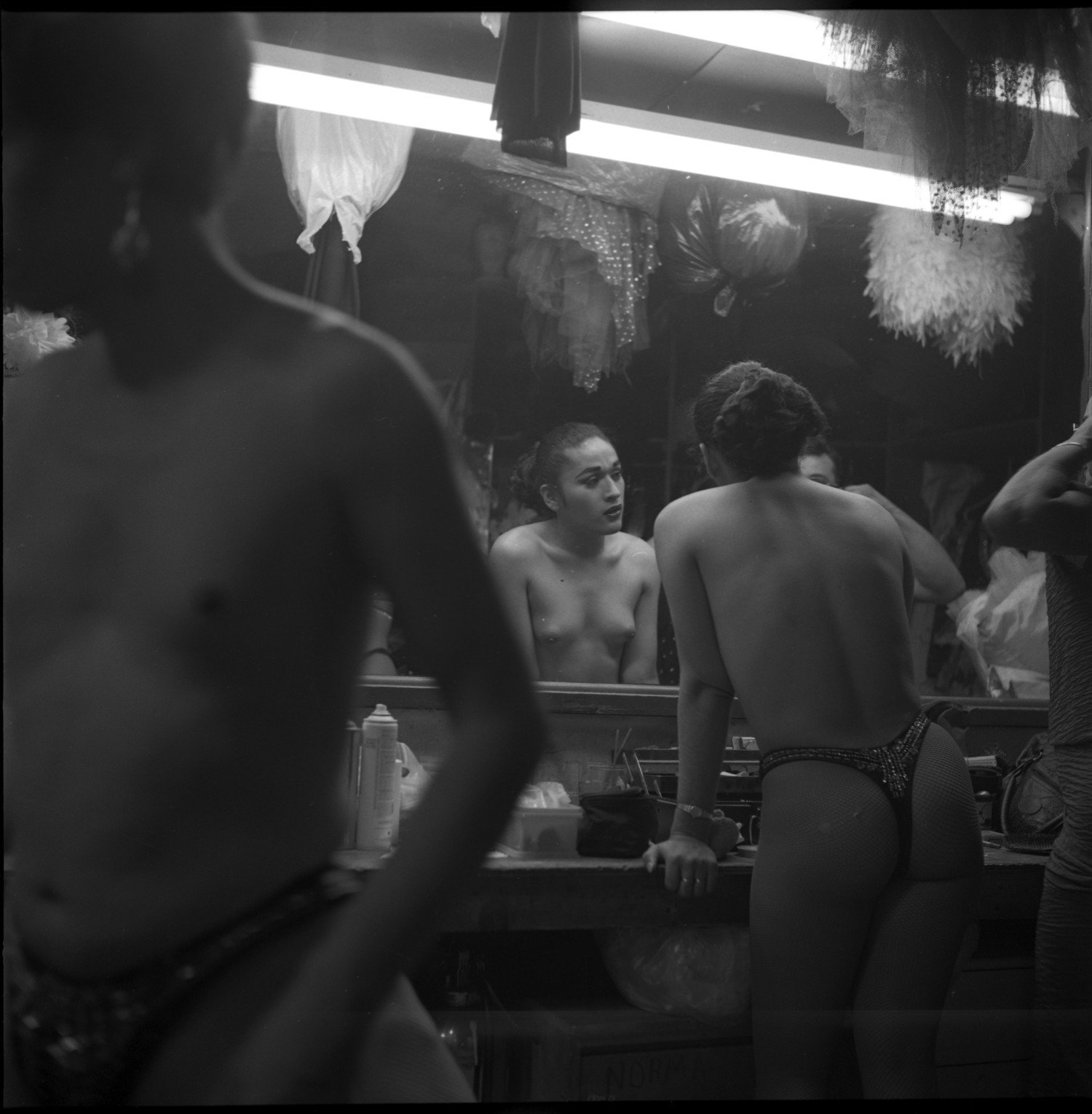
It’s the third Saturday in January and I’m at Reynaldo Rivera’s house looking at pictures of the long-disappeared worlds of Los Angeles drag bars … dank clubs with names like La Plaza, the Silverlake Lounge, Little Joy and Mugy’s that offered live shows between the late Seventies and early Nineties.
These clubs, Reynaldo tells me, were mostly frequented by LA’s gay male Latino community at the time. Reynaldo and I have been friends for a long time and I’ve seen these pictures before. Many of them are burned into my brain because I’ve written about them for a forthcoming book on his work, Reynaldo Rivera – Provisional Notes For A Disappeared City. Reynaldo took these photos three decades ago for himself and his friends, but soon other people will look at them, too. He’s planning shows at Gaga & Reena Spaulings Fine Art gallery and Centro Estatal de las Artes in Mexicali, Mexico, and his work will be shown early this summer at the Hammer Museum’s biennial show, Made in LA (7 June to 30 August).
All of Rivera’s silvery black-and-white prints evoke an impossible glamour made even more potent by its aspiration. Glamour and danger… the makeshift stage of a dive bar becomes a conduit for an illusion of perfect beauty. In Yoshi Mugy’s (1995), a middle-aged Japanese man wearing a blonde wig and tiered floor-length taffeta dress poses in front of an unseen audience on the dirty black-and-white checkerboard floor of the Mugy’s stage. The club is clearly a tiny hole in the wall, with small cluster wood tables and chairs around the makeshift stage.
Reynaldo Rivera, Ms Alex, 1993 Courtesy of the artist and Reena Spaulings Fine Art, New York/Los Angeles
Oblivious to the cheap cascade of white Christmas lights and the tattered New Year’s banner hung over the stage long after New Year’s, Yoshi channels some kind of Southern Gothic American beauty, the Civil War South as depicted in David O. Selznick’s Gone With The Wind (1939). All of these different eras collide, and Yoshi tilts her head back to bathe the left side of her face in the light. (The other side of her face, hidden in darkness, has a terrible scar that she got when a trick sliced her cheek with a knife.)
Glamour, Reynaldo tells me, has to do with the perception of danger. There couldn’t be glamour without restrictions. And what is allure without danger? It’s something you want to have but you can’t… In his new book, Dismembered: Selected Poems, Stories and Essays (2020), the co-founder of the New
Narrative movement (a fiction trend which began in the Seventies, striving to represent subjective experience), writer Bruce Boone, talks about glamour and sleaze as “masochist doors that open onto another world.”
Reynaldo Rivera, Olga la plaza. 1992 Courtesy of the artist and Reena Spaulings Fine Art, New York/Los Angeles
He asks: could they be the world of the spirit? “Think about it,” he writes. “For whatever reasons – environmental catastrophe, political decay, infrastructure collapse – don’t you really want to identify with some kind of FAILURE more and more often these days, and in the process turn your back on stupid images of SUCCESS? … The ghetto serves as a place of refuge from exterior violence directed against gay people, a place of relaxation.”
Lounge, most of the Mugy’s performers were Asian. The club, Rivera recalls, “was very low budget. You can see that in the photos. There was just a little stage. But unlike the Latino drag bars where everyone was
trying to look real and pass, the girls at Mugy’s were more about pushing boundaries. They had a very different way of viewing themselves and what they did. The La Plaza girls, a lot of them came from these small Mexican towns where on Sundays, the girls from the rancho would come down with their white patent leather shoes. The polka dots and loud mismatched colours … the flashier the better.
Reynaldo Rivera, Performers la plaza. 1992 Courtesy of the artist and Reena Spaulings Fine Art, New York/Los Angeles
These are the ways they were deluxe or glamorous. I know this because I come from one of these small towns. I saw this with a new filter when I came to LA, but you can’t run away from your own culture.
“The Asian girls saw themselves more as performers. It was a whole different ball game, much more about art and illusion. Once, I asked one of the Mugy’s performers what he thought the difference was between them and the La Plaza performers, and he said: We don’t want to be housewives. The Asian performers took a lot more liberty in how they did drag, and they had so many influences. Yoshi would come onstage with Kabuki makeup and hair, wearing a flamenco dress and singing a Japanese song from the Fifties. It was a mishmash of culture.”
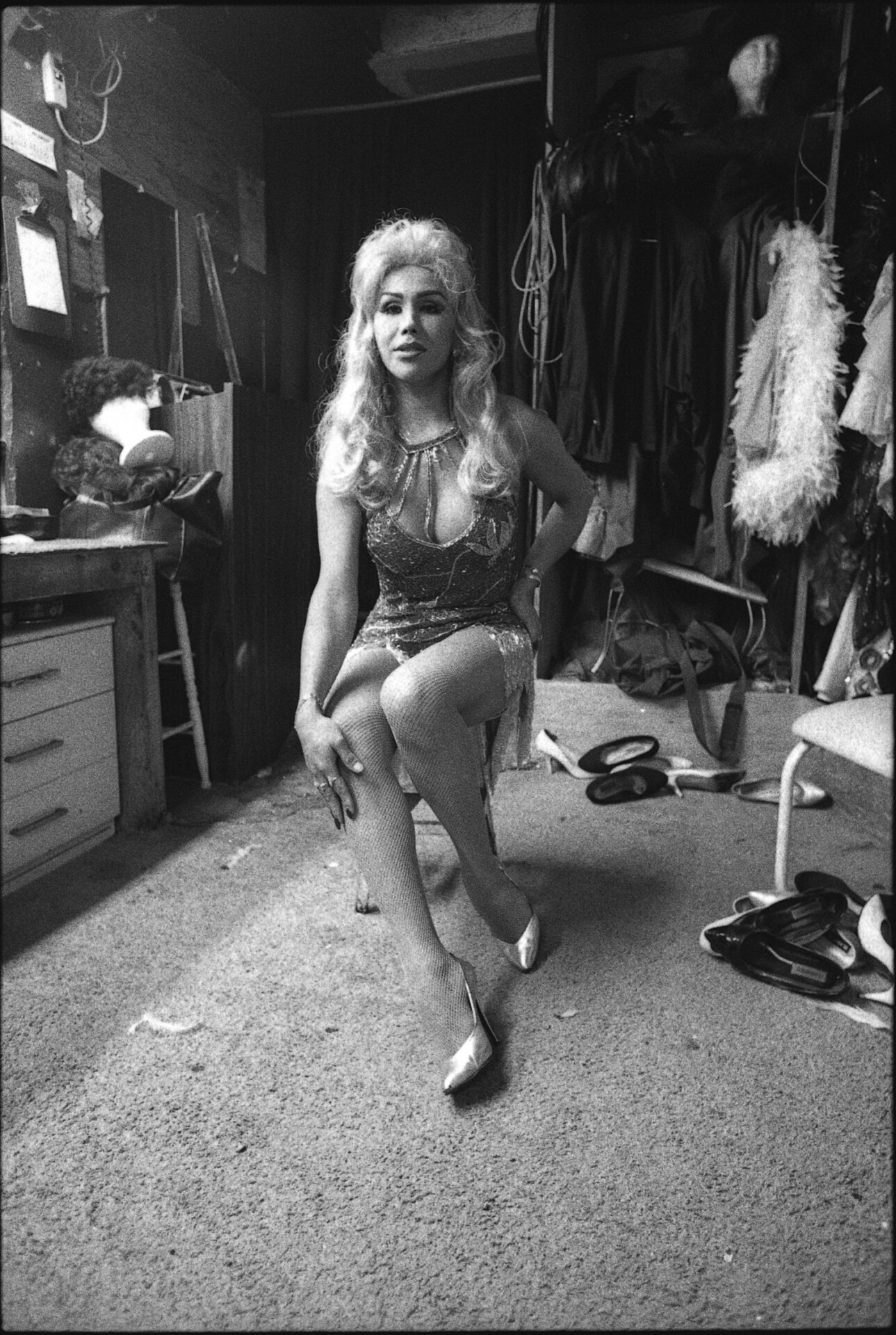
Reynaldo Rivera, Laura la plaza. 1993 Courtesy of the artist and Reena Spaulings Fine Art, New York/Los Angeles
“When you look at the images now, the Mugy’s photos read as a much more recognisable form of glamour. And then I add my own layer, of course. I’m from LA, which is, for better or worse, the movie capital of the world. I think we grow up with a movie language inside our brain that can translate everything into something cinematic. It’s like, when you look at Cindy Sherman’s early work – those images are completely invented, but they look like stills from movies you’ve already seen.”
Glamour and melancholy. We talk about what’s become of some of these performers since he took these great photos of them. Drugs and street life took their toll. Many of them are no longer alive and some of them disappeared with shocking speed. Reynaldo remembers the words of a song, Arráncame la Vida (Spanish: ‘tear this heart out’), by the Afro-Mexican singer Toña la Negra:
Arráncame la vida
Con el último beso de amor,
Arráncala, toma mi corazón,
Arráncame la vida
Y si acaso te hiere el dolor
Ha de ser de no verme
Porque al fin tus ojos
Me los llevo yo.
This story originally appeared in SLEEK 65 which is jetzt erhältlich.
Reynaldo Rivera: Provisional Notes for a Disappeared City is forthcoming from Semiotext(e).