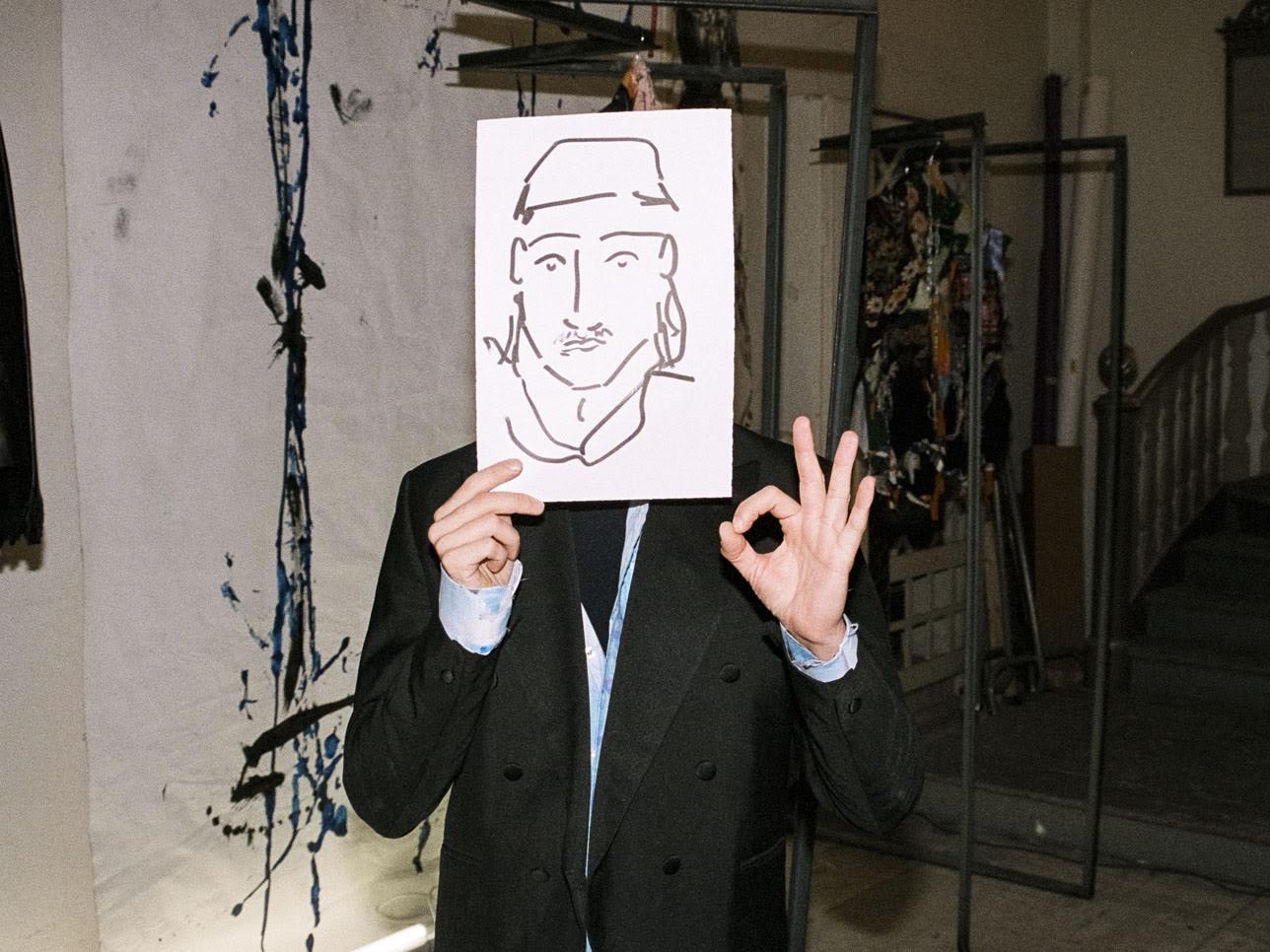
All images: Haakon Korbi
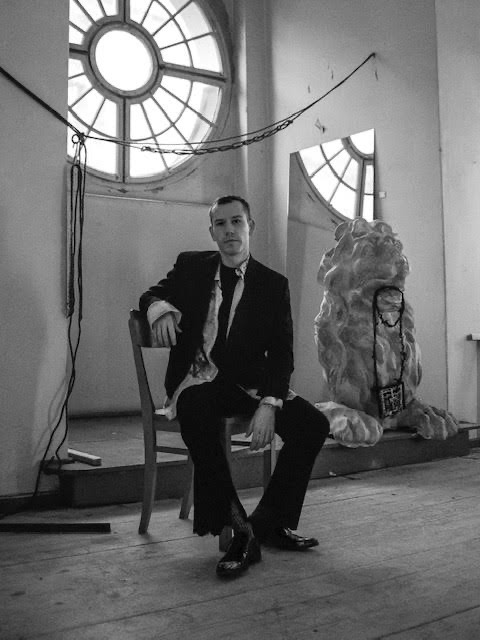
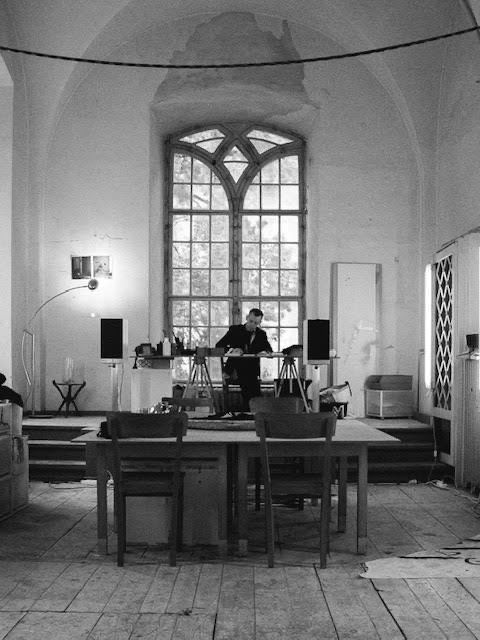
Close to Berlin’s noisy and rained-out Alexanderplatz lies St Mary’s, one of the city’s oldest churches. This is the address given to me by French fashion designer and Haute couturier, Lucas Meyer-Leclère. There is no bell, only a mobile phone number to call when I arrive. Lucas calls out to me and I’m a little taken aback by his elegant appearance.
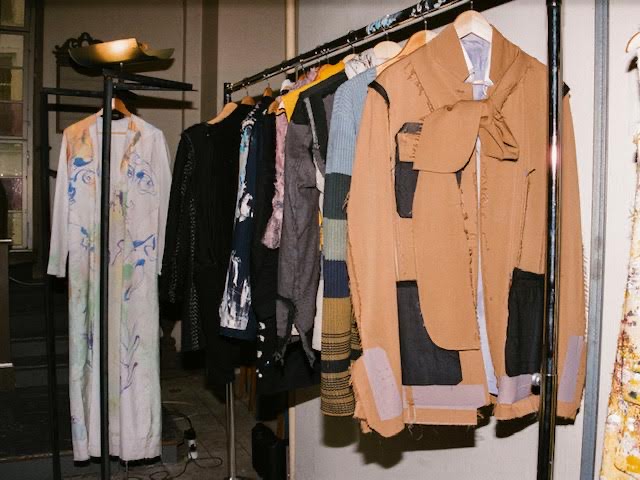
Trying not to show my unexpected timidity, I quickly follow him inside the beautiful church and up a long spiral staircase. I’m surrounded by what seems like costumes because of the variety and dramatic feeling that Meyer-Leclère’s collection contains.
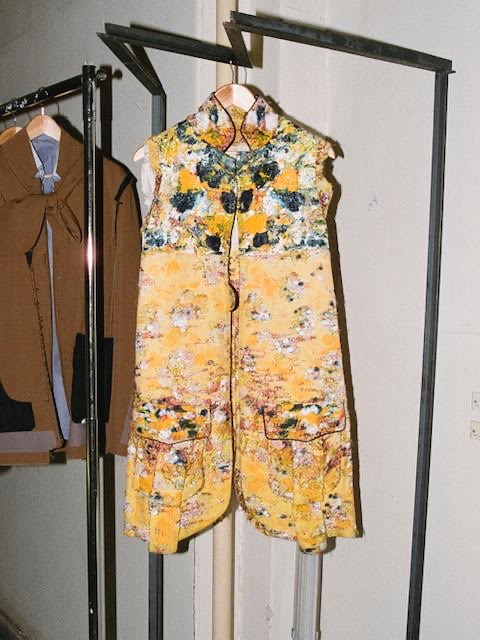
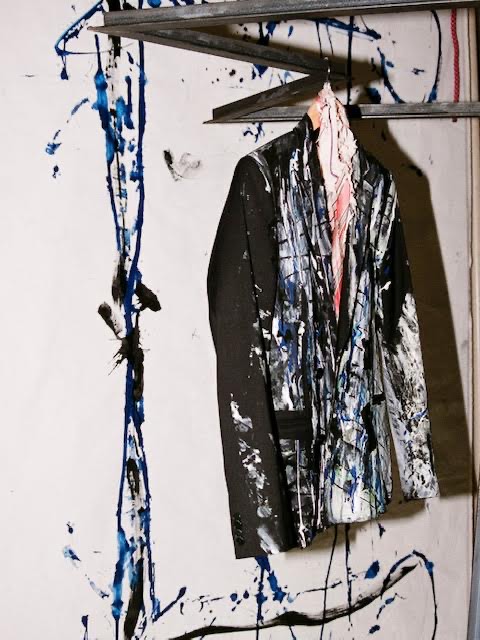
Bringing me his favourite overcoat, the designer explains why it’s shocking yellow and covered in different streaks of oil paint. “This one is interesting because I had actually done it at school at CSM. I took a four-year break when I was working for Chanel doing fabrics, so when I came back to finish my studies, I got sponsored by all these mills and created this l-coupé, this cut technique that I used in the reverse and painted. It’s the first that I hand-painted for myself. It’s sort of what inspired me to use up pieces by Dior, Berluti and co.”
So you’re a designer and a painter?
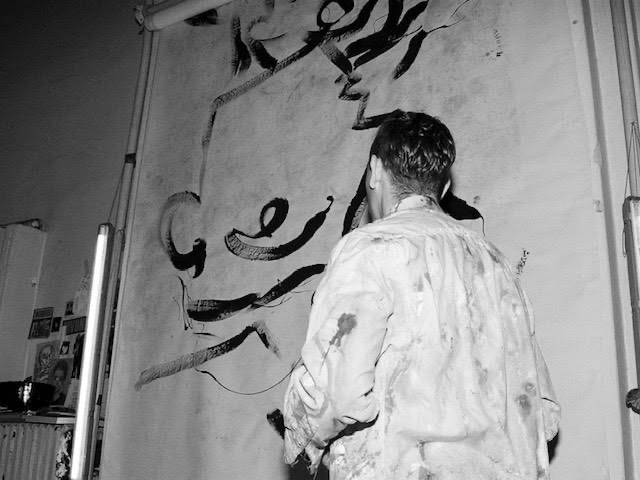
I don’t consider myself a painter. Renoir, Picasso, they are painters. I put paint on stuff, or on these canvases. It’s not the same. But the connection between both was always present. My father was actually an electrician and a projectionist and he did the electricity for Yan Pei-Ming.
He used to paint these huge oil paintings in black and white, portraits of Bruce Lee and so on. Pei-Ming is with the Thaddaeus Ropac Gallery. He had an exhibition and we went there, and I got really close to see the details – and some paint stained my coat. I was petrified because I had altered a piece of art and then also I had fucked up my coat, but years later I realised that oil paint is very resistant and it’s never going to go away. You can wash it all you want… with fashion, I feel much more confident in saying what’s hot and what’s not. Whereas with art, I can never call myself an artist.
Why?
I don’t know. I think it’s not up to me to decide.
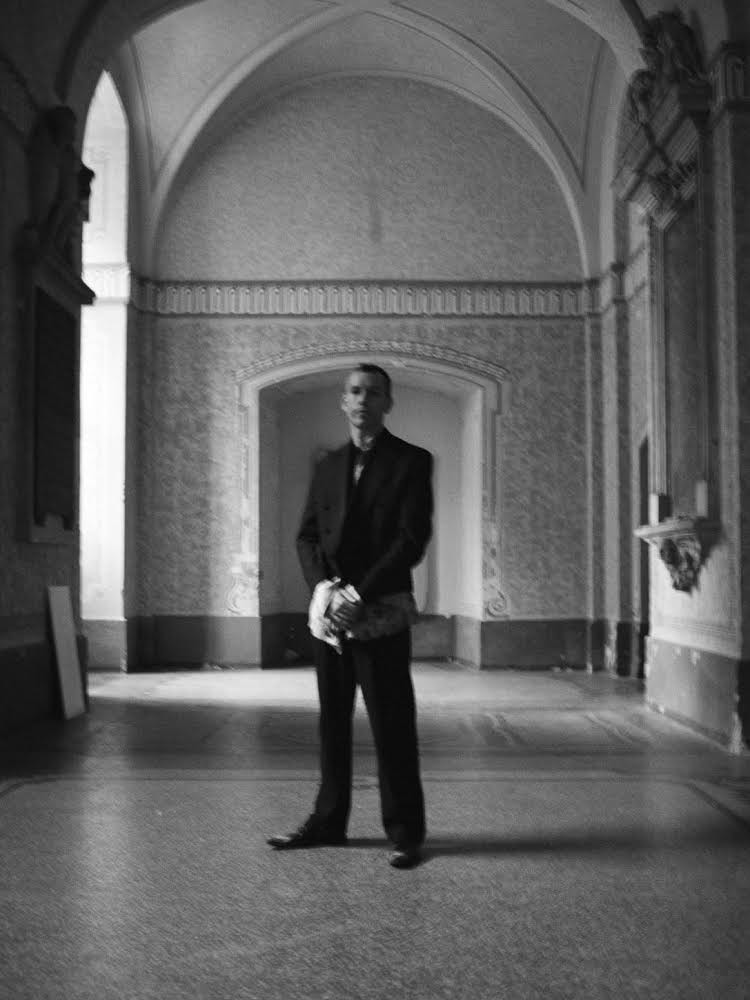
So is there a certain reverence here?
Yeah, absolutely. This is why galleries were churches for me when I was a kid. So now that I’m here [at St Mary’s] it’s so great! I think being an artist demands a certain dedication that I don’t have when it comes to one medium. I’m more dilettante in that I dabble with different things.
What drives you?
I relate to every piece differently, so it’s more the emotion, the fabric, the cut, how I can play around three-dimensionality and how I can have fun by cutting things out or adding pieces. It’s sort of like adding layers of memory to things that exist and to bring them a narrative as if they had lived, although some pieces are completely new. In the end, you have that eclectic mix, although people say they see a common thread. What I love is when I’m missing something, missing a tool. I usually don’t then go out and get it because I know something is going to come out of it.
So how do you feel about upcycling?
I prefer the term ‘re-tailored’. ‘Upcycling’, as a term, is tragic as it ‘connects’ to a work that is very different from mine. For me, upcycling feels like putting a fifth wheel on a skateboard or a lightbulb on a bin. That being said, I know that it sometimes leads to a reflection on how garments are made and what fabrics are used, and that’s vital. To have this sustainability fight is a beautiful cause. I think it is good that some big brands are making an effort, and I see my practice at the service of bigger structures. Luckily, mentalities are changing around sustainability. It was never sexy or exciting. The fact that luxury, by its essence, just isn’t eco-friendly is the challenge that excites me the most.
As you know, the theme of this issue is ‘failure’. What does the term evoke in you?
I think failure is more personal. The wisest and kindest way one can be with failure is to have ‘milder’ goals, which sounds rather unerotic, but it might be the key to world peace – to have no expectations. I realise that the second I fought for anything, I didn’t get it, and when I focussed on my work and stayed in love, good things happened. Things that I really desperately tried hard with always took an obscene amount of energy, and in this regard were a failure. Failure is a good friend because you wake up, like, after a hangover and think, “Huh, that happened, an emotional near-death experience and you survived.” As digital natives, it is funny how time is relative but we won’t die if we don’t post something. There is a deeper sense of time and emotion outside this scheme. Social media imposes a happy vision of constant success that is deaf to reality… I sound like such a cranky granny! But yeah, failure is that thing that pushes you in the right direction. See, my father died when I was 11, so I know what the end looks like. And failure? It’s nothing.