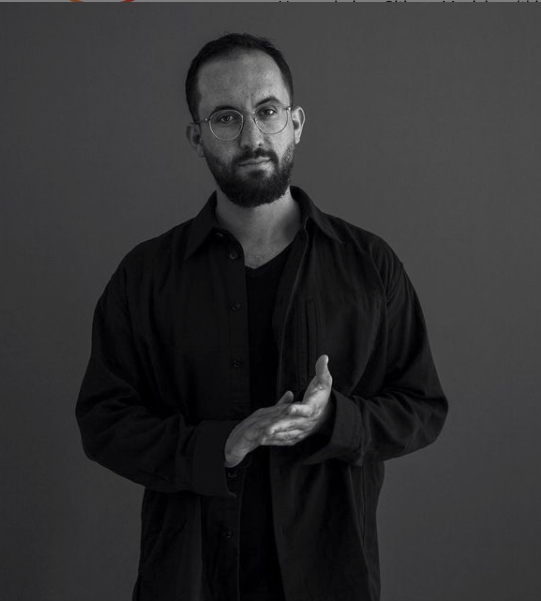
As part of this issue’s investigation into the subject of courage, SLEEK’s publisher Christian Bracht spoke to the Russian-German pianist Igor Levit. Famous for his renditions of Bach, Beethoven and Liszt, the Berlin-based musician is also professor at Hanover’s University of Music, Drama and Media, and was last year awarded Germany’s Order of Merit – the country’s highest accolade. Discussing the parallels between music and politics, the media and the form post-pandemic life might take, the 34 year old imparts his idea of what it means to be brave in spite of fear.
Does it take courage to speak or write about yourself?
Apparently, yes. It seems so, in this country. But whether that says more about me than about the country, I’m not sure. I don’t really think in terms of courage. I’m quite confident at handling my own thoughts, so I’m very deliberate about which ones to share or not. I tend to think someone who asks about courage has more of an issue with it than someone who possesses it.
You once said music and politics both have something to do with you. What do they have in common?
First of all, there are actually some major differences between them. Politics has to achieve something whereas music doesn’t – but it has the potential to achieve anything. Music owes nothing to anyone. It belongs to everyone and no one. Music is a free art form and can’t exist without us humans. And that could actually be the only thing politics and music have in common: without us humans, politics wouldn’t exist either. Politics is us. Society is us. And music is us too. It’s us that makes it. Things would be pretty quiet without us. Music isn’t governed by rules.
I think the many differences are easier to find than similarities.
"Politics has to achieve something whereas music doesn’t – but it has the potential to achieve anything. Music owes nothing to anyone. It belongs to everyone and no one."
Does that refer to a self-perception?
I’ve never seen a causal link between myself as a musician and my perception of what I, as a human, should be doing. In my view the two are completely unconnected. Music can manipulate you, but only if it’s intended. It can hurt you, cause pain, but it can’t injure you. It can injure people when it becomes verbal, though, but then it’s the words that are causing offence, not the melody. And that’s the really big difference: music is able to do anything. It can be manipulated (and then, of course, the question is: what context was the music presented in?), but it’s free, whereas politics isn’t.
Do you utilise the freedom of music?
Yes, because I let the music take me places. When I perform a piece, though, I don’t have any power of interpretation at all; I’ve no idea what it will do to the listener.
You once said, “I don’t know how anyone can be apolitical.” Was that a provocation?
What does ‘political’ even mean? To me, politics determines our everyday lives. It’s about what everyday life looks like, the condition of the road outside your house, how people deal with each other, what they talk about, the kind of world we live in, what our structures look like, where discrimination or oppression is happening, where there are structural, economic or sociocultural problems – all of those things are political to me. They are all things that I think about and that influence us all. We’re influenced by what we see and perceive because we’re all in the middle of everyday life – which really begs the question of what the alternative is? That’s why I questioned how anyone can be apolitical.
Surely there are all sorts of different variations across the generations …
That’s true. There’s one point where I would say that statement is correct, even though I find it too general. For instance, I once had a student who seemed to me to be committed and organised in her political activity in a way that was quite unlike anything we ever had. That’s one of the most revolutionary things the Fridays for Future movement has given us, it’s changed the language of political activism in the digital age. Fortunately for us, this generation has learned to be impatient.
Let’s turn to the future briefly. What direction do you see yourself going in?
To start with, I’d be happy to see myself ‘going’ at all. The rest will follow.
I make plans. I’m a professional and I live and work by keeping my mind as open as possible to the fact that everything could change tomorrow. Soon, when we start to feel our everyday lives coming back, I think it will be important to have a serious and detailed discussion about what’s happened over the last 15 months.
"I think it will be important to have a serious and detailed discussion about what’s happened over the last 15 months."
Can you tell us a bit more about that?
There’ve been an incredible number of discussions, but still there was a lack of understanding as to what exactly we need. And by that I mean not just cultural institutions but us as individuals, on a personal level. The individual artists and creatives were left out on a limb. The world of culture is highly diverse in itself – that’s a fact – and there was just so much that went wrong. We didn’t manage to tell an exact story or describe an overall vision. I realise it’s impossible to reflect such a diverse world, but rather than just accepting that realisation, I want us to take onboard all the experience we’ve gained and channel it into the tasks that lie ahead.
The final point is that we have been trying for a year to get this subject to the top of the media’s agenda. But what actually happened was: we made it onto the YouTube channels of the TV corporations, but instead of them tackling the entire topic seriously, we ended up with a narrative around the sideshows of individual artists. I take that to be a show of disinterest on the part of the media towards all the artists and creatives who actively support the community. I’m not one of those artists who sweep things under the carpet; I want to get them out into the open.
What would you have wanted from the media?
To be taken seriously.
The conversation appeared in our SLEEK #69 The Courage Issue, get your copy hier, digital or hard copy.