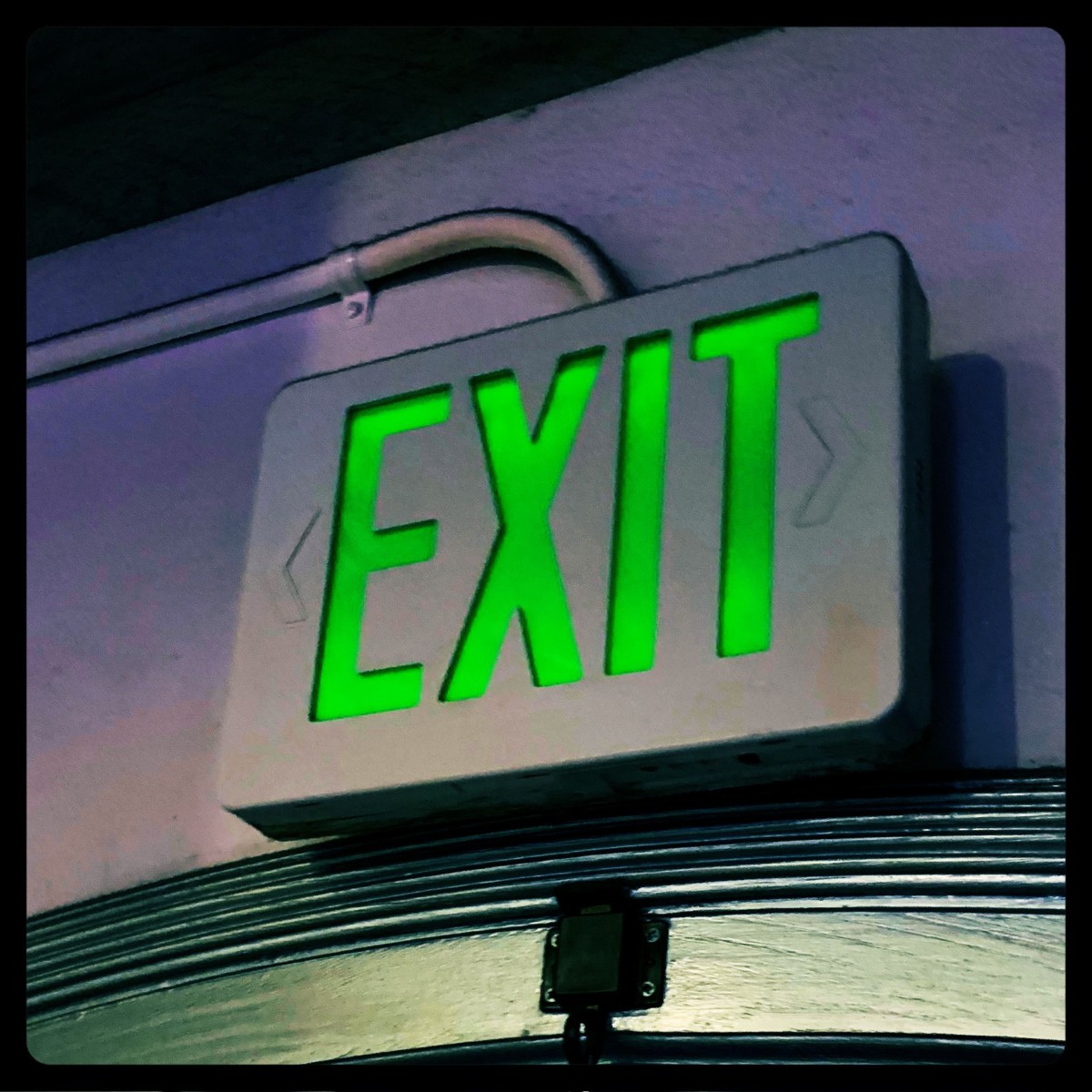
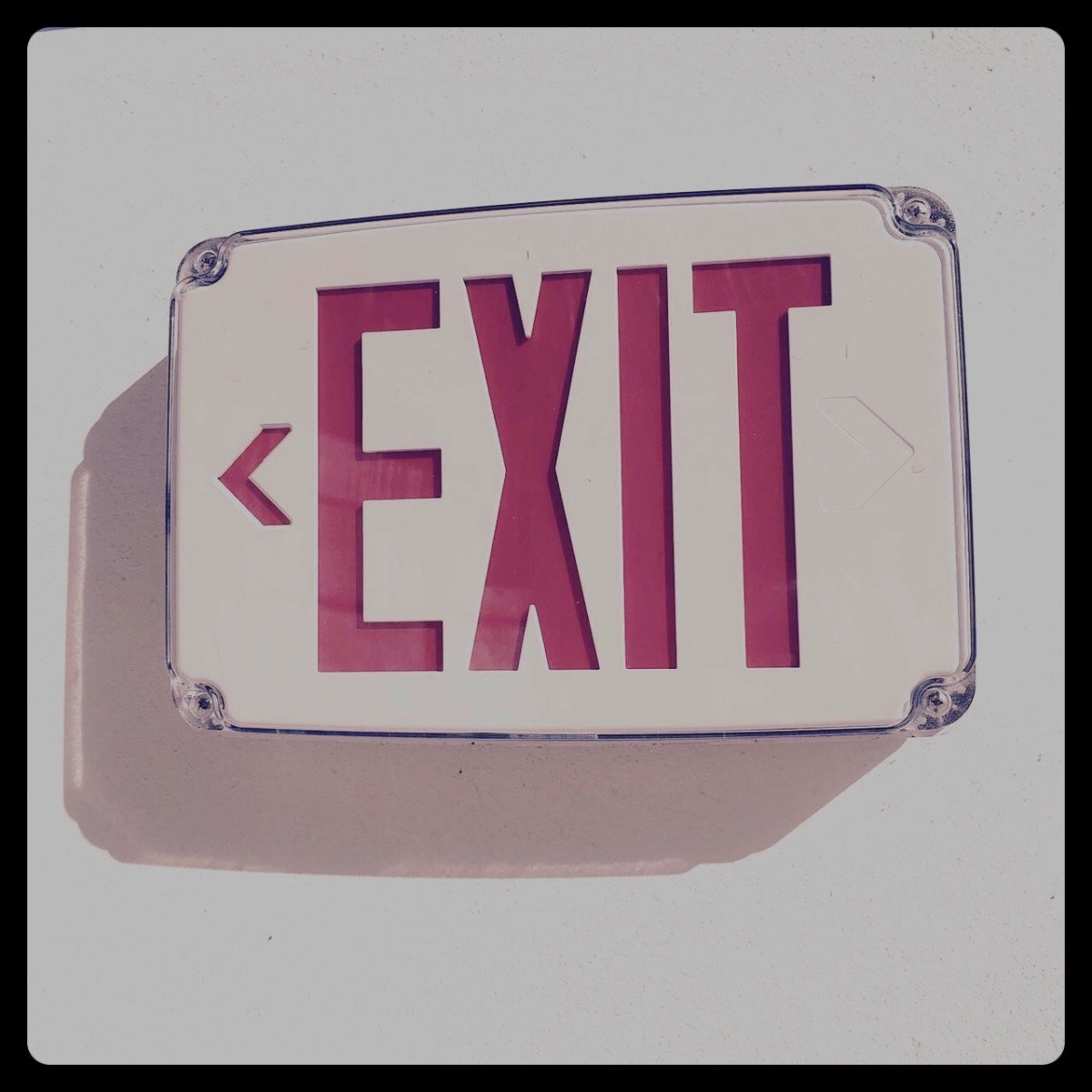
The Cologne-based photographer Florian Reinhardt had just finished organising an exhibition celebrating the release of his new book Exit (2021) – a series 10 years in the making depicting exit signs – when North Rhine-Westphalia flooded. The deluge this July killed at least 184 people and caused tens of billions of euros in damages. The artist’s home was one of many that were partially destroyed.
Imagery courtesy of Florian Reinhardt
In the wake of the disaster, Florian (or Flow, for short) decided to donate all the profits from the Exit exhibition to relief funds. We were able to have a conversation with him about Exit – how the project developed, and how it helped shape his response to the worst natural disaster Germany has seen in more than half a century.
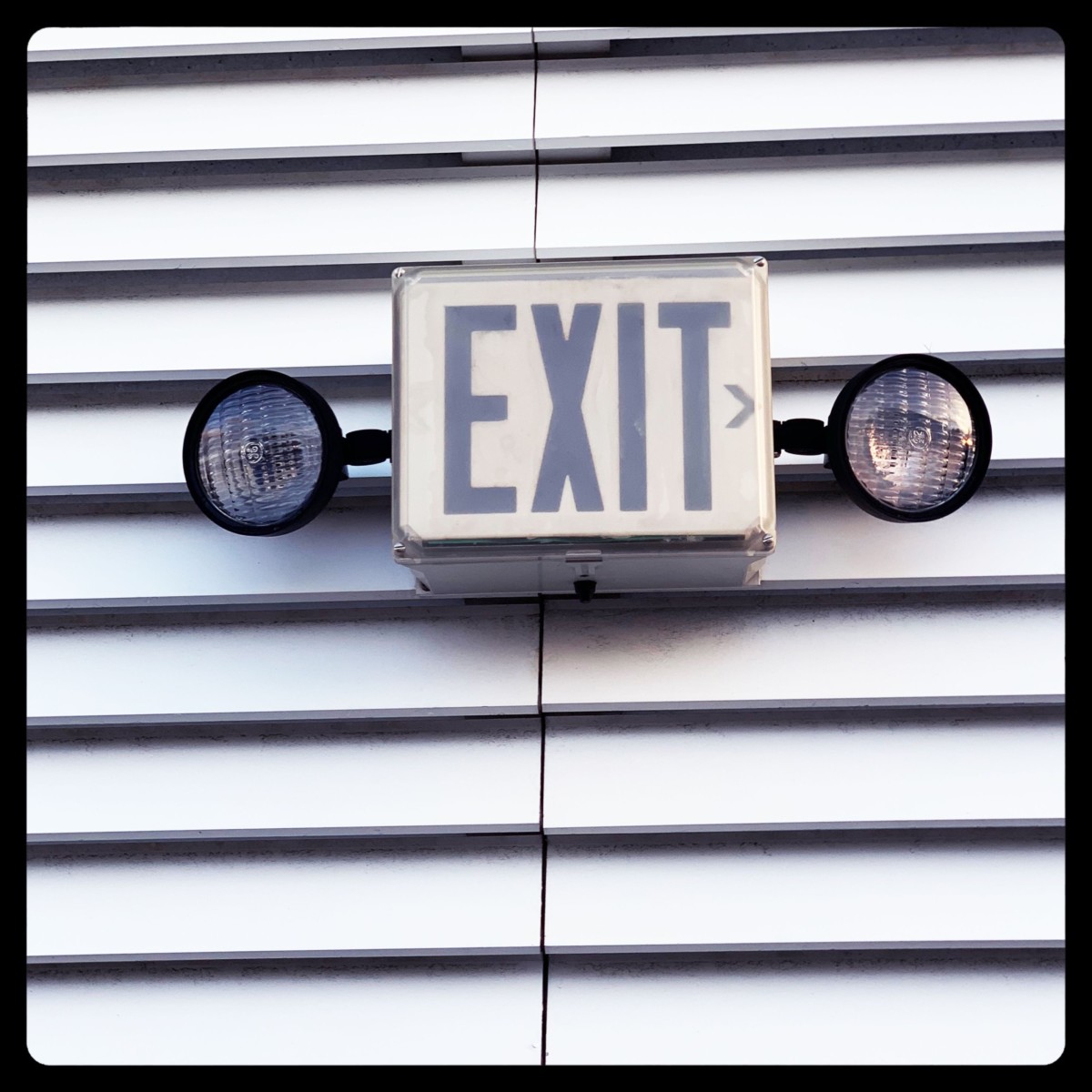
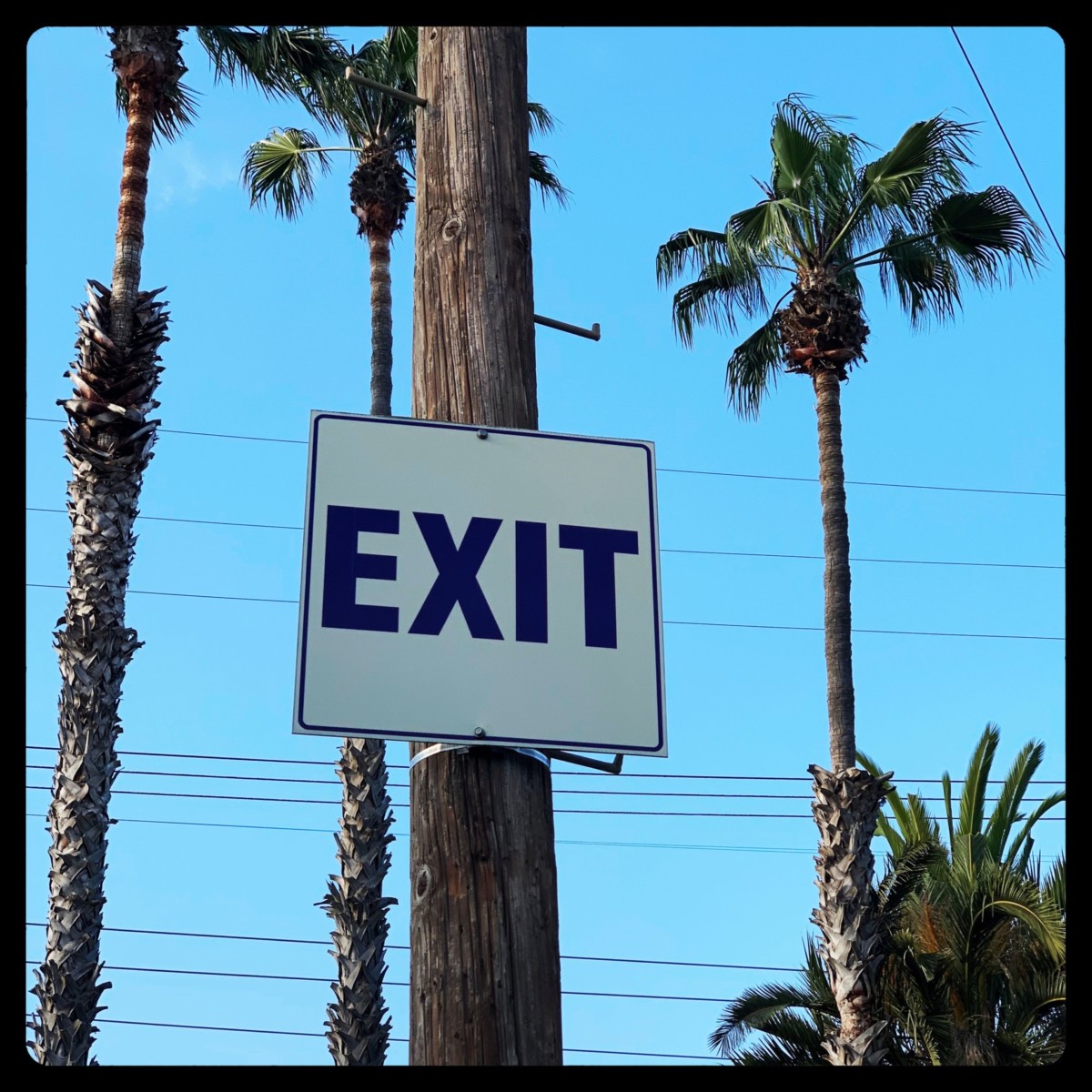
When Flow started photographing exit signs some 10 years ago, he was working as a producer for a major television company. He didn’t have any real intention in mind, he says. When he saw a sign that he liked, he would whip out his phone and take a picture of it. What started as something instinctual is now a collection of 1024 images, opening Reinhardt’s door to shows in Miami, New York, Austria and throughout Germany.
SLEEK: In your book there’s a story about how this project took off. Rudolph Budja, who is now your gallerist, noticed you running off a filming set to take a photo of an exit sign.
Florian Reinhardt: I get goosebumps, because that moment was magic. Rudloph had a birthday party and I didn’t know what to give to him, so I took just a picture [from Exit] and a guitar pick. When I gave him the picture he said, “Florian do you remember when you used my gallery as a film set once, you interrupted your interview.” I said, ”What?” He replied, “You interrupted your camera crew and the people in front of the camera because you stood up and you were running through the gallery to catch an exit sign.”
What I remember – I just remember that I had a fight with my camera guy. He said: “Hey, you know, there are people here, this is disrespectful.” And I had no idea what I was doing. Because it was like, if I saw those signs it was magic, I had to capture them if I liked them, if I liked the light, if I liked the surroundings. So this was the moment when it was opened up. Rudolph said, “Florian, do you have more of those signs?” And in my head it was like this – BOOM!
Imagery courtesy of Florian Reinhardt
It sounds like the process of developing the project was almost retroactive. You had to figure out what it was that you had been doing when you were taking these pictures. Would you say you’re still in the process of discovering what it meant?
Now I know what it means. The first time, when they put my work up in Art New York, in Art Miami, I said, “I have to find out what this is.” So I decided to create a book around Exit. The authors I was working with, they said, “OK Florian, we are doing something for you, now you have to do something for us. Sit down, and find out, not where and when you took those pictures, but what was going on with you.” And this was – it was the most intense thing I ever did in my life, I guess.
I think the word ‘exit’ is something like, you always have a choice. If you have the choice to exit something, whether you want to end up somewhere, or make a decision, or also to stay in a situation, it’s like the biggest option you can have. If something isn’t working the way you like, you can exit. You can go left, right, you can end up somewhere. Exit for me stands for freedom and hope. Make a decision to change your life or to become another person, to become a better person, and you have to follow the – how do you say it – the consequences.
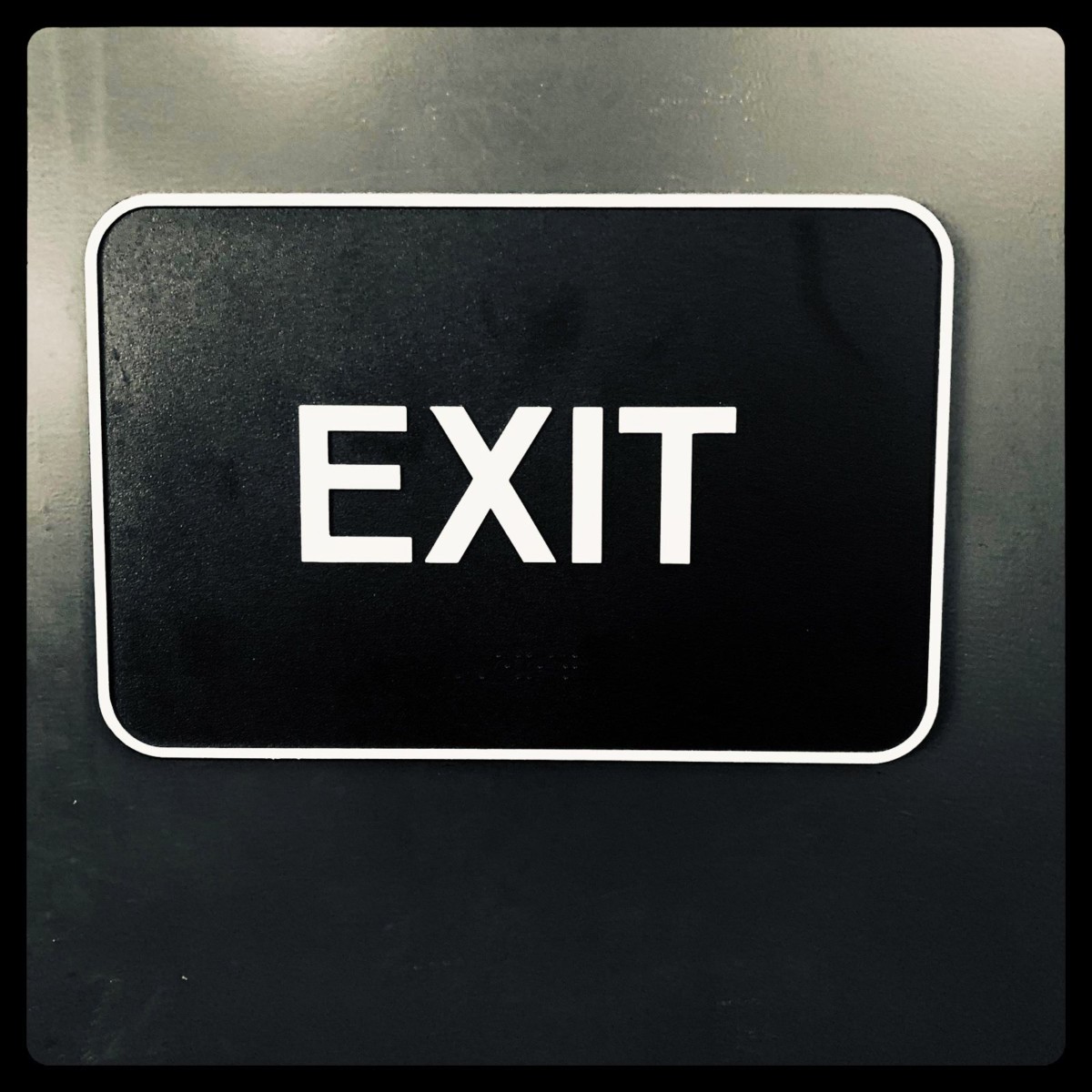
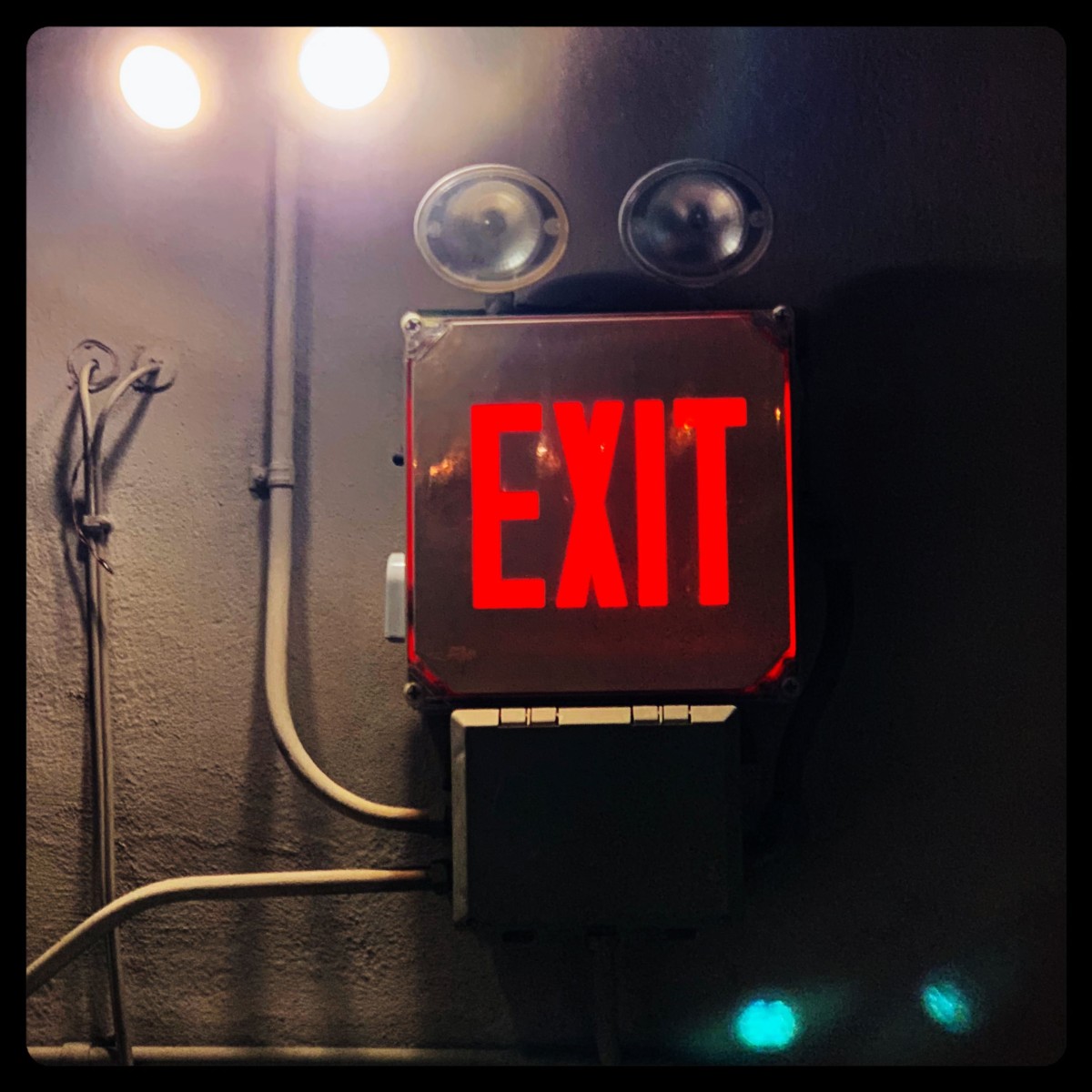
Imagery courtesy of Florian Reinhardt
There’s a quote you use, “physically present, mentally not.” It feels like this could be read as a negative statement, a critique of being absent minded. But when you talk about it, it seems more like an affirmation.
Completely. Imagine meetings where you don’t want to listen to people because you already know what to do. Imagine you’re sitting in the airplane, the airplane stops, everybody is standing up, you have to wait. Sometimes you can’t do anything. But you can do with your mind whatever you want to get in a good mood. And for me, this is to say: I decide what my thoughts are, I can create the mindset I want to have. I knew that people could think it could be negative as well, that’s OK. But if you flip it, it’s exactly the same thing with Exit.
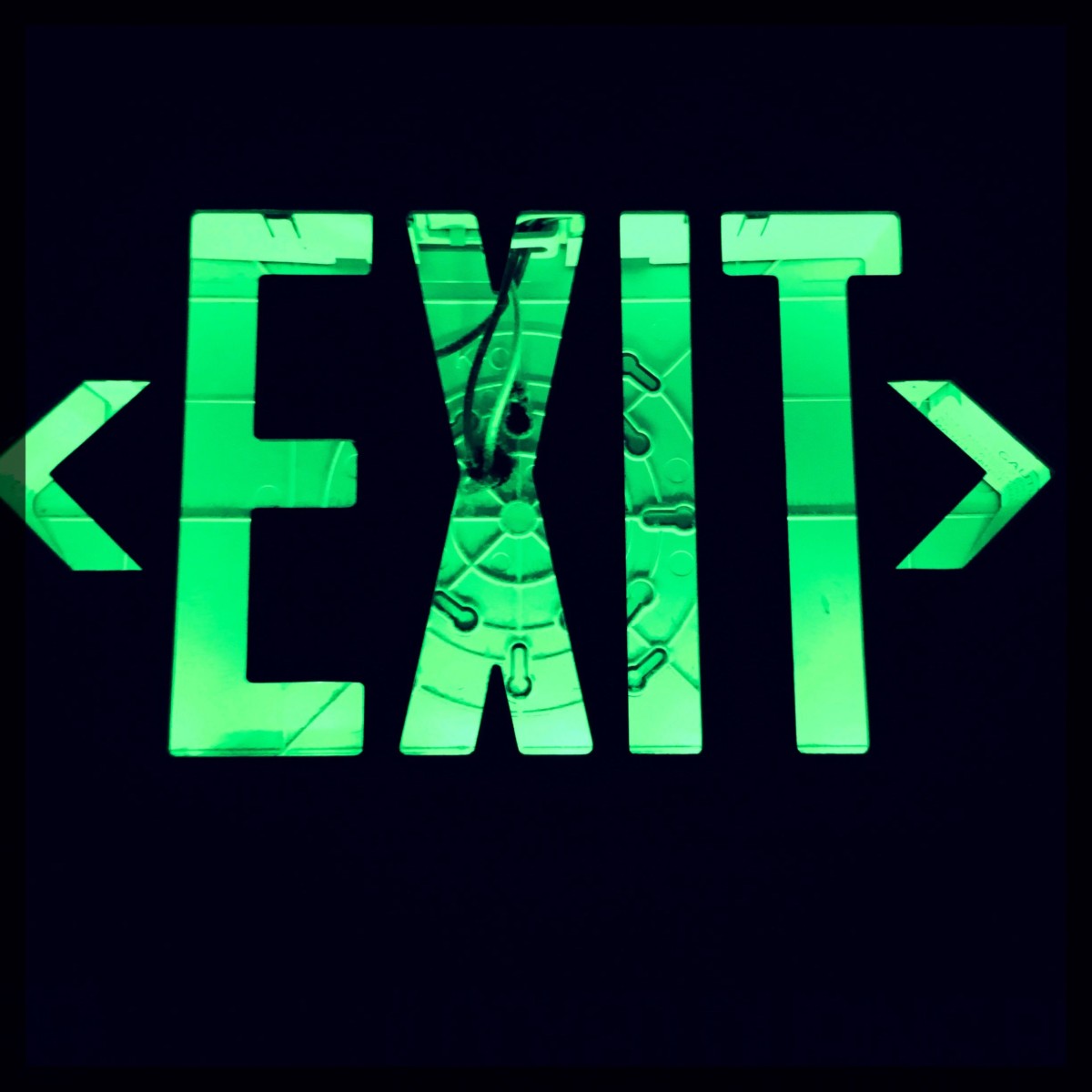
Imagery courtesy of Florian Reinhardt
Your house was one of the many homes that were flood damaged in late July. Could you describe that experience?
We were on holiday when it started. My neighbour called me and said, “Hey, there’s this little stream.” And I was like, “OK, if this goes on we will have a problem.” And then two hours later, the house was filled with water, like 1.8 metres, and everything we had was under water. Like, for example, my collection of guitars. I have a sofa, I have a record thing, I have books, I have a kitchen, I have jackets, I have shoes, I have all the stuff from my children, I have everything down there.
My brother-in-law came in to get our passports out of the house. He was swimming into the park where the house was, he was going on the roof of the garage with a headlight and a baseball bat. He was like diving in my house, and I was like, “Get your ass out of there!” because many people died when the electricity came back on. He did this for his sister and me and I was like, “crazy crazy fuck fuck.” and then I had this moment, it was like the universe was talking to me, it was like, “Florian, can you use the exit now?”
And so I was like “OK, what can we do?” I organised like twelve friends of mine, organised a car, said, “Let’s get all the shit out of the house.” So we fixed it, we took everything out of the house, we took everything we have upstairs and put it into storage.
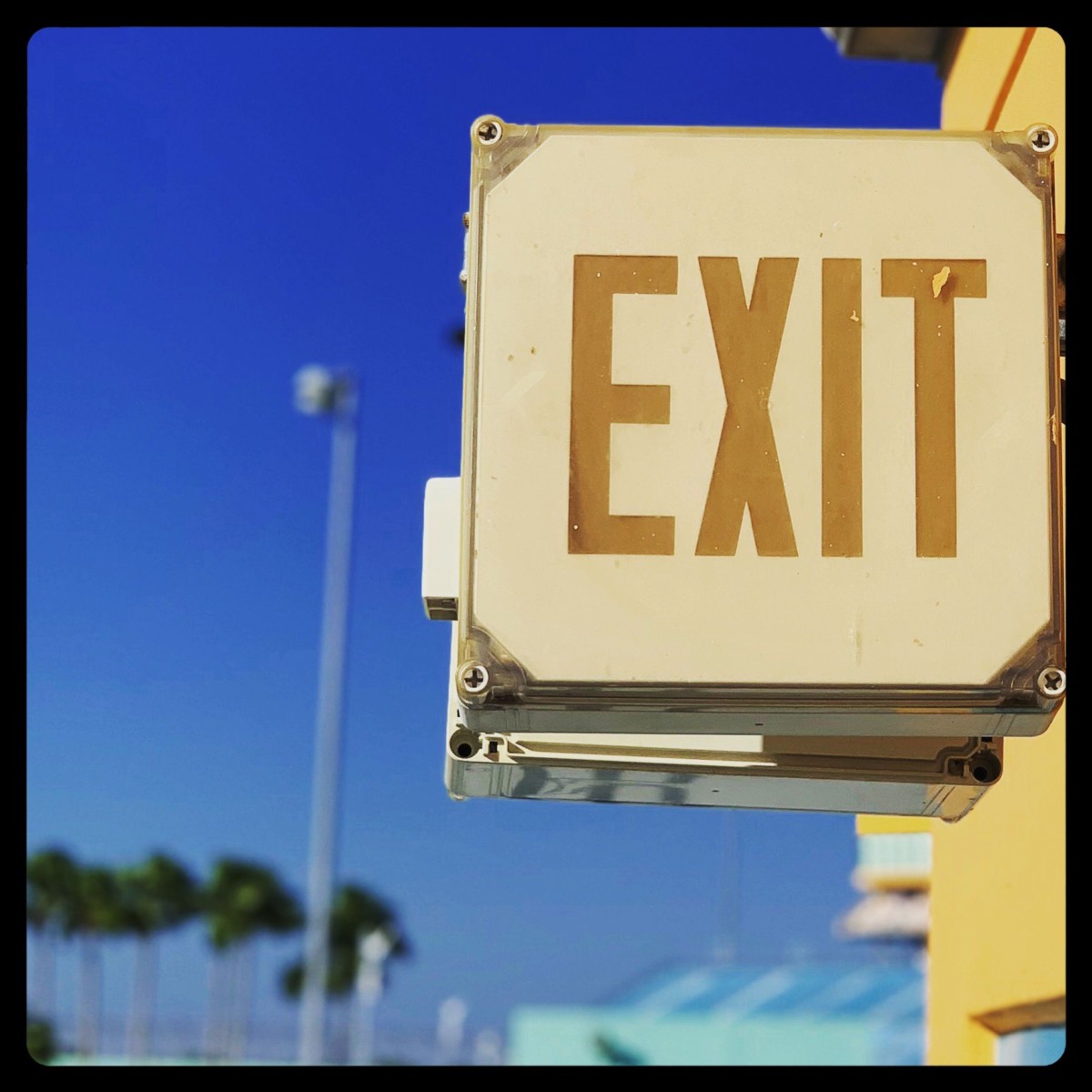
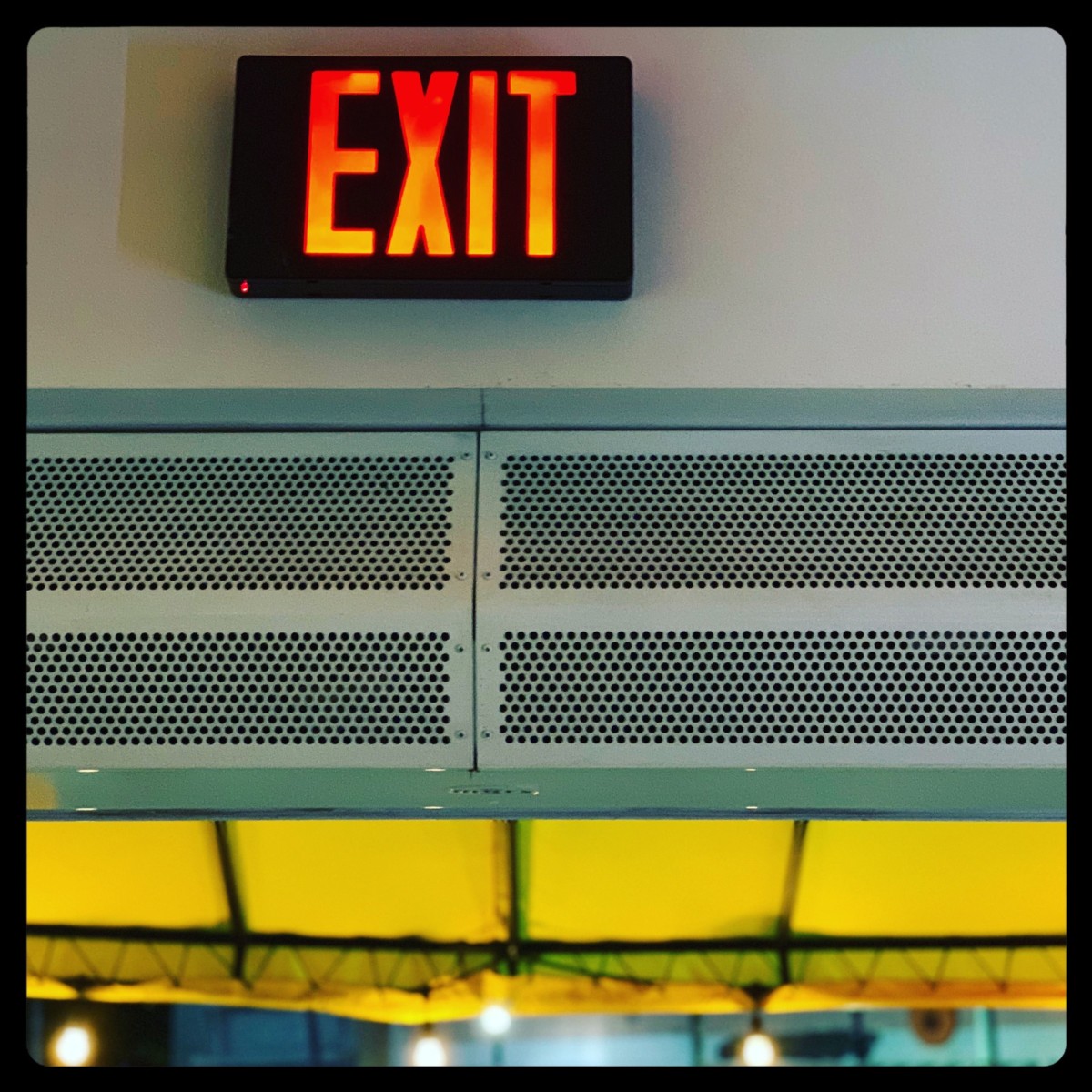
Imagery courtesy of Florian Reinhardt
So being able to perform that mental exit was really important – you used it and it worked. And all of this happened in the middle of you putting together the Exit exhibition.
It was exactly the day after Till Breckner and I had finished what we wanted to do in the exhibition. So we finished all the texts. I do not know what to say, “I just have those pieces here, they made it, let’s do something with them.” I try to see the positive side of things. OK, we are not dead, we have insurance. You know how many of my neighbours have no fucking insurance? So I said, “OK, let’s sell what we have, and whatever we sell we can give it to people who have problems, who have no insurance.” And this is what we started to do.
For me, right now, I see that there will be some positives in the situation. I can’t even say, “Oh god, I lost my house!” because when I see how many people really lost everything, you know, we’re fine, we’re cool. We can rebuild, and it’s not a big deal. It’s a deal but it’s not a big deal. If I would not have gone through Exit last year, through all my stories, just to give the authors something as a base, I don’t think I would have reacted the way that I did.
I don’t know. I mean, it’s like, crazy, to lose your home, and to see something good come out of it. And maybe that’s what exit is, always do the best out of it. And you decide what you do.