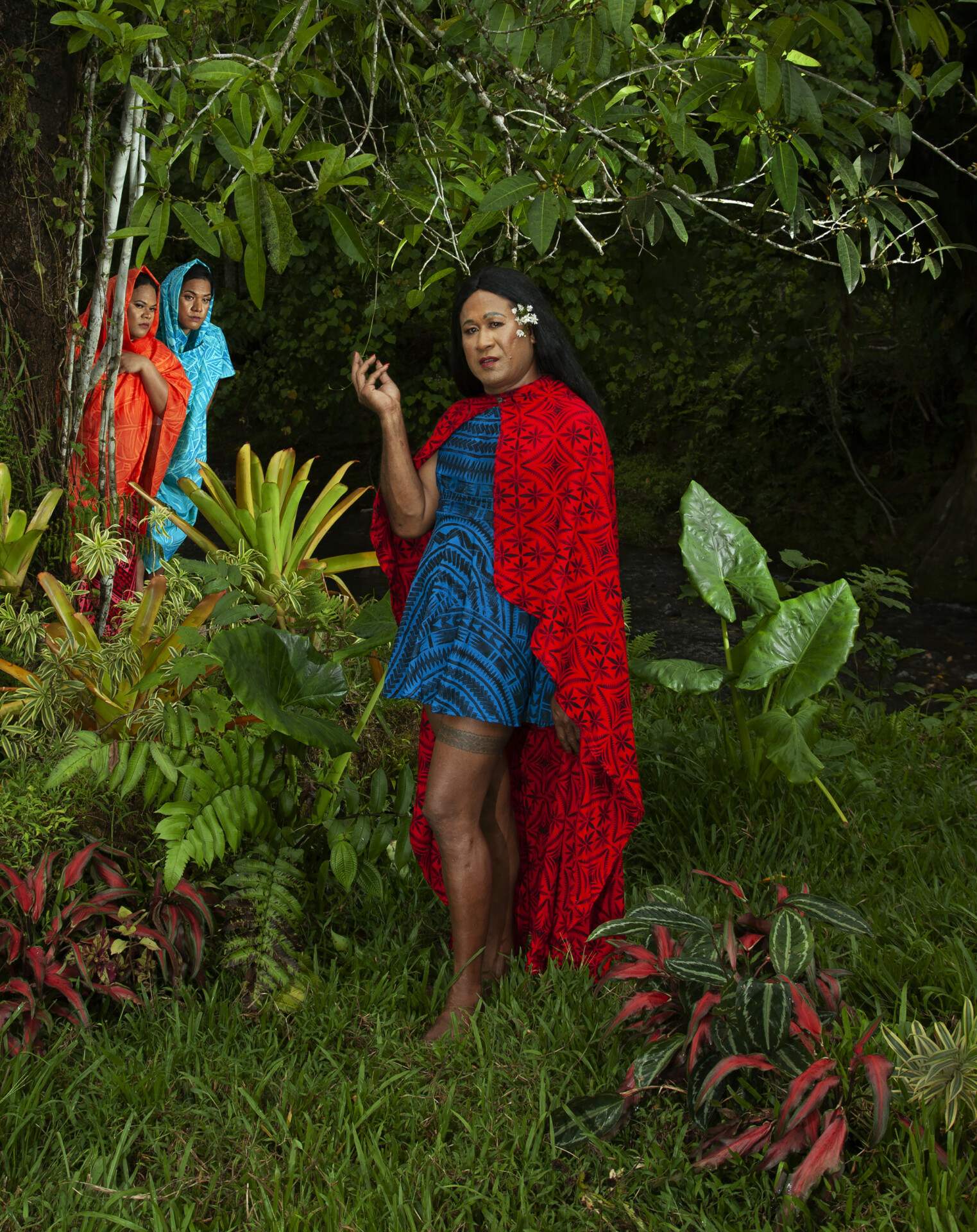
Yuki Kihara. Photography by Luke Walker.
The 59th Venice Biennale, the world’s oldest and probably most prestigious international art exhibition, kicks off on April 23rd. Number 59 was supposed to happen in 2021 but you-know-what was raging all over the place, so it has now been three years since the art world cognoscenti descended en masse on Venice for a weekend or week or month of eye-popping art installations and lavish (and can we say pill-popping?) parties.
The Venice Biennale is structured around national pavilions, in which participating countries exhibit work from artists or collectives that they select to represent them. This year, the New Zealand pavilion will host a new work called Paradise Camp by the artist Yuki Kihara. Kihara is the first artist to represent New Zealand who is Pacifika, Asian, and Fa’afafine (Samoa’s third-gender).
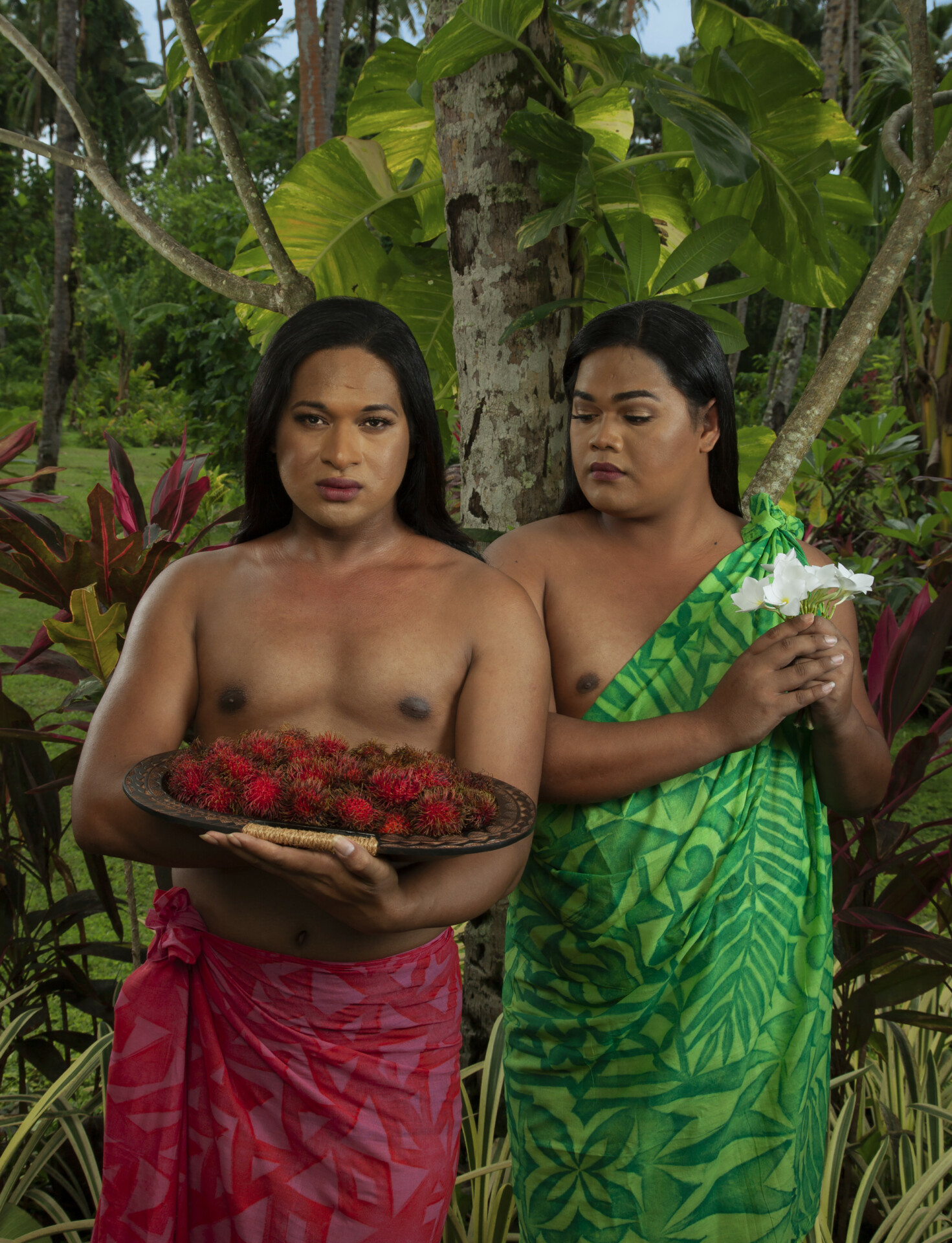
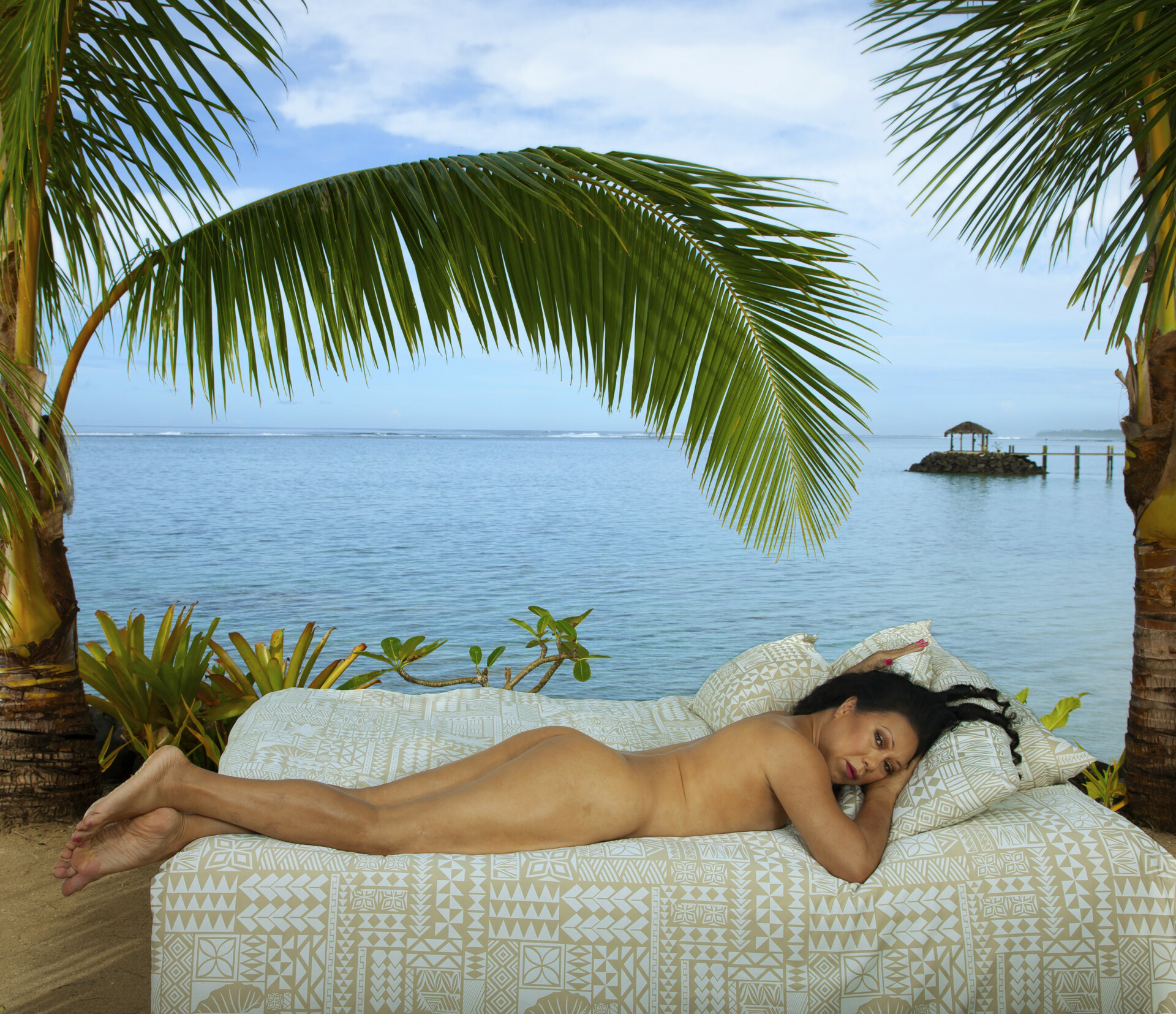
Paradise Camp is inspired by an essay by Ngahuia Te Awekotuku, who makes the argument that some of the models in Paul Gauguin’s paintings from his time in Polynesia may have been Māhū, a third-gender community in Native Hawaiian and Tahitian communities. Kihara’s work, which includes videos, photographs, essays, and archival material, is an “upcycling” of Gauguin’s paintings, through which she interrogates western colonial perspectives and their impact on indigenous culture.
Paradise Camp was eight years in the making, and has extended into various projects over that period; for example, Kihara was also a major contributor to the show Paul Gauguin, Why Are You Angry, which is currently on show at Berlin’s own Alte Nationalgalerie. The exhibition, which Gauguin’s paintings alongside works by contemporary artists such as Angela Tiata and Henri Hero, constitutes a sort of re-appropriation of Gauguin’s aesthetic riffs on Polynesian culture. There’s a lot of different threads to pull at here – gender, climate change, the idea of paradise, the function of art as a tool to both expand and repress.
SLEEK sat down with Yuki Kihara to talk about Paradise Camp, her own identity, and what it means to represent New Zealand at the upcoming Biennale.
SLEEK: When people visit your show at the Arsenale, what can they expect to see?
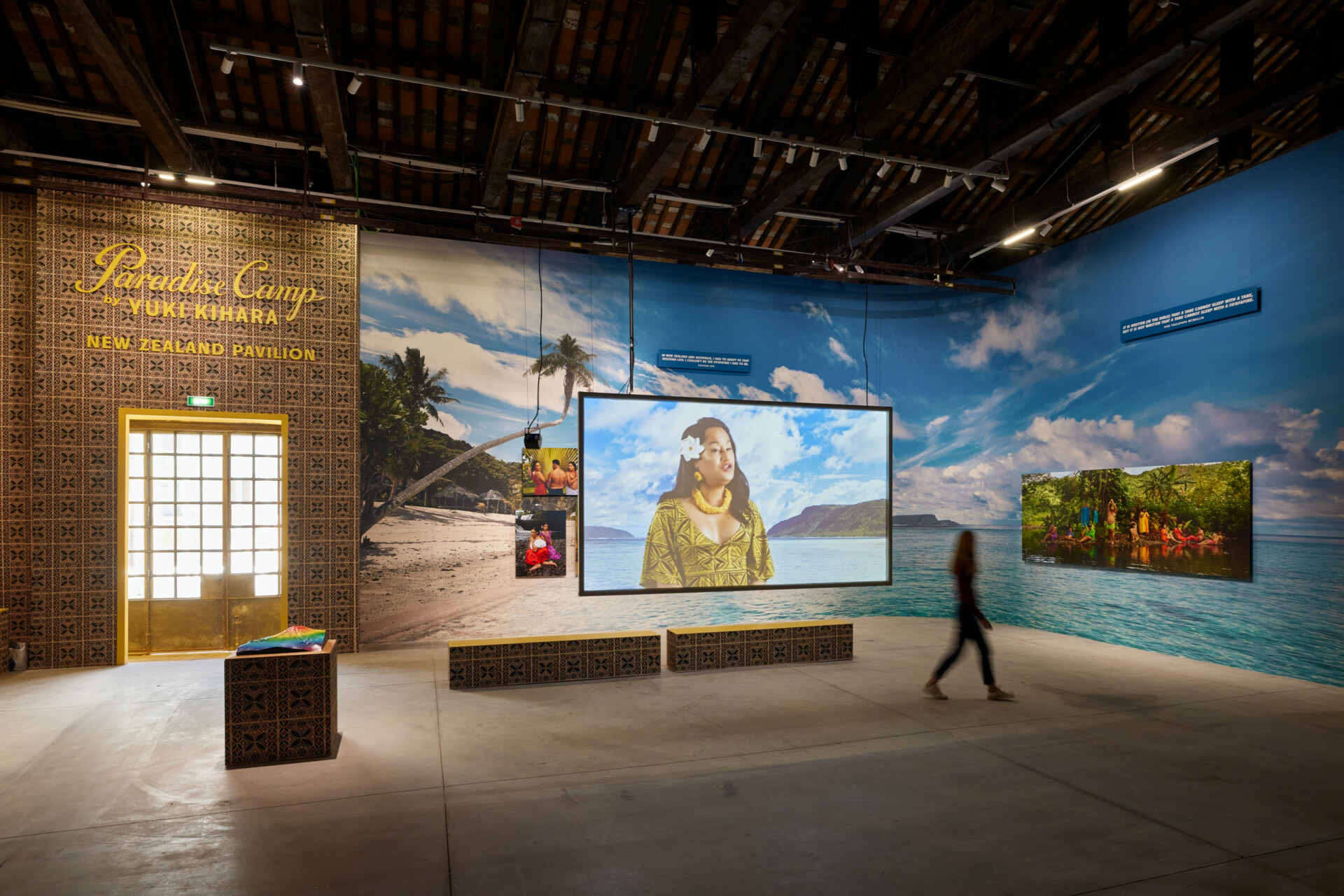
Yuki Kihara: The first thing the audience will experience upon entering Paradise Camp presented in central Arsenale is the sense of being transported to a whole other world, or at least a world according to how I see it, which is set in Sāmoa: a place I call home where I live and work. Paradise Camp is the Fa’afafine utopia – where heteronormativity is shattered to make way for an Indigenous worldview that’s more inclusive and sensitive to the changes in the environment. But beneath the surface of this utopian ideal lies the real-life stories of trials, tribulations and triumphs: how the Fa’afafine community work through the colonial legacy of gender, sexuality and the environment specific to the social and political contexts in Sāmoa.
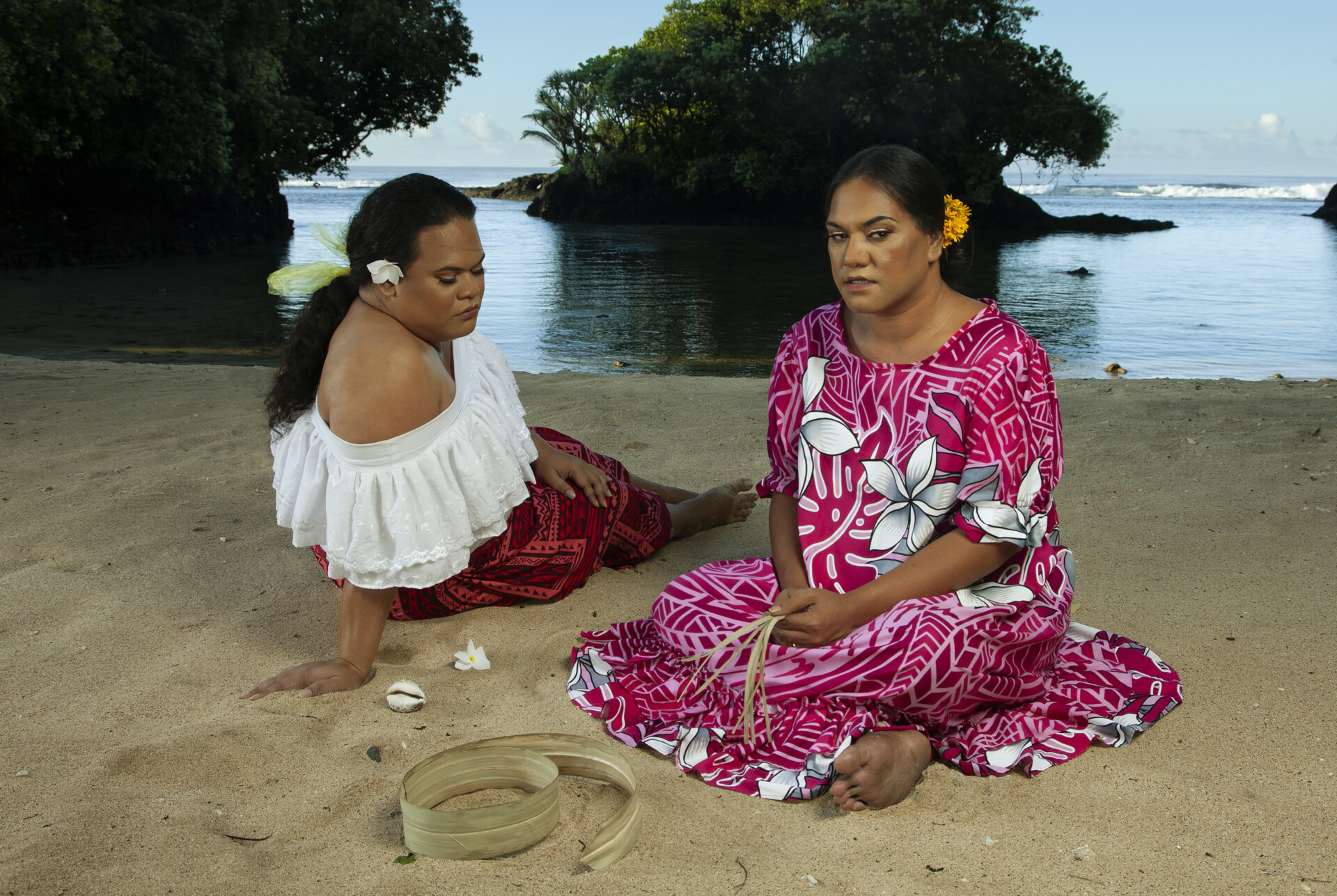
S You identify as Fa’afafine, a third-gender in the Samoan community. Fa’afafine refers specifically to people who are born genetically male but embody both masculine and feminine traits. Do you feel like your identity fully aligns with the traditional concept of Fa’afafine? Or are there other terms – for example “non-binary” or “genderfluid” – that more accurately describe you?
YK: Within the Sāmoan context, my family identify me as a Fa’afafine and part of a kinship system based on our relationship to the land. The Sāmoan scholar Tui Atua Tupua Tamasese Efi perfectly sums up what it means to ‘belong’ to Sāmoa:
‘I am not an individual; I am an integral part of the cosmos. I share divinity with my ancestors, the land, the seas, and the skies. I am not an individual, because I share a tofi [inheritance] with my family, my village, and my nation. I belong to my family and my family belongs to me. I belong to a village and my village belongs to me. I belong to my nation and my nation belongs to me. This is the essence of my sense of belonging.’
The only time I refer to myself as a trans woman is when I see a doctor so that I can receive proper medical care. We have to remember that medical terminologies such as homosexuality and transgenderism adopted by the gay community derive from Western medical disease models that saw anything outside heteronormativity as something that needed to be ‘fixed’, which is, unfortunately, a view that continues to persist today. Hence, I prefer to identify as a Fa’afafine that comes with the cultural and spiritual dimensions of being Sāmoan, which pre-dates ‘contact’. This is despite the inherent bias some Sāmoans today have about Fa’afafine due to the legacy of colonisation that brought the notion of heteronormativity to our shores. By identifying myself as a Fa’afafine, I’m not only reclaiming the ways of our ancestors but also my personal quest for ongoing decolonisation.
S Following that point, how do you feel the evolution of popular discourse on gender identity has or has not impacted on perceptions of the Fa’afafine community?
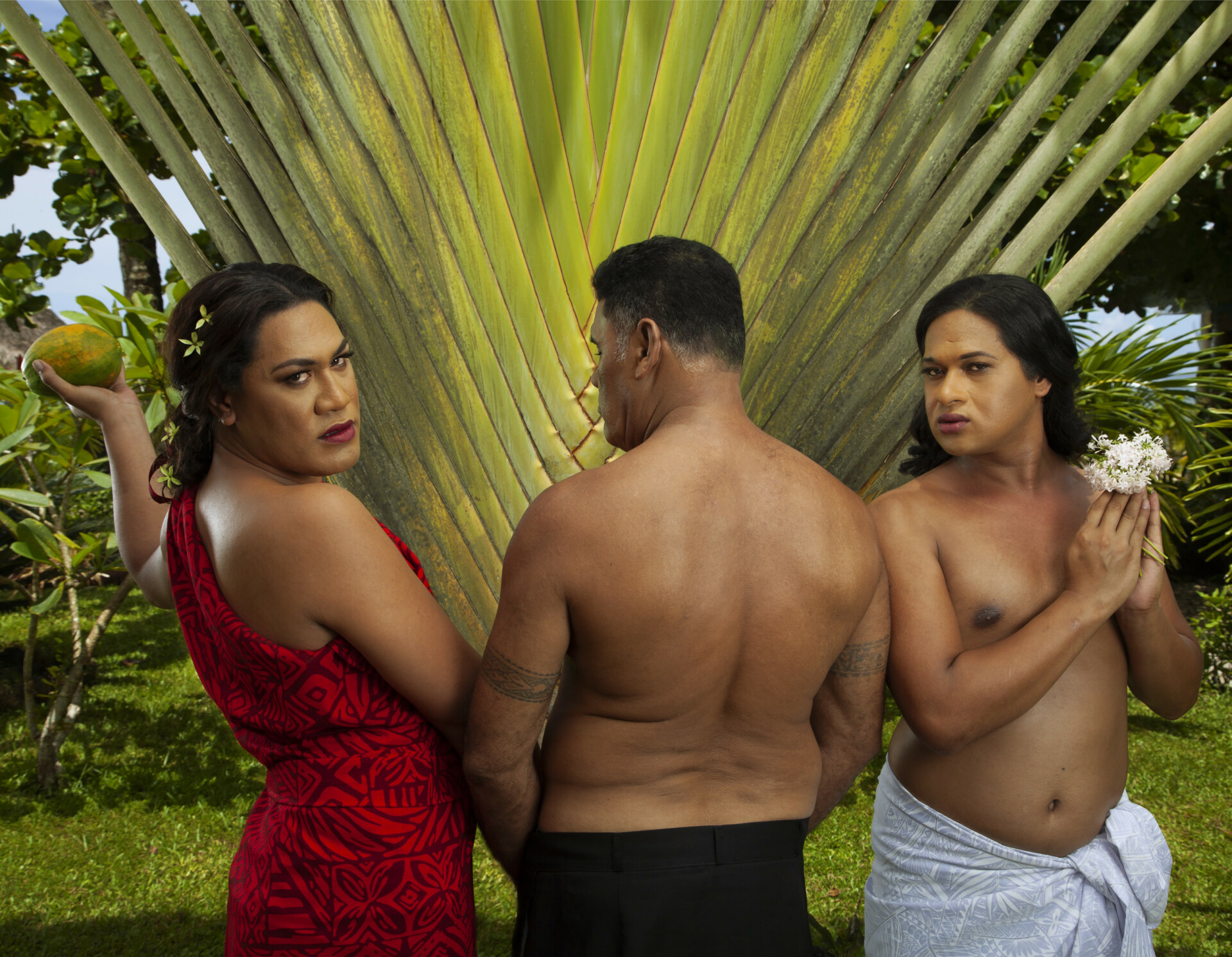
YK: Fa’afafine is one of the original, continuous Indigenous queer cultures of Polynesia and the Pacific Islands that existed prior to Western contact. The sexual encounters between colonialists and natives in the Moana Pacific shaped the Western notion of gender and sexuality, including homosexuality and transgenderism. Therefore, I see the popular discourse on gender identity as something that the West is finally catching up with what Indigenous cultures have been doing all along. What is problematic, however, is when the media continually frames Indigenous queer cultures through the intersectionality of race and heteronormativity by creating a hierarchy that describes Fa’afafine being a ‘noble savage’ as opposed to the gay white man being more ‘advanced’ but both are not as ‘civilised’ as a straight white man. Women, Indigenous women and women of colour, in particular, are also impacted by this fraught hierarchy based on white heteropatriarchy.
S Is it possible to identify a particular essence of the Fa’afafine perspective on the relations between Samoa and New Zealand? If so, what would you say the addition provided by this perspective is? Or, a different way of putting this would be – what is missing from the conversation? And what would you like to add?
YK: Informed by British colonial rule, the heteronormative legislations directed against the Fa’afafine community, including the banning of female impersonation and homosexuality, were introduced by the New Zealand colonial administration of Sāmoa in 1961 on the eve of our country’s Independence in 1962. Anyone caught breaking these laws was fined and imprisoned for six months. These anti-Faʻafafine legislations were the last straw against Sāmoa by the New Zealand colonial administration and highlight how the Faʻafafine community was seen as an obstacle to building a postcolonial, independent nation.
While the female impersonation law was later abolished in 2013, homosexuality continues to remain illegal. However, despite not being enforced, the illegality of homosexuality continues to fuel discrimination against the Fa’afafine community in the post-Independence era. Examples of discrimination today can range from public harassment to systematic discrimination, including the exclusion of the Fa’afafine community in policies around environmental crisis, climate change, disaster risk management and post-disaster recovery by both the local government and aid donors, including the New Zealand government. Climate change affects everyone, but the specific ways that climate change impacts marginalised communities must be taken into account.
S The imagery and aesthetic Gauguin developed in French Polynesia was instrumental in shaping Western concepts and misconceptions of Polynesia as a sort of “paradise.” How would you situate Paradise Camp in relation to Gauguin’s paradise?
YK: When I look at the paintings the artist Paul Gauguin produced during his time in French Polynesia, they immediately remind me of Sāmoa – the clash of bright colours in the landscape and gender-neutral models in his paintings also reminded me of the Fa’afafine community which I belong to in Sāmoa. Sure enough, in my research I’ve uncovered how Gauguin used several photographs of people and places in Sāmoa as a foundational reference for his significant paintings. So as a way to return the colonial gaze, I upcycled a selection of Gauguin’s paintings that I thought might have been inspired by Sāmoa by using photography to convey the similarity between Gauguin’s paintings and the Sāmoan people, some of which are almost identical. You’ll see all of this in Paradise Camp.
S One of the themes in your work is how the rest of the world, including the Samoan diaspora, engages more or less sustainably with Samoan territories. What, for you, is the most “sustainable” way to engage with the legacy of an artist like Gaugain? And can this inform or help shape an approach to the physical space of Polynesia?
YK: The exclusion of Indigenous perspectives in many posthumous exhibitions of Paul Gauguin by major galleries and museums highlight his most sought-after paintings produced in Tahiti and the Marquesas are complicit in perpetuating colonial myths about ‘paradise’. These ‘paradise’ myths are also capitalised by the tourism industry that markets Moana Pacific while down-playing the impact the tourism industry has on the local environment. I think galleries and museums can address Climate change by using Gauguin’s work as a catalyst to highlight what is happening in the Moana Pacific rather than perpetuating myths that work against Indigenous peoples.
SYou’re the first artist to represent New Zealand at the Venice Biennale who is Pasifika, Asian and Fa’afafine. In what sense do you see yourself as a “representative” of New Zealand, specifically at the Venice Biennale but also in your broader oeuvre?
YK: Moana Pacific peoples – Fa’afafine community in particular – have been historically marginalised in the art world that predominantly caters for cisgender-white audiences. By acknowledging that I’m the first artist to represent New Zealand at the Venice Biennale who is Pasifika, Asian and Fa’afafine, I’ve formed a group entitled ‘Firsts Solidarity Network’ – an artist-led initiative comprising artist/s who are first time representatives from a marginalised or under-represented group in their respective country or a first time country participant at the Biennale Arte, to offer visitors to Venice a route to discover these ‘firsts’ at the global art world event. For artists and curators the network offers practical advice and camaraderie among participating pavilions. In addition, I hope the ‘Firsts Solidarity Network’ encourages discourse around pertinent issues such as the internal structures of national pavilions and their commitment towards equitable representation of artist/s in their respective countries.