On writing to understand oneself and the power of what remains unspoken.
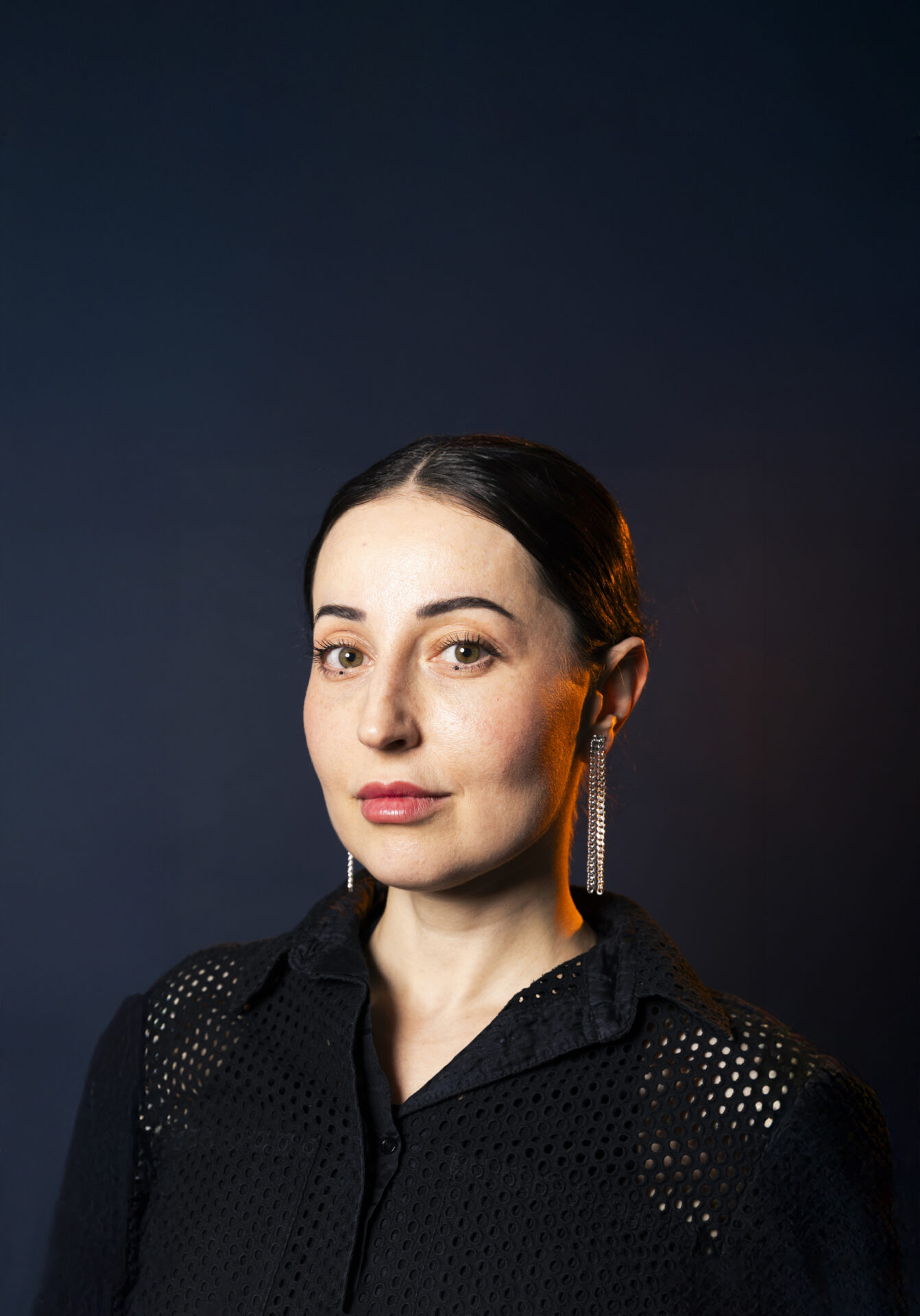
Lana Lux. Photography by Paula Winkler.
Lana Lux has never been particularly interested in simple characters or easy answers. Born in Dnipro, Ukraine, and living in Germany since childhood, the Berlin-based author writes about what happens when relationships, identities and people become more complicated than we would like them to be.
Across three novels, most recently Geordnete Verhältnisse, she has explored everything from migration and poverty to obsession, mental health and femicide. We spoke to Lux about writing as a way of understanding oneself, the things families leave unsaid and why creating a book can feel a lot like suffering.
NISHA MERIT Lana Lux is your artist name. Who is Lana Lux?
LANA LUX Lana Lux used to be the person I wanted to be, and over the years she has moved closer and closer to the person I actually am. She stopped being this infallible ideal a long time ago. Lana Lux struggles with creativity, motivation, networking, getting things done, too. So, I didn’t manage to hide behind her. She exposed me.
NM Why did you decide to use an artist name in the first place?
LL Lana Lux as a name, or as a brand, was also a form of protection from the immediate discrimination and categorisation that came with people hearing my legal name. Nobody asked: Who is this person? They immediately felt like they already knew who I was. And before I even learned the other person’s name, I was already caught up in explaining my very complex biography going back six generations. That’s exhausting and, in a way, probably prevented people from actually getting to me.
NM That’s interesting because you’re also very open about the complexity of being human in general.
LL That’s at the core of being human. No matter how successful or unsuccessful we are, where we live, whether we migrate or stay, we never escape having to deal with ourselves. Sometimes it gets quieter for a while, then louder and more urgent again, especially during major changes in our lives.
With migrant biographies, it can become even more complex because certain things mean something different. In Western democratic societies, growing up often means finding yourself and becoming independent. In many other cultures, including the one I come from, it means taking responsibility for your family. That’s something completely different. I like exploring that in different ways.
NM Getting to know yourself and finding your position also has a lot to do with language. Not necessarily one particular language, but whether the words exist to describe what you’re going through.
LL And also what silence says. I often deal with what isn’t spoken, what can’t be said, or what the generation before us never told us. What isn’t said shapes us at least as much as what is. Just like the absence of people can shape us. It’s not only presence that leaves a mark.
NM Is that also how you came to writing?
LL I’ve always written because writing is almost a bodily function for me. A kind of digestion, or a way of understanding myself. It has also been a remedy for loneliness since I was very young. I’ve always enjoyed words, taking them apart and putting them back together. My mother tongue is Russian, where doing that is even more absurd than in German, where you’re actually allowed to combine all kinds of things grammatically. At first, I didn’t like the sound of German. But once I realised that the language itself does exactly what I had always done with words, I found it fascinating. I started writing down words that otherwise would have disappeared because they were nonsense. And diaries, of course, especially after migrating. I wanted to hold on to things. I think I wanted to listen to myself, and I had to become that person for myself.
NM Writing was always important to you. How did you eventually start publishing your work?
LL I never really thought publishing could be possible for me because I’m dyslexic. Writing had always been part of my life, but it was something very private, where I was allowed to make mistakes. Even when I wrote scenes for a theatre project as a teenager, I never really saw it as MY writing, more as a step towards something else. Then my life became very complicated. I was pregnant and had to quit acting school halfway through. And writing was simply there. I started working on a text, and it kept growing, page by page, scene by scene. In the end, it became my first novel.
NM How did the birth of your daughter influence your work?
LL After my daughter was born, I had this fixed slot every week: Tuesdays from ten to twelve. That was my writing time, the two hours when I felt most like myself. I loved merging with another world, hearing my characters’ voices so clearly that I just had to write them down. I hardly work autobiographically. A lot of what I write comes from everything my subconscious has absorbed. We consciously experience only a small part of our surroundings, but the rest is still there. And I think that’s creativity: the subconscious eventually giving it all back to you.
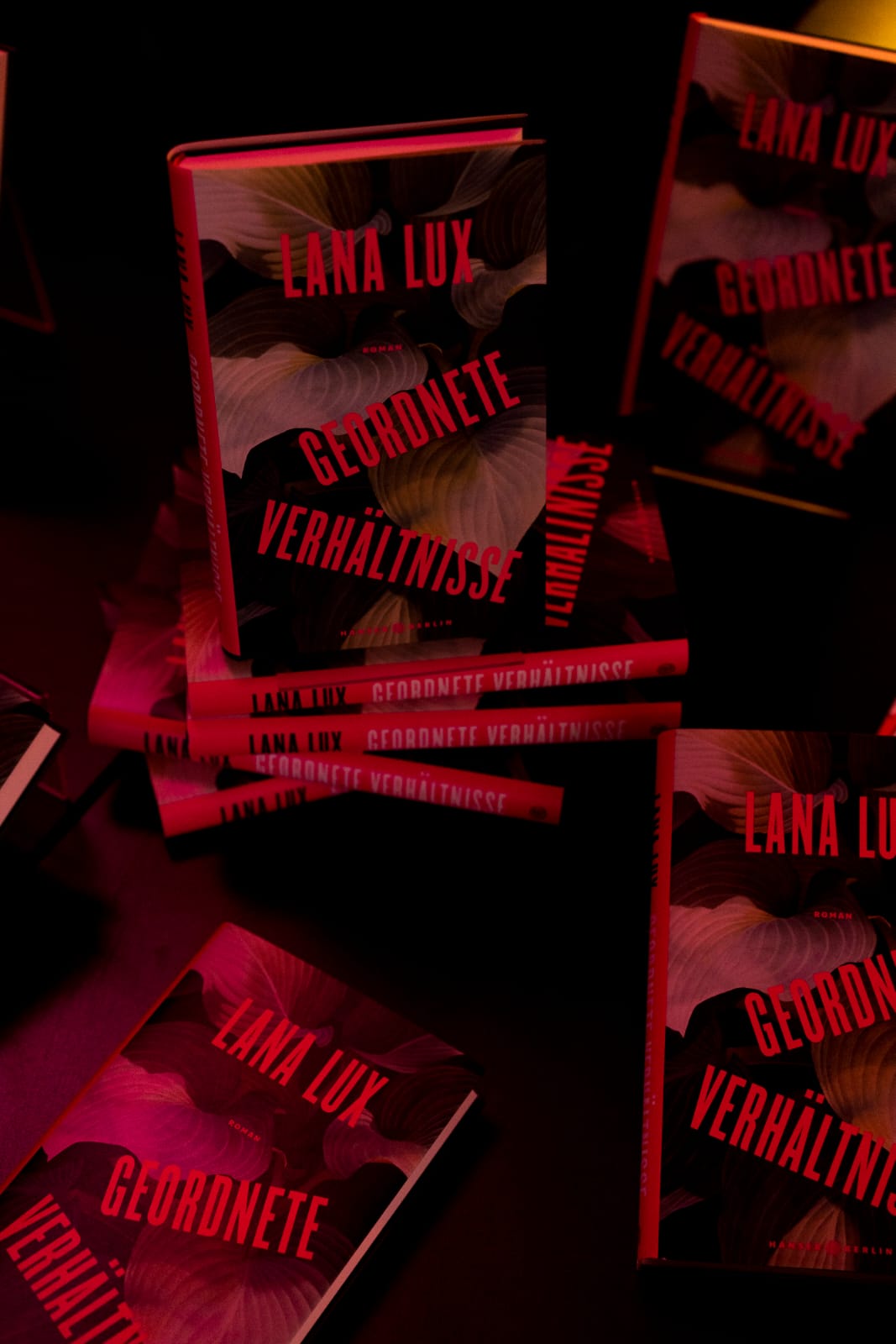
Image Courtesy of the artist.
NM Are there certain themes you’re particularly interested in? How does a story begin?
LL The bigger my body of work becomes, the more certain themes emerge, although I don’t choose them consciously: being a woman, being a girl, the vulnerability of childhood, the margins of society and morality, mental health, poverty, and the complexity of relationships. But that’s never how a story starts. Usually, it begins with a voice or an image that simply won’t go away. Then a character starts speaking, or two people start talking, and eventually the story starts telling itself. Often, subjects come up that I know nothing about, so I start researching. Some might become irrelevant later, but they still help me understand and write the characters.
NM How do you deal with a process that can be so long and intense, with all the thinking, feeling and researching that goes into it?
LL The classic way: I just suffer. I’m not going to romanticise it. It’s suffering. There are moments of light and a lot of darkness. I try not to let that suffering radiate too much into the lives of the people around me, but I probably can’t avoid it entirely.
NM Which naturally leads to the question: Why do it, then?
LL Because I suffer even more without it. Not writing means getting stuck in that darkness. Then eventually, there’s this moment when everything suddenly works, and it’s incredible. Very brief, but that’s what you do it for. And when it’s finished, people think it must feel amazing. But it’s horrible: loneliness, phantom pain, meaninglessness, and this fear of what will happen to your “baby” once it’s out in the world. Even when things have gone well before, you still think: How much longer can this possibly go well?
Image Courtesy of the artist.
NM I completely understand that. You work so intensely on something until suddenly all the pieces fall into place and make sense. And then you have to let it go.
LL And then everything else starts: promo, interviews, all of that. Every time I think: This time I’m going to do it really well. And afterwards I just think: Please, everyone, leave me alone. Usually, I’ve already moved on to something new by then. I’ve probably always done too little for my books because of that, and I genuinely feel guilty towards them. They deserved a better mom.
NM At the same time, once they’re out there, they also exist independently of you.
LL Nobody reads the same book. Everyone reads through their own experiences, so every reader becomes a kind of co-creator. That’s why I can’t think about who might read my work while I’m writing. Otherwise, I couldn’t write what I write. Of course, the longer I publish, the more this voice creeps in: “People are going to ask you about this” or “This group won’t like that.” But that can’t matter. Sometimes men ask me: “Where are the men?” Even though, half of my second book had a male protagonist. And some men perhaps liked him a little too much, considering he committed a femicide. So: think about it.
NM Your work often explores the darker sides of people and the structures around them.
LL Maybe life is simply like that. Literature allows you to engage deeply with something without being watched. You can sit on a train reading a violent or pornographic book and nobody knows what you’re feeling. You can be very honest with yourself: What does this immoral thought do to me? Why does this image trigger desire, fear or anger? I recently heard a quote by Rudine Sims Bishop: books can be mirrors and windows. They show us worlds we might otherwise never see, but also allow us to recognise ourselves and realise: I’m not alone in this. And you can return to a book years later and see what has become a mirror and what is still a window. Good literature allows for that complexity.
NM I also think literature creates space for contradictions and everything in between. We’re never just one thing or the other.
LL Exactly. Reading a book is a bit like assembling an IKEA shelf. You have to put more effort into it, and because of that, you’ve helped create it yourself. A novel has so much space to work inside you: jumps in time, different layers, pauses. We’ve become used to things being easy, but at the same time, especially among younger people, there’s a renewed longing for the analogue, for slowness and depth.
NM What are you working on at the moment?
LL It’s the story of a woman in her forties who discovers that she can consciously lucid dream. The dream exists on its own timeline. It continues, she remembers it, and she can return to it. In that world, she has become the person she could have been. The only problem is: the more she sleeps and spends time there, the more her actual life begins to fall apart. And she starts changing physically, too.
Also featured in SLEEK #89 – PLAY.