On Creative Processes and the Urge to Write.
Anyone who meets JULIA MALIK will struggle to put her in a box. And that’s a good thing. She’s an actress, violinist and author, with her second novel, Ich will dich lebend, to be released in September. Malik works across disciplines, placing no limits on her creative output. She says it’s her curiosity that drives her to keep exploring different disciplines. Malik first became known as an actress, appearing in theatre, films and TV series. For a long time, writing took a back seat professionally, even though she had always written – as a child, and even more so as a teenager. What held her back from pursuing it more seriously was her lack of a professional background in writing. A native of Berlin, Malik first studied acting and music in Hamburg before devoting herself to theatre and television productions. She lacked the courage to pursue a career as a writer. But the desire remained: after she returned to writing as a magazine contributor, she quickly realised that she wanted to tell stories.
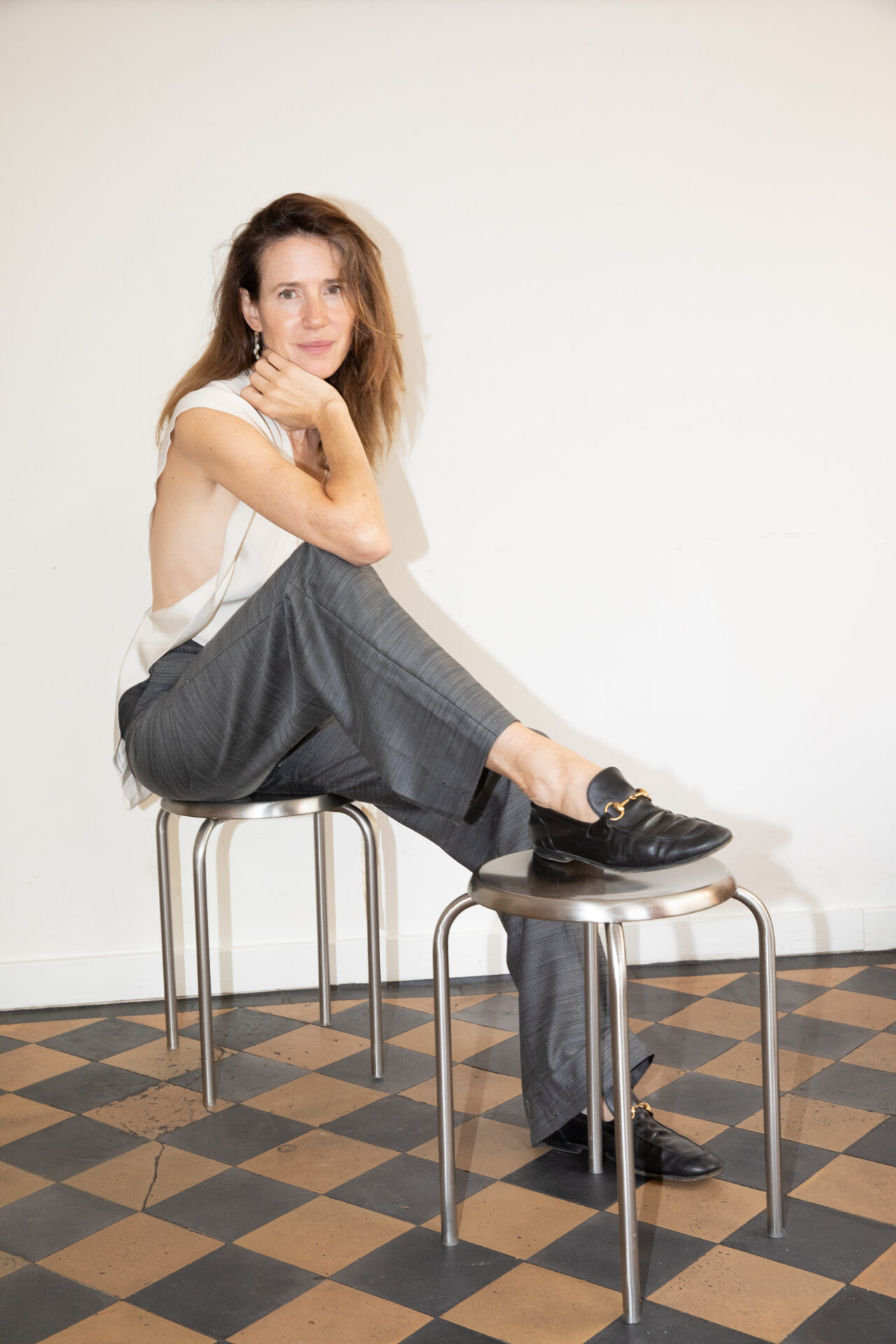
Photo BELLA LIEBERBERG (2) at Onette, Berlin.
Writing came easily; she immediately felt that she was in her element. “I have to write this now – it needs to be written. I have the sentences in my head and want to write them down, but there wasn’t always space. So sometimes I wrote at the the supermarket in the play area or by the edge of the pool. Mostly, of course, when the kids were asleep or at daycare.” This is how Malik describes her daily life, caught between her role as a mother and her creative process as an author.
Parallels can be drawn with the protagonist of her first novel, Brauch Blau: a single mother of two who works in show business. Does she identify with her character? Malik says that, for her, it’s less about the character and more about the feeling she wants to convey. There is the constant balancing act between family obligations and the need for creative freedom – a conflict that many women and mothers face and one that, according to Malik, must be addressed by society. “There’s this absolute longing for freedom as an artist, and also the necessity of it when you do this professionally – and of course, you have to take care of the children. Sometimes the two clash so sharply, it hurts. And it’s frightening.”
When asked how she manages this balancing act, Malik says she can never fully master it. Rather, it is a process, a constant swaying back and forth between the two, an ongoing attempt to find a balance through different phases. It isn’t ideal. It isn’t always easy, but time and again, it feels good.
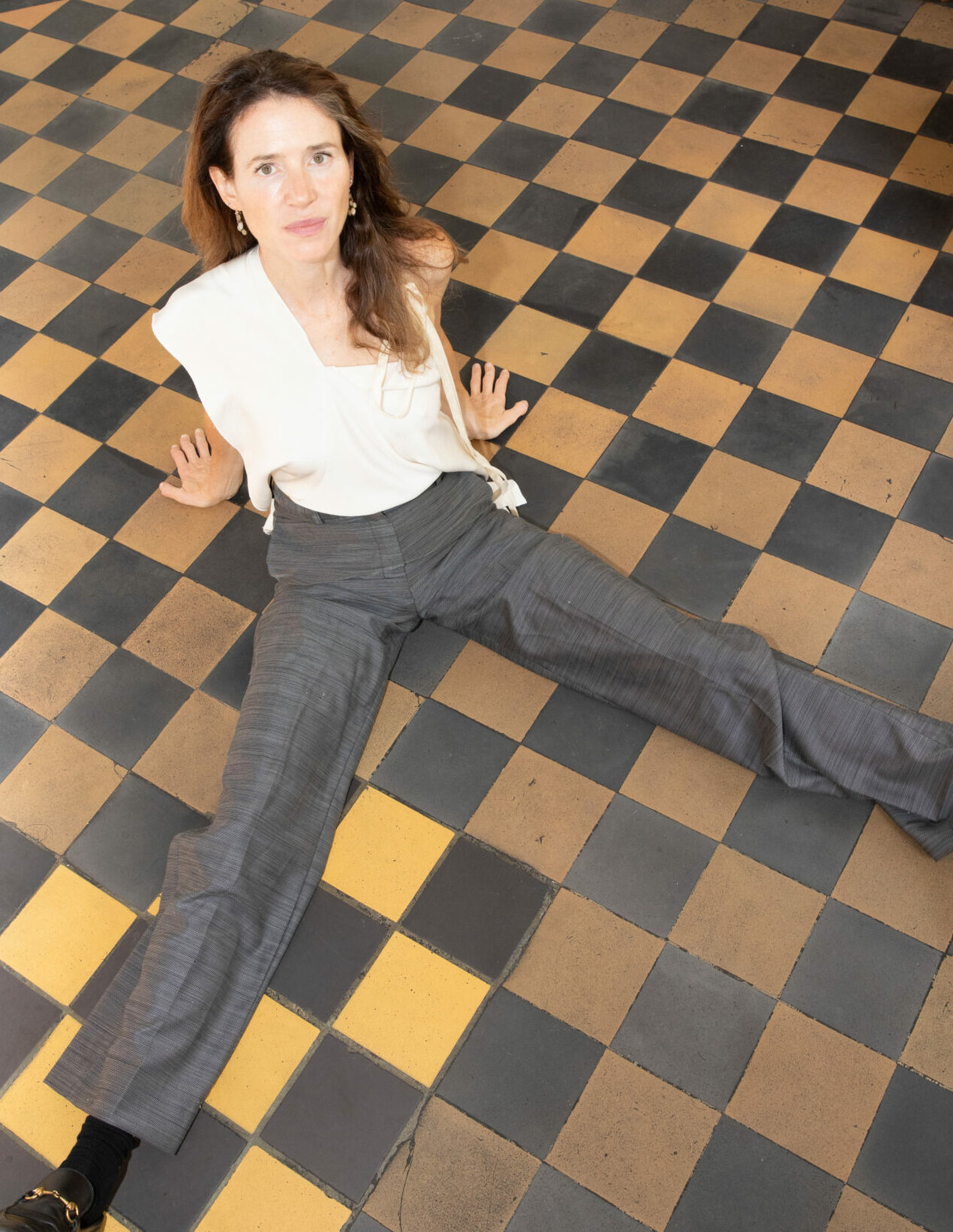
Photo BELLA LIEBERBERG (2) at Onette, Berlin.
Her new book features strong female protagonists. Her characters emerge in different stages. First, she says, there’s a sense of a character, who might then take shape by merging three or four people she knows into a single figure; at other times, the characters take on gestures of Malik’s own. She elaborates on her connection to them: “The two main characters in Ich will dich lebend are, on the surface, entirely new characters, but they both have something of me in them.” What her books have in common is that they do not shy away from difficult subjects. These are issues that need their own space, their own stage: domestic violence, conflicts between different roles and the path towards female self-empowerment. She was still working on her second book when the verdict in the Pelicot trial was announced: “There was this brilliant line: ‘Shame must change sides.’ But the imbalance extends to many more areas.”
Julia Malik tackles these issues in her books without flinching, bringing them into the open. Writing and speaking about these topics, she says, is the first step, though she reflects critically on the limits of her own approach: “Unfortunately, it’s less activist in nature. I want to understand these conflicts through the microcosm of a story, to draw attention to the fact that they exist. They’re happening – so why aren’t we looking at them?”