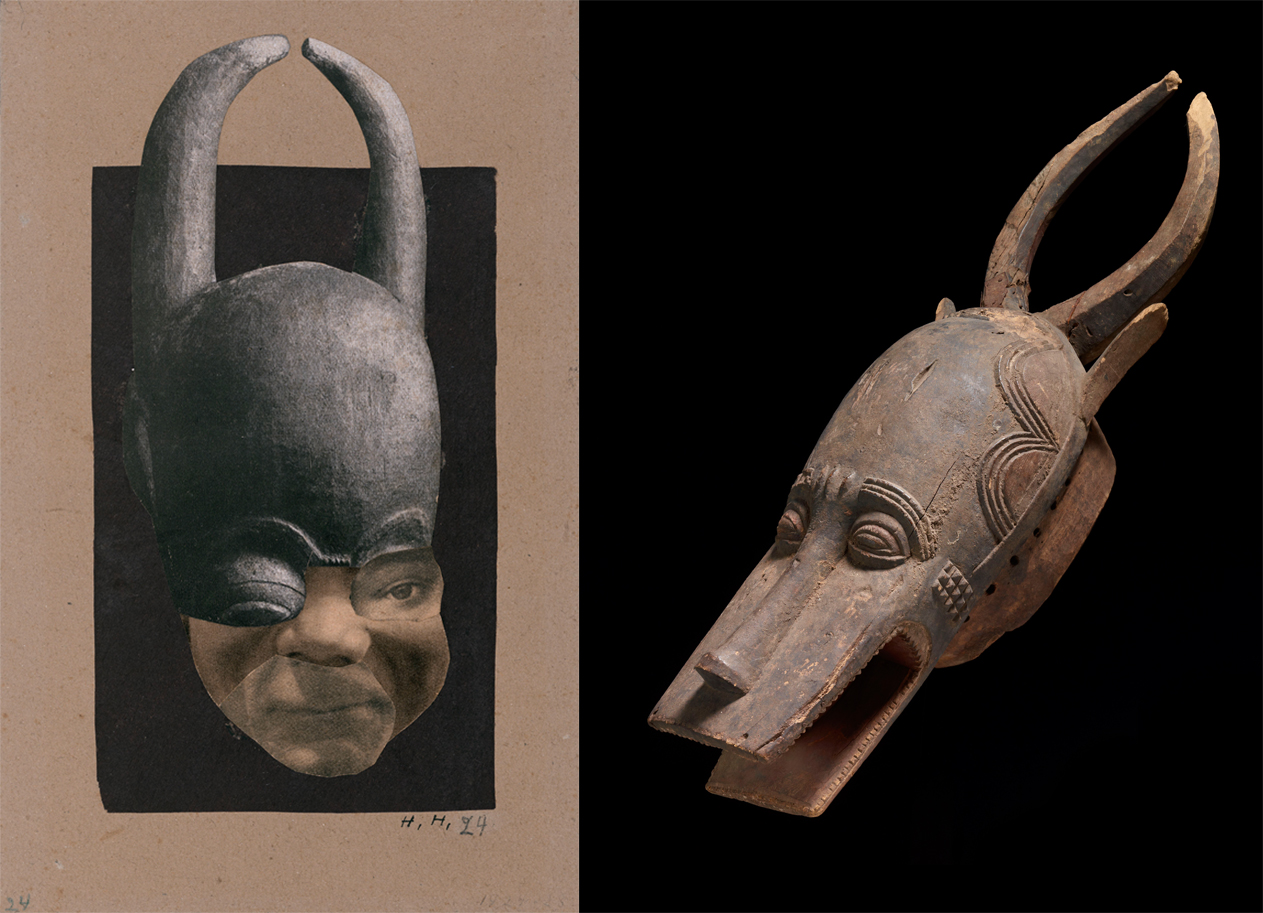
 Left: Hannah Höch, From an ethnographic museum, No X. Right: a Helmet Mask from the Baule Region
Picasso will always be synonym with cubism. Yet what often goes unnoticed is how much that art movement borrowed from African art. Another art movement that has been immensely influenced by African art is Dada. Founded in Hugo Ball’s infamous Zurich nightclub Cabaret Voltaire in 1915, Dada drew inspiration from art and cultures from all over the world. In this Swiss club left-leaning writers, artists and thinkers met for evenings of progressive music and performances. Many of their shows imitated African rituals in an attempt to shake up and challenge the audiences and themselves. Dada artists wanted to rebel against bourgeois ideals and the hypocrisy of European society that, despite seeing itself as superior, still allowed the horrors of the first world war. In the eyes of Dadaists, European culture had lost its credibility, so they turned to the rest of the world and were forced to recognise its wealth and validity.
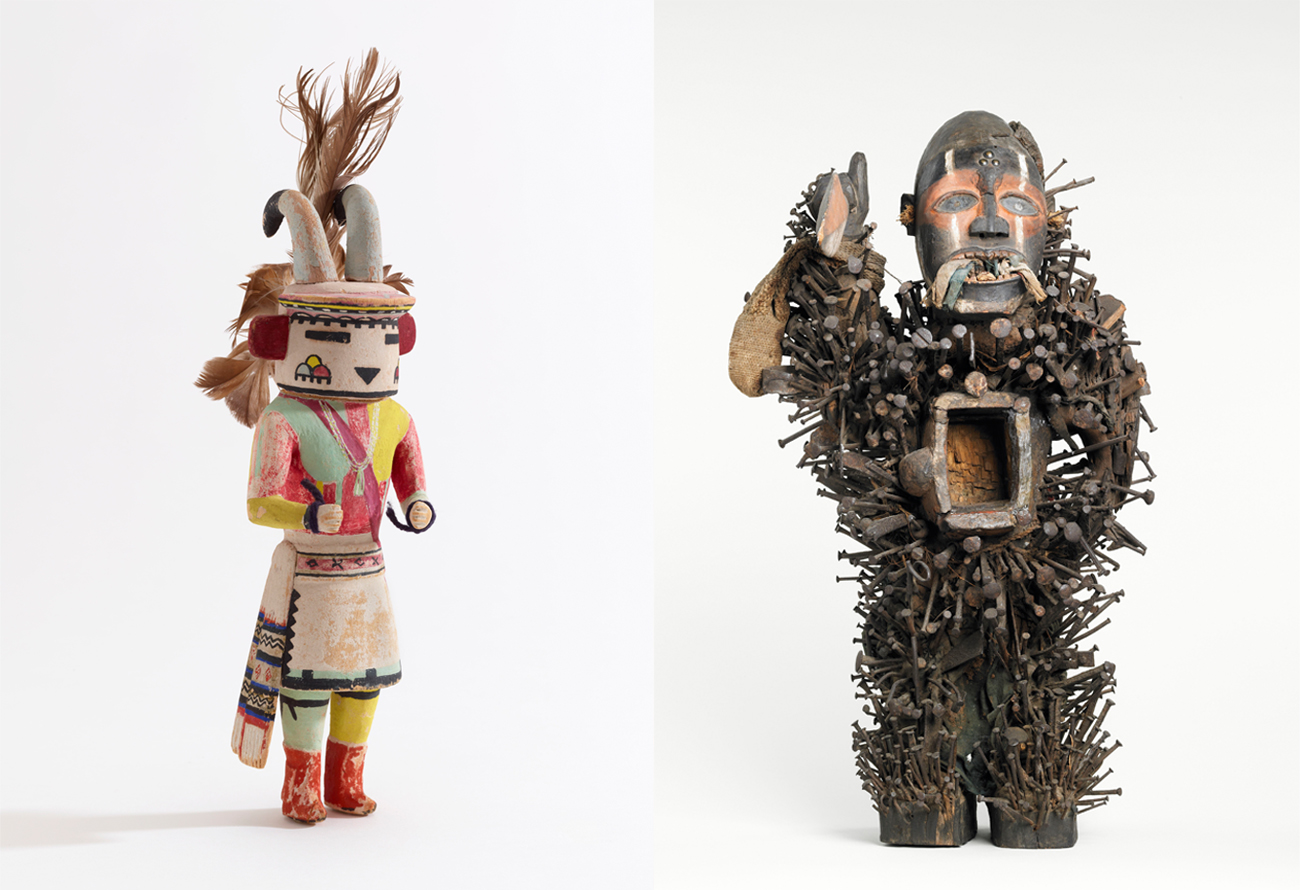 Left: Uknown Artist, Mountain Sheep Katsina. Right: Unkown Artist, Force Figure
The legacy
The appropriation of world cultures and artefacts led to a groundbreaking advancement in western art and reinvented the way we see and think. For instance, multi-genre performances blended music, text and dance; poetry was formed from sounds alone; and the longevity of a material was no longer relevant.
In celebration of Dada’s centenary, a new exhibition at the Berlinische Galerie entitled “Dada Africa: Dialogue With the Other”, examines the link established between Dada and non-European cultures. Some of the 120 works on show include a Helmet Mask (Bo Nun Amuin) from the Baule people (Cote d’Ivoire, first half 20th century), and wooden ancestral figure (Easter Island, 19th century), in the same room as Man Ray’s “Fisherman’s Idol” (1926) and Hannah Höch’s “From an ethnographic Museum No. X” (1925). The curatorial juxtaposition offers eye-opening new readings of many of the works by European artists, though it glazes over the fact that Dada can also be very problematic.
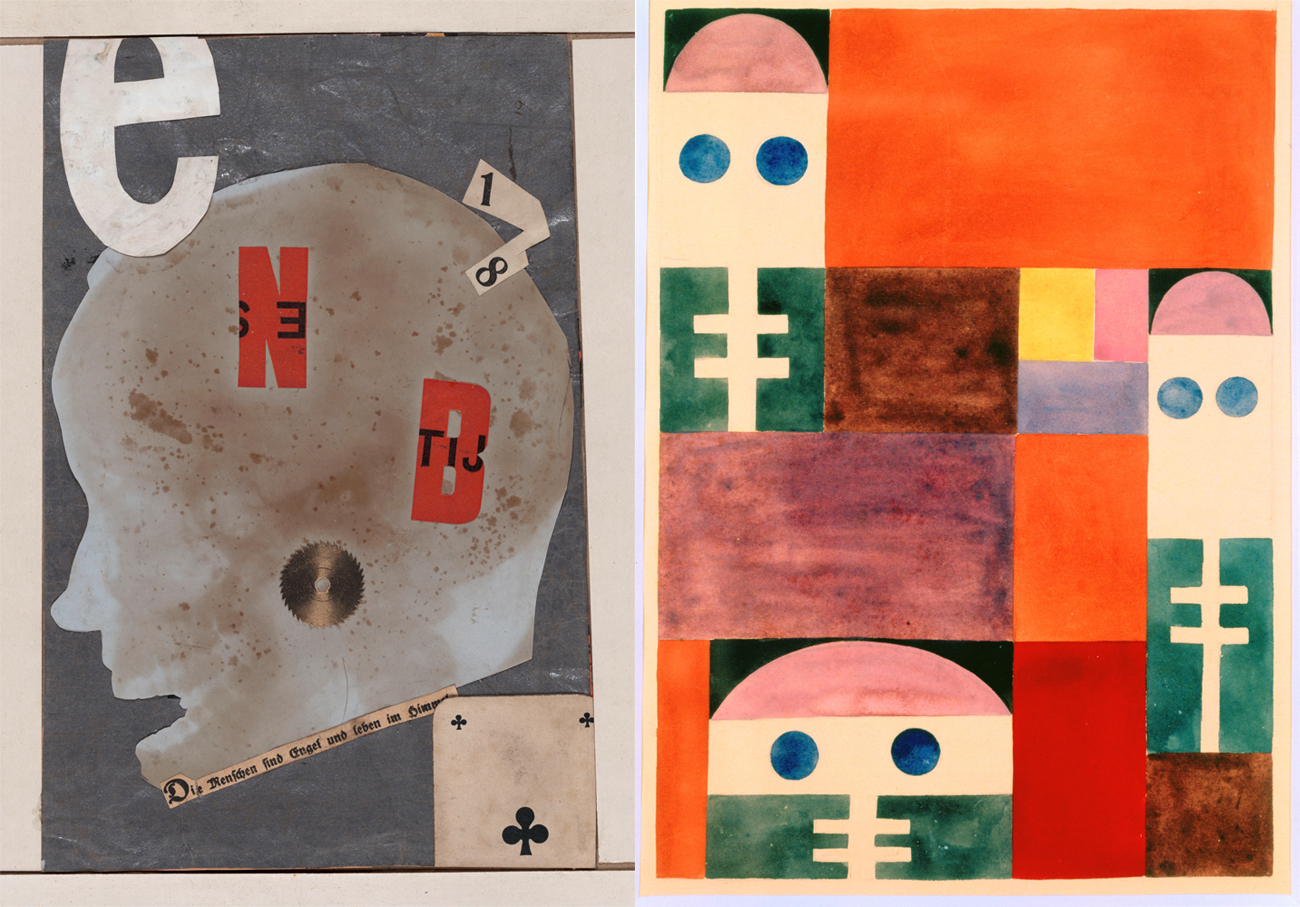 Left: Raoul Hausmann, People are Angels and Live in Heaven. Right: Sophie Taeuber, Arp Abstract Motif
The controversy
From the title to the artefacts, the exhibition pointedly shifts the focus to non-European art. However, it stills suffers from the shortsightedness that the Dadaists themselves are accused of. From the outset, Dada saw non-European cultures as the “other” and didn’t refrain from exoticising their “difference”. This opportunism has remained almost unquestioned in art ever since: from Jean-Luc Godard’s quote, “It’s not where you take things from — it’s where you take them to” to Ai Weiwei using refugees’ life jackets as his palette.
With juxtaposition and other techniques, Dada did invent new ways of seeing and confronted Nazi Germany with a reinvigorated set of beauty ideals in art. However, not without failing to see that it perpetuated the hypocrisy of the west simply by disregarding the horrors of European colonisation, and by appropriating rather than collaborating.
The diversity in Dada’s repertoire has shaped art to this day, including the problems that come with appropriation. This exhibition documents the cultural intersections made by Dada while leaving room for individual assessments on the complicated political implications. It begs the question of where western art would be today without Dada but perhaps more importantly where would it would be without the rest of the world.
 Left: Marcel Janco. Design for Dada Poster. Right: Mechanical head of Raoul Hausmann
“Dada Afrika” is at the Berlinische Galerie until 7 November 2016