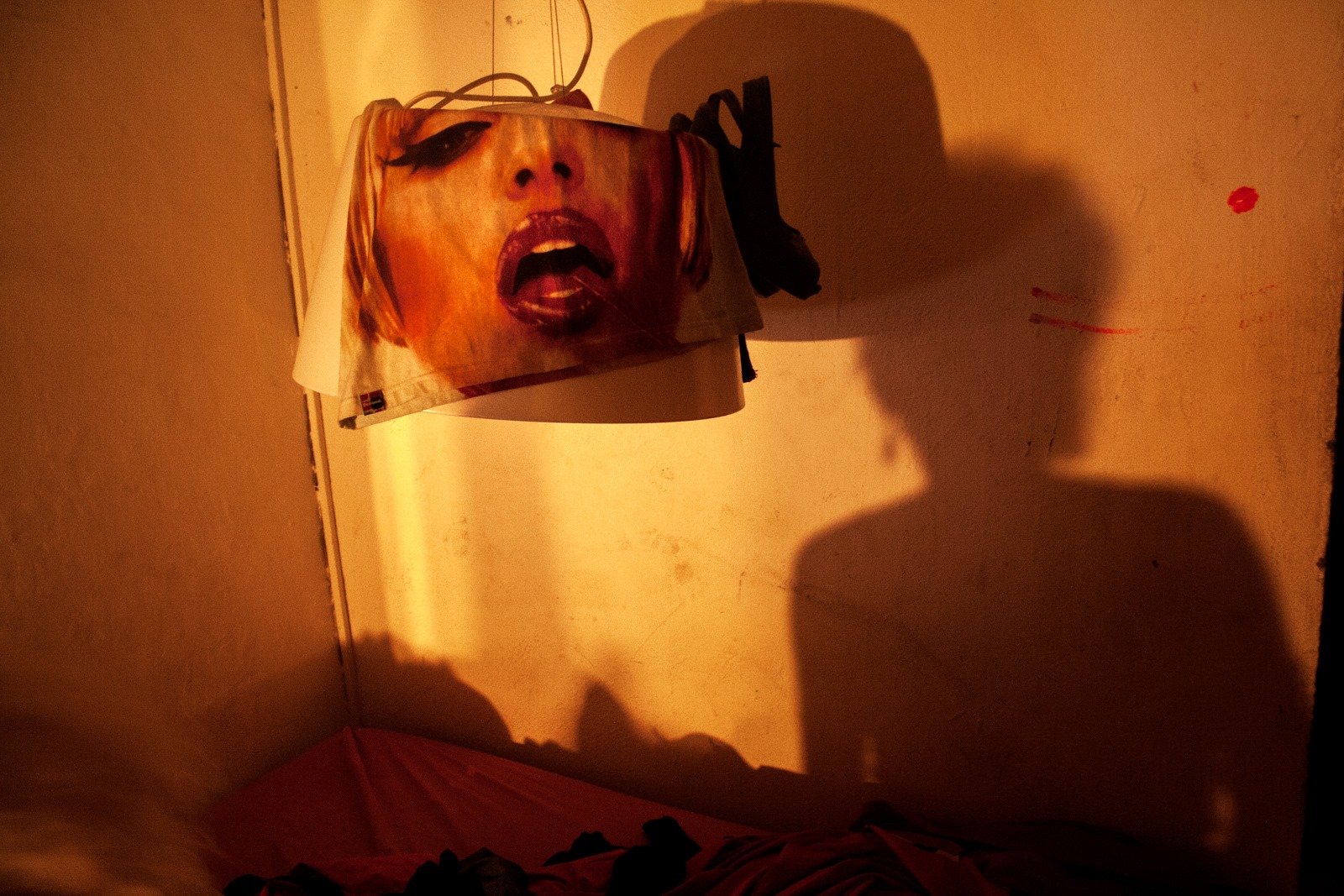
Helio Léon. María's Shadow. (2010). Courtesy of the artist.
In the late 19th century Edvard Munch painted a counterpart to The Scream. Unlike his better-known masterpiece — of a singular figure in a state of wide-eyed, open-mouthed horror — this second painting depicts a gaggle of people with hollowed-out eyes and blurred, indistinct faces. As with The Scream, a swirling sky of scarlet and gold rages overhead indicating that something terrible is about to happen. The painting, entitled Anxiety (1894), is a stirring representation of the psychiatric and physiological condition characterised by feelings of dread and despair of which the painting takes its name. Munch painted this scene exactly 50 years after the Danish philosopher, Søren Kierkegaard wrote The Concept of Anxiety (1844), in which he defined anxiety as the “dizziness of freedom” — a deep-rooted sense of uneasiness in the myriad possibilities available to a person in the modern world.
In the past decade, anxiety has become shorthand for our contemporary experience: like with Munch’s painting we are in a perpetual state of waiting for the worst to happen. A new exhibition at the Irish Museum of Modern Art in Dublin, aptly titled A Vague Anxiety, takes this dull sense of a trembling apprehension as its central premise. “The starting point was this hum of anxiety,” the exhibition’s curator Sean Kissane tells me over the phone. Desiring to curate an exhibition on “the most pressing theme,” Kissane realised there was not just one, but several issues. “There are so many: climate, politics, the housing crisis, the internet, apps, all of these things are pressing on us at the moment.” Although Kissane recognised that factors like climate change, the rising far right, Brexit and Trump are major components in our intensifying dread, it is also on account of knowing too much, an information overload facilitated by social media, wall-to-wall news and digital technology. “Possibly the cause in some ways has less to do with Trump and Jair Bolsonaro, and more to do with the fact that we know what Trump eats for breakfast,” notes Kissane.
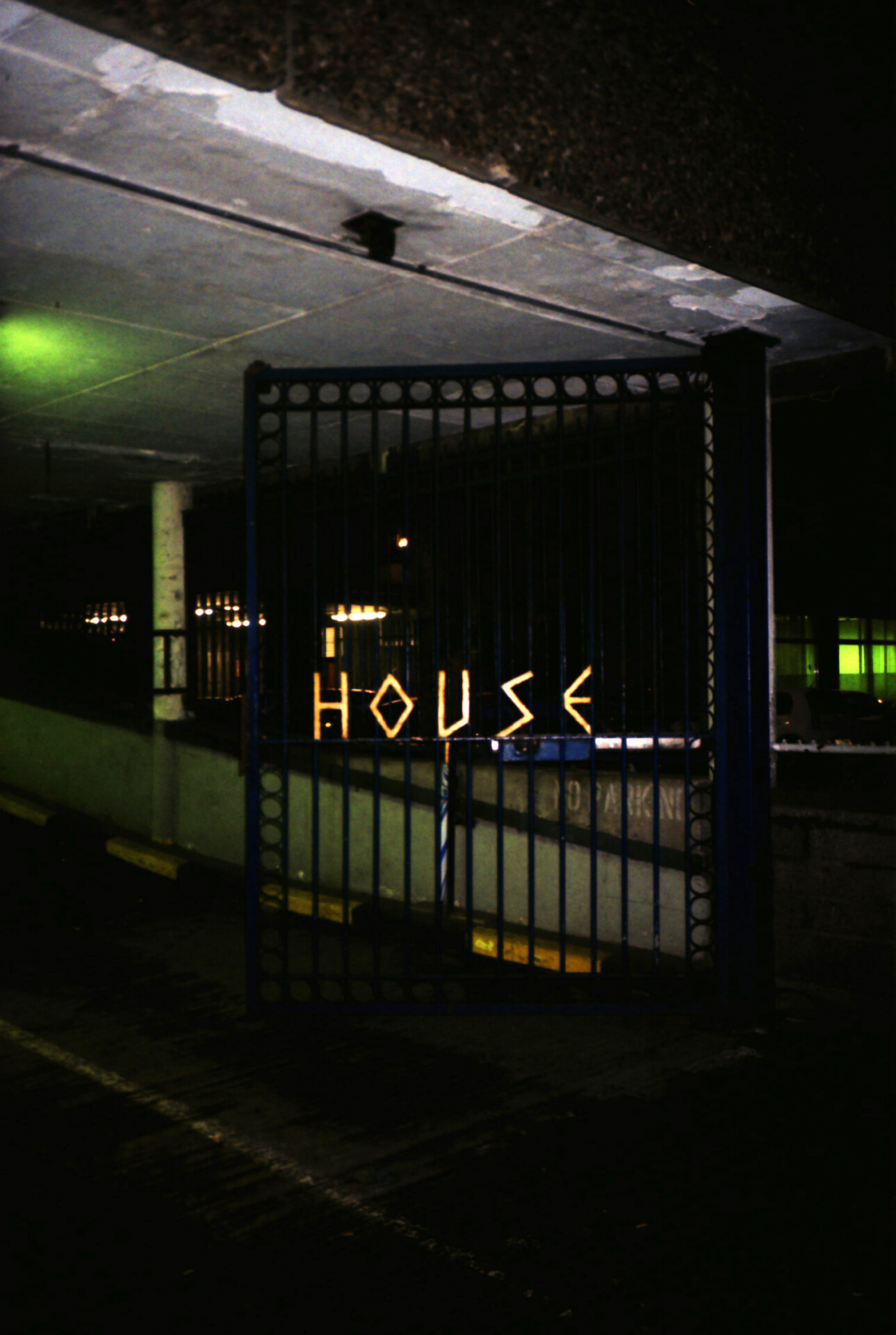
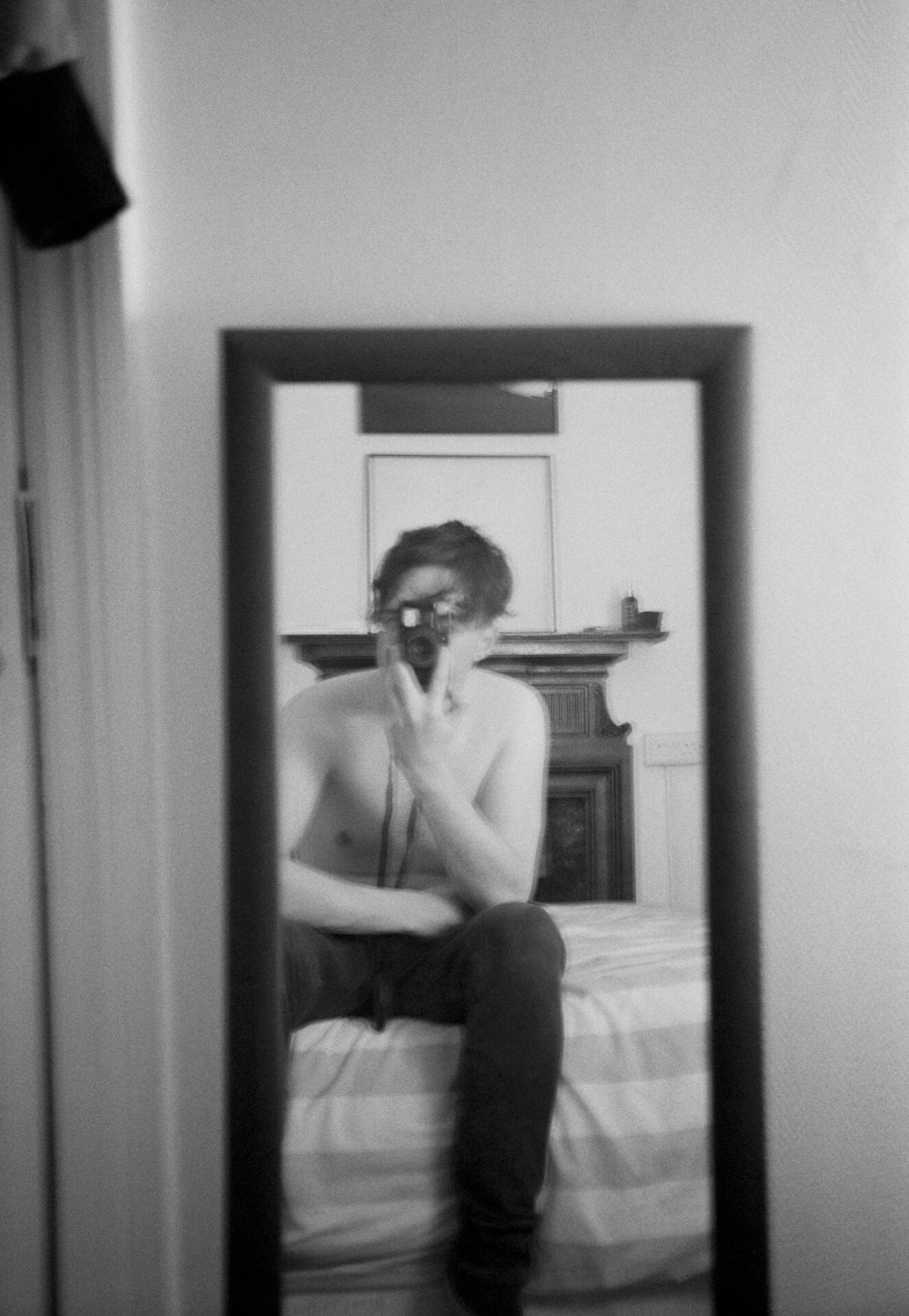
Left: Brian Teeling, House (2016) Right: I'm In Love With Myself.
Addressing a number of these key factors as identified by Kissane, A Vague Anxiety features a selection of emerging artists either based in or from Ireland, including Cristina Bunello, Marie Farrington, STASIS, Saidhbhín Gibson, Susanne Wawra, and Helio León, working across photography, painting, sculpture and installation. Among those exhibiting is Brian Teeling — a self-taught Dublin-based, queer artist whose work at IMMA explores a turn to hook-up apps following the breakdown of a relationship. Teeling considers anxiety to be “something undefined, yet consistently present in the background.”
For the exhibition, Teeling presents four different photographic series that detail the feelings of emptiness and loneliness following a break-up. He considers the majority of the work on view to be informed by pain — “the pain felt by feeling alone, the pain felt when wanting to kill yourself, the pain felt when texting an ex-lover, who still has his hand on your heart.” Among these series is Shadowlands, a collection of photographs of non-descript urban spaces in Dublin. “In this work, I revisited (nearly) every public place I’ve had sex,” explains Teeling over email. “All of these erotic endeavours took place at night so I wanted to go back during the day and capture how unique and occasionally beautiful these places are. They also hold some difficult but also fond memories for me. Some of these people were anonymous, others were people I know and care for, one I loved.” Presented as a looping steam of images on CCTV, lingering for four to five seconds at a time, Shadowlands provides a haunting insight into the artist’s personal memory. On camera, the furtive nature of the acts is heightened — through surveillance the anxiety of getting caught is augmented by the potency of the image.
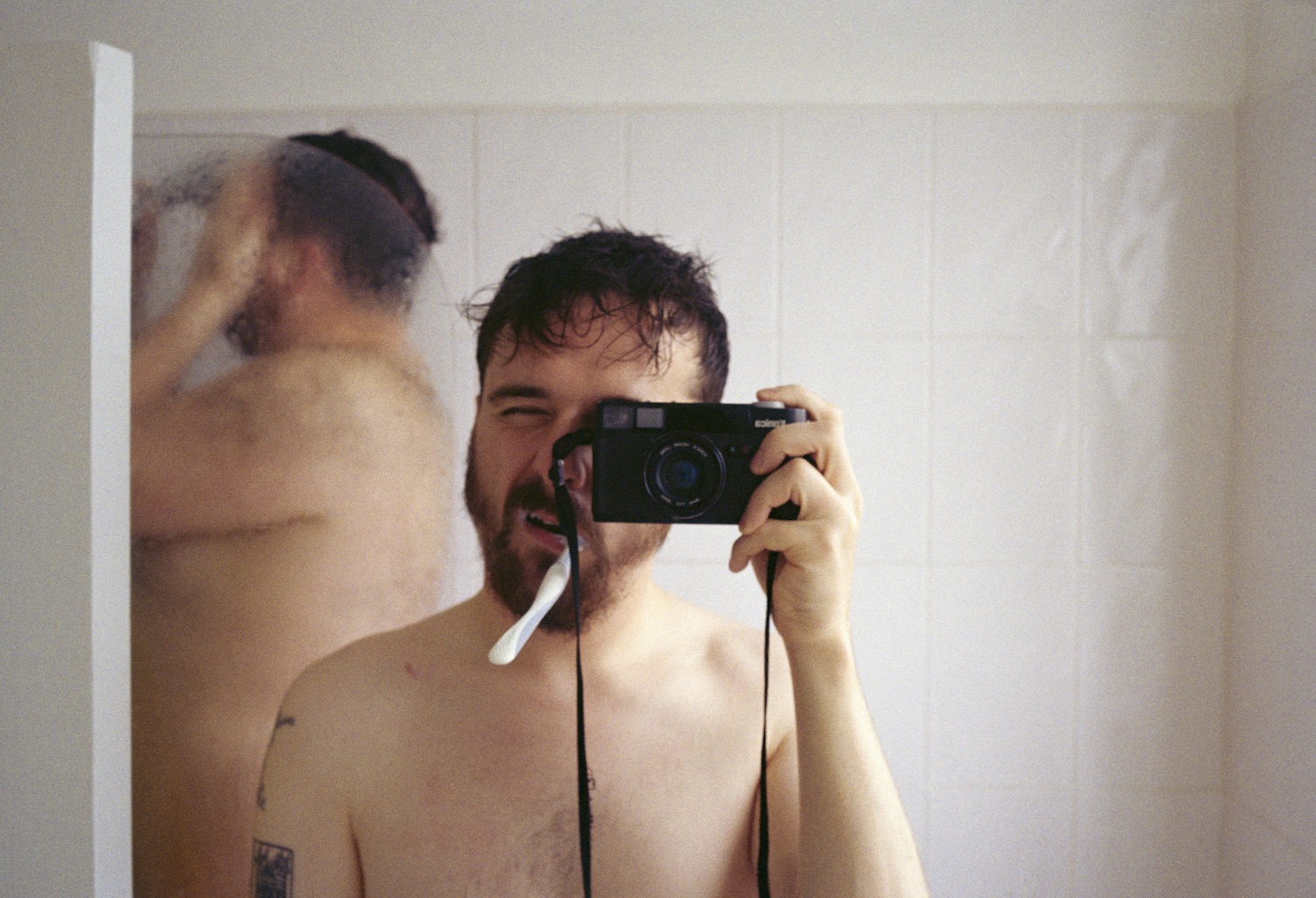
Brian Teeling, Shower Time (2018)
Besides from the anxiety and desperation caused by heartbreak, Teeling believes that the increasing tendency to look inwards is a major component in millennial angst. “The constant mechanisms of division that define our political environment — we’re stuck in a limbo between utopia and dystopia — means we are more and more self-identifying.” Arguably, in Teeling’s work this manifests itself as candid self-portraits — a toothbrush lolling in the mouth as another figure, a possible lover, showers in the background. The anxiety is not readily apparent in an image such as this — only so when we think of our own selves, busying about the bathroom, getting ready in the morning, and the blank-eyed moment of apprehension as we face ourselves in the mirror, ever before the day has even really begun.
Meanwhile, the Spanish photographer Helio León, who has lived in Ireland for a number of years, takes a more outward approach to the subject matter. His series The Purple Room, of which a number of images are extracted, probes underground culture across a quartet of European cities: Istanbul, Barcelona, Madrid and Cork, Ireland. Frequently caught in a blinking, twilight haze, León’s images can be compared to the unflinching portraiture of Nan Goldin — like Goldin, he immerses himself within a community, lensing private nocturnal moments that facilitate an exploration of the artist’s “boundaries and existential concerns about the world.” His is a photographic landscape punctuated with purple-y bruises blooming like wildflowers; bodies cavorting in a dull pink haze; painted fingernails; tired, worn-out flats; the suggestive wink of red lights on a backstreet slick with rainwater. For the artist, the series is in direct dialogue with the exhibition’s key motifs: “There are several themes in the show that are quite prominent in my work such as gender, sexuality, the precarity of living, social movements, underground youth culture, childhood, and trauma,” says León. “There’s a very specific intimate feeling in the work, that can be described as the anxiety of a child waiting alone in a dark room.”
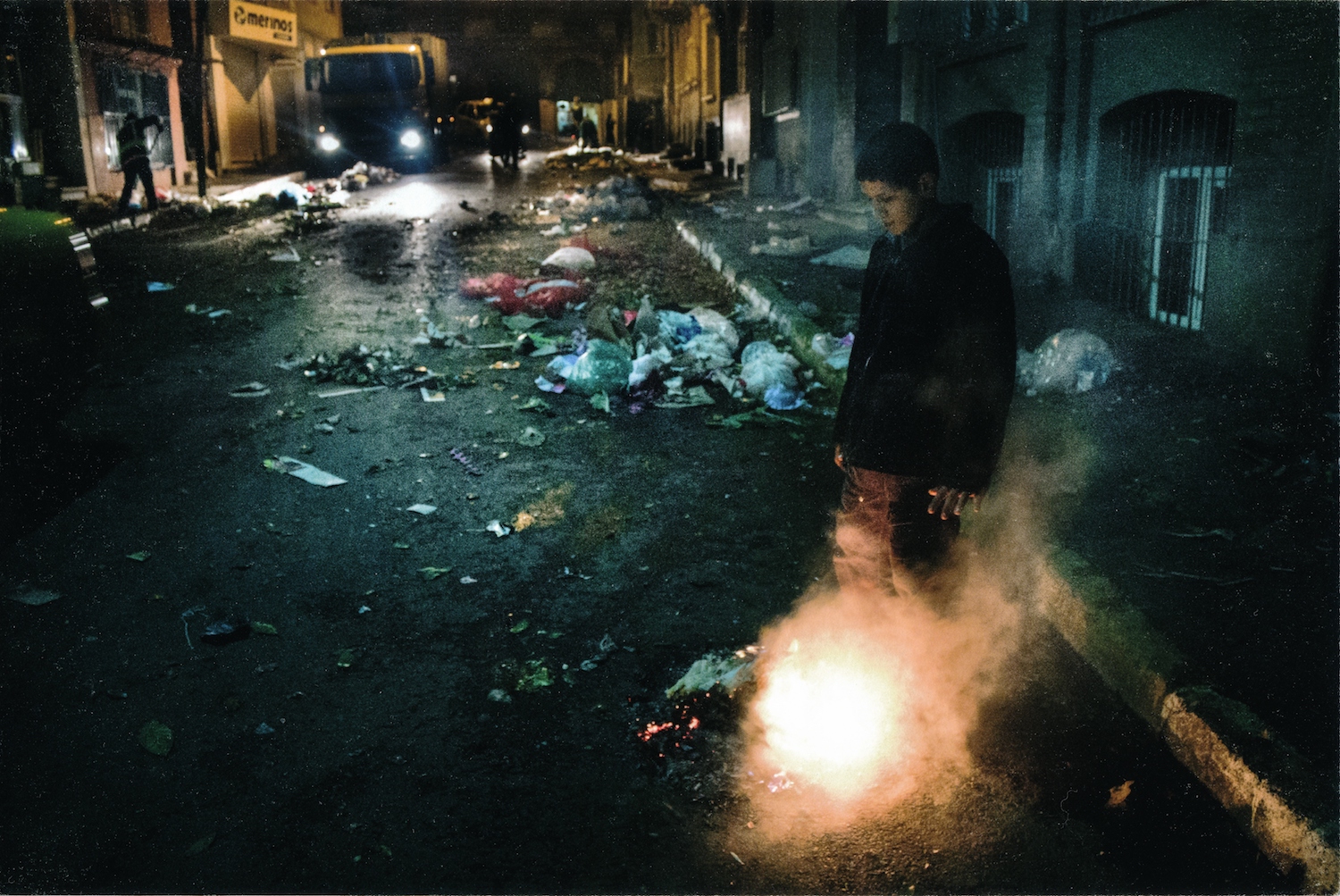
Helio Leon, Apparition, Istanbul, (2012)
Both Teeling and León believe we are living in extremely anxious times, intensified by capitalist culture. “The word ‘vague’ in the title could also refer to the anaesthetising of society with the help of consumerism’s permanent distractions: social media, apps, smartphones and ads that depict a narcissistic candy-like, happy world as well as the corporate appropriation of social movements rewriting the meaning of real, old fights,” considers León. Teeling continues, “We won’t figure out a method of escape until we figure out how to end capitalism and find a replacement structure that’s not pulled directly from our political past.”
In The Concept of Anxiety, Kierkegaard wrote, “Learning to know anxiety is an adventure which every man has to affront…He therefore who has learned rightly to be in anxiety has learned the most important thing.” As much as anxiety is a debilitating condition that hampers the ease at which we can enjoy life, arguably — at a manageable level — it can compel us toward change and instigate action. For León, anxiety is vital part of his artistic process — “not as a conscious decision but simply as part of life, of the excitement of taking photographs.” Teeling agrees. “Anxiety bleeds through my work as it does for many others. This is a good thing though. It keeps it on edge.”


Istanbul, The Purple Room Series (2012)
A Vague Anxiety runs through to 18 August at IMMA, Dublin.